A short dialogue follows Socrates and Euthyphro as they question what makes an action holy. Outside an Athenian court, Euthyphro explains why he is bringing a murder charge against his own father.
33 pages 38 min reading time
One of the most widely read dialogues of Plato, often the first piece of philosophy that students meet.
Asks the famous question of whether something is good because the gods love it, or whether the gods love it because it is good.
Shows Socrates testing each answer Euthyphro gives until it falls apart, so that the two men end without agreeing on what holiness is.
Its central question, now called the Euthyphro dilemma, is still argued over today by thinkers debating whether right and wrong can depend on God's commands.
It became a model for the "Socratic method," the style of teaching through careful questions that is still used in classrooms and law schools.
Set just before a trial
Socrates is at court to face charges of disrespecting the gods, charges that soon led to his death.
Written after his teacher died
Plato, a young follower of Socrates, wrote it some years after Athens put Socrates to death.
First of four last days
Ancient editors placed it first in a set with Apology, Crito, and Phaedo, which follow Socrates to his death.
Probably a real man
Euthyphro was likely a real Athenian who claimed to know about religion, and Plato mentions him in another dialogue.


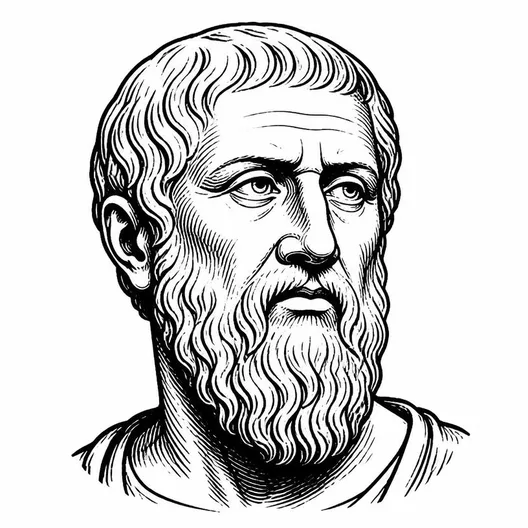 Plato c. 395 BCE