In this short dialogue, Socrates and his friend Crito discuss whether he should escape prison before his execution. The debate takes a surprising turn when Socrates imagines the laws of Athens speaking to him.
23 pages 27 min reading time
One of the earliest and most famous works in Western thought on why people should obey the law.
Argues that doing wrong is never right, even to pay back someone who has wronged you first.
Imagines living in a country and accepting its benefits as an unspoken agreement to follow its laws, an early form of the idea later called the "social contract."
Became a starting point for later debates over civil disobedience (openly breaking a law you believe is unjust), and writers on that question still argue with it today.
Based on a real execution
Athens really did sentence Socrates to death, and the author, Plato, was one of his devoted students.
A ship delayed the death
Athens allowed no executions while a sacred ship was away at Delos, so Socrates waited weeks in prison.
A dream sets the date
Socrates tells Crito he dreamed of a woman in white who hinted he would die in three days.
Crito was a real friend
The real Crito was a wealthy man about Socrates' age, and in the dialogue he offers to pay for the escape.


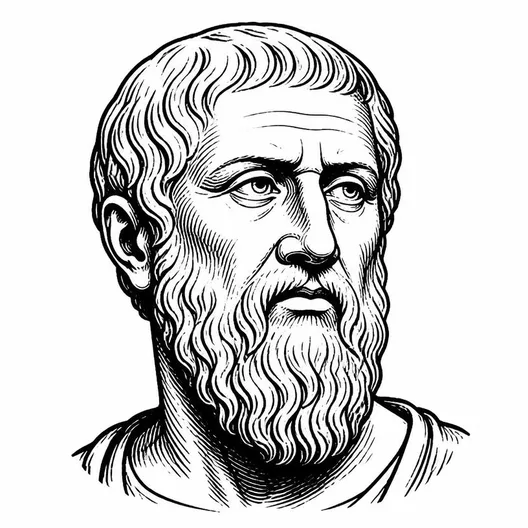 Plato c. 390 BCE