Guests at an Athenian drinking party give speeches about love in this philosophical dialogue. Aristophanes tells a strange story of humans split in two, each searching for a missing half.
114 pages 2h 13m reading time
One of the most famous works of Western philosophy, and still one of the most widely read books about love.
Argues, through Socrates and the wise woman Diotima, that love can lead a person step by step from desire for one beautiful body to a love of beauty itself.
Presents love as a longing for something we lack, and as a drive to create lasting things like children, art, laws, and ideas.
Gave the language the term "Platonic love," which today means a close bond without sex, a meaning that grew out of later readings of this book.
Shaped centuries of writing about love, from Renaissance thinkers in Florence to poets and philosophers who returned to its ladder of beauty and its tale of lost halves.
A guest soon disgraced
The drunken guest Alcibiades was a real politician soon accused of crimes against religion, which first readers knew.
Set at a real party
The dinner celebrates the playwright Agathon's real win in a drama contest in Athens in 416 BCE.
A rival gets hiccups
Aristophanes, who had mocked Socrates on stage, gets hiccups and must give up his turn to speak.
Shelley's version held back
Percy Shelley's translation was printed only in cut form until 1931, because of its open talk of love between men.


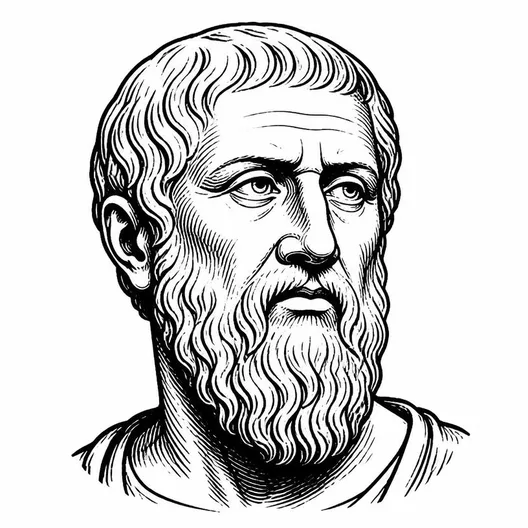 Plato c. 380 BCE