A huge work of history and faith, written after Rome was sacked in 410, compares earthly power with heaven. Augustine answers pagans who blamed Christians for the fall of the city.
779 pages 15h 7m reading time
A founding work of Christian thought and of the philosophy of history.
Divides humanity into two cities, one built on love of God and one on love of self, mixed together until the end of time.
Answers pagans who blamed Christianity for the Visigoths' sack of Rome in 410, arguing that every earthly empire rises and falls.
Its reasoning on when war can be just helped found the Christian just war tradition, later developed by Thomas Aquinas.
It shaped medieval thinking on church and state, read by rulers from Charlemagne onward.
Requested by a doomed friend
Augustine started it at the urging of Marcellinus, a Roman official he dedicated it to, who was executed in 413.
Thirteen years in the making
He wrote its 22 books over about thirteen years, sending early parts to readers while writing the rest.
Saves lost Roman writings
He quoted Varro's study of the Roman gods so often that parts of that lost work survive only here.
Among Italy's first printed books
It was among the first books printed in Italy, by German printers working at a monastery in Subiaco.


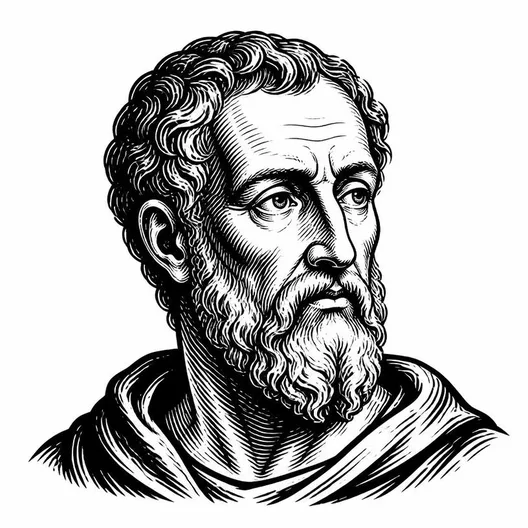 Augustine of Hippo c. 426 CE