Part 2, Chapter 7
I Go to Bristol
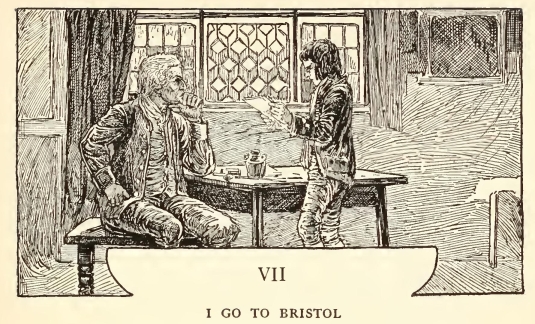
It was longer than the squire imagined ere we were ready for the sea, and none of our first plans—not even Dr. Livesey’s, of keeping me beside him—could be carried out as we intended. The doctor had to go to London for a physician to take charge of his practice; the squire was hard at work at Bristol; and I lived on at the hall under the charge of old Redruth, the gamekeeper, almost a prisoner, but full of sea-dreams and the most charming anticipations of strange islands and adventures. I brooded by the hour together over the map, all the details of which I well remembered. Sitting by the fire in the housekeeper’s room, I approached that island in my fancy from every possible direction; I explored every acre of its surface; I climbed a thousand times to that tall hill they call the Spy-glass, and from the top enjoyed the most wonderful and changing prospects. Sometimes the isle was thick with savages, with whom we fought, sometimes full of dangerous animals that hunted us, but in all my fancies nothing occurred to me so strange and tragic as our actual adventures.
It took longer than the squire imagined before we were ready to sail. None of our first plans worked out as intended, not even Dr. Livesey’s plan to keep me beside him. The doctor had to go to London to find a physician to take over his practice. The squire was hard at work in Bristol. I stayed at the hall under the care of old Redruth, the gamekeeper. I was almost a prisoner, but my head was full of dreams of the sea. I eagerly imagined strange islands and adventures. I spent hours poring over the map, every detail of which I remembered well. Sitting by the fire in the housekeeper’s room, I imagined approaching the island from every possible direction. I explored every acre of its surface. A thousand times I climbed the tall hill called the Spy-glass. From the top, I enjoyed the most wonderful and changing views. Sometimes the island was crowded with savages, whom we fought. Sometimes it was full of dangerous animals that hunted us. But nothing I imagined was as strange and tragic as our actual adventures.
So the weeks passed on, till one fine day there came a letter addressed to Dr. Livesey, with this addition, “To be opened, in the case of his absence, by Tom Redruth or young Hawkins.” Obeying this order, we found, or rather I found—for the gamekeeper was a poor hand at reading anything but print—the following important news:
The weeks passed, until one fine day a letter arrived addressed to Dr. Livesey. It also said, “To be opened, in his absence, by Tom Redruth or young Hawkins.” Following those instructions, we opened the letter and found the following important news. Or rather, I found it, since the gamekeeper was not much good at reading anything except print:
Old Anchor Inn, Bristol, March 1, 17—.
Old Anchor Inn, Bristol, March 1, 17..
Dear Livesey—As I do not know whether you are at the hall or still in London, I send this in double to both places. The ship is bought and fitted. She lies at anchor, ready for sea. You never imagined a sweeter schooner—a child might sail her—two hundred tons; name, Hispaniola. I got her through my old friend, Blandly, who has proved himself throughout the most surprising trump. The admirable fellow literally slaved in my interest, and so, I may say, did everyone in Bristol, as soon as they got wind of the port we sailed for—treasure, I mean.
Dear Livesey, I don't know whether you're at the hall or still in London, so I'm sending a copy to each place. The ship is bought and fitted out. She's at anchor, ready to sail. You never imagined a finer schooner. A child could sail her. She's two hundred tons, and her name is Hispaniola. I got her through my old friend Blandly, who has proved himself a remarkably good fellow throughout. The admirable man literally worked like a slave on my behalf. And I might say everyone in Bristol did the same, as soon as they heard what we were sailing for. Treasure, I mean.
“Redruth,” said I, interrupting the letter, “Dr. Livesey will not like that. The squire has been talking, after all.”
“Redruth,” I said, interrupting the reading of the letter, “Dr. Livesey won’t like that. The squire has been talking after all.”
“Well, who’s a better right?” growled the gamekeeper. “A pretty rum go if squire ain’t to talk for Dr. Livesey, I should think.”
“Well, who has a better right?” growled the gamekeeper. “It would be a strange business if the squire couldn’t speak for Dr. Livesey, I’d say.”
At that I gave up all attempts at commentary and read straight on:
At that, I gave up all attempts to comment and read straight on:
Blandly himself found the Hispaniola, and by the most admirable management got her for the merest trifle. There is a class of men in Bristol monstrously prejudiced against Blandly. They go the length of declaring that this honest creature would do anything for money, that the Hispaniola belonged to him, and that he sold it me absurdly high—the most transparent calumnies. None of them dare, however, to deny the merits of the ship. So far there was not a hitch. The workpeople, to be sure—riggers and what not—were most annoyingly slow; but time cured that. It was the crew that troubled me. I wished a round score of men—in case of natives, buccaneers, or the odious French—and I had the worry of the deuce itself to find so much as half a dozen, till the most remarkable stroke of fortune brought me the very man that I required. I was standing on the dock, when, by the merest accident, I fell in talk with him. I found he was an old sailor, kept a public-house, knew all the seafaring men in Bristol, had lost his health ashore, and wanted a good berth as cook to get to sea again. He had hobbled down there that morning, he said, to get a smell of the salt. I was monstrously touched—so would you have been—and, out of pure pity, I engaged him on the spot to be ship’s cook. Long John Silver, he is called, and has lost a leg; but that I regarded as a recommendation, since he lost it in his country’s service, under the immortal Hawke. He has no pension, Livesey. Imagine the abominable age we live in! Well, sir, I thought I had only found a cook, but it was a crew I had discovered. Between Silver and myself we got together in a few days a company of the toughest old salts imaginable—not pretty to look at, but fellows, by their faces, of the most indomitable spirit. I declare we could fight a frigate. Long John even got rid of two out of the six or seven I had already engaged. He showed me in a moment that they were just the sort of fresh-water swabs we had to fear in an adventure of importance. I am in the most magnificent health and spirits, eating like a bull, sleeping like a tree, yet I shall not enjoy a moment till I hear my old tarpaulins tramping round the capstan. Seaward, ho! Hang the treasure! It’s the glory of the sea that has turned my head. So now, Livesey, come post; do not lose an hour, if you respect me. Let young Hawkins go at once to see his mother, with Redruth for a guard; and then both come full speed to Bristol.
Blandly found the Hispaniola himself and, through the most admirable bargaining, got her for next to nothing. A group of men in Bristol is terribly prejudiced against Blandly. They even claim that this honest creature would do anything for money. They say the Hispaniola belonged to him and that he sold her to me at an absurdly high price. These are the most obvious slanders. None of them, however, dare deny the ship’s merits. So far, there had been no trouble. The workers, riggers and the like, were annoyingly slow, of course, but time took care of that. It was the crew that worried me. I wanted a full twenty men, in case we encountered natives, buccaneers, or the odious French. I had a devil of a time finding even half a dozen. Then a most remarkable stroke of luck brought me the very man I needed. I was standing on the dock when, quite by chance, I fell into conversation with him. I learned that he was an old sailor who ran a pub and knew all the seafaring men in Bristol. His health had suffered on land, and he wanted a good position as a cook to get back to sea. He said he had hobbled down to the dock that morning to smell the salt air. I was deeply touched, and so would you have been. Out of pure pity, I hired him on the spot as the ship’s cook. His name is Long John Silver, and he has lost a leg. But I took that as a point in his favor, since he lost it serving his country under the immortal Hawke. He has no pension, Livesey. Imagine the appalling age we live in! Well, sir, I thought I had only found a cook, but I had discovered a crew. Between Silver and me, we gathered a company of the toughest old sailors imaginable in just a few days. They were not pretty to look at, but their faces showed the most unbreakable spirit. I declare we could fight a frigate. Long John even got rid of two of the six or seven men I had already hired. He showed me at once that they were just the sort of inexperienced sailors we had to fear on an important adventure. I am in magnificent health and spirits, eating like a bull and sleeping like a tree. Yet I shall not enjoy a moment until I hear my old sailors marching around the capstan. Seaward, ho! Hang the treasure! It’s the glory of the sea that has turned my head. So now, Livesey, come as fast as you can. Do not lose an hour, if you respect me. Let young Hawkins go at once to see his mother, with Redruth as his guard. Then both should come to Bristol as fast as they can.
John Trelawney
John Trelawney
Postscript.—I did not tell you that Blandly, who, by the way, is to send a consort after us if we don’t turn up by the end of August, had found an admirable fellow for sailing master—a stiff man, which I regret, but in all other respects a treasure. Long John Silver unearthed a very competent man for a mate, a man named Arrow. I have a boatswain who pipes, Livesey; so things shall go man-o’-war fashion on board the good ship Hispaniola. I forgot to tell you that Silver is a man of substance; I know of my own knowledge that he has a banker’s account, which has never been overdrawn. He leaves his wife to manage the inn; and as she is a woman of colour, a pair of old bachelors like you and I may be excused for guessing that it is the wife, quite as much as the health, that sends him back to roving.
Postscript. I forgot to tell you that Blandly has found an excellent sailing master. By the way, Blandly will send another ship after us if we don’t return by the end of August. The sailing master is a rather formal man, which I regret, but in every other respect he is a treasure. Long John Silver found a very capable mate named Arrow. I have a boatswain who pipes, Livesey, so things will run like a navy ship aboard the good ship Hispaniola. I forgot to tell you that Silver is a man of means. I know for a fact that he has a bank account he has never overdrawn. He is leaving his wife to manage the inn. She is a woman of colour, so a pair of old bachelors like you and me may be forgiven for guessing that his wife has as much to do with his return to wandering as his health does.
J. T.
J. T.
P.P.S.—Hawkins may stay one night with his mother.
P.P.S. Hawkins may stay one night with his mother.
J. T.
J. T.
You can fancy the excitement into which that letter put me. I was half beside myself with glee; and if ever I despised a man, it was old Tom Redruth, who could do nothing but grumble and lament. Any of the under-gamekeepers would gladly have changed places with him; but such was not the squire’s pleasure, and the squire’s pleasure was like law among them all. Nobody but old Redruth would have dared so much as even to grumble.
You can imagine how excited that letter made me. I was almost beside myself with joy. And if I ever despised a man, it was old Tom Redruth, who did nothing but grumble and complain. Any of the junior gamekeepers would gladly have traded places with him. But that was not what the squire wanted, and his wishes were like law to them all. Nobody but old Redruth would have dared even to grumble.
The next morning he and I set out on foot for the Admiral Benbow, and there I found my mother in good health and spirits. The captain, who had so long been a cause of so much discomfort, was gone where the wicked cease from troubling. The squire had had everything repaired, and the public rooms and the sign repainted, and had added some furniture—above all a beautiful armchair for mother in the bar. He had found her a boy as an apprentice also so that she should not want help while I was gone.
The next morning, he and I walked to the Admiral Benbow. There I found my mother healthy and in good spirits. The captain, who had caused so much discomfort for so long, had gone where the wicked cease from troubling. The squire had repaired everything and had the public rooms and the sign repainted. He had also added some furniture, especially a beautiful armchair for Mother in the bar. He had found her a boy to take on as an apprentice, so she would have help while I was gone.
It was on seeing that boy that I understood, for the first time, my situation. I had thought up to that moment of the adventures before me, not at all of the home that I was leaving; and now, at sight of this clumsy stranger, who was to stay here in my place beside my mother, I had my first attack of tears. I am afraid I led that boy a dog’s life, for as he was new to the work, I had a hundred opportunities of setting him right and putting him down, and I was not slow to profit by them.
Seeing that boy made me understand my situation for the first time. Until then, I had thought about the adventures ahead, not at all about the home I was leaving. Now I saw this clumsy stranger who would stay here beside my mother in my place. For the first time, I burst into tears. I’m afraid I made that boy’s life miserable. He was new to the work, so I had a hundred chances to correct him and put him down. I was quick to take them.
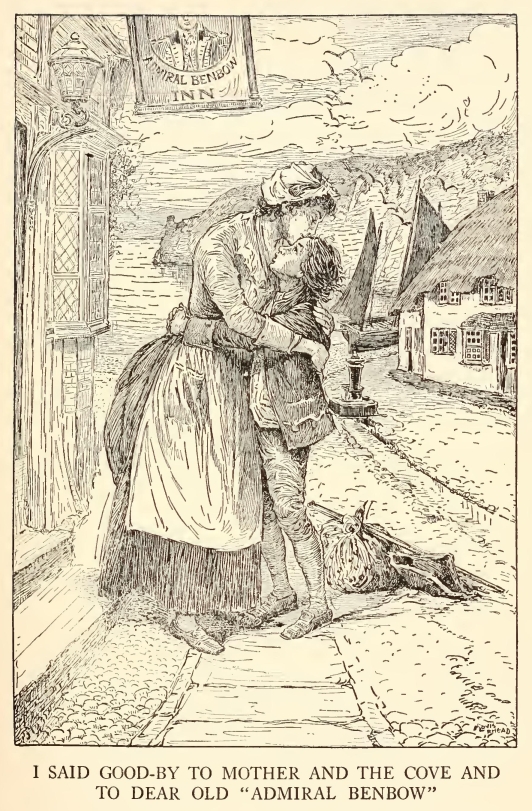
The night passed, and the next day, after dinner, Redruth and I were afoot again and on the road. I said good-bye to Mother and the cove where I had lived since I was born, and the dear old Admiral Benbow—since he was repainted, no longer quite so dear. One of my last thoughts was of the captain, who had so often strode along the beach with his cocked hat, his sabre-cut cheek, and his old brass telescope. Next moment we had turned the corner and my home was out of sight.
The night passed, and the next day after dinner, Redruth and I set out on foot again. I said goodbye to Mother and the cove where I had lived since I was born. I also said goodbye to the dear old Admiral Benbow, though it was not quite so dear since being repainted. One of my last thoughts was of the captain. He had so often walked along the beach with his cocked hat, his sword-scarred cheek, and his old brass telescope. A moment later, we turned the corner, and my home disappeared from sight.
The mail picked us up about dusk at the Royal George on the heath. I was wedged in between Redruth and a stout old gentleman, and in spite of the swift motion and the cold night air, I must have dozed a great deal from the very first, and then slept like a log up hill and down dale through stage after stage, for when I was awakened at last it was by a punch in the ribs, and I opened my eyes to find that we were standing still before a large building in a city street and that the day had already broken a long time.
The mail coach picked us up around dusk at the Royal George on the heath. I was squeezed between Redruth and a stout old gentleman. Despite the fast ride and the cold night air, I must have dozed a great deal from the start. Then I slept like a log, up hill and down dale, through stage after stage of the journey. At last, a punch in the ribs woke me. I opened my eyes and saw that we had stopped outside a large building on a city street. Day had broken long before.
“Where are we?” I asked.
“Where are we?” I asked.
“Bristol,” said Tom. “Get down.”
“Bristol,” said Tom. “Get down.”
Mr. Trelawney had taken up his residence at an inn far down the docks to superintend the work upon the schooner. Thither we had now to walk, and our way, to my great delight, lay along the quays and beside the great multitude of ships of all sizes and rigs and nations. In one, sailors were singing at their work, in another there were men aloft, high over my head, hanging to threads that seemed no thicker than a spider’s. Though I had lived by the shore all my life, I seemed never to have been near the sea till then. The smell of tar and salt was something new. I saw the most wonderful figureheads, that had all been far over the ocean. I saw, besides, many old sailors, with rings in their ears, and whiskers curled in ringlets, and tarry pigtails, and their swaggering, clumsy sea-walk; and if I had seen as many kings or archbishops I could not have been more delighted.
Mr. Trelawney had been staying at an inn far down by the docks to oversee the work on the schooner. We now had to walk there. To my great delight, our route took us along the docks, past a great number of ships of every size, rig, and nationality. On one ship, sailors sang as they worked. On another, men worked high above my head, clinging to ropes that looked no thicker than spiderwebs. Though I had lived by the shore all my life, I felt as if I had never been near the sea until then. The smell of tar and salt was new to me. I saw wonderful figureheads, all of which had traveled far across the ocean. I also saw many old sailors with earrings, whiskers curled into ringlets, and pigtails covered in tar. They walked with a clumsy, swaggering sailor’s gait. I could not have been more delighted if I had seen as many kings or archbishops.
And I was going to sea myself, to sea in a schooner, with a piping boatswain and pig-tailed singing seamen, to sea, bound for an unknown island, and to seek for buried treasure!
And I was going to sea myself! I would sail on a schooner, with a boatswain piping and sailors singing, their hair tied in pigtails. We were bound for an unknown island to search for buried treasure!
While I was still in this delightful dream, we came suddenly in front of a large inn and met Squire Trelawney, all dressed out like a sea-officer, in stout blue cloth, coming out of the door with a smile on his face and a capital imitation of a sailor’s walk.
While I was still lost in this delightful dream, we suddenly came to a large inn. Squire Trelawney was coming out of the door, dressed like a naval officer in sturdy blue cloth. He had a smile on his face and was doing an excellent imitation of a sailor’s walk.
“Here you are,” he cried, “and the doctor came last night from London. Bravo! The ship’s company complete!”
“Here you are!” he cried. “And the doctor arrived from London last night. Great! The ship’s crew is complete!”
“Oh, sir,” cried I, “when do we sail?”
“Oh, sir,” I cried, “when do we sail?”
“Sail!” says he. “We sail tomorrow!”
“Sail!” he says. “We sail tomorrow!”