“Tiger! Tiger!”
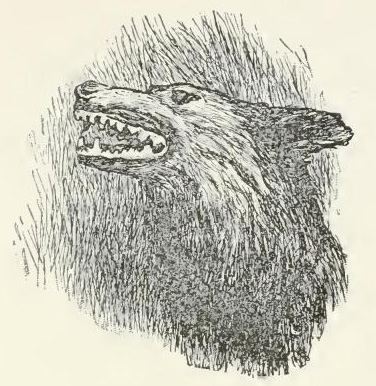
What of the hunting, hunter bold? Brother, the watch was long and cold. What of the quarry ye went to kill? Brother, he crops in the jungle still. Where is the power that made your pride? Brother, it ebbs from my flank and side. Where is the haste that ye hurry by? Brother, I go to my lair—to die.
How was the hunt, brave hunter? Brother, the wait was long and cold. What of the prey you went to kill? Brother, he still grazes in the jungle. Where is the strength that made you proud? Brother, it is draining from my body. Why are you hurrying past? Brother, I am going to my den to die.
Now we must go back to the first tale. When Mowgli left the wolf’s cave after the fight with the Pack at the Council Rock, he went down to the plowed lands where the villagers lived, but he would not stop there because it was too near to the jungle, and he knew that he had made at least one bad enemy at the Council. So he hurried on, keeping to the rough road that ran down the valley, and followed it at a steady jog-trot for nearly twenty miles, till he came to a country that he did not know. The valley opened out into a great plain dotted over with rocks and cut up by ravines. At one end stood a little village, and at the other the thick jungle came down in a sweep to the grazing-grounds, and stopped there as though it had been cut off with a hoe. All over the plain, cattle and buffaloes were grazing, and when the little boys in charge of the herds saw Mowgli they shouted and ran away, and the yellow pariah dogs that hang about every Indian village barked. Mowgli walked on, for he was feeling hungry, and when he came to the village gate he saw the big thorn-bush that was drawn up before the gate at twilight, pushed to one side.
Now we must go back to the first tale. After the fight with the Pack at the Council Rock, Mowgli left the wolf’s cave. He went down to the plowed lands where the villagers lived. But he would not stop there because it was too close to the jungle. He knew he had made at least one dangerous enemy at the Council. So he hurried along the rough road that ran down the valley. He jogged steadily for nearly twenty miles, until he came to a country he did not know. The valley opened into a great plain dotted with rocks and crossed by ravines. A small village stood at one end. At the other, thick jungle swept down to the grazing grounds. There it stopped as though someone had cut it back with a hoe. Cattle and buffaloes grazed all over the plain. When the little boys watching the herds saw Mowgli, they shouted and ran away. The yellow pariah dogs that hang around every Indian village barked. Mowgli walked on because he was hungry. At the village gate, he saw that the big thornbush had been pushed aside. It was usually pulled across the gate at twilight.
“Umph!” he said, for he had come across more than one such barricade in his night rambles after things to eat. “So men are afraid of the People of the Jungle here also.” He sat down by the gate, and when a man came out he stood up, opened his mouth, and pointed down it to show that he wanted food. The man stared, and ran back up the one street of the village shouting for the priest, who was a big, fat man dressed in white, with a red and yellow mark on his forehead. The priest came to the gate, and with him at least a hundred people, who stared and talked and shouted and pointed at Mowgli.
“Umph!” he said. He had come across more than one such barricade while searching for food at night. “So men are afraid of the People of the Jungle here too.” He sat down by the gate. When a man came out, Mowgli stood up, opened his mouth, and pointed into it to show he wanted food. The man stared, then ran back up the village’s only street, shouting for the priest. The priest was a big, fat man dressed in white, with a red and yellow mark on his forehead. He came to the gate with at least a hundred people. They stared, talked, shouted, and pointed at Mowgli.
“They have no manners, these Men Folk,” said Mowgli to himself. “Only the gray ape would behave as they do.” So he threw back his long hair and frowned at the crowd.
“These people have no manners,” Mowgli said to himself. “Only the gray ape would behave like them.” So he tossed back his long hair and frowned at the crowd.
“What is there to be afraid of?” said the priest. “Look at the marks on his arms and legs. They are the bites of wolves. He is but a wolf-child run away from the jungle.”
“What is there to be afraid of?” said the priest. “Look at the marks on his arms and legs. They are wolf bites. He is just a wolf-child who ran away from the jungle.”
Of course, in playing together, the cubs had often nipped Mowgli harder than they intended, and there were white scars all over his arms and legs. But he would have been the last person in the world to call these bites, for he knew what real biting meant.
Of course, the cubs had often nipped Mowgli harder than they meant to while playing with him. His arms and legs were covered in white scars. But he would have been the last person in the world to call those nips bites. He knew what real biting meant.
“Arre! Arre!” said two or three women together. “To be bitten by wolves, poor child! He is a handsome boy. He has eyes like red fire. By my honor, Messua, he is not unlike thy boy that was taken by the tiger.”
“Arre! Arre!” said two or three women together. “Bitten by wolves, poor child! He is a handsome boy. His eyes are like red fire. I swear, Messua, he looks a little like your boy who was taken by the tiger.”
“Let me look,” said a woman with heavy copper rings on her wrists and ankles, and she peered at Mowgli under the palm of her hand. “Indeed he is not. He is thinner, but he has the very look of my boy.”
“Let me look,” said a woman wearing heavy copper rings on her wrists and ankles. She shaded her eyes with her hand and looked closely at Mowgli. “No, he is not. He is thinner, but he looks just like my boy.”
The priest was a clever man, and he knew that Messua was wife to the richest villager in the place. So he looked up at the sky for a minute and said solemnly: “What the jungle has taken the jungle has restored. Take the boy into thy house, my sister, and forget not to honor the priest who sees so far into the lives of men.”
The priest was a clever man. He knew that Messua was married to the richest villager in the place. So he looked up at the sky for a minute and said solemnly: “What the jungle took, the jungle has returned. Take the boy into your house, my sister. And remember to honor the priest who can see so deeply into people's lives.”
“By the Bull that bought me,” said Mowgli to himself, “but all this talking is like another looking-over by the Pack! Well, if I am a man, a man I must become.”
“By the Bull that bought me,” Mowgli said to himself, “all this talking is like being examined by the Pack again! Well, if I am a man, I must become one.”
The crowd parted as the woman beckoned Mowgli to her hut, where there was a red lacquered bedstead, a great earthen grain chest with funny raised patterns on it, half a dozen copper cooking pots, an image of a Hindu god in a little alcove, and on the wall a real looking glass, such as they sell at the country fairs.
The crowd parted as the woman beckoned Mowgli into her hut. Inside was a red lacquered bed frame and a large clay grain chest with funny raised patterns. There were also six copper cooking pots and an image of a Hindu god in a small alcove. On the wall hung a real mirror, like the ones sold at country fairs.
She gave him a long drink of milk and some bread, and then she laid her hand on his head and looked into his eyes; for she thought perhaps that he might be her real son come back from the jungle where the tiger had taken him. So she said, “Nathoo, O Nathoo!” Mowgli did not show that he knew the name. “Dost thou not remember the day when I gave thee thy new shoes?” She touched his foot, and it was almost as hard as horn. “No,” she said sorrowfully, “those feet have never worn shoes, but thou art very like my Nathoo, and thou shalt be my son.”
She gave him plenty of milk to drink and some bread. Then she laid her hand on his head and looked into his eyes. She thought perhaps he was her own son, returned from the jungle where the tiger had taken him. So she said, “Nathoo, oh Nathoo!” Mowgli gave no sign that he knew the name. “Don’t you remember the day I gave you your new shoes?” She touched his foot. It was almost as hard as horn. “No,” she said sadly, “those feet have never worn shoes, but you look so much like my Nathoo. You shall be my son.”
Mowgli was uneasy, because he had never been under a roof before. But as he looked at the thatch, he saw that he could tear it out any time if he wanted to get away, and that the window had no fastenings. “What is the good of a man,” he said to himself at last, “if he does not understand man’s talk? Now I am as silly and dumb as a man would be with us in the jungle. I must speak their talk.”
Mowgli was uneasy because he had never been under a roof before. But when he looked at the thatch, he saw he could tear it out whenever he wanted to escape. He also saw that the window had no fastenings. “What good is a man,” he said to himself at last, “if he can't understand the way men speak? Now I'm as foolish and unable to speak as a man would be with us in the jungle. I must learn to speak their language.”
It was not for fun that he had learned while he was with the wolves to imitate the challenge of bucks in the jungle and the grunt of the little wild pig. So, as soon as Messua pronounced a word Mowgli would imitate it almost perfectly, and before dark he had learned the names of many things in the hut.
While living with the wolves, Mowgli had learned to imitate the challenge calls of jungle bucks and the grunts of little wild pigs. He had not learned these sounds just for fun. So, whenever Messua said a word, Mowgli could imitate it almost perfectly. Before dark, he had learned the names of many things in the hut.
There was a difficulty at bedtime, because Mowgli would not sleep under anything that looked so like a panther trap as that hut, and when they shut the door he went through the window. “Give him his will,” said Messua’s husband. “Remember he can never till now have slept on a bed. If he is indeed sent in the place of our son he will not run away.”
There was a problem at bedtime because the hut looked too much like a panther trap for Mowgli to sleep in it. When they shut the door, he went out through the window. “Let him do as he likes,” said Messua’s husband. “Remember, he can never have slept on a bed before. If he really was sent to take our son’s place, he will not run away.”
So Mowgli stretched himself in some long, clean grass at the edge of the field, but before he had closed his eyes a soft gray nose poked him under the chin.
So Mowgli stretched out in some long, clean grass at the edge of the field. But before he closed his eyes, a soft gray nose poked him under the chin.
“Phew!” said Gray Brother (he was the eldest of Mother Wolf’s cubs). “This is a poor reward for following thee twenty miles. Thou smellest of wood smoke and cattle—altogether like a man already. Wake, Little Brother; I bring news.”
“Phew!” said Gray Brother. He was the oldest of Mother Wolf’s cubs. “This is a poor reward for following you twenty miles. You smell of wood smoke and cattle. You already smell just like a man. Wake up, Little Brother. I have news.”
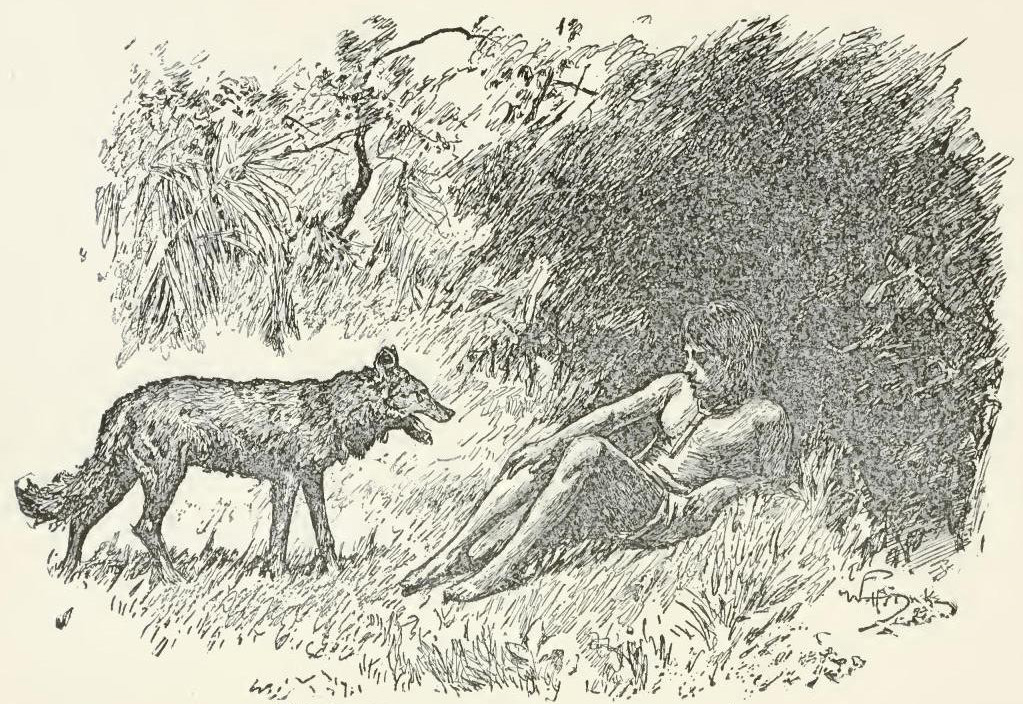
“Are all well in the jungle?” said Mowgli, hugging him.
“Is everyone in the jungle well?” Mowgli asked, hugging him.
“All except the wolves that were burned with the Red Flower. Now, listen. Shere Khan has gone away to hunt far off till his coat grows again, for he is badly singed. When he returns he swears that he will lay thy bones in the Waingunga.”
“All except the wolves that were burned by the Red Flower. Now, listen. Shere Khan has gone far away to hunt until his coat grows back. He is badly burned. When he returns, he swears he will leave your bones in the Waingunga.”
“There are two words to that. I also have made a little promise. But news is always good. I am tired to-night,—very tired with new things, Gray Brother,—but bring me the news always.”
“There is another side to that. I have made a little promise too. But news is always good. I am tired tonight, Gray Brother, very tired from all the new things. But always bring me the news.”
“Thou wilt not forget that thou art a wolf? Men will not make thee forget?” said Gray Brother anxiously.
“You won’t forget that you’re a wolf? Men won’t make you forget?” Gray Brother asked anxiously.
“Never. I will always remember that I love thee and all in our cave. But also I will always remember that I have been cast out of the Pack.”
“Never. I will always remember that I love you and everyone in our cave. But I will also always remember that I was cast out of the Pack.”
“And that thou mayest be cast out of another pack. Men are only men, Little Brother, and their talk is like the talk of frogs in a pond. When I come down here again, I will wait for thee in the bamboos at the edge of the grazing-ground.”
“And that you may be cast out of another pack. Men are only men, Little Brother, and their talk is like the talk of frogs in a pond. When I come down here again, I will wait for you in the bamboo at the edge of the grazing ground.”
For three months after that night Mowgli hardly ever left the village gate, he was so busy learning the ways and customs of men. First he had to wear a cloth round him, which annoyed him horribly; and then he had to learn about money, which he did not in the least understand, and about plowing, of which he did not see the use. Then the little children in the village made him very angry. Luckily, the Law of the Jungle had taught him to keep his temper, for in the jungle life and food depend on keeping your temper; but when they made fun of him because he would not play games or fly kites, or because he mispronounced some word, only the knowledge that it was unsportsmanlike to kill little naked cubs kept him from picking them up and breaking them in two.
For three months after that night, Mowgli hardly ever left the village gate. He was so busy learning the ways and customs of people. First, he had to wear a cloth around himself, which annoyed him terribly. Then he had to learn about money, which he did not understand at all. He also had to learn about plowing, though he could not see any use for it. The village children made him very angry, too. Luckily, the Law of the Jungle had taught him to control his temper. In the jungle, life and food depend on keeping your temper. The children made fun of him because he would not play games or fly kites, or because he mispronounced a word. But he knew it was unsporting to kill little naked cubs. Only that knowledge kept him from picking them up and breaking them in two.
He did not know his own strength in the least. In the jungle he knew he was weak compared with the beasts, but in the village people said that he was as strong as a bull.
He had no idea how strong he was. In the jungle, he knew he was weak compared with the animals. But in the village, people said he was as strong as a bull.
And Mowgli had not the faintest idea of the difference that caste makes between man and man. When the potter’s donkey slipped in the clay pit, Mowgli hauled it out by the tail, and helped to stack the pots for their journey to the market at Khanhiwara. That was very shocking, too, for the potter is a low-caste man, and his donkey is worse. When the priest scolded him, Mowgli threatened to put him on the donkey too, and the priest told Messua’s husband that Mowgli had better be set to work as soon as possible; and the village head-man told Mowgli that he would have to go out with the buffaloes next day, and herd them while they grazed. No one was more pleased than Mowgli; and that night, because he had been appointed a servant of the village, as it were, he went off to a circle that met every evening on a masonry platform under a great fig-tree. It was the village club, and the head-man and the watchman and the barber, who knew all the gossip of the village, and old Buldeo, the village hunter, who had a Tower musket, met and smoked. The monkeys sat and talked in the upper branches, and there was a hole under the platform where a cobra lived, and he had his little platter of milk every night because he was sacred; and the old men sat around the tree and talked, and pulled at the big huqas (the water-pipes) till far into the night. They told wonderful tales of gods and men and ghosts; and Buldeo told even more wonderful ones of the ways of beasts in the jungle, till the eyes of the children sitting outside the circle bulged out of their heads. Most of the tales were about animals, for the jungle was always at their door. The deer and the wild pig grubbed up their crops, and now and again the tiger carried off a man at twilight, within sight of the village gates.
Mowgli had no idea how caste divided one person from another. When the potter’s donkey slipped in the clay pit, Mowgli pulled it out by the tail. He also helped stack the pots for their journey to the market at Khanhiwara. That was shocking too, because the potter was a low-caste man, and his donkey was even lower. When the priest scolded him, Mowgli threatened to put the priest on the donkey too. The priest told Messua’s husband that Mowgli should be put to work as soon as possible. The village headman told Mowgli he would have to take the buffaloes out the next day and herd them while they grazed. No one was more pleased than Mowgli. That night, because he had, in a way, been appointed a servant of the village, he joined a gathering. The group met every evening on a stone platform under a great fig tree. It was the village club. The headman, the watchman, and the barber, who knew all the village gossip, met there and smoked. Old Buldeo, the village hunter, also joined them. He had a Tower musket. The monkeys sat and talked in the upper branches. A cobra lived in a hole under the platform. Because he was sacred, he received a small dish of milk every night. The old men sat around the tree and talked, smoking the big huqas, or water pipes, until late at night. They told wonderful tales of gods, men, and ghosts. Buldeo told even more wonderful tales about the ways of animals in the jungle. The children sitting outside the circle listened until their eyes bulged. Most of the tales were about animals, because the jungle was always at their door. Deer and wild pigs dug up their crops. Now and then a tiger carried off a man at twilight, within sight of the village gates.
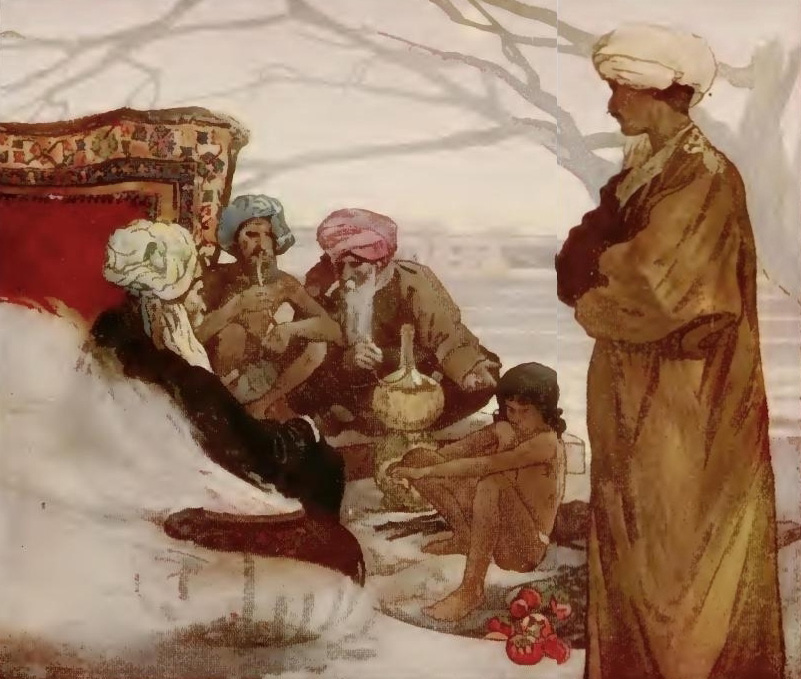
Mowgli, who naturally knew something about what they were talking of, had to cover his face not to show that he was laughing, while Buldeo, the Tower musket across his knees, climbed on from one wonderful story to another, and Mowgli’s shoulders shook.
Mowgli naturally knew something about what they were discussing, so he had to cover his face to hide his laughter. Buldeo had the Tower musket across his knees and went on from one wonderful story to another. Mowgli’s shoulders shook.
Buldeo was explaining how the tiger that had carried away Messua’s son was a ghost-tiger, and his body was inhabited by the ghost of a wicked, old money-lender, who had died some years ago. “And I know that this is true,” he said, “because Purun Dass always limped from the blow that he got in a riot when his account books were burned, and the tiger that I speak of he limps, too, for the tracks of his pads are unequal.”
Buldeo was explaining that the tiger that had carried away Messua’s son was a ghost-tiger. Its body was inhabited by the ghost of a wicked old money-lender who had died some years ago. “And I know this is true,” he said, “because Purun Dass always limped after a blow he received in a riot. His account books were burned in that riot. The tiger I’m talking about limps too, because its paw prints are uneven.”
“True, true, that must be the truth,” said the gray-beards, nodding together.
“True, true, that must be the truth,” said the elders, nodding together.
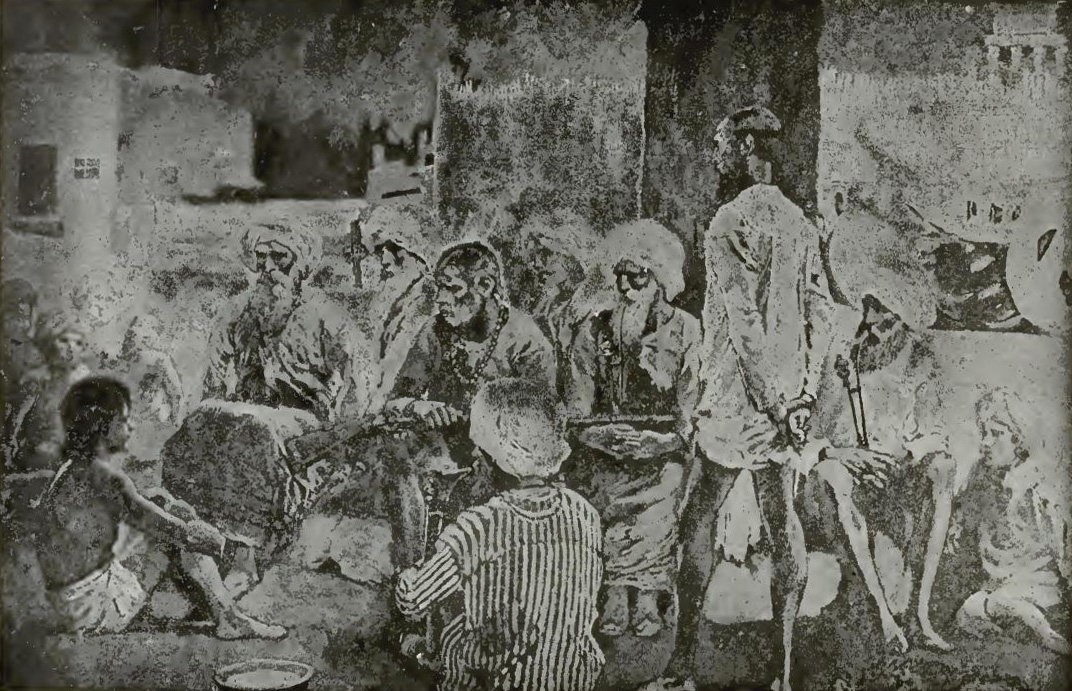
“Are all these tales such cobwebs and moontalk?” said Mowgli. “That tiger limps because he was born lame, as everyone knows. To talk of the soul of a money-lender in a beast that never had the courage of a jackal is child’s talk.”
“Are all these stories such nonsense and moonshine?” said Mowgli. “Everyone knows that tiger limps because he was born lame. Talking about a moneylender’s soul in a beast that never had a jackal’s courage is childish.”
Buldeo was speechless with surprise for a moment, and the head-man stared.
Buldeo was too surprised to speak for a moment, and the village chief stared.
“Oho! It is the jungle brat, is it?” said Buldeo. “If thou art so wise, better bring his hide to Khanhiwara, for the Government has set a hundred rupees on his life. Better still, talk not when thy elders speak.”
“Oh, it’s the jungle brat, is it?” said Buldeo. “If you’re so wise, you’d better bring his hide to Khanhiwara. The government has offered a hundred rupees for his life. Better still, don’t talk when your elders are speaking.”
Mowgli rose to go. “All the evening I have lain here listening,” he called back over his shoulder, “and, except once or twice, Buldeo has not said one word of truth concerning the jungle, which is at his very doors. How, then, shall I believe the tales of ghosts and gods and goblins which he says he has seen?”
Mowgli stood up to leave. “I’ve lain here listening all evening,” he called back over his shoulder. “Except once or twice, Buldeo hasn’t said a single true word about the jungle, right outside his door. So how can I believe his stories about ghosts, gods, and goblins he says he has seen?”
“It is full time that boy went to herding,” said the head-man, while Buldeo puffed and snorted at Mowgli’s impertinence.
“It’s high time that boy started herding,” said the village headman, while Buldeo puffed and snorted at Mowgli’s rudeness.
The custom of most Indian villages is for a few boys to take the cattle and buffaloes out to graze in the early morning, and bring them back at night. The very cattle that would trample a white man to death allow themselves to be banged and bullied and shouted at by children that hardly come up to their noses. So long as the boys keep with the herds they are safe, for not even the tiger will charge a mob of cattle. But if they straggle to pick flowers or hunt lizards, they are sometimes carried off. Mowgli went through the village street in the dawn, sitting on the back of Rama, the great herd bull. The slaty-blue buffaloes, with their long, backward-sweeping horns and savage eyes, rose out their byres, one by one, and followed him, and Mowgli made it very clear to the children with him that he was the master. He beat the buffaloes with a long, polished bamboo, and told Kamya, one of the boys, to graze the cattle by themselves, while he went on with the buffaloes, and to be very careful not to stray away from the herd.
In most Indian villages, a few boys take the cattle and buffaloes out to graze early in the morning. They bring the animals back at night. The same cattle that would trample a white man to death let children hit, bully, and shout at them. The children barely reach the animals’ noses. As long as the boys stay with the herds, they are safe, because not even a tiger will attack a mob of cattle. But if the boys wander off to pick flowers or hunt lizards, they are sometimes carried off. At dawn, Mowgli went through the village street on the back of Rama, the great herd bull. The slate-blue buffaloes rose from their sheds one by one and followed him. They had long horns that swept backward and fierce eyes. Mowgli made it very clear to the children with him that he was in charge. He beat the buffaloes with a long, polished bamboo stick. He told Kamya, one of the boys, to graze the cattle separately while he went on with the buffaloes. He also told Kamya to be very careful not to stray from the herd.
An Indian grazing ground is all rocks and scrub and tussocks and little ravines, among which the herds scatter and disappear. The buffaloes generally keep to the pools and muddy places, where they lie wallowing or basking in the warm mud for hours. Mowgli drove them on to the edge of the plain where the Waingunga came out of the jungle; then he dropped from Rama’s neck, trotted off to a bamboo clump, and found Gray Brother. “Ah,” said Gray Brother, “I have waited here very many days. What is the meaning of this cattle-herding work?”
An Indian grazing ground is all rocks, scrub, grass clumps, and small ravines. The herds scatter and disappear among them. The buffaloes usually stay near pools and muddy places. There they spend hours rolling or basking in the warm mud. Mowgli drove them to the edge of the plain, where the Waingunga came out of the jungle. Then he slid off Rama’s neck, trotted over to a clump of bamboo, and found Gray Brother. “Ah,” said Gray Brother, “I have waited here for many days. What is this cattle-herding work all about?”
“It is an order,” said Mowgli. “I am a village herd for a while. What news of Shere Khan?”
“It’s an order,” said Mowgli. “I’m a village herdsman for a while. Any news of Shere Khan?”
“He has come back to this country, and has waited here a long time for thee. Now he has gone off again, for the game is scarce. But he means to kill thee.”
“He has come back to this country and has waited here a long time for you. Now he has gone away again because there are few animals to hunt. But he means to kill you.”
“Very good,” said Mowgli. “So long as he is away do thou or one of the four brothers sit on that rock, so that I can see thee as I come out of the village. When he comes back wait for me in the ravine by the dhâk tree in the center of the plain. We need not walk into Shere Khan’s mouth.”
“Very good,” said Mowgli. “As long as he is away, you or one of the four brothers should sit on that rock. That way, I can see you as I come out of the village. When he comes back, wait for me in the ravine by the dhâk tree in the center of the plain. We need not walk into Shere Khan’s mouth.”
Then Mowgli picked out a shady place, and lay down and slept while the buffaloes grazed round him. Herding in India is one of the laziest things in the world. The cattle move and crunch, and lie down, and move on again, and they do not even low. They only grunt, and the buffaloes very seldom say anything, but get down into the muddy pools one after another, and work their way into the mud till only their noses and staring china-blue eyes show above the surface, and then they lie like logs. The sun makes the rocks dance in the heat, and the herd children hear one kite (never any more) whistling almost out of sight overhead, and they know that if they died, or a cow died, that kite would sweep down, and the next kite miles away would see him drop and follow, and the next, and the next, and almost before they were dead there would be a score of hungry kites come out of nowhere. Then they sleep and wake and sleep again, and weave little baskets of dried grass and put grasshoppers in them; or catch two praying mantises and make them fight; or string a necklace of red and black jungle nuts; or watch a lizard basking on a rock, or a snake hunting a frog near the wallows. Then they sing long, long songs with odd native quavers at the end of them, and the day seems longer than most people’s whole lives, and perhaps they make a mud castle with mud figures of men and horses and buffaloes, and put reeds into the men’s hands, and pretend that they are kings and the figures are their armies, or that they are gods to be worshiped. Then evening comes and the children call, and the buffaloes lumber up out of the sticky mud with noises like gunshots going off one after the other, and they all string across the gray plain back to the twinkling village lights.
Then Mowgli chose a shady spot, lay down, and slept while the buffaloes grazed around him. Herding cattle in India is one of the laziest activities in the world. The cattle move about and crunch grass, lie down, and move on again. They do not even moo. They only grunt, and the buffaloes rarely make any sound at all. Instead, the buffaloes enter the muddy pools one after another. They work their way into the mud until only their noses and staring, china-blue eyes show above the surface. Then they lie like logs. The sun makes the rocks seem to dance in the heat. The children tending the herd hear one kite whistling overhead, almost out of sight. There is never more than one. They know that if they or a cow died, that kite would swoop down. The next kite, miles away, would see it drop and follow, and then the next, and the next. Almost before the children or the cow were dead, twenty hungry kites would appear out of nowhere. Then the children sleep and wake and sleep again. They weave little baskets from dried grass and put grasshoppers in them. Or they catch two praying mantises and make them fight. They string necklaces of red and black jungle nuts. They watch a lizard basking on a rock, or a snake hunting a frog near the muddy pools. Then they sing long, long songs with unusual local trills at the end. The day seems longer than most people's whole lives. Perhaps they make a mud castle with mud figures of men, horses, and buffaloes. They put reeds in the men's hands and pretend they are kings and the figures are their armies. Or they pretend they are gods to be worshiped. Then evening comes, and the children call. The buffaloes heave themselves out of the sticky mud, making noises like gunshots going off one after another. They all make their way across the gray plain, back to the twinkling village lights.
Day after day Mowgli would lead the buffaloes out to their wallows, and day after day he would see Gray Brother’s back a mile and a half away across the plain (so he knew that Shere Khan had not come back), and day after day he would lie on the grass listening to the noises round him, and dreaming of old days in the jungle. If Shere Khan had made a false step with his lame paw up in the jungles by the Waingunga, Mowgli would have heard him in those long, still mornings.
Day after day, Mowgli led the buffaloes out to their wallows. And day after day, he saw Gray Brother’s back a mile and a half away across the plain. So he knew that Shere Khan had not come back. Day after day, Mowgli lay on the grass, listening to the sounds around him and dreaming of old days in the jungle. If Shere Khan had taken a wrong step with his lame paw in the jungles by the Waingunga, Mowgli would have heard him during those long, quiet mornings.
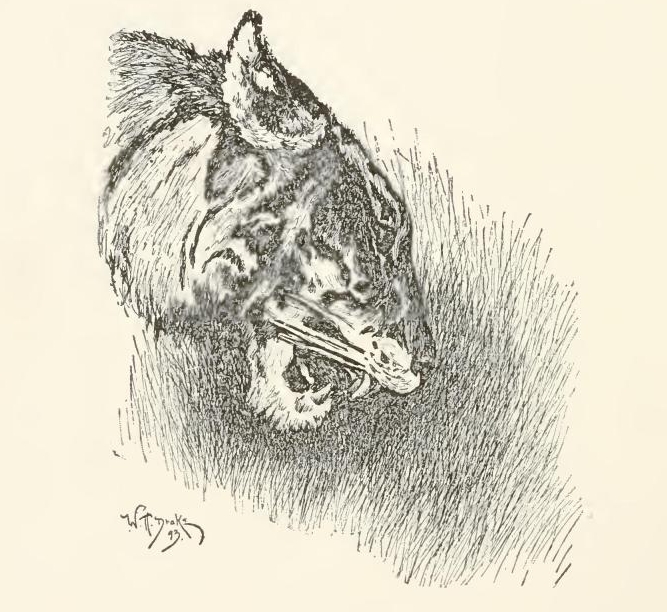
At last a day came when he did not see Gray Brother at the signal place, and he laughed and headed the buffaloes for the ravine by the dhk tree, which was all covered with golden-red flowers. There sat Gray Brother, every bristle on his back lifted.
At last, a day came when he did not see Gray Brother at the signal place. He laughed and led the buffaloes toward the ravine by the dhk tree. The tree was covered with golden-red flowers. Gray Brother sat there, with every bristle on his back raised.
“He has hidden for a month to throw thee off thy guard. He crossed the ranges last night with Tabaqui, hot-foot on thy trail,” said the Wolf, panting.
“He has hidden for a month to catch you off guard. He crossed the ranges last night with Tabaqui, close on your trail,” said the Wolf, panting.
Mowgli frowned. “I am not afraid of Shere Khan, but Tabaqui is very cunning.”
Mowgli frowned. “I’m not afraid of Shere Khan, but Tabaqui is very sneaky.”
“Have no fear,” said Gray Brother, licking his lips a little. “I met Tabaqui in the dawn. Now he is telling all his wisdom to the kites, but he told me everything before I broke his back. Shere Khan’s plan is to wait for thee at the village gate this evening—for thee and for no one else. He is lying up now, in the big dry ravine of the Waingunga.”
“Don’t be afraid,” said Gray Brother, licking his lips a little. “I met Tabaqui at dawn. Now he’s telling all his wisdom to the kites, but he told me everything before I broke his back. Shere Khan plans to wait for you at the village gate this evening. He’s waiting for you and no one else. Right now, he’s hiding in the big dry ravine of the Waingunga.”
“Has he eaten today, or does he hunt empty?” said Mowgli, for the answer meant life and death to him.
“Has he eaten today, or is he hunting on an empty stomach?” Mowgli asked, because the answer meant life or death for him.
“He killed at dawn,—a pig,—and he has drunk too. Remember, Shere Khan could never fast, even for the sake of revenge.”
“He killed a pig at dawn, and he has drunk too. Remember, Shere Khan could never go without food, even for revenge.”
“Oh! Fool, fool! What a cub’s cub it is! Eaten and drunk too, and he thinks that I shall wait till he has slept! Now, where does he lie up? If there were but ten of us we might pull him down as he lies. These buffaloes will not charge unless they wind him, and I cannot speak their language. Can we get behind his track so that they may smell it?”
“Oh! Fool, fool! What a baby of a cub he is! He has eaten and drunk, and he thinks I’ll wait until he has slept! Now, where is he resting? If there were only ten of us, we might bring him down while he lies there. These buffaloes won’t charge unless they smell him, and I can’t speak their language. Can we get behind his trail so they can smell it?”
“He swam far down the Waingunga to cut that off,” said Gray Brother.
“He swam far down the Waingunga to cut that off,” said Gray Brother.
“Tabaqui told him that, I know. He would never have thought of it alone.” Mowgli stood with his finger in his mouth, thinking. “The big ravine of the Waingunga. That opens out on the plain not half a mile from here. I can take the herd round through the jungle to the head of the ravine and then sweep down—but he would slink out at the foot. We must block that end. Gray Brother, canst thou cut the herd in two for me?”
“Tabaqui told him that, I know. He would never have thought of it on his own.” Mowgli stood with his finger in his mouth, thinking. “The big ravine of the Waingunga. It opens onto the plain less than half a mile from here. I can take the herd through the jungle to the head of the ravine and then sweep down. But he would slip out at the bottom. We must block that end. Gray Brother, can you split the herd in two for me?”
“Not I, perhaps—but I have brought a wise helper.” Gray Brother trotted off and dropped into a hole. Then there lifted up a huge gray head that Mowgli knew well, and the hot air was filled with the most desolate cry of all the jungle—the hunting howl of a wolf at midday.
“Perhaps not me, but I have brought a wise helper.” Gray Brother trotted off and dropped into a hole. Then a huge gray head rose up. Mowgli knew it well. The hot air filled with the most desolate cry in all the jungle: a wolf’s hunting howl at midday.
“Akela! Akela!” said Mowgli, clapping his hands. “I might have known that thou wouldst not forget me. We have a big work in hand. Cut the herd in two, Akela. Keep the cows and calves together, and the bulls and the plow buffaloes by themselves.”
“Akela! Akela!” said Mowgli, clapping his hands. “I should have known you wouldn't forget me. We have a big job to do. Split the herd in two, Akela. Keep the cows and calves together, and keep the bulls and the plow buffaloes apart from them.”
The two wolves ran, ladies’-chain fashion, in and out of the herd, which snorted and threw up its head, and separated into two clumps. In one, the cow-buffaloes stood with their calves in the center, and glared and pawed, ready, if a wolf would only stay still, to charge down and trample the life out of him. In the other, the bulls and the young bulls snorted and stamped, but though they looked more imposing they were much less dangerous, for they had no calves to protect. No six men could have divided the herd so neatly.
The two wolves ran in and out of the herd like dancers weaving past one another. The buffaloes snorted, tossed their heads, and split into two groups. In one group, the cows stood with their calves in the center. They glared and pawed the ground, ready to charge and trample a wolf to death if one would only stay still. In the other group, the bulls and young bulls snorted and stamped. Though they looked more impressive, they were much less dangerous because they had no calves to protect. Not even six men could have divided the herd so neatly.
“What orders!” panted Akela. “They are trying to join again.”
“What orders!” Akela panted. “They are trying to join up again.”
Mowgli slipped on to Rama’s back. “Drive the bulls away to the left, Akela. Gray Brother, when we are gone, hold the cows together, and drive them into the foot of the ravine.”
Mowgli climbed onto Rama’s back. “Drive the bulls to the left, Akela. Gray Brother, when we’re gone, keep the cows together and drive them to the bottom of the ravine.”
“How far?” said Gray Brother, panting and snapping.
“How far?” said Gray Brother, panting and snapping.
“Till the sides are higher than Shere Khan can jump,” shouted Mowgli. “Keep them there till we come down.” The bulls swept off as Akela bayed, and Gray Brother stopped in front of the cows. They charged down on him, and he ran just before them to the foot of the ravine, as Akela drove the bulls far to the left.
“Until the sides are too high for Shere Khan to jump over,” shouted Mowgli. “Keep them there until we come down.” As Akela howled, the bulls swept away, and Gray Brother stopped in front of the cows. The cows charged at him, and he ran just ahead of them to the foot of the ravine. Meanwhile, Akela drove the bulls far to the left.
“Well done! Another charge and they are fairly started. Careful, now—careful, Akela. A snap too much and the bulls will charge. Hujah! This is wilder work than driving black-buck. Didst thou think these creatures could move so swiftly?” Mowgli called.
“Well done! One more charge and they will be properly moving. Careful now, Akela. One snap too many and the bulls will charge. Hujah! This is wilder work than driving blackbuck. Did you think these creatures could move so fast?” Mowgli called.
“I have—have hunted these too in my time,” gasped Akela in the dust. “Shall I turn them into the jungle?”
“I have, have hunted these too in my time,” Akela gasped in the dust. “Should I drive them into the jungle?”
“Ay! Turn. Swiftly turn them! Rama is mad with rage. Oh, if I could only tell him what I need of him to-day.”
“Yes! Turn. Turn them quickly! Rama is furious. Oh, if only I could tell him what I need him to do today.”
The bulls were turned, to the right this time, and crashed into the standing thicket. The other herd children, watching with the cattle half a mile away, hurried to the village as fast as their legs could carry them, crying that the buffaloes had gone mad and run away.
The bulls were turned to the right this time and crashed into the thick bushes. The other children were watching the cattle half a mile away. They ran to the village as fast as they could, crying that the buffaloes had gone mad and run away.
But Mowgli’s plan was simple enough. All he wanted to do was to make a big circle uphill and get at the head of the ravine, and then take the bulls down it and catch Shere Khan between the bulls and the cows; for he knew that after a meal and a full drink Shere Khan would not be in any condition to fight or to clamber up the sides of the ravine. He was soothing the buffaloes now by voice, and Akela had dropped far to the rear, only whimpering once or twice to hurry the rear-guard. It was a long, long circle, for they did not wish to get too near the ravine and give Shere Khan warning. At last Mowgli rounded up the bewildered herd at the head of the ravine on a grassy patch that sloped steeply down to the ravine itself. From that height you could see across the tops of the trees down to the plain below; but what Mowgli looked at was the sides of the ravine, and he saw with a great deal of satisfaction that they ran nearly straight up and down, while the vines and creepers that hung over them would give no foothold to a tiger who wanted to get out.
But Mowgli’s plan was simple enough. All he wanted was to make a wide circle uphill and reach the head of the ravine. Then he would drive the bulls down it and trap Shere Khan between the bulls and the cows. Mowgli knew that after eating and drinking his fill, Shere Khan would be in no condition to fight or climb the ravine’s sides. Mowgli was now calming the buffaloes with his voice. Akela had fallen far behind, whimpering only once or twice to hurry the animals at the rear. It was a long, long circle, because they did not want to get too close to the ravine and alert Shere Khan. At last Mowgli gathered the bewildered herd at the head of the ravine. They stood on a grassy patch that sloped steeply down to the ravine itself. From that height, you could see over the treetops to the plain below. But Mowgli was looking at the sides of the ravine. He was very pleased to see that they were almost vertical. The vines and creepers hanging over them would give no foothold to a tiger trying to escape.
“Let them breathe, Akela,” he said, holding up his hand. “They have not winded him yet. Let them breathe. I must tell Shere Khan who comes. We have him in the trap.”
“Let them catch their breath, Akela,” he said, raising his hand. “They haven’t caught his scent yet. Let them catch their breath. I must tell Shere Khan who is coming. We have him trapped.”
He put his hands to his mouth and shouted down the ravine—it was almost like shouting down a tunnel—and the echoes jumped from rock to rock.
He cupped his hands around his mouth and shouted down the ravine. It was almost like shouting down a tunnel. The echoes jumped from rock to rock.
After a long time there came back the drawling, sleepy snarl of a full-fed tiger just wakened.
After a long time, the slow, sleepy snarl of a tiger came back. The tiger had eaten its fill and had just woken up.
“Who calls?” said Shere Khan, and a splendid peacock fluttered up out of the ravine screeching.
“Who is calling?” said Shere Khan, and a magnificent peacock fluttered out of the ravine, screeching.
“I, Mowgli. Cattle thief, it is time to come to the Council Rock! Down—hurry them down, Akela! Down, Rama, down!”
“I am Mowgli. Cattle thief, it is time to come to the Council Rock! Down! Hurry them down, Akela! Down, Rama, down!”
The herd paused for an instant at the edge of the slope, but Akela gave tongue in the full hunting-yell, and they pitched over one after the other, just as steamers shoot rapids, the sand and stones spurting up round them. Once started, there was no chance of stopping, and before they were fairly in the bed of the ravine Rama winded Shere Khan and bellowed.
The herd paused for a moment at the edge of the slope. But Akela let out a full hunting yell, and the animals plunged over the edge one after another. They raced down like steamboats shooting through rapids, with sand and stones flying up around them. Once the herd started, there was no chance of stopping. Before they had fully reached the bottom of the ravine, Rama caught Shere Khan's scent and bellowed.
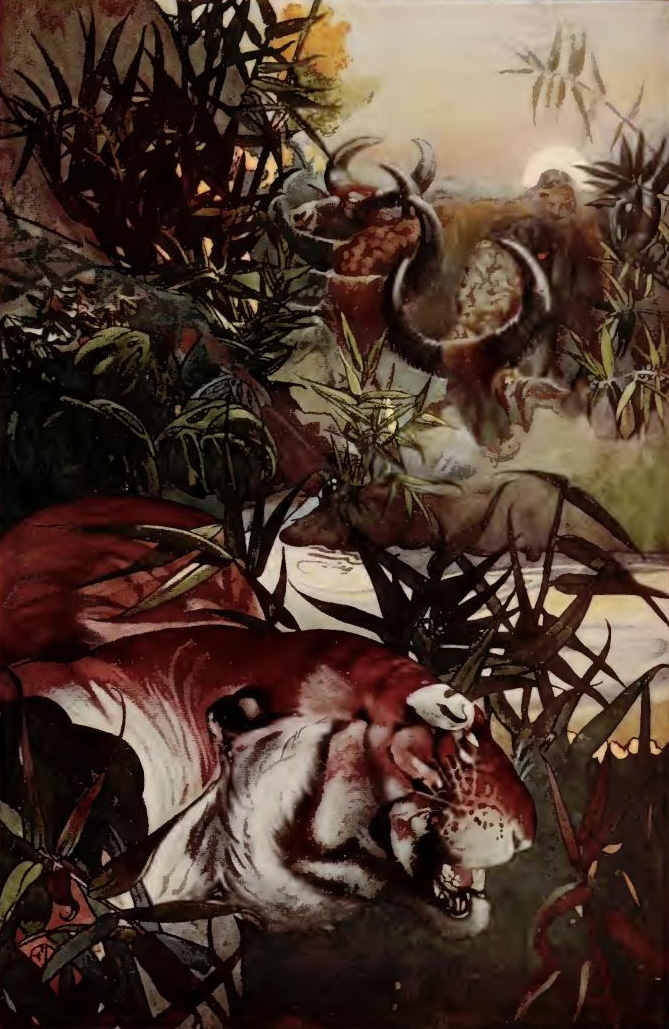
“Ha! Ha!” said Mowgli, on his back. “Now thou knowest!” and the torrent of black horns, foaming muzzles, and staring eyes whirled down the ravine just as boulders go down in floodtime; the weaker buffaloes being shouldered out to the sides of the ravine where they tore through the creepers. They knew what the business was before them—the terrible charge of the buffalo herd against which no tiger can hope to stand. Shere Khan heard the thunder of their hoofs, picked himself up, and lumbered down the ravine, looking from side to side for some way of escape, but the walls of the ravine were straight and he had to hold on, heavy with his dinner and his drink, willing to do anything rather than fight. The herd splashed through the pool he had just left, bellowing till the narrow cut rang. Mowgli heard an answering bellow from the foot of the ravine, saw Shere Khan turn (the tiger knew if the worst came to the worst it was better to meet the bulls than the cows with their calves), and then Rama tripped, stumbled, and went on again over something soft, and, with the bulls at his heels, crashed full into the other herd, while the weaker buffaloes were lifted clean off their feet by the shock of the meeting. That charge carried both herds out into the plain, goring and stamping and snorting. Mowgli watched his time, and slipped off Rama’s neck, laying about him right and left with his stick.
“Ha! Ha!” said Mowgli, riding on Rama’s back. “Now you know!” The torrent of black horns, foaming muzzles, and staring eyes whirled down the ravine like boulders in a flood. The weaker buffaloes were shoved to the sides, where they tore through the creepers. The herd knew what lay ahead: the terrible charge of buffaloes that no tiger can hope to withstand. Shere Khan heard the thunder of their hoofs, picked himself up, and lumbered down the ravine. He looked from side to side for a way out, but the ravine walls were sheer. He had to keep going, heavy with his dinner and drink, willing to do anything rather than fight. The herd splashed through the pool Shere Khan had just left, bellowing until the narrow ravine rang. Mowgli heard an answering bellow from the foot of the ravine and saw Shere Khan turn. The tiger knew that, if the worst came to the worst, it was better to face the bulls than the cows with their calves. Then Rama tripped and stumbled over something soft, but kept going. With the bulls at his heels, he crashed straight into the other herd. The shock of the collision lifted the weaker buffaloes clean off their feet. The charge carried both herds out onto the plain, goring, stamping, and snorting. Mowgli waited for the right moment, then slipped off Rama’s neck, swinging his stick to the right and left.
“Quick, Akela! Break them up. Scatter them, or they will be fighting one another. Drive them away, Akela. Hai, Rama! Hai, hai, hai! my children. Softly now, softly! It is all over.”
“Quick, Akela! Break them up. Scatter them, or they will fight each other. Drive them away, Akela. Hai, Rama! Hai, hai, hai! My children. Easy now, easy! It is all over.”
Akela and Gray Brother ran to and fro nipping the buffaloes’ legs, and though the herd wheeled once to charge up the ravine again, Mowgli managed to turn Rama, and the others followed him to the wallows.
Akela and Gray Brother ran back and forth, nipping at the buffaloes’ legs. The herd turned once to charge back up the ravine, but Mowgli managed to turn Rama around. The other buffaloes followed Rama to the wallows.
Shere Khan needed no more trampling. He was dead, and the kites were coming for him already.
Shere Khan needed no more trampling. He was dead, and the kites were already coming for him.
“Brothers, that was a dog’s death,” said Mowgli, feeling for the knife he always carried in a sheath round his neck now that he lived with men. “But he would never have shown fight. His hide will look well on the Council Rock. We must get to work swiftly.”
“Brothers, he died like a dog,” said Mowgli, feeling for his knife. Now that he lived with men, he always carried it in a sheath around his neck. “But he would never have fought back. His hide will look good on the Council Rock. We must work quickly.”
A boy trained among men would never have dreamed of skinning a ten-foot tiger alone, but Mowgli knew better than anyone else how an animal’s skin is fitted on, and how it can be taken off. But it was hard work, and Mowgli slashed and tore and grunted for an hour, while the wolves lolled out their tongues, or came forward and tugged as he ordered them. Presently a hand fell on his shoulder, and looking up he saw Buldeo with the Tower musket. The children had told the village about the buffalo stampede, and Buldeo went out angrily, only too anxious to correct Mowgli for not taking better care of the herd. The wolves dropped out of sight as soon as they saw the man coming.
A boy raised among people would never have thought of skinning a ten-foot tiger alone. But Mowgli knew better than anyone how an animal’s skin is attached and how to remove it. It was hard work, though. Mowgli cut, tore, and grunted for an hour. The wolves lay with their tongues hanging out, or came forward and pulled as he told them to. Soon, a hand landed on his shoulder. Mowgli looked up and saw Buldeo holding the Tower musket. The children had told the village about the buffalo stampede. Buldeo had gone out in anger, eager to scold Mowgli for not taking better care of the herd. The wolves had disappeared from sight as soon as they saw Buldeo coming.
“What is this folly?” said Buldeo angrily. “To think that thou canst skin a tiger! Where did the buffaloes kill him? It is the Lame Tiger too, and there is a hundred rupees on his head. Well, well, we will overlook thy letting the herd run off, and perhaps I will give thee one of the rupees of the reward when I have taken the skin to Khanhiwara.” He fumbled in his waist cloth for flint and steel, and stooped down to singe Shere Khan’s whiskers. Most native hunters always singe a tiger’s whiskers to prevent his ghost from haunting them.
“What nonsense is this?” Buldeo said angrily. “To think you can skin a tiger! Where did the buffaloes kill him? It is the Lame Tiger too, and there is a reward of a hundred rupees for him. Well, well, we will overlook your letting the herd run off. Perhaps I will give you one rupee of the reward after I take the skin to Khanhiwara.” He fumbled in his waist cloth for flint and steel, then bent down to singe Shere Khan’s whiskers. Most local hunters always singe a tiger’s whiskers to prevent his ghost from haunting them.
“Hum!” said Mowgli, half to himself as he ripped back the skin of a forepaw. “So thou wilt take the hide to Khanhiwara for the reward, and perhaps give me one rupee? Now it is in my mind that I need the skin for my own use. Heh! Old man, take away that fire!”
“Hmm!” said Mowgli, half to himself, as he pulled back the skin from a front paw. “So you’ll take the hide to Khanhiwara for the reward, and perhaps give me one rupee? Well, I think I need the skin for my own use. Hey! Old man, take away that fire!”
“What talk is this to the chief hunter of the village? Thy luck and the stupidity of thy buffaloes have helped thee to this kill. The tiger has just fed, or he would have gone twenty miles by this time. Thou canst not even skin him properly, little beggar brat, and forsooth I, Buldeo, must be told not to singe his whiskers. Mowgli, I will not give thee one anna of the reward, but only a very big beating. Leave the carcass!”
“How dare you speak like that to the village’s chief hunter? Your luck and the stupidity of your buffaloes helped you make this kill. The tiger has just eaten, or he would have gone twenty miles by now. You can’t even skin him properly, you little beggar brat. And yet I, Buldeo, must be told not to singe his whiskers. Mowgli, I won’t give you one anna of the reward. I’ll give you a very big beating instead. Leave the carcass!”
“By the Bull that bought me,” said Mowgli, who was trying to get at the shoulder, “must I stay babbling to an old ape all noon? Here, Akela, this man plagues me.”
“By the Bull that bought me,” said Mowgli, who was trying to reach the shoulder, “must I keep talking to an old ape all noon? Here, Akela, this man is bothering me.”
Buldeo, who was still stooping over Shere Khan’s head, found himself sprawling on the grass, with a gray wolf standing over him, while Mowgli went on skinning as though he were alone in all India.
Buldeo was still bent over Shere Khan’s head when he found himself sprawled on the grass. A gray wolf stood over him, while Mowgli kept skinning as if he were alone in all India.
“Ye-es,” he said, between his teeth. “Thou art altogether right, Buldeo. Thou wilt never give me one anna of the reward. There is an old war between this lame tiger and myself—a very old war, and—I have won.”
“Y-yes,” he said through clenched teeth. “You’re absolutely right, Buldeo. You’ll never give me one anna of the reward. There’s an old war between this lame tiger and me, a very old war, and I’ve won.”
To do Buldeo justice, if he had been ten years younger he would have taken his chance with Akela had he met the wolf in the woods, but a wolf who obeyed the orders of this boy who had private wars with man-eating tigers was not a common animal. It was sorcery, magic of the worst kind, thought Buldeo, and he wondered whether the amulet round his neck would protect him. He lay as still as still, expecting every minute to see Mowgli turn into a tiger too.
To be fair to Buldeo, if he had been ten years younger, he would have risked facing Akela in the woods. But a wolf who obeyed a boy who fought his own wars with man-eating tigers was no ordinary animal. Buldeo thought it was sorcery, magic of the worst kind. He wondered whether the amulet around his neck would protect him. He lay perfectly still, expecting Mowgli to turn into a tiger at any moment.
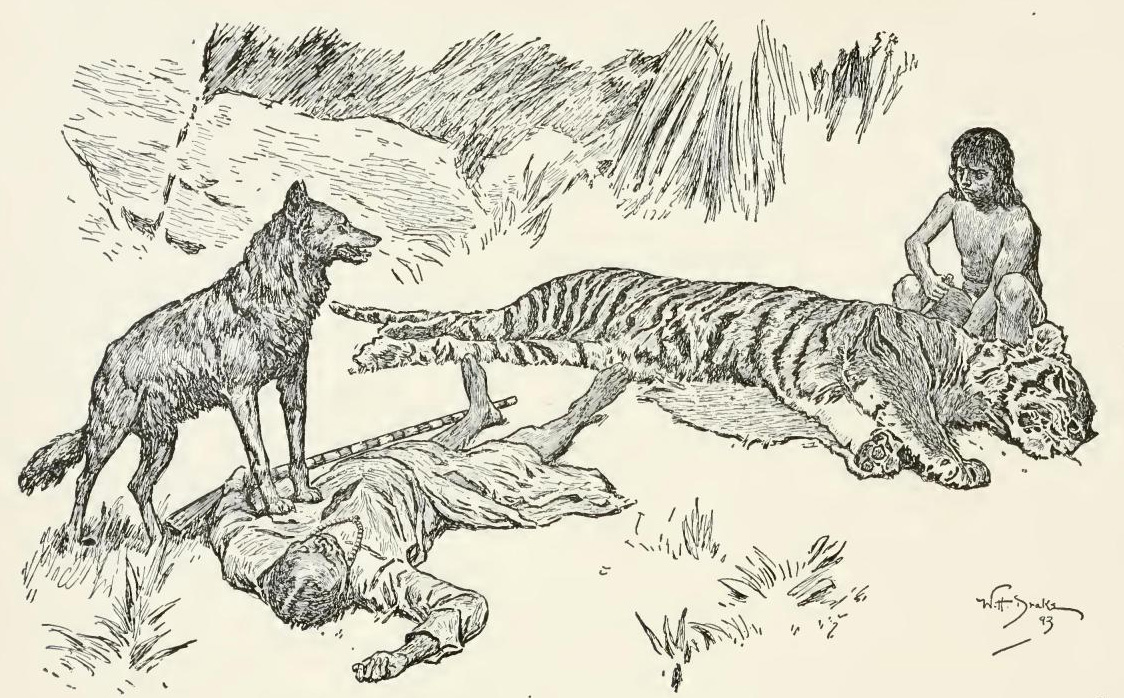
“Maharaj! Great King,” he said at last in a husky whisper.
“Maharaj! Great King,” he finally said in a husky whisper.
“Yes,” said Mowgli, without turning his head, chuckling a little.
“Yes,” said Mowgli, chuckling softly without turning his head.
“I am an old man. I did not know that thou wast anything more than a herdsboy. May I rise up and go away, or will thy servant tear me to pieces?”
“I am an old man. I did not know you were anything more than a herdboy. May I get up and leave, or will your servant tear me to pieces?”
“Go, and peace go with thee. Only, another time do not meddle with my game. Let him go, Akela.”
“Go, and may peace go with you. But next time, do not interfere with my hunt. Let him go, Akela.”
Buldeo hobbled away to the village as fast as he could, looking back over his shoulder in case Mowgli should change into something terrible. When he got to the village he told a tale of magic and enchantment and sorcery that made the priest look very grave.
Buldeo hobbled back to the village as fast as he could. He kept looking over his shoulder in case Mowgli turned into something terrible. When Buldeo reached the village, he told a story of magic, enchantment, and sorcery. The story made the priest look very serious.
Mowgli went on with his work, but it was nearly twilight before he and the wolves had drawn the great gay skin clear of the body.
Mowgli kept working. But it was nearly twilight before he and the wolves had pulled the large, brightly patterned skin off the body.
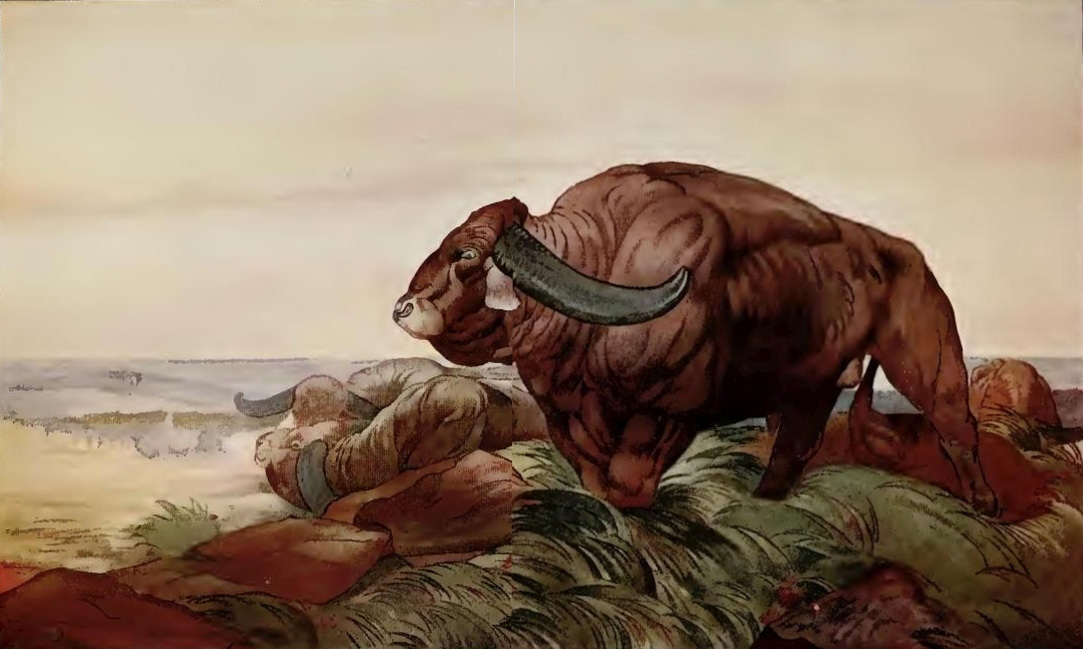
“Now we must hide this and take the buffaloes home! Help me to herd them, Akela.”
“Now we need to hide this and take the buffaloes home! Help me herd them, Akela.”
The herd rounded up in the misty twilight, and when they got near the village Mowgli saw lights, and heard the conches and bells in the temple blowing and banging. Half the village seemed to be waiting for him by the gate. “That is because I have killed Shere Khan,” he said to himself. But a shower of stones whistled about his ears, and the villagers shouted: “Sorcerer! Wolf’s brat! Jungle demon! Go away! Get hence quickly or the priest will turn thee into a wolf again. Shoot, Buldeo, shoot!”
The herd gathered in the misty twilight. As they neared the village, Mowgli saw lights and heard conches blowing and bells clanging in the temple. Half the village seemed to be waiting for him at the gate. “That’s because I killed Shere Khan,” he said to himself. But a shower of stones whistled past his ears, and the villagers shouted: “Sorcerer! Wolf’s brat! Jungle demon! Go away! Leave quickly or the priest will turn you into a wolf again. Shoot, Buldeo, shoot!”
The old Tower musket went off with a bang, and a young buffalo bellowed in pain.
The old Tower musket fired with a bang, and a young buffalo bellowed in pain.
“More sorcery!” shouted the villagers. “He can turn bullets. Buldeo, that was thy buffalo.”
“More magic!” shouted the villagers. “He can deflect bullets. Buldeo, that was your buffalo.”
“Now what is this?” said Mowgli, bewildered, as the stones flew thicker.
“What is this?” Mowgli asked, confused, as more and more stones flew through the air.
“They are not unlike the Pack, these brothers of thine,” said Akela, sitting down composedly. “It is in my head that, if bullets mean anything, they would cast thee out.”
“Your brothers are not unlike the Pack,” said Akela, sitting down calmly. “I think that, if bullets mean anything, they would cast you out.”
“Wolf! Wolf’s cub! Go away!” shouted the priest, waving a sprig of the sacred tulsi plant.
“Wolf! Wolf cub! Go away!” shouted the priest, waving a sprig of the sacred tulsi plant.
“Again? Last time it was because I was a man. This time it is because I am a wolf. Let us go, Akela.”
“Again? Last time it was because I was a man. This time it's because I'm a wolf. Let's go, Akela.”
A woman—it was Messua—ran across to the herd, and cried: “Oh, my son, my son! They say thou art a sorcerer who can turn himself into a beast at will. I do not believe, but go away or they will kill thee. Buldeo says thou art a wizard, but I know thou hast avenged Nathoo’s death.”
A woman ran across to the herd. It was Messua. She cried: “Oh, my son, my son! They say you are a sorcerer who can turn into an animal whenever you want. I don't believe it, but go away or they will kill you. Buldeo says you are a wizard, but I know you have avenged Nathoo's death.”
“Come back, Messua!” shouted the crowd. “Come back, or we will stone thee.”
“Come back, Messua!” shouted the crowd. “Come back, or we will stone you.”
Mowgli laughed a little short ugly laugh, for a stone had hit him in the mouth. “Run back, Messua. This is one of the foolish tales they tell under the big tree at dusk. I have at least paid for thy son’s life. Farewell; and run quickly, for I shall send the herd in more swiftly than their brickbats. I am no wizard, Messua. Farewell!”
Mowgli gave a short, ugly laugh because a stone had hit him in the mouth. “Run back, Messua. This is one of the foolish stories they tell under the big tree at dusk. At least I have paid for your son’s life. Goodbye, and run quickly. I will send the herd in faster than they can throw their stones. I am no wizard, Messua. Goodbye!”
“Now, once more, Akela,” he cried. “Bring the herd in.”
“Now, once more, Akela,” he shouted. “Bring the herd in.”
The buffaloes were anxious enough to get to the village. They hardly needed Akela’s yell, but charged through the gate like a whirlwind, scattering the crowd right and left.
The buffaloes were eager enough to get to the village. They hardly needed Akela’s yell. But they charged through the gate like a whirlwind, scattering the crowd in all directions.
“Keep count!” shouted Mowgli scornfully. “It may be that I have stolen one of them. Keep count, for I will do your herding no more. Fare you well, children of men, and thank Messua that I do not come in with my wolves and hunt you up and down your street.”
“Count them!” Mowgli shouted scornfully. “Perhaps I have stolen one of them. Count them, because I will not herd them for you anymore. Goodbye, children of men. Thank Messua that I do not come in with my wolves and hunt you up and down your street.”
He turned on his heel and walked away with the Lone Wolf, and as he looked up at the stars he felt happy. “No more sleeping in traps for me, Akela. Let us get Shere Khan’s skin and go away. No, we will not hurt the village, for Messua was kind to me.”
He turned and walked away with the Lone Wolf. He looked up at the stars and felt happy. “No more sleeping in traps for me, Akela. Let’s get Shere Khan’s skin and leave. No, we won’t hurt the village, because Messua was kind to me.”
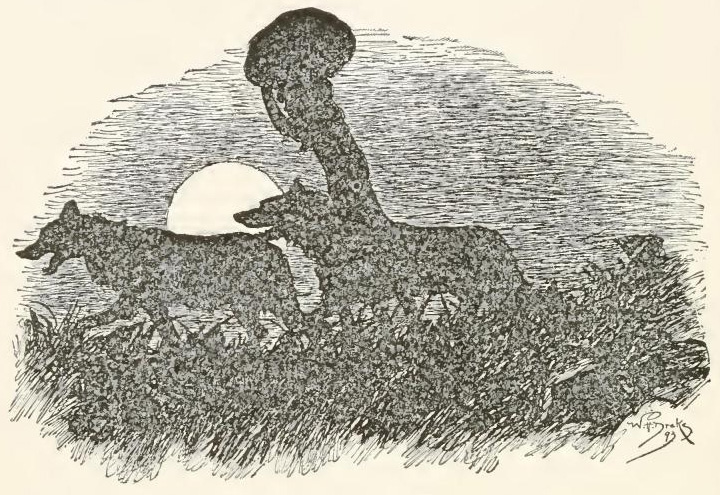
When the moon rose over the plain, making it look all milky, the horrified villagers saw Mowgli, with two wolves at his heels and a bundle on his head, trotting across at the steady wolf’s trot that eats up the long miles like fire. Then they banged the temple bells and blew the conches louder than ever. And Messua cried, and Buldeo embroidered the story of his adventures in the jungle, till he ended by saying that Akela stood up on his hind legs and talked like a man.
When the moon rose over the plain, it made the whole landscape look milky. The horrified villagers saw Mowgli trotting across it, with two wolves at his heels and a bundle on his head. He ran at the steady wolf’s trot that devours long miles like fire. Then the villagers rang the temple bells and blew the conch shells louder than ever. Messua cried, and Buldeo embellished the story of his adventures in the jungle. He ended by saying that Akela stood on his hind legs and talked like a man.
The moon was just going down when Mowgli and the two wolves came to the hill of the Council Rock, and they stopped at Mother Wolf’s cave.
The moon was just setting when Mowgli and the two wolves reached the hill of the Council Rock. They stopped at Mother Wolf’s cave.
“They have cast me out from the Man-Pack, Mother,” shouted Mowgli, “but I come with the hide of Shere Khan to keep my word.”
“The Man-Pack has thrown me out, Mother,” shouted Mowgli. “But I have brought Shere Khan’s hide to keep my promise.”
Mother Wolf walked stiffly from the cave with the cubs behind her, and her eyes glowed as she saw the skin.
Mother Wolf walked stiffly out of the cave, with the cubs behind her. Her eyes glowed when she saw the skin.
“I told him on that day, when he crammed his head and shoulders into this cave, hunting for thy life, Little Frog—I told him that the hunter would be the hunted. It is well done.”
“I told him that day, Little Frog, when he shoved his head and shoulders into this cave to kill you. I told him that the hunter would become the hunted. It is well done.”
“Little Brother, it is well done,” said a deep voice in the thicket. “We were lonely in the jungle without thee,” and Bagheera came running to Mowgli’s bare feet. They clambered up the Council Rock together, and Mowgli spread the skin out on the flat stone where Akela used to sit, and pegged it down with four slivers of bamboo, and Akela lay down upon it, and called the old call to the Council, “Look—look well, O Wolves,” exactly as he had called when Mowgli was first brought there.
“Little Brother, you did well,” said a deep voice in the thicket. “We were lonely in the jungle without you.” Bagheera came running to Mowgli’s bare feet. They climbed up the Council Rock together. Mowgli spread the skin on the flat stone where Akela used to sit. He pegged it down with four slivers of bamboo. Akela lay down on the skin and gave the old call to the Council: “Look, look well, O Wolves.” He called exactly as he had when Mowgli was first brought there.
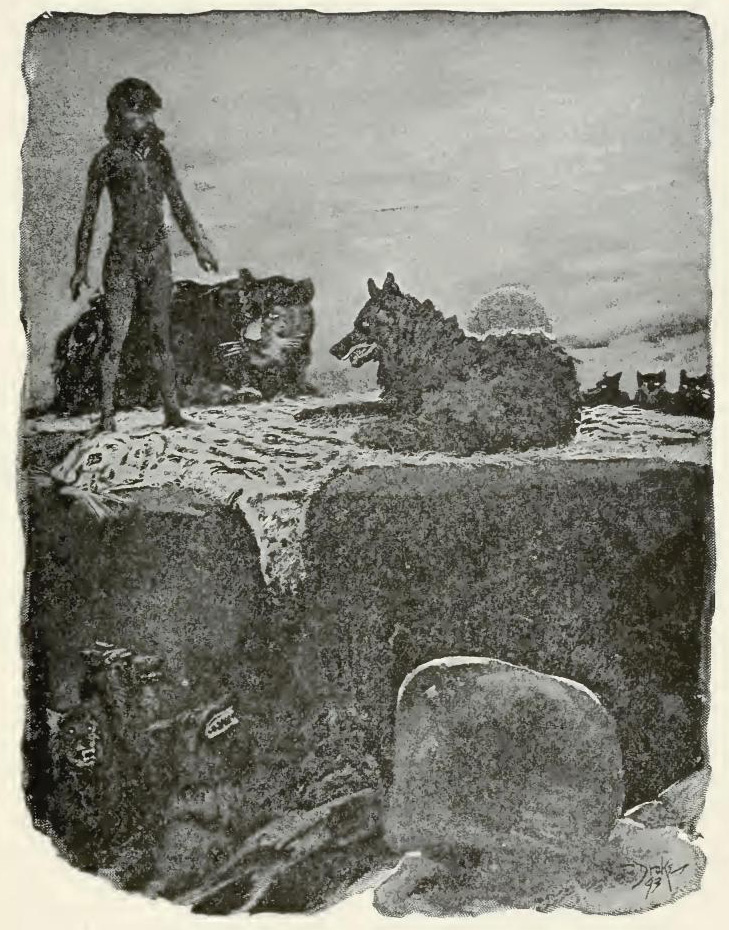
Ever since Akela had been deposed, the Pack had been without a leader, hunting and fighting at their own pleasure. But they answered the call from habit; and some of them were lame from the traps they had fallen into, and some limped from shot wounds, and some were mangy from eating bad food, and many were missing. But they came to the Council Rock, all that were left of them, and saw Shere Khan’s striped hide on the rock, and the huge claws dangling at the end of the empty dangling feet. It was then that Mowgli made up a song that came up into his throat all by itself, and he shouted it aloud, leaping up and down on the rattling skin, and beating time with his heels till he had no more breath left, while Gray Brother and Akela howled between the verses.
Ever since Akela had been removed as leader, the Pack had been leaderless. The wolves hunted and fought as they pleased. But they answered the call out of habit. Some were lame from the traps they had fallen into. Some limped from gunshot wounds, and some had mange from eating bad food. Many were missing. But all the wolves who were left came to the Council Rock. There they saw Shere Khan’s striped hide on the rock, with huge claws hanging from its empty, dangling feet. Then a song rose in Mowgli’s throat all by itself. He shouted it aloud, leaping up and down on the rattling skin and beating time with his heels. He went on until he was out of breath, while Gray Brother and Akela howled between the verses.
“Look well, O Wolves. Have I kept my word?” said Mowgli. And the wolves bayed “Yes,” and one tattered wolf howled:
“Look closely, wolves. Have I kept my word?” said Mowgli. The wolves cried “Yes,” and one ragged wolf howled:
“Lead us again, O Akela. Lead us again, O Man-cub, for we be sick of this lawlessness, and we would be the Free People once more.”
“Lead us again, Akela. Lead us again, Man-cub. We are sick of this lawlessness, and we want to be the Free People once more.”
“Nay,” purred Bagheera, “that may not be. When ye are full-fed, the madness may come upon you again. Not for nothing are ye called the Free People. Ye fought for freedom, and it is yours. Eat it, O Wolves.”
“No,” purred Bagheera, “that cannot be. When you are full, the madness may come over you again. You are not called the Free People for nothing. You fought for freedom, and it is yours. Eat your freedom, O Wolves.”
“Man-Pack and Wolf-Pack have cast me out,” said Mowgli. “Now I will hunt alone in the jungle.”
“Man-Pack and Wolf-Pack have both rejected me,” said Mowgli. “Now I will hunt alone in the jungle.”
“And we will hunt with thee,” said the four cubs.
“And we will hunt with you,” said the four cubs.
So Mowgli went away and hunted with the four cubs in the jungle from that day on. But he was not always alone, because, years afterward, he became a man and married.
So Mowgli went away, and from that day on he hunted in the jungle with the four cubs. But he was not always alone. Years later, he became a man and married.
But that is a story for grown-ups.
But that is a story for grown-ups.
Mowgli’s Song
Mowgli’s Song
THAT HE SANG AT THE COUNCIL ROCK WHEN HE DANCED ON SHERE KHAN’S HIDE
THAT HE SANG AT THE COUNCIL ROCK WHILE DANCING ON SHERE KHAN’S SKIN
The Song of Mowgli—I, Mowgli, am singing. Let the jungle listen to the things I have done. Shere Khan said he would kill—would kill! At the gates in the twilight he would kill Mowgli, the Frog! He ate and he drank. Drink deep, Shere Khan, for when wilt thou drink again? Sleep and dream of the kill. I am alone on the grazing-grounds. Gray Brother, come to me! Come to me, Lone Wolf, for there is big game afoot! Bring up the great bull buffaloes, the blue-skinned herd bulls with the angry eyes. Drive them to and fro as I order. Sleepest thou still, Shere Khan? Wake, oh, wake! Here come I, and the bulls are behind. Rama, the King of the Buffaloes, stamped with his foot. Waters of the Waingunga, whither went Shere Khan? He is not Ikki to dig holes, nor Mao, the Peacock, that he should fly. He is not Mang the Bat, to hang in the branches. Little bamboos that creak together, tell me where he ran? Ow! He is there. Ahoo! He is there. Under the feet of Rama lies the Lame One! Up, Shere Khan! Up and kill! Here is meat; break the necks of the bulls! Hsh! He is asleep. We will not wake him, for his strength is very great. The kites have come down to see it. The black ants have come up to know it. There is a great assembly in his honor. Alala! I have no cloth to wrap me. The kites will see that I am naked. I am ashamed to meet all these people. Lend me thy coat, Shere Khan. Lend me thy gay striped coat that I may go to the Council Rock. By the Bull that bought me I made a promise—a little promise. Only thy coat is lacking before I keep my word. With the knife, with the knife that men use, with the knife of the hunter, I will stoop down for my gift. Waters of the Waingunga, Shere Khan gives me his coat for the love that he bears me. Pull, Gray Brother! Pull, Akela! Heavy is the hide of Shere Khan. The Man Pack are angry. They throw stones and talk child’s talk. My mouth is bleeding. Let me run away. Through the night, through the hot night, run swiftly with me, my brothers. We will leave the lights of the village and go to the low moon. Waters of the Waingunga, the Man-Pack have cast me out. I did them no harm, but they were afraid of me. Why? Wolf Pack, ye have cast me out too. The jungle is shut to me and the village gates are shut. Why? As Mang flies between the beasts and birds, so fly I between the village and the jungle. Why? I dance on the hide of Shere Khan, but my heart is very heavy. My mouth is cut and wounded with the stones from the village, but my heart is very light, because I have come back to the jungle. Why? These two things fight together in me as the snakes fight in the spring. The water comes out of my eyes; yet I laugh while it falls. Why? I am two Mowglis, but the hide of Shere Khan is under my feet. All the jungle knows that I have killed Shere Khan. Look—look well, O Wolves! Ahae! My heart is heavy with the things that I do not understand.
The Song of Mowgli: I, Mowgli, am singing. Let the jungle listen to the things I have done. Shere Khan said he would kill, would kill! At the gates in the twilight he would kill Mowgli, the Frog! He ate and he drank. Drink deep, Shere Khan, for when will you drink again? Sleep and dream of the kill. I am alone on the grazing grounds. Gray Brother, come to me! Come to me, Lone Wolf, for there is big game afoot! Bring up the great bull buffaloes, the blue-skinned herd bulls with angry eyes. Drive them back and forth as I order. Are you still asleep, Shere Khan? Wake, oh, wake! Here I come, and the bulls are behind me. Rama, the King of the Buffaloes, stamped his foot. Waters of the Waingunga, where did Shere Khan go? He is not Ikki, who digs holes. He is not Mao, the Peacock, who can fly. He is not Mang the Bat, who hangs in the branches. Little bamboos that creak together, tell me where he ran. Ow! He is there. Ahoo! He is there. The Lame One lies under Rama’s feet! Get up, Shere Khan! Get up and kill! Here is meat. Break the bulls’ necks! Hsh! He is asleep. We will not wake him, for his strength is very great. The kites have come down to see him. The black ants have come up to find out about him. A great crowd has gathered in his honor. Alala! I have no cloth to wrap around me. The kites will see that I am naked. I am ashamed to meet all these people. Lend me your coat, Shere Khan. Lend me your bright striped coat so I may go to the Council Rock. By the Bull that bought me, I made a promise, a little promise. All I need is your coat to keep my word. With the knife, with the knife that men use, with the hunter’s knife, I will bend down for my gift. Waters of the Waingunga, Shere Khan gives me his coat for the love he bears me. Pull, Gray Brother! Pull, Akela! Shere Khan’s hide is heavy. The Man Pack are angry. They throw stones and talk like children. My mouth is bleeding. Let me run away. Through the night, through the hot night, run swiftly with me, my brothers. We will leave the village lights and go toward the low moon. Waters of the Waingunga, the Man-Pack have cast me out. I did them no harm, but they were afraid of me. Why? Wolf Pack, you have cast me out too. The jungle is closed to me, and the village gates are closed. Why? Just as Mang flies between the beasts and birds, I fly between the village and the jungle. Why? I dance on Shere Khan’s hide, but my heart is very heavy. My mouth is cut and wounded by stones from the village. But my heart is very light because I have come back to the jungle. Why? These two things fight inside me as snakes fight in the spring. Water comes out of my eyes, yet I laugh as it falls. Why? I am two Mowglis, but Shere Khan’s hide is under my feet. All the jungle knows that I have killed Shere Khan. Look, look closely, O Wolves! Ahae! My heart is heavy with the things I do not understand.