On the last day of his life, Socrates talks with friends in prison about death and the soul. It ends with him calmly drinking the poison he was sentenced to take.
147 pages 2h 52m reading time
A founding text of Western philosophy, recounting Socrates' final hours before his execution.
Argues, through Socrates, that the soul is immortal and survives the body, so a philosopher need not fear death.
Holds that true reality lies in the Forms, perfect and unchanging ideas behind the imperfect things we see.
Its picture of an immortal soul apart from the body passed through later Platonists and Augustine into Christian belief.
Socrates' calm death became a lasting image, painted in Jacques-Louis David's The Death of Socrates.
Plato was not there
The book says Plato was ill on Socrates' last day, so he wrote about a scene he never saw.
Based on a real execution
Athens put the real Socrates to death in 399 BCE for disrespecting the gods and corrupting young people.
A sacred ship delayed it
Athens executed no one while a sacred ship was away at Delos, so Socrates waited about a month in prison.
Read before a famous suicide
Plutarch says the Roman statesman Cato read it twice on the night he took his own life.


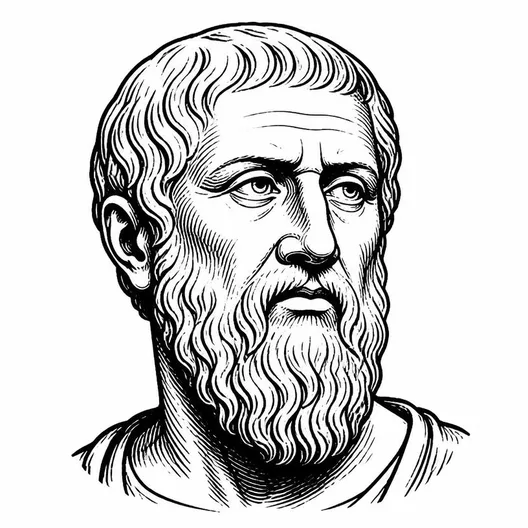 Plato c. 360 BCE