A study of how cities are governed, comparing kingship, rule by the few, and rule by the many. It is the source of the famous claim that humans are by nature political animals.
318 pages 6h 10m reading time
A founding text of Western political thought.
Calls humans political animals by nature, who can live well only as citizens of a community.
Holds that good government serves the common good, and that a mix of rule by the few and the many is most stable.
Through Thomas Aquinas it shaped medieval political thought, and its comparison of constitutions laid the ground for political science.
Built on 158 constitutions
Aristotle's school is said to have collected the constitutions of 158 Greek cities, and only Athens's survives.
Likely lecture notes
Its uneven, sometimes unfinished style suggests teaching notes for Aristotle's school, not a book for the public.
Lost to Western Europe
Latin readers had no copy for centuries, until William of Moerbeke translated it from Greek around 1260.
Order still debated
Scholars have long argued about the right order of its eight books, and some editors have even rearranged them.


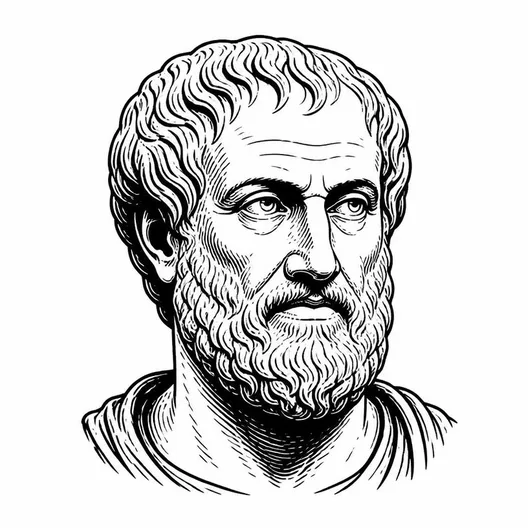 Aristotle c. 350 BCE