Book 1
Even as champions and wrestlers and such as practise the strength and agility of body are not only careful to retain a sound constitution of health, and to hold on their ordinary course of exercise, but sometimes also to recreate themselves with seasonable intermission, and esteem it as a main point of their practice; so I think it necessary for scholars and such as addict themselves to the study of learning, after they have travelled long in the perusal of serious authors, to relax a little the intention of their thoughts, that they may be more apt and able to endure a continued course of study.
Champions, wrestlers, and others who train for strength and agility take care to stay healthy and exercise regularly. But they also take breaks at suitable times to refresh themselves, considering rest an essential part of their training. In the same way, I think scholars and others devoted to learning need to relax their minds a little. After spending a long time reading serious authors, students need this rest to better sustain long periods of study.
And this kind of repose will be the more conformable, and fit their purpose better, if it be employed in the reading of such works as shall not only yield a bare content by the pleasing and comely composure of them, but shall also give occasion of some learned speculation to the mind, which I suppose I have effected in these books of mine: wherein not only the novelty of the subject, nor the pleasingness of the project, may tickle the reader with delight, nor to hear so many notorious lies delivered persuasively and in the way of truth, but because everything here by me set down doth in a comical fashion glance at some or other of the old poets, historiographers, and philosophers, which in their writings have recorded many monstrous and intolerable untruths, whose names I would have quoted down, but that I knew the reading would bewray them to you.
This kind of rest will suit their purpose better if they spend it reading works that offer more than simple pleasure. Such works should delight through their graceful style while also giving the mind something thoughtful to consider. I believe I have achieved this in these books of mine. Readers may enjoy not only the unusual subject and entertaining idea, but also the many outrageous lies told convincingly as truth. But there is another pleasure: everything I have written here pokes fun at some ancient poet, historian, or philosopher. These writers filled their works with many monstrous and outrageous falsehoods. I would have named them, but I knew you would recognize them as you read.
Ctesias, the son of Ctesiochus, the Cnidian, wrote of the region of the Indians and the state of those countries, matters which he neither saw himself, nor ever heard come from the mouth of any man. Iambulus also wrote many strange miracles of the great sea, which all men knew to be lies and fictions, yet so composed that they want not their delight: and many others have made choice of the like argument, of which some have published their own travels and peregrinations, wherein they have described the greatness of beasts, the fierce condition of men, with their strange and uncouth manner of life: but the first father and founder of all this foolery was Homer's Ulysses, who tells a long tale to Alcinous of the servitude of the winds, and of wild men with one eye in their foreheads that fed upon raw flesh, of beasts with many heads, and the transformation of his friends by enchanted potions, all which he made the silly Phæakes believe for great sooth.
Ctesias, the son of Ctesiochus, the Cnidian, wrote about the land of the Indians and conditions in those countries. He had neither seen these things himself nor heard anyone speak of them. Iambulus also wrote about many strange wonders of the great sea. Everyone knew these stories were lies and inventions, yet he told them in an entertaining way. Many others have chosen similar subjects. Some have published accounts of their own travels and wanderings. In these accounts, they described enormous beasts and fierce people with strange, unfamiliar ways of life. But the original father and founder of all this nonsense was Homer's Ulysses. He tells Alcinous a long tale about winds forced to serve him. He describes wild men with one eye in their foreheads who ate raw flesh, and beasts with many heads. He also tells how enchanted potions transformed his friends. He made the foolish Phæakes believe all these stories were completely true.
This coming to my perusal, I could not condemn ordinary men for lying, when I saw it in request amongst them that would be counted philosophical persons: yet could not but wonder at them, that, writing so manifest lies, they should not think to be taken with the manner; and this made me also ambitious to leave some monument of myself behind me, that I might not be the only man exempted from this liberty of lying: and because I had no matter of verity to employ my pen in (for nothing hath befallen me worth the writing), I turned my style to publish untruths, but with an honester mind than others have done: for this one thing I confidently pronounce for a truth, that I lie: and this, I hope, may be an excuse for all the rest, when I confess what I am faulty in: for I write of matters which I neither saw nor suffered, nor heard by report from others, which are in no being, nor possible ever to have a beginning. Let no man therefore in any case give any credit to them.
After reading this, I could not condemn ordinary people for lying. After all, lying was popular among those who wanted to be considered philosophers. Yet I could not help wondering how those writers could tell such obvious lies without expecting to be caught. So I too became eager to leave something behind for people to remember me by. I did not want to be the only man denied this freedom to lie. And because I had nothing true to write about, I turned to publishing falsehoods. Nothing worth writing about had ever happened to me. But I approached the task more honestly than others had. For I confidently declare one thing to be true: I am lying. By admitting my fault, I hope to excuse all the rest. For I write about things I have neither seen nor experienced, nor heard about from others. These things do not exist and could never come into existence. So no one should believe any of them under any circumstances.
Disanchoring on a time from the pillars of Hercules, the wind fitting me well for my purpose, I thrust into the West Ocean. The occasion that moved me to take such a voyage in hand was only a curiosity of mind, a desire of novelties, and a longing to learn out the bounds of the ocean, and what people inhabit the farther shore: for which purpose I made plentiful provision of victuals and fresh water, got fifty companions of the same humour to associate me in my travels, furnished myself with store of munition, gave a round sum of money to an expert pilot that could direct us in our course, and new rigged and repaired a tall ship strongly to hold a tedious and difficult journey.
Once, I set sail from the pillars of Hercules with a favorable wind and headed into the West Ocean. My only reasons for making the voyage were curiosity, a desire for new experiences, and a longing to explore. I wanted to discover the ocean’s limits and learn what people lived on its far shore. For this purpose, I stocked up on food and fresh water. I gathered fifty like-minded companions to join me on my travels and laid in plenty of military supplies. I paid a large sum to an experienced pilot who could guide us on our course. I also had a large ship repaired and fitted with new rigging to withstand a long and difficult journey.
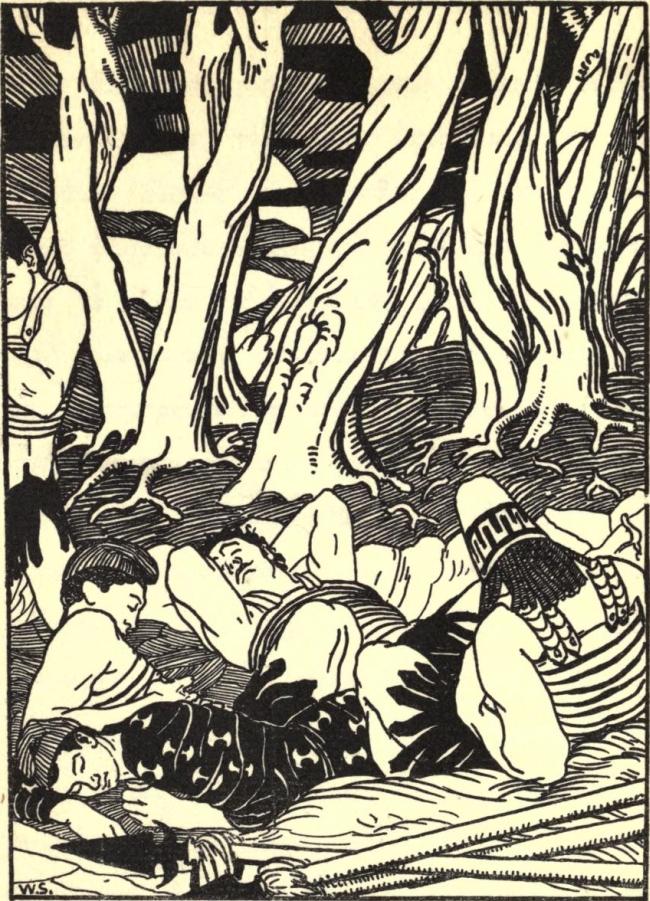
Thus sailed we forward a day and a night with a prosperous wind, and as long as we had any sight of land, made no great haste on our way; but the next morrow about sun rising the wind blew high and the waves began to swell and a darkness fell upon us, so that we could not see to strike our sails, but gave our ship over to the wind and weather; thus were we tossed in this tempest the space of threescore and nineteen days together. On the fourscorth day the sun upon a sudden brake out, and we descried not far off us an island full of mountains and woods, about the which the seas did not rage so boisterously, for the storm was now reasonably well calmed: there we thrust in and went on shore and cast ourselves upon the ground, and so lay a long time, as utterly tired with our misery at sea: in the end we arose up and divided ourselves: thirty we left to guard our ship: myself and twenty more went to discover the island, and had not gone above three furlongs from the sea through a wood, but we saw a brazen pillar erected, whereupon Greek letters were engraven, though now much worn and hard to be discerned, importing, "Thus far travelled Hercules and Bacchus."
We sailed on for a day and a night with a favorable wind. As long as land remained in sight, we made no great haste. But around sunrise the next morning, the wind rose, the waves swelled, and darkness fell over us. We could not see to lower our sails, so we left our ship to the wind and weather. We were tossed about in this storm for seventy-nine days in a row. On the eightieth day, the sun suddenly broke through, and we spotted an island nearby, covered with mountains and woods. The sea around the island was less violent, for the storm had now calmed considerably. We sailed in, went ashore, and threw ourselves on the ground. We lay there a long time, utterly exhausted by our suffering at sea. At last we got up and split into groups. We left thirty men to guard our ship, while I went with twenty others to explore the island. We had gone no more than three furlongs inland through a wood when we saw a bronze pillar. Greek letters were carved into the pillar, though they were now badly worn and hard to read. The inscription meant, "Hercules and Bacchus traveled this far."
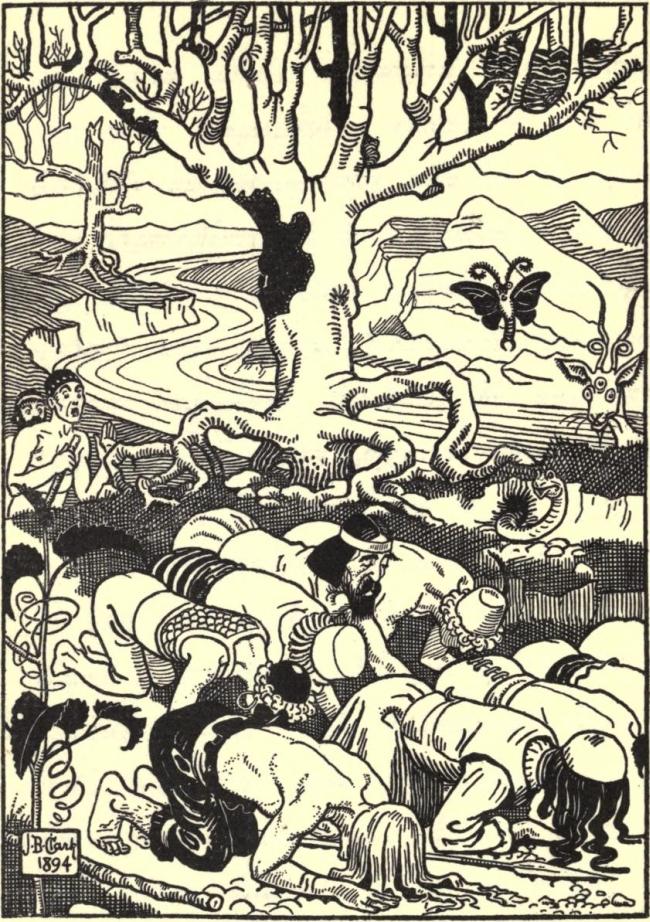
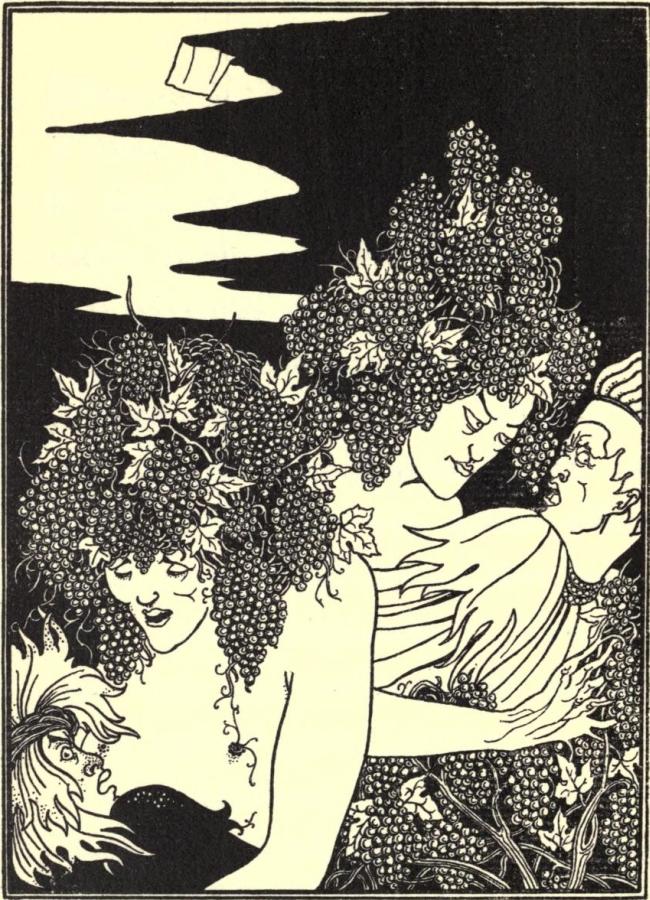
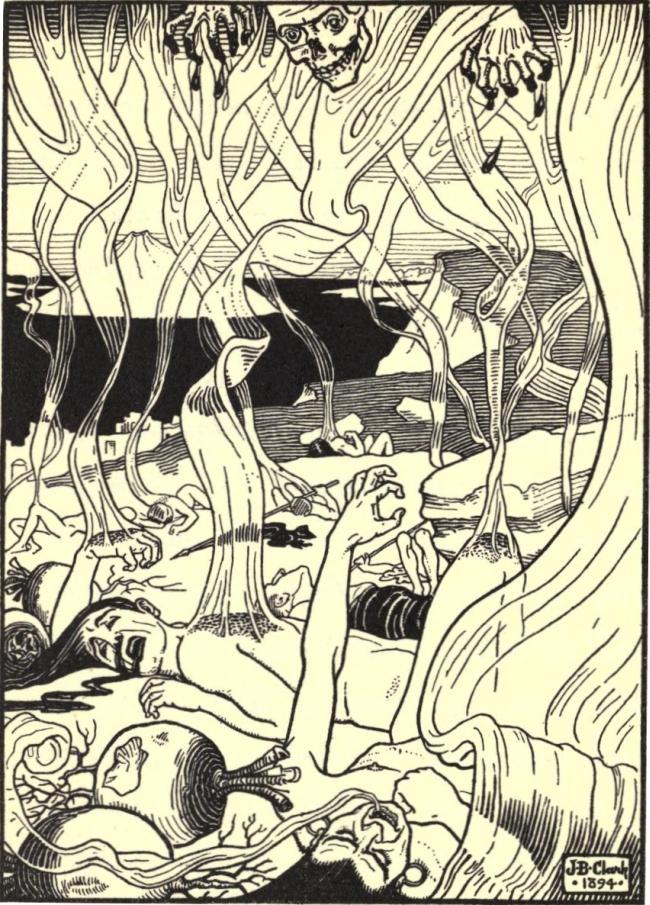
There were also near unto the place two portraitures cut out in a rock, the one of the quantity of an acre of ground, the other less, which made me imagine the lesser to be Bacchus and the other Hercules: and giving them due adoration, we proceeded on our journey, and far we had not gone but we came to a river, the stream whereof seemed to run with as rich wine as any is made in Chios, and of a great breadth, in some places able to bear a ship, which made me to give the more credit to the inscription upon the pillar, when I saw such apparent signs of Bacchus's peregrination. We then resolved to travel up the stream to find whence the river had his original, and when we were come to the head, no spring at all appeared, but mighty great vine-trees of infinite number, which from their roots distilled pure wine which made the river run so abundantly: the stream was also well stored with fish, of which we took a few, in taste and colour much resembling wine, but as many as ate of them fell drunk upon it; for when they were opened and cut up, we found them to be full of lees: afterwards we mixed some fresh water fish with them, which allayed the strong taste of the wine. We then crossed the stream where we found it passable, and came among a world of vines of incredible number, which towards the earth had firm stocks and of a good growth; but the tops of them were women, from the hip upwards, having all their proportion perfect and complete; as painters picture out Daphne, who was turned into a tree when she was overtaken by Apollo; at their fingers' ends sprung out branches full of grapes, and the hair of their heads was nothing else but winding wires and leaves, and clusters of grapes. When we were come to them, they saluted us and joined hands with us, and spake unto us some in the Lydian and some in the Indian language, but most of them in Greek: they also kissed us with their mouths, but he that was so kissed fell drunk, and was not his own man a good while after: they could not abide to have any fruit pulled from them, but would roar and cry out pitifully if any man offered it. Some of them desired to have carnal mixture with us, and two of our company were so bold as to entertain their offer, and could never afterwards be loosed from them, but were knit fast together at their nether parts, from whence they grew together and took root together, and their fingers began to spring out with branches and crooked wires as if they were ready to bring out fruit: whereupon we forsook them and fled to our ships, and told the company at our coming what had betide unto us, how our fellows were entangled, and of their copulation with the vines. Then we took certain of our vessels and filled them, some with water and some with wine out of the river, and lodged for that night near the shore.
Nearby were two figures carved into a rock. One covered an area the size of an acre, and the other was smaller. I imagined the smaller figure was Bacchus and the larger one Hercules. After paying them due worship, we continued our journey. We had not gone far when we reached a river. Its current seemed to be wine as rich as any made in Chios. The river was very wide, and in some places a ship could sail on it. This made me trust the inscription on the pillar more, since I saw such clear signs of Bacchus's travels. We then decided to follow the river upstream to find its source. When we reached the head of the river, we found no spring at all. Instead, there were countless enormous vines, whose roots dripped pure wine, supplying the river's abundant flow. The river also held plenty of fish, and we caught a few. Their taste and color closely resembled wine, but everyone who ate them became drunk. When we cut the fish open, we found them full of wine sediment. Afterward, we mixed some freshwater fish with them, which softened the strong taste of wine. We then crossed the river where we could and came among an incredible number of vines. Near the ground, the vines had sturdy, well-grown trunks. But their upper parts were women from the hips upward, with every part of their bodies fully formed. They looked like painters' images of Daphne, who became a tree when Apollo caught up with her. Branches laden with grapes sprouted from their fingertips. Their hair consisted entirely of curling tendrils, leaves, and bunches of grapes. When we approached, the women greeted us and took our hands. Some spoke to us in the Lydian language, some in the Indian language, but most spoke Greek. They also kissed us on the mouth. But anyone they kissed became drunk and did not regain his senses for quite some time. They could not bear to have any fruit picked from them. If anyone tried, they would howl and cry out pitifully. Some of the women wanted to have sex with us. Two of our companions were bold enough to accept, but afterward they could never break free. They were joined firmly to the women at their lower parts. From that point, their bodies grew together and took root together. Branches and curling tendrils began to sprout from our companions' fingers, as if they were about to bear fruit. So we abandoned them and fled to our ships. When we arrived, we told the others what had happened to us. We described how our companions had become entangled and how they had mated with the vines. Then we took some containers and filled some with water and others with wine from the river. We spent that night near the shore.
On the morrow we put to sea again, the wind serving us weakly, but about noon, when we had lost sight of the island, upon a sudden a whirlwind caught us, which turned our ship round about, and lifted us up some three thousand furlongs into the air, and suffered us not to settle again into the sea, but we hung above ground, and were carried aloft with a mighty wind which filled our sails strongly. Thus for seven days' space and so many nights were we driven along in that manner, and on the eighth day we came in view of a great country in the air, like to a shining island, of a round proportion, gloriously glittering with light, and approaching to it, we there arrived, and took land, and surveying the country, we found it to be both inhabited and husbanded: and as long as the day lasted we could see nothing there, but when night was come many other islands appeared unto us, some greater and some less, all of the colour of fire, and another kind of earth underneath, in which were cities and seas and rivers and woods and mountains, which we conjectured to be the earth by us inhabited: and going further into the land, we were met withal and taken by those kind of people which they call Hippogypians. These Hippogypians are men riding upon monstrous vultures, which they use instead of horses: for the vultures there are exceeding great, every one with three heads apiece: you may imagine their greatness by this, for every feather in their wings was bigger and longer than the mast of a tall ship: their charge was to fly about the country, and all the strangers they found to bring them to the king: and their fortune was then to seize upon us, and by them we were presented to him. As soon as he saw us, he conjectured by our habit what countrymen we were, and said, Are not you, strangers, Grecians? which when we affirmed, And how could you make way, said he, through so much air as to get hither?
The next day we put to sea again, with only a light wind to help us. But around noon, after we had lost sight of the island, a whirlwind suddenly caught us. It spun our ship around and lifted us some three thousand furlongs into the air. The whirlwind did not let us fall back into the sea. Instead, we hung above the ground, carried aloft by a powerful wind that filled our sails. For seven days and seven nights, we were driven along like this. On the eighth day, we caught sight of a great country in the air. It looked like a shining island, round in shape and glittering gloriously with light. We approached it, arrived, and went ashore. As we explored the country, we found that it was inhabited and farmed. As long as daylight lasted, we could see nothing there. But when night came, many other islands appeared, some larger and some smaller, all the color of fire. Below us was another kind of land, with cities, seas, rivers, woods, and mountains. We guessed that it was the earth we lived on. As we went farther inland, we were met and captured by the people called Hippogypians. These Hippogypians are men who ride monstrous vultures instead of horses. The vultures there are enormous, and each has three heads. You can imagine their size from this: every wing feather was larger and longer than a tall ship's mast. The riders' duty was to fly around the country and bring every stranger they found to the king. As it happened, they captured us and brought us before him. As soon as the king saw us, he guessed from our clothes what country we came from. He asked whether we strangers were Grecians. When we said we were, he asked how we had managed to cross so much air to reach this place.
Then we delivered the whole discourse of our fortunes to him; whereupon he began to tell us likewise of his own adventures, how that he also was a man, by name Endymion, and rapt up long since from the earth as he was asleep, and brought hither, where he was made king of the country, and said it was that region which to us below seemed to be the moon; but he bade us be of good cheer and fear no danger, for we should want nothing we stood in need of: and if the war he was now in hand withal against the sun succeeded fortunately, we should live with him in the highest degree of happiness. Then we asked of him what enemies he had, and the cause of the quarrel: and he answered, Phaethon, the king of the inhabitants of the sun (for that is also peopled as well as the moon), hath made war against us a long time upon this occasion: I once assembled all the poor people and needy persons within my dominions, purposing to send a colony to inhabit the Morning Star, because the country was desert and had nobody dwelling in it. This Phaethon envying, crossed me in my design, and sent his Hippomyrmicks to meet with us in the midway, by whom we were surprised at that time, being not prepared for an encounter, and were forced to retire: now therefore my purpose is once again to denounce war and publish a plantation of people there: if therefore you will participate with us in our expedition, I will furnish you every one with a prime vulture and all armour answerable for service, for to-morrow we must set forwards. With all our hearts, said I, if it please you. Then were we feasted and abode with him, and in the morning arose to set ourselves in-order of battle, for our scouts had given us knowledge that the enemy was at hand. Our forces in number amounted to an hundred thousand, besides such as bare burthens and engineers, and the foot forces and the strange aids: of these, fourscore thousand were Hippogypians, and twenty thousand that rode upon Lachanopters, which is a mighty great fowl, and instead of feathers covered thick over with wort leaves; but their wing feathers were much like the leaves of lettuces: after them were placed the Cenchrobolians and the Scorodomachians: there came also to aid us from the Bear Star thirty thousand Psyllotoxotans, and fifty thousand Anemodromians: these Psyllotoxotans ride upon great fleas, of which they have their denomination, for every flea among them is as big as a dozen elephants: the Anemodromians are footmen, yet flew in the air without feathers in this manner: every man had a large mantle reaching down to his foot, which the wind blowing against, filled it like a sail, and they were carried along as if they had been boats: the most part of these in fight were targeteers. It was said also that there were expected from the stars over Cappadocia threescore and ten thousand Struthobalanians and five thousand Hippogeranians, but I had no sight of them, for they were not yet come, and therefore I durst write nothing, though wonderful and incredible reports were given out of them. This was the number of Endymion's army; the furniture was all alike; their helmets of bean hulls, which are great with them and very strong; their breastplates all of lupins cut into scales, for they take the shells of lupins, and fastening them together, make breastplates of them which are impenetrable and as hard as any horn: their shields and swords like to ours in Greece: and when the time of battle was come, they were ordered in this manner. The right wing was supplied by the Hippogypians, where the king himself was in person with the choicest soldiers in the army, among whom we also were ranged: the Lachanopters made the left wing, and the aids were placed in the main battle as every man's fortune fell: the foot, which in number were about six thousand myriads, were disposed of in this manner: there are many spiders in those parts of mighty bigness, every one in quantity exceeding one of the Islands Cyclades: these were appointed to spin a web in the air between the Moon and the Morning Star, which was done in an instant, and made a plain champaign upon which the foot forces were planted, who had for their leader Nycterion, the son of Eudianax, and two other associates.
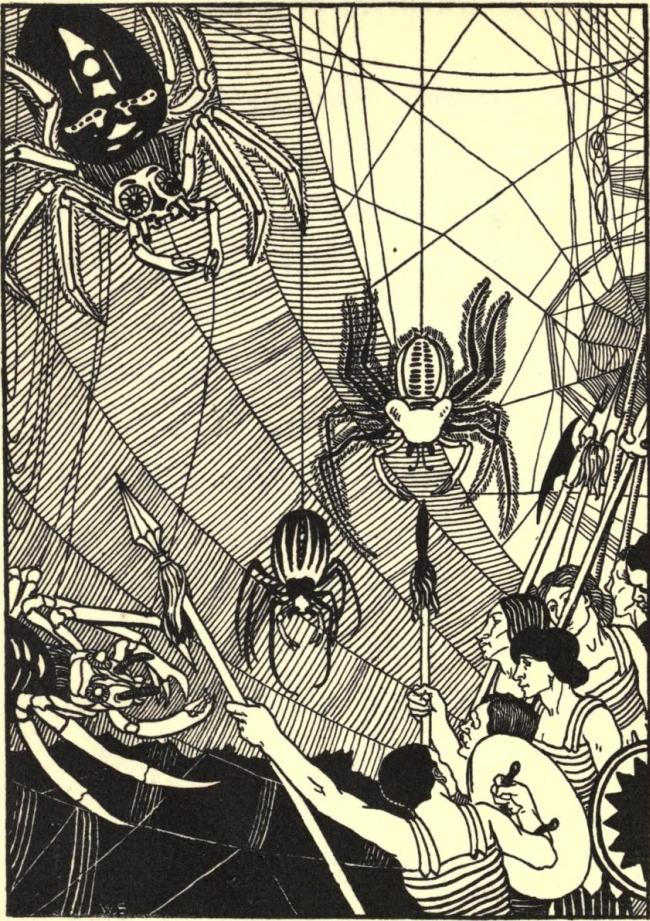
Then we told him the full story of our experiences. He responded by telling us about his own adventures. He too was a man, named Endymion. Long ago, he had been carried away from earth while asleep and brought here, where he became king. He said his kingdom was the region that appeared to us below as the moon. But he told us to take heart and fear no danger, because we would have everything we needed. And if his present war against the sun went well, we would live with him in the greatest happiness. Then we asked who his enemies were and what had caused the quarrel. He answered: Phaethon, king of the sun’s inhabitants, has been at war with us for a long time. For the sun is inhabited, just like the moon. The war began for this reason. I once gathered all the poor and needy people in my kingdom, intending to establish a colony on the Morning Star. The land there was deserted, with nobody living on it. Envious of my plan, Phaethon opposed it and sent his Hippomyrmicks to intercept us halfway there. They caught us by surprise, unprepared for battle, and forced us to retreat. So now I intend to declare war again and announce the founding of a colony there. If you join our expedition, I will provide each of you with an excellent vulture and all the necessary armor. For tomorrow we must set out. With all our hearts, I said, if you wish. Then he gave us a feast, and we stayed with him. In the morning, we rose to take our places for battle, because our scouts had reported that the enemy was near. Our forces numbered one hundred thousand, besides the porters, engineers, infantry, and foreign auxiliaries. Of these, eighty thousand were Hippogypians, and twenty thousand rode Lachanopters. The Lachanopter is an enormous bird, thickly covered with cabbage leaves instead of feathers. Its wing feathers, however, closely resembled lettuce leaves. Behind them stood the Cenchrobolians and the Scorodomachians. Thirty thousand Psyllotoxotans and fifty thousand Anemodromians also came from the Bear Star to help us. The Psyllotoxotans ride enormous fleas, from which they take their name. Each flea is as large as twelve elephants. The Anemodromians are infantrymen, yet they flew through the air without feathers. Each man wore a large cloak reaching to his feet. The wind filled the cloak like a sail, carrying the man along as if he were a boat. Most of these men fought with shields. Seventy thousand Struthobalanians and five thousand Hippogeranians were also reportedly expected from the stars above Cappadocia. But I did not see them, because they had not yet arrived. So I dared write nothing about them, although wonderful and incredible stories were told about them. Such were the numbers in Endymion’s army. Their equipment was all alike. Their helmets were made from bean shells, which grow large and very strong in that country. Their breastplates were all made from lupin shells cut into scales. They fasten these shells together to make breastplates that cannot be pierced and are as hard as any horn. Their shields and swords were like ours in Greece. When the time for battle came, the army formed up as follows. The Hippogypians held the right wing. The king himself was there with the army’s finest soldiers, and we were stationed among them. The Lachanopters formed the left wing. The auxiliaries were placed in the center, wherever chance assigned each man. The infantry, numbering about six hundred million, were deployed as follows. There are many enormous spiders in those regions, each larger than one of the Cyclades Islands. These spiders were ordered to spin a web in the air between the Moon and the Morning Star. They finished in an instant, creating a level field on which the infantry took their positions. The infantry were led by Nycterion, son of Eudianax, and two other commanders.
But of the enemy's side the left wing consisted of the Hippomyrmicks, and among them Phaethon himself: these are beasts of huge bigness and winged, carrying the resemblance of our emmets, but for their greatness: for those of the largest size were of the quantity of two acres, and not only the riders supplied the place of soldiers, but they also did much mischief with their horns: they were in number fifty thousand. In the right wing were ranged the Aeroconopes, of which there were also about fifty thousand, all archers riding upon great gnats: then followed the Aerocardakes, who were light armed and footmen, but good soldiers, casting out of slings afar off huge great turnips, and whosoever was hit with them lived not long after, but died with the stink that proceeded from their wounds: it is said they use to anoint their bullets with the poison of mallows. After them were placed the Caulomycetes, men-at-arms and good at hand strokes, in number about fifty thousand: they are called Caulomycetes because their shields were made of mushrooms and their spears of the stalks of the herb asparagus: near unto them were placed the Cynobalanians, that were sent from the Dogstar to aid him: these were men with dogs' faces, riding upon winged acorns: but the slingers that should have come out of Via Lactea, and the Nephelocentaurs came too short of these aids, for the battle was done before their arrival, so that they did them no good: and indeed the slingers came not at all, wherefore they say Phaethon in displeasure over-ran their country. These were the forces that Phaethon brought into the field: and when they were joined in battle, after the signal was given, and when the asses on either side had brayed (for these are to them instead of trumpets), the fight began, and the left wing of the Heliotans, or Sun soldiers, fled presently and would not abide to receive the charge of the Hippogypians, but turned their backs immediately, and many were put to the sword: but the right wing of theirs were too hard for our left wing, and drove them back till they came to our footmen, who joining with them, made the enemies there also turn their backs and fly, especially when they found their own left wing to be overthrown. Thus were they wholly discomfited on all hands; many were taken prisoners, and many slain; much blood was spilt; some fell upon the clouds, which made them look of a red colour, as sometimes they appear to us about sun-setting; some dropped down upon the earth, which made me suppose it was upon some such occasion that Homer thought Jupiter rained blood for the death of his son Sarpedon. Returning from the pursuit, we erected two trophies: one for the fight on foot, which we placed upon the spiders' web: the other for the fight in the air, which we set up upon the clouds. As soon as this was done, news came to us by our scouts that the Nephelocentaurs were coming on, which indeed should have come to Phaethon before the fight. And when they drew so near unto us that we could take full view of them, it was a strange sight to behold such monsters, composed of flying horses and men: that part which resembled mankind, which was from the waist upwards, did equal in greatness the Rhodian Colossus, and that which was like a horse was as big as a great ship of burden: and of such multitude that I was fearful to set down their number lest it might be taken for a lie: and for their leader they had the Sagittarius out of the Zodiac. When they heard that their friends were foiled, they sent a messenger to Phaethon to renew the fight: whereupon they set themselves in array, and fell upon the Selenitans or the Moon soldiers that were troubled, and disordered in following the chase, and scattered in gathering the spoils, and put them all to flight, and pursued the king into his city, and killed the greatest part of his birds, overturned the trophies he had set up, and overcame the whole country that was spun by the spiders. Myself and two of my companions were taken alive. When Phaethon himself was come they set up other trophies in token of victory, and on the morrow we were carried prisoners into the Sun, our arms bound behind us with a piece of the cobweb: yet would they by no means lay any siege to the city, but returned and built up a wall in the midst of the air to keep the light of the Sun from falling upon the Moon, and they made it a double wall, wholly compact of clouds, so that a manifest eclipse of the Moon ensued, and all things detained in perpetual night: wherewith Endymion was so much oppressed that he sent ambassadors to entreat the demolishing of the building, and beseech him that he would not damn them to live in darkness, promising to pay him tribute, to be his friend and associate, and never after to stir against him. Phaethon's council twice assembled to consider upon this offer, and in their first meeting would remit nothing of their conceived displeasure, but on the morrow they altered their minds to these terms.
On the enemy’s side, the left wing consisted of the Hippomyrmicks, with Phaethon himself among them. These are enormous winged beasts, resembling our ants except in size. The largest covered an area of two acres. Their riders fought as soldiers, but the beasts themselves also did great damage with their horns. They numbered fifty thousand. The right wing held the Aeroconopes, also about fifty thousand strong, all archers riding giant gnats. Next came the Aerocardakes, lightly armed foot soldiers who fought well. They used slings to hurl enormous turnips over great distances. Anyone struck by these did not live long, but died from the stench rising from their wounds. It is said that they coat their projectiles with mallow poison. Behind them stood the Caulomycetes, about fifty thousand heavily armed soldiers, skilled in close combat. They are called Caulomycetes because their shields were made of mushrooms and their spears from asparagus stalks. Nearby stood the Cynobalanians, sent from the Dogstar to help Phaethon. These were men with dogs’ faces, riding winged acorns. But the slingers expected from Via Lactea and the Nephelocentaurs were too late to help. The battle ended before their arrival, so they did Phaethon no good. In fact, the slingers never came at all. They say Phaethon was so angry that he overran their country. These were the forces Phaethon brought into battle. Once the armies met, the signal was given, and the asses on both sides brayed. These animals serve them instead of trumpets. Then the fighting began. The left wing of the Heliotans, or Sun soldiers, fled at once rather than face the Hippogypians’ charge. They immediately turned their backs, and many were put to the sword. But their right wing overpowered our left and drove our soldiers back to our infantry. Our infantry joined them and forced the enemy there to turn and flee as well. The enemy were especially ready to flee when they discovered that their own left wing had been defeated. So the enemy were completely routed on every side. Many were captured, many were killed, and much blood was spilled. Some blood fell on the clouds, turning them red, as they sometimes appear to us around sunset. Some dripped down to earth. This made me suppose that some such event inspired Homer’s account of Jupiter raining blood when his son Sarpedon died. When we returned from the pursuit, we set up two victory trophies. We placed one on the spiders’ web to mark the battle on foot. We set the other on the clouds to mark the battle in the air. As soon as we had finished, our scouts reported that the Nephelocentaurs were approaching. They should have reached Phaethon before the battle. When the Nephelocentaurs came close enough for us to see them clearly, the monsters were a strange sight. They combined the forms of flying horses and men. Their human part, from the waist upward, was as large as the Rhodian Colossus. Their horse part was as large as a great cargo ship. There were so many that I was afraid to record their number, lest anyone think I was lying. Their leader was Sagittarius from the Zodiac. When they heard that their friends had been defeated, they sent Phaethon a messenger, urging him to renew the battle. Then they formed ranks and attacked the Selenitans, or Moon soldiers. The Moon soldiers were in confusion and disorder from the pursuit, and scattered as they gathered plunder. The Nephelocentaurs put them all to flight and chased the king into his city. They killed most of his birds and knocked down the trophies he had set up. They also conquered the whole territory spun by the spiders. Two of my companions and I were taken alive. When Phaethon himself arrived, they set up new trophies to mark their victory. The next day, we were taken as prisoners to the Sun, our arms tied behind us with cobweb. Yet they refused to besiege the city. Instead, they withdrew and built a wall in midair to keep the Sun’s light from reaching the Moon. They made it a double wall, built entirely of clouds. This caused a clear eclipse of the Moon and kept everything there in perpetual night. Endymion was so distressed by this that he sent ambassadors to ask Phaethon to tear down the wall. They begged Phaethon not to condemn them to live in darkness. Endymion promised to pay him tribute, become his friend and ally, and never again take up arms against him. Phaethon’s council met twice to consider the offer. At the first meeting, they refused to soften their anger at all. But the next day, they changed their minds and agreed to the following terms.
"The Heliotans and their colleagues have made a peace with the Selenitans and their associates upon these conditions, that the Heliotans shall cast down the wall, and deliver the prisoners that they have taken upon a ratable ransom: and that the Selenitans should leave the other stars at liberty, and raise no war against the Heliotans, but aid and assist one another if either of them should be invaded: that the king of the Selenitans should yearly pay to the king of the Heliotans in way of tribute ten thousand vessels of dew, and deliver ten thousand of their people to be pledges for their fidelity: that the colony to be sent to the Morning Star should be jointly supplied by them both, and liberty given to any else that would to be sharers in it: that these articles of peace should be engraven in a pillar of amber, to be erected in the midst of the air upon the confines of their country: for the performance whereof were sworn of the Heliotans, Pyronides and Therites and Phlogius: and of the Selenitans, Nyctor and Menius and Polylampes." Thus was the peace concluded, the wall immediately demolished, and we that were prisoners delivered. Being returned into the Moon, they came forth to meet us, Endymion himself and all his friends, who embraced us with tears, and desired us to make our abode with him, and to be partners in the colony, promising to give me his own son in marriage (for there are no women amongst them), which I by no means would yield unto, but desired of all loves to be dismissed again into the sea, and he finding it impossible to persuade us to his purpose, after seven days' feasting, gave us leave to depart.
"The Heliotans and their allies have made peace with the Selenitans and their allies on the following terms. The Heliotans must tear down the wall and release their prisoners for a proportionate ransom. The Selenitans must leave the other stars free and wage no war against the Heliotans. Both sides must help each other if either is invaded. The king of the Selenitans must pay the king of the Heliotans an annual tribute of ten thousand vessels of dew. He must also hand over ten thousand of his people as hostages to guarantee his loyalty. Both sides must jointly supply the colony to be sent to the Morning Star. Anyone else who wishes to join the colony must be free to do so. These peace terms must be carved on an amber pillar, to be erected in midair at the border between their countries. Pyronides, Therites, and Phlogius swore to uphold these terms on behalf of the Heliotans. Nyctor, Menius, and Polylampes swore on behalf of the Selenitans." So peace was concluded, the wall was immediately demolished, and we prisoners were released. When we returned to the Moon, Endymion himself and all his friends came out to meet us. They embraced us in tears. Endymion asked us to stay with him and take part in the colony. He promised to give me his own son in marriage, for there are no women among them. I absolutely refused and begged him, for the sake of his affection for us, to let us return to the sea. Endymion found he could not persuade us to accept his plan. After seven days of feasting, he gave us permission to leave.
Now, what strange novelties worthy of note I observed during the time of my abode there, I will relate unto you. The first is, that they are not begotten of women, but of mankind: for they have no other marriage but of males: the name of women is utterly unknown among them: until they accomplish the age of five and twenty years, they are given in marriage to others: from that time forwards they take others in marriage to themselves: for as soon as the infant is conceived the leg begins to swell, and afterwards when the time of birth is come, they give it a lance and take it out dead: then they lay it abroad with open mouth towards the wind, and so it takes life: and I think thereof the Grecians call it the belly of the leg, because therein they bear their children instead of a belly. I will tell you now of a thing more strange than this. There are a kind of men among them called Dendritans, which are begotten in this manner: they cut out the right stone out of a man's cod, and set it in their ground, from which springeth up a great tree of flesh, with branches and leaves, bearing a kind of fruit much like to an acorn, but of a cubit in length, which they gather when they are ripe, and cut men out of them: their privy members are to be set on and taken off as they have occasion: rich men have them made of ivory, poor men of wood, wherewith they perform the act of generation and accompany their spouses.
Now I will tell you about the strange and remarkable things I observed during my stay there. First, they are born from men, not women, for marriage there is only between males. Even the word for women is completely unknown to them. Until they reach twenty-five, they are given in marriage to others. From that age onward, they take others as their spouses. As soon as a child is conceived, the leg begins to swell. When the time comes for birth, they cut open the leg and take out the child, dead. Then they lay the child outside with its mouth open toward the wind, and so it comes to life. I think this is why the Grecians call the calf the belly of the leg. For these people carry their children in their legs instead of their bellies. Now I will tell you something even stranger. Among them are men called Dendritans, who are produced in the following way. They cut the right testicle out of a man's scrotum and plant it in the ground. From it grows a great tree of flesh, with branches and leaves. The tree bears fruit shaped much like acorns, but a cubit long. They gather the fruit when ripe and cut men out of it. Their genitals can be attached and removed as needed. Rich men have genitals made of ivory, while poor men have wooden ones. They use these to reproduce and have sex with their spouses.
When a man is come to his full age he dieth not, but is dissolved like smoke and is turned into air. One kind of food is common to them all, for they kindle a fire and broil frogs upon the coals, which are with them in infinite numbers flying in the air, and whilst they are broiling, they sit round about them as it were about a table, and lap up the smoke that riseth from them, and feast themselves therewith, and this is all their feeding. For their drink they have air beaten in a mortar, which yieldeth a kind of moisture much like unto dew. They have no avoidance of excrements, either of urine or dung, neither have they any issue for that purpose like unto us. Their boys admit copulation, not like unto ours, but in their hams, a little above the calf of the leg, for there they are open. They hold it a great ornament to be bald, for hairy persons are abhorred with them, and yet among the stars that are comets it is thought commendable, as some that have travelled those coasts reported unto us. Such beards as they have are growing a little above their knees. They have no nails on their feet, for their whole foot is all but one toe. Every one of them at the point of his rump hath a long colewort growing out instead of a tail, always green and flourishing, which though a man fall upon his back, cannot be broken. The dropping of their noses is more sweet than honey. When they labour or exercise themselves, they anoint their body with milk, wherein to if a little of that honey chance to drop, it will be turned into cheese. They make very fat oil of their beans, and of as delicate a savour as any sweet ointment. They have many vines in those parts, which yield them but water: for the grapes that hang upon the clusters are like our hailstones: and I verily think that when the vines there are shaken with a strong wind, there falls a storm of hail amongst us by the breaking down of those kind of berries. Their bellies stand them instead of satchels to put in their necessaries, which they may open and shut at their pleasure, for they have neither liver nor any kind of entrails, only they are rough and hairy within, so that when their young children are cold, they may be enclosed therein to keep them warm. The rich men have garments of glass, very soft and delicate: the poorer sort of brass woven, whereof they have great plenty, which they enseam with water to make it fit for the workman, as we do our wool. If I should write what manner of eyes they have, I doubt I should be taken for a liar in publishing a matter so incredible: yet I cannot choose but tell it: for they have eyes to take in and out as please themselves: and when a man is so disposed, he may take them out and lay them by till he have occasion to use them, and then put them in and see again: many when they have lost their own eyes, borrow of others, for the rich have many lying by them. Their ears are all made of the leaves of plane-trees, excepting those that come of acorns, for they only have them made of wood.
When a man reaches his full age, he does not die but dissolves like smoke and turns into air. They all eat the same food. They light a fire and roast frogs on the coals. Countless frogs fly through the air there. While the frogs roast, the people sit around them as if around a table. They lap up the rising smoke and feast on it. This is all they eat. For drink, they beat air in a mortar, producing a kind of moisture much like dew. They pass neither urine nor dung, and they have no openings for that purpose like ours. Their boys receive sexual intercourse not as ours do, but behind their knees, just above the calf. That is where their openings are. They consider baldness a great ornament and detest hairy people. Yet among the comet stars, hair is admired, according to some who have traveled in those regions. Whatever beards they have grow a little above their knees. They have no toenails, for each foot consists of a single toe. At the tip of each person's rump, a long cabbage grows instead of a tail, always green and flourishing. Even if a man falls on his back, the cabbage cannot be broken. The liquid dripping from their noses is sweeter than honey. When they work or exercise, they rub milk over their bodies. If a little of that honey happens to drip into the milk, the milk turns into cheese. They make a very rich oil from their beans, with a scent as delicate as any fragrant ointment. They have many vines in those regions, but the vines yield only water. The grapes hanging in their clusters are like our hailstones. I firmly believe that when strong winds shake those vines, the berries break off and cause hailstorms here among us. Their bellies serve as bags for carrying whatever they need. They can open and close their bellies whenever they please, for they have neither livers nor any other internal organs. Their bellies are simply rough and hairy inside. So when their young children are cold, they can put them inside to keep them warm. The rich wear clothes made of glass, very soft and delicate. The poor wear woven brass, which they have in great abundance. They treat the brass with water to prepare it for the craftsman, as we do with wool. If I described their eyes, I fear I would be called a liar for publishing something so incredible. Yet I cannot help telling you. They can take their eyes out and put them back whenever they please. Whenever a man wishes, he can remove his eyes and set them aside until he needs them. Then he puts them back and sees again. Many who have lost their own eyes borrow someone else's, for the rich keep many spare eyes. Their ears are all made from plane-tree leaves, except those of people who come from acorns. Only those people have wooden ears.
I saw also another strange thing in the same court: a mighty great glass lying upon the top of a pit of no great depth, whereinto, if any man descend, he shall hear everything that is spoken upon the earth: if he but look into the glass, he shall see all cities and all nations as well as if he were among them. There had I the sight of all my friends and the whole country about: whether they saw me or not I cannot tell: but if they believe it not to be so, let them take the pains to go thither themselves and they shall find my words true. Then we took our leaves of the king and such as were near him, and took shipping and departed: at which time Endymion bestowed upon me two mantles made of their glass, and five of brass, with a complete armour of those shells of lupins, all which I left behind me in the whale: and sent with us a thousand of his Hippogypians to conduct us five hundred furlongs on our way. In our course we coasted many other countries, and lastly arrived at the Morning Star now newly inhabited, where we landed and took in fresh water: from thence we entered the Zodiac, passing by the Sun, and, leaving it on our right hand, took our course near unto the shore, but landed not in the country, though our company did much desire it, for the wind would not give us leave: but we saw it was a flourishing region, fat and well watered, abounding with all delights: but the Nephelocentaurs espying us, who were mercenary soldiers to Phaethon, made to our ship as fast as they could, and finding us to be friends, said no more unto us, for our Hippogypians were departed before. Then we made forwards all the next night and day, and about evening-tide following we came to a city called Lychnopolis, still holding on our course downwards. This city is seated in the air between the Pleiades and the Hyades, somewhat lower than the Zodiac, and arriving there, not a man was to be seen, but lights in great numbers running to and fro, which were employed, some in the market place, and some about the haven, of which many were little, and as a man may say, but poor things; some again were great and mighty, exceeding glorious and resplendent, and there were places of receipt for them all; every one had his name as well as men; and we did hear them speak. These did us no harm, but invited us to feast with them, yet we were so fearful, that we durst neither eat nor sleep as long as we were there. Their court of justice standeth in the midst of the city, where the governor sitteth all the night long calling every one by name, and he that answereth not is adjudged to die, as if he had forsaken his ranks. Their death is to be quenched. We also standing amongst them saw what was done, and heard what answers the lights made for themselves, and the reasons they alleged for tarrying so long: there we also knew our own light, and spake unto it, and questioned it of our affairs at home, and how all did there, which related everything unto us. That night we made our abode there, and on the next morrow returned to our ship, and sailing near unto the clouds had a sight of the city Nephelococcygia, which we beheld with great wonder, but entered not into it, for the wind was against us. The king thereof was Coronus, the son of Cottyphion: and I could not choose but think upon the poet Aristophanes, how wise a man he was, and how true a reporter, and how little cause there is to question his fidelity for what he hath written.
I also saw another strange thing in the same court: an enormous mirror placed over a shallow pit. If anyone climbs down into the pit, he can hear everything said on earth. If he looks into the mirror, he can see all cities and all nations as clearly as if he were there. In the mirror I saw all my friends and the whole surrounding countryside. Whether my friends saw me, I cannot say. But if they do not believe my account, let them make the journey themselves and discover that I speak the truth. Then we said goodbye to the king and those around him, boarded our ship, and departed. As we left, Endymion gave me two cloaks made of their glass and five made of brass. He also gave me a complete suit of armor made from lupin shells. I left all these gifts behind in the whale. Endymion also sent a thousand of his Hippogypians to escort us for five hundred furlongs. On our voyage, we sailed along the coasts of many other countries. At last we reached the Morning Star, which had only recently been settled. We landed there and took on fresh water. From there we entered the Zodiac and passed the Sun, keeping it on our right. We sailed close to the shore but did not land, though our company very much wanted to. The wind would not allow us. But we could see that the country was flourishing, fertile, and well watered, with every kind of delight in abundance. The Nephelocentaurs, who served as mercenary soldiers under Phaethon, spotted us and hurried toward our ship. When the Nephelocentaurs found that we were friends, they said nothing more to us. Our Hippogypians had already left us. We sailed on throughout the next night and day. Toward evening, we reached a city called Lychnopolis, still following our downward course. The city floats in the air between the Pleiades and the Hyades, a little below the Zodiac. When we arrived, we saw no people, only great numbers of lights running back and forth. Some were busy in the marketplace and others around the harbor. Many were small and, one might say, poor little things. Others were large and powerful, wonderfully splendid and brilliant. There were lodgings for them all. Each had a name, just as people do, and we heard them speak. The lights did us no harm but invited us to feast with them. Yet we were so frightened that we dared neither eat nor sleep throughout our stay. Their court of justice stands in the middle of the city. There the governor sits all night, calling each light by name. Any light that fails to answer is sentenced to death, as if it had deserted its post. For a light, death means being put out. We stood among the lights and watched the proceedings. We heard the lights defend themselves and explain why they had taken so long to arrive. There we also recognized our own light and spoke to it. We asked about our affairs at home and how everyone was doing, and our light told us everything. We stayed there that night and returned to our ship the next morning. Sailing close to the clouds, we caught sight of the city Nephelococcygia and gazed at it in wonder. But we did not enter, because the wind was against us. Its king was Coronus, the son of Cottyphion. I could not help thinking of the poet Aristophanes. What a wise man he was, and how truthfully he reported things. How little reason there is to doubt the accuracy of what he wrote.
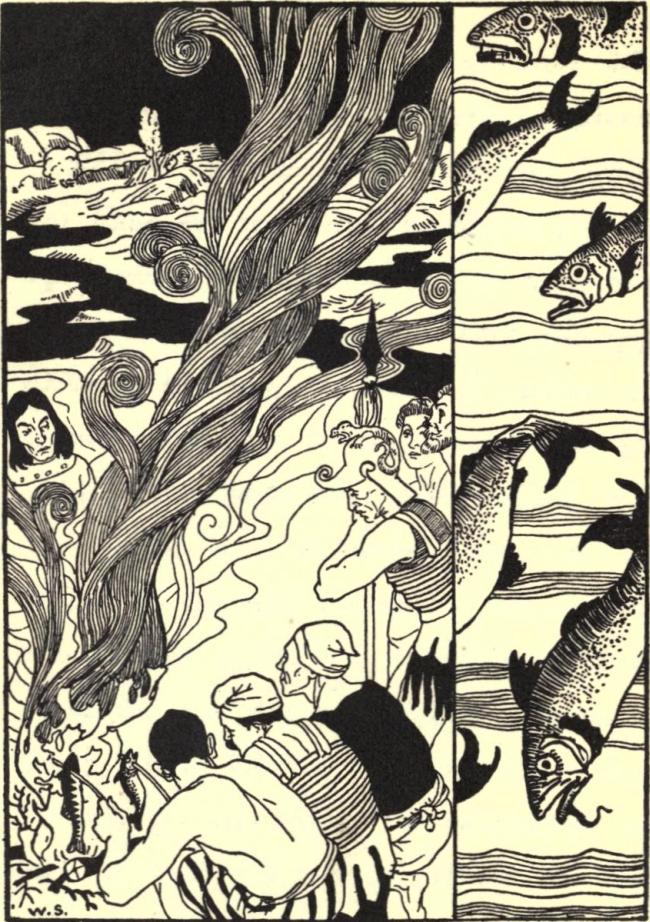
The third after, the ocean appeared plainly unto us, though we could see no land but what was in the air, and those countries also seemed to be fiery and of a glittering colour. The fourth day about noon, the wind gently forbearing, settled us fair and leisurely into the sea; and as soon as we found ourselves upon water, we were surprised with incredible gladness, and our joy was unexpressible; we feasted and made merry with such provision as we had; we cast ourselves into the sea, and swam up and down for our disport, for it was a calm. But oftentimes it falleth out that the change to the better is the beginning of greater evils: for when we had made only two days' sail in the water, as soon as the third day appeared, about sun-rising, upon a sudden we saw many monstrous fishes and whales: but one above the rest, containing in greatness fifteen hundred furlongs, which came gaping upon us and troubled the sea round about him, so that he was compassed on every side with froth and foam, showing his teeth afar off, which were longer than any beech trees are with us, all as sharp as needles, and as white as ivory: then we took, as we thought, our last leaves one of another, and embracing together, expected our ending day. The monster was presently with us, and swallowed us up ship and all; but by chance he caught us not between his chops, for the ship slipped through the void passages down into his entrails. When we were thus got within him we continued a good while in darkness, and could see nothing till he began to gape, and then we perceived it to be a monstrous whale of a huge breadth and height, big enough to contain a city that would hold ten thousand men: and within we found small fishes and many other creatures chopped in pieces, and the masts of ships and anchors and bones of men and luggage. In the midst of him was earth and hills, which were raised, as I conjectured, by the settling of the mud which came down his throat, for woods grew upon them and trees of all sorts and all manner of herbs, and it looked as if it had been husbanded. The compass of the land was two hundred and forty furlongs: there were also to be seen all kind of sea fowl, as gulls, halcyons and others that had made their nests upon the trees. Then we fell to weeping abundantly, but at the last I roused up my company, and propped up our ship and struck fire. Then we made ready supper of such as we had, for abundance of all sort of fish lay ready by us, and we had yet water enough left which we brought out of the Morning Star.
On the third day, we could clearly see the ocean, though the only land visible was in the air. Those lands, too, seemed fiery and glittering. Around noon on the fourth day, the wind eased and gently lowered us into the sea. As soon as we found ourselves on the water, we felt incredible delight, and our joy was beyond words. We feasted and celebrated with whatever supplies we had. Since the sea was calm, we jumped in and swam about for pleasure. But often a change for the better marks the beginning of greater troubles. We had sailed on the water for only two days when, around sunrise on the third, many monstrous fish and whales suddenly appeared. One whale towered above the rest, measuring fifteen hundred furlongs. The whale came toward us with its mouth open, churning up the sea until froth and foam surrounded it. We could see its teeth from far away. They were longer than any beech trees in our country, all sharp as needles and white as ivory. Then we said what we thought were our final goodbyes, embraced one another, and waited for death. The monster reached us at once and swallowed us, ship and all. But by chance, we escaped its jaws, for the ship slipped through the open space and down into its belly. Inside the whale, we spent a long time in darkness and could see nothing until it opened its mouth. Then we saw that the monstrous whale was enormously wide and tall, big enough to hold a city of ten thousand men. Inside, we found small fish and many other creatures torn to pieces, along with ships’ masts, anchors, human bones, and luggage. In the middle of the whale’s belly lay land and hills. I guessed the hills had formed from mud settling after coming down its throat. Woods grew on the hills, with trees of all kinds and every sort of plant. The land looked as if it had been cultivated. It measured two hundred and forty furlongs around. We also saw all kinds of seabirds, including gulls, kingfishers, and others, nesting in the trees. Then we began to weep bitterly. But at last I rallied my companions, propped up our ship, and lit a fire. Then we prepared supper from what we had, for fish of every kind lay around us in abundance. We also still had enough water left from the supply we had brought from the Morning Star.
The next morrow we rose to watch when the whale should gape: and then looking out, we could sometimes see mountains, sometimes only the skies, and many times islands, for we found that the fish carried himself with great swiftness to every part of the sea. When we grew weary of this, I took seven of my company, and went into the wood to see what I could find there, and we had not gone above five furlongs but we light upon a temple erected to Neptune, as by the title appeared, and not far off we espied many sepulchres and pillars placed upon them, with a fountain of clear water close unto it: we also heard the barking of a dog, and saw smoke rise afar off, so that we judged there was some dwelling thereabout. Wherefore making the more haste, we lighted upon an old man and a youth, who were very busy in making a garden and in conveying water by a channel from the fountain into it: whereupon we were surprised both with joy and fear: and they also were brought into the same taking, and for a long time remained mute. But after some pause, the old man said, What are ye, you strangers? any of the sea spirits? or miserable men like unto us? for we that are men by nature, born and bred in the earth, are now sea-dwellers, and swim up and down within the Continent of this whale, and know not certainly what to think of ourselves: we are like to men that be dead, and yet believe ourselves to be alive. Whereunto I answered, For our parts, father, we are men also, newly come hither, and swallowed up ship and all but yesterday: and now come purposely within this wood which is so large and thick: some good angel, I think, did guide us hither to have the sight of you, and to make us know that we are not the only men confined within this monster: tell us therefore your fortunes, we beseech you, what you are, and how you came into this place. But he answered, You shall not hear a word from me, nor ask any more questions until you have taken part of such viands as we are able to afford you. So he took us and brought us into his house, which was sufficient to serve his turn: his pallets were prepared, and all things else made ready. Then he set before us herbs and nuts and fish, and filled out of his own wine unto us: and when we were sufficiently satisfied, he then demanded of us what fortunes we had endured, and I related all things to him in order that had betide unto us, the tempest, the passages in the island, our navigation in the air, our war, and all the rest, even till our diving into the whale. Whereat he wondered exceedingly, and began to deliver also what had befallen to him, and said, By lineage, O ye strangers, I am of the isle Cyprus, and travelling from mine own country as a merchant, with this my son you see here, and many other friends with me, made a voyage for Italy in a great ship full fraught with merchandise, which perhaps you have seen broken in pieces in the mouth of the whale. We sailed with fair weather till we were as far as Sicily, but there we were overtaken with such a boisterous storm that the third day we were driven into the ocean, where it was our fortune to meet with this whale which swallowed us all up, and only we two escaped with our lives; all the rest perished, whom we have here buried and built a temple to Neptune. Ever since we have continued this course of life, planting herbs and feeding upon fish and nuts: here is wood enough, you see, and plenty of vines which yield most delicate wine: we have also a well of excellent cool water, which it may be you have seen: we make our beds of the leaves of trees, and burn as much wood as we will: we chase after the birds that fly about us, and go out upon the gills of the monster to catch after live fishes: here we bathe ourselves when we are disposed, for we have a lake of salt water not far off, about some twenty furlongs in compass, full of sundry sorts of fish, in which we swim and sail upon it in a little boat of mine own making. This is the seven-and-twentieth year of our drowning, and with all this we might be well enough contented if our neighbours and borderers about us were not perverse and troublesome, altogether insociable and of stern condition. Is it so, indeed, said I, that there should be any within the whale but yourselves? Many, said he, and such as are unreconcilable towards strangers, and of monstrous and deformed proportions. The western countries and the tail-part of the wood are inhabited by the Tarychanians that look like eels, with faces like a lobster: these are warlike, fierce, and feed upon raw flesh: they that dwell towards the right side are called Tritonomendetans, which have their upper parts like unto men, their lower parts like cats, and are less offensive than the rest. On the left side inhabit the Carcinochirians and the Thinnocephalians, which are in league one with another: the middle region is possessed by the Paguridians, and the Psettopodians, a warlike nation and swift of foot: eastwards towards the mouth is for the most part desert, as overwashed by the sea: yet am I fain to take that for my dwelling, paying yearly to the Psettopodians in way of tribute five hundred oysters.
The next morning we got up to watch for the whale to open its mouth. Looking out, we sometimes saw mountains, sometimes only the sky, and often islands. We found that the whale moved very swiftly through every part of the sea. When we grew tired of watching, I took seven of my companions into the woods to see what I could find. We had gone no more than five furlongs when we came upon a temple. Its inscription showed that it was dedicated to Neptune. Nearby we spotted many tombs with pillars standing on them, and a spring of clear water close by. We also heard a dog barking and saw smoke rising in the distance. So we thought someone must live nearby. We hurried on and came upon an old man and a young man. They were busy tending a garden and channeling water into it from the spring. We were overcome with both joy and fear. They felt the same, and for a long time neither side spoke. After a pause, the old man said, Who are you, strangers? Are you spirits of the sea, or unfortunate men like us? We are human by nature, born and raised on land. But now we live at sea, drifting about inside this whale as though it were a continent. We do not really know what to think of ourselves. We are like dead men, yet we believe we are alive. I answered, We too are men, father. We arrived here only yesterday, swallowed up with our ship and everything aboard. Now we have come to explore these vast, thick woods. Some good angel, I think, led us here to meet you. Now we know we are not the only people trapped inside this monster. So please tell us your story, who you are and how you came here. But he answered, You will hear nothing from me, and ask no more questions, until you have shared what food we can offer. He took us to his house, which was adequate for his needs. His simple beds were ready, and everything else was prepared. He served us herbs, nuts, and fish, and poured us some of his own wine. Once we had eaten and drunk enough, he asked what adventures we had been through. I told him everything in order: the storm, the events on the island, our voyage through the air, and our war. I went on through all the rest, right up to our plunge into the whale. He was utterly amazed, and then began to tell us what had happened to him. He said, Strangers, I come from the isle of Cyprus. I left my country on a trading voyage to Italy, with this son of mine and many friends. We sailed in a large ship fully loaded with goods. Perhaps you have seen its wreckage in the whale’s mouth. We had fair weather until we reached Sicily. But there such a violent storm struck us that, on the third day, we were driven into the ocean. There we happened to meet this whale, which swallowed us all. Only the two of us survived. All the others died. We buried them here and built a temple to Neptune. Ever since, we have lived this way, growing herbs and eating fish and nuts. As you can see, there is plenty of wood here. There are also many vines, which produce delicious wine. We also have a well of wonderfully cool water, which you may have seen. We make our beds from tree leaves and burn as much wood as we like. We hunt the birds that fly around us and go out onto the monster’s gills to catch live fish. We bathe here whenever we wish. Not far away is a saltwater lake, about twenty furlongs around, filled with many kinds of fish. We swim in the lake and sail on it in a little boat I made myself. This is the twenty-seventh year since we were swallowed. Despite everything, we might be quite content if our neighbors were not so hostile and troublesome, utterly unsociable and harsh. Is that so? I asked. Are there others inside the whale besides yourselves? Many, he said. They are implacably hostile to strangers, and their bodies are monstrous and misshapen. The western lands and the woods toward the tail are inhabited by the Tarychanians. They look like eels, with faces like lobsters. They are warlike and fierce, and they eat raw flesh. Those living on the right side are called Tritonomendetans. Their upper bodies are like men’s and their lower bodies like cats’. They are less troublesome than the others. On the left live the Carcinochirians and the Thinnocephalians, who are allies. The middle region belongs to the Paguridians and the Psettopodians, a warlike people who are swift on foot. Eastward, toward the mouth, the land is mostly deserted because the sea washes over it. Yet I am forced to live there, paying the Psettopodians five hundred oysters each year as tribute.
Of so many nations doth this country consist. We must therefore devise among ourselves either how to be able to fight with them, or how to live among them. What number may they all amount unto? said I. More than a thousand, said he. And what armour have they? None at all, said he, but the bones of fishes. Then were it our best course, said I, to encounter them, being provided as we are, and they without weapons, for if we prove too hard for them we shall afterward live out of fear. This we concluded upon, and went to our ship to furnish ourselves with arms. The occasion of war we gave by non-payment of tribute, which then was due, for they sent their messengers to demand it, to whom he gave a harsh and scornful answer, and sent them packing with their arrant. But the Psettopodians and Paguridians, taking it ill at the hands of Scintharus, for so was the man named, came against us with great tumult: and we, suspecting what they would do, stood upon our guard to wait for them, and laid five-and-twenty of our men in ambush, commanding them as soon as the enemy was passed by to set upon them, who did so, and arose out of their ambush, and fell upon the rear. We also being five-and-twenty in number (for Scintharus and his son were marshalled among us) advanced to meet with them, and encountered them with great courage and strength: but in the end we put them to flight and pursued them to their very dens. Of the enemies were slain an hundred threescore and ten, and but one of us besides Trigles, our pilot, who was thrust through the back with a fish's rib. All that day following and the night after we lodged in our trenches, and set on end a dry backbone of a dolphin instead of a trophy.
This country is made up of that many nations. So we must work out how to fight them or how to live among them. How many are there altogether? I asked. More than a thousand, he said. And what weapons do they have? None at all, he said, except fish bones. Then our best course is to fight them, I said, since we are well equipped and they have no weapons. For if we prove too strong for them, we can live without fear afterward. We agreed on this plan and went to our ship to arm ourselves. We gave them a reason for war by refusing to pay the tribute then due. They sent messengers to demand payment. He answered the messengers harshly and scornfully, then sent them away with their demand unanswered. The Psettopodians and Paguridians resented this treatment by Scintharus, for that was the man's name. They came against us with a great uproar. But we suspected what they would do and stood ready to meet them. We placed twenty-five of our men in ambush. We ordered these men to attack as soon as the enemy had passed them. The men followed our orders, rose from their hiding places, and attacked the enemy from behind. Our remaining force also numbered twenty-five, with Scintharus and his son among us. We advanced to meet the enemy and fought them with great courage and strength. In the end, we put them to flight and pursued them all the way to their dens. We killed a hundred and seventy of the enemy. We lost only one man besides Trigles, our pilot, who was stabbed through the back with a fish's rib. We stayed in our trenches for the rest of that day and the following night. We set up a dried dolphin's backbone as a trophy of victory.
The next morrow the rest of the country people, perceiving what had happened, came to assault us. The Tarychanians were ranged in the right wing, with Pelamus their captain: the Thinnocephalians were placed in the left wing: the Carcinochirians made up the main battle: for the Tritonomendetans stirred not, neither would they join with either part. About the temple of Neptune we met with them, and joined fight with a great cry, which was answered with an echo out of the whale as if it had been out of a cave: but we soon put them to flight, being naked people, and chased them into the wood, making ourselves masters of the country. Soon after they sent ambassadors to us to crave the bodies of the dead and to treat upon conditions of peace; but we had no purpose to hold friendship with them, but set upon them the next day and put them all to the sword except the Tritonomendetans, who, seeing how it fared with the rest of their fellows, fled away through the gills of the fish, and cast themselves into the sea. Then we travelled all the country over, which now was desert, and dwelt there afterwards without fear of enemies, spending the time in exercise of the body and in hunting, in planting vineyards and gathering fruit of the trees, like such men as live delicately and have the world at will, in a spacious and unavoidable prison. This kind of life led we for a year and eight months, but when the fifth day of the ninth month was come, about the time of the second opening of his mouth (for so the whale did once every hour, whereby we conjectured how the hours went away), I say about the second opening, upon a sudden we heard a great cry and a mighty noise like the calls of mariners and the stirring of oars, which troubled us not a little. Wherefore we crept up to the very mouth of the fish, and standing within his teeth, saw the strangest sight that ever eye beheld—men of monstrous greatness, half a furlong in stature, sailing upon mighty great islands as if they were upon shipboard. I know you will think this smells like a lie, but yet you shall have it. The islands were of a good length indeed, but not very high, containing about an hundred furlongs in compass; every one of these carried of those kind of men eight-and-twenty, of which some sat on either side of the island and rowed in their course with great cypress trees, branches, leaves and all, instead of oars. On the stern or hinder part, as I take it, stood the governor, upon a high hill, with a brazen rudder of a furlong in length in his hand: on the fore-part stood forty such fellows as those, armed for the fight, resembling men in all points but in their hair, which was all fire and burnt clearly, so that they needed no helmets. Instead of sails the wood growing in the island did serve their turns, for the wind blowing against it drave forward the island like a ship, and carried it which way the governor would have it, for they had pilots to direct them, and were as nimble to be stirred with oars as any long-boat. At the first we had the sight but of two or three of them: afterwards appeared no less than six hundred, which, dividing themselves in two parts, prepared for encounter, in which many of them by meeting with their barks together were broken in pieces, many were turned over and drowned: they that closed, fought lustily and would not easily be parted, for the soldiers in the front showed a great deal of valour, entering one upon another, and killed all they could, for none were taken prisoners. Instead of iron grapples they had mighty great polypodes fast tied, which they cast at the other, and if they once laid hold on the wood they made the isle sure enough for stirring. They darted and wounded one another with oysters that would fill a wain, and sponges as big as an acre. The leader on the one side was Æolocentaurus, and of the other Thalassopotes. The quarrel, as it seems, grew about taking a booty: for they said that Thalassopotes drave away many flocks of dolphins that belonged to Æolocentaurus, as we heard by their clamours one to another, and calling upon the names of their kings: but Æolocentaurus had the better of the day and sunk one hundred and fifty of the enemy's islands, and three they took with the men and all. The rest withdrew themselves and fled, whom the other pursued, but not far, because it grew towards evening, but returned to those that were wrecked and broken, which they also recovered for the most part, and took their own away with them: for on their part there were no less than fourscore islands drowned. Then they erected a trophy for a monument of this island fight, and fastened one of the enemy's islands with a stake upon the head of the whale. That night they lodged close by the beast, casting their cables about him, and anchored near unto him: their anchors are huge and great, made of glass, but of a wonderful strength. The morrow after, when they had sacrificed upon the top of the whale, and there buried their dead, they sailed away, with great triumph and songs of victory. And this was the manner of the islands' fight.
The next morning, the rest of the country’s people realized what had happened and came to attack us. The Tarychanians formed the right wing, with Pelamus as their captain. The Thinnocephalians formed the left wing, and the Carcinochirians held the center. The Tritonomendetans stayed where they were and refused to join either side. We met our enemies near the temple of Neptune and charged into battle with a great shout. The shout echoed inside the whale as if inside a cave. But we soon drove our enemies back, since they were naked. We chased them into the woods and took control of the country. Soon afterward, they sent ambassadors to ask for their dead and discuss terms of peace. But we had no intention of making friends with them. Instead, we attacked the next day and killed them all with our swords, except the Tritonomendetans. Seeing what had happened to their companions, the Tritonomendetans escaped through the fish’s gills and threw themselves into the sea. Then we explored the whole country, which was now deserted. Afterward, we lived there without fear of enemies, spending our time exercising, hunting, planting vineyards, and gathering fruit from trees. We lived like men enjoying every luxury, with everything we could wish for, in a spacious prison with no escape. We lived this way for a year and eight months. Then, on the fifth day of the ninth month, something happened around the whale’s second opening of its mouth. The whale opened its mouth once every hour, which allowed us to estimate the passing hours. Around that second opening, I say, we suddenly heard loud shouting and a tremendous noise. It sounded like sailors calling and oars moving, and it alarmed us greatly. So we crept right up to the fish’s mouth and stood inside its teeth. There we saw the strangest sight any eye had ever seen. Men of monstrous size, half a furlong tall, were sailing on enormous islands as if aboard ships. I know you will think this sounds like a lie, but you shall hear it anyway. The islands were certainly long, though not very high, and each measured about a hundred furlongs around. Each island carried twenty-eight of these men. Some sat along either side, rowing with enormous cypress trees, branches, leaves, and all, instead of oars. At the stern, or rear, as I took it to be, the commander stood on a high hill. He held a bronze rudder a furlong long. At the front stood forty more such fellows, armed for battle. They looked human in every way except for their hair, which was entirely fire and burned brightly. So they needed no helmets. The woods growing on each island served as sails. The wind blew against the trees and drove the island forward like a ship, wherever the commander wanted it to go. They had pilots to steer them, and their islands responded to the oars as nimbly as any longboat. At first, we saw only two or three islands. Then no fewer than six hundred appeared, divided into two sides, and prepared for battle. Many islands smashed into one another and broke apart. Many overturned and sank. Those who came close fought fiercely and were not easily separated. The soldiers at the front showed great courage, boarding one another’s islands and killing everyone they could. No prisoners were taken. Instead of iron grappling hooks, they had enormous octopuses tied securely to ropes, which they threw at the enemy. Once the octopuses gripped the trees, they held the island fast. The fighters hurled oysters large enough to fill a wagon and sponges as big as an acre, wounding one another. Æolocentaurus led one side, and Thalassopotes led the other. The quarrel apparently arose over stolen property. They said Thalassopotes had driven away many herds of dolphins belonging to Æolocentaurus. We learned this from their shouts to one another and their calls to their kings by name. But Æolocentaurus won the day. His forces sank a hundred and fifty enemy islands and captured three more, along with everyone aboard. The remaining enemies withdrew and fled. The victors pursued them, but not far, because evening was approaching. Then they returned to the wrecked and broken islands and recovered most of them. They also took their own islands away with them, for no fewer than eighty islands on their side had sunk. Then they set up a trophy to commemorate this battle of islands. They fastened one of the enemy’s islands to the whale’s head with a stake. That night, they stayed close to the beast, looping their cables around it and anchoring nearby. Their anchors are enormous and made of glass, but remarkably strong. The next morning, they offered sacrifices on top of the whale and buried their dead there. Then they sailed away in great triumph, singing songs of victory. And that was how the battle of the islands was fought.