Book 2
Upon this we began to be weary of our abode in the whale, and our tarriance there did much trouble us. We therefore set all our wits a-work to find out some means or other to clear us from our captivity. First, we thought it would do well to dig a hole through his right side and make our escape that way forth, which we began to labour at lustily; but after we had pierced him five furlongs deep and found it was to no purpose, we gave it over. Then we devised to set the wood on fire, for that would certainly kill him without all question, and being once dead, our issue would be easy enough. This we also put in practice, and began our project at the tail end, which burnt seven days and as many nights before he had any feeling of our fireworks: upon the eighth and ninth days we perceived he began to grow sickly: for he gaped more dully than he was wont to do, and sooner closed his mouth again: the tenth and eleventh he was thoroughly mortified and began to stink: upon the twelfth day we bethought ourselves, though almost too late, that unless we underpropped his chops when he gaped next to keep them from closing, we should be in danger of perpetual imprisonment within his dead carcase and there miserably perish.
By then, we were growing tired of living inside the whale, and our long stay troubled us greatly. So we put all our minds to finding some way to escape our captivity. First, we thought we could dig a hole through his right side and escape that way. We began digging with great energy. But after digging five furlongs deep and finding we were getting nowhere, we gave up. Then we decided to set the woods on fire, since the fire would certainly kill him. Once he was dead, escaping would be easy enough. So we put our plan into action, starting the fire at his tail end. The fire burned for seven days and seven nights before he felt anything from our fireworks. On the eighth and ninth days, we noticed he was beginning to grow sick. He opened his mouth more sluggishly than usual and closed it again sooner. On the tenth and eleventh days, he was completely dead and beginning to stink. On the twelfth day, we realized something, though almost too late. Unless we propped his jaws open the next time he opened his mouth, we risked being trapped forever inside his dead body. There we would die miserably.
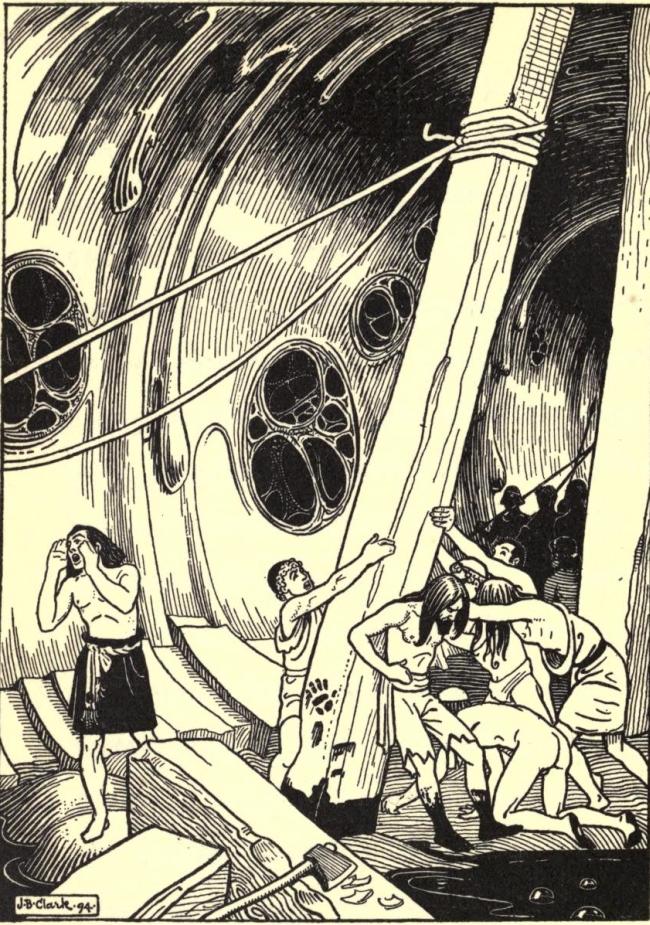
We therefore pitched long beams of timber upright within his mouth to keep it from shutting, and then made our ship in a readiness, and provided ourselves with store of fresh water, and all other things necessary for our use, Scintharus taking upon him to be our pilot, and the next morrow the whale died. Then we hauled our ship through the void passages, and fastening cables about his teeth, by little and little settled it into the sea, and mounting the back of the whale, sacrificed to Neptune, and for three days together took up our lodging hard by the trophy, for we were becalmed. The fourth day we put to sea, and met with many dead corpses that perished in the late sea-fight, which our ship hit against, whose bodies we took measure of with great admiration, and sailed for a few days in very temperate weather. But after that the north wind blew so bitterly that a great frost ensued, wherewith the whole sea was all frozen up, not only superficially upon the upper part, but in depth also the depth of four hundred fathoms, so that we were fain to forsake our ship and run upon the ice. The wind sitting long in this corner, and we not able to endure it, put this device in practice, which was the invention of Scintharus:—with mattocks and other instruments we made a mighty cave in the water, wherein we sheltered ourselves forty days together: in it we kindled fire, and fed upon fish, of which we found great plenty in our digging. At the last, our provision falling short, we returned to our frozen ship, which we set upright, and spreading her sails, went forward as well as if we had been upon water, leisurely and gently sliding upon the ice; but on the fifth day the weather grew warm, and the frost brake, and all was turned to water again. We had not sailed three hundred furlongs forwards but we came to a little island that was desert, where we only took in fresh water (which now began to fail us), and with our shot killed two wild bulls, and so departed. These bulls have their horns growing not upon their heads but under their eyes, as Momus thought it better. Then we entered into a sea, not of water but of milk, in which appeared a white island full of vines. This island was only a great cheese well pressed (as we afterwards found when we fed upon it), about some five-and-twenty furlongs in bigness: the vines were full of clusters of grapes, out of which we could crush no wine, but only milk: in the midst of the island there was a temple built dedicated to Galatea, one of the daughters of Nereus, as by the inscription appeared. As long as we remained there the soil yielded us food and victuals, and our drink was the milk that came out of the grapes: in these, as they said, reigneth Tyro, the daughter of Salmoneus, who, after her departure, received this guerdon at the hands of Neptune.
So we set long wooden beams upright inside the whale’s mouth to keep it from closing. Then we prepared our ship and stocked up on fresh water and everything else we needed. Scintharus agreed to be our pilot, and the next morning the whale died. Then we hauled our ship through the open passages and fastened ropes around the whale’s teeth. Using these ropes, we gradually lowered the ship into the sea. We climbed onto the whale’s back and sacrificed to Neptune. For three days we camped near the trophy, because there was no wind. On the fourth day we set sail. We came across many bodies of those who had died in the recent sea battle. Our ship bumped against them, and we measured the bodies in great amazement. We sailed for a few days in very mild weather. But then the north wind blew so bitterly that a severe frost followed. The whole sea froze, not just on the surface but down to a depth of four hundred fathoms. So we had to abandon our ship and run across the ice. The wind kept blowing from the north, and we could not bear the cold. So we carried out a plan devised by Scintharus. With mattocks and other tools, we dug a huge cave in the frozen water. We sheltered there for forty days, lighting a fire and eating the many fish we found as we dug. At last, our supplies ran low, so we returned to our frozen ship and set it upright. We spread its sails and moved forward as well as if we had been on water. The ship slid slowly and smoothly over the ice. But on the fifth day, the weather grew warm, the ice broke up, and everything turned to water again. Before we had sailed three hundred furlongs, we reached a small, deserted island. There we did nothing but replenish our dwindling fresh water and kill two wild bulls with our weapons before leaving. These bulls have horns growing under their eyes rather than on their heads, as Momus thought would be better. Then we entered a sea of milk rather than water, where we saw a white island covered with vines. The island was nothing but a large, firmly pressed cheese, as we later discovered when we ate some. It measured about twenty-five furlongs across. The vines were full of bunches of grapes, but we could squeeze only milk from them, not wine. In the middle of the island stood a temple dedicated to Galatea, one of the daughters of Nereus. We learned this from the inscription. As long as we stayed there, the ground supplied our food, and we drank the milk from the grapes. They said that Tyro, the daughter of Salmoneus, ruled these lands. After her death, Neptune had given her this reward.
In this island we rested ourselves five days, and on the sixth put to sea again, a gentle gale attending us, and the seas all still and quiet. The eighth day, as we sailed onward, not in milk any longer, but in salt and azure water, we saw many men running upon the sea, like unto us every way forth, both in shape and stature, but only for their feet, which were of cork, whereupon, I suppose, they had the name of Phellopodes.
We rested on this island for five days, and on the sixth we set sail again. A gentle breeze carried us along, and the sea was completely calm and still. On the eighth day, we sailed on, no longer through milk but through salty, blue water. We saw many men running on the sea. The men were just like us in every way, in both shape and size, except for their cork feet. I suppose those feet gave them the name Phellopodes.
We marvelled much when we saw they did not sink, but keep above water, and travel upon it so boldly. These came unto us, and saluted us in the Grecian language, and said they were bound towards Phello, their own country, and for a while ran along by us, but at last turned their own way and left us, wishing us a happy and prosperous voyage. Within a while after many islands appeared, and near unto them, upon our left hand, stood Phello, the place whereunto they were travelling, which was a city seated upon a mighty great and round cork. Further off, and more towards the right hand, we saw five other islands, large and mountainous, in which much fire was burning; but directly before us was a spacious flat island, distant from us not above five hundred furlongs: and approaching somewhat near unto it, a wonderful fragrant air breathed upon us, of a most sweet and delicate smell, such as Herodotus, the story-writer, saith ariseth out of Arabia the happy, consisting of a mixture of roses, daffodils, gillyflowers, lilies, violets, myrtles, bays, and blossoms of vines: such a dainty odoriferous savour was conveyed unto us.
We were amazed to see that they did not sink but stayed afloat and traveled so boldly over the water. They came up to us, greeted us in Greek, and said they were heading for Phello, their own country. For a while they ran alongside us, but then they went their own way. As they left, they wished us a happy and prosperous voyage. Soon afterward, many islands appeared. Near them, on our left, stood Phello, the place our visitors were heading for. It was a city built on an enormous round piece of cork. Farther off, toward the right, we saw five other islands, large and mountainous, with great fires burning on them. But directly ahead lay a broad, flat island, no more than five hundred furlongs away. As we drew somewhat closer, a wonderfully fragrant breeze reached us, carrying an exquisitely sweet and delicate scent. It was like the scent that Herodotus, the historian, says rises from Arabia the happy. The fragrance blended roses, daffodils, gillyflowers, lilies, violets, myrtles, bays, and vine blossoms. Such a delightful perfume drifted toward us.
Being delighted with this smell, and hoping for better fortunes after our long labours, we got within a little of the isle, in which we found many havens on every side, not subject to overflowing, and yet of great capacity, and rivers of clear water emptying themselves easily into the sea, with meadows and herbs and musical birds, some singing upon the shore, and many upon the branches of trees, a still and gentle air compassing the whole country. When pleasant blasts gently stirred the woods the motion of the branches made a continual delightsome melody, like the sound of wind instruments in a solitary place: a kind of clamour also was heard mixed with it, yet not tumultuous nor offensive, but like the noise of a banquet, when some do play on wind instruments, some commend the music, and some with their hands applaud the pipe, or the harp. All which yielded us so great content that we boldly entered the haven, made fast our ship and landed, leaving in her only Scintharus and two more of our companions behind us. Passing along through a sweet meadow we met with the guards that used to sail about the island, who took us and bound us with garlands of roses (which are the strictest bands they have), to be carried to their governor: from them we heard, as we were upon the way, that it was the island of those that are called blessed, and that Rhadamanthus was governor there, to whom we were brought and placed the fourth in order of them that were to be judged.
Delighted by the smell, we hoped for better fortune after our long hardships and drew close to the island. We found many spacious harbors on every side, sheltered from flooding. Rivers of clear water flowed gently into the sea. There were meadows, herbs, and musical birds, some singing on the shore and many in the trees. A calm, gentle air surrounded the whole country. When pleasant breezes softly stirred the woods, the moving branches made a constant, delightful melody. It sounded like wind instruments playing in a lonely place. Other sounds mingled with the melody, but they were neither disorderly nor unpleasant. They sounded like a banquet, where some people play wind instruments and some praise the music. Others clap their hands to applaud the pipe or harp. All these things delighted us so much that we boldly entered the harbor, secured our ship, and went ashore. We left only Scintharus and two more of our companions aboard. As we crossed a lovely meadow, we met the guards who regularly sailed around the island. They seized us and bound us with garlands of roses, the strongest bonds they have, to take us to their governor. On the way, the guards told us this was the island of those called blessed, and Rhadamanthus was its governor. We were brought before Rhadamanthus and placed fourth in line among those waiting to be judged.
The first trial was about Ajax, the son of Telamon, whether he were a meet man to be admitted into the society of the Heroes or not: the objections against him were his madness and the killing of himself: and after long pleading to and fro, Rhadamanthus gave this sentence, that for the present he should be put to Hippocrates, the physician of Cos, to be purged with helleborus, and upon the recovery of his wits to have admittance.
The first trial concerned Ajax, the son of Telamon, and whether he was fit to join the Heroes. The objections were his madness and his suicide. After lengthy arguments on both sides, Rhadamanthus ruled that Ajax should first be sent to Hippocrates, the physician of Cos. Ajax was to be purged with helleborus and admitted to the Heroes once he regained his sanity.
The second was a controversy of love, Theseus and Menelaus contending which had the better right to Helen; but Rhadamanthus gave judgment on Menelaus' side, in respect of the manifold labours and perils he had incurred for that marriage' sake, whereas Theseus had wives enough beside to live withal—as the Amazon, and the daughters of Minos. The third was a question of precedency between Alexander, the son of Philip, and Hannibal, the Carthaginian, in which Alexander was preferred, and his throne placed next to the elder Cyrus the Persian.
The second case was a dispute over love. Theseus and Menelaus argued over who had the stronger claim to Helen. But Rhadamanthus ruled in favor of Menelaus because of the many hardships and dangers he had faced for the marriage. Theseus, on the other hand, had enough other wives to live with, including the Amazon and the daughters of Minos. The third case concerned rank, between Alexander, the son of Philip, and Hannibal, the Carthaginian. Alexander was given the higher rank, and his throne was placed next to the elder Cyrus the Persian.
In the fourth place we appeared, and he demanded of us what reason we had, being living men, to take land in that sacred country, and we told him all our adventures in order as they befell us: then he commanded us to stand aside, and considering upon it a great while, in the end proposed it to the benchers, which were many, and among them Aristides the Athenian, surnamed the Just: and when he was provided what sentence to deliver, he said that for our busy curiosity and needless travels we should be accountable after our death; but for the present we should have a time limited for our abode, during which we should feast with the Heroes and then depart, prefixing us seven months' liberty to conclude our tarriance, and no more. Then our garlands fell off from us of themselves, and we were set loose and led into the city to feast with the blessed.
We were the fourth to appear before him. He asked why we, as living men, had landed in that sacred country. We told him all our adventures in the order they had happened. Then he ordered us to stand aside and thought the matter over for a long time. At last, he put the case before the many judges, including Aristides the Athenian, known as the Just. When he had decided on our sentence, he said we would answer after death for our meddlesome curiosity and needless travels. But for now, we could stay for a limited time, feasting with the Heroes before we left. He gave us seven months to stay, and no more. Then our garlands fell off by themselves, and we were released and led into the city to feast with the blessed.
The city was all of gold, compassed with a wall made of the precious stone smaragdus, which had seven gates, every one cut out of a whole piece of timber of cinnamon-tree: the pavement of the city and all the ground within the walls was ivory: the temples of all the gods are built of beryl, with large altars made all of one whole amethyst, upon which they offer their sacrifices: about the city runneth a river of most excellent sweet ointment, in breadth an hundred cubits of the larger measure, and so deep that a man may swim in it with ease. For their baths they have great houses of glass, which they warm with cinnamon: and their bathing-tubs are filled with warm dew instead of water. Their only garments are cobwebs of purple colour; neither have they any bodies, but are intactile and without flesh, a mere shape and presentation only: and being thus bodiless, they yet stand, and are moved, are intelligent, and can speak: and their naked soul seemeth to wander up and down in a corporal likeness: for if a man touch them not he cannot say otherwise, but that they have bodies, altogether like shadows standing upright, and not, as they are, of a dark colour. No man waxeth any older there than he was before, but of what age he comes thither, so he continues. Neither is there any night with them, nor indeed clear day: but like the twilight towards morning before the sun be up, such a kind of light do they live in. They know but one season of the year which is the spring, and feel no other wind but Zephyrus. The region flourisheth with all sorts of flowers, and with all pleasing plants fit for shade: their vines bear fruit twelve times a year, every month once: their pomegranate-trees, their apple-trees, and their other fruit, they say, bear thirteen times in the year, for in the month called Minous they bear twice. Instead of wheat their ears bear them loaves of bread ready baked, like unto mushrooms. About the city are three hundred three-score and five wells of water, and as many of honey, and five hundred of sweet ointment, for they are less than the other. They have seven rivers of milk and eight of wine.
The city was entirely made of gold, surrounded by a wall of the precious stone smaragdus, or emerald. The wall had seven gates, each carved from a single piece of cinnamon wood. The city’s pavement and all the ground within the walls were ivory. The temples of all the gods are built of beryl. Their large altars are each made from a single amethyst, on which they offer sacrifices. A river of wonderfully sweet perfume flows around the city. It is a hundred cubits wide by the larger measure, and deep enough for a person to swim easily. Their bathhouses are large glass buildings heated with cinnamon. Their bathtubs are filled with warm dew instead of water. Their only clothes are purple cobwebs. They have no bodies, but are intangible and fleshless, nothing more than shapes and appearances. Yet despite having no bodies, they stand, move, think, and speak. Their naked souls seem to wander about in bodily form. For unless you touch them, you cannot tell that they have no bodies. They look just like shadows standing upright, except that they are not dark. No one grows any older there. Everyone remains the same age as when they arrived. They have no night, nor any full daylight. Instead, they live in a light like the twilight before sunrise. They know only one season, spring, and feel no wind but Zephyrus. The land flourishes with every kind of flower and every pleasant plant that provides shade. Their vines bear fruit twelve times a year, once each month. Their pomegranate trees, apple trees, and other fruit trees, they say, bear thirteen times a year. For in the month called Minous, these trees bear fruit twice. Instead of wheat, their ears of grain produce ready-baked loaves of bread, like mushrooms. Around the city are 365 wells of water, just as many of honey, and 500 of sweet perfume. There are more perfume wells because these are smaller than the others. They have seven rivers of milk and eight of wine.
They keep their feast without the city in a field called Elysium, which is a most pleasant meadow, environed with woods of all sorts, so thick that they serve for a shade to all that are invited, who sit upon beds of flowers, and are waited upon, and have everything brought unto them by the winds, unless it be to have the wine filled: and that there is no need of: for about the banqueting place are mighty great trees growing of clear and pure glass, and the fruit of those trees are drinking-cups and other kind of vessels of what fashion or greatness you will: and every man that comes to the feast gathers one or two of those cups, and sets them before him, which will be full of wine presently, and then they drink. Instead of garlands the nightingales and other musical birds gather flowers with their beaks out of the meadows adjoining, and flying over their heads with chirping notes scatter them among them.
They hold their feast outside the city in a field called Elysium, a very pleasant meadow. Woods of every kind surround the meadow, so thick that they shade all the guests. The guests sit on beds of flowers, and the winds serve them and bring them everything except refills of wine. But no one needs wine poured for them. Enormous trees of clear, pure glass grow around the feasting place. Their fruit consists of drinking cups and other vessels of whatever shape or size you want. Every man who comes to the feast picks one or two cups and sets them before him. The cups fill with wine at once, and then the guests drink. Instead of garlands, nightingales and other songbirds gather flowers in their beaks from the nearby meadows. The birds fly over the guests' heads, singing and scattering the flowers among them.
They are anointed with sweet ointment in this manner: sundry clouds draw that unguent out of the fountains and the rivers, which settling over the heads of them that are at the banquet, the least blast of wind makes a small rain fall upon them like unto a dew. After supper they spend the time in music and singing: their ditties that are in most request they take out of Homer's verses, who is there present himself and feasteth among them, sitting next above Ulysses: their choirs consist of boys and virgins, which were directed and assisted by Eunomus the Locrian, and Arion the Lesbian, and Anacreon, and Stesichorus, who hath had a place there ever since his reconcilement with Helena. As soon as these have done there enter a second choir of swans, swallows, and nightingales; and when they have ended, the whole woods ring like wind-instruments by the stirring of the air.
They are anointed with fragrant ointment in this way: clouds draw the ointment from the fountains and rivers. The clouds settle over the heads of the banquet guests. The slightest breeze then sends a light rain of ointment down on them like dew. After supper, they spend their time in music and singing. Their most popular songs come from Homer's verses. Homer himself is there, feasting among them, seated just above Ulysses. Their choirs consist of boys and maidens. Eunomus the Locrian, Arion the Lesbian, Anacreon, and Stesichorus direct and assist the choirs. Stesichorus has had a place there ever since his reconciliation with Helena. As soon as these singers finish, a second choir enters, made up of swans, swallows, and nightingales. When the birds finish, the moving air makes the whole forest ring like wind instruments.
But that which maketh most for their mirth are two wells adjoining to the banqueting place, the one of laughter, the other of pleasure: of these every man drinks to begin the feast withal, which makes them spend the whole time in mirth and laughter.
But two wells beside the banqueting hall do the most to keep them merry. One is the well of laughter, the other the well of pleasure. Everyone drinks from these wells at the start of the feast. As a result, they spend the whole feast in merriment and laughter.
I will also relate unto you what famous men I saw in that association. There were all the demigods, and all that fought against Troy, excepting Ajax the Locrian: he only, they told me, was tormented in the region of the unrighteous. Of barbarians there was the elder and the younger Cyrus, and Anacharsis the Scythian, Zamolxis the Thracian, and Numa the Italian. There was also Lycurgus the Lacedæmonian, and Phocion and Tellus the Athenians, and all the Wise Men, unless it were Periander.
I will also tell you which famous men I saw in that company. All the demigods were there, along with everyone who fought against Troy, except Ajax the Locrian. They told me that he alone was being tormented in the region of the unrighteous. Among the barbarians were the elder and the younger Cyrus, Anacharsis the Scythian, Zamolxis the Thracian, and Numa the Italian. Also present were Lycurgus the Lacedæmonian, Phocion and Tellus the Athenians, and all the Wise Men, except perhaps Periander.
I also saw Socrates, the son of Sophroniscus, prattling with Nestor and Palamedes, and close by him stood Hyacinthus the Lacedæmonian, and the gallant Narcissus and Hylas, and other beautiful and lovely youths, and for aught I could gather by him he was far in love with Hyacinthus, for he discoursed with him more than all the rest: for which cause, they said, Rhadamanthus was offended at him, and often threatened to thrust him out of the island if he continued to play the fool in that fashion, and not give over his idle manner of jesting, when he was at their banquet. Only Plato was not present, for they said he dwelled in a city framed by himself, observing the same rule of government and laws as he had prescribed for them to live under.
I also saw Socrates, the son of Sophroniscus, chattering with Nestor and Palamedes. Close by stood Hyacinthus the Lacedæmonian, the handsome Narcissus and Hylas, and other beautiful and lovely youths. As far as I could tell, Socrates was deeply in love with Hyacinthus. He talked with Hyacinthus more than with all the others. Because of this, people said, Rhadamanthus was annoyed with Socrates and often threatened to expel him from the island. He would do so if Socrates kept acting so foolishly and would not stop his silly joking at their banquet. Only Plato was absent. People said he lived in a city he had designed himself. There he followed the same system of government and laws he had laid down for its inhabitants.
Aristippus and Epicurus are prime men amongst them, because they are the most jovial good fellows and the best companions. Diogenes the Sinopean was so far altered from the man he was before that he married with Lais the harlot, and was many times so drunk that he would rise and dance about the room as a man out of his senses. Æsop the Phrygian served them for a jester. There was not one Stoic in company but were still busied in ascending the height of virtue's hill: and of Chrysippus we heard that it was not lawful for him by any means to touch upon the island until he have the fourth time purged himself with helleborus. The Academics, they say, were willing enough to come, but that they yet are doubtful and in suspense, and cannot comprehend how there should be any such island; but indeed, I think, they were fearful to come to be judged by Rhadamanthus, because themselves have abolished all kind of judgment: yet many of them, they say, had a desire, and would follow after those that were coming hither, but were so slothful as to give it over because they were not comprehensive, and therefore turned back in the midst of their way.
Aristippus and Epicurus are the leading men among them because they are the merriest fellows and the best companions. Diogenes the Sinopean had changed so much from his former self that he married Lais the prostitute. He was often so drunk that he would get up and dance around the room like a madman. Æsop the Phrygian acted as their jester. There was not a single Stoic among them. The Stoics were all still busy climbing virtue's hill. We heard that Chrysippus was forbidden to set foot on the island until he had purged himself a fourth time with helleborus. The Academics, they say, were willing enough to come. But the Academics are still uncertain and undecided, unable to understand how such an island could exist. In fact, I think they were afraid to face judgment from Rhadamanthus, because they themselves had rejected every kind of judgment. Still, many of them, they say, wanted to come and would follow those heading here. But they were so lazy that they gave up because they could not grasp the idea. So they turned back halfway.
These were all the men of note that I saw there; and amongst them all Achilles was held to be the best man, and next to him Theseus. For their manner of venery and copulation thus it is: they couple openly in the eyes of all men, both with females and male kind, and no man holds it for any dishonesty. Only Socrates would swear deeply that he accompanied young men in a cleanly fashion, and therefore every man condemned him for a perjured fellow: and Hyacinthus and Narcissus both confessed otherwise for all his denial.
These were all the notable men I saw there. Among them all, Achilles was considered the best man, followed by Theseus. As for their sexual habits, they have sex openly, in full view of everyone, with both women and men. No one considers it shameful. Only Socrates swore solemnly that his relations with young men were innocent, so everyone condemned him for swearing falsely. Despite his denials, Hyacinthus and Narcissus both admitted otherwise.
The women there are all in common, and no man takes exception at it, in which respect they are absolutely the best Platonists in the world: and so do the boys yield themselves to any man's pleasure without contradiction.
All the women there are shared, and no man objects. In that respect, the people there are absolutely the best Platonists in the world. Likewise, the boys submit to any man's sexual pleasure without objection.
After I had spent two or three days in this manner, I went to talk with Homer the poet, our leisure serving us both well, and to know of him what countryman he was, a question with us hard to be resolved, and he said he could not certainly tell himself, because some said he was of Chios, some of Smyrna, and many to be of Colophon; but he said indeed he was a Babylonian, and among his own countrymen not called Homer but Tigranes, and afterwards living as an hostage among the Grecians, he had therefore that name put upon him. Then I questioned him about those verses in his books that are disallowed as not of his making, whether they were written by him or not, and he told me they were all his own, much condemning Zenodotus and Aristarchus, the grammarians, for their weakness in judgment.
After spending two or three days this way, I went to talk with Homer the poet. We both had plenty of free time. I wanted to ask where he came from, a question we found hard to settle. He said he could not say for certain himself. Some said he came from Chios, some from Smyrna, and many from Colophon. But he said he was actually a Babylonian. In his own country, he was called Tigranes, not Homer. Later, he lived among the Greeks as a hostage, and that was how he got the name Homer. Then I asked about the verses in his books that were rejected as someone else’s work. Had he written those verses or not? He told me they were all his own. He strongly criticized the grammarians Zenodotus and Aristarchus for their poor judgment.
When he had satisfied me in this, I asked him again why he began the first verse of his poem with anger: and he told me it fell out so by chance, not upon any premeditation. I also desired to know of him whether he wrote his Odysseys before his Iliads, as many men do hold: but he said it was not so. As for his blindness which is charged upon him, I soon found it was far otherwise, and perceived it so plainly that I needed not to question him about it.
Once he had satisfied me on that point, I asked why he began his poem’s first verse with anger. He told me it happened by chance, not by design. I also asked whether he wrote his Odysseys before his Iliads, as many people believe. But he said he had not. As for the claim that he was blind, I soon saw clearly that he was not. His sight was so obvious that I did not need to ask him about it.
Thus was I used to do many days when I found him idle, and would go to him and ask him many questions, which he would give me answer to very freely: especially when we talked of a trial he had in the court of justice, wherein he got the better: for Thersites had preferred a bill of complaint against him for abusing him and scoffing at him in his Poem, in which action Homer was acquitted, having Ulysses for his advocate.
For many days, whenever I found him free, I would visit him and ask him many questions. He answered very freely, especially when we discussed a court case he had won. Thersites had filed a complaint against Homer for insulting and mocking him in his poem. Homer was acquitted, with Ulysses as his lawyer.
About the same time came to us Pythagoras the Samian, who had changed his shape now seven times, and lived in as many lives, and accomplished the periods of his soul. The right half of his body was wholly of gold; and they all agreed that he should have place amongst them, but were doubtful what to call him, Pythagoras or Euphorbus. Empedocles also came to the place, scorched quite over, as if his body had been broiled upon the embers; but could not be admitted for all his great entreaty.
Around the same time, Pythagoras the Samian came to us. He had now changed his form seven times and lived seven lives, completing his soul’s cycles. The right half of his body was entirely gold. Everyone agreed that he should have a place among them. But they were unsure whether to call him Pythagoras or Euphorbus. Empedocles also arrived, scorched all over, as if his body had been roasted on hot coals. But despite all his pleading, he could not gain admission.
The time passing thus along, the day of prizes for masteries of activity now approached, which they call Thanatusia. The setters of them forth were Achilles the fifth time, and Theseus the seventh time. To relate the whole circumstance would require a long discourse, but the principal points I will deliver. At wrestling Carus, one of the lineage of Hercules, had the best, and wan the garland from Ulysses. The fight with fists was equal between Arius the Ægyptian, who was buried at Corinth, and Epius, that combated for it. There was no prize appointed for the Pancratian fight: neither do I remember who got the best in running: but for poetry, though Homer without question were too good for them all, yet the best was given to Hesiodus. The prizes were all alike, garlands plotted of peacocks' feathers.
As time passed in this way, the day for athletic contests with prizes approached, known as Thanatusia. Achilles organized the games for the fifth time, and Theseus for the seventh. A full account would take too long, but I will give the main points. In wrestling, Carus, a descendant of Hercules, won the garland over Ulysses. The boxing match ended in a draw between Arius the Ægyptian and Epius. Arius was buried at Corinth. No prize was offered for the Pancratian fight, and I do not remember who won the running race. But in poetry, although Homer was unquestionably better than all the others, first prize went to Hesiodus. The prizes were all the same: garlands woven from peacocks' feathers.
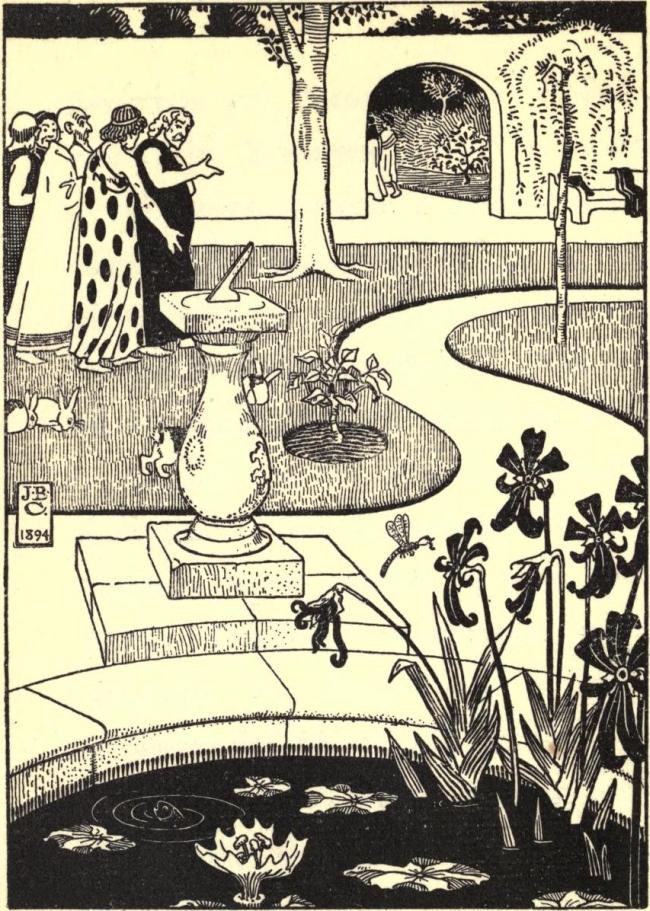
As soon as the games were ended, news came to us that the damned crew in the habitation of the wicked had broken their bounds, escaped the gaolers, and were coming to assail the island, led by Phalaris the Agrigentine, Busyris the Ægyptian, Diomedes the Thracian, Sciron, Pituocamptes, and others: which Rhadamanthus hearing, he ranged the Heroes in battle array upon the sea-shore, under the leading of Theseus and Achilles and Ajax Telamonius, who had now recovered his senses, where they joined fight; but the Heroes had the day, Achilles carrying himself very nobly. Socrates also, who was placed in the right wing, was noted for a brave soldier, much better than he was in his lifetime, in the battle at Delium: for when the enemy charged him, he neither fled nor changed countenance: wherefore afterwards, in reward of his valour, he had a prize set out for him on purpose, which was a beautiful and spacious garden, planted in the suburbs of the city, whereunto he invited many, and disputed with them there, giving it the name of Necracademia.
As soon as the games ended, we heard that the damned in the dwelling of the wicked had broken free. They had escaped their jailers and were coming to attack the island. Their leaders were Phalaris the Agrigentine, Busyris the Ægyptian, Diomedes the Thracian, Sciron, Pituocamptes, and others. When Rhadamanthus heard the news, he lined up the Heroes for battle on the seashore. Theseus, Achilles, and Ajax Telamonius commanded them. Ajax had now recovered his senses. The two sides fought there, but the Heroes won, with Achilles fighting very nobly. Socrates, stationed on the right wing, also distinguished himself as a brave soldier. He fought much better than he had during his lifetime at the battle of Delium. When the enemy charged him, he neither fled nor showed any change in his expression. So afterward, a special prize was set aside to reward his courage. It was a beautiful, spacious garden planted on the outskirts of the city. He invited many people to the garden and debated with them there, naming it Necracademia.
Then we took the vanquished prisoners, and bound them, and sent them back to be punished with greater torments.
Then we took the defeated prisoners and tied them up. We sent them back to face even harsher torture.
This fight was also penned by Homer, who, at my departure, gave me the book to show my friends, which I afterwards lost and many things else beside: but the first verse of the poem I remember was this: "Tell me now, Muse, how the dead Heroes fought."
Homer also wrote about this battle. When I left, he gave me the book to show my friends. I later lost the book, along with many other things. But I remember the poem’s first line: "Tell me now, Muse, how the dead heroes fought."
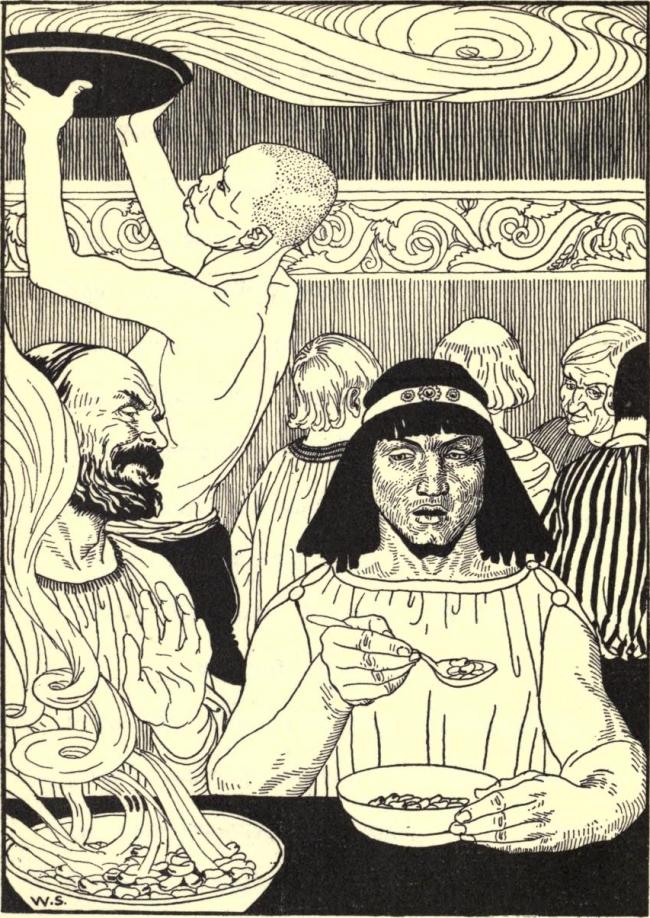
When they overcome in fight, they have a custom to make a feast with sodden beans, wherewith they banquet together for joy of their victory: only Pythagoras had no part with them, but sat aloof off, and lost his dinner because he could not away with beans.
When they win a battle, they traditionally feast together on boiled beans to celebrate their victory. Only Pythagoras did not join them. Instead, he sat apart and missed his dinner because he could not stand beans.
Six months were now passed over, and the seventh halfway onwards, when a new business was begot amongst us. For Cinyras the son of Scintharus, a proper tall young man, had long been in love with Helena, and it might plainly be perceived that she as fondly doted upon him, for they would still be winking and drinking one to another whilst they were a-feasting, and rise alone together, and wander up and down in the wood. This humour increasing, and knowing not what course to take, Cinyras' device was to steal away Helena, whom he found as pliable to run away with him, to some of the islands adjoining, either to Phello, or Tyroessa, having before combined with three of the boldest fellows in my company to join with them in their conspiracy; but never acquainted his father with it, knowing that he would surely punish him for it.
Six months had passed, and we were halfway through the seventh, when a new affair arose among us. Cinyras, the son of Scintharus, was a tall, handsome young man who had long been in love with Helena. She was clearly just as infatuated with him. During feasts, the two were always exchanging winks and drinking to each other. They would leave together, alone, and wander through the woods. As his passion grew, Cinyras did not know what to do. So he devised a plan to carry Helena off to one of the nearby islands, either Phello or Tyroessa. Helena was just as willing to run away with him. Cinyras had already persuaded three of the boldest men in my company to join their plot. But he never told his father, knowing his father would certainly punish him for it.
Being resolved upon this, they watched their time to put it in practice: for when night was come, and I absent (for I was fallen asleep at the feast), they gave a slip to all the rest, and went away with Helena to shipboard as fast as they could. Menelaus waking about midnight, and finding his bed empty, and his wife gone, made an outcry, and calling up his brother, went to the court of Rhadamanthus.
Having decided on this plan, they waited for the right moment to carry it out. When night came, I was absent because I had fallen asleep at the feast. They slipped away from all the others and hurried aboard the ship with Helena as fast as they could. Menelaus woke around midnight and found his bed empty and his wife gone. He cried out, woke his brother, and went to the court of Rhadamanthus.
As soon as the day appeared, the scouts told them they had descried a ship, which by that time was got far off into the sea. Then Rhadamanthus set out a vessel made of one whole piece of timber of asphodelus wood, manned with fifty of the Heroes to pursue after them, which were so willing on their way, that by noon they had overtaken them newly entered into the milky ocean, not far from Tyroessa, so near were they got to make an escape. Then took we their ship and hauled it after us with a chain of roses and brought it back again.
At daybreak, the scouts reported spotting a ship that had already sailed far out to sea. Then Rhadamanthus sent a vessel carved from a single piece of asphodelus wood to pursue the ship. Fifty of the Heroes crewed the vessel. The Heroes were so eager that by noon they had caught up with the fleeing ship. The ship had just entered the milky ocean, not far from Tyroessa. So close had the fugitives come to escaping. Then we seized their ship and towed it back with a chain of roses.
Rhadamanthus first examined Cinyras and his companions whether they had any other partners in this plot, and they confessing none, were adjudged to be tied fast by the privy members and sent into the place of the wicked, there to be tormented, after they had been scourged with rods made of mallows. Helena, all blubbered with tears, was so ashamed of herself that she would not show her face. They also decreed to send us packing out of the country, our prefixed time being come, and that we should stay there no longer than the next morrow: wherewith I was much aggrieved and wept bitterly to leave so good a place and turn wanderer again I knew not whither: but they comforted me much in telling me that before many years were past I should be with them again, and showed me a chair and a bed prepared for me against the time to come near unto persons of the best quality.
Rhadamanthus first questioned Cinyras and his companions about whether anyone else had joined them in the plot. They admitted to having no other accomplices. They were sentenced to be tied tightly by their genitals and sent to the place of the wicked for torment. First, they were to be whipped with rods made of mallows. Helena’s face was swollen with tears, and she was so ashamed that she would not show her face. They also ordered us to leave the country, since our allotted time was up. We could stay no later than the next morning. I was deeply distressed and wept bitterly at leaving such a good place to wander again, with no destination. But they gave me great comfort by saying I would be with them again before many years had passed. They showed me a chair and a bed prepared for my return, near people of the highest rank.
Then went I to Rhadamanthus, humbly beseeching him to tell me my future fortunes, and to direct me in my course; and he told me that after many travels and dangers, I should at last recover my country, but would not tell me the certain time of my return: and showing me the islands adjoining, which were five in number, and a sixth a little further off, he said, Those nearest are the islands of the ungodly, which you see burning all in a light fire, but the other sixth is the island of dreams, and beyond that is the island of Calypso, which you cannot see from hence. When you are past these, you shall come into the great continent, over against your own country, where you shall suffer many afflictions, and pass through many nations, and meet with men of inhuman conditions, and at length attain to the other continent.
Then I went to Rhadamanthus and humbly begged him to tell me my future and guide me on my journey. He told me that after many journeys and dangers, I would finally return to my country. But he would not tell me exactly when I would return. He pointed out five nearby islands and a sixth a little farther away. He said, Those nearest are the islands of the ungodly, all of which you see burning in bright flames. But the sixth is the island of dreams. Beyond the island of dreams is the island of Calypso, which you cannot see from here. Once you have passed these islands, you will reach the great continent opposite your own country. There you will suffer many hardships, travel through many nations, and meet people of an inhuman nature. At last you will reach the other continent.
When he had told me this, he plucked a root of mallows out of the ground, and reached it to me, commanding me in my greatest perils to make my prayers to that: advising me further neither to rake in the fire with my knife, nor to feed upon lupins, nor to come near a boy when he is past eighteen years of age: if I were mindful of this, the hopes would be great that I should come to the island again.
After telling me this, he pulled a mallow root from the ground and handed it to me. He told me to pray to the root whenever I was in the greatest danger. He also advised me not to stir the fire with my knife or eat lupins. Nor should I go near a boy over eighteen years old. If I kept these instructions in mind, there was a good chance I would return to the island.
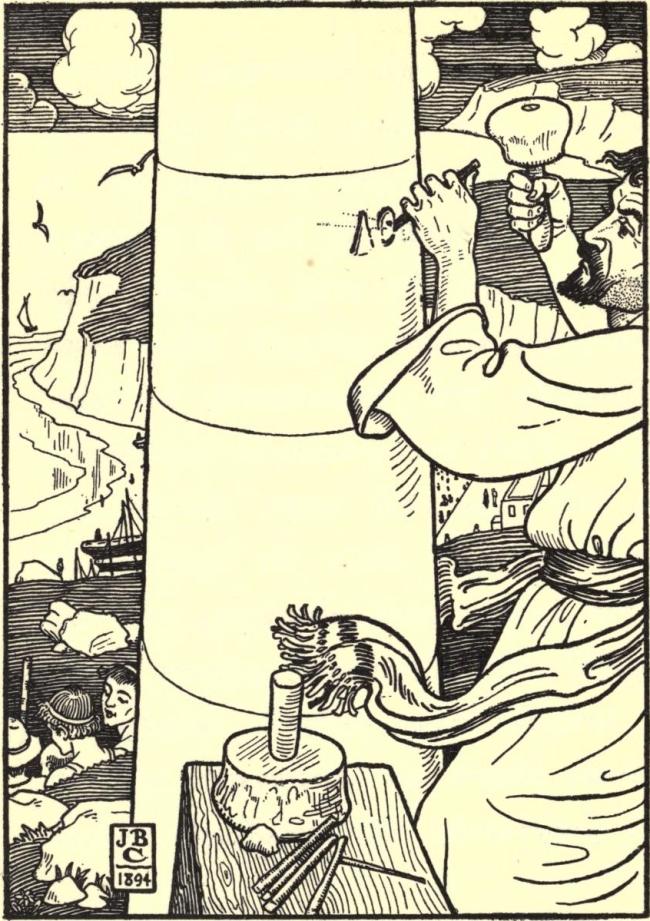
Then we prepared for our passage, and feasted with them at the usual hour, and next morrow I went to Homer, entreating him to do so much as make an epigram of two verses for me, which he did: and I erected a pillar of berylstone near unto the haven, and engraved them upon it. The epigram was this:
Then we prepared for our voyage and feasted with them at the usual hour. The next morning I went to Homer and begged him to write a two-line epigram for me. He did, and I set up a pillar of beryl near the harbor and engraved the verses on it. The epigram read:
Lucian, the gods' belov'd, did once attain To see all this, and then go home again.
Lucian, loved by the gods, once managed To see all this and then return home.
After that day's tarrying, we put to sea, brought onward on our way by the Heroes, where Ulysses closely coming to me that Penelope might not see him, conveyed a letter into my hand to deliver to Calypso in the isle of Ogygia. Rhadamanthus also sent Nauplius, the ferryman, along with us, that if it were our fortune to put into those islands, no man should lay hands upon us, because we were bent upon other employments.
After staying that day, we put to sea, with the Heroes escorting us on our way. Ulysses came close to me so that Penelope would not see him, and slipped a letter into my hand. I was to deliver the letter to Calypso on the isle of Ogygia. Rhadamanthus also sent Nauplius, the ferryman, with us. If we happened to land on those islands, Nauplius was to ensure no one interfered with us. This was because we were bound on other business.
No sooner had we passed beyond the smell of that sweet odour but we felt a horrible filthy stink, like pitch and brimstone burning, carrying an intolerable scent with it as if men were broiling upon burning coals: the air was dark and muddy, from which distilled a pitchy kind of dew. We heard also the lash of the whips, and the roarings of the tormented: yet went we not to visit all the islands, but that wherein we landed was of this form: it was wholly compassed about with steep, sharp, and craggy rocks, without either wood or water: yet we made a shift to scramble up among the cliffs, and so went forwards in a way quite overgrown with briars and thorns through a most villainous ghastly country, and coming at last to the prison and place of torment we wondered to see the nature and quality of the soil, which brought forth no other flowers but swords and daggers, and round about it ran certain rivers, the first of dirt, the second of blood, and the innermost of burning fire, which was very broad and unpassable, floating like water, and working like the waves of the sea, full of sundry fishes, some as big as firebrands, others of a less size like coals of fire, and these they call Lychniscies.
As soon as we passed beyond the sweet scent, we encountered a horrible, filthy stench, like burning pitch and sulfur. The smell was unbearable, as if men were roasting on hot coals. The air was dark and murky, and a tarry dew dripped from it. We also heard the crack of whips and the roars of those being tortured. Yet we did not visit all the islands. The island where we landed was completely surrounded by steep, jagged, rocky cliffs, with neither trees nor water. Still, we managed to scramble up among the cliffs. We then followed a path overgrown with briars and thorns through a dreadful, ghastly landscape. At last, we reached the prison and place of torment. We were amazed at the nature of the soil, which grew no flowers except swords and daggers. Rivers ran around the prison, the first of dirt, the second of blood, and the innermost of burning fire. The river of fire was very broad and impossible to cross. The fire flowed like water and surged like the waves of the sea. It was full of various fish, some as big as burning brands, others smaller, like glowing coals. These fish are called Lychniscies.
There was but one narrow entrance into it, and Timon of Athens appointed to keep the door, yet we got in by the help of Nauplius, and saw them that were tormented, both kings and private persons very many, of which there were some that I knew, for there I saw Cinyras tied by private members, and hanging up in the smoke. But the greatest torments of all are inflicted upon them that told any lies in their lifetime, and wrote untruly, as Ctesias the Cnidian, Herodotus, and many other, which I beholding, was put in great hopes that I should never have anything to do there, for I do not know that ever I spake any untruth in my life. We therefore returned speedily to our ship (for we could endure the sight no longer), and taking our leaves of Nauplius, sent him back again.
There was only one narrow entrance, and Timon of Athens had been appointed to guard the door. Yet with Nauplius’s help, we got inside and saw many people being tormented, both kings and private citizens. I knew some of them, for I saw Cinyras hanging in the smoke, tied by his genitals. But the worst torments of all are inflicted on people who told any lies during their lives or wrote falsely. These included Ctesias the Cnidian, Herodotus, and many others. Seeing them gave me great hope that I would never have anything to do with that place. For I am not aware of ever having told a lie in my life. So we hurried back to our ship (for we could no longer bear the sight). We said goodbye to Nauplius and sent him back.
A little after appeared the Isle of Dreams near unto us, an obscure country and unperspicuous to the eye, endued with the same quality as dreams themselves are: for as we drew, it still gave back and fled from us, that it seemed to be farther off than at the first, but in the end we attained it and entered the haven called Hypnus, and adjoined to the gate of ivory, where the temple of Alectryon stands, and took land somewhat late in the evening.
A little later, the Isle of Dreams appeared nearby, a shadowy land as hard to see clearly as dreams themselves. For as we approached, the island kept retreating, so it seemed farther away than at first. But we finally reached the island and entered the harbor called Hypnus, beside the gate of ivory. The temple of Alectryon stands there. We came ashore rather late in the evening.
Entering the gate we saw many dreams of sundry fashions; but I will first tell you somewhat of the city, because no man else hath written any description of it: only Homer hath touched it a little, but to small purpose.
As we entered the gate, we saw many dreams of various kinds. But first I will tell you something about the city, because no one else has written a description of it. Only Homer has mentioned the city briefly, but his account tells us very little.
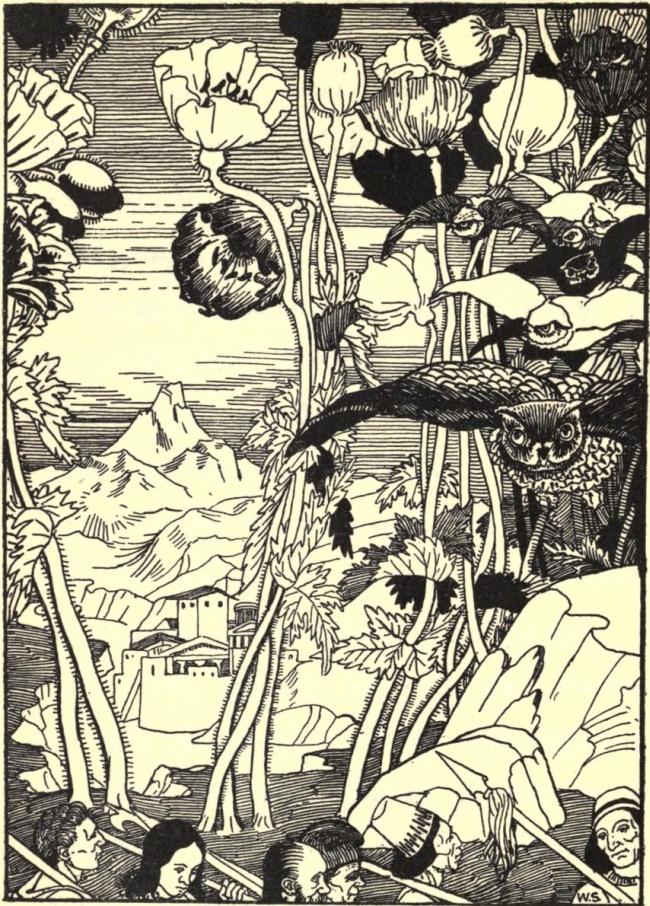
It is round about environed with a wood, the trees whereof are exceeding high poppies and mandragoras, in which an infinite number of owls do nestle, and no other birds to be seen in the island: near unto it is a river running, called by them Nyctiporus, and at the gates are two wells, the one named Negretus, the other Pannychia. The wall of the city is high and of a changeable colour, like unto the rainbow, in which are four gates, though Homer speak but of two: for there are two which look toward the fields of sloth, the one made of iron, the other of potter's clay, through which those dreams have passage that represent fearful, bloody, and cruel matters: the other two behold the haven and the sea, of which the one is made of horn, the other of ivory, which we went in at.
It is surrounded by a wood whose trees are extremely tall poppies and mandragoras. Countless owls nest in them, and no other birds are seen on the island. Nearby runs a river they call Nyctiporus. At the gates are two wells, one named Negretus and the other Pannychia. The city wall is high and changes colour like a rainbow. It has four gates, though Homer speaks of only two. Two face the fields of sloth, one made of iron and the other of potter's clay. Through these gates pass dreams that depict fearful, bloody, and cruel things. The other two gates face the harbour and the sea. One is made of horn and the other of ivory. We entered through the ivory gate.
As we entered the city, on the right hand stands the temple of the Night, whom, with Alectryon, they reverence above all the gods: for he hath also a temple built for him near unto the haven. On the left hand stands the palace of sleep, for he is the sovereign king over them all, and hath deputed two great princes to govern under him, namely, Taraxion, the son of Matogenes, and Plutocles, the son of Phantasion.
As we entered the city, the temple of the Night stood on our right. The people honor her and Alectryon above all the gods, for Alectryon also has a temple near the harbor. On our left stood the palace of sleep, for he is the supreme king over them all. He has appointed two great princes to rule under him: Taraxion, son of Matogenes, and Plutocles, son of Phantasion.
In the middest of the market-place is a well, by them called Careotis, and two temples adjoining, the one of falsehood, the other of truth, which have either of them a private cell peculiar to the priests, and an oracle, in which the chief prophet is Antiphon, the interpreter of dreams, who was preferred by Sleep to that place of dignity.
In the middle of the marketplace is a well they call Careotis. Two temples stand beside it, one dedicated to falsehood and the other to truth. Each temple has a private chamber reserved for its priests and an oracle. The chief prophet is Antiphon, the interpreter of dreams. Sleep appointed him to this high office.
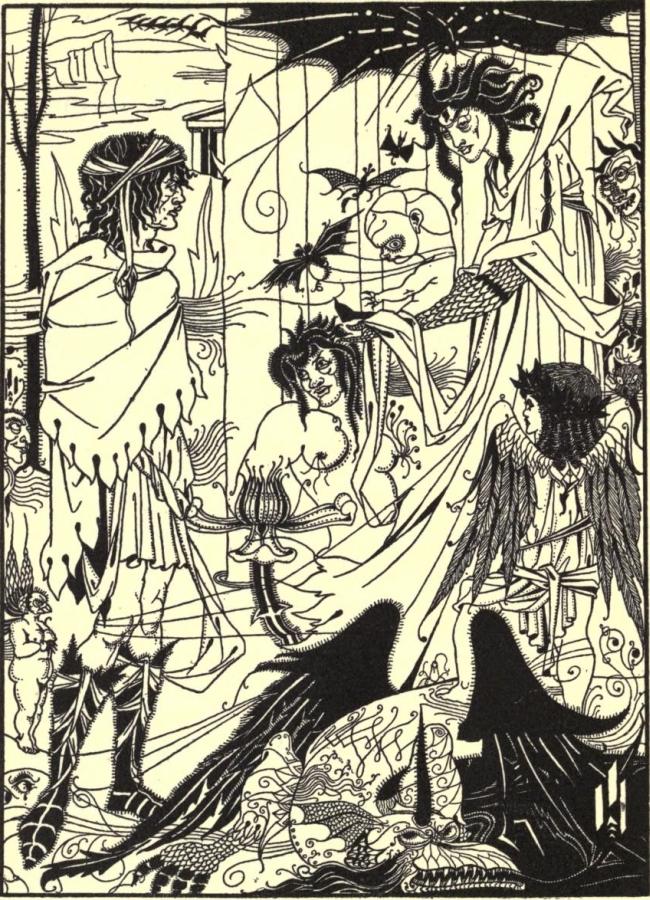
These dreams are not all alike either in nature or shape, for some of them are long, beautiful, and pleasing: others again are as short and deformed. Some make show to be of gold, and others to be as base and beggarly. Some of them had wings, and were of monstrous forms: others set out in pomp, as it were in a triumph, representing the appearances of kings, gods, and other persons.
These dreams differ in both nature and shape. Some are long, beautiful, and pleasant, while others are short and deformed. Some look golden, while others look shabby and beggarly. Some had wings and monstrous shapes. Others appeared in splendor, as if in a triumphal procession, taking the forms of kings, gods, and other figures.
Many of them were of our acquaintance, for they had been seen of us before, which came unto us and saluted us as their old friends, and took us and lulled us asleep, and feasted us nobly and courteously, promising beside all other entertainment which was sumptuous and costly, to make us kings and princes. Some of them brought us home to our own country to show us our friends there, and come back with us the next morrow.
Many of them were people we knew, since we had seen them before. They came up and greeted us as old friends. They took us in, lulled us to sleep, and treated us to lavish feasts with great courtesy. Besides all the other lavish and costly entertainment, they promised to make us kings and princes. Some of them took us back to our own country to show us our friends there. They returned with us the next morning.
Thus we spent thirty days and as many nights among them, sleeping and feasting all the while, until a sudden clap of thunder awakened us all, and we starting up, provided ourselves of victuals, and took sea again, and on the third day landed in Ogygia. But upon the way I opened the letter I was to deliver, and read the contents, which were these:
So we spent thirty days and thirty nights among them, sleeping and feasting the whole time. Then a sudden clap of thunder woke us all. We jumped up, gathered food, and set sail again. On the third day, we landed in Ogygia. But on the way, I opened the letter I was supposed to deliver and read it. The letter said:
"Ulysses to Calypso sendeth greeting. This is to give you to understand that after my departure from you in the vessel I made in haste for myself, I suffered shipwreck, and hardly escaped by the help of Leucothea into the country of the Phæacks, who sent me to mine own home, where I found many that were wooers to my wife, and riotously consumed my means; but I slew them all, and was afterwards killed myself by my son Telegonus, whom I begat of Circe, and am now in the island of the blessed, where I daily repent myself for refusing to live with you, and forsaking the immortality proffered me by you; but if I can spy a convenient time, I will give them all the slip and come to you."
"Ulysses sends greetings to Calypso. I write to let you know what happened after I left you in the boat I hastily built for myself. I was shipwrecked and barely escaped with Leucothea’s help to the country of the Phæacks. The Phæacks sent me home, where I found many men courting my wife and recklessly spending my wealth. But I killed them all. Later, I was killed by my son Telegonus, whose mother was Circe. I am now on the island of the blessed. Every day I regret refusing to live with you and giving up the immortality you offered me. But if I can find the right moment, I will slip away from them all and come to you."
This was the effect of the letter, with some addition concerning us, that we should have entertainment: and far had I not gone from the sea but I found such a cave as Homer speaks of, and she herself working busily at her wool. When she had received the letter, and brought us in, she began to weep and take on grievously, but afterwards she called us to meat, and made us very good cheer, asking us many questions concerning Ulysses and Penelope, whether she was so beautiful and modest as Ulysses had often before bragged of her.
That was the gist of the letter, with an added request that we be welcomed as guests. I had not gone far from the sea before I found a cave like the one Homer describes. She herself was there, busily working with her wool. After receiving the letter and bringing us inside, she began to weep and was deeply distressed. But afterward she invited us to eat and treated us very generously. She asked us many questions about Ulysses and Penelope. She wanted to know whether Penelope was as beautiful and modest as Ulysses had so often boasted.
And we made her such answer as we thought would give her best content: and departing to our ship, reposed ourselves near unto the shore, and in the morning put to sea, where we were taken with a violent storm, which tossed us two days together, and on the third we fell among the Colocynthopiratans. These are a wild kind of men, that issue out of the islands adjoining, and prey upon passengers, and for their shipping have mighty great gourds six cubits in length, which they make hollow when they are ripe, and cleanse out all that is within them, and use the rinds for ships, making their masts of reeds, and their sails of the gourd leaves.
We gave her the answer we thought would please her most. Then we returned to our ship and rested near the shore. In the morning we put to sea, where a violent storm caught us and tossed us about for two days. On the third day we fell among the Colocynthopiratans. These are wild men who come from the nearby islands and prey on travelers. For boats they use enormous gourds, six cubits long. When the gourds are ripe, they hollow them out and clean out everything inside. They use the shells as boats, with masts made of reeds and sails made of gourd leaves.
These set upon us with two ships furnished and fought with us, and wounded many, casting at us instead of stones the seeds of those gourds. The fight was continued with equal fortune until about noon, at which time, behind the Colocynthopiratans, we espied the Caryonautans coming on, who, as it appeared, were enemies to the other, for when they saw them approach, they forsook us and turned about to fight with them; and in the mean space we hoist sail and away, leaving them together by the ears, and no doubt but the Caryonautans had the better of the day, for they exceeded in number, having five ships well furnished, and their vessels of greater strength, for they are made of nutshells cloven in the midst and cleansed, of which every half is fifteen fathom in length.
They attacked us with two fully equipped ships and wounded many of us, hurling gourd seeds instead of stones. The battle remained evenly matched until about noon. Then, behind the Colocynthopiratans, we spotted the Caryonautans approaching. The Caryonautans seemed to be enemies of the Colocynthopiratans. For when the Colocynthopiratans saw the newcomers approaching, they left us and turned to fight them. Meanwhile, we hoisted our sail and escaped, leaving the two sides fighting each other. No doubt the Caryonautans won the day, for they outnumbered their enemies, with five fully equipped ships. Their vessels were also stronger, being made from nutshells split in half and hollowed out. Each half was fifteen fathoms long.
When we were got out of sight we were careful for the curing of our hurt men, and from that time forwards went no more unarmed, fearing continually to be assaulted on the sudden: and good cause we had: for before sun-setting some twenty men or thereabouts, which also were pirates, made towards us, riding upon monstrous great dolphins, which carried them surely: and when their riders gat upon their backs, would neigh like horses. When they were come near us, they divided themselves, some on the one side, and some on the other, and flung at us with dried cuttle-fishes and the eyes of sea-crabs: but when we shot at them again and hurt them, they would not abide it, but fled to the island, the most of them wounded.
Once we were out of sight, we carefully tended our wounded men. From then on, we never went unarmed, constantly fearing a sudden attack. And we had good reason. Before sunset, about twenty more pirates approached us, riding enormous dolphins. The dolphins carried them steadily and neighed like horses when their riders climbed onto their backs. As the pirates came near, they split up, some on one side of us and some on the other. They threw dried cuttlefish and the eyes of sea crabs at us. But when we shot back and wounded them, the pirates could not stand their ground. They fled to the island, most of them wounded.
About midnight, the sea being calm, we fell before we were aware upon a mighty great halcyon's nest, in compass no less than threescore furlongs, in which the halcyon herself sailed, as she was hatching her eggs, in quantity almost equalling the nest, for when she took her wings, the blast of her feathers had like to have overturned our ship, making a lamentable noise as she flew along.
Around midnight, with the sea calm, we suddenly came upon an enormous halcyon’s nest before we realized it. The nest measured no less than sixty furlongs around. The halcyon herself floated along in the nest, sitting on her eggs, and was almost as large as the nest. When she took flight, the gust from her wings nearly overturned our ship. She made a mournful noise as she flew along.
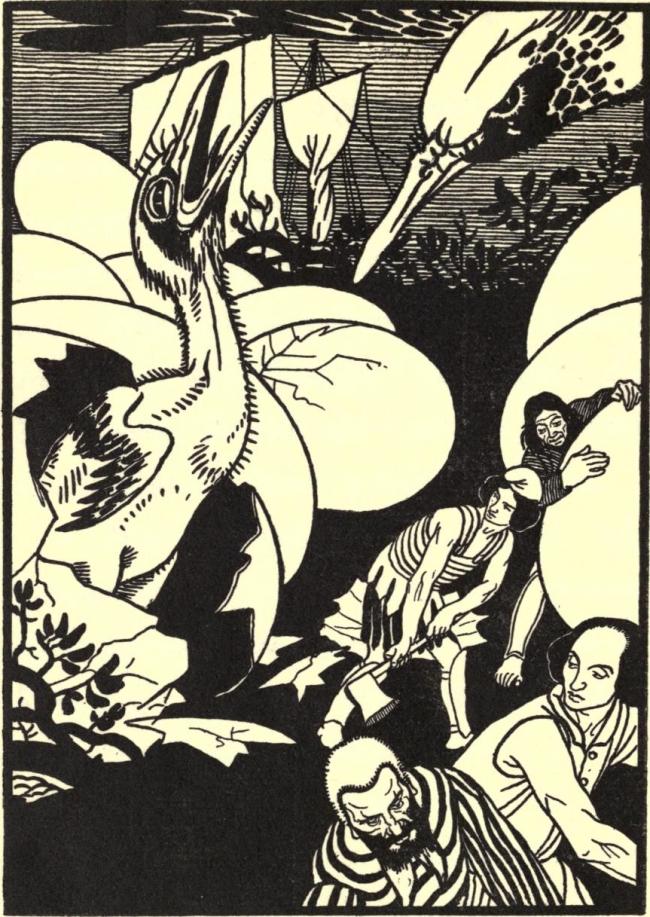
As soon as it was day, we got upon it, and found it to be a nest, fashioned like a great lighter, with trees plaited and wound one within another, in which were five hundred eggs, every one bigger than a tun of Chios measure, and so near their time of hatching that the young chickens might be seen and began to cry. Then with an axe we hewed one of the eggs in pieces, and cut out a young one that had no feathers, which yet was bigger than twenty of our vultures.
At daybreak, we climbed onto it and found that it was a nest shaped like a large cargo barge. It was made of trees woven and twisted together. Inside were five hundred eggs, each bigger than a wine barrel holding a tun by Chios measure. The eggs were so close to hatching that we could see the chicks, which had begun to cry. Then we chopped one of the eggs open with an axe and cut out a featherless chick. Yet even without feathers, the chick was bigger than twenty of our vultures.
When we had gone some two hundred furlongs from this nest, fearful prodigies and strange tokens appeared unto us, for the carved goose, that stood for an ornament on the stern of our ship, suddenly flushed out with feathers and began to cry. Scintharus, our pilot, that was a bald man, in an instant was covered with hair: and which was more strange than all the rest, the mast of our ship began to bud out with branches and to bear fruit at the top, both of figs and great clusters of grapes, but not yet ripe. Upon the sight of this we had great cause to be troubled in mind, and therefore besought the gods to avert from us the evil that by these tokens was portended.
When we had traveled some two hundred furlongs from this nest, we saw frightening wonders and strange signs. The carved goose decorating our ship’s stern suddenly sprouted feathers and began to cry out. Scintharus, our pilot, was bald, but in an instant his head was covered with hair. Stranger than all the rest, our ship’s mast began to sprout branches and bear fruit at the top. Both figs and large clusters of grapes grew there, but the fruit was not yet ripe. These sights gave us good reason to be deeply troubled. So we begged the gods to spare us the evil these signs foretold.
And we had not passed full out five hundred furlongs, but we came in view of a mighty wood of pine-trees and cypress, which made us think it had been land, when it was indeed a sea of infinite depth, planted with trees that had no roots, but floated firm and upright, standing upon the water. When we came to it and found how the case stood with us, we knew not what to do with ourselves. To go forwards through the trees was altogether impossible: they were so thick and grew so close together: and to turn again with safety was as much unlikely.
We had traveled less than five hundred furlongs when we saw a vast forest of pine and cypress trees. We thought the forest was on land, but it was actually a sea of infinite depth. The trees had no roots but floated firmly upright on the water. When we reached the forest and realized our situation, we did not know what to do. Going forward through the trees was completely impossible because they were so dense and grew so close together. But turning back safely seemed just as unlikely.
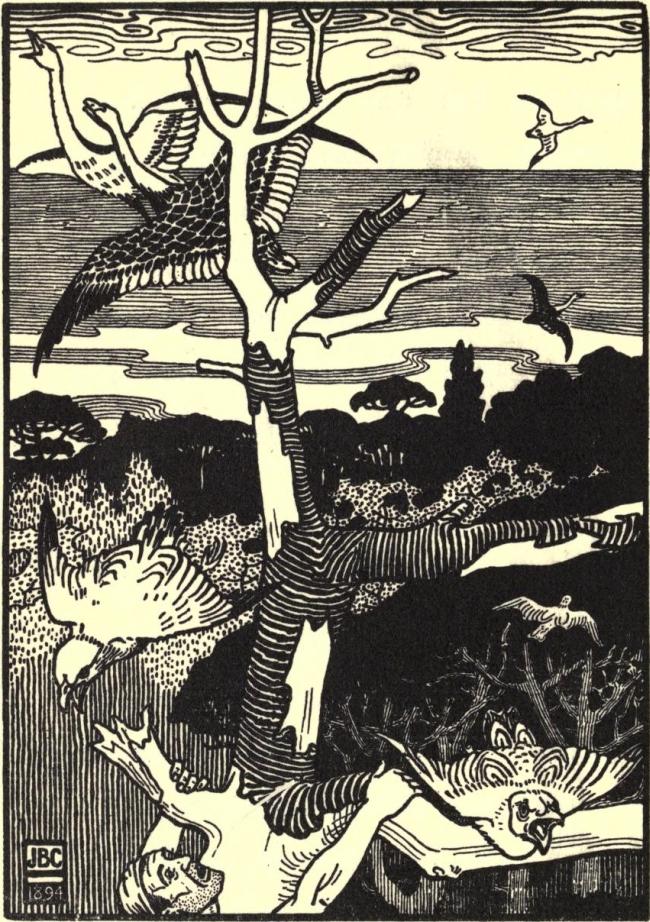
I therefore got me up to the top of the highest tree to discover, if I could, what was beyond; and I found the breadth of the wood to be fifty furlongs or thereabout, and then appeared another ocean to receive us. Wherefore we thought it best to assay to lift up our ship upon the leaves of the trees which were thick grown, and by that means pass over, if it were possible, to the other ocean: and so we did: for fastening a strong cable to our ship, we wound it about the tops of the trees, and with much ado poised it up to the height, and placing it upon the branches, spread our sails, and were carried as it were upon the sea, dragging our ship after us by the help of the wind which set it forwards. At which time a verse of the poet Antimachus came to my remembrance, wherein he speaks of sailing over tops of trees.
So I climbed to the top of the tallest tree to see, if I could, what lay beyond. I found that the forest was about fifty furlongs wide, with another ocean beyond it waiting to receive us. So we thought our best course was to try lifting our ship onto the thick canopy of leaves. That way, we could cross to the other ocean, if possible. And so we did. We fastened a strong cable to our ship and wound the cable around the treetops. With great difficulty, we hoisted the ship up and settled it on the branches. Then we spread our sails and moved along as if we were at sea. The wind helped us drag our ship onward. At that moment, I remembered a verse by the poet Antimachus in which he speaks of sailing over treetops.
When we had passed over the wood, and were come to the sea again, we let down our ship in the same manner as we took it up. Then sailed we forwards in a pure and clear stream, until we came to an exceeding great gulf or trench in the sea, made by the division of the waters as many times is upon land, where we see great clefts made in the ground by earthquakes and other means. Whereupon we struck sail and our ship stayed upon a sudden when it was at the pit's brim ready to tumble in: and we stooping down to look into it, thought it could be no less than a thousand furlongs deep, most fearful and monstrous to behold, for the water stood as it were divided into two parts, but looking on our right hand afar off, we perceived a bridge of water, which to our seeming, did join the two seas together and crossed over from the one to the other. Wherefore we laboured with oars to get unto it, and over it we went and with much ado got to the further side beyond all our expectation.
After crossing the forest, we reached the sea again and lowered our ship in the same way we had raised it. Then we sailed on through a clear, clean current until we reached an enormous chasm in the sea. The waters had split apart, just as earthquakes and other forces often open great cracks in the land. So we lowered our sail, and our ship stopped suddenly at the edge of the pit, just before falling in. We leaned over to look down and thought the chasm must be at least a thousand furlongs deep. It was a terrifying, monstrous sight, for the water seemed to stand divided into two parts. But far off to our right, we spotted a bridge of water. The bridge seemed to connect the two seas, crossing from one to the other. So we rowed hard to reach the bridge and sailed across. With great difficulty, and against all our expectations, we reached the far side.
Then a calm sea received us, and in it we found an island, not very great, but inhabited with unsociable people, for in it were dwelling wild men named Bucephalians, that had horns on their heads like the picture of Minotaurus, where we went ashore to look for fresh water and victuals, for ours was all spent: and there we found water enough, but nothing else appeared; only we heard a great bellowing and roaring a little way off, which we thought to have been some herd of cattle, and going forwards, fell upon those men, who espying us, chased us back again, and took three of our company: the rest fled towards the sea.
Then we entered a calm sea and found a small island inhabited by unfriendly people. These were wild men called Bucephalians, with horns on their heads like those in pictures of Minotaurus. We went ashore to look for fresh water and food, because our supplies had all run out. We found plenty of water there, but nothing else was in sight. We heard loud bellowing and roaring a little way off and thought it came from some herd of cattle. As we went farther, we came upon the wild men. When the men spotted us, they chased us back and captured three of our company. The rest fled toward the sea.
Then we all armed ourselves, not meaning to leave our friends unrevenged, and set upon the Bucephalians as they were dividing the flesh of them that were slain, and put them all to flight, and pursued after them, of whom we killed fifty, and two we took alive, and so returned with our prisoners; but food we could find none.
Then we all armed ourselves, determined to avenge our friends. We attacked the Bucephalians as they were dividing up the flesh of those who had been killed. We drove them all into flight and pursued them, killing fifty and capturing two alive. We then returned with our prisoners, but we could find no food.
Then the company were all earnest with me to kill those whom we had taken; but I did not like so well of that, thinking it better to keep them in bonds until ambassadors should come from the Bucephalians to ransom them that were taken, and indeed they did: and I well understood by the nodding of their heads, and their lamentable lowing, like petitioners, what their business was.
Then all my companions urged me to kill our prisoners, but I was against it. I thought it better to keep the prisoners in chains until ambassadors came from the Bucephalians to ransom them. And indeed, ambassadors did come. From their nodding heads and mournful lowing, like people pleading for help, I understood clearly why the ambassadors had come.
So we agreed upon a ransom of sundry cheeses and dried fish and onions and four deer with three legs apiece, two behind and one before. Upon these conditions we delivered those whom we had taken, and tarrying there but one day, departed.
So we agreed on a ransom of various cheeses, dried fish, onions, and four deer. Each deer had three legs, two at the back and one at the front. On these terms, we released our captives, stayed there for just one day, and left.
Then the fishes began to show themselves in the sea, and the birds flew over our heads, and all other tokens of our approach to land appeared unto us. Within a while after we saw men travelling the seas, and a new found manner of navigation, themselves supplying the office both for ship and sailor, and I will tell you how. As they lie upon their backs in the water and their privy members standing upright, which are of a large size and fit for such a purpose, they fasten thereto a sail, and holding their cords in their hands, when the wind hath taken it, are carried up and down as please themselves.
Then fish began to appear in the sea, and birds flew over our heads. All the other signs that we were nearing land appeared too. Soon afterward, we saw men traveling across the sea in a new way. They served as both ship and sailor, and I will tell you how. They lie on their backs in the water with their penises standing upright. Their penises are large and well suited to the purpose, and they attach a sail to them. Holding the ropes in their hands, the men sail wherever they please once the wind catches the sail.
After these followed others riding upon cork, for they yoke two dolphins together, and drive them on (performing themselves the place of a coachman), which draw the cork along after them. These never offered us any violence, nor once shunned our sight; but passed along in our company without fear, in a peaceable manner, wondering at the greatness of our ship, and beholding it on every side.
After these came others riding on cork. They harness two dolphins together and drive them like coachmen, with the dolphins pulling the cork behind them. These riders never threatened us or avoided being seen by us. Instead, they traveled peacefully alongside us without fear, marveling at our ship’s size and examining it from every side.
At evening we arrived upon a small island, inhabited, as it seemed, only by women, which could speak the Greek language; for they came unto us, gave us their hands, and saluted us, all attired like wantons, beautiful and young, wearing long mantles down to the foot: the island was called Cabbalusa and the city Hydramardia. So the women received us, and every one of them took aside one of us for herself, and made him her guest. But I pausing a little upon it (for my heart misgave me), looked narrowly round about, and saw the bones of many men, and the skulls lying together in a corner; yet I thought not good to make any stir, or to call my company about me, or to put on arms; but taking the mallow into my hand, made my earnest prayers thereto that I might escape out of those present perils.
In the evening, we reached a small island that seemed to be inhabited only by women who spoke Greek. For the women came up to us, took our hands, and greeted us. All were dressed like prostitutes, young and beautiful, wearing long cloaks that reached their feet. The island was called Cabbalusa, and the city Hydramardia. So the women welcomed us, and each took one of us aside to be her guest. But I hesitated for a moment, because I felt uneasy. I looked carefully around and saw the bones of many men, with their skulls lying together in a corner. Still, I thought it best not to cause a disturbance, gather my companions around me, or take up arms. Instead, I took the mallow in my hand and prayed earnestly to it to let me escape these dangers.
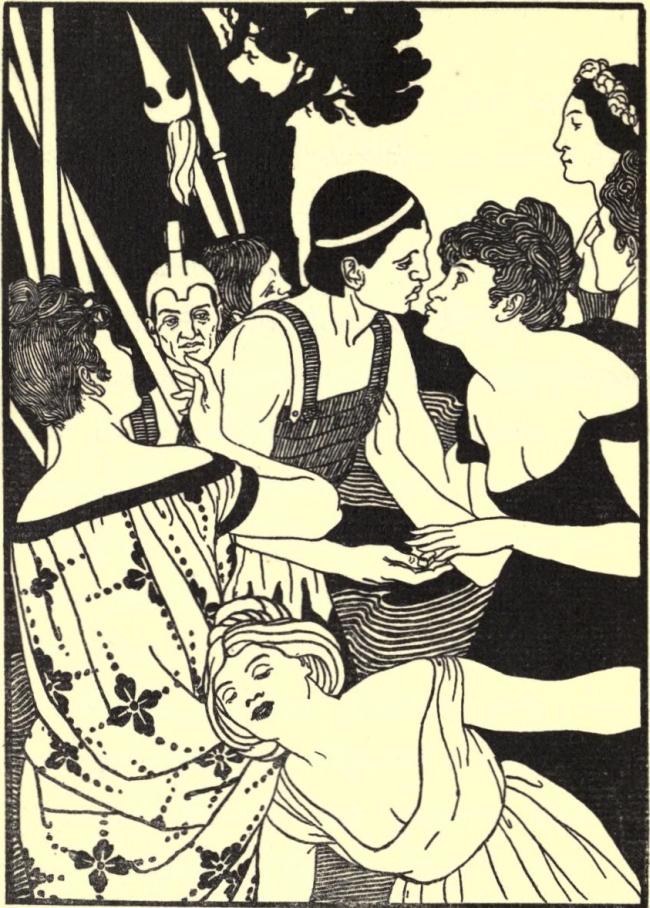
Within a while after, when the strange female came to wait upon me, I perceived she had not the legs of a woman, but the hoofs of an ass. Whereupon I drew my sword, and taking fast hold of her, bound her, and examined her upon the point: and she, though unwillingly, confessed that they were sea-women, called Onosceleans, and they fed upon strangers that travelled that way. For, said she, when we have made them drunk, we go to bed to them, and in their sleep, make a hand of them.
A little later, when the strange woman came to attend to me, I noticed she did not have a woman’s legs. Instead, she had a donkey’s hooves. So I drew my sword, seized her, tied her up, and questioned her about it. Although unwilling, she confessed that she and the others were sea-women called Onosceleans. They fed on strangers who traveled that way. For, she said, once we have made the strangers drunk, we go to bed with them. Then we kill them in their sleep.
I hearing this, left her bound in the place where she was, and went up to the roof of the house, where I made an outcry, and called my company to me, and when they were come together, acquainted them with all that I had heard, and showed them the bones, and brought them into her that was bound, who suddenly was turned into water, and could not be seen. Notwithstanding, I thrust my sword into the water to see what would come of it, and it was changed into blood.
After hearing this, I left her tied up where she was and went up to the roof of the house. There I shouted and called my companions to me. When they had gathered, I told them all I had heard and showed them the bones. Then I took them to the woman I had tied up. She suddenly turned into water and could no longer be seen. Even so, I thrust my sword into the water to see what would happen, and the water turned into blood.
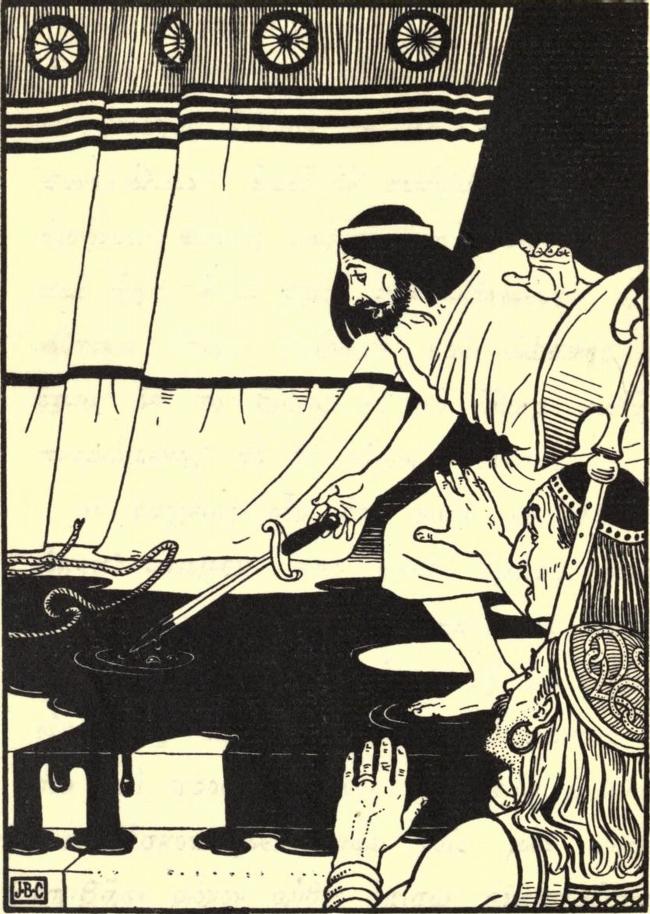
Then we made all the haste we could to our ship, and got us away, and as soon as it was clear day, we had sight of the mainland, which we judged to be the country opposite to our continent. Whereupon we worshipped, and made our prayers, and took council what was now to be done. Some thought it best only to go a-land and so return back again: others thought it better to leave our ship there and march into the mid-land to try what the inhabitants would do: but whilst we were upon this consultation a violent storm fell upon us, which drave our ship against the shore, and burst it all in pieces, and with much ado we all swam to land with our arms, every man catching what he could lay hands on.
Then we hurried to our ship as fast as we could and sailed away. As soon as daylight came, we saw the mainland. We believed it was the country opposite our continent. So we worshipped, prayed, and discussed what to do next. Some thought it best just to go ashore and then return. Others thought we should leave our ship there and march inland to see what the inhabitants would do. But while we were discussing our plans, a violent storm struck. The storm drove our ship against the shore and smashed it to pieces. With great difficulty, we all swam ashore with our weapons, each man grabbing whatever he could get his hands on.
These are all the occurrences I can acquaint you withal, till the time of our landing, both in the sea, and in our course to the islands, and in the air, and after that in the whale; and when we came out again what betid unto us among the Heroes and among the dreams, and lastly among the Bucephalians and the Onosceleans. What passed upon land the next books shall deliver.
These are all the events I can tell you about up to the time of our landing. They happened at sea, on our journey to the islands, in the air, and then inside the whale. After we came out, we had adventures among the Heroes and among the dreams. Finally, we had adventures among the Bucephalians and the Onosceleans. The next books will tell what happened on land.
The end