A conversation between Socrates and a young mathematician asks what it means to know something. Socrates compares his questioning to a midwife's work, helping others bring their thoughts into the world.
232 pages 4h 31m reading time
The first full-length work in Western thought devoted to the question of what knowledge is, and still a starting point for that question today.
Tests three answers in turn: that knowing is simply perceiving with the senses, that it is believing something true, and that it is a true belief backed by an explanation, and it finds a problem with each one.
Ends without settling on an answer, showing that clearing away bad answers can be real progress.
Gave philosophers the working definition of knowledge as "true belief with a reason," which shaped the field for over two thousand years.
Inspired one of the most famous modern philosophy papers, Edmund Gettier's 1963 "Is Justified True Belief Knowledge?", which challenged that definition and started a debate that still continues.
A tribute to a dying friend
The talk is framed as a written record read aloud while the real Theaetetus is carried home dying after a battle.
Its hero was a real mathematician
Theaetetus was an actual Athenian thinker remembered for early work on unusual numbers and perfectly regular solid shapes.
Set on the eve of a trial: The talk ends with Socrates leaving to answer the charges that led to his trial and death.
Written as a play on purpose
The narrator says he dropped the repeated "he said" lines so readers could follow the speakers directly.


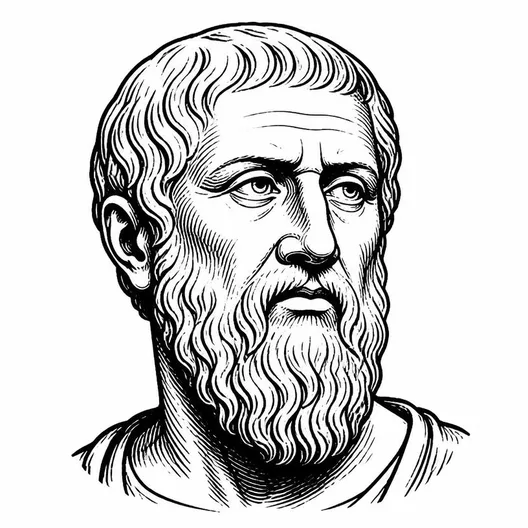 Plato c. 369 BCE