

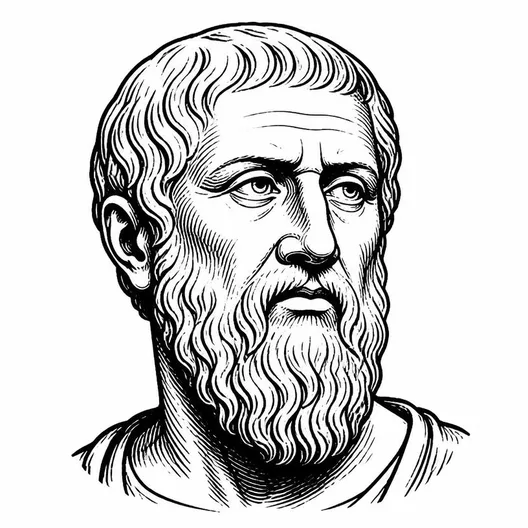
Plato
Ancient Greek philosopher whose dialogues starring his teacher Socrates founded the Western philosophical tradition Show bio
Bio
Plato wrote poems and tragedies as a young man, then burned them after meeting Socrates. He dropped his political ambitions when his teacher Socrates was put on trial.
Plato never spoke in his own voice, writing dialogues in which Socrates nearly always appears. He studied mathematics and learned from followers of Pythagoras in southern Italy. Plato developed his Theory of Forms, or Ideas, said to exist beyond ordinary human understanding.
He shaped Christian, Jewish and Islamic philosophy through later thinkers who built on his work. Plato burned his early poems, but his complete works are believed to survive today.
Books by Plato
 The Republic
A conversation led by Socrates asks what justice is, and imagines a city ruled by philosophers to answer it. Along the way comes the tale of a magic ring that makes its wearer invisible.
 Apology
Socrates defends himself in court against charges of corrupting the young and offending the gods. Found guilty, he suggests his punishment should be free meals for life at public expense.
 Symposium
Guests at an Athenian drinking party give speeches about love in this philosophical dialogue. Aristophanes tells a strange story of humans split in two, each searching for a missing half.
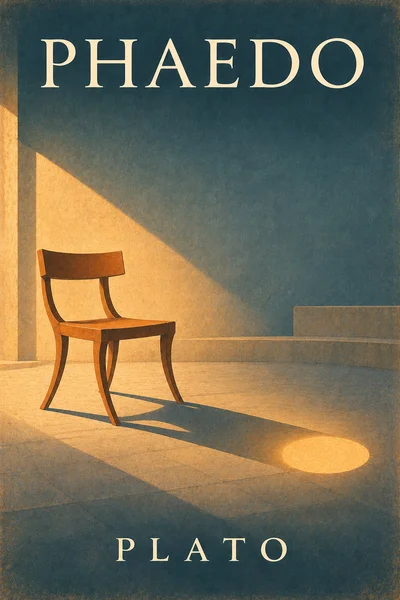 Phaedo
On the last day of his life, Socrates talks with friends in prison about death and the soul. It ends with him calmly drinking the poison he was sentenced to take.
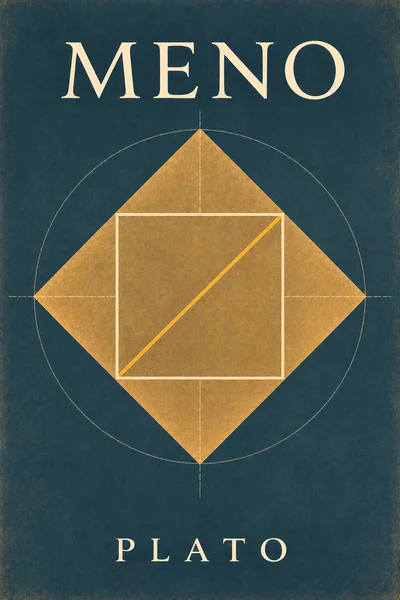 Meno
In this dialogue, Socrates and Meno ask whether people can be taught to be good. Socrates questions an enslaved boy about a square to test how people learn.
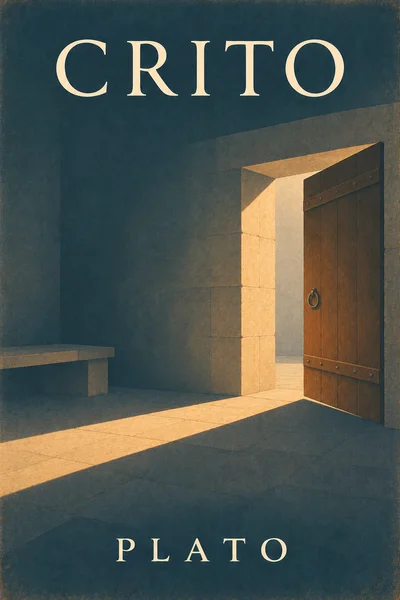 Crito
In this short dialogue, Socrates and his friend Crito discuss whether he should escape prison before his execution. The debate takes a surprising turn when Socrates imagines the laws of Athens speaking to him.
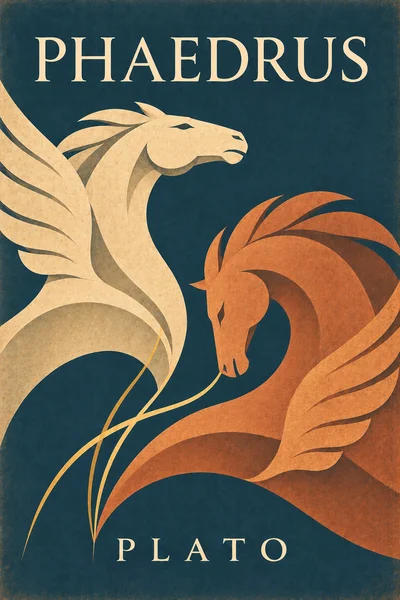 Phaedrus
A conversation between Socrates and Phaedrus examines love and the art of speaking well. Beside a stream outside Athens, Socrates pictures the soul as a chariot pulled by two very different horses.
 Gorgias
This dialogue follows Socrates as he questions public speakers about persuasion, power, and justice. He compares persuasive speech to cooking, arguing that both can please people without doing them good.
 Euthyphro
A short dialogue follows Socrates and Euthyphro as they question what makes an action holy. Outside an Athenian court, Euthyphro explains why he is bringing a murder charge against his own father.
 Theaetetus
A conversation between Socrates and a young mathematician asks what it means to know something. Socrates compares his questioning to a midwife's work, helping others bring their thoughts into the world.
 Timaeus
A long speech within a dialogue describes how the universe and human beings came into existence. Its account pictures a divine craftsman shaping the world from disorder.
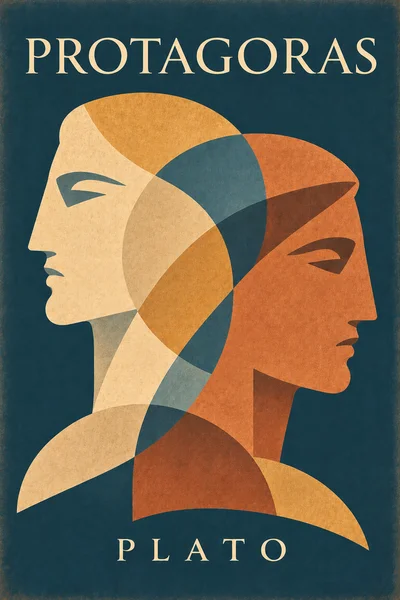 Protagoras
A dialogue follows Socrates and the teacher Protagoras as they debate whether goodness can be taught. Protagoras tells a myth in which humans receive fire but still need justice to live together.
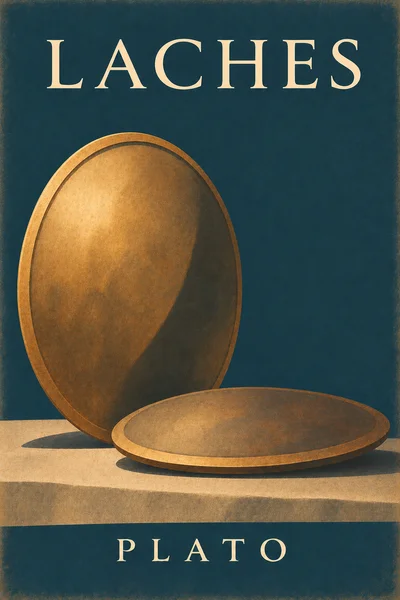 Laches
In this dialogue, Socrates and two generals discuss courage and how young men should be taught. A display of fighting in armor sparks a debate that neither general can settle.
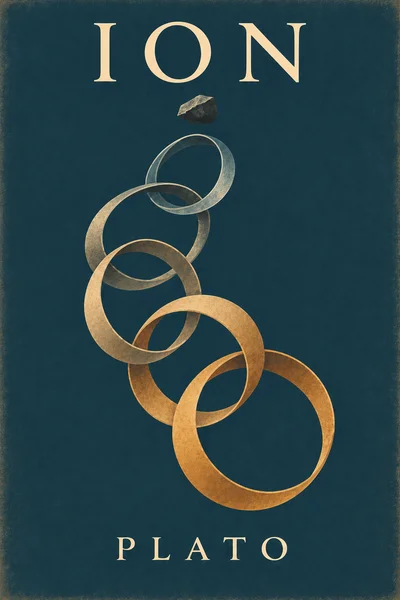 Ion
In this short dialogue, Socrates questions a performer of Homer's poems about the source of his skill. A magnet and a chain of iron rings become an image of poetry's power over its listeners.
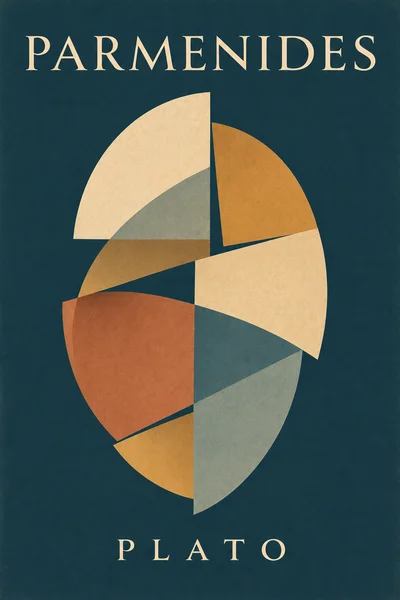 Parmenides
This philosophical dialogue examines whether beauty and other qualities exist apart from the things that possess them. A young Socrates faces questions from the elderly Parmenides, rather than leading the discussion himself.