Sayings of a Greek teacher, arranged by topic, on living well by caring only about what you control. Epictetus spent his youth as a slave, yet he taught that true freedom lives in the mind.
200 pages 3h 52m reading time
A core collection of the teachings of Epictetus, one of the great Stoic philosophers.
Teaches people to separate what is in their control, their own judgments and choices, from what is not, and to accept the rest.
Insists that true freedom is inner, so no one can enslave a mind that governs itself.
Epictetus, born into slavery, shaped the thinking of the emperor Marcus Aurelius, who quotes him in the Meditations.
His idea that our judgments, not events, upset us helped inspire cognitive behavioral therapy.
Never written by Epictetus
Epictetus wrote nothing down, so his words survive only because his student Arrian took notes during his classes.
Released without permission
Arrian said he never meant to publish his notes, and they spread to the public without his knowledge.
Half the lectures lost
Arrian's record of the lectures once filled eight books, but only four have survived to today.
Borrowed by Christian monks
Christian monks later adapted his short handbook of sayings into a guide for their own religious life.


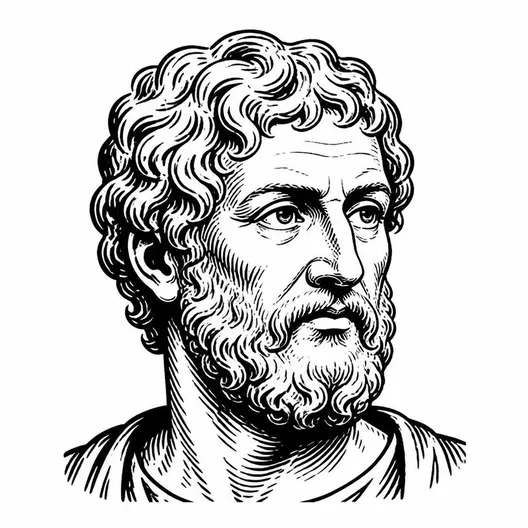 Epictetus c. 108 CE