A short handbook of advice for a ruler on how to gain power and keep it. He asks whether rulers should be loved or feared, and says fear is safer if they can't be both.
159 pages 3h 5m reading time
The founding work of modern political realism and one of the most famous books on power.
Argues that rulers should judge actions by their results, not by morality, and be willing to do wrong when needed.
Holds that it is safer for a ruler to be feared than loved, if he cannot be both.
It gave the language "Machiavellian," a word for cunning and ruthless scheming.
Written in exile
Machiavelli wrote it in 1513 on his farm outside Florence, after losing his government job and being tortured.
A gift seeking favor
He dedicated it to Lorenzo de' Medici, hoping for work again, but it brought him no post.
Read only by hand
It passed around in handwritten copies and was printed only in 1532, five years after his death.
Banned by the Church
In 1559 the Catholic Church put all of Machiavelli's works on its list of forbidden books.


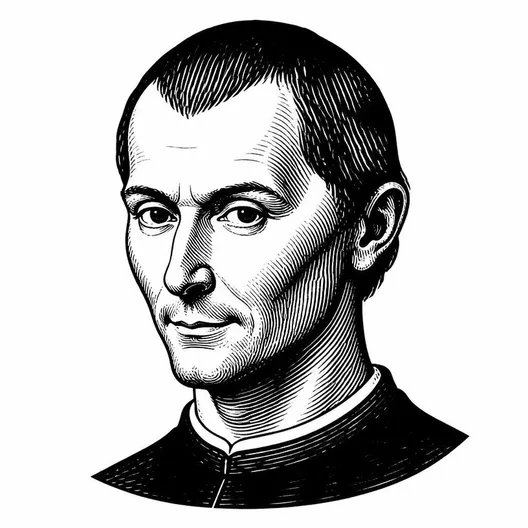 Niccolò Machiavelli 1532 CE