These classroom talks examine how to face hardship and judge what lies within your control. Recorded by his student Arrian, they show a former slave challenging pupils at his school in Nicopolis.
501 pages 9h 44m reading time
One of the founding works of Stoic philosophy, and among the most widely read of all ancient writings on how to live.
Argues that people are troubled not by events themselves but by their judgments about those events, so we are free to choose how we respond.
Teaches that true freedom belongs to anyone, even a slave, who stops depending on wealth, status, and other people's opinions.
Shaped the private notebook of the Roman emperor Marcus Aurelius, now known as the Meditations, which quotes it directly.
Helped inspire cognitive behavioral therapy in the twentieth century, whose founders pointed to the book's idea that changing our beliefs can change how we feel.
Published without permission
Arrian later wrote that his private notes of the talks somehow got out and spread without his consent.
Kept in everyday speech
Arrian used the plain spoken Greek of the classroom, not polished literary language, to keep the teacher's living voice.
Half the work lost
Ancient sources mention eight books of these talks, but only four have survived to the present day.
Saved by one manuscript
Nearly every surviving copy traces back to a single medieval manuscript now kept at Oxford.


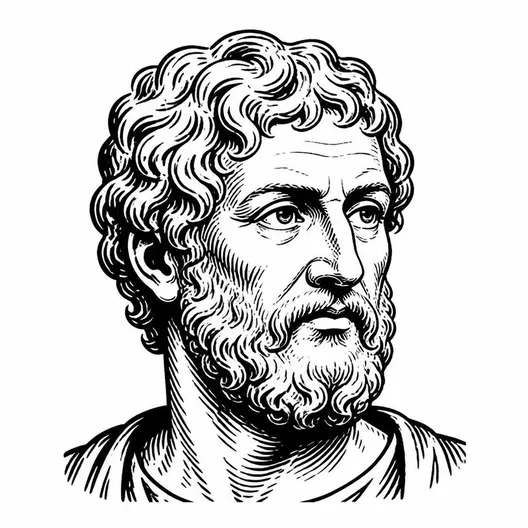 Epictetus c. 108 CE