

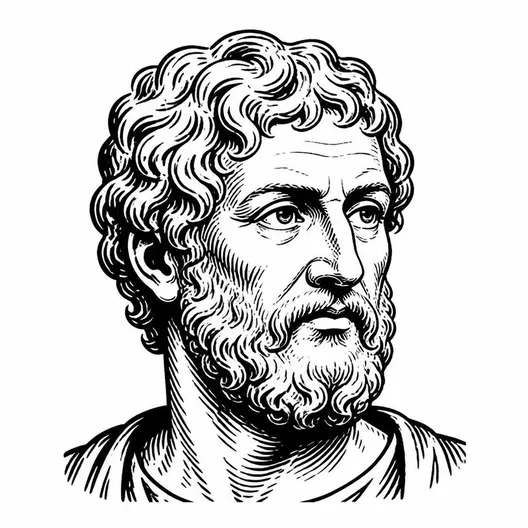
Epictetus
Greek Stoic philosopher, born into slavery, who taught acceptance of what we can't control Show bio
Bio
Epictetus studied philosophy while enslaved in Rome, with his master’s permission. He began teaching after gaining his freedom. Epictetus left Rome when Emperor Domitian banished philosophers, then founded a school in Greece.
He taught that people cannot control events, but can control their own actions. Epictetus attracted a student whose notes on his lectures became the Discourses.
He left no known writings, but that student also compiled the Enchiridion, a handbook. Epictetus later influenced the Roman emperor Marcus Aurelius, who cited him in his writings.
Books by Epictetus
- The Discourses of EpictetusThe Discourses of Epictetus
These classroom talks examine how to face hardship and judge what lies within your control. Recorded by his student Arrian, they show a former slave challenging pupils at his school in Nicopolis.
- The EnchiridionThe Enchiridion
A small handbook of short, practical rules for staying calm, drawn from the teaching of a former slave. It begins by dividing everything into what is in our power and what is not.
- The Golden Sayings of EpictetusThe Golden Sayings of Epictetus
Short passages from the talks of a Greek teacher on how to stay free and calm whatever happens. Born a slave, Epictetus taught that chains can hold the body but never the will.
- The Teaching of EpictetusThe Teaching of Epictetus
Sayings of a Greek teacher, arranged by topic, on living well by caring only about what you control. Epictetus spent his youth as a slave, yet he taught that true freedom lives in the mind.