Chapter 3
SCRUPLES—HEAVENLY FAVORS—JOURNEY TO BARCELONA
DOUBTS ABOUT SIN, HEAVENLY BLESSINGS, JOURNEY TO BARCELONA
At last his confessor, without any suggestion on the part of the penitent, commanded him to confess nothing of his past life, except what was very clear and evident. But as he regarded everything of the past as evident, the confessor's order did not help him at all. He was in constant anxiety. At that time he lived in the Dominican monastery, in a little cell which the Fathers had allotted to him. He kept up his usual custom of praying on bended knees for seven hours a day, and scourged himself three times a day and during the night. But all this did not remove his scruples, which had been tormenting him for months. One day, when terribly tormented, he began to pray. During his prayer, he cried out to God in a loud voice: "O Lord, help me, for I find no remedy among men, nor in any creature! If I thought I could find one, no labor would seem too great to me. Show me some one! O Lord! where may I find one? I am willing to do anything to find relief."
At last, without any suggestion from him, his confessor ordered him to confess nothing from his past life unless it was very clear and evident. But he considered everything in his past to be evident, so the confessor’s order did not help him at all. He was constantly anxious. At that time, he lived in a Dominican monastery, in a small cell the Fathers had given him. As usual, he prayed on his knees for seven hours a day. He also whipped himself three times a day and during the night. But none of this relieved his scruples, which had tormented him for months. One day, when he was terribly tormented, he began to pray. During his prayer, he cried out to God in a loud voice: "O Lord, help me, for I can find no remedy among people or in any creature! If I thought I could find one, no effort would seem too great. Show me someone! O Lord, where can I find someone? I am willing to do anything to find relief."
While tortured by these thoughts, several times he was violently tempted to cast himself out of the large window of his cell. This window was quite near the place where he was praying. But since he knew that it would be a sin to take his own life, he began to pray, "O Lord, I will not do anything to offend Thee." He repeated these words frequently with his former prayer, when there came to his mind the story of a certain holy man, who, to obtain of God some favor which he ardently desired, spent many days without food, until he obtained the favor he asked. He determined to do the same. He resolved in his heart neither to eat nor drink until God should look upon him in mercy, or until he should find himself at the point of death; then only should he eat.
Tormented by these thoughts, he was several times violently tempted to throw himself out of the large window of his cell. The window was quite near the place where he was praying. But he knew that taking his own life would be a sin, so he began to pray, "O Lord, I will not do anything to offend you." He often repeated these words along with his earlier prayer. Then he remembered the story of a holy man who had gone without food for many days. The man had done this to obtain a favor he deeply desired from God, and he continued until he received it. He decided to do the same. He resolved not to eat or drink until God looked on him with mercy or he was near death. Only then would he eat.
This resolution was taken on a Sunday after communion, and for a whole week he neither ate nor drank anything; in the meantime he practised his usual penances, recited the Divine Office, prayed on bended knees at the appointed times, and rose at midnight. On the following Sunday, when about to make his usual confession, as he had been in the habit of making known to his confessor everything he had done, even the smallest detail, he told him that he had not eaten anything during the past week. Hereupon his confessor bade him break his fast. Although he felt that he still had sufficient strength to continue without food, nevertheless he obeyed his confessor, and on that day and the next he was free from scruples. On the third day, however, which was Tuesday, while standing in prayer, the remembrance of his sins came back to him. One suggested another, until he passed in review, one after another, all his past sins. He then thought he ought to repeat his general confession. After these thoughts a sort of disgust seized him, so that he felt an inclination to give up the life he was leading. While in this state, God was pleased to arouse him as it were from sleep, and to relieve him of his trouble. As he had acquired some experience in the discernment of spirits, he profited by the lessons he had learned of God, and began to examine how that spirit had entered into possession of his soul; then he resolved never again to speak of his past sins in confession. From that day he was free from scruples, and felt certain that it was the will of our merciful Lord to deliver him from his trouble of soul.
He made this resolution on a Sunday after communion. For a whole week, he neither ate nor drank anything. During that time, he continued his usual penances, recited the Divine Office, prayed on his knees at the appointed times, and rose at midnight. The following Sunday, he was about to make his usual confession. He was in the habit of telling his confessor everything he had done, even the smallest detail. So he told him that he had eaten nothing during the past week. His confessor then ordered him to end his fast. Although he felt strong enough to continue without food, he obeyed. That day and the next, he was free from scruples. On the third day, however, which was Tuesday, he was standing in prayer when he remembered his sins again. One sin brought another to mind, until he had reviewed all his past sins, one by one. He then thought he should make another general confession. After these thoughts, he felt a kind of disgust and was inclined to give up the life he was leading. While he was in this state, God was pleased to wake him, as if from sleep, and relieve his distress. He had gained some experience in discerning spirits. Drawing on what God had taught him, he began to examine how that spirit had taken possession of his soul. He then resolved never again to speak of his past sins in confession. From that day on, he was free from scruples. He felt certain that it was the will of our merciful Lord to deliver him from his spiritual distress.
Besides the seven hours devoted to prayer, he spent a portion of his time in assisting souls who came to him for advice. During the rest of the day he gave his thoughts to God, pondering on what he had read or meditated that day. When he retired, it often happened that wonderful illuminations and great spiritual consolations came to him, so that he abridged the short time he had already allotted to sleep. Once while thinking over this matter he concluded that he had given sufficient time for conversation with God, and that moreover the whole day was also given to Him. Then he began to doubt whether these illuminations were from the Good Spirit. Finally he came to the conclusion that it would be better to give up a portion and to give sufficient time to sleep. This he did.
Besides the seven hours he spent in prayer, he spent some time helping people who came to him for advice. During the rest of the day, he directed his thoughts toward God, reflecting on what he had read or meditated on that day. When he went to bed, he often received wonderful spiritual insights and great spiritual comfort. As a result, he cut short the little time he had already set aside for sleep. Once, while thinking about this, he concluded that he had spent enough time in conversation with God. He had also devoted the whole day to God. Then he began to doubt whether these insights came from the Good Spirit. Finally, he decided that it would be better to give up some of these insights and allow enough time for sleep. And so he did.
While he persevered in his resolution to abstain from meat, it happened on a certain morning after rising, that a dish of cooked meat seemed to be set before him. He appeared to see it with his eyes, although he had felt no previous craving for it. At the same time he afterward experienced within himself a certain movement of the will, urging him to eat meat. Although the remembrance of his former resolution came to mind, he had no doubt about determining to eat meat. When he made this known to his confessor, the latter advised him to consider whether it was a temptation or not. Pondering over it, he felt certain that he was right. At that period God dealt with him as a teacher instructing a pupil. Was this on account of his ignorance or dulness, or because he had no one else to teach him? Or on account of the fixed resolve he had of serving God, with which God Himself had inspired him, for the light given him could not possibly be greater? He was firmly convinced, both then and afterward, that God had treated him thus because it was the better spiritual training for him. The five following points will prove what he says:—
While he remained committed to giving up meat, something happened one morning after he got up. A dish of cooked meat seemed to be set before him. He seemed to see it with his own eyes, though he had not previously craved meat. At the same time, he felt an inner impulse urging him to eat meat. Although he remembered his earlier resolution, he had no doubt about deciding to eat meat. When he told his confessor, the confessor advised him to consider whether this was a temptation. After thinking it over, he felt certain that he was right. At that time, God treated him as a teacher instructs a pupil. Was this because of his ignorance or slowness to understand, or because he had no one else to teach him? Or was it because of his firm resolve to serve God, a resolve God himself had inspired in him? For the light given to him could not possibly have been greater. He was firmly convinced, both then and afterward, that God treated him this way because it was better spiritual training for him. The following five points will prove what he says:
In the first place, he had a great devotion to the Blessed Trinity. Every day he prayed to each of the three Persons and to the whole Trinity. While thus praying to the Blessed Trinity, the thought came of how to offer fourfold prayers to the Divinity. This thought, however, caused him little or no trouble. Once, while reciting on the steps of the monastery the little hours in honor of the Blessed Virgin, his vision carried him beyond the earth. He seemed to behold the Blessed Trinity in the form of a lyre or harp; this vision affected him so much that he could not refrain from tears and sighs. On the same day he accompanied the procession from the church, but even up to the time of dinner he could not withhold his tears, and after dinner his joy and consolation were so great that he could speak of no subject except the Blessed Trinity. In these conversations he made use of many different comparisons to illustrate his thoughts. Such an impression was made on him on that occasion that during his after life, whenever he prayed to the Blessed Trinity, he experienced great devotion.
First, he had a great devotion to the Blessed Trinity. Every day, he prayed to each of the three Persons and to the whole Trinity. As he prayed to the Blessed Trinity, he wondered how he could offer four prayers to God. But this thought troubled him little, if at all. Once, while saying the little hours in honor of the Blessed Virgin on the monastery steps, his vision carried him beyond the earth. He seemed to see the Blessed Trinity in the form of a lyre or harp. The vision moved him so deeply that he could not hold back his tears and sighs. That same day, he joined the procession from the church, but he continued to weep until dinner. After dinner, his joy and consolation were so great that he could speak of nothing but the Blessed Trinity. In these conversations, he used many different comparisons to explain his thoughts. The experience made such an impression on him that, for the rest of his life, he felt great devotion whenever he prayed to the Blessed Trinity.
At another time, to his great joy, God permitted him to understand how He had created this world. This vision presented to him a white object, with rays emanating from it. From this object God sent forth light. However, he could not clearly explain this vision, nor could he recall the illuminations given to him by God on that occasion. During his stay of about a year at Manresa, after he had begun to receive from God consolations, and fruitful lights for the direction of others, he gave up his former rigorous penances. At that time he trimmed his nails and hair. During the time of his residence at Manresa, while assisting at Mass, he had another vision in the church of the monastery. At the elevation of the body of Christ Our Lord he beheld, with the eyes of his soul, white rays descending from above. Although he cannot, after so long an interval, explain the details of this vision, still the manner in which Our Lord Jesus Christ is present in the Blessed Sacrament was clearly and vividly stamped upon his mind. Often in prayer, and even during a long space of time, did he see the humanity of Christ with the eyes of the soul. The form under which this vision appeared was that of a white body, neither large nor small; besides, there seemed to be no distinction of members in His body. This vision appeared to him often at Manresa, perhaps twenty or even forty times, once at Jerusalem, and once when he was at Padua. He saw the Blessed Virgin under the same form, without any distinction of members. These visions gave him such strength that he often thought within himself, that even though Scripture did not bear witness to these mysteries of faith, still, from what he had seen, it would be his duty to lay down his life for them.
At another time, God allowed him to understand how he had created the world, and this gave him great joy. In a vision, he saw a white object with rays coming from it. God sent light from this object. But he could not clearly explain the vision or recall the insights God had given him then. He stayed at Manresa for about a year. During that time, after God began to give him spiritual comfort and useful insights for guiding others, he gave up his earlier severe penances. He also trimmed his nails and hair. While living at Manresa, he had another vision during Mass in the monastery church. As the body of Christ our Lord was raised, he saw white rays coming down from above with the eyes of his soul. After so much time, he could not explain the details of the vision. But the way our Lord Jesus Christ is present in the Blessed Sacrament remained clearly and vividly imprinted on his mind. Often during prayer, he saw the humanity of Christ with the eyes of his soul, sometimes for a long time. In this vision, Christ appeared as a white body, neither large nor small. There seemed to be no distinct limbs or features. He saw this vision often at Manresa, perhaps twenty or even forty times. He also saw it once at Jerusalem and once at Padua. He saw the Blessed Virgin in the same form, without distinct limbs or features. These visions gave him great strength. He often thought that, even if Scripture did not bear witness to these mysteries of faith, he would still have a duty to lay down his life for them because of what he had seen.
One day he went to the Church of St. Paul, situated about a mile from Manresa. Near the road is a stream, on the bank of which he sat, and gazed at the deep waters flowing by. While seated there, the eyes of his soul were opened. He did not have any special vision, but his mind was enlightened on many subjects, spiritual and intellectual. So clear was this knowledge that from that day everything appeared to him in a new light. Such was the abundance of this light in his mind that all the divine helps received, and all the knowledge acquired up to his sixty-second year, were not equal to it.
One day he went to the Church of St. Paul, about a mile from Manresa. A stream ran near the road. He sat on its bank and gazed at the deep water flowing past. As he sat there, the eyes of his soul were opened. He did not see any special vision, but his mind was enlightened about many spiritual and intellectual matters. This knowledge was so clear that from that day on, everything appeared to him in a new light. The light in his mind was so abundant that it surpassed all the divine help he received and all the knowledge he gained up to his sixty-second year.
From that day he seemed to be quite another man, and possessed of a new intellect. This illumination lasted a long time. While kneeling in thanksgiving for this grace, there appeared to him that object which he had often seen before, but had never understood. It seemed to be something most beautiful, and, as it were, gleaming with many eyes. This is how it always appeared. There was a cross near which he was praying, and he noticed that near the cross the vision had lost some of its former beautiful color. He understood from this that the apparition was the work of the devil, and whenever the vision appeared to him after that, as it did several times, he dispelled it with his staff.
From that day on, he seemed like a completely different man, with a new understanding. This illumination lasted a long time. While he was kneeling and giving thanks for this grace, the object he had often seen before appeared again. He had never understood what it was. It seemed very beautiful, as if it were gleaming with many eyes. This is how it always appeared. He was praying near a cross, and he noticed that the vision had lost some of its former beautiful color. From this he understood that the apparition was the work of the devil. Whenever it appeared to him after that, as it did several times, he drove it away with his staff.
During a violent fever at Manresa, he thought he was near his death. The thought then came to his mind that he was already justified before God. Calling to mind his sins, he tried to combat the thought, but could not overcome it, and this struggle to overcome the temptation caused him much more suffering than the fever itself. After the fever had somewhat abated, and he was out of danger, he cried out to some noble ladies who had come to visit him, and asked them for the love of God, to cry out aloud the next time they should find him near death, "O sinner!" and "Remember the sins by which you have offended God."
During a severe fever at Manresa, he thought he was near death. Then it occurred to him that he was already justified before God. He recalled his sins and tried to fight this thought, but he could not overcome it. The struggle against this temptation caused him much more suffering than the fever itself. After the fever had eased somewhat and he was out of danger, some noble ladies came to visit him. He called out to them and asked them, for the love of God, to shout aloud the next time they found him near death: "O sinner!" and "Remember the sins by which you have offended God."
On another occasion, while sailing from Valencia to Italy, in the midst of a violent storm, the rudder was broken, and he and every one on board were convinced that the ship must founder unless help came from above. Then, as he examined his conscience and prepared for death, he had no dread on account of past sins, nor fear of eternal punishment, but he experienced intense shame and sorrow at the thought of not having made a good use of the favors and graces which God had bestowed upon him. Again, in the year 1550, he was dangerously ill, and in his own judgment and that of others he was about to die. This time, however, whenever he thought of death, such consolation poured into his soul that he wept tears of joy. He continued in this state so long that he often had to divert his mind from the thought of death, lest he should find in the thought too much consolation.
On another occasion, he was sailing from Valencia to Italy when the rudder broke during a violent storm. He and everyone on board were convinced that the ship would sink unless help came from above. As he examined his conscience and prepared for death, he did not dread his past sins or fear eternal punishment. But he felt intense shame and sorrow at the thought that he had not made good use of the favors and graces God had given him. Again, in 1550, he became dangerously ill. Both he and others thought he was about to die. This time, however, whenever he thought of death, such comfort filled his soul that he wept with joy. He remained in this state for so long that he often had to turn his mind away from death. He did this so that he would not find too much comfort in the thought.
In the beginning of another winter he became very ill, and was placed under the care of the father of a man named Ferrera, who afterward entered the service of Balthasar Faria. Here he was very carefully attended. Several ladies of the highest rank were very devoted to him, and came every night to watch beside him. When he began to recover, he was still extremely weak, and suffered from severe pains in the stomach. These two causes, together with the intense cold and the entreaties of his attendants, induced him to wear shoes, warmer clothing, and a cap. He was obliged to accept two small coats of coarse grayish stuff, and a small cap of the same color. During that illness his constant wish was to speak of spiritual things, and to find some one who could talk upon such subjects. Meanwhile the time which he had determined upon for his journey to Jerusalem was approaching.
At the beginning of another winter, he became very ill. He was placed in the care of the father of a man named Ferrera, who later entered the service of Balthasar Faria. He was cared for very attentively there. Several ladies of the highest rank were devoted to him and came every night to watch over him. When he began to recover, he was still extremely weak and had severe stomach pains. His weakness and pain, together with the intense cold and his attendants’ pleas, persuaded him to wear shoes, warmer clothes, and a cap. He had to accept two short coats made of coarse grayish cloth and a small cap of the same color. Throughout his illness, he constantly wished to speak about spiritual matters and to find someone who could discuss them. Meanwhile, the time he had chosen for his journey to Jerusalem was approaching.
In the beginning of the year 1523, therefore, he set out for Barcelona. Many offered to accompany him, but he refused, as he wished to go alone. He expected to derive great advantage from placing his whole trust in God alone. Several were very earnest, and insisted that as he knew neither Latin nor Italian, he should not go alone, but should take with him a certain companion whom they praised very much. Ignatius replied that even were he the son or brother of the Duke of Cordova, he would not take him as a companion, as he wished only three virtues,—Faith, Hope, and Charity. If he took a companion, when hungry he would look to his companion for food; if exhausted, he would call on his companion for help; and so he would confide in his companion, and have some affection for him: whereas he wished to place all this confidence, hope, and affection in God alone. These words were not a mere expression of the lips, but they were the true sentiments of his heart. For these reasons he wished to embark not only alone, but even without any provision for the voyage. When he arranged about his passage, the captain agreed to take him free, as he had no money; but on condition that he should take with him as much sailors' bread as would suffice for his sustenance. Were it not for this condition imposed by the captain, Ignatius would have refused to take with him any provision at all.
At the beginning of 1523, he set out for Barcelona. Many people offered to accompany him, but he refused because he wanted to go alone. He expected to gain greatly by placing his whole trust in God alone. Several people urged him strongly not to go alone because he knew neither Latin nor Italian. They insisted that he take a companion whom they praised highly. Ignatius replied that he would not take the man with him, even if he were the Duke of Cordova's son or brother. He wanted only three virtues: Faith, Hope, and Charity. If he took a companion, he would look to him for food when hungry and call on him for help when exhausted. He would come to trust his companion and feel some affection for him. Instead, he wanted to place all this trust, hope, and affection in God alone. These were not empty words. They expressed what he truly felt in his heart. For these reasons, he wanted to sail not only alone but also without any supplies for the voyage. When he arranged his passage, the captain agreed to take him for free because he had no money. But the captain required him to bring enough sailors' bread to sustain him. Without this condition, Ignatius would have refused to bring any supplies at all.
When he thought of procuring bread, he was much troubled with scruples. "Is this your hope and faith in God, who, you were sure, would not fail you?" The force and violence of the temptation were such that he was greatly distressed. Good reasons on both sides presented themselves. Finally, in his perplexity, he determined to leave the matter to his confessor. He told him first of his great desire to go to Jerusalem, and to do everything for the greater glory of God. Then he gave the reasons for not taking provisions for the voyage. His confessor decided that he ought to beg what was necessary and take it with him. He went to a lady of rank to ask for what he needed. When she asked where he was going, he hesitated a little about telling his final destination, and replied that he was going to Italy and Rome. She was somewhat astonished at this, and replied: "To Rome? Why, as to those who go there—well, I do not like to say what they are when they return." She meant by this that as most of those who went to Rome did not go through motives of piety and devotion, when they returned they were not much better. The reason of his not openly declaring that he intended to go to the holy city of Jerusalem was his dread of yielding to vain glory. In fact, he was so much troubled by this fear that he was afraid to make known even the place of his birth or the name of his family. When he had secured the bread, before going on board he took care to leave behind him, on a bench on the wharf, five or six Spanish coins, which had been given to him as alms.
When he thought about getting bread, he was troubled by doubts of conscience. "Is this your hope and faith in God, who you were sure would not fail you?" The temptation was so strong and forceful that he was greatly distressed. Good reasons for and against taking bread came to mind. Finally, in his confusion, he decided to leave the matter to his confessor. First he told him of his great desire to go to Jerusalem and do everything for the greater glory of God. Then he explained his reasons for not taking provisions for the voyage. His confessor decided that he should beg for what he needed and take it with him. He went to a noblewoman to ask for what he needed. When she asked where he was going, he hesitated a little before answering. He did not tell her his final destination, but said that he was going to Italy and Rome. She was somewhat surprised and replied: "To Rome? Why, as for those who go there, well, I do not like to say what they are when they return." She meant that most people who went to Rome did not go for reasons of piety and devotion. So when they returned, they were not much better. He had not openly said that he intended to go to the holy city of Jerusalem because he feared giving in to vanity. In fact, this fear troubled him so much that he was afraid to reveal even his birthplace or family name. After he had secured the bread, he made sure to leave five or six Spanish coins on a bench on the wharf before boarding. The coins had been given to him as alms.
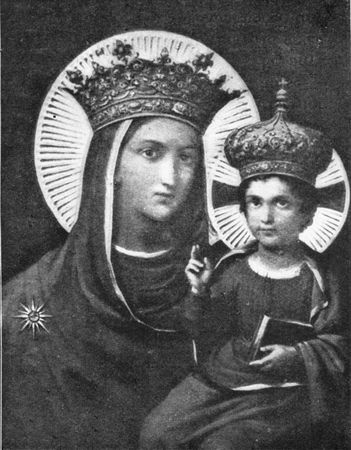
He was obliged to remain at Barcelona more than twenty days before the ship was ready to sail. During that time, in accordance with his custom, in order to speak with spiritual men about his soul, he sought them out even though dwelling in hermitages at a long distance from the city. But neither then, nor during the whole time of his stay at Manresa, could he find any one who could help him to advance as he wished. He met one woman, however, who seemed to be thoroughly acquainted with the spiritual life. She promised to pray to Jesus Christ and to ask Him to appear to Ignatius in person. In consequence of this promise, after leaving Barcelona, he gave up all anxiety about finding souls advanced in the spiritual life.
He had to stay in Barcelona for more than twenty days before the ship was ready to sail. During that time, as was his custom, he sought out spiritual men to talk with them about his soul. He did so even when they lived in hermitages far from the city. But neither then nor during his entire stay in Manresa could he find anyone who could help him advance as he wished. He did meet one woman, however, who seemed to know the spiritual life thoroughly. She promised to pray to Jesus Christ and ask him to appear to Ignatius in person. Because of her promise, after leaving Barcelona, he stopped worrying altogether about finding people advanced in the spiritual life.