Chapter 18
That was Tom’s great secret—the scheme to return home with his brother pirates and attend their own funerals. They had paddled over to the Missouri shore on a log, at dusk on Saturday, landing five or six miles below the village; they had slept in the woods at the edge of the town till nearly daylight, and had then crept through back lanes and alleys and finished their sleep in the gallery of the church among a chaos of invalided benches.
That was Tom’s great secret: his plan to return home with his fellow pirates and attend their own funerals. They had paddled on a log to the Missouri shore at dusk on Saturday. They landed five or six miles downstream from the village. They had slept in the woods at the edge of town until nearly daylight. Then they had crept through back lanes and alleys and finished sleeping in the church balcony among jumbled, broken benches.
At breakfast, Monday morning, Aunt Polly and Mary were very loving to Tom, and very attentive to his wants. There was an unusual amount of talk. In the course of it Aunt Polly said:
At breakfast on Monday morning, Aunt Polly and Mary were very affectionate toward Tom and paid close attention to his needs. There was much more conversation than usual. During the conversation, Aunt Polly said:
“Well, I don’t say it wasn’t a fine joke, Tom, to keep everybody suffering ’most a week so you boys had a good time, but it is a pity you could be so hard-hearted as to let me suffer so. If you could come over on a log to go to your funeral, you could have come over and give me a hint some way that you warn’t dead, but only run off.”
“Well, I don’t say it wasn’t a fine joke, Tom. You kept everybody suffering almost a week so you boys could have a good time. But it’s a pity you could be so hard-hearted as to let me suffer so. If you could come over on a log to go to your funeral, you could have come and give me some hint. You could have let me know you weren’t dead, but had only run off.”
“Yes, you could have done that, Tom,” said Mary; “and I believe you would if you had thought of it.”
“Yes, you could have done that, Tom,” Mary said. “And I believe you would have if you'd thought of it.”
“Would you, Tom?” said Aunt Polly, her face lighting wistfully. “Say, now, would you, if you’d thought of it?”
“Would you, Tom?” said Aunt Polly, her face brightening with longing. “Tell me, would you, if you’d thought of it?”
“I—well, I don’t know. ’Twould ’a’ spoiled everything.”
“I, well, I don’t know. It would have spoiled everything.”
“Tom, I hoped you loved me that much,” said Aunt Polly, with a grieved tone that discomforted the boy. “It would have been something if you’d cared enough to think of it, even if you didn’t do it.”
“Tom, I hoped you loved me that much,” said Aunt Polly, sounding hurt and making the boy uncomfortable. “It would have meant something if you’d cared enough to think of it, even if you didn’t do it.”
“Now, auntie, that ain’t any harm,” pleaded Mary; “it’s only Tom’s giddy way—he is always in such a rush that he never thinks of anything.”
“Now, auntie, that ain’t any harm,” pleaded Mary. “It’s just Tom’s silly way. He is always in such a rush that he never thinks of anything.”
“More’s the pity. Sid would have thought. And Sid would have come and done it, too. Tom, you’ll look back, some day, when it’s too late, and wish you’d cared a little more for me when it would have cost you so little.”
“That’s a real shame. Sid would have thought of it. And Sid would have come and done it, too. Tom, someday you’ll look back when it’s too late. You’ll wish you’d cared a little more for me when it would have cost you so little.”
“Now, auntie, you know I do care for you,” said Tom.
“Now, auntie, you know I really care about you,” Tom said.
“I’d know it better if you acted more like it.”
“I’d know it better if you acted more like it.”
“I wish now I’d thought,” said Tom, with a repentant tone; “but I dreamt about you, anyway. That’s something, ain’t it?”
“I wish I’d thought of it,” Tom said regretfully. “But I dreamed about you, anyway. That’s something, ain’t it?”
“It ain’t much—a cat does that much—but it’s better than nothing. What did you dream?”
“It ain’t much. A cat does that much, but it’s better than nothing. What did you dream?”
“Why, Wednesday night I dreamt that you was sitting over there by the bed, and Sid was sitting by the woodbox, and Mary next to him.”
“Why, Wednesday night I dreamt that you was sitting over there by the bed. And Sid was sitting by the woodbox, and Mary next to him.”
“Well, so we did. So we always do. I’m glad your dreams could take even that much trouble about us.”
“Well, we did. We always do. I’m glad your dreams could go to even that much trouble for us.”
“And I dreamt that Joe Harper’s mother was here.”
“And I dreamed that Joe Harper’s mother was here.”
“Why, she was here! Did you dream any more?”
“Why, she was here! Did you dream anything else?”
“Oh, lots. But it’s so dim, now.”
“Oh, lots. But it’s so hazy now.”
“Well, try to recollect—can’t you?”
“Well, try to remember, can’t you?”
“Somehow it seems to me that the wind—the wind blowed the—the—”
“Somehow it seems to me that the wind... the wind blowed the... the...”
“Try harder, Tom! The wind did blow something. Come!”
“Try harder, Tom! The wind did blow something. Come on!”
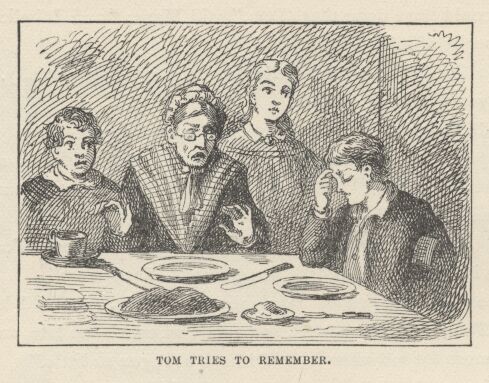
Tom pressed his fingers on his forehead an anxious minute, and then said:
Tom pressed his fingers against his forehead for an anxious minute, then said:
“I’ve got it now! I’ve got it now! It blowed the candle!”
“I’ve got it now! I’ve got it now! It blowed the candle!”
“Mercy on us! Go on, Tom—go on!”
“Oh my goodness! Go on, Tom, go on!”
“And it seems to me that you said, ‘Why, I believe that that door—’”
“And I think you said, ‘Why, I think that door...’”
“Go on, Tom!”
“Go on, Tom!”
“Just let me study a moment—just a moment. Oh, yes—you said you believed the door was open.”
“Just let me think for a moment, just a moment. Oh, yes, you said you believed the door was open.”
“As I’m sitting here, I did! Didn’t I, Mary! Go on!”
“As sure as I’m sitting here, I did! Didn’t I, Mary! Go on!”
“And then—and then—well I won’t be certain, but it seems like as if you made Sid go and—and—”
“And then, and then, well, I won't say for sure. But it seems like as if you made Sid go and, and...”
“Well? Well? What did I make him do, Tom? What did I make him do?”
“Well? Well? What did I make him do, Tom? What did I make him do?”
“You made him—you—Oh, you made him shut it.”
“You made him, you... Oh, you made him shut it.”
“Well, for the land’s sake! I never heard the beat of that in all my days! Don’t tell me there ain’t anything in dreams, any more. Sereny Harper shall know of this before I’m an hour older. I’d like to see her get around this with her rubbage ’bout superstition. Go on, Tom!”
“Well, for the land’s sake! I never heard anything like that in all my days! Don’t tell me there ain’t anything in dreams anymore. Sereny Harper will hear about this before an hour is up. I’d like to see her explain away this with her rubbish about superstition. Go on, Tom!”
“Oh, it’s all getting just as bright as day, now. Next you said I warn’t bad, only mischeevous and harum-scarum, and not any more responsible than—than—I think it was a colt, or something.”
“Oh, it’s all getting as clear as day now. Next you said I weren't bad, only mischievous and reckless. And not any more responsible than, than, I think it was a colt, or something.”
“And so it was! Well, goodness gracious! Go on, Tom!”
“And it was! Well, my goodness! Keep going, Tom!”
“And then you began to cry.”
“And then you started crying.”
“So I did. So I did. Not the first time, neither. And then—”
“So I did. So I did. Not the first time, neither. And then...”
“Then Mrs. Harper she began to cry, and said Joe was just the same, and she wished she hadn’t whipped him for taking cream when she’d throwed it out her own self—”
“Then Mrs. Harper she started to cry and said Joe was just the same. And she wished she hadn’t whipped him for taking cream when she’d throwed it out her own self...”
“Tom! The sperrit was upon you! You was a prophesying—that’s what you was doing! Land alive, go on, Tom!”
“Tom! The spirit was upon you! You was a prophesying. That’s what you was doing! Land alive, go on, Tom!”
“Then Sid he said—he said—”
“Then Sid he said... he said...”
“I don’t think I said anything,” said Sid.
“I don’t think I said anything,” Sid said.
“Yes you did, Sid,” said Mary.
“Yes, you did, Sid,” said Mary.
“Shut your heads and let Tom go on! What did he say, Tom?”
“Shut up and let Tom keep talking! What did he say, Tom?”
“He said—I think he said he hoped I was better off where I was gone to, but if I’d been better sometimes—”
“He said (I think he said) he hoped I was better off where I was gone to. But if I’d been better sometimes...”
“There, d’you hear that! It was his very words!”
“There, do you hear that! It was his very words!”
“And you shut him up sharp.”
“And you shut him up right away.”
“I lay I did! There must ’a’ been an angel there. There was an angel there, somewheres!”
“I bet I did! There must have been an angel there. There was an angel there, somewhere!”
“And Mrs. Harper told about Joe scaring her with a firecracker, and you told about Peter and the Pain-killer—”
“And Mrs. Harper told about how Joe scared her with a firecracker. And you told about Peter and the Pain-killer...”
“Just as true as I live!”
“It's true, as sure as I'm alive!”
“And then there was a whole lot of talk ’bout dragging the river for us, and ’bout having the funeral Sunday, and then you and old Miss Harper hugged and cried, and she went.”
“And then there was a whole lot of talk about searching the river for us and having the funeral Sunday. And then you and old Miss Harper hugged and cried, and she left.”
“It happened just so! It happened just so, as sure as I’m a-sitting in these very tracks. Tom, you couldn’t told it more like if you’d ’a’ seen it! And then what? Go on, Tom!”
“It happened just so! It happened just so, as sure as I’m sitting right here. Tom, you couldn’t told it more like if you’d have seen it! And then what? Go on, Tom!”
“Then I thought you prayed for me—and I could see you and hear every word you said. And you went to bed, and I was so sorry that I took and wrote on a piece of sycamore bark, ‘We ain’t dead—we are only off being pirates,’ and put it on the table by the candle; and then you looked so good, laying there asleep, that I thought I went and leaned over and kissed you on the lips.”
“Then I thought you prayed for me. And I could see you and hear every word you said. Then you went to bed. I was so sorry that I took and wrote on a piece of sycamore bark: ‘We ain’t dead. We are only off being pirates.’ I put it on the table by the candle. And then you looked so good, laying there asleep. So I thought I went and leaned over and kissed you on the lips.”
“Did you, Tom, did you! I just forgive you everything for that!” And she seized the boy in a crushing embrace that made him feel like the guiltiest of villains.
“Did you, Tom, did you! I forgive you for everything because of that!” And she grabbed the boy in a crushing hug. It made him feel like the guiltiest villain of all.
“It was very kind, even though it was only a—dream,” Sid soliloquized just audibly.
“It was very kind, even though it was only a... dream,” Sid said to himself, just loud enough to hear.
“Shut up, Sid! A body does just the same in a dream as he’d do if he was awake. Here’s a big Milum apple I’ve been saving for you, Tom, if you was ever found again—now go ’long to school. I’m thankful to the good God and Father of us all I’ve got you back, that’s long-suffering and merciful to them that believe on Him and keep His word, though goodness knows I’m unworthy of it, but if only the worthy ones got His blessings and had His hand to help them over the rough places, there’s few enough would smile here or ever enter into His rest when the long night comes. Go ’long Sid, Mary, Tom—take yourselves off—you’ve hendered me long enough.”
“Shut up, Sid! A body does just the same in a dream as he’d do if he was awake. Here’s a big Milum apple I’ve been saving for you, Tom, if you was ever found again. Now go along to school. I’m thankful to the good God and Father of us all that I’ve got you back. He’s patient and merciful to them that believe in him and keep his word. Though goodness knows I’m unworthy of his blessings. But what if only the worthy ones got his blessings and had his hand to help them through hard times? There’s few enough would smile here or ever enter his rest when the long night comes. Go along, Sid, Mary, Tom. Get going. You’ve kept me from my work long enough.”
The children left for school, and the old lady to call on Mrs. Harper and vanquish her realism with Tom’s marvellous dream. Sid had better judgment than to utter the thought that was in his mind as he left the house. It was this: “Pretty thin—as long a dream as that, without any mistakes in it!”
The children left for school, and the old lady went to visit Mrs. Harper. She would defeat Mrs. Harper’s skepticism with the story of Tom’s wonderful dream. As Sid left the house, he knew better than to say what he was thinking: “Pretty hard to believe. A dream that long, without a single mistake in it!”
What a hero Tom was become, now! He did not go skipping and prancing, but moved with a dignified swagger as became a pirate who felt that the public eye was on him. And indeed it was; he tried not to seem to see the looks or hear the remarks as he passed along, but they were food and drink to him. Smaller boys than himself flocked at his heels, as proud to be seen with him, and tolerated by him, as if he had been the drummer at the head of a procession or the elephant leading a menagerie into town. Boys of his own size pretended not to know he had been away at all; but they were consuming with envy, nevertheless. They would have given anything to have that swarthy sun-tanned skin of his, and his glittering notoriety; and Tom would not have parted with either for a circus.
What a hero Tom had become now! He no longer skipped and pranced, but walked with a dignified swagger. That was how a pirate should walk when he knew everyone was watching him. And everyone was watching. As he passed, he tried to seem unaware of their looks and comments, but he lived on that attention. Younger boys crowded behind him, proud to be seen with him and to have him put up with them. They were as proud as if he were the drummer leading a parade or the elephant leading a traveling menagerie into town. Boys his own size pretended not to know he had been away at all. But they were burning with envy just the same. They would have given anything for his dark, sun-tanned skin and his dazzling fame. And Tom would not have traded either for a whole circus.
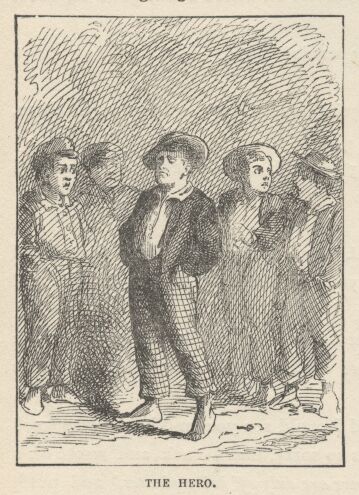
At school the children made so much of him and of Joe, and delivered such eloquent admiration from their eyes, that the two heroes were not long in becoming insufferably “stuck-up.” They began to tell their adventures to hungry listeners—but they only began; it was not a thing likely to have an end, with imaginations like theirs to furnish material. And finally, when they got out their pipes and went serenely puffing around, the very summit of glory was reached.
At school, the children fussed over him and Joe, their eyes shining with admiration. Before long, all this attention made the two heroes unbearably “stuck-up.” They began telling their adventures to eager listeners, but they were only getting started. With imaginations like theirs supplying the stories, the tales weren't likely to end. Finally, they brought out their pipes and strolled around, calmly puffing away. Their glory was complete.
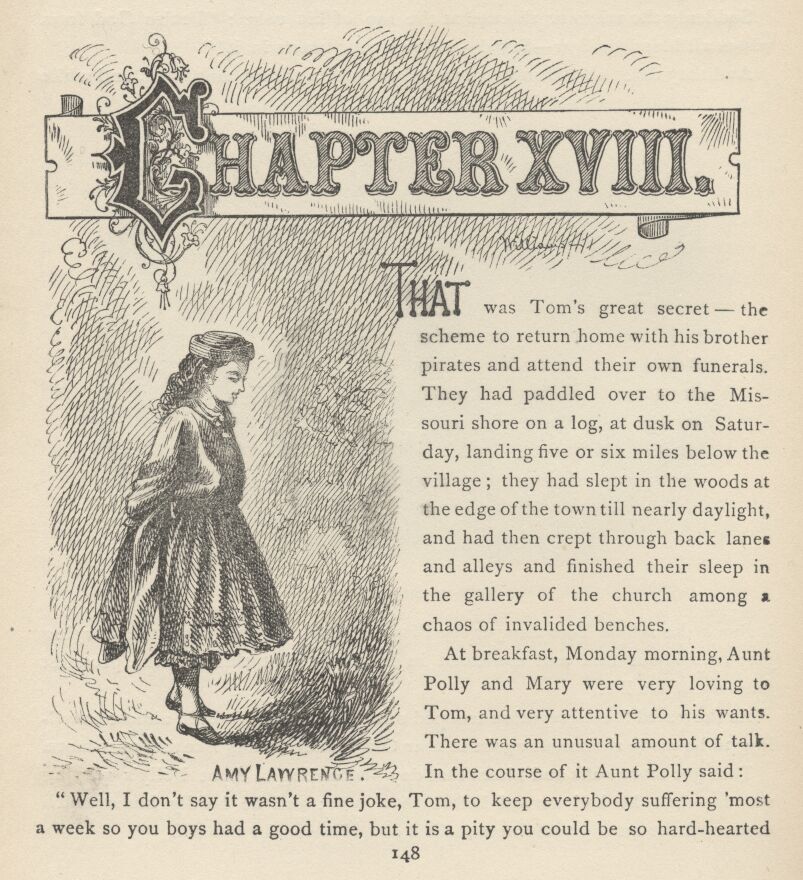
Tom decided that he could be independent of Becky Thatcher now. Glory was sufficient. He would live for glory. Now that he was distinguished, maybe she would be wanting to “make up.” Well, let her—she should see that he could be as indifferent as some other people. Presently she arrived. Tom pretended not to see her. He moved away and joined a group of boys and girls and began to talk. Soon he observed that she was tripping gayly back and forth with flushed face and dancing eyes, pretending to be busy chasing schoolmates, and screaming with laughter when she made a capture; but he noticed that she always made her captures in his vicinity, and that she seemed to cast a conscious eye in his direction at such times, too. It gratified all the vicious vanity that was in him; and so, instead of winning him, it only “set him up” the more and made him the more diligent to avoid betraying that he knew she was about. Presently she gave over skylarking, and moved irresolutely about, sighing once or twice and glancing furtively and wistfully toward Tom. Then she observed that now Tom was talking more particularly to Amy Lawrence than to any one else. She felt a sharp pang and grew disturbed and uneasy at once. She tried to go away, but her feet were treacherous, and carried her to the group instead. She said to a girl almost at Tom’s elbow—with sham vivacity:
Tom decided he could do without Becky Thatcher now. Glory was enough. He would live for glory. Now that he had made a name for himself, maybe she would want to “make up.” Well, let her. She would see that he could be just as indifferent as some other people. Soon she arrived. Tom pretended not to see her. He moved away, joined a group of boys and girls, and began to talk. Soon he noticed her skipping cheerfully back and forth, her face flushed and her eyes sparkling. She pretended to be busy chasing schoolmates and screamed with laughter whenever she caught one. But he noticed that she always caught them near him. At those moments, she also seemed to glance his way, aware that he might be watching. This fed all his spiteful vanity. So instead of winning him over, her behavior only “puffed him up” more. He took even greater care not to show that he knew she was nearby. Soon she stopped fooling around and wandered uncertainly, sighing once or twice and stealing wistful glances at Tom. Then she noticed that Tom was talking to Amy Lawrence more than to anyone else. She felt a sharp pang and immediately grew upset and uneasy. She tried to leave, but her feet betrayed her and carried her toward the group instead. She spoke to a girl almost at Tom’s elbow, pretending to be cheerful:
“Why, Mary Austin! you bad girl, why didn’t you come to Sunday-school?”
“Mary Austin, you bad girl! Why didn’t you come to Sunday school?”
“I did come—didn’t you see me?”
“I did come. Didn’t you see me?”
“Why, no! Did you? Where did you sit?”
“No! Did you? Where did you sit?”
“I was in Miss Peters’ class, where I always go. I saw you.”
“I was in Miss Peters’ class, where I always go. I saw you.”
“Did you? Why, it’s funny I didn’t see you. I wanted to tell you about the picnic.”
“Did you? Well, it’s strange I didn’t see you. I wanted to tell you about the picnic.”
“Oh, that’s jolly. Who’s going to give it?”
“Oh, that’s great. Who’s going to give it?”
“My ma’s going to let me have one.”
“My ma’s going to let me have one.”
“Oh, goody; I hope she’ll let me come.”
“Oh, great! I hope she’ll let me come.”
“Well, she will. The picnic’s for me. She’ll let anybody come that I want, and I want you.”
“Well, she will. The picnic is for me. She’ll let anyone I want come, and I want you.”
“That’s ever so nice. When is it going to be?”
“That’s really nice. When is it going to be?”
“By and by. Maybe about vacation.”
“Later. Maybe around vacation time.”
“Oh, won’t it be fun! You going to have all the girls and boys?”
“Oh, won’t it be fun! You going to have all the girls and boys?”
“Yes, every one that’s friends to me—or wants to be”; and she glanced ever so furtively at Tom, but he talked right along to Amy Lawrence about the terrible storm on the island, and how the lightning tore the great sycamore tree “all to flinders” while he was “standing within three feet of it.”
“Yes, everyone who’s friends with me, or wants to be.” She glanced very secretly at Tom. But he kept talking to Amy Lawrence about the terrible storm on the island. He described how lightning tore the great sycamore tree “all to pieces” while he was “standing within three feet of it.”
“Oh, may I come?” said Grace Miller.
“Oh, can I come?” Grace Miller asked.
“Yes.”
“Yes.”
“And me?” said Sally Rogers.
“What about me?” Sally Rogers asked.
“Yes.”
“Yes.”
“And me, too?” said Susy Harper. “And Joe?”
“And me, too?” said Susy Harper. “And Joe?”
“Yes.”
“Yes.”
And so on, with clapping of joyful hands till all the group had begged for invitations but Tom and Amy. Then Tom turned coolly away, still talking, and took Amy with him. Becky’s lips trembled and the tears came to her eyes; she hid these signs with a forced gayety and went on chattering, but the life had gone out of the picnic, now, and out of everything else; she got away as soon as she could and hid herself and had what her sex call “a good cry.” Then she sat moody, with wounded pride, till the bell rang. She roused up, now, with a vindictive cast in her eye, and gave her plaited tails a shake and said she knew what she’d do.
And so it went, with joyful clapping, until everyone in the group except Tom and Amy had begged for invitations. Then Tom calmly turned away, still talking, and took Amy with him. Becky’s lips trembled, and tears filled her eyes. She hid these signs by pretending to be cheerful and kept chattering. But now all the excitement had gone out of the picnic and everything else. She got away as soon as she could, hid herself, and had what women call “a good cry.” Then she sat brooding, her pride wounded, until the bell rang. Now she stirred, with revenge in her eyes, shook her braids, and said she knew what she’d do.
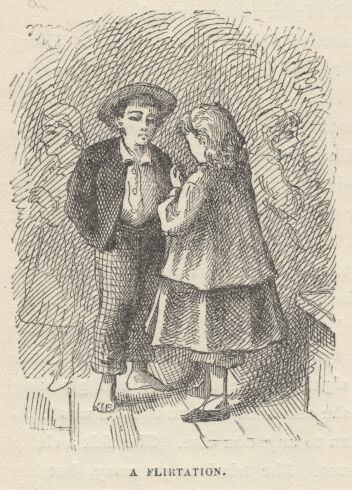
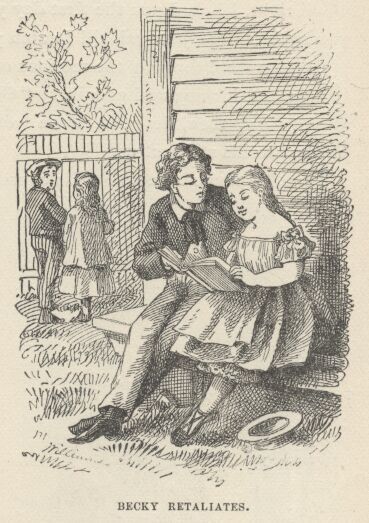
At recess Tom continued his flirtation with Amy with jubilant self-satisfaction. And he kept drifting about to find Becky and lacerate her with the performance. At last he spied her, but there was a sudden falling of his mercury. She was sitting cosily on a little bench behind the schoolhouse looking at a picture-book with Alfred Temple—and so absorbed were they, and their heads so close together over the book, that they did not seem to be conscious of anything in the world besides. Jealousy ran red-hot through Tom’s veins. He began to hate himself for throwing away the chance Becky had offered for a reconciliation. He called himself a fool, and all the hard names he could think of. He wanted to cry with vexation. Amy chatted happily along, as they walked, for her heart was singing, but Tom’s tongue had lost its function. He did not hear what Amy was saying, and whenever she paused expectantly he could only stammer an awkward assent, which was as often misplaced as otherwise. He kept drifting to the rear of the schoolhouse, again and again, to sear his eyeballs with the hateful spectacle there. He could not help it. And it maddened him to see, as he thought he saw, that Becky Thatcher never once suspected that he was even in the land of the living. But she did see, nevertheless; and she knew she was winning her fight, too, and was glad to see him suffer as she had suffered.
At recess Tom kept flirting with Amy, feeling delighted with himself. He kept wandering around, hoping to find Becky and hurt her by putting on a show. At last he spotted her, but his spirits suddenly sank. She was sitting cozily on a little bench behind the schoolhouse, looking at a picture book with Alfred Temple. They were so absorbed, with their heads so close together over the book, that nothing else seemed to exist. Jealousy burned red-hot in Tom’s veins. He began to hate himself for throwing away the chance Becky had offered to make up. He called himself a fool and every other harsh name he could think of. He wanted to cry with frustration. Amy chatted happily as they walked, her heart singing with joy, but Tom could no longer find anything to say. He did not hear what Amy was saying. Whenever she paused for an answer, he could only stammer an awkward agreement, as often out of place as not. Again and again, he wandered behind the schoolhouse to torment himself with the hateful sight. He could not help himself. And it drove him mad to think that Becky Thatcher never once seemed aware he was even alive. But Becky did notice him. She also knew she was winning their fight and was glad to see him suffer as she had suffered.
Amy’s happy prattle became intolerable. Tom hinted at things he had to attend to; things that must be done; and time was fleeting. But in vain—the girl chirped on. Tom thought, “Oh, hang her, ain’t I ever going to get rid of her?” At last he must be attending to those things—and she said artlessly that she would be “around” when school let out. And he hastened away, hating her for it.
Amy’s cheerful chatter became unbearable. Tom hinted that he had things to take care of. They had to be done, and time was running out. But it was no use. The girl kept chattering. Tom thought, “Oh, hang her, ain’t I ever going to get rid of her?” At last he insisted he had to go take care of those things. She said innocently that she would be “around” when school let out. And he hurried away, hating her for saying so.
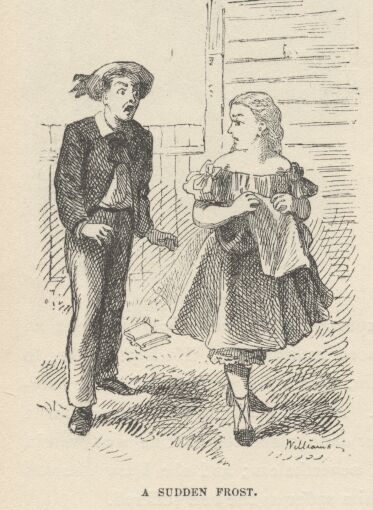
“Any other boy!” Tom thought, grating his teeth. “Any boy in the whole town but that Saint Louis smarty that thinks he dresses so fine and is aristocracy! Oh, all right, I licked you the first day you ever saw this town, mister, and I’ll lick you again! You just wait till I catch you out! I’ll just take and—”
“Any other boy!” Tom thought, grinding his teeth. “Any boy in the whole town but that Saint Louis smarty! He thinks he dresses so well and is so upper-class! Oh, all right, I beat you up the first day you ever saw this town, mister. And I’ll beat you up again! Just wait till I catch you outside! I’ll just go and...”
And he went through the motions of thrashing an imaginary boy—pummelling the air, and kicking and gouging. “Oh, you do, do you? You holler ’nough, do you? Now, then, let that learn you!” And so the imaginary flogging was finished to his satisfaction.
And he pretended to beat up an imaginary boy, punching the air, kicking, and gouging. “Oh, you do, do you? You holler enough, do you? Now, then, let that learn you!” And so he finished the imaginary beating to his satisfaction.
Tom fled home at noon. His conscience could not endure any more of Amy’s grateful happiness, and his jealousy could bear no more of the other distress. Becky resumed her picture inspections with Alfred, but as the minutes dragged along and no Tom came to suffer, her triumph began to cloud and she lost interest; gravity and absentmindedness followed, and then melancholy; two or three times she pricked up her ear at a footstep, but it was a false hope; no Tom came. At last she grew entirely miserable and wished she hadn’t carried it so far. When poor Alfred, seeing that he was losing her, he did not know how, kept exclaiming: “Oh, here’s a jolly one! look at this!” she lost patience at last, and said, “Oh, don’t bother me! I don’t care for them!” and burst into tears, and got up and walked away.
Tom ran home at noon. His conscience could no longer stand Amy’s grateful happiness, and his jealousy could bear no more of his other misery. Becky went back to looking at pictures with Alfred. But as the minutes dragged by and Tom failed to appear and suffer, her triumph began to fade. She lost interest, grew serious and distracted, and then became sad. Two or three times she listened eagerly at the sound of footsteps, but her hopes were false. Tom never came. At last she became completely miserable and wished she hadn’t gone so far. Poor Alfred could see he was losing her attention, though he didn’t know why. He kept exclaiming: “Oh, here’s a fun one! Look at this!” At last she lost patience and said, “Oh, don’t bother me! I don’t care about them!” She burst into tears, got up, and walked away.
Alfred dropped alongside and was going to try to comfort her, but she said:
Alfred came up beside her and was about to try to comfort her, but she said:
“Go away and leave me alone, can’t you! I hate you!”
“Go away and leave me alone, can’t you! I hate you!”
So the boy halted, wondering what he could have done—for she had said she would look at pictures all through the nooning—and she walked on, crying. Then Alfred went musing into the deserted schoolhouse. He was humiliated and angry. He easily guessed his way to the truth—the girl had simply made a convenience of him to vent her spite upon Tom Sawyer. He was far from hating Tom the less when this thought occurred to him. He wished there was some way to get that boy into trouble without much risk to himself. Tom’s spelling-book fell under his eye. Here was his opportunity. He gratefully opened to the lesson for the afternoon and poured ink upon the page.
So the boy stopped, wondering what he could have done wrong. She had said she would look at pictures throughout the lunch break, but she walked on, crying. Then Alfred went into the empty schoolhouse, lost in thought. He felt humiliated and angry. He easily guessed the truth. The girl had simply used him to get back at Tom Sawyer. Realizing this did nothing to lessen his hatred of Tom. He wished there were some way to get that boy into trouble without much risk to himself. Then he spotted Tom’s spelling book. Here was his chance. Grateful for the opportunity, he opened the book to the afternoon’s lesson and poured ink onto the page.
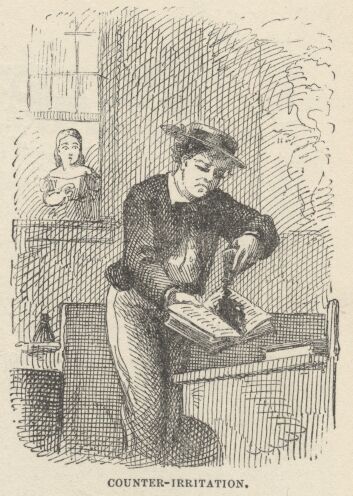
Becky, glancing in at a window behind him at the moment, saw the act, and moved on, without discovering herself. She started homeward, now, intending to find Tom and tell him; Tom would be thankful and their troubles would be healed. Before she was half way home, however, she had changed her mind. The thought of Tom’s treatment of her when she was talking about her picnic came scorching back and filled her with shame. She resolved to let him get whipped on the damaged spelling-book’s account, and to hate him forever, into the bargain.
Becky happened to glance through a window behind him and saw what he did. She moved on without letting him see her. She headed home, planning to find Tom and tell him. Tom would be grateful, and their troubles would be over. But before she was halfway home, she changed her mind. The memory of how Tom had treated her when she talked about her picnic came burning back, filling her with shame. She decided to let him get whipped for the damaged spelling book and to hate him forever, too.