Chapter 5
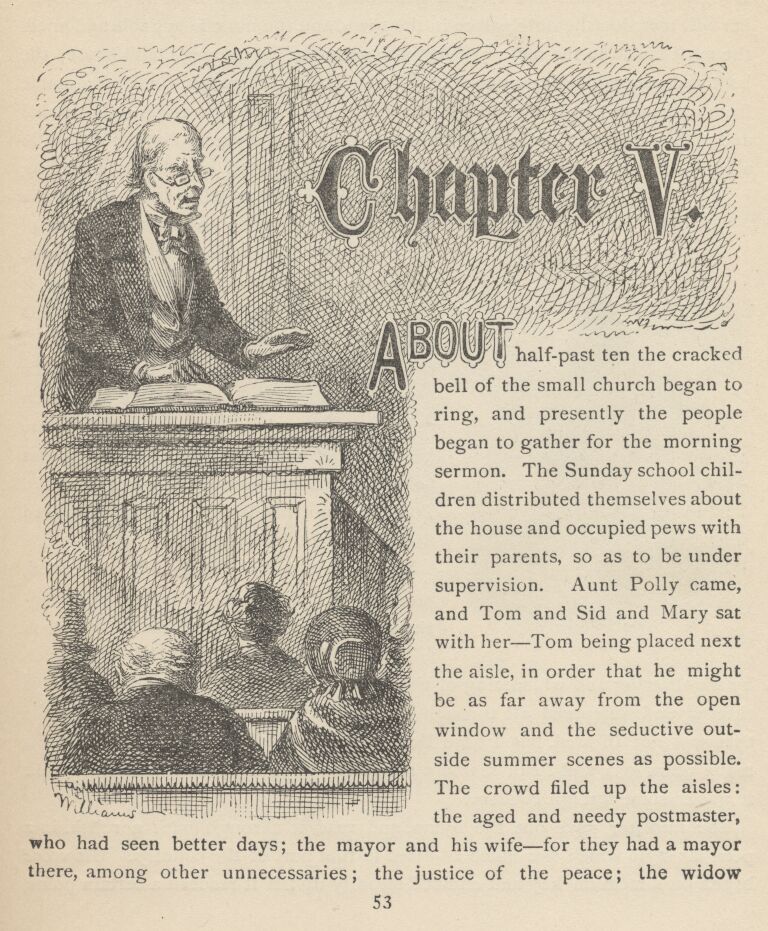
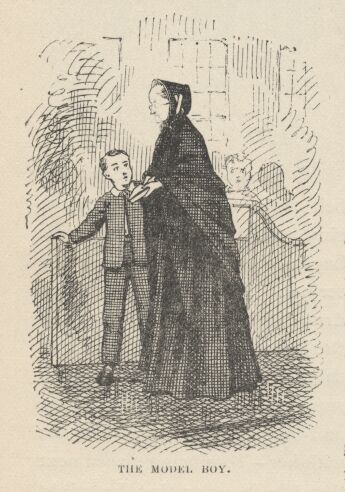
About half-past ten the cracked bell of the small church began to ring, and presently the people began to gather for the morning sermon. The Sunday-school children distributed themselves about the house and occupied pews with their parents, so as to be under supervision. Aunt Polly came, and Tom and Sid and Mary sat with her—Tom being placed next the aisle, in order that he might be as far away from the open window and the seductive outside summer scenes as possible. The crowd filed up the aisles: the aged and needy postmaster, who had seen better days; the mayor and his wife—for they had a mayor there, among other unnecessaries; the justice of the peace; the widow Douglas, fair, smart, and forty, a generous, good-hearted soul and well-to-do, her hill mansion the only palace in the town, and the most hospitable and much the most lavish in the matter of festivities that St. Petersburg could boast; the bent and venerable Major and Mrs. Ward; lawyer Riverson, the new notable from a distance; next the belle of the village, followed by a troop of lawn-clad and ribbon-decked young heart-breakers; then all the young clerks in town in a body—for they had stood in the vestibule sucking their cane-heads, a circling wall of oiled and simpering admirers, till the last girl had run their gantlet; and last of all came the Model Boy, Willie Mufferson, taking as heedful care of his mother as if she were cut glass. He always brought his mother to church, and was the pride of all the matrons. The boys all hated him, he was so good. And besides, he had been “thrown up to them” so much. His white handkerchief was hanging out of his pocket behind, as usual on Sundays—accidentally. Tom had no handkerchief, and he looked upon boys who had as snobs.
Around ten thirty, the small church’s cracked bell began to ring. Soon people began gathering for the morning sermon. The Sunday-school children spread out through the church and sat with their parents, so they could be watched. Aunt Polly arrived, and Tom, Sid, and Mary sat with her. Tom was placed next to the aisle, as far as possible from the open window and the tempting summer scenery outside. The crowd filed up the aisles. There was the old, poor postmaster, who had seen better days. Then came the mayor and his wife. The town had a mayor, among other unnecessary things. Next came the justice of the peace, then the widow Douglas, pretty, stylish, and forty. She was generous, kindhearted, and wealthy. Her mansion on the hill was the town’s only palace. It was also the most welcoming home, and its parties were by far the most lavish in St. Petersburg. Then came the stooped, elderly Major and Mrs. Ward, followed by lawyer Riverson, a new local celebrity from elsewhere. Next came the village beauty, followed by a troop of young heartbreakers in fine cotton dresses and ribbons. Then all the town’s young clerks came together. They had waited in the entrance hall, sucking on their cane handles. With slicked-down hair and silly smiles, these admirers had formed a surrounding wall until the last girl passed through. Last of all came the Model Boy, Willie Mufferson, looking after his mother as carefully as if she were cut glass. He always brought his mother to church, and all the mothers were proud of him. All the boys hated him because he was so good. Besides, he had been “held up as an example to them” so often. As usual on Sundays, his white handkerchief hung out of his back pocket, accidentally. Tom had no handkerchief, and he thought boys who had one were snobs.
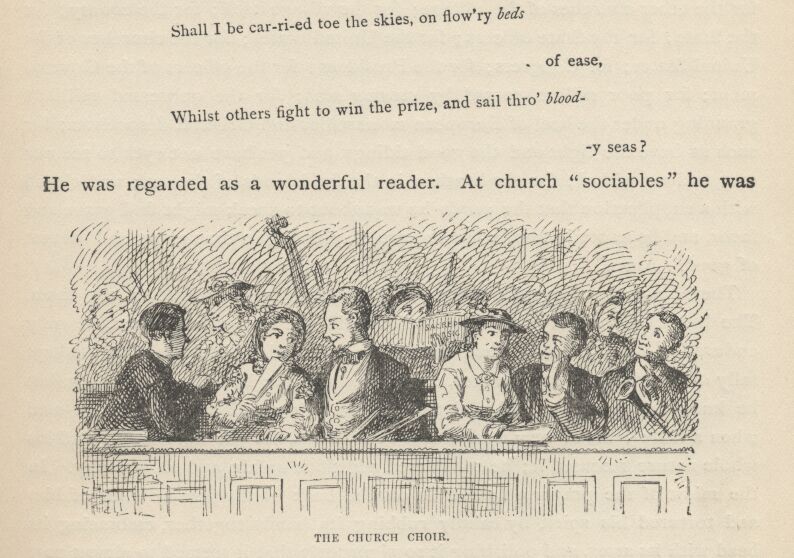
The congregation being fully assembled, now, the bell rang once more, to warn laggards and stragglers, and then a solemn hush fell upon the church which was only broken by the tittering and whispering of the choir in the gallery. The choir always tittered and whispered all through service. There was once a church choir that was not ill-bred, but I have forgotten where it was, now. It was a great many years ago, and I can scarcely remember anything about it, but I think it was in some foreign country.
With the congregation now fully gathered, the bell rang once more to warn anyone running late or lingering outside. Then a solemn silence fell over the church, broken only by the choir’s giggling and whispering in the gallery. The choir always giggled and whispered all through the service. There was once a church choir that wasn’t rude, but I’ve forgotten where it was. That was many years ago, and I can barely remember anything about it. But I think it was in some foreign country.
The minister gave out the hymn, and read it through with a relish, in a peculiar style which was much admired in that part of the country. His voice began on a medium key and climbed steadily up till it reached a certain point, where it bore with strong emphasis upon the topmost word and then plunged down as if from a spring-board:
The minister announced the hymn and read it through with great enjoyment. His unusual style was much admired in that part of the country. His voice started at a medium pitch and climbed steadily to a certain point. There, he put strong emphasis on the highest word, then sent his voice plunging down as if off a springboard:
Shall I be car-ri-ed toe the skies, on flow’ry beds of ease, Whilst others fight to win the prize, and sail thro’ blood -y seas?
Shall I be car-ri-ed toe the skies, on flow’ry beds of ease, Whilst others fight to win the prize, and sail thro’ blood -y seas?
He was regarded as a wonderful reader. At church “sociables” he was always called upon to read poetry; and when he was through, the ladies would lift up their hands and let them fall helplessly in their laps, and “wall” their eyes, and shake their heads, as much as to say, “Words cannot express it; it is too beautiful, TOO beautiful for this mortal earth.”
He was thought to be a wonderful reader. At church “social gatherings” he was always asked to read poetry. When he finished, the ladies would raise their hands and let them fall helplessly into their laps. They would “roll” their eyes and shake their heads, as if to say, “Words cannot express it. It is too beautiful, TOO beautiful for this mortal world.”
After the hymn had been sung, the Rev. Mr. Sprague turned himself into a bulletin-board, and read off “notices” of meetings and societies and things till it seemed that the list would stretch out to the crack of doom—a queer custom which is still kept up in America, even in cities, away here in this age of abundant newspapers. Often, the less there is to justify a traditional custom, the harder it is to get rid of it.
After the hymn, the Rev. Mr. Sprague turned himself into a bulletin board. He read out “notices” of meetings and societies and other things until the list seemed likely to last until Judgment Day. This strange custom still survives in America, even in cities, in this age of plentiful newspapers. Often, the less reason there is to keep a traditional custom, the harder the custom is to get rid of.
And now the minister prayed. A good, generous prayer it was, and went into details: it pleaded for the church, and the little children of the church; for the other churches of the village; for the village itself; for the county; for the State; for the State officers; for the United States; for the churches of the United States; for Congress; for the President; for the officers of the Government; for poor sailors, tossed by stormy seas; for the oppressed millions groaning under the heel of European monarchies and Oriental despotisms; for such as have the light and the good tidings, and yet have not eyes to see nor ears to hear withal; for the heathen in the far islands of the sea; and closed with a supplication that the words he was about to speak might find grace and favor, and be as seed sown in fertile ground, yielding in time a grateful harvest of good. Amen.
And now the minister prayed. It was a good, generous prayer, and it covered everything in detail. He prayed for the church and its little children, then for the village’s other churches. He prayed for the village itself, the county, the State, and the State officials. He prayed for the United States, its churches, Congress, the President, and the Government officials. He prayed for poor sailors tossed about on stormy seas. He prayed for the oppressed millions groaning under the heels of European monarchies and Asian tyrannies. He prayed for those who had the light and the good news, yet lacked eyes to see or ears to hear. He prayed for the heathen on distant islands in the sea. He ended by asking that the words he was about to speak might be welcomed and accepted. He asked that his words might be like seeds planted in fertile soil, producing a welcome harvest of good in time. Amen.
There was a rustling of dresses, and the standing congregation sat down. The boy whose history this book relates did not enjoy the prayer, he only endured it—if he even did that much. He was restive all through it; he kept tally of the details of the prayer, unconsciously—for he was not listening, but he knew the ground of old, and the clergyman’s regular route over it—and when a little trifle of new matter was interlarded, his ear detected it and his whole nature resented it; he considered additions unfair, and scoundrelly. In the midst of the prayer a fly had lit on the back of the pew in front of him and tortured his spirit by calmly rubbing its hands together, embracing its head with its arms, and polishing it so vigorously that it seemed to almost part company with the body, and the slender thread of a neck was exposed to view; scraping its wings with its hind legs and smoothing them to its body as if they had been coat-tails; going through its whole toilet as tranquilly as if it knew it was perfectly safe. As indeed it was; for as sorely as Tom’s hands itched to grab for it they did not dare—he believed his soul would be instantly destroyed if he did such a thing while the prayer was going on. But with the closing sentence his hand began to curve and steal forward; and the instant the “Amen” was out the fly was a prisoner of war. His aunt detected the act and made him let it go.
Dresses rustled as the standing congregation sat down. The boy whose story this book tells did not enjoy the prayer. He only endured it, if he even did that much. He was restless throughout it. Without thinking, he kept track of the prayer’s details. He was not listening, but he knew the familiar ground and the minister’s usual route across it. Whenever the minister slipped in some small new detail, Tom’s ear caught it, and his whole being resented it. He thought additions were unfair and downright underhanded. During the prayer, a fly landed on the back of the pew in front of him. The fly tormented him by calmly rubbing its hands together, wrapping its arms around its head, and polishing it. It polished so hard that its head seemed almost ready to come off, exposing its thin, threadlike neck. Then it scraped its wings with its hind legs and smoothed them against its body as if they were coattails. It went through its entire grooming routine as calmly as if it knew it was perfectly safe. And indeed it was. Much as Tom’s hands itched to grab the fly, he did not dare. He believed his soul would be destroyed instantly if he did such a thing during the prayer. But as the minister spoke the final sentence, Tom began to curl his hand and ease it forward. The instant the “Amen” was out, the fly was a prisoner of war. His aunt caught him at it and made him let the fly go.
The minister gave out his text and droned along monotonously through an argument that was so prosy that many a head by and by began to nod—and yet it was an argument that dealt in limitless fire and brimstone and thinned the predestined elect down to a company so small as to be hardly worth the saving. Tom counted the pages of the sermon; after church he always knew how many pages there had been, but he seldom knew anything else about the discourse. However, this time he was really interested for a little while. The minister made a grand and moving picture of the assembling together of the world’s hosts at the millennium when the lion and the lamb should lie down together and a little child should lead them. But the pathos, the lesson, the moral of the great spectacle were lost upon the boy; he only thought of the conspicuousness of the principal character before the on-looking nations; his face lit with the thought, and he said to himself that he wished he could be that child, if it was a tame lion.
The minister announced his Bible passage and droned on in a flat voice. His argument was so dull that, after a while, many heads began to nod. Yet he spoke of endless hellfire and brimstone, leaving so few people destined for salvation they were hardly worth saving. Tom counted the pages of the sermon. After church, he always knew how many pages there had been, but he seldom knew anything else about the sermon. This time, though, he was truly interested for a little while. The minister painted a grand and moving picture of the world’s multitudes gathering at the millennium. Then the lion and the lamb would lie down together, and a little child would lead them. But the emotion, the lesson, and the moral of this great scene were lost on the boy. He thought only of how much attention the child would get, with all the nations watching. His face lit up at the thought. He told himself he wished he could be that child, if the lion was tame.
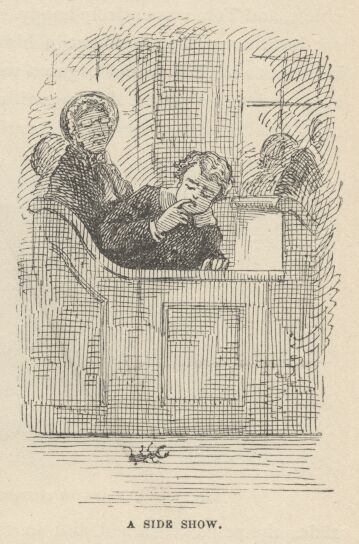
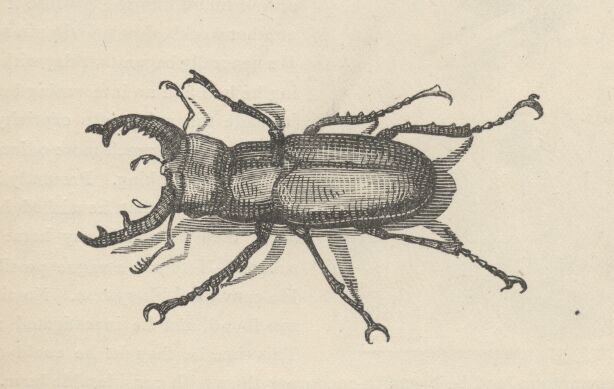
Now he lapsed into suffering again, as the dry argument was resumed. Presently he bethought him of a treasure he had and got it out. It was a large black beetle with formidable jaws—a “pinchbug,” he called it. It was in a percussion-cap box. The first thing the beetle did was to take him by the finger. A natural fillip followed, the beetle went floundering into the aisle and lit on its back, and the hurt finger went into the boy’s mouth. The beetle lay there working its helpless legs, unable to turn over. Tom eyed it, and longed for it; but it was safe out of his reach. Other people uninterested in the sermon found relief in the beetle, and they eyed it too. Presently a vagrant poodle dog came idling along, sad at heart, lazy with the summer softness and the quiet, weary of captivity, sighing for change. He spied the beetle; the drooping tail lifted and wagged. He surveyed the prize; walked around it; smelt at it from a safe distance; walked around it again; grew bolder, and took a closer smell; then lifted his lip and made a gingerly snatch at it, just missing it; made another, and another; began to enjoy the diversion; subsided to his stomach with the beetle between his paws, and continued his experiments; grew weary at last, and then indifferent and absent-minded. His head nodded, and little by little his chin descended and touched the enemy, who seized it. There was a sharp yelp, a flirt of the poodle’s head, and the beetle fell a couple of yards away, and lit on its back once more. The neighboring spectators shook with a gentle inward joy, several faces went behind fans and hand-kerchiefs, and Tom was entirely happy. The dog looked foolish, and probably felt so; but there was resentment in his heart, too, and a craving for revenge. So he went to the beetle and began a wary attack on it again; jumping at it from every point of a circle, lighting with his fore-paws within an inch of the creature, making even closer snatches at it with his teeth, and jerking his head till his ears flapped again. But he grew tired once more, after a while; tried to amuse himself with a fly but found no relief; followed an ant around, with his nose close to the floor, and quickly wearied of that; yawned, sighed, forgot the beetle entirely, and sat down on it. Then there was a wild yelp of agony and the poodle went sailing up the aisle; the yelps continued, and so did the dog; he crossed the house in front of the altar; he flew down the other aisle; he crossed before the doors; he clamored up the home-stretch; his anguish grew with his progress, till presently he was but a woolly comet moving in its orbit with the gleam and the speed of light. At last the frantic sufferer sheered from its course, and sprang into its master’s lap; he flung it out of the window, and the voice of distress quickly thinned away and died in the distance.
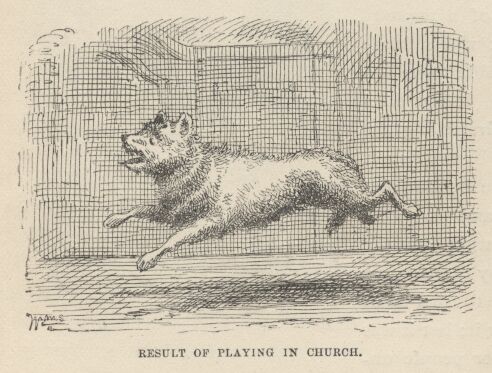
Now he began to suffer again as the dry sermon resumed. Before long, he remembered a treasure he had and took it out. It was a large black beetle with fearsome jaws. He called it a “pinchbug.” He kept it in a percussion-cap box. The first thing the beetle did was pinch his finger. He flicked it away by instinct. The beetle tumbled into the aisle and landed on its back, while the sore finger went into the boy’s mouth. The beetle lay there waving its helpless legs, unable to turn over. Tom watched it and longed to get it back, but it was safely out of his reach. Other people bored by the sermon found some relief in watching the beetle too. Soon a wandering poodle came strolling along, sad at heart. The summer warmth and quiet had made him lazy. He was tired of being cooped up and longed for a change. He spotted the beetle, and his drooping tail rose and wagged. He studied his prize, walked around it, and sniffed it from a safe distance. He walked around it again, grew bolder, and sniffed closer. Then he lifted his lip and cautiously snapped at it, just missing. He tried again, and again, and began enjoying the game. He lay down on his stomach with the beetle between his paws and kept experimenting. At last he grew tired, then lost interest and let his mind wander. His head nodded. Little by little, his chin sank until it touched the enemy, who seized it. The dog gave a sharp yelp and jerked his head. The beetle flew a couple of yards away and landed on its back again. The nearby spectators shook with quiet delight. Several hid their faces behind fans and handkerchiefs, and Tom was completely happy. The dog looked foolish and probably felt foolish too. But he also felt resentment and a thirst for revenge. So he returned to the beetle and began another cautious attack. He jumped at it from every direction, landing with his front paws within an inch of the creature. He snapped closer and closer with his teeth and jerked his head until his ears flapped. But after a while, he grew tired again. He tried amusing himself with a fly, but that brought no relief. He followed an ant with his nose close to the floor, but quickly tired of that too. He yawned, sighed, forgot the beetle entirely, and sat down on it. Then came a wild yelp of agony, and the poodle went flying up the aisle. The yelps continued, and so did the dog. He raced across the church in front of the altar and flew down the other aisle. He crossed in front of the doors and howled his way up the home stretch. His agony grew as he ran. Soon he was nothing but a woolly comet circling its orbit with the gleam and speed of light. At last the frantic sufferer swerved off course and leaped into his master’s lap. His master flung him out the window. The cries of distress quickly grew fainter and died away in the distance.
By this time the whole church was red-faced and suffocating with suppressed laughter, and the sermon had come to a dead standstill. The discourse was resumed presently, but it went lame and halting, all possibility of impressiveness being at an end; for even the gravest sentiments were constantly being received with a smothered burst of unholy mirth, under cover of some remote pew-back, as if the poor parson had said a rarely facetious thing. It was a genuine relief to the whole congregation when the ordeal was over and the benediction pronounced.
By now, everyone in the church was red-faced and choking as they struggled not to laugh. The sermon had come to a complete stop. Soon the minister started again, but his words came slowly and awkwardly, with no hope of impressing anyone. Even his most serious thoughts kept drawing muffled bursts of irreverent laughter from behind some distant pew. It was as if the poor minister had said something unusually funny. The whole congregation felt genuine relief when the ordeal ended and the final blessing was given.
Tom Sawyer went home quite cheerful, thinking to himself that there was some satisfaction about divine service when there was a bit of variety in it. He had but one marring thought; he was willing that the dog should play with his pinchbug, but he did not think it was upright in him to carry it off.
Tom Sawyer went home feeling quite cheerful. He thought church services could offer some satisfaction when there was a little variety. Only one thought spoiled his mood. He was happy to let the dog play with his pinchbug, but he didn't think taking it away was fair.