Chapter 9
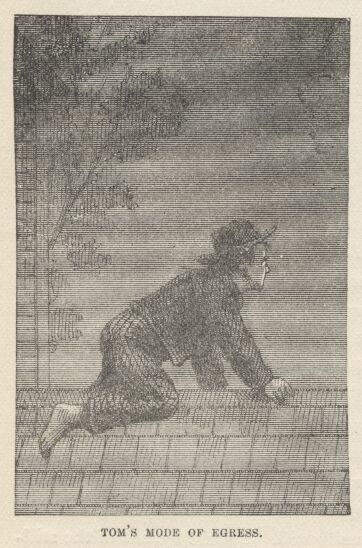
At half-past nine, that night, Tom and Sid were sent to bed, as usual. They said their prayers, and Sid was soon asleep. Tom lay awake and waited, in restless impatience. When it seemed to him that it must be nearly daylight, he heard the clock strike ten! This was despair. He would have tossed and fidgeted, as his nerves demanded, but he was afraid he might wake Sid. So he lay still, and stared up into the dark. Everything was dismally still. By and by, out of the stillness, little, scarcely perceptible noises began to emphasize themselves. The ticking of the clock began to bring itself into notice. Old beams began to crack mysteriously. The stairs creaked faintly. Evidently spirits were abroad. A measured, muffled snore issued from Aunt Polly’s chamber. And now the tiresome chirping of a cricket that no human ingenuity could locate, began. Next the ghastly ticking of a death-watch in the wall at the bed’s head made Tom shudder—it meant that somebody’s days were numbered. Then the howl of a far-off dog rose on the night air, and was answered by a fainter howl from a remoter distance. Tom was in an agony. At last he was satisfied that time had ceased and eternity begun; he began to doze, in spite of himself; the clock chimed eleven, but he did not hear it. And then there came, mingling with his half-formed dreams, a most melancholy caterwauling. The raising of a neighboring window disturbed him. A cry of “Scat! you devil!” and the crash of an empty bottle against the back of his aunt’s woodshed brought him wide awake, and a single minute later he was dressed and out of the window and creeping along the roof of the “ell” on all fours. He “meow’d” with caution once or twice, as he went; then jumped to the roof of the woodshed and thence to the ground. Huckleberry Finn was there, with his dead cat. The boys moved off and disappeared in the gloom. At the end of half an hour they were wading through the tall grass of the graveyard.
At nine thirty that night, Tom and Sid were sent to bed as usual. They said their prayers, and Sid soon fell asleep. Tom lay awake and waited with restless impatience. When he thought it must be nearly daylight, he heard the clock strike ten! He was in despair. He wanted to toss and fidget, as his nerves demanded, but he was afraid he might wake Sid. So he lay still and stared up into the darkness. Everything was miserably quiet. After a while, tiny, barely noticeable noises began to stand out in the silence. The ticking clock began to catch his attention. Old beams began to crack mysteriously. The stairs creaked faintly. Clearly, spirits were roaming about. A steady, muffled snore came from Aunt Polly’s bedroom. Then a cricket began its tiresome chirping, and no amount of human cleverness could have located it. Next came the eerie ticking of a death-watch beetle in the wall at the head of the bed. Tom shuddered at the sound. It meant someone’s days were numbered. Then a distant dog’s howl rose into the night air. A fainter howl answered from even farther away. Tom was in agony. At last he was convinced that time had stopped and eternity had begun. In spite of himself, he began to doze. The clock struck eleven, but he did not hear it. Then a terribly mournful yowling mingled with his half-formed dreams. The sound of a nearby window opening disturbed him. A cry of “Scat! you devil!” followed. An empty bottle smashed against the back of his aunt’s woodshed, bringing him wide awake. A minute later, he was dressed and out the window, crawling along the roof of the “ell,” the house’s extension. He cautiously “meowed” once or twice as he went. Then he jumped onto the woodshed roof and from there to the ground. Huckleberry Finn was waiting with his dead cat. The boys set off and disappeared into the darkness. Half an hour later, they were wading through the graveyard’s tall grass.
It was a graveyard of the old-fashioned Western kind. It was on a hill, about a mile and a half from the village. It had a crazy board fence around it, which leaned inward in places, and outward the rest of the time, but stood upright nowhere. Grass and weeds grew rank over the whole cemetery. All the old graves were sunken in, there was not a tombstone on the place; round-topped, worm-eaten boards staggered over the graves, leaning for support and finding none. “Sacred to the memory of” So-and-So had been painted on them once, but it could no longer have been read, on the most of them, now, even if there had been light.
It was an old-fashioned Western graveyard. It stood on a hill, about a mile and a half from the village. A rickety board fence surrounded it, leaning inward in places and outward everywhere else, but standing straight nowhere. Thick grass and weeds covered the whole cemetery. All the old graves had sunk in, and there wasn't a single tombstone. Worm-eaten boards with rounded tops stood crookedly over the graves, leaning for support and finding none. “Sacred to the memory of” So-and-So had once been painted on the boards. But now, even if there had been light, the words on most of them would have been unreadable.
A faint wind moaned through the trees, and Tom feared it might be the spirits of the dead, complaining at being disturbed. The boys talked little, and only under their breath, for the time and the place and the pervading solemnity and silence oppressed their spirits. They found the sharp new heap they were seeking, and ensconced themselves within the protection of three great elms that grew in a bunch within a few feet of the grave.
A faint wind moaned through the trees. Tom feared it might be the spirits of the dead, complaining about being disturbed. The boys spoke little, and only in whispers, because the hour, the place, and the solemn silence weighed on them. They found the fresh mound of earth they were looking for. They took shelter among three large elms growing close together a few feet from the grave.
Then they waited in silence for what seemed a long time. The hooting of a distant owl was all the sound that troubled the dead stillness. Tom’s reflections grew oppressive. He must force some talk. So he said in a whisper:
Then they waited in silence for what felt like a long time. Only the hooting of a distant owl broke the deep stillness. Tom’s thoughts began to weigh on him. He had to start a conversation. So he whispered:
“Hucky, do you believe the dead people like it for us to be here?”
“Hucky, do you think the dead people like us being here?”
Huckleberry whispered:
Huckleberry whispered:
“I wisht I knowed. It’s awful solemn like, ain’t it?”
“I wish I knowed. It’s awful solemn like, ain’t it?”
“I bet it is.”
“I bet it is.”
There was a considerable pause, while the boys canvassed this matter inwardly. Then Tom whispered:
There was a long pause while the boys silently thought the matter over. Then Tom whispered:
“Say, Hucky—do you reckon Hoss Williams hears us talking?”
“Say, Hucky, do you reckon Hoss Williams hears us talking?”
“O’ course he does. Least his sperrit does.”
“Of course he does. Least his spirit does.”
Tom, after a pause:
Tom, after a brief pause:
“I wish I’d said Mister Williams. But I never meant any harm. Everybody calls him Hoss.”
“I wish I’d said Mister Williams. But I didn’t mean any harm. Everybody calls him Hoss.”
“A body can’t be too partic’lar how they talk ’bout these-yer dead people, Tom.”
“A body can’t be too careful how they talk about these here dead people, Tom.”
This was a damper, and conversation died again.
This dampened the mood, and the conversation stopped again.
Presently Tom seized his comrade’s arm and said:
Soon Tom grabbed his friend’s arm and said:
“Sh!”
“Shh!”
“What is it, Tom?” And the two clung together with beating hearts.
“What is it, Tom?” And the two held tightly to each other, their hearts pounding.
“Sh! There ’tis again! Didn’t you hear it?”
“Shh! There it is again! Didn’t you hear it?”
“I—”
“I...”
“There! Now you hear it.”
“There! Now you can hear it.”
“Lord, Tom, they’re coming! They’re coming, sure. What’ll we do?”
“Lord, Tom, they’re coming! They’re coming for sure. What are we going to do?”
“I dono. Think they’ll see us?”
“I don’t know. Think they’ll see us?”
“Oh, Tom, they can see in the dark, same as cats. I wisht I hadn’t come.”
“Oh, Tom, they can see in the dark, same as cats. I wish I hadn’t come.”
“Oh, don’t be afeard. I don’t believe they’ll bother us. We ain’t doing any harm. If we keep perfectly still, maybe they won’t notice us at all.”
“Oh, don’t be afraid. I don’t believe they’ll bother us. We ain’t doing any harm. If we keep perfectly still, maybe they won’t notice us at all.”
“I’ll try to, Tom, but, Lord, I’m all of a shiver.”
“I’ll try to, Tom, but, Lord, I’m shaking all over.”
“Listen!”
“Listen!”
The boys bent their heads together and scarcely breathed. A muffled sound of voices floated up from the far end of the graveyard.
The boys leaned their heads together and barely breathed. Muffled voices drifted up from the far end of the graveyard.
“Look! See there!” whispered Tom. “What is it?”
“Look! Over there!” whispered Tom. “What is it?”
“It’s devil-fire. Oh, Tom, this is awful.”
“It’s devil-fire. Oh, Tom, this is awful.”
Some vague figures approached through the gloom, swinging an old-fashioned tin lantern that freckled the ground with innumerable little spangles of light. Presently Huckleberry whispered with a shudder:
Some shadowy figures approached through the darkness, swinging an old-fashioned tin lantern. The lantern scattered countless tiny specks of light across the ground. Soon Huckleberry shuddered and whispered:
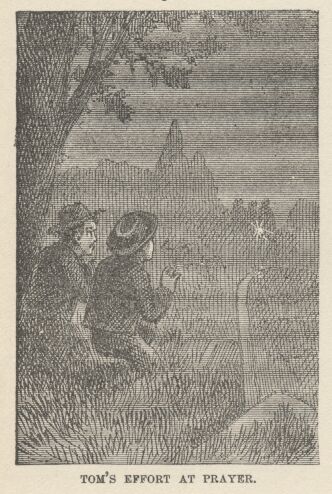
“It’s the devils sure enough. Three of ’em! Lordy, Tom, we’re goners! Can you pray?”
“It’s the devils for sure. Three of them! Lordy, Tom, we’re goners! Can you pray?”
“I’ll try, but don’t you be afeard. They ain’t going to hurt us. ‘Now I lay me down to sleep, I—’”
“I’ll try, but don’t you be afraid. They ain’t going to hurt us. ‘Now I lay me down to sleep, I...’”
“Sh!”
“Shh!”
“What is it, Huck?”
“What is it, Huck?”
“They’re humans! One of ’em is, anyway. One of ’em’s old Muff Potter’s voice.”
“They’re humans! One of them is, anyway. One of them’s old Muff Potter’s voice.”
“No—’tain’t so, is it?”
“No, it ain't so, is it?”
“I bet I know it. Don’t you stir nor budge. He ain’t sharp enough to notice us. Drunk, the same as usual, likely—blamed old rip!”
“I bet I know it. Don’t you stir nor budge. He ain’t smart enough to notice us. Likely drunk, same as usual. Blamed old rip!”
“All right, I’ll keep still. Now they’re stuck. Can’t find it. Here they come again. Now they’re hot. Cold again. Hot again. Red hot! They’re p’inted right, this time. Say, Huck, I know another o’ them voices; it’s Injun Joe.”
“All right, I’ll keep still. Now they’re stuck. Can’t find it. Here they come again. Now they’re hot. Cold again. Hot again. Red hot! They’re pointed right, this time. Say, Huck, I know another of them voices. It’s Injun Joe.”
“That’s so—that murderin’ half-breed! I’d druther they was devils a dern sight. What kin they be up to?”
“That’s so. That murdering half-breed! I’d a darn sight rather they was devils. What can they be up to?”
The whisper died wholly out, now, for the three men had reached the grave and stood within a few feet of the boys’ hiding-place.
The whispering stopped completely now because the three men had reached the grave. They stood just a few feet from the boys’ hiding place.
“Here it is,” said the third voice; and the owner of it held the lantern up and revealed the face of young Doctor Robinson.
“Here it is,” said the third voice. The speaker raised the lantern, revealing the face of young Doctor Robinson.
Potter and Injun Joe were carrying a handbarrow with a rope and a couple of shovels on it. They cast down their load and began to open the grave. The doctor put the lantern at the head of the grave and came and sat down with his back against one of the elm trees. He was so close the boys could have touched him.
Potter and Injun Joe were carrying a handcart with a rope and a couple of shovels on it. They dropped their load and began digging up the grave. The doctor set the lantern at the head of the grave. Then he sat down with his back against one of the elm trees. He was so close that the boys could have touched him.
“Hurry, men!” he said, in a low voice; “the moon might come out at any moment.”
“Hurry, men!” he said quietly. “The moon might come out at any moment.”
They growled a response and went on digging. For some time there was no noise but the grating sound of the spades discharging their freight of mould and gravel. It was very monotonous. Finally a spade struck upon the coffin with a dull woody accent, and within another minute or two the men had hoisted it out on the ground. They pried off the lid with their shovels, got out the body and dumped it rudely on the ground. The moon drifted from behind the clouds and exposed the pallid face. The barrow was got ready and the corpse placed on it, covered with a blanket, and bound to its place with the rope. Potter took out a large spring-knife and cut off the dangling end of the rope and then said:
They growled a reply and went on digging. For some time there was no noise but the grating of the spades as they unloaded their freight of earth and gravel. It was very monotonous. Finally a spade struck the coffin with a dull, woody sound, and within another minute or two the men had hoisted it out onto the ground. They pried off the lid with their shovels, got out the body, and dumped it roughly on the ground. The moon drifted from behind the clouds and showed the pale face. The handcart was made ready, and the corpse was placed on it, covered with a blanket, and tied in place with the rope. Potter took out a large spring-knife, cut off the dangling end of the rope, and then said:
“Now the cussed thing’s ready, Sawbones, and you’ll just out with another five, or here she stays.”
“Now the cussed thing’s ready, Sawbones. And you’ll just hand over another five dollars, or here she stays.”
“That’s the talk!” said Injun Joe.
“That’s the spirit!” said Injun Joe.
“Look here, what does this mean?” said the doctor. “You required your pay in advance, and I’ve paid you.”
“Look here, what does this mean?” said the doctor. “You insisted on being paid in advance, and I’ve paid you.”
“Yes, and you done more than that,” said Injun Joe, approaching the doctor, who was now standing. “Five years ago you drove me away from your father’s kitchen one night, when I come to ask for something to eat, and you said I warn’t there for any good; and when I swore I’d get even with you if it took a hundred years, your father had me jailed for a vagrant. Did you think I’d forget? The Injun blood ain’t in me for nothing. And now I’ve got you, and you got to settle, you know!”
“Yes, and you done more than that,” said Injun Joe, approaching the doctor, who was now standing. “Five years ago you drove me away from your father’s kitchen one night, when I come asking for food. And you said I wasn’t there for any good. And when I swore I’d get even with you if it took a hundred years, your father had me jailed for vagrancy. Did you think I’d forget? The Injun blood ain’t in me for nothing. And now I’ve got you, and you got to settle, you know!”
He was threatening the doctor, with his fist in his face, by this time. The doctor struck out suddenly and stretched the ruffian on the ground. Potter dropped his knife, and exclaimed:
By now, he was threatening the doctor, holding his fist in the doctor's face. The doctor suddenly punched the thug and knocked him to the ground. Potter dropped his knife and cried out:
“Here, now, don’t you hit my pard!” and the next moment he had grappled with the doctor and the two were struggling with might and main, trampling the grass and tearing the ground with their heels. Injun Joe sprang to his feet, his eyes flaming with passion, snatched up Potter’s knife, and went creeping, catlike and stooping, round and round about the combatants, seeking an opportunity. All at once the doctor flung himself free, seized the heavy headboard of Williams’ grave and felled Potter to the earth with it—and in the same instant the half-breed saw his chance and drove the knife to the hilt in the young man’s breast. He reeled and fell partly upon Potter, flooding him with his blood, and in the same moment the clouds blotted out the dreadful spectacle and the two frightened boys went speeding away in the dark.
“Here, now, don’t you hit my pard!” The next moment, he grabbed the doctor, and the two struggled with all their strength. They trampled the grass and tore up the ground with their heels. Injun Joe sprang to his feet, his eyes blazing with rage, and snatched up Potter’s knife. Crouching like a cat, he crept around and around the fighting men, looking for an opening. Suddenly, the doctor broke free and grabbed the heavy board marking Williams’ grave. He struck Potter with it, knocking him to the ground. At that same instant, the mixed-race man saw his chance and drove the knife into the young doctor’s chest. The blade went in all the way to the handle. The doctor staggered and fell partly on top of Potter, soaking him with his blood. At that same moment, clouds hid the dreadful sight, and the two terrified boys raced away in the dark.
Presently, when the moon emerged again, Injun Joe was standing over the two forms, contemplating them. The doctor murmured inarticulately, gave a long gasp or two and was still. The half-breed muttered:
Soon, when the moon came out again, Injun Joe was standing over the two bodies, studying them. The doctor murmured something unintelligible, gave one or two long gasps, and lay still. The mixed-race man muttered:
“That score is settled—damn you.”
“That score is settled, damn you.”
Then he robbed the body. After which he put the fatal knife in Potter’s open right hand, and sat down on the dismantled coffin. Three—four—five minutes passed, and then Potter began to stir and moan. His hand closed upon the knife; he raised it, glanced at it, and let it fall, with a shudder. Then he sat up, pushing the body from him, and gazed at it, and then around him, confusedly. His eyes met Joe’s.
Then he robbed the body. After that, he placed the knife used in the killing in Potter’s open right hand. He sat down on the broken-apart coffin. Three, four, five minutes passed, and then Potter began to move and moan. His hand closed around the knife. He raised it, glanced at it, and let it fall with a shudder. Then he sat up, pushing the body away from him. He stared at the body, then looked around in confusion. His eyes met Joe’s.
“Lord, how is this, Joe?” he said.
“Lord, how did this happen, Joe?” he said.
“It’s a dirty business,” said Joe, without moving. “What did you do it for?”
“It’s a dirty business,” Joe said without moving. “Why did you do it?”
“I! I never done it!”
“I! I never done it!”
“Look here! That kind of talk won’t wash.”
“Listen here! That kind of talk won’t work.”
Potter trembled and grew white.
Potter trembled and turned pale.
“I thought I’d got sober. I’d no business to drink to-night. But it’s in my head yet—worse’n when we started here. I’m all in a muddle; can’t recollect anything of it, hardly. Tell me, Joe—honest, now, old feller—did I do it? Joe, I never meant to—’pon my soul and honor, I never meant to, Joe. Tell me how it was, Joe. Oh, it’s awful—and him so young and promising.”
“I thought I’d sobered up. I’d no business drinking tonight. But the drink’s still in my head, worse than when we started here. I’m all mixed up. I can hardly remember any of it. Tell me, Joe, honest, now, old fellow, did I do it? Joe, I never meant to. On my soul and honor, I never meant to, Joe. Tell me how it happened, Joe. Oh, it’s awful, and him so young and promising.”
“Why, you two was scuffling, and he fetched you one with the headboard and you fell flat; and then up you come, all reeling and staggering like, and snatched the knife and jammed it into him, just as he fetched you another awful clip—and here you’ve laid, as dead as a wedge til now.”
“Why, you two was scuffling, and he hit you with the headboard, and you fell flat. And then up you come, all reeling and staggering like, and snatched the knife. You stabbed him just as he hit you another awful blow. And here you’ve laid, as dead as a wedge till now.”
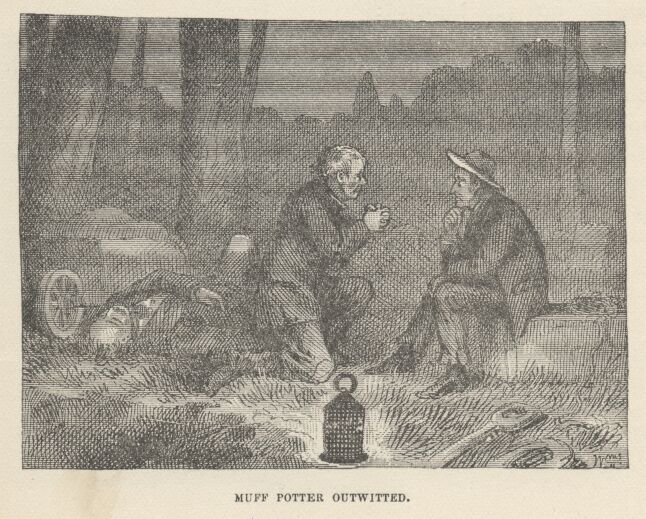
“Oh, I didn’t know what I was a-doing. I wish I may die this minute if I did. It was all on account of the whiskey and the excitement, I reckon. I never used a weepon in my life before, Joe. I’ve fought, but never with weepons. They’ll all say that. Joe, don’t tell! Say you won’t tell, Joe—that’s a good feller. I always liked you, Joe, and stood up for you, too. Don’t you remember? You won’t tell, will you, Joe?” And the poor creature dropped on his knees before the stolid murderer, and clasped his appealing hands.
“Oh, I didn’t know what I was doing. I wish I may die this minute if I did. It was all because of the whiskey and the excitement, I reckon. I never used a weapon in my life before, Joe. I’ve fought, but never with weapons. They’ll all say that. Joe, don’t tell! Say you won’t tell, Joe. Be a good fellow. I always liked you, Joe, and stood up for you, too. Don’t you remember? You won’t tell, will you, Joe?” And the poor creature dropped to his knees before the expressionless murderer and clasped his hands in a plea.
“No, you’ve always been fair and square with me, Muff Potter, and I won’t go back on you. There, now, that’s as fair as a man can say.”
“No, you’ve always been fair and square with me, Muff Potter, and I won’t go back on you. There, now, that’s as fair as a man can say.”
“Oh, Joe, you’re an angel. I’ll bless you for this the longest day I live.” And Potter began to cry.
“Oh, Joe, you’re an angel. I’ll bless you for this as long as I live.” And Potter began to cry.
“Come, now, that’s enough of that. This ain’t any time for blubbering. You be off yonder way and I’ll go this. Move, now, and don’t leave any tracks behind you.”
“Come on, that’s enough of that. This ain’t any time for blubbering. You be off that way and I’ll go this way. Move, now, and don’t leave any tracks behind you.”
Potter started on a trot that quickly increased to a run. The half-breed stood looking after him. He muttered:
Potter started jogging, then quickly broke into a run. The mixed-race man stood watching him go. He muttered:
“If he’s as much stunned with the lick and fuddled with the rum as he had the look of being, he won’t think of the knife till he’s gone so far he’ll be afraid to come back after it to such a place by himself—chicken-heart!”
“If he's as dazed from the blow and drunk on rum as he looked, he won't remember the knife until he's far away. Then he'll be afraid to come back for the knife in a place like this alone. Chicken-heart!”
Two or three minutes later the murdered man, the blanketed corpse, the lidless coffin, and the open grave were under no inspection but the moon’s. The stillness was complete again, too.
Two or three minutes later, only the moon watched over the murdered man, the blanket-covered corpse, the lidless coffin, and the open grave. Everything was completely still again, too.