Chapter 2
Saturday morning was come, and all the summer world was bright and fresh, and brimming with life. There was a song in every heart; and if the heart was young the music issued at the lips. There was cheer in every face and a spring in every step. The locust-trees were in bloom and the fragrance of the blossoms filled the air. Cardiff Hill, beyond the village and above it, was green with vegetation and it lay just far enough away to seem a Delectable Land, dreamy, reposeful, and inviting.
Saturday morning had arrived, and the whole summer world was bright, fresh, and full of life. There was a song in every heart, and if the heart was young, the song rose to the lips. Every face was cheerful, and every step had a spring in it. The locust trees were blooming, and the sweet smell of their blossoms filled the air. Cardiff Hill rose beyond the village, green with plants and trees. The hill was just far enough away to seem like a Delectable Land, dreamy, peaceful, and inviting.
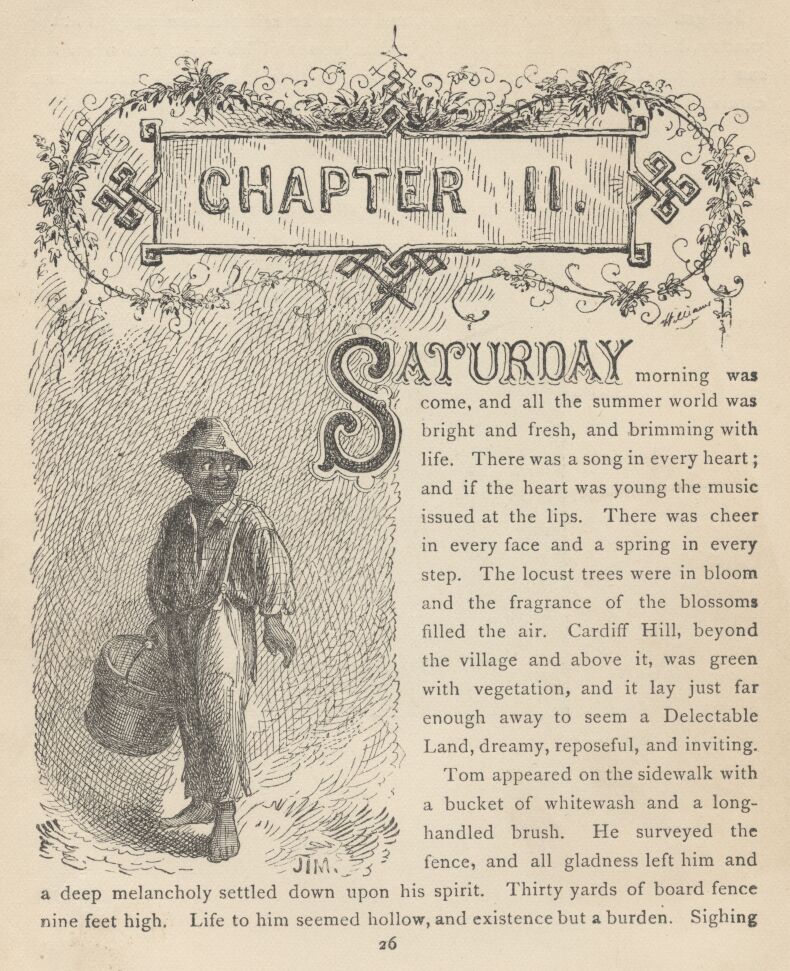
Tom appeared on the sidewalk with a bucket of whitewash and a long-handled brush. He surveyed the fence, and all gladness left him and a deep melancholy settled down upon his spirit. Thirty yards of board fence nine feet high. Life to him seemed hollow, and existence but a burden. Sighing, he dipped his brush and passed it along the topmost plank; repeated the operation; did it again; compared the insignificant whitewashed streak with the far-reaching continent of unwhitewashed fence, and sat down on a tree-box discouraged. Jim came skipping out at the gate with a tin pail, and singing Buffalo Gals. Bringing water from the town pump had always been hateful work in Tom’s eyes, before, but now it did not strike him so. He remembered that there was company at the pump. White, mulatto, and negro boys and girls were always there waiting their turns, resting, trading playthings, quarrelling, fighting, skylarking. And he remembered that although the pump was only a hundred and fifty yards off, Jim never got back with a bucket of water under an hour—and even then somebody generally had to go after him. Tom said:
Tom appeared on the sidewalk with a bucket of whitewash and a long-handled brush. He looked over the fence, and all his joy vanished. A deep sadness settled over him. Thirty yards of wooden fence, nine feet high. Life seemed empty to him, and being alive felt like nothing but a burden. With a sigh, he dipped his brush and dragged it along the top board. He did it again, then once more. He compared the tiny whitewashed streak with the vast continent of unpainted fence. Discouraged, he sat down on a wooden box around a tree. Jim came skipping through the gate with a tin pail, singing Buffalo Gals. Tom had always hated fetching water from the town pump, but now the job didn't seem so bad. He remembered there was company at the pump. White, mixed-race, and Black boys and girls were always there waiting their turns. They rested, traded toys, argued, fought, and fooled around. And he remembered that although the pump was only a hundred and fifty yards away, Jim never returned within an hour. Even then, someone usually had to go after him. Tom said:
“Say, Jim, I’ll fetch the water if you’ll whitewash some.”
“Hey, Jim, I’ll get the water if you’ll do some whitewashing.”
Jim shook his head and said:
Jim shook his head and said:
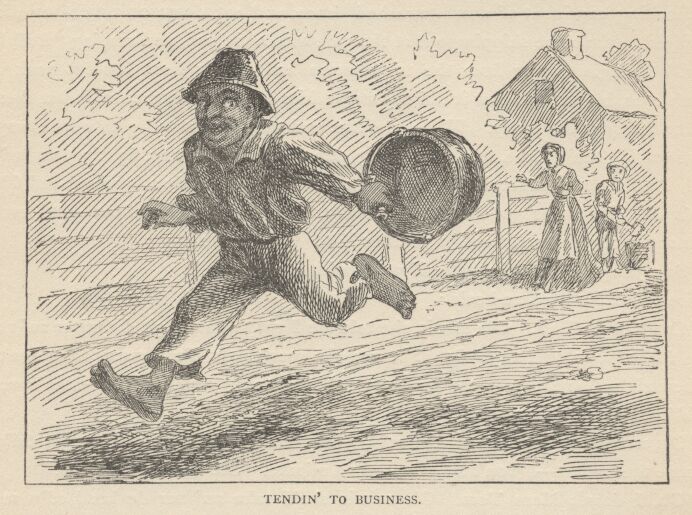
“Can’t, Mars Tom. Ole missis, she tole me I got to go an’ git dis water an’ not stop foolin’ roun’ wid anybody. She say she spec’ Mars Tom gwine to ax me to whitewash, an’ so she tole me go ’long an’ ’tend to my own business—she ’lowed she’d ’tend to de whitewashin’.”
“Can’t, Master Tom. Old mistress, she told me I got to go and get this water and not stop fooling around with anybody. She say she expect Master Tom going to ask me to whitewash. So she told me go along and tend to my own business. She said she’d tend to the whitewashing.”
“Oh, never you mind what she said, Jim. That’s the way she always talks. Gimme the bucket—I won’t be gone only a a minute. She won’t ever know.”
“Oh, never you mind what she said, Jim. That’s the way she always talks. Give me the bucket. I won’t be gone only a minute. She won’t ever know.”
“Oh, I dasn’t, Mars Tom. Ole missis she’d take an’ tar de head off’n me. ’Deed she would.”
“Oh, I daren’t, Master Tom. Old missus she’d take and tear the head off me. Indeed she would.”
“She! She never licks anybody—whacks ’em over the head with her thimble—and who cares for that, I’d like to know. She talks awful, but talk don’t hurt—anyways it don’t if she don’t cry. Jim, I’ll give you a marvel. I’ll give you a white alley!”
“She! She never beats anybody. She whacks them over the head with her thimble, and who cares about that, I’d like to know. She talks awful, but talk don’t hurt. Anyways, talk don’t hurt if she don’t cry. Jim, I’ll give you a marble. I’ll give you a white alley marble!”
Jim began to waver.
Jim began to hesitate.
“White alley, Jim! And it’s a bully taw.”
“A white alabaster marble, Jim! And it’s a great shooting marble.”
“My! Dat’s a mighty gay marvel, I tell you! But Mars Tom I’s powerful ’fraid ole missis—”
“My! That’s a mighty pretty marble, I tell you! But Master Tom, I’s powerful afraid of old mistress...”
“And besides, if you will I’ll show you my sore toe.”
“And besides, if you do, I’ll show you my sore toe.”
Jim was only human—this attraction was too much for him. He put down his pail, took the white alley, and bent over the toe with absorbing interest while the bandage was being unwound. In another moment he was flying down the street with his pail and a tingling rear, Tom was whitewashing with vigor, and Aunt Polly was retiring from the field with a slipper in her hand and triumph in her eye.
Jim was only human. The temptation was too much for him. He set down his bucket, took the white marble, and bent over the toe, fascinated, as the bandage was unwound. A moment later, he was racing down the street with his bucket and a stinging backside. Tom was whitewashing with energy, and Aunt Polly was leaving the scene, a slipper in her hand and triumph in her eyes.
But Tom’s energy did not last. He began to think of the fun he had planned for this day, and his sorrows multiplied. Soon the free boys would come tripping along on all sorts of delicious expeditions, and they would make a world of fun of him for having to work—the very thought of it burnt him like fire. He got out his worldly wealth and examined it—bits of toys, marbles, and trash; enough to buy an exchange of work, maybe, but not half enough to buy so much as half an hour of pure freedom. So he returned his straitened means to his pocket, and gave up the idea of trying to buy the boys. At this dark and hopeless moment an inspiration burst upon him! Nothing less than a great, magnificent inspiration.
But Tom’s energy did not last. He began to think of the fun he had planned for the day, and his troubles piled up. Soon the boys who were free would come skipping along, heading off on all sorts of wonderful adventures. And they would make endless fun of him for having to work. The very thought burned him like fire. He took out everything he owned and looked it over: bits of toys, marbles, and junk. Maybe he had enough to buy a trade of work, but not nearly enough to buy even half an hour of pure freedom. So he put his meager treasures back in his pocket and gave up trying to pay the boys. At this dark and hopeless moment, an idea suddenly struck him! Nothing less than a great, magnificent idea.
He took up his brush and went tranquilly to work. Ben Rogers hove in sight presently—the very boy, of all boys, whose ridicule he had been dreading. Ben’s gait was the hop-skip-and-jump—proof enough that his heart was light and his anticipations high. He was eating an apple, and giving a long, melodious whoop, at intervals, followed by a deep-toned ding-dong-dong, ding-dong-dong, for he was personating a steamboat. As he drew near, he slackened speed, took the middle of the street, leaned far over to starboard and rounded to ponderously and with laborious pomp and circumstance—for he was personating the Big Missouri, and considered himself to be drawing nine feet of water. He was boat and captain and engine-bells combined, so he had to imagine himself standing on his own hurricane-deck giving the orders and executing them:
He picked up his brush and calmly went to work. Soon Ben Rogers came into view. Of all the boys, Ben was the one whose teasing he had been dreading. Ben came hopping, skipping, and jumping along, clear proof that he was cheerful and expecting a good time. He was eating an apple and letting out a long, musical whoop now and then. Each whoop was followed by a deep ding-dong-dong, ding-dong-dong, because he was pretending to be a steamboat. As he came closer, he slowed down and moved to the middle of the street. He leaned far to the right, the boat’s starboard side, and made a slow, heavy turn with great ceremony. He was pretending to be the Big Missouri, imagining that he sat nine feet deep in the water. He was the boat, the captain, and the engine bells all at once. So he had to imagine himself standing on his own upper deck, giving orders and carrying them out:
“Stop her, sir! Ting-a-ling-ling!” The headway ran almost out, and he drew up slowly toward the sidewalk.
“Stop her, sir! Ting-a-ling-ling!” He had almost stopped moving forward, and he slowly pulled up near the sidewalk.
“Ship up to back! Ting-a-ling-ling!” His arms straightened and stiffened down his sides.
“Get ready to back up! Ting-a-ling-ling!” He straightened his arms and held them stiffly at his sides.
“Set her back on the stabboard! Ting-a-ling-ling! Chow! ch-chow-wow! Chow!” His right hand, mean-time, describing stately circles—for it was representing a forty-foot wheel.
“Set her back on the starboard! Ting-a-ling-ling! Chow! ch-chow-wow! Chow!” Meanwhile, his right hand traced grand circles because it was playing the part of a forty-foot wheel.
“Let her go back on the labboard! Ting-a-ling-ling! Chow-ch-chow-chow!” The left hand began to describe circles.
“Back her up on the port side! Ting-a-ling-ling! Chow-ch-chow-chow!” The left hand began moving in circles.
“Stop the stabboard! Ting-a-ling-ling! Stop the labboard! Come ahead on the stabboard! Stop her! Let your outside turn over slow! Ting-a-ling-ling! Chow-ow-ow! Get out that head-line! lively now! Come—out with your spring-line—what’re you about there! Take a turn round that stump with the bight of it! Stand by that stage, now—let her go! Done with the engines, sir! Ting-a-ling-ling! SH’T! S’H’T! SH’T!” (trying the gauge-cocks).
“Stop the starboard engine! Ting-a-ling-ling! Stop the port engine! Go ahead on the starboard engine! Stop her! Let your outside paddle wheel turn slowly! Ting-a-ling-ling! Chow-ow-ow! Get that bow line out! Quickly now! Come on, get your spring line out! What are you doing there! Wrap a loop of it around that stump! Stand by the gangplank now! Let her go! Shut down the engines, sir! Ting-a-ling-ling! SH’T! S’H’T! SH’T!” (testing the boiler’s water-level valves).
Tom went on whitewashing—paid no attention to the steamboat. Ben stared a moment and then said: “Hi-Yi! You’re up a stump, ain’t you!”
Tom kept whitewashing and paid no attention to the steamboat. Ben stared for a moment and then said: “Hey! You’re up a stump, ain’t you!”
No answer. Tom surveyed his last touch with the eye of an artist, then he gave his brush another gentle sweep and surveyed the result, as before. Ben ranged up alongside of him. Tom’s mouth watered for the apple, but he stuck to his work. Ben said:
No answer. Tom studied his latest brushstroke with an artist’s eye. Then he gave his brush another gentle sweep and studied the result as before. Ben came up beside him. Tom’s mouth watered for the apple, but he kept working. Ben said:
“Hello, old chap, you got to work, hey?”
“Hey, buddy, you got to work, huh?”
Tom wheeled suddenly and said:
Tom spun around suddenly and said:
“Why, it’s you, Ben! I warn’t noticing.”
“Why, it’s you, Ben! I wasn’t noticing.”
“Say—I’m going in a-swimming, I am. Don’t you wish you could? But of course you’d druther work—wouldn’t you? Course you would!”
“Say, I’m going swimming, I am. Don’t you wish you could? But of course you’d rather work, wouldn’t you? Course you would!”
Tom contemplated the boy a bit, and said:
Tom studied the boy for a moment and said:
“What do you call work?”
“What do you mean by work?”
“Why, ain’t that work?”
“Why, ain’t that work?”
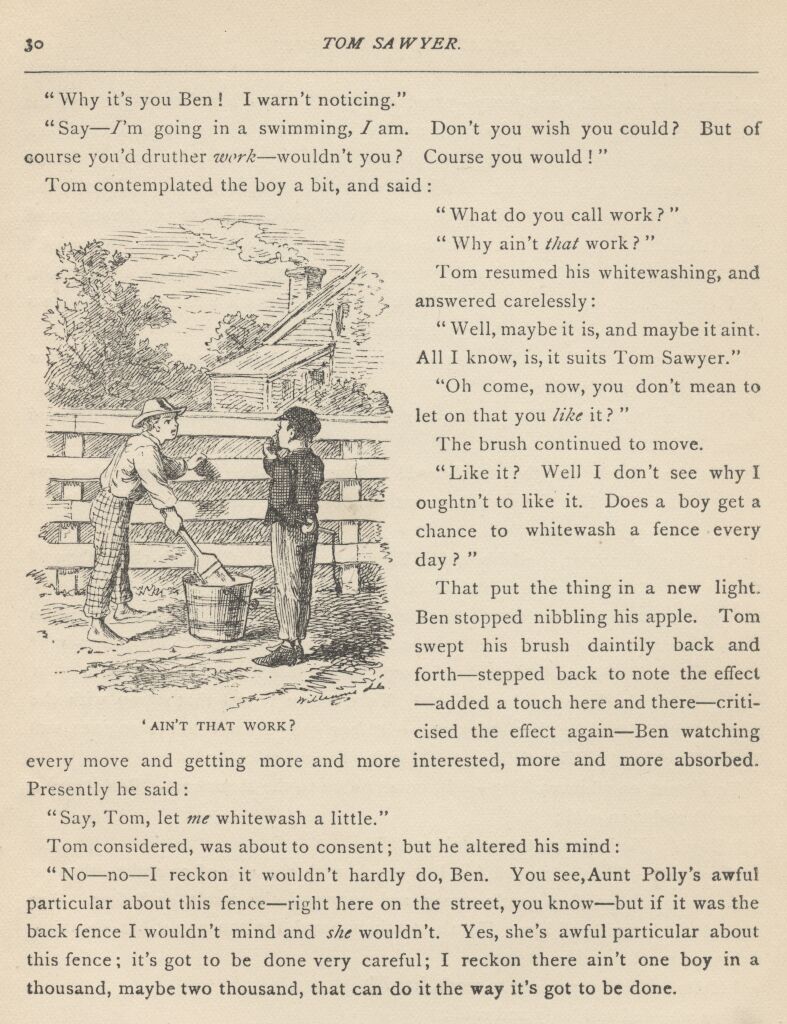
Tom resumed his whitewashing, and answered carelessly:
Tom went back to whitewashing and replied casually:
“Well, maybe it is, and maybe it ain’t. All I know, is, it suits Tom Sawyer.”
“Well, maybe it is, and maybe it ain’t. All I know is, it suits Tom Sawyer.”
“Oh come, now, you don’t mean to let on that you like it?”
“Oh, come on, you don’t mean to say you like it?”
The brush continued to move.
The brush kept moving.
“Like it? Well, I don’t see why I oughtn’t to like it. Does a boy get a chance to whitewash a fence every day?”
“Like it? Well, I don’t see why I shouldn’t like it. Does a boy get a chance to whitewash a fence every day?”
That put the thing in a new light. Ben stopped nibbling his apple. Tom swept his brush daintily back and forth—stepped back to note the effect—added a touch here and there—criticised the effect again—Ben watching every move and getting more and more interested, more and more absorbed. Presently he said:
That put things in a new light. Ben stopped nibbling his apple. Tom moved his brush lightly back and forth. He stepped back to check the result, added a few touches here and there, then studied his work again. Ben watched every move, growing more and more interested, more and more absorbed. After a while, he said:
“Say, Tom, let me whitewash a little.”
“Hey, Tom, let me do a little whitewashing.”
Tom considered, was about to consent; but he altered his mind:
Tom thought it over and was about to agree. But he changed his mind:
“No—no—I reckon it wouldn’t hardly do, Ben. You see, Aunt Polly’s awful particular about this fence—right here on the street, you know—but if it was the back fence I wouldn’t mind and she wouldn’t. Yes, she’s awful particular about this fence; it’s got to be done very careful; I reckon there ain’t one boy in a thousand, maybe two thousand, that can do it the way it’s got to be done.”
“No, no, I reckon it wouldn’t hardly do, Ben. You see, Aunt Polly’s awful particular about this fence. It’s right here on the street, you know. But if it was the back fence, I wouldn’t mind and she wouldn’t. Yes, she’s awful particular about this fence. It’s got to be done very careful. I reckon there ain’t one boy in a thousand, maybe two thousand, that can do it the way it’s got to be done.”
“No—is that so? Oh come, now—lemme just try. Only just a little—I’d let you, if you was me, Tom.”
“No, is that so? Oh, come on, now. Let me just try. Only a little. I’d let you, if you was me, Tom.”
“Ben, I’d like to, honest injun; but Aunt Polly—well, Jim wanted to do it, but she wouldn’t let him; Sid wanted to do it, and she wouldn’t let Sid. Now don’t you see how I’m fixed? If you was to tackle this fence and anything was to happen to it—”
“Ben, I’d like to, honest injun. But Aunt Polly... Well, Jim wanted to do it, but she wouldn’t let him. Sid wanted to do it, and she wouldn’t let Sid. Now don’t you see how I’m fixed? If you was to tackle this fence and anything was to happen to it...”
“Oh, shucks, I’ll be just as careful. Now lemme try. Say—I’ll give you the core of my apple.”
“Oh, shucks, I’ll be just as careful. Now let me try. Say, I’ll give you the core of my apple.”
“Well, here—No, Ben, now don’t. I’m afeard—”
“Well, here... No, Ben, now don’t. I’m afraid...”
“I’ll give you all of it!”
“I’ll give you all of it!”
Tom gave up the brush with reluctance in his face, but alacrity in his heart. And while the late steamer Big Missouri worked and sweated in the sun, the retired artist sat on a barrel in the shade close by, dangled his legs, munched his apple, and planned the slaughter of more innocents. There was no lack of material; boys happened along every little while; they came to jeer, but remained to whitewash. By the time Ben was fagged out, Tom had traded the next chance to Billy Fisher for a kite, in good repair; and when he played out, Johnny Miller bought in for a dead rat and a string to swing it with—and so on, and so on, hour after hour. And when the middle of the afternoon came, from being a poor poverty-stricken boy in the morning, Tom was literally rolling in wealth. He had besides the things before mentioned, twelve marbles, part of a jews-harp, a piece of blue bottle-glass to look through, a spool cannon, a key that wouldn’t unlock anything, a fragment of chalk, a glass stopper of a decanter, a tin soldier, a couple of tadpoles, six fire-crackers, a kitten with only one eye, a brass door-knob, a dog-collar—but no dog—the handle of a knife, four pieces of orange-peel, and a dilapidated old window sash.
Tom gave up the brush with reluctance in his face but eagerness in his heart. And while the late steamer Big Missouri worked and sweated in the sun, the retired artist sat on a barrel in the shade close by. He dangled his legs, munched his apple, and planned the slaughter of more innocents. There was no lack of material. Boys happened along every little while. They came to jeer, but stayed to whitewash. By the time Ben was worn out, Tom had traded the next turn to Billy Fisher for a kite in good repair. And when Billy gave out, Johnny Miller bought in for a dead rat and a string to swing it with. And so on, and so on, hour after hour. By the middle of the afternoon, Tom, who had been a poor, poverty-stricken boy in the morning, was literally rolling in wealth. Besides the things already mentioned, he had twelve marbles, part of a jews-harp, a piece of blue bottle-glass to look through, a spool cannon, a key that wouldn’t unlock anything, a fragment of chalk, a glass stopper from a decanter, a tin soldier, a couple of tadpoles, six firecrackers, a kitten with only one eye, a brass doorknob, a dog collar (but no dog), the handle of a knife, four pieces of orange peel, and a battered old window sash.
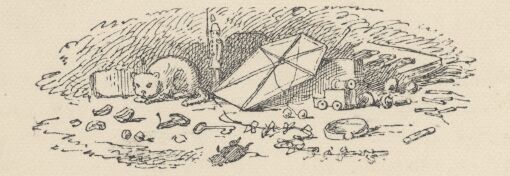
He had had a nice, good, idle time all the while—plenty of company—and the fence had three coats of whitewash on it! If he hadn’t run out of whitewash he would have bankrupted every boy in the village.
He’d had a wonderful time relaxing all along, with plenty of company. And the fence had three coats of whitewash on it! If he hadn’t run out of whitewash, he would have left every boy in the village broke.
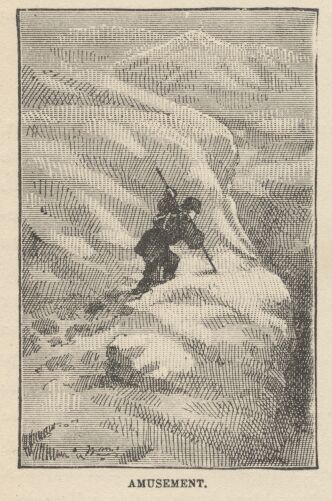
Tom said to himself that it was not such a hollow world, after all. He had discovered a great law of human action, without knowing it—namely, that in order to make a man or a boy covet a thing, it is only necessary to make the thing difficult to attain. If he had been a great and wise philosopher, like the writer of this book, he would now have comprehended that Work consists of whatever a body is obliged to do, and that Play consists of whatever a body is not obliged to do. And this would help him to understand why constructing artificial flowers or performing on a tread-mill is work, while rolling ten-pins or climbing Mont Blanc is only amusement. There are wealthy gentlemen in England who drive four-horse passenger-coaches twenty or thirty miles on a daily line, in the summer, because the privilege costs them considerable money; but if they were offered wages for the service, that would turn it into work and then they would resign.
Tom told himself the world was not so empty after all. Without knowing it, he had discovered a great law of human behavior. To make a man or boy want something, you only need to make it hard to get. If he had been a great and wise philosopher, like the writer of this book, he would now have understood. Work is whatever a person is required to do. Play is whatever a person is not required to do. And this distinction would help him understand why making artificial flowers or walking on a treadmill is work. Yet bowling or climbing Mont Blanc is only amusement. There are wealthy gentlemen in England who drive passenger coaches pulled by four horses along regular routes in summer. They drive twenty or thirty miles because they pay a great deal for the privilege. But if they were offered wages for driving, that would make it work, and then they would quit.
The boy mused awhile over the substantial change which had taken place in his worldly circumstances, and then wended toward headquarters to report.
The boy thought for a while about the big change in his material fortunes. Then he headed toward headquarters to report.