Chapter 3
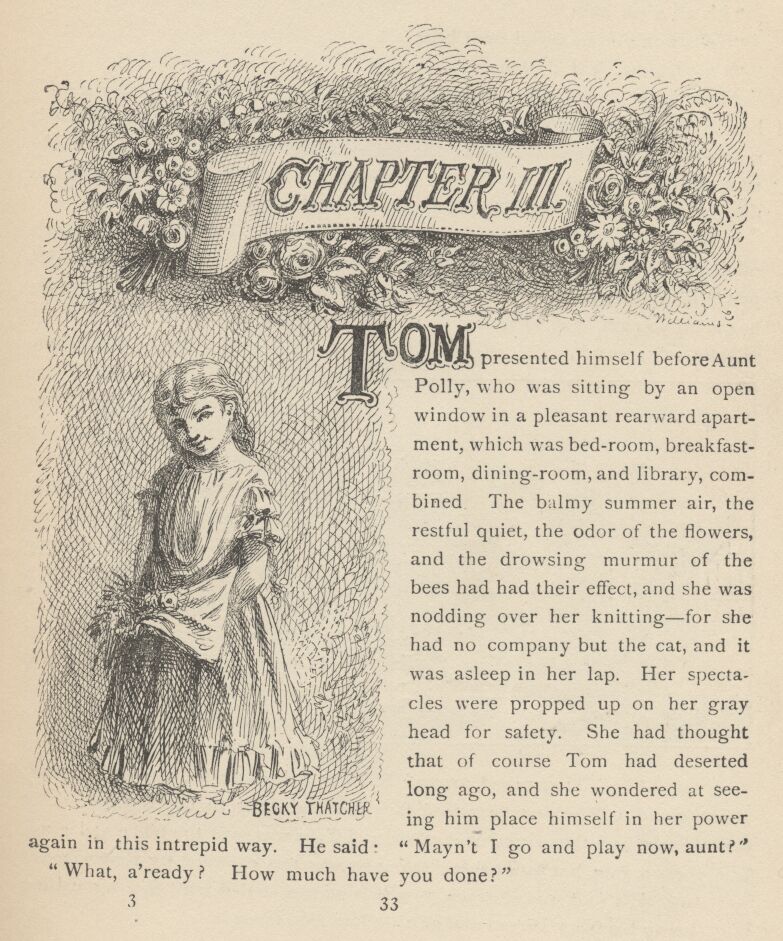
Tom presented himself before Aunt Polly, who was sitting by an open window in a pleasant rearward apartment, which was bedroom, breakfast-room, dining-room, and library, combined. The balmy summer air, the restful quiet, the odor of the flowers, and the drowsing murmur of the bees had had their effect, and she was nodding over her knitting—for she had no company but the cat, and it was asleep in her lap. Her spectacles were propped up on her gray head for safety. She had thought that of course Tom had deserted long ago, and she wondered at seeing him place himself in her power again in this intrepid way. He said: “Mayn’t I go and play now, aunt?”
Tom came before Aunt Polly, who sat by an open window in a pleasant room at the back of the house. The room served as a bedroom, breakfast room, dining room, and library. The warm summer air, peaceful quiet, scent of flowers, and sleepy hum of bees had made her drowsy. She was nodding over her knitting, for her only company was the cat, asleep in her lap. Her glasses rested on top of her gray head for safekeeping. She had thought Tom must have run off long ago. She was surprised to see him so boldly put himself back in her power. He said: “May I go and play now, aunt?”
“What, a’ready? How much have you done?”
“What, already? How much have you done?”
“It’s all done, aunt.”
“It’s all done, aunt.”
“Tom, don’t lie to me—I can’t bear it.”
“Tom, don’t lie to me. I can’t stand it.”
“I ain’t, aunt; it is all done.”
“I ain’t, aunt. It is all done.”
Aunt Polly placed small trust in such evidence. She went out to see for herself; and she would have been content to find twenty per cent. of Tom’s statement true. When she found the entire fence white-washed, and not only whitewashed but elaborately coated and recoated, and even a streak added to the ground, her astonishment was almost unspeakable. She said:
Aunt Polly put little faith in such evidence. She went out to see for herself. She would have been satisfied if even twenty percent of Tom’s story were true. But she found the whole fence whitewashed, with several thorough coats and even a streak of whitewash on the ground. She was almost too astonished to speak. She said:
“Well, I never! There’s no getting round it, you can work when you’re a mind to, Tom.” And then she diluted the compliment by adding, “But it’s powerful seldom you’re a mind to, I’m bound to say. Well, go ’long and play; but mind you get back some time in a week, or I’ll tan you.”
“Well, I never! There’s no getting round it, you can work when you’re a mind to, Tom.” And then she watered down the compliment by adding, “But it’s powerful seldom you’re a mind to, I’m bound to say. Well, go along and play. But mind you get back some time in a week, or I’ll tan you.”
She was so overcome by the splendor of his achievement that she took him into the closet and selected a choice apple and delivered it to him, along with an improving lecture upon the added value and flavor a treat took to itself when it came without sin through virtuous effort. And while she closed with a happy Scriptural flourish, he “hooked” a doughnut.
She was so dazzled by his achievement that she took him into the pantry and picked out an especially fine apple. She gave it to him, along with a lecture meant to improve his character. A treat, she explained, was worth more and tasted better when earned through good, honest effort rather than sin. And while she happily finished with a flourish from the Bible, he “stole” a doughnut.
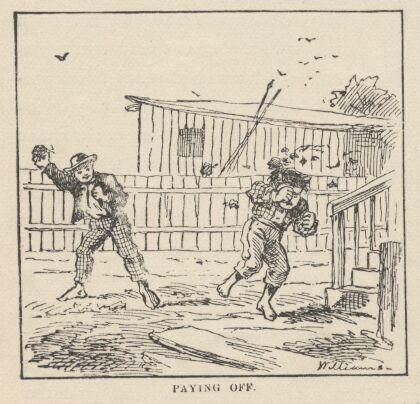
Then he skipped out, and saw Sid just starting up the outside stairway that led to the back rooms on the second floor. Clods were handy and the air was full of them in a twinkling. They raged around Sid like a hail-storm; and before Aunt Polly could collect her surprised faculties and sally to the rescue, six or seven clods had taken personal effect, and Tom was over the fence and gone. There was a gate, but as a general thing he was too crowded for time to make use of it. His soul was at peace, now that he had settled with Sid for calling attention to his black thread and getting him into trouble.
Then he dashed outside and saw Sid starting up the outdoor stairs to the back rooms on the second floor. Clumps of dirt lay close at hand, and in an instant the air was full of them. They flew around Sid like a hailstorm. Before Aunt Polly could recover from her surprise and come to the rescue, six or seven clumps had hit Sid. By then, Tom was over the fence and gone. There was a gate, but he was usually too pressed for time to use it. His soul was at peace now that he had paid Sid back. Sid had pointed out his black thread and gotten him into trouble.
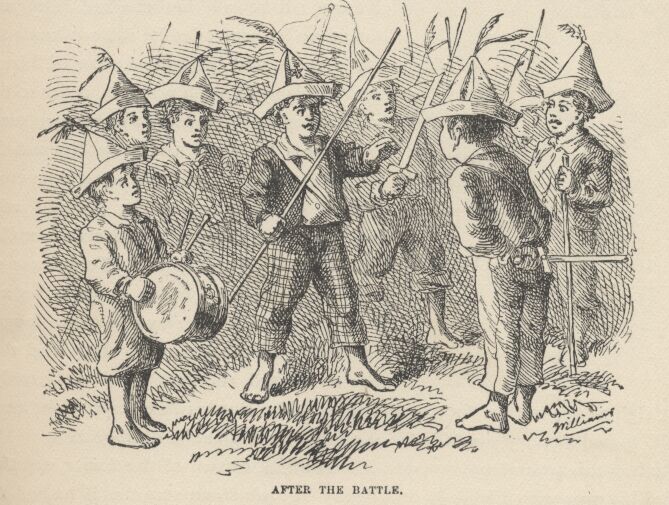
Tom skirted the block, and came round into a muddy alley that led by the back of his aunt’s cow-stable. He presently got safely beyond the reach of capture and punishment, and hastened toward the public square of the village, where two “military” companies of boys had met for conflict, according to previous appointment. Tom was General of one of these armies, Joe Harper (a bosom friend) General of the other. These two great commanders did not condescend to fight in person—that being better suited to the still smaller fry—but sat together on an eminence and conducted the field operations by orders delivered through aides-de-camp. Tom’s army won a great victory, after a long and hard-fought battle. Then the dead were counted, prisoners exchanged, the terms of the next disagreement agreed upon, and the day for the necessary battle appointed; after which the armies fell into line and marched away, and Tom turned homeward alone.
Tom went around the block and into a muddy alley behind his aunt’s cow stable. Soon he was safely out of reach of capture and punishment, and he hurried toward the village square. Two “military” companies of boys had gathered there to fight, as they had arranged beforehand. Tom was general of one army, and Joe Harper, a close friend, was general of the other. These two great commanders would not lower themselves to fighting in person. That was better suited to the smaller boys. Instead, they sat together on a hill and directed the battle, sending orders through their assistants. Tom’s army won a great victory after a long, hard-fought battle. Then the dead were counted and prisoners exchanged. They agreed on the terms of their next disagreement and set a date for the necessary battle. After that, the armies lined up and marched away, and Tom headed home alone.
As he was passing by the house where Jeff Thatcher lived, he saw a new girl in the garden—a lovely little blue-eyed creature with yellow hair plaited into two long-tails, white summer frock and embroidered pantalettes. The fresh-crowned hero fell without firing a shot. A certain Amy Lawrence vanished out of his heart and left not even a memory of herself behind. He had thought he loved her to distraction; he had regarded his passion as adoration; and behold it was only a poor little evanescent partiality. He had been months winning her; she had confessed hardly a week ago; he had been the happiest and the proudest boy in the world only seven short days, and here in one instant of time she had gone out of his heart like a casual stranger whose visit is done.
As he passed the house where Jeff Thatcher lived, he saw a new girl in the garden. She was a lovely little blue-eyed girl with yellow hair in two long braids. She wore a white summer dress and embroidered pantalettes. The newly crowned hero fell without firing a shot. A certain Amy Lawrence vanished from his heart, leaving not even a memory of herself behind. He had thought he was madly in love with her. He had seen his love as worship. But now, look, it had been only a tiny, passing crush. He had spent months winning her over. Hardly a week ago, she had admitted she loved him. For just seven short days, he had been the happiest and proudest boy in the world. And now, in a single instant, she had left his heart like a casual stranger whose visit was over.
He worshipped this new angel with furtive eye, till he saw that she had discovered him; then he pretended he did not know she was present, and began to “show off” in all sorts of absurd boyish ways, in order to win her admiration. He kept up this grotesque foolishness for some time; but by-and-by, while he was in the midst of some dangerous gymnastic performances, he glanced aside and saw that the little girl was wending her way toward the house. Tom came up to the fence and leaned on it, grieving, and hoping she would tarry yet awhile longer. She halted a moment on the steps and then moved toward the door. Tom heaved a great sigh as she put her foot on the threshold. But his face lit up, right away, for she tossed a pansy over the fence a moment before she disappeared.
He worshipped this new angel with secret glances until he saw that she had noticed him. Then he pretended he did not know she was there. He began to “show off” in all sorts of ridiculous boyish ways to win her admiration. He kept up these ridiculous antics for some time. But then, in the middle of some dangerous acrobatics, he glanced aside and saw the little girl heading toward the house. Tom went up to the fence and leaned on it, sad and hoping she would stay a little longer. She paused a moment on the steps, then moved toward the door. Tom let out a deep sigh as she stepped onto the threshold. But his face lit up right away, for she tossed a pansy over the fence just before she disappeared.
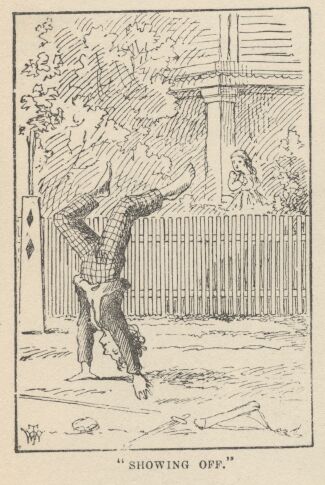
The boy ran around and stopped within a foot or two of the flower, and then shaded his eyes with his hand and began to look down street as if he had discovered something of interest going on in that direction. Presently he picked up a straw and began trying to balance it on his nose, with his head tilted far back; and as he moved from side to side, in his efforts, he edged nearer and nearer toward the pansy; finally his bare foot rested upon it, his pliant toes closed upon it, and he hopped away with the treasure and disappeared round the corner. But only for a minute—only while he could button the flower inside his jacket, next his heart—or next his stomach, possibly, for he was not much posted in anatomy, and not hypercritical, anyway.
The boy ran around and stopped a foot or two from the flower. Then he shaded his eyes with his hand and looked down the street, as if something interesting was happening there. Soon he picked up a straw and tried to balance it on his nose, with his head tilted far back. As he moved from side to side, trying to balance the straw, he edged closer and closer to the pansy. Finally, his bare foot rested on the flower, and his flexible toes curled around it. He hopped away with his treasure and disappeared around the corner. But he was gone for only a minute. He needed just enough time to button the flower inside his jacket, next to his heart. Or next to his stomach, possibly, since he didn't know much about anatomy and wasn't too particular anyway.
He returned, now, and hung about the fence till nightfall, “showing off,” as before; but the girl never exhibited herself again, though Tom comforted himself a little with the hope that she had been near some window, meantime, and been aware of his attentions. Finally he strode home reluctantly, with his poor head full of visions.
He returned and lingered by the fence until nightfall, “showing off,” as before. But the girl never appeared again, though Tom took a little comfort in one hope. Perhaps she had been near a window all that time and noticed his efforts to impress her. Finally, he reluctantly headed home, his poor head full of daydreams.
All through supper his spirits were so high that his aunt wondered “what had got into the child.” He took a good scolding about clodding Sid, and did not seem to mind it in the least. He tried to steal sugar under his aunt’s very nose, and got his knuckles rapped for it. He said:
Throughout supper, he was so cheerful that his aunt wondered “what had got into the child.” She scolded him sharply for throwing clumps of dirt at Sid, but he didn't seem to mind at all. He tried to steal sugar right under his aunt’s nose, and she smacked his knuckles for it. He said:
“Aunt, you don’t whack Sid when he takes it.”
“Aunt, you don’t hit Sid when he takes it.”
“Well, Sid don’t torment a body the way you do. You’d be always into that sugar if I warn’t watching you.”
“Well, Sid don’t torment a body the way you do. You’d be always into that sugar if I wasn’t watching you.”
Presently she stepped into the kitchen, and Sid, happy in his immunity, reached for the sugar-bowl—a sort of glorying over Tom which was wellnigh unbearable. But Sid’s fingers slipped and the bowl dropped and broke. Tom was in ecstasies. In such ecstasies that he even controlled his tongue and was silent. He said to himself that he would not speak a word, even when his aunt came in, but would sit perfectly still till she asked who did the mischief; and then he would tell, and there would be nothing so good in the world as to see that pet model “catch it.” He was so brimful of exultation that he could hardly hold himself when the old lady came back and stood above the wreck discharging lightnings of wrath from over her spectacles. He said to himself, “Now it’s coming!” And the next instant he was sprawling on the floor! The potent palm was uplifted to strike again when Tom cried out:
Soon she stepped into the kitchen. Sid, happy that he could get away with anything, reached for the sugar bowl. He was practically gloating over Tom, who could hardly bear it. But Sid’s fingers slipped, and the bowl fell and broke. Tom was overjoyed. He was so overjoyed that he even held his tongue and stayed silent. He told himself he wouldn’t say a word, even when his aunt came in. He would sit perfectly still until she asked who had broken the bowl. Then he would tell her. Nothing in the world would be better than seeing her perfect little favorite “get it.” He was so full of delight that he could hardly contain himself when the old lady returned. She stood over the broken bowl, glaring furiously over her glasses. He said to himself, “Now it’s coming!” And the next instant he was sprawled on the floor! Her powerful hand was raised to strike again when Tom cried out:
“Hold on, now, what ’er you belting me for?—Sid broke it!”
“Hold on, now, what are you hitting me for? Sid broke it!”
Aunt Polly paused, perplexed, and Tom looked for healing pity. But when she got her tongue again, she only said:
Aunt Polly paused, puzzled, and Tom hoped for some comforting sympathy. But when she could speak again, she only said:
“Umf! Well, you didn’t get a lick amiss, I reckon. You been into some other audacious mischief when I wasn’t around, like enough.”
“Hmph! Well, you deserved every hit you got, I reckon. You been up to some other brazen mischief when I wasn’t around, most likely.”
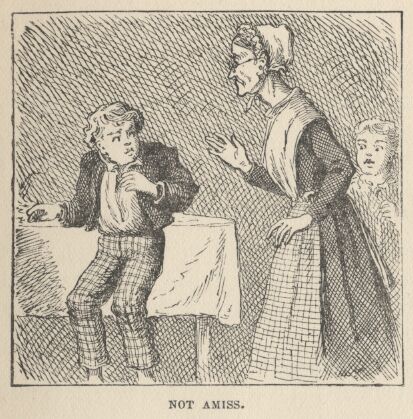
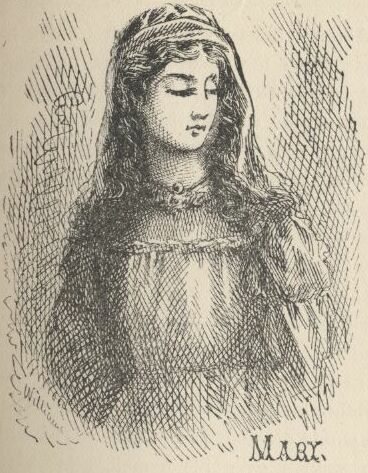
Then her conscience reproached her, and she yearned to say something kind and loving; but she judged that this would be construed into a confession that she had been in the wrong, and discipline forbade that. So she kept silence, and went about her affairs with a troubled heart. Tom sulked in a corner and exalted his woes. He knew that in her heart his aunt was on her knees to him, and he was morosely gratified by the consciousness of it. He would hang out no signals, he would take notice of none. He knew that a yearning glance fell upon him, now and then, through a film of tears, but he refused recognition of it. He pictured himself lying sick unto death and his aunt bending over him beseeching one little forgiving word, but he would turn his face to the wall, and die with that word unsaid. Ah, how would she feel then? And he pictured himself brought home from the river, dead, with his curls all wet, and his sore heart at rest. How she would throw herself upon him, and how her tears would fall like rain, and her lips pray God to give her back her boy and she would never, never abuse him any more! But he would lie there cold and white and make no sign—a poor little sufferer, whose griefs were at an end. He so worked upon his feelings with the pathos of these dreams, that he had to keep swallowing, he was so like to choke; and his eyes swam in a blur of water, which overflowed when he winked, and ran down and trickled from the end of his nose. And such a luxury to him was this petting of his sorrows, that he could not bear to have any worldly cheeriness or any grating delight intrude upon it; it was too sacred for such contact; and so, presently, when his cousin Mary danced in, all alive with the joy of seeing home again after an age-long visit of one week to the country, he got up and moved in clouds and darkness out at one door as she brought song and sunshine in at the other.
Then her conscience troubled her, and she longed to say something kind and loving. But she thought that would seem like admitting she had been wrong, and discipline would not allow that. So she said nothing and went about her business with a troubled heart. Tom sulked in a corner and made the most of his misery. He knew that, in her heart, his aunt was on her knees before him. That knowledge gave him a gloomy satisfaction. He would make no friendly gestures and respond to none. He knew she sometimes looked at him with longing through a veil of tears, but he refused to acknowledge it. He pictured himself dying in bed, with his aunt bending over him, begging for one little word of forgiveness. But he would turn his face to the wall and die without saying it. Ah, how would she feel then? And he pictured himself brought home from the river, dead, with his curls all wet and his aching heart at rest. How she would throw herself on him, and how her tears would fall like rain! She would beg God to give her boy back, and she would never, never mistreat him again! But he would lie there cold and pale, giving no sign of life. He would be a poor little sufferer whose sorrows were over. These pitiful daydreams stirred his feelings so much that he kept swallowing to keep from choking. His eyes blurred with tears that spilled over when he blinked, ran down, and dripped from his nose. He so enjoyed nursing his sorrows that he could not bear any ordinary cheerfulness or jarring happiness intruding on them. His sorrow was too sacred for that. Just then, his cousin Mary danced in, bursting with joy at being home again. She had spent a whole, seemingly endless week in the country. So Tom got up and went out through one door, wrapped in gloom, as she brought song and sunshine through the other.
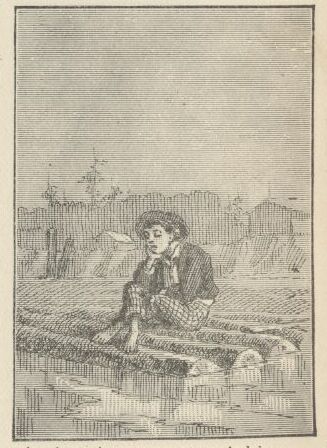
He wandered far from the accustomed haunts of boys, and sought desolate places that were in harmony with his spirit. A log raft in the river invited him, and he seated himself on its outer edge and contemplated the dreary vastness of the stream, wishing, the while, that he could only be drowned, all at once and unconsciously, without undergoing the uncomfortable routine devised by nature. Then he thought of his flower. He got it out, rumpled and wilted, and it mightily increased his dismal felicity. He wondered if she would pity him if she knew? Would she cry, and wish that she had a right to put her arms around his neck and comfort him? Or would she turn coldly away like all the hollow world? This picture brought such an agony of pleasurable suffering that he worked it over and over again in his mind and set it up in new and varied lights, till he wore it threadbare. At last he rose up sighing and departed in the darkness.
He wandered far from the places where boys usually gathered, seeking lonely spots that matched his mood. A log raft in the river looked inviting. He sat on its outer edge and stared at the river’s vast, dreary expanse. He wished he could drown instantly, without knowing it, and without going through the uncomfortable process nature required. Then he thought of his flower. He took it out, crumpled and wilted, and it greatly increased his miserable happiness. Would she pity him if she knew? Would she cry and wish she had the right to put her arms around his neck and comfort him? Or would she turn coldly away, like all the rest of the heartless world? This picture brought him such painfully sweet suffering that he kept going over it in his mind. He imagined it in new and different ways until he had worn it out. At last he stood up with a sigh and walked away into the darkness.
About half-past nine or ten o’clock he came along the deserted street to where the Adored Unknown lived; he paused a moment; no sound fell upon his listening ear; a candle was casting a dull glow upon the curtain of a second-story window. Was the sacred presence there? He climbed the fence, threaded his stealthy way through the plants, till he stood under that window; he looked up at it long, and with emotion; then he laid him down on the ground under it, disposing himself upon his back, with his hands clasped upon his breast and holding his poor wilted flower. And thus he would die—out in the cold world, with no shelter over his homeless head, no friendly hand to wipe the death-damps from his brow, no loving face to bend pityingly over him when the great agony came. And thus she would see him when she looked out upon the glad morning, and oh! would she drop one little tear upon his poor, lifeless form, would she heave one little sigh to see a bright young life so rudely blighted, so untimely cut down?
Around nine-thirty or ten, he walked along the deserted street to the house where the Adored Unknown lived. He paused for a moment and listened, but heard nothing. A candle cast a dim glow on the curtain of an upstairs window. Was her sacred presence there? He climbed the fence and crept through the plants until he stood beneath that window. He gazed up at it for a long time, full of emotion. Then he lay on his back beneath it, his hands clasped over his chest, holding his poor wilted flower. And this was how he would die, out in the cold world, with no shelter over his homeless head. No friendly hand would wipe the sweat of death from his forehead. No loving face would bend over him with pity when the terrible agony came. And this was how she would see him when she looked out on the bright, cheerful morning. Oh, would she shed one little tear over his poor, lifeless body? Would she give one little sigh to see a bright young life so cruelly ruined, cut short so soon?
The window went up, a maid-servant’s discordant voice profaned the holy calm, and a deluge of water drenched the prone martyr’s remains!
The window opened. A maid’s harsh voice shattered the sacred calm, and a flood of water drenched the sprawled martyr’s remains!
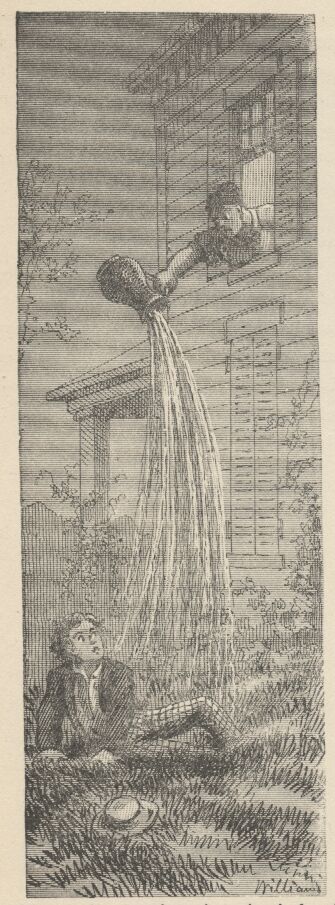
The strangling hero sprang up with a relieving snort. There was a whiz as of a missile in the air, mingled with the murmur of a curse, a sound as of shivering glass followed, and a small, vague form went over the fence and shot away in the gloom.
The choking hero sprang up with a snort of relief. Something whizzed through the air like a thrown object, accompanied by a muttered curse. A sound like breaking glass followed. Then a small, shadowy figure scrambled over the fence and darted away into the darkness.
Not long after, as Tom, all undressed for bed, was surveying his drenched garments by the light of a tallow dip, Sid woke up; but if he had any dim idea of making any “references to allusions,” he thought better of it and held his peace, for there was danger in Tom’s eye.
Not long after, Tom had undressed for bed and was examining his soaking clothes by candlelight. Sid woke up. But if he had any vague idea of making any “references to allusions,” he thought better of it. He kept quiet, because there was danger in Tom’s eyes.
Tom turned in without the added vexation of prayers, and Sid made mental note of the omission.
Tom went to bed without the extra annoyance of saying his prayers, and Sid mentally noted that Tom had skipped them.