Chapter 14
Wintering in McMurdo Sound
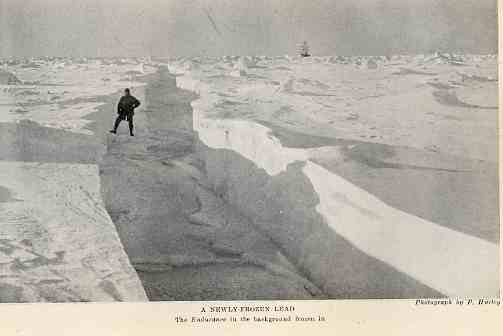
The Aurora, after picking up six men at Hut Point on March 11, had gone back to Cape Evans. The position chosen for the winter quarters of the Aurora was at Cape Evans, immediately off the hut erected by Captain Scott on his last Expedition. The ship on March 14 lay about forty yards off shore, bows seaward. Two anchors had been taken ashore and embedded in heavy stone rubble, and to these anchors were attached six steel hawsers. The hawsers held the stern, while the bow was secured by the ordinary ship’s anchors. Later, when the new ice had formed round the Aurora, the cable was dragged ashore over the smooth surface and made fast. The final moorings thus were six hawsers and one cable astern, made fast to the shore anchors, and two anchors with about seventy fathoms of cable out forward. On March 23 Mr. Stenhouse landed a party consisting of Stevens, Spencer-Smith, Gaze, and Richards in order that they might carry out routine observations ashore. These four men took up their quarters in Captain Scott’s hut. They had been instructed to kill seals for meat and blubber. The landing of stores, gear, and coal did not proceed at all rapidly, it being assumed that the ship would remain at her moorings throughout the winter. Some tons of coal were taken ashore during April, but most of it stayed on the beach, and much of it was lost later when the sea-ice went out. This shore party was in the charge of Stevens, and his report, handed to me much later, gives a succinct account of what occurred, from the point of view of the men at the hut:
After picking up six men at Hut Point on March 11, the Aurora returned to Cape Evans. The site chosen for the Aurora's winter quarters was just offshore at Cape Evans. It was beside the hut Captain Scott had built on his last Expedition. On March 14, the ship lay about forty yards offshore, with her bow facing the sea. Two anchors had been taken ashore and embedded in piles of heavy stones. Six steel hawsers were attached to these anchors. The hawsers held the stern, while the bow was secured by the ship’s ordinary anchors. Later, when new ice had formed around the Aurora, the cable was dragged ashore over the smooth surface and secured. The final moorings consisted of six hawsers and one cable at the stern, secured to the shore anchors. At the bow, two anchors had been lowered with about seventy fathoms of cable out. On March 23, Mr. Stenhouse landed a party of Stevens, Spencer-Smith, Gaze, and Richards to carry out routine observations ashore. The four men took up quarters in Captain Scott’s hut. They had been instructed to kill seals for meat and blubber. Stores, gear, and coal were landed slowly, because the crew assumed the ship would remain at her moorings throughout the winter. Some tons of coal were taken ashore during April, but most remained on the beach. Much of it was later lost when the sea ice went out. Stevens was in charge of the shore party. His report, handed to me much later, gives a concise account of what happened from the hut party’s point of view:
“CAPE EVANS, ROSS ISLAND, July 30, 1915.
“CAPE EVANS, ROSS ISLAND, July 30, 1915.
“On the 23rd March, 1915, a party consisting of Spencer-Smith, Richards, and Gaze was landed at Cape Evans Hut in my charge. Spencer-Smith received independent instructions to devote his time exclusively to photography. I was verbally instructed that the main duty of the party was to obtain a supply of seals for food and fuel. Scientific work was also to be carried on.
“On March 23, 1915, a party of Spencer-Smith, Richards, and Gaze landed at Cape Evans Hut under my command. Spencer-Smith received separate instructions to devote all his time to photography. I was told that the party’s main duty was to obtain seals for food and fuel. We were also to carry out scientific work.
“Meteorological instruments were at once installed, and experiments were instituted on copper electrical thermometers in order to supplement our meagre supply of instruments and enable observations of earth, ice, and sea temperatures to be made. Other experimental work was carried on, and the whole of the time of the scientific members of the party was occupied. All seals seen were secured. On one or two occasions the members of the shore party were summoned to work on board ship.
“We immediately installed weather instruments and experimented with copper electrical thermometers. These experiments were meant to supplement our limited supply of instruments and allow us to measure earth, ice, and sea temperatures. The scientific members of the party also carried out other experiments, and their work occupied all their time. Every seal seen was captured. On one or two occasions, the shore party was called to work on board the ship.
“In general the weather was unsettled, blizzards occurring frequently and interrupting communication with the ship across the ice. Only small, indispensable supplies of stores and no clothes were issued to the party on shore. Only part of the scientific equipment was able to be transferred to the shore, and the necessity to obtain that prevented some members of the party landing all their personal gear.
“The weather was generally unsettled. Frequent blizzards interrupted communication with the ship across the ice. The party on shore received only small amounts of essential supplies and no clothes. Only some of the scientific equipment could be brought ashore. The need to bring it ashore prevented some members of the party from landing all their personal gear.
“The ship was moored stern on to the shore, at first well over one hundred yards from it. There were two anchors out ahead and the vessel was made fast to two others sunk in the ground ashore by seven wires. The strain on the wires was kept constant by tightening up from time to time such as became slack, and easing cables forward, and in this way the ship was brought much closer inshore. A cable was now run out to the south anchor ashore, passed onboard through a fair-lead under the port end of the bridge, and made fast to bollards forward. Subsequent strain due to ice and wind pressure on the ship broke three of the wires. Though I believe it was considered on board that the ship was secure, there was still considerable anxiety felt. The anchors had held badly before, and the power of the ice-pressure on the ship was uncomfortably obvious.
“The ship was moored with its stern facing the shore, initially more than a hundred yards away. Two anchors were out ahead of the ship. Seven wires secured the vessel to two other anchors buried in the ground ashore. The crew kept the strain on the wires constant by tightening any that became slack and easing the forward cables. In this way, they brought the ship much closer to shore. They then ran a cable to the south anchor ashore. On board, the cable passed through a fairlead beneath the port end of the bridge and was secured to bollards forward. Later, the strain from ice and wind pressing on the ship broke three of the wires. Though I believe those on board considered the ship secure, there was still considerable anxiety. The anchors had held poorly before, and the force of the ice pressing against the ship was uncomfortably obvious.
“Since the ship had been moored the bay had frequently frozen over, and the ice had as frequently gone out on account of blizzards. The ice does not always go out before the wind has passed its maximum. It depends on the state of tides and currents; for the sea-ice has been seen more than once to go out bodily when a blizzard had almost completely calmed down.
“Since the ship had been moored, the bay had often frozen over, and blizzards had just as often swept the ice away. The ice does not always go out before the wind has reached its strongest. It depends on the tides and currents. More than once, the sea ice has been seen to go out in one mass when a blizzard had almost completely died down.
“On the 6th May the ice was in and people passed freely between the shore and the ship. At 11 p.m. the wind was south, backing to south-east, and blew at forty miles per hour. The ship was still in her place. At 3 a.m. on the 7th the wind had not increased to any extent, but ice and ship had gone. As she was not seen to go we are unable to say whether the vessel was damaged. The shore end of the cable was bent twice sharply, and the wires were loose. On the afternoon of the 7th the weather cleared somewhat, but nothing was seen of the ship. The blizzard only lasted some twelve hours. Next day the wind became northerly, but on the 10th there was blowing the fiercest blizzard we have so far experienced from the south-east. Nothing has since been seen or heard of the ship, though a look-out was kept.
“On May 6, the ice was in, and people moved freely between the shore and the ship. At 11 p.m., the wind was blowing from the south at forty miles per hour, shifting toward the southeast. The ship was still in place. At 3 a.m. on May 7, the wind had not grown much stronger, but the ice and ship were gone. No one saw the ship leave, so we cannot say whether it was damaged. The shore end of the cable was sharply bent in two places, and the wires were loose. The weather cleared somewhat that afternoon, but there was no sign of the ship. The blizzard lasted only about twelve hours. The next day, the wind shifted to the north. But on May 10, the fiercest blizzard we had experienced so far was blowing from the southeast. We have seen and heard nothing of the ship since then, though we kept watch.
“Immediately the ship went as accurate an inventory as possible of all stores ashore was made, and the rate of consumption of food-stuffs so regulated that they would last ten men for not less than one hundred weeks. Coal had already been used with the utmost economy. Little could be done to cut down the consumption, but the transference to the neighbourhood of the hut of such of the coal landed previously by the ship as was not lost was pushed on. Meat also was found to be very short; it was obvious that neither it nor coal could be made to last two years, but an evidently necessary step in the ensuing summer would be the ensuring of an adequate supply of meat and blubber, for obtaining which the winter presented little opportunity. Meat and coal were, therefore, used with this consideration in mind, as required but as carefully as possible.
“As soon as the ship left, we made as accurate an inventory as possible of all the supplies ashore. We rationed the food so that it would last ten men at least one hundred weeks. Coal had already been used as sparingly as possible. Little could be done to reduce its use, but we worked hard to move the remaining coal near the hut. The ship had landed this coal earlier, and some of it had been lost. We also found that meat was in very short supply. Clearly, neither the meat nor the coal could be made to last two years. But there was little opportunity to obtain meat and blubber during the winter. It was therefore clearly necessary to secure an adequate supply during the coming summer. With this in mind, we used meat and coal as needed, but as carefully as possible.
“A. STEVENS.”
“A. STEVENS.”
The men ashore did not at once abandon hope of the ship returning before the Sound froze firmly. New ice formed on the sea whenever the weather was calm, and it had been broken up and taken out many times by the blizzards. During the next few days eager eyes looked seaward through the dim twilight of noon, but the sea was covered with a dense black mist and nothing was visible. A northerly wind sprang up on May 8 and continued for a few hours, but it brought no sign of the ship, and when on May 10 the most violent blizzard yet experienced by the party commenced, hope grew slender. The gale continued for three days, the wind attaining a velocity of seventy miles an hour. The snowdrift was very thick and the temperature fell to –20° Fahr. The shore party took a gloomy view of the ship’s chances of safety among the ice-floes of the Ross Sea under such conditions.
The men ashore did not immediately give up hope that the ship would return before the Sound froze solid. New ice formed on the sea whenever the weather was calm. Blizzards had broken up the ice and carried it away many times. Over the next few days, the men eagerly watched the sea through the dim light of noon. But a dense black mist covered the sea, and they could see nothing. A northerly wind sprang up on May 8 and lasted a few hours, but it brought no sign of the ship. On May 10, the worst blizzard the party had yet experienced began, and hope began to fade. The gale lasted three days, with winds reaching seventy miles an hour. The drifting snow was very thick, and the temperature fell to −20° Fahrenheit. In such conditions, the shore party had little hope that the ship was safe among the ice floes of the Ross Sea.
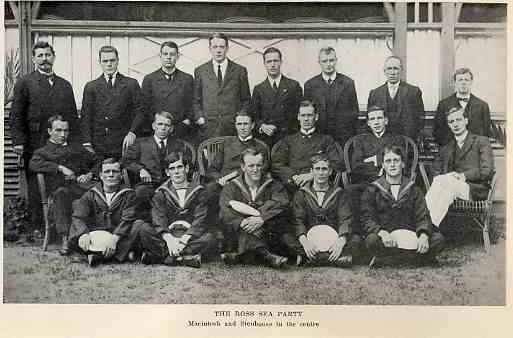
Stevens and his companions made a careful survey of their position and realized that they had serious difficulties to face. No general provisions and no clothing of the kind required for sledging had been landed from the ship. Much of the sledging gear was also aboard. Fortunately, the hut contained both food and clothing, left there by Captain Scott’s Expedition. The men killed as many seals as possible and stored the meat and blubber. June 2 brought a welcome addition to the party in the form of the men who had been forced to remain at Hut Point until the sea-ice became firm. Mackintosh and those with him had incurred some risk in making the crossing, since open water had been seen on their route by the Cape Evans party only a short time before. There were now ten men at Cape Evans—namely, Mackintosh, Spencer-Smith, Joyce, Wild, Cope, Stevens, Hayward, Gaze, Jack, and Richards. The winter had closed down upon the Antarctic and the party would not be able to make any move before the beginning of September. In the meantime they overhauled the available stores and gear, made plans for the work of the forthcoming spring and summer, and lived the severe but not altogether unhappy life of the polar explorer in winter quarters. Mackintosh, writing on June 5, surveyed his position:
Stevens and his companions carefully assessed their situation and realized they faced serious difficulties. No general provisions or clothing suitable for sledging had been unloaded from the ship. Much of the sledging gear was still aboard. Fortunately, the hut contained food and clothing left by Captain Scott’s Expedition. The men killed as many seals as possible and stored the meat and blubber. On June 2, more men joined the party. They had been forced to remain at Hut Point until the sea ice became firm. Mackintosh and his companions had taken some risk in making the crossing. The Cape Evans party had seen open water along their route only a short time before. There were now ten men at Cape Evans: Mackintosh, Spencer-Smith, Joyce, Wild, Cope, Stevens, Hayward, Gaze, Jack, and Richards. Winter had settled over the Antarctic, and the party would not be able to move before early September. Meanwhile, they checked the available supplies and gear and made plans for the coming spring and summer. They lived the harsh but not entirely unhappy life of polar explorers in winter quarters. Writing on June 5, Mackintosh assessed his situation:
“The decision of Stenhouse to make this bay the wintering place of the ship was not reached without much thought and consideration of all eventualities. Stenhouse had already tried the Glacier Tongue and other places, but at each of them the ship had been in an exposed and dangerous position. When this bay was tried the ship withstood several severe blizzards, in which the ice remained in on several occasions. When the ice did go out the moorings held. The ship was moored bows north. She had both anchors down forward and two anchors buried astern, to which the stern moorings were attached with seven lengths of wire. Taking all this into account, it was quite a fair judgment on his part to assume that the ship would be secure here. The blizzard that took the ship and the ice out of the bay was by no means as severe as others she had weathered. The accident proves again the uncertainty of conditions in these regions. I only pray and trust that the ship and those aboard are safe. I am sure they will have a thrilling story to tell when we see them.”
“Stenhouse decided to make this bay the ship’s wintering place only after careful thought about everything that might happen. He had already tried the Glacier Tongue and other places, but the ship had been exposed and in danger at each one. In this bay, the ship withstood several severe blizzards. During several of them, the ice remained in the bay. When the ice did go out, the moorings held. The ship was moored with her bow pointing north. Both anchors were down at the bow, and two more were buried astern. The stern moorings were attached to these anchors with seven lengths of wire. Taking all this into account, Stenhouse was quite reasonable to assume that the ship would be secure here. The blizzard that carried the ship and the ice out of the bay was not nearly as severe as others she had weathered. The accident shows once again how unpredictable conditions are in these regions. I can only pray and trust that the ship and those aboard are safe. I am sure they will have a thrilling story to tell when we see them.”
The Aurora could have found safe winter quarters farther up McMurdo Sound, towards Hut Point, but would have run the risk of being frozen in over the following summer, and I had given instructions to Mackintosh before he went south that this danger must be avoided.
The Aurora could have found a safe place to spend the winter farther up McMurdo Sound, toward Hut Point. But the ship would have risked being trapped in ice over the following summer. Before Mackintosh went south, I had instructed him to avoid that danger.
“Meanwhile we are making all preparations here for a prolonged stay. The shortage of clothing is our principal hardship. The members of the party from Hut Point have the clothes we wore when we left the ship on January 25. We have been without a wash all that time, and I cannot imagine a dirtier set of people. We have been attempting to get a wash ever since we came back, but owing to the blow during the last two days no opportunity has offered. All is working smoothly here, and every one is taking the situation very philosophically. Stevens is in charge of the scientific staff and is now the senior officer ashore. Joyce is in charge of the equipment and has undertaken to improvise clothes out of what canvas can be found here. Wild is working with Joyce. He is a cheerful, willing soul. Nothing ever worries or upsets him, and he is ever singing or making some joke or performing some amusing prank. Richards has taken over the keeping of the meteorological log. He is a young Australian, a hard, conscientious worker, and I look forward to good results from his endeavours. Jack, another young Australian, is his assistant. Hayward is the handy man, being responsible for the supply of blubber. Gaze, another Australian, is working in conjunction with Hayward. Spencer-Smith, the padre, is in charge of photography, and, of course, assists in the general routine work. Cope is the medical officer.
“Meanwhile, we are making all the preparations for a long stay here. The shortage of clothing is our main hardship. Those of us from Hut Point have the clothes we wore when we left the ship on January 25. We have gone without washing all that time, and I cannot imagine a dirtier group of people. We have been trying to wash ever since we came back. But the strong wind of the last two days has given us no chance. Everything is running smoothly here, and everyone is taking the situation very calmly. Stevens is in charge of the scientific staff and is now the senior officer ashore. Joyce is in charge of the equipment and has agreed to make clothes from whatever canvas can be found here. Wild is working with Joyce. He is cheerful and willing. Nothing ever worries or upsets him. He is always singing, making a joke, or playing some amusing prank. Richards has taken over the weather log. He is a young Australian and a hardworking, conscientious man. I expect good results from his efforts. Jack, another young Australian, is his assistant. Hayward is the handyman and is responsible for the supply of blubber. Gaze, another Australian, is working with Hayward. Spencer-Smith, the padre, is in charge of photography and, of course, helps with the general routine work. Cope is the medical officer.
“The routine here is as follows: Four of us, myself, Stevens, Richards, and Spencer-Smith, have breakfast at 7 a.m. The others are called at 9 a.m., and their breakfast is served. Then the table is cleared, the floor is swept, and the ordinary work of the day is commenced. At 1 p.m. we have what we call ‘a counter lunch,’ that is, cold food and cocoa. We work from 2 p.m. till 5 p.m. After 5 p.m. people can do what they like. Dinner is at 7. The men play games, read, write up diaries. We turn in early, since we have to economize fuel and light. Night-watches are kept by the scientific men, who have the privilege of turning in during the day. The day after my arrival here I gave an outline of our situation and explained the necessity for economy in the use of fuel, light, and stores, in view of the possibility that we may have to stay here for two years.... We are not going to commence work for the sledging operations until we know more definitely the fate of the Aurora. I dare not think any disaster has occurred.”
“Our routine here is as follows: Four of us, Stevens, Richards, Spencer-Smith, and I, have breakfast at 7 a.m. The others are called at 9 a.m. and served breakfast. Then the table is cleared, the floor is swept, and the ordinary work of the day begins. At 1 p.m. we have what we call ‘a counter lunch,’ meaning cold food and cocoa. We work from 2 p.m. until 5 p.m. After 5 p.m. people can do as they please. Dinner is at 7. The men play games, read, and write in their diaries. We go to bed early because we have to save fuel and light. The scientists keep watch at night and have the privilege of sleeping during the day. The day after I arrived here, I outlined our situation. I explained that we must save fuel, light, and supplies because we may have to stay here for two years.... We are not going to begin work for the sledging operations until we know more clearly what happened to the Aurora. I dare not think that any disaster has occurred.”
During the remaining days of June the men washed and mended clothes, killed seals, made minor excursions in the neighbourhood of the hut, and discussed plans for the future. They had six dogs, two being bitches without experience of sledging. One of these bitches had given birth to a litter of pups, but she proved a poor mother and the young ones died. The animals had plenty of seal meat and were tended carefully.
During the rest of June, the men washed and mended clothes, killed seals, explored the area near the hut, and discussed plans for the future. They had six dogs, two of them females with no experience pulling sleds. One of the females had given birth to a litter of pups, but she was a poor mother and the pups died. The dogs had plenty of seal meat and were carefully looked after.
Mackintosh called a meeting of all hands on June 26 for the discussion of the plans he had made for the depot-laying expedition to be undertaken during the following spring and summer.
On June 26, Mackintosh called a meeting of everyone to discuss his plans for the depot-laying expedition. The expedition was to take place the following spring and summer.
“I gave an outline of the position and invited discussion from the members. Several points were brought up. I had suggested that one of our party should remain behind for the purpose of keeping the meteorological records and laying in a supply of meat and blubber. This man would be able to hand my instructions to the ship and pilot a party to the Bluff. It had been arranged that Richards should do this. Several objected on the ground that the whole complement would be necessary, and, after the matter had been put to the vote, it was agreed that we should delay the decision until the parties had some practical work and we had seen how they fared. The shortage of clothing was discussed, and Joyce and Wild have agreed to do their best in this matter. October sledging (on the Barrier) was mentioned as being too early, but is to be given a trial. These were the most important points brought up, and it was mutually and unanimously agreed that we could do no more.... I know we are doing our best.”
“I outlined the situation and invited the members to discuss it. Several points came up. I had suggested that one of our party stay behind to keep the weather records and stock up on meat and blubber. He could also give my instructions to the ship and guide a party to the Bluff. Richards had been chosen for this task. Several members objected because they thought the whole party would be needed. After a vote, we agreed to delay the decision until the parties had done some practical work and we had seen how they fared. We discussed the shortage of clothing, and Joyce and Wild agreed to do their best to address it. Some said that October was too early for sledging on the Barrier, but we will give it a trial. These were the most important points raised, and we all agreed that we could do no more.... I know we are doing our best.”
The party was anxious to visit Cape Royds, north of Cape Evans, but at the end of June open water remained right across the Sound and a crossing was impossible. At Cape Royds is the hut used by the Shackleton Expedition of 1907–1909, and the stores and supplies it contains might have proved very useful. Joyce and Wild made finneskoe (fur boots) from spare sleeping-bags. Mackintosh mentions that the necessity of economizing clothing and footgear prevented the men taking as much exercise as they would otherwise have done. A fair supply of canvas and leather had been found in the hut, and some men tried their hands at making shoes. Many seals had been killed and brought in, and the supply of meat and blubber was ample for present needs.
The party wanted to visit Cape Royds, north of Cape Evans. But at the end of June, open water still stretched across the Sound, making a crossing impossible. The hut used by the Shackleton Expedition from 1907 to 1909 stands at Cape Royds. Its stores and supplies might have been very useful. Joyce and Wild made finneskoe (fur boots) from spare sleeping bags. Mackintosh notes that the men had to conserve their clothing and footwear, so they took less exercise than they otherwise would have. They had found a fair supply of canvas and leather in the hut, and some tried making shoes. Many seals had been killed and brought in, and there was plenty of meat and blubber for their immediate needs.
During July Mackintosh made several trips northwards on the sea-ice, but found always that he could not get far. A crack stretched roughly from Inaccessible Island to the Barne Glacier, and the ice beyond looked weak and loose. The improving light told of the returning sun. Richards and Jack were weighing out stores in readiness for the sledging expeditions. Mackintosh, from the hill behind the hut, saw open water stretching westward from Inaccessible Island on August 1, and noted that probably McMurdo Sound was never completely frozen over. A week later the extent of the open water appeared to have increased, and the men began to despair of getting to Cape Royds. Blizzards were frequent and persistent. A few useful articles were found in the neighbourhood of the hut as the light improved, including some discarded socks and underwear, left by members of the Scott Expedition, and a case of candied peel, which was used for cakes. A small fire broke out in the hut on August 12. The acetylene-gas lighting plant installed in the hut by Captain Scott had been rigged, and one day it developed a leak. A member of the party searched for the leak with a lighted candle, and the explosion that resulted fired some woodwork. Fortunately the outbreak was extinguished quickly. The loss of the hut at this stage would have been a tragic incident.
During July, Mackintosh made several trips north on the sea ice, but he could never get far. A crack stretched roughly from Inaccessible Island to the Barne Glacier, and the ice beyond it looked weak and loose. The growing light showed that the sun was returning. Richards and Jack were weighing out supplies for the sledging expeditions. On August 1, Mackintosh looked from the hill behind the hut and saw open water stretching west from Inaccessible Island. He noted that McMurdo Sound was probably never completely frozen over. A week later, the open water seemed to have spread, and the men began to despair of reaching Cape Royds. Blizzards were frequent and persistent. As the light improved, the men found a few useful items near the hut. These included discarded socks and underwear left by members of the Scott Expedition, and a case of candied peel for cakes. A small fire broke out in the hut on August 12. The acetylene gas lighting system installed by Captain Scott had been set up, and one day it developed a leak. A member of the party searched for the leak with a lighted candle. The resulting explosion set some woodwork on fire. Fortunately, the fire was put out quickly. Losing the hut at this stage would have been tragic.
Mackintosh and Stevens paid a visit to Cape Royds on August 13. They had decided to attempt the journey over the Barne Glacier, and after crossing a crevassed area they got to the slopes of Cape Barne and thence down to the sea-ice. They found this ice to be newly formed, but sufficiently strong for their purpose, and soon reached the Cape Royds hut.
Mackintosh and Stevens visited Cape Royds on August 13. They had decided to try to travel over the Barne Glacier. After crossing an area of crevasses, they reached the slopes of Cape Barne and went down to the sea ice. The ice had formed recently, but it was strong enough for them to cross. They soon reached the Cape Royds hut.
“The outer door of the hut we found to be off,” wrote Mackintosh. “A little snow had drifted into the porch, but with a shovel, which we found outside, this was soon cleared away. We then entered, and in the centre of the hut found a pile of snow and ice, which had come through the open ventilator in the roof of the hut. We soon closed this. Stevens prepared a meal while I cleared the ice and snow away from the middle of the hut. After our meal we commenced taking an inventory of the stores inside. Tobacco was our first thought. Of this we found one tin of Navy Cut and a box of cigars. Soap, too, which now ensures us a wash and clean clothes when we get back. We then began to look round for a sleeping-bag. No bags were here, however, but on the improvised beds of cases we found two mattresses, an old canvas screen, and two blankets. We took it in turns to turn in. Stevens started first, while I kept the fire going. No coal or blubber was here, so we had to use wood, which, while keeping the person alongside it warm, did not raise the temperature of the hut over freezing-point. Over the stove in a conspicuous place we found a notice by Scott’s party that parties using the hut should leave the dishes clean.”
“We found that the hut’s outer door was off,” wrote Mackintosh. “A little snow had drifted into the porch, but we soon cleared it with a shovel we found outside. We then entered the hut and found a pile of snow and ice in the center. It had come through the open ventilator in the roof. We soon closed the ventilator. Stevens prepared a meal while I cleared the ice and snow from the middle of the hut. “After our meal, we began taking an inventory of the supplies inside. Tobacco was our first thought. We found one tin of Navy Cut and a box of cigars. We also found soap, which meant we could wash ourselves and our clothes when we got back. “We then began looking for a sleeping bag. There were no bags, but we found two mattresses, an old canvas screen, and two blankets on beds made from cases. We took turns sleeping. Stevens went first while I kept the fire going. There was no coal or blubber, so we had to use wood. It kept the person sitting beside the fire warm, but it did not raise the hut’s temperature above freezing. “In a prominent place over the stove, we found a notice from Scott’s party. It said that parties using the hut should leave the dishes clean.”
Mackintosh and Stevens stayed at the Cape Royds hut over the next day and made a thorough examination of the stores there. They found outside the hut a pile of cases containing meats, flour, dried vegetables, and sundries, at least a year’s supply for a party of six. They found no new clothing, but made a collection of worn garments, which could be mended and made serviceable. Carrying loads of their spoils, they set out for Cape Evans on the morning of August 15 across the sea-ice. Very weak ice barred the way and they had to travel round the coast. They got back to Cape Evans in two hours. During their absence Wild and Gaze had climbed Inaccessible Island, Gaze having an ear badly frost-bitten on the journey. The tobacco was divided among the members of the party. A blizzard was raging the next day, and Mackintosh congratulated himself on having chosen the time for his trip fortunately.
Mackintosh and Stevens stayed at the Cape Royds hut the following day and carefully examined the supplies. Outside the hut, they found a pile of cases containing meat, flour, dried vegetables, and other supplies. There was enough for a party of six for at least a year. They found no new clothing, but gathered worn garments that could be mended and made usable. On the morning of August 15, they set out across the sea ice for Cape Evans, carrying loads of their finds. The ice was too weak to cross, so they had to travel around the coast. They reached Cape Evans in two hours. During their absence, Wild and Gaze had climbed Inaccessible Island, and Gaze had badly frostbitten an ear on the journey. The tobacco was divided among the members of the party. A blizzard raged the next day, and Mackintosh was glad he had chosen a good time for his trip.
The record of the remaining part of August is not eventful. All hands were making preparations for the sledging, and were rejoicing in the increasing daylight. The party tried the special sledging ration prepared under my own direction, and “all agreed it was excellent both in bulk and taste.” Three emperor penguins, the first seen since the landing, were caught on August 19. By that time the returning sun was touching with gold the peaks of the Western Mountains and throwing into bold relief the massive form of Erebus. The volcano was emitting a great deal of smoke, and the glow of its internal fires showed occasionally against the smoke-clouds above the crater. Stevens, Spencer-Smith, and Cope went to Cape Royds on the 20th, and were still there when the sun made its first appearance over Erebus on the 26th. Preceding days had been cloudy, and the sun, although above the horizon, had not been visible.
The rest of August passed without much incident. Everyone was preparing for the sledging and enjoying the increasing daylight. The party tried the special sledging ration I had prepared under my own direction. “All agreed it was excellent both in bulk and taste.” On August 19, we caught three emperor penguins, the first seen since the landing. By then, the returning sun was touching the peaks of the Western Mountains with gold. It also brought the massive form of Erebus into sharp relief. The volcano was giving off a great deal of smoke. The glow of its inner fires occasionally showed against the smoke clouds above the crater. Stevens, Spencer-Smith, and Cope went to Cape Royds on the 20th. They were still there when the sun first appeared over Erebus on the 26th. The previous days had been cloudy, and although the sun was above the horizon, it had not been visible.
“The morning broke clear and fine,” wrote Mackintosh. “Over Erebus the sun’s rays peeped through the massed cumulus and produced the most gorgeous cloud effects. The light made us all blink and at the same time caused the greatest exuberance of spirits. We felt like men released from prison. I stood outside the hut and looked at the truly wonderful scenery all round. The West Mountains were superb in their wild grandeur. The whole outline of peaks, some eighty or ninety distant, showed up, stencilled in delicate contrast to the sky-line. The immense ice-slopes shone white as alabaster against dark shadows. The sky to the west over the mountains was clear, except for low-lying banks at the foot of the slopes round about Mount Discovery. To the south hard streaks of stratus lay heaped up to 30 degrees above the horizon.... Then Erebus commenced to emit volumes of smoke, which rose hundreds of feet and trailed away in a north-westerly direction. The southern slopes of Erebus were enveloped in a mass of cloud.” The party from Cape Royds returned that afternoon, and there was disappointment at their report that no more tobacco had been found.
“The morning dawned clear and beautiful,” wrote Mackintosh. “Above Erebus, the sun’s rays peeked through thick cumulus clouds, creating the most gorgeous effects. The light made us all blink and filled us with high spirits. We felt like men released from prison. I stood outside the hut and looked at the truly wonderful scenery all around. The West Mountains were magnificent in their wild grandeur. The whole outline of their peaks, some eighty or ninety miles away, stood out in delicate contrast against the sky. The immense ice slopes shone white as alabaster against the dark shadows. The sky to the west above the mountains was clear. Only low banks of cloud lay at the foot of the slopes around Mount Discovery. To the south, dense streaks of stratus cloud were piled up to 30 degrees above the horizon.... Then Erebus began to send out volumes of smoke. The smoke rose hundreds of feet and drifted away to the northwest. The southern slopes of Erebus were wrapped in a mass of cloud.” The party from Cape Royds returned that afternoon. We were disappointed to hear that they had found no more tobacco.
The sledging of stores to Hut Point, in preparation for the depot-laying journeys on the Barrier, was to begin on September 1. Mackintosh, before that date, had discussed plans fully with the members of his party. He considered that sufficient sledging provisions were available at Cape Evans, the supply landed from the ship being supplemented by the stores left by the Scott Expedition of 1912–13 and the Shackleton Expedition of 1907–09. The supply of clothing and tents was more difficult. Garments brought from the ship could be supplemented by old clothing found at Hut Point and Cape Evans. The Burberry wind-proof outer garments were old and in poor order for the start of a season’s sledging. Old sleeping-bags had been cut up to make finneskoe (fur boots) and mend other sleeping-bags. Three tents were available, one sound one landed from the Aurora, and two old ones left by Captain Scott. Mackintosh had enough sledges, but the experience of the first journey with the dogs had been unfortunate, and there were now only four useful dogs left. They did not make a full team and would have to be used merely as an auxiliary to man-haulage.
Transporting supplies by sledge to Hut Point was to begin on September 1. This was in preparation for the journeys to lay supply depots on the Barrier. Before that date, Mackintosh had discussed the plans fully with the members of his party. He believed there were enough sledging provisions at Cape Evans. The supplies brought ashore from the ship were supplemented by stores left by the Scott Expedition of 1912 to 1913 and the Shackleton Expedition of 1907 to 1909. Clothing and tents were a greater problem. The clothes brought from the ship could be supplemented with old clothing found at Hut Point and Cape Evans. The Burberry windproof outer garments were old and in poor condition for the start of a sledging season. Old sleeping bags had been cut up to make finneskoe (fur boots) and repair other sleeping bags. Three tents were available: one in good condition brought ashore from the Aurora, and two old ones left by Captain Scott. Mackintosh had enough sledges, but the first journey with the dogs had gone badly. Only four useful dogs remained. They did not make a full team and could only help the men who pulled the sledges.
The scheme adopted by Mackintosh, after discussion with the members of his party, was that nine men, divided into three parties of three each, should undertake the sledging. One man would be left at Cape Evans to continue the meteorological observations during the summer. The motor-tractor, which had been left at Hut Point, was to be brought to Cape Evans and, if possible, put into working order. Mackintosh estimated that the provisions required for the consumption of the depot parties, and for the depots to be placed southward to the foot of the Beardmore Glacier, would amount to 4000 lbs. The first depot was to be placed off Minna Bluff, and from there southward a depot was to be placed on each degree of latitude. The final depot would be made at the foot of the Beardmore Glacier. The initial task would be the haulage of stores from Cape Evans to Hut Point, a distance of 13 miles. All the sledging stores had to be taken across, and Mackintosh proposed to place additional supplies there in case a party, returning late from the Barrier, had to spend winter months at Hut Point.
After discussing the plan with his party, Mackintosh decided that nine men would do the sledging. They would be divided into three teams of three. One man would stay at Cape Evans to continue the weather observations during the summer. The motor-tractor had been left at Hut Point. It was to be brought to Cape Evans and, if possible, made operational. Mackintosh estimated that 4,000 pounds of provisions would be needed. These would feed the depot parties and supply the depots to be placed southward as far as the foot of the Beardmore Glacier. The first depot was to be placed off Minna Bluff. From there, a depot was to be placed at each degree of latitude southward. The final depot would be at the foot of the Beardmore Glacier. The first task would be to haul stores from Cape Evans to Hut Point, a distance of 13 miles. All the sledging stores had to be taken there. Mackintosh also proposed leaving additional supplies at Hut Point. A party returning late from the Barrier might have to spend the winter months there.
The first party, consisting of Mackintosh, Richards, and Spencer-Smith, left Cape Evans on September 1 with 600 lbs. of stores on one sledge, and had an uneventful journey to Hut Point. They pitched a tent half-way across the bay, on the sea-ice, and left it there for the use of the various parties during the month. At Hut Point they cleared the snow from the motor-tractor and made some preliminary efforts to get it into working order. They returned to Cape Evans on the 3rd. The second trip to Hut Point was made by a party of nine, with three sledges. Two sledges, man-hauled, were loaded with 1278 lbs. of stores, and a smaller sledge, drawn by the dogs, carried the sleeping-bags. This party encountered a stiff southerly breeze, with low temperature, and, as the men were still in rather soft condition, they suffered much from frost bites. Joyce and Gaze both had their heels badly blistered. Mackintosh’s face suffered, and other men had fingers and ears “bitten.” When they returned Gaze had to travel on a sledge, since he could not set foot to the ground. They tried to haul the motor to Cape Evans on this occasion, but left it for another time after covering a mile or so. The motor was not working and was heavy to pull.
The first party consisted of Mackintosh, Richards, and Spencer-Smith. They left Cape Evans on September 1 with 600 lbs. of supplies on one sledge. Their journey to Hut Point was uneventful. Halfway across the bay, they pitched a tent on the sea ice. They left it there for the various parties to use during the month. At Hut Point, they cleared the snow from the motor-tractor and began trying to get it working. They returned to Cape Evans on the 3rd. A party of nine made the second trip to Hut Point with three sledges. The men pulled two sledges loaded with 1,278 lbs. of supplies. The dogs pulled a smaller sledge carrying the sleeping bags. The party faced a stiff southerly breeze and low temperatures. Because the men were still rather out of condition, they suffered badly from frostbite. Joyce and Gaze both had badly blistered heels. Mackintosh’s face was affected, and other men had fingers and ears “bitten.” On the return journey, Gaze had to travel on a sledge because he could not put his foot down. The party also tried to haul the motor-tractor to Cape Evans. But after a mile or so, they left it for another time. The motor-tractor was not working and was heavy to pull.
Eight men made the third journey to Hut Point, Gaze and Jack remaining behind. They took 660 lbs. of oil and 630 lbs. of stores. From Hut Point the next day (September 14) the party proceeded with loaded sledges to Safety Camp, on the edge of the Barrier. This camp would be the starting-point for the march over the Barrier to the Minna Bluff depot. They left the two sledges, with 660 lbs. of oil and 500 lbs. of oatmeal, sugar, and sundries, at Safety Camp and returned to Hut Point. The dogs shared the work on this journey. The next day Mackintosh and his companions took the motor to Cape Evans, hauling it with its grip-wheels mounted on a sledge. After a pause due to bad weather, a party of eight men took another load to Hut Point on September 24, and on to Safety Camp the next day. They got back to Cape Evans on the 26th. Richards meanwhile had overhauled the motor and given it some trial runs on the sea-ice. But he reported that the machine was not working satisfactorily, and Mackintosh decided not to persevere with it.
Eight men made the third trip to Hut Point, while Gaze and Jack stayed behind. The party took 660 lbs. of oil and 630 lbs. of supplies. The next day, September 14, they left Hut Point with loaded sledges and headed for Safety Camp. The camp stood on the edge of the Barrier. It would be the starting point for the march across the Barrier to the Minna Bluff depot. They left the two sledges at Safety Camp with 660 lbs. of oil and 500 lbs. of oatmeal, sugar, and other supplies. Then they returned to Hut Point. The dogs shared the work on this trip. The next day, Mackintosh and his companions took the motor to Cape Evans. They hauled it on a sledge with its grip-wheels mounted. Bad weather caused a delay. Then, on September 24, a party of eight men took another load to Hut Point. They took it on to Safety Camp the next day and returned to Cape Evans on the 26th. Meanwhile, Richards had inspected and repaired the motor and tested it on the sea ice. But he reported that the machine was not working well, and Mackintosh decided not to keep trying to use it.
“Everybody is up to his eyes in work,” runs the last entry in the journal left by Mackintosh at Cape Evans. “All gear is being overhauled, and personal clothing is having the last stitches. We have been improvising shoes to replace the finneskoe, of which we are badly short. Wild has made an excellent shoe out of an old horse-rug he found here, and this is being copied by other men. I have made myself a pair of mitts out of an old sleeping-bag. Last night I had a bath, the second since being here.... I close this journal to-day (September 30) and am packing it with my papers here. To-morrow we start for Hut Point. Nine of us are going on the sledge party for laying depots—namely, Stevens, Spencer-Smith, Joyce, Wild, Cope, Hayward, Jack, Richards, and myself. Gaze, who is still suffering from bad feet, is remaining behind and will probably be relieved by Stevens after our first trip. With us we take three months’ provisions to leave at Hut Point. I continue this journal in another book, which I keep with me.”
“Everybody is buried in work,” reads the last entry in the journal Mackintosh left at Cape Evans. “All the gear is being checked, and everyone is putting the last stitches in their personal clothing. We have been making makeshift shoes to replace the finneskoe, which we are badly short of. Wild has made an excellent shoe from an old horse blanket he found here, and the other men are copying it. I have made myself a pair of mittens from an old sleeping bag. Last night I had a bath, my second since arriving here.... I am closing this journal today (September 30) and packing it with my papers here. Tomorrow we start for Hut Point. Nine of us are going on the sledge party to lay depots: Stevens, Spencer-Smith, Joyce, Wild, Cope, Hayward, Jack, Richards, and myself. Gaze is staying behind because he is still suffering from bad feet. Stevens will probably relieve him after our first trip. We are taking three months’ provisions to leave at Hut Point. I will continue this journal in another book that I keep with me.”
The nine men reached Hut Point on October 1. They took the last loads with them. Three sledges and three tents were to be taken on to the Barrier, and the parties were as follows:
The nine men reached Hut Point on October 1. They brought the last loads with them. Three sledges and three tents were to be taken on to the Barrier. The parties were as follows:
No. 1: Mackintosh, Spencer-Smith, and Wild; No. 2: Joyce, Cope, and Richards; No. 3: Jack, Hayward, and Gaze. On October 3 and 4 some stores left at Half-Way Camp were brought in, and other stores were moved on to Safety Camp. Bad weather delayed the start of the depot-laying expedition from Hut Point until October 9.
No. 1: Mackintosh, Spencer-Smith, and Wild. No. 2: Joyce, Cope, and Richards. No. 3: Jack, Hayward, and Gaze. On October 3 and 4, some supplies left at Half-Way Camp were brought in. Other supplies were moved to Safety Camp. Bad weather delayed the depot-laying expedition's departure from Hut Point until October 9.