Chapter 13
The Ross Sea Party
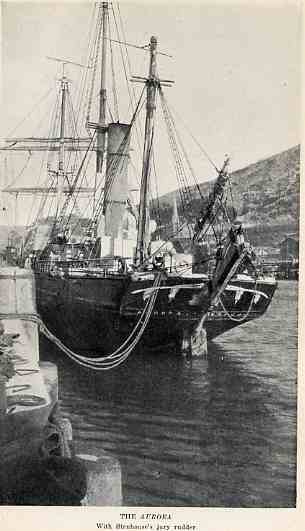
I now turn to the fortunes and misfortunes of the Ross Sea Party and the Aurora. In spite of extraordinary difficulties occasioned by the breaking out of the Aurora from her winter quarters before sufficient stores and equipment had been landed, Captain Æneas Mackintosh and the party under his command achieved the object of this side of the Expedition. For the depot that was the main object of the Expedition was laid in the spot that I had indicated, and if the transcontinental party had been fortunate enough to have crossed they would have found the assistance, in the shape of stores, that would have been vital to the success of their undertaking. Owing to the dearth of stores, clothing, and sledging equipment, the depot party was forced to travel more slowly and with greater difficulty than would have otherwise been the case. The result was that in making this journey the greatest qualities of endurance, self-sacrifice, and patience were called for, and the call was not in vain, as you reading the following pages will realize. It is more than regrettable that after having gone through those many months of hardship and toil, Mackintosh and Hayward should have been lost. Spencer-Smith during those long days, dragged by his comrades on the sledge, suffering but never complaining, became an example to all men. Mackintosh and Hayward owed their lives on that journey to the unremitting care and strenuous endeavours of Joyce, Wild, and Richards, who, also scurvy-stricken but fitter than their comrades, dragged them through the deep snow and blizzards on the sledges. I think that no more remarkable story of human endeavour has been revealed than the tale of that long march which I have collated from various diaries. Unfortunately, the diary of the leader of this side of the Expedition was lost with him. The outstanding feature of the Ross Sea side was the journey made by these six men. The earlier journeys for the first year did not produce any sign of the qualities of leadership amongst the others. Mackintosh was fortunate for the long journey in that he had these three men with him: Ernest Wild, Richards, and Joyce.
I now turn to the fortunes and misfortunes of the Ross Sea Party and the Aurora. The Aurora broke free from her winter quarters before enough stores and equipment had been unloaded. Despite the extraordinary difficulties this caused, Captain Æneas Mackintosh and the party under his command achieved the object of this side of the Expedition. They laid the depot that was the main object of the Expedition in the spot I had indicated. If the transcontinental party had been fortunate enough to cross, they would have found the supplies vital to their success. Because stores, clothing, and sledging equipment were scarce, the depot party had to travel more slowly and with greater difficulty than they otherwise would have. As a result, the journey called for the greatest qualities of endurance, self-sacrifice, and patience. As you will realize in the following pages, the men rose to the challenge. It is more than regrettable that Mackintosh and Hayward were lost after those many months of hardship and toil. During those long days, Spencer-Smith became an example to all men. His comrades dragged him on the sledge, and he suffered but never complained. Mackintosh and Hayward owed their lives on that journey to the constant care and strenuous efforts of Joyce, Wild, and Richards. Though also suffering from scurvy, these three were fitter than their comrades. They dragged Mackintosh and Hayward on the sledges through deep snow and blizzards. I think no more remarkable story of human endeavour has been revealed than the tale of that long march, which I have pieced together from various diaries. Unfortunately, the diary of the leader of this side of the Expedition was lost with him. The outstanding event on the Ross Sea side was the journey made by these six men. The earlier journeys in the first year did not reveal any signs of leadership among the others. Mackintosh was fortunate to have these three men with him on the long journey: Ernest Wild, Richards, and Joyce.
Before proceeding with the adventures of this party I want to make clear in these pages how much I appreciate the assistance I received both in Australia and New Zealand, especially in the latter dominion. And amongst the many friends there it is not invidious on my part to lay special stress on the name of Leonard Tripp, who has been my mentor, counsellor, and friend for many years, and who, when the Expedition was in precarious and difficult circumstances, devoted his energy, thought, and gave his whole time and advice to the best interests of our cause. I also must thank Edward Saunders, who for the second time has greatly helped me in preparing an Expedition record for publication.
Before continuing the story of this party's adventures, I want to express my gratitude for the help I received in Australia and New Zealand, especially in New Zealand. Among my many friends there, I hope no one will take offense if I single out Leonard Tripp. He has been my mentor, adviser, and friend for many years. When the Expedition was in a precarious and difficult position, he devoted his energy, thought, time, and advice to furthering our cause. I must also thank Edward Saunders, who has helped me greatly for a second time in preparing an Expedition record for publication.
To the Dominion Government I tender my warmest thanks. To the people of New Zealand, and especially to those many friends—too numerous to mention here—who helped us when our fortunes were at a low ebb, I wish to say that their kindness is an ever-green memory to me. If ever a man had cause to be grateful for assistance in dark days, I am he.
I offer my warmest thanks to the Dominion Government. I also want to thank the people of New Zealand, especially the many friends who helped us when our fortunes were low. They are too numerous to name here, but I will always remember their kindness. If anyone has reason to be grateful for help in dark times, I do.
The Aurora, under the command of Captain Æneas Mackintosh, sailed from Hobart for the Ross Sea on December 24, 1914. The ship had refitted in Sydney, where the State and Federal Governments had given generous assistance, and would be able, if necessary, to spend two years in the Antarctic. My instructions to Captain Mackintosh, in brief, were to proceed to the Ross Sea, make a base at some convenient point in or near McMurdo Sound, land stores and equipment, and lay depots on the Great Ice Barrier in the direction of the Beardmore Glacier for the use of the party that I expected to bring overland from the Weddell Sea coast. This programme would involve some heavy sledging, but the ground to be covered was familiar, and I had not anticipated that the work would present any great difficulties. The Aurora carried materials for a hut, equipment for landing and sledging parties, stores and clothing of all the kinds required, and an ample supply of sledges. There were also dog teams and one of the motor-tractors. I had told Captain Mackintosh that it was possible the transcontinental journey would be attempted in the 1914–15 season in the event of the landing on the Weddell Sea coast proving unexpectedly easy, and it would be his duty, therefore, to lay out depots to the south immediately after his arrival at his base. I had directed him to place a depot of food and fuel-oil at lat. 80° S. in 1914–15, with cairns and flags as guides to a sledging party approaching from the direction of the Pole. He would place depots farther south in the 1915–16 season.
The Aurora, commanded by Captain Æneas Mackintosh, sailed from Hobart for the Ross Sea on December 24, 1914. The ship had been refitted in Sydney, where the State and Federal Governments had provided generous assistance. If necessary, the ship could spend two years in the Antarctic. My instructions to Captain Mackintosh were, briefly, to proceed to the Ross Sea and establish a base at a suitable point in or near McMurdo Sound. He was to land stores and equipment and lay depots on the Great Ice Barrier toward the Beardmore Glacier. These depots were for the party I expected to bring overland from the Weddell Sea coast. The plan would involve some heavy sledging, but the ground was familiar. I had not expected the work to present any great difficulties. The Aurora carried materials for a hut, equipment for landing and sledging parties, and all the required kinds of stores and clothing. The ship also carried an ample supply of sledges, as well as dog teams and one of the motor-tractors. I had told Captain Mackintosh that we might attempt the transcontinental journey in the 1914–15 season if the landing on the Weddell Sea coast proved unexpectedly easy. His duty, therefore, was to lay depots to the south immediately after arriving at his base. I had directed him to place a depot of food and fuel oil at 80° S. in 1914–15. Cairns and flags would guide a sledging party approaching from the direction of the Pole. He would place depots farther south in the 1915–16 season.
The Aurora had an uneventful voyage southwards. She anchored off the sealing-huts at Macquarie Island on Christmas Day, December 25. The wireless station erected by Sir Douglas Mawson’s Australian Antarctic Expedition could be seen on a hill to the north-west with the Expedition’s hut at the base of the hill. This hut was still occupied by a meteorological staff, and later in the day the meteorologist, Mr. Tulloch, came off to the ship and had dinner aboard. The Aurora had some stores for the Macquarie Island party, and these were sent ashore during succeeding days in the boats. The landing-place was a rough, kelp-guarded beach, where lay the remains of the New Zealand barque Clyde. Macquarie Island anchorages are treacherous, and several ships engaged in the sealing and whaling trade have left their bones on the rocky shores, where bask great herds of seals and sea-elephants. The Aurora sailed from the island on December 31, and three days later they sighted the first iceberg, a tabular berg rising 250 ft. above the sea. This was in lat. 62° 44´ S., long. 169° 58´ E. The next day, in lat. 64° 27´ 38´´ S., the Aurora passed through the first belt of pack-ice. At 9 a.m. on January 7, Mount Sabine, a mighty peak of the Admiralty Range, South Victoria Land, was sighted seventy-five miles distant.
The Aurora had an uneventful voyage south. On Christmas Day, December 25, she anchored off the sealing huts on Macquarie Island. A wireless station stood on a hill to the northwest, with the Expedition’s hut at its base. Sir Douglas Mawson’s Australian Antarctic Expedition had built the station. The hut was still occupied by a meteorological staff. Later that day, the meteorologist, Mr. Tulloch, came out to the ship and had dinner aboard. The Aurora had brought some supplies for the Macquarie Island party. Over the following days, the supplies were sent ashore in boats. The landing place was a rough beach, guarded by kelp, where the remains of the New Zealand barque Clyde lay. Macquarie Island’s anchorages are treacherous. Several sealing and whaling ships have been wrecked on its rocky shores. Great herds of seals and sea elephants bask there. The Aurora sailed from the island on December 31. Three days later, those aboard sighted the first iceberg, a flat-topped berg rising 250 feet above the sea. They were at latitude 62° 44´ S., longitude 169° 58´ E. The next day, at latitude 64° 27´ 38´´ S., the Aurora passed through the first belt of pack ice. At 9 a.m. on January 7, Mount Sabine was sighted seventy-five miles away. It is a mighty peak in the Admiralty Range, South Victoria Land.
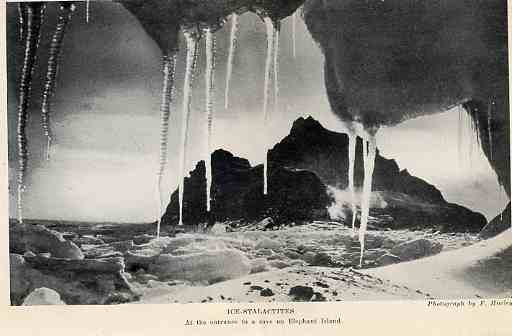
It had been proposed that a party of three men should travel to Cape Crozier from winter quarters during the winter months in order to secure emperor penguins’ eggs. The ship was to call at Cape Crozier, land provisions, and erect a small hut of fibro-concrete sheets for the use of this party. The ship was off the Cape on the afternoon of January 9, and a boat put off with Stenhouse, Cope, Joyce, Ninnis, Mauger, and Aitken to search for a landing-place. “We steered in towards the Barrier,” wrote Stenhouse, “and found an opening leading into a large bight which jutted back to eastward into the Barrier. We endeavoured without success to scale the steep ice-foot under the cliffs, and then proceeded up the bay. Pulling along the edge of perpendicular ice, we turned into a bay in the ice-cliff and came to a cul-de-sac, at the head of which was a grotto. At the head of the grotto and on a ledge of snow were perched some adelie penguins. The beautiful green and blue tints in the ice-colouring made a picture as unreal as a stage setting. Coming back along the edge of the bight towards the land, we caught and killed one penguin, much to the surprise of another, which ducked into a niche in the ice and, after much squawking, was extracted with a boat-hook and captured. We returned to our original landing, and were fortunate in our time, for no sooner had we cleared the ledge where Ninnis had been hanging in his endeavour to catch the penguin than the barrier calved and a piece weighing hundreds of tons toppled over into the sea.
A party of three men had been proposed to travel from winter quarters to Cape Crozier during the winter months. Their purpose was to collect emperor penguins’ eggs. The ship was to call at Cape Crozier, land provisions, and erect a small hut of fibro-concrete sheets for the party. On the afternoon of January 9, the ship was off the Cape. A boat set out with Stenhouse, Cope, Joyce, Ninnis, Mauger, and Aitken to look for a landing place. “We steered toward the Barrier,” wrote Stenhouse, “and found an opening leading into a large inlet. The inlet extended eastward into the Barrier. We tried without success to climb the steep ice at the foot of the cliffs. Then we continued up the bay. We rowed along the edge of the sheer ice and turned into a bay in the ice cliff. There we came to a dead end, with a grotto at its head. Some Adélie penguins were perched on a ledge of snow at the back of the grotto. The beautiful green and blue colors in the ice made the scene as unreal as a stage setting. “On our way back along the edge of the inlet toward land, we caught and killed one penguin. Another penguin seemed much surprised and ducked into a niche in the ice. After much squawking, it was pulled out with a boat hook and captured. We returned to our original landing place, and our timing was fortunate. Ninnis had been hanging from a ledge in his attempt to catch the penguin. No sooner had we cleared the ledge than the Barrier calved, and a piece weighing hundreds of tons toppled into the sea.
“Since we left the ship a mist had blown up from the south, and when we arrived back at the entrance to the bay the ship could be but dimly seen. We found a slope on the ice-foot, and Joyce and I managed, by cutting steps, to climb up to a ledge of debris between the cliffs and the ice, which we thought might lead to the vicinity of the emperor penguin rookery. I sent the boat back to the ship to tell the captain of our failure to find a spot where we could depot the hut and stores, and then, with Joyce, set out to walk along the narrow land between the cliffs and the ice to the southward in hopes of finding the rookery. We walked for about a mile along the foot of the cliffs, over undulating paths, sometimes crawling carefully down a gully and then over rocks and debris which had fallen from the steep cliffs which towered above us, but we saw no signs of a rookery or any place where a rookery could be. Close to the cliffs and separated from them by the path on which we travelled, the Barrier in its movement towards the sea had broken and showed signs of pressure. Seeing a turn in the cliffs ahead, which we thought might lead to better prospects, we trudged on, and were rewarded by a sight which Joyce admitted as being the grandest he had ever witnessed. The Barrier had come into contact with the cliffs and, from where we viewed it, it looked as if icebergs had fallen into a tremendous cavern and lay jumbled together in wild disorder. Looking down into that wonderful picture one realized a little the ‘eternalness’ of things.
“Since we left the ship, a mist had blown up from the south. When we returned to the entrance to the bay, we could barely see the ship. We found a slope on the ice-foot, and Joyce and I cut steps to climb it. We reached a ledge of debris between the cliffs and the ice. We thought the ledge might lead us near the emperor penguin rookery. I sent the boat back to tell the captain that we had failed to find a place to store the hut and supplies. Then Joyce and I set out south along the narrow strip of land between the cliffs and the ice, hoping to find the rookery. We walked for about a mile along the base of the cliffs, over uneven paths. At times we crawled carefully down gullies and then crossed rocks and debris that had fallen from the steep cliffs towering above us. But we saw no sign of a rookery or any place where one could be. Near the cliffs, on the other side of our path, the Barrier had broken as it moved toward the sea. It showed signs of pressure. Ahead, we saw a bend in the cliffs that we thought might offer better prospects, so we trudged on. We were rewarded with a sight that Joyce admitted was the grandest he had ever seen. The Barrier had come into contact with the cliffs. From where we stood, it looked as if icebergs had fallen into a tremendous cavern and lay jumbled together in wild disorder. Looking down on that wonderful scene, one began to understand a little of the ‘eternalness’ of things.”
“We had not long to wait, and, much as we wished to go ahead, had to turn back. I went into a small crevasse; no damage. Arriving back at the place where we left the boat we found it had not returned, so sat down under an overhang and smoked and enjoyed the sense of loneliness. Soon the boat appeared out of the mist, and the crew had much news for us. After we left the ship the captain manœuvred her in order to get close to the Barrier, but, unfortunately, the engines were loath to be reversed when required to go astern and the ship hit the Barrier end on. The Barrier here is about twenty feet high, and her jib-boom took the weight and snapped at the cap. When I returned Thompson was busy getting the broken boom and gear aboard. Luckily the cap was not broken and no damage was done aloft, but it was rather a bad introduction to the Antarctic. There is no place to land the Cape Crozier hut and stores, so we must build a hut in the winter here, which will mean so much extra sledging from winter quarters. Bad start, good finish! Joyce and I went aloft to the crow’s-nest, but could see no opening in the Barrier to eastward where a ship might enter and get farther south.”
“We did not have to wait long. Much as we wanted to go on, we had to turn back. I fell into a small crevasse, but no damage was done. When we got back to where we had left the boat, we found it had not returned. So we sat under an overhang, smoked, and enjoyed the feeling of being alone. Soon the boat appeared out of the mist, and the crew had much news for us. After we left the ship, the captain maneuvered her to get close to the Barrier. Unfortunately, when he needed to back up, the engines were slow to reverse, and the ship hit the Barrier head-on. The Barrier is about twenty feet high here. The ship’s jib-boom took the impact and snapped at the cap. When I returned, Thompson was busy bringing the broken boom and gear aboard. Luckily, the cap was not broken, and no damage was done aloft. But it was a rather bad introduction to the Antarctic. There is nowhere to land the Cape Crozier hut and stores, so we must build a hut here during the winter. This will mean that much more sledging from winter quarters. Bad start, good finish! Joyce and I climbed up to the crow’s-nest, but we could see no opening in the Barrier to the east. There was nowhere a ship could enter and get farther south.”
Mackintosh proceeded into McMurdo Sound. Heavy pack delayed the ship for three days, and it was not until January 16 that she reached a point off Cape Evans, where he landed ten tons of coal and ninety-eight cases of oil. During succeeding days Captain Mackintosh worked the Aurora southward, and by January 24 he was within nine miles of Hut Point. There he made the ship fast to sea-ice, then breaking up rapidly, and proceeded to arrange sledging parties. It was his intention to direct the laying of the depots himself and to leave his first officer, Lieut. J. R. Stenhouse, in command of the Aurora, with instructions to select a base and land a party.
Mackintosh sailed into McMurdo Sound. Dense pack ice delayed the ship for three days. On January 16, the ship reached a point off Cape Evans, where he landed ten tons of coal and ninety-eight cases of oil. Over the following days, Captain Mackintosh navigated the Aurora southward. By January 24, he was within nine miles of Hut Point. There he secured the ship to the sea ice, which was breaking up rapidly, and began organizing sledging parties. He intended to direct the laying of the depots himself. He planned to leave his first officer, Lieut. J. R. Stenhouse, in command of the Aurora. Stenhouse was to select a base and land a party.
The first objective was Hut Point, where stands the hut erected by the Discovery expedition in 1902. An advance party, consisting of Joyce (in charge), Jack, and Gaze, with dogs and fully loaded sledges, left the ship on January 24; Mackintosh, with Wild and Smith, followed the next day; and a supporting party, consisting of Cope (in charge), Stevens, Ninnis, Haywood, Hooke, and Richards, left the ship on January 30. The first two parties had dog teams. The third party took with it the motor-tractor, which does not appear to have given the good service that I had hoped to get from it. These parties had a strenuous time during the weeks that followed. The men, fresh from shipboard, were not in the best of training, and the same was true of the dogs. It was unfortunate that the dogs had to be worked so early after their arrival in the Antarctic. They were in poor condition and they had not learned to work together as teams. The result was the loss of many of the dogs, and this proved a serious matter in the following season. Captain Mackintosh’s record of the sledging in the early months of 1915 is fairly full. It will not be necessary here to follow the fortunes of the various parties in detail, for although the men were facing difficulties and dangers, they were on well-travelled ground, which has been made familiar to most readers by the histories of earlier Expeditions.
The first objective was Hut Point, where the Discovery expedition had built a hut in 1902. An advance party left the ship on January 24, with dogs and fully loaded sledges. It consisted of Joyce, who was in charge, Jack, and Gaze. Mackintosh followed the next day with Wild and Smith. A supporting party left the ship on January 30. It consisted of Cope, who was in charge, Stevens, Ninnis, Haywood, Hooke, and Richards. The first two parties had dog teams. The third took the motor-tractor, which does not appear to have served as well as I had hoped. These parties had a strenuous time in the weeks that followed. Fresh from the ship, neither the men nor the dogs were in the best condition for the work. Unfortunately, the dogs had to be put to work so soon after arriving in the Antarctic. They were in poor condition and had not learned to work together as teams. As a result, many dogs were lost, and this proved a serious matter the following season. Captain Mackintosh’s account of the sledging in the early months of 1915 is fairly detailed. There is no need to follow the fortunes of the various parties in detail here. Although the men faced difficulties and dangers, they were travelling over well-travelled ground. The histories of earlier Expeditions have made this ground familiar to most readers.
Captain Mackintosh and his party left the Aurora on the evening of January 25. They had nine dogs and one heavily loaded sledge, and started off briskly to the accompaniment of a cheer from their shipmates. The dogs were so eager for exercise after their prolonged confinement aboard the ship that they dashed forward at their best speed, and it was necessary for one man to sit upon the sledge in order to moderate the pace. Mackintosh had hoped to get to Hut Point that night, but luck was against him. The weather broke after he had travelled about five miles, and snow, which completely obscured all landmarks, sent him into camp on the sea-ice. The weather was still thick on the following morning, and the party, making a start after breakfast, missed its way. “We shaped a course where I imagined Hut Point to be,” wrote Captain Mackintosh in his diary, “but when the sledge-meter showed thirteen miles fifty yards, which is four miles in excess of the distance from the slip to Hut Point, I decided to halt again. The surface was changing considerably and the land was still obscured. We have been travelling over a thick snow surface, in which we sink deeply, and the dogs are not too cheerful about it.” They started again at noon on January 27, when the weather had cleared sufficiently to reveal the land, and reached Hut Point at 4 p.m. The sledge-meter showed that the total distance travelled had been over seventeen miles. Mackintosh found in the hut a note from Joyce, who had been there on the 25th, and who reported that one of his dogs had been killed in a fight with its companions. The hut contained some stores left there by earlier Expeditions. The party stayed there for the night. Mackintosh left a note for Stenhouse directing him to place provisions in the hut in case the sledging parties did not return in time to be taken off by the ship. Early next morning Joyce reached the hut. He had encountered bad ice and had come back to consult with Mackintosh regarding the route to be followed. Mackintosh directed him to steer out towards Black Island in crossing the head of the Sound beyond Hut Point.
Captain Mackintosh and his party left the Aurora on the evening of January 25. They had nine dogs and one heavily loaded sledge. They set off briskly, cheered by their shipmates. The dogs were eager for exercise after being confined aboard the ship for so long. They raced ahead at full speed, and one man had to sit on the sledge to slow them down. Mackintosh had hoped to reach Hut Point that night, but luck was against him. After he had traveled about five miles, the weather turned bad. Snow completely hid all landmarks, forcing him to camp on the sea ice. The weather was still thick the next morning. The party set out after breakfast but lost its way. “We headed in the direction where I thought Hut Point was,” Captain Mackintosh wrote in his diary. “But when the sledge-meter showed thirteen miles and fifty yards, I decided to stop again. That was four miles farther than the distance from the slip to Hut Point. The surface was changing considerably, and the land was still hidden. We have been traveling over a thick layer of snow, in which we sink deeply. The dogs are not too cheerful about it.” They set out again at noon on January 27, when the weather had cleared enough to reveal the land. They reached Hut Point at 4 p.m. The sledge-meter showed that they had traveled more than seventeen miles in total. In the hut, Mackintosh found a note from Joyce, who had been there on the 25th. Joyce reported that one of his dogs had been killed in a fight with the others. The hut contained some supplies left by earlier Expeditions, and the party stayed there for the night. Mackintosh left a note telling Stenhouse to put provisions in the hut. These were in case the sledging parties did not return in time to be picked up by the ship. Early the next morning, Joyce reached the hut. He had encountered bad ice and had come back to discuss the route with Mackintosh. Mackintosh told him to head out toward Black Island when crossing the head of the Sound beyond Hut Point.
Mackintosh left Hut Point on January 28. He had taken some additional stores, and he mentions that the sledge now weighed 1200 lbs. This was a heavy load, but the dogs were pulling well and he thought it practicable. He encountered difficulty almost at once after descending the slope from the point to the sea-ice, for the sledge stuck in soft snow and the party had to lighten the load and relay until they reached a better surface. They were having trouble with the dogs, which did not pull cheerfully, and the total distance covered in the day was under four miles. The weather was warm and the snow consequently was soft. Mackintosh had decided that it would be best to travel at night. A fall of snow held up the party throughout the following day, and they did not get away from their camp until shortly before midnight. “The surface was abominably soft,” wrote Mackintosh. “We harnessed ourselves on to the sledge and with the dogs made a start, but we had a struggle to get off. We had not gone very far when in deeper snow we stopped dead. Try as we would, no movement could be produced. Reluctantly we unloaded and began the tedious task of relaying. The work, in spite of the lighter load on the sledge, proved terrific for ourselves and for the dogs. We struggled for four hours, and then set camp to await the evening, when the sun would not be so fierce and the surface might be better. I must say I feel somewhat despondent, as we are not getting on as well as I expected, nor do we find it as easy as one would gather from reading.”
Mackintosh left Hut Point on January 28. He had taken some extra supplies and noted that the sledge now weighed 1,200 pounds. This was a heavy load, but the dogs were pulling well, and he thought they could manage it. He ran into trouble almost immediately after going down the slope from the point to the sea ice. The sledge stuck in soft snow, and the party had to lighten the load and carry it forward in stages until they reached a better surface. The dogs were also causing trouble, since they were reluctant to pull. The party covered less than four miles that day. The weather was warm, so the snow was soft. Mackintosh had decided it would be best to travel at night. Snowfall held the party up all the next day, and they did not leave camp until shortly before midnight. “The surface was terribly soft,” wrote Mackintosh. “We harnessed ourselves to the sledge and set off with the dogs, but we struggled to get moving. We had not gone far when we came to a complete stop in deeper snow. No matter how hard we tried, we could not move the sledge. Reluctantly, we unloaded it and began the tedious task of carrying the load forward in stages. Even with the lighter load on the sledge, the work was terribly hard on us and the dogs. We struggled for four hours, then set up camp to wait for evening, when the sun would be less fierce and the surface might be better. I must say I feel somewhat discouraged. We are not making the progress I expected, and we do not find it as easy as reading about it would suggest.”
The two parties met again that day. Joyce also had been compelled to relay his load, and all hands laboured strenuously and advanced slowly. They reached the edge of the Barrier on the night of January 30 and climbed an easy slope to the Barrier surface, about thirty feet above the sea-ice. The dogs were showing signs of fatigue, and when Mackintosh camped at 6.30 a.m. on January 31, he reckoned that the distance covered in twelve and a half hours had been about two and a half miles. The men had killed a seal at the edge of the sea-ice and placed the meat on a cairn for future use. One dog, having refused to pull, had been left behind with a good feed of meat, and Mackintosh hoped the animal would follow. The experiences of the party during the days that followed can be indicated by some extracts from Mackintosh’s diary.
The two parties met again that day. Joyce too had been forced to carry his load in stages. Everyone worked hard, but they made slow progress. On the night of January 30, they reached the edge of the Barrier. They climbed a gentle slope to its surface, about thirty feet above the sea ice. The dogs were showing signs of fatigue. When Mackintosh made camp at 6.30 a.m. on January 31, he estimated they had covered about two and a half miles in twelve and a half hours. The men had killed a seal at the edge of the sea ice and placed its meat on a cairn for future use. One dog had refused to pull and had been left behind with plenty of meat to eat. Mackintosh hoped the dog would follow. Extracts from Mackintosh’s diary give some idea of what the party experienced in the days that followed.
“Sunday, January 31.—Started off this afternoon at 3 p.m. Surface too dreadful for words. We sink into snow at times up to our knees, the dogs struggling out of it panting and making great efforts. I think the soft snow must be accounted for by a phenomenally fine summer without much wind. After proceeding about 1000 yds. I spotted some poles on our starboard side. We shaped course for these and found Captain Scott’s Safety Camp. We unloaded a relay here and went back with empty sledge for the second relay. It took us four hours to do just this short distance. It is exasperating. After we had got the second load up we had lunch. Then we dug round the poles, while snow fell, and after getting down about three feet we came across, first, a bag of oats, lower down two cases of dog-biscuit—one with a complete week’s ration, the other with seal meat. A good find. About forty paces away we found a venesta-lid sticking out of the snow. Smith scraped round this with his ice-axe and presently discovered one of the motor-sledges Captain Scott used. Everything was just as it had been left, the petrol-tank partly filled and apparently undeteriorated. We marked the spot with a pole. The snow clearing, we proceeded with a relay. We got only half a mile, still struggling in deep snow, and then went back for the second load. We can still see the cairn erected at the Barrier edge and a black spot which we take to be the dog.
“Sunday, January 31. We set off this afternoon at 3 p.m. The surface was too dreadful for words. At times we sank into snow up to our knees. The dogs struggled out, panting and making great efforts. I think the soft snow must be due to a remarkably fine summer with little wind. After about 1,000 yards, I spotted some poles on our right. We headed toward them and found Captain Scott’s Safety Camp. We unloaded one load here and went back with the empty sledge for the second. This short distance took us four hours. It is exasperating. After we had brought up the second load, we had lunch. Then, as snow fell, we dug around the poles. About three feet down, we found a bag of oats. Lower down were two cases of dog biscuits. One held a complete week’s ration, the other seal meat. A good find. About forty paces away, we found a venesta lid sticking out of the snow. Smith scraped around it with his ice axe and soon uncovered one of the motor sledges Captain Scott used. Everything was just as it had been left. The petrol tank was partly full, and the petrol appeared to be undeteriorated. We marked the spot with a pole. When the snow cleared, we went on with one load. We covered only half a mile, still struggling through deep snow, then went back for the second load. We can still see the cairn erected at the Barrier edge and a black spot we take to be the dog.
“February 1.—We turned out at 7.30 p.m., and after a meal broke camp. We made a relay of two and a half miles. The sledge-meter stopped during this relay. Perhaps that is the cause of our mileage not showing. We covered seven and a half miles in order to bring the load two and a half miles. After lunch we decided, as the surface was getting better, to make a shot at travelling with the whole load. It was a back-breaking job. Wild led the team, while Smith and I pulled in harness. The great trouble is to get the sledge started after the many unavoidable stops. We managed to cover one mile. This even is better than relaying. We then camped—the dogs being entirely done up, poor brutes.
“February 1. We got up at 7:30 p.m., ate, and broke camp. We moved our load two and a half miles in stages. The sledge-meter stopped during this relay. Perhaps that is why our mileage was not showing. We covered seven and a half miles to bring the load two and a half miles. After lunch, we decided to try travelling with the whole load, since the surface was getting better. It was back-breaking work. Wild led the team, while Smith and I pulled in harness. The biggest problem was getting the sledge started after the many unavoidable stops. We managed to cover one mile. Even this was better than relaying. We then camped. The dogs were completely exhausted, poor beasts.
“February 2.—We were awakened this afternoon, while in our bags, by hearing Joyce’s dogs barking. They have done well and have caught us up. Joyce’s voice was heard presently, asking us the time. He is managing the full load. We issued a challenge to race him to the Bluff, which he accepted. When we turned out at 6.30 p.m. his camp was seen about three miles ahead. About 8 p.m., after our hoosh, we made a start, and reached Joyce’s camp at 1 a.m. The dogs had been pulling well, seeing the camp ahead, but when we arrived off it they were not inclined to go on. After a little persuasion and struggle we got off, but not for long. This starting business is terrible work. We have to shake the sledge and its big load while we shout to the dogs to start. If they do not pull together it is useless. When we get the sledge going we are on tenter-hooks lest it stop again on the next soft slope, and this often occurs. Sledging is real hard work; but we are getting along.”
“February 2. This afternoon, while we were in our sleeping bags, Joyce’s dogs woke us with their barking. The dogs have done well and caught up with us. Soon we heard Joyce’s voice asking us the time. He is managing the full load. We challenged him to a race to the Bluff, and he accepted. When we got up at 6.30 p.m., we saw his camp about three miles ahead. About 8 p.m., after our hoosh, we set off and reached Joyce’s camp at 1 a.m. The dogs had been pulling well because they could see the camp ahead. But when we reached the camp, they were reluctant to go on. After some persuasion and a struggle, we got moving, but not for long. Getting started is terrible work. We have to shake the sledge and its big load while shouting to the dogs to start. If the dogs do not pull together, it is useless. Once we get the sledge moving, we are on edge, afraid it will stop again on the next soft slope. And this often happens. Sledging is really hard work, but we are making progress.”
The surface was better on February 2, and the party covered six miles without relaying. They camped in soft snow, and when they started the next day they were two hours relaying over one hundred and fifty yards. Then they got into Joyce’s track and found the going better. Mackintosh overtook Joyce on the morning of February 4 and went ahead, his party breaking trail during the next march. They covered ten miles on the night of the 4th. One dog had “chucked his hand in” on the march, and Mackintosh mentions that he intended to increase the dogs’ allowance of food. The surface was harder, and during the night of February 5 Mackintosh covered eleven miles twenty-five yards, but he finished with two dogs on the sledge. Joyce was travelling by day, so that the parties passed one another daily on the march.
The surface was better on February 2, and the party covered six miles without relaying their loads. They camped in soft snow. When they set out the next day, they spent two hours relaying their loads over 150 yards. Then they reached Joyce’s tracks and found the going easier. Mackintosh caught up with Joyce on the morning of February 4 and went ahead. His party broke trail during the next march. They covered ten miles on the night of the 4th. One dog had “chucked his hand in” during the march. Mackintosh mentioned that he intended to increase the dogs’ food allowance. The surface was harder, and Mackintosh covered eleven miles and twenty-five yards during the night of February 5. But he finished with two dogs on the sledge. Joyce was travelling by day, so the parties passed each other daily on the march.
A blizzard came from the south on February 10 and the parties were confined to their tents for over twenty-four hours. The weather moderated on the morning of the next day, and at 11 a.m. Mackintosh camped beside Joyce and proceeded to rearrange the parties. One of his dogs had died on the 9th, and several others had ceased to be worth much for pulling. He had decided to take the best dogs from the two teams and continue the march with Joyce and Wild, while Smith, Jack, and Gaze went back to Hut Point with the remaining dogs. This involved the adjustment of sledge-loads in order that the proper supplies might be available for the depots. He had eight dogs and Smith had five. A depot of oil and fuel was laid at this point and marked by a cairn with a bamboo pole rising ten feet above it. The change made for better progress. Smith turned back at once, and the other party went ahead fairly rapidly, the dogs being able to haul the sledge without much assistance from the men. The party built a cairn of snow after each hour’s travelling to serve as guides to the depot and as marks for the return journey. Another blizzard held the men up on February 13, and they had an uncomfortable time in their sleeping-bags owing to low temperature.
A blizzard came from the south on February 10, and the parties were confined to their tents for over twenty-four hours. The weather eased the next morning. At 11 a.m., Mackintosh camped beside Joyce and began to rearrange the parties. One of Mackintosh’s dogs had died on the 9th, and several others were no longer much use for pulling. He had decided to take the best dogs from both teams and continue the march with Joyce and Wild. Smith, Jack, and Gaze would return to Hut Point with the remaining dogs. This meant rearranging the sledge loads so that the right supplies would be available for the depots. Mackintosh had eight dogs and Smith had five. They left a depot of oil and fuel at this point. They marked it with a cairn and a bamboo pole rising ten feet above the cairn. The change helped them make better progress. Smith turned back at once, and the other party went ahead fairly quickly. The dogs could pull the sledge without much help from the men. After each hour of travel, the party built a snow cairn to guide them to the depot and mark the return route. Another blizzard held the men up on February 13. The low temperature made them uncomfortable in their sleeping bags.
During succeeding days the party plodded forward. They were able to cover from five to twelve miles a day, according to the surface and weather. They built the cairns regularly and checked their route by taking bearings of the mountains to the west. They were able to cover from five to twelve miles a day, the dogs pulling fairly well. They reached lat. 80° S. on the afternoon of February 20. Mackintosh had hoped to find a depot laid in that neighbourhood by Captain Scott, but no trace of it was seen. The surface had been very rough during the afternoon, and for that reason the depot to be laid there was named Rocky Mountain Depot. The stores were to be placed on a substantial cairn, and smaller cairns were to be built at right angles to the depot as a guide to the overland party. “As soon as breakfast was over,” wrote Mackintosh the next day, “Joyce and Wild went off with a light sledge and the dogs to lay out the cairns and place flags to the eastward, building them at every mile. The outer cairn had a large flag and a note indicating the position of the depot. I remained behind to get angles and fix our position with the theodolite. The temperature was very low this morning, and handling the theodolite was not too warm a job for the fingers. My whiskers froze to the metal while I was taking a sight. After five hours the others arrived back. They had covered ten miles, five miles out and five miles back. During the afternoon we finished the cairn, which we have built to a height of eight feet. It is a solid square erection which ought to stand a good deal of weathering, and on top we have placed a bamboo pole with a flag, making the total height twenty-five feet. Building the cairn was a fine warming job, but the ice on our whiskers often took some ten minutes thawing out. To-morrow we hope to lay out the cairns to the westward, and then to shape our course for the Bluff.”
Over the following days, the party trudged onward. They covered five to twelve miles a day, depending on the surface and weather. They built cairns regularly and checked their route by taking bearings on the mountains to the west. They covered five to twelve miles a day, with the dogs pulling fairly well. On the afternoon of February 20, they reached latitude 80° S. Mackintosh had hoped to find a depot that Captain Scott had laid nearby, but they saw no trace of it. The surface had been very rough that afternoon, so they named the depot they were to lay there Rocky Mountain Depot. The stores were to be placed on a substantial cairn. Smaller cairns were to be built in a line at right angles to the depot, as a guide to the overland party. “As soon as breakfast was over,” Mackintosh wrote the next day, “Joyce and Wild set off with the dogs and a light sledge. They went east to build cairns and place flags at every mile. The outer cairn had a large flag and a note showing the position of the depot. I stayed behind to take angles and fix our position with the theodolite. The temperature was very low this morning, and handling the theodolite was not a warm job for my fingers. My whiskers froze to the metal while I was taking a sight. The others returned after five hours. They had covered ten miles, five miles out and five miles back. During the afternoon we finished the cairn, which we built eight feet high. It is a solid square structure that should stand up to a good deal of weathering. On top we placed a bamboo pole with a flag, making the total height twenty-five feet. Building the cairn was a fine way to warm up, but the ice on our whiskers often took about ten minutes to thaw. Tomorrow we hope to build the cairns to the west, then set our course for the Bluff.”
The weather, became bad again during the night. A blizzard kept the men in their sleeping-bags on February 21, and it was not until the afternoon of the 23rd that Mackintosh and Joyce made an attempt to lay out the cairns to the west. They found that two of the dogs had died during the storm, leaving seven dogs to haul the sledge. They marched a mile and a half to the westward and built a cairn, but the weather was very thick and they did not think it wise to proceed farther. They could not see more than a hundred yards and the tent was soon out of sight. They returned to the camp, and stayed there until the morning of February 24, when they started the return march with snow still falling. “We did get off from our camp,” says Mackintosh, “but had only proceeded about four hundred yards when the fog came on so thick that we could scarcely see a yard ahead, so we had to pitch the tent again, and are now sitting inside hoping the weather will clear. We are going back with only ten days’ provisions, so it means pushing on for all we are worth. These stoppages are truly annoying. The poor dogs are feeling hungry; they eat their harness or any straps that may be about. We can give them nothing beyond their allowance of three biscuits each as we are on bare rations ourselves; but I feel sure they require more than one pound a day. That is what they are getting now.... After lunch we found it a little clearer, but a very bad light. We decided to push on. It is weird travelling in this light. There is no contrast or outline; the sky and the surface are one, and we cannot discern undulations, which we encounter with disastrous results. We picked up the first of our outward cairns. This was most fortunate. After passing a second cairn everything became blotted out, and so we were forced to camp, after covering 4 miles 703 yds. The dogs are feeling the pangs of hunger and devouring everything they see. They will eat anything except rope. If we had not wasted those three days we might have been able to give them a good feed at the Bluff depot, but now that is impossible. It is snowing hard.”
The weather turned bad again during the night. A blizzard kept the men in their sleeping bags on February 21. Not until the afternoon of the 23rd did Mackintosh and Joyce try to set up cairns to the west. They found that two dogs had died during the storm, leaving seven to pull the sledge. They traveled a mile and a half west and built a cairn. But visibility was very poor, and they did not think it wise to go farther. They could not see more than a hundred yards, and the tent was soon out of sight. They returned to camp and stayed there until the morning of February 24. Then they began the return journey, with snow still falling. “We did leave our camp,” says Mackintosh, “but had gone only about four hundred yards when the fog became very thick. We could scarcely see a yard ahead, so we had to pitch the tent again. We are now sitting inside, hoping the weather will clear. We are going back with only ten days’ provisions, so we must push on as hard as we can. These delays are truly annoying. The poor dogs are hungry. They eat their harnesses or any straps lying around. We can give them nothing beyond their allowance of three biscuits each, as we have only bare rations ourselves. But I feel sure they need more than one pound a day. That is what they are getting now.... After lunch, we found it a little clearer, but the light was very bad. We decided to push on. Traveling in this light is weird. There is no contrast or outline. The sky and the surface look like one, and we cannot see the uneven ground. We run into it with disastrous results. We found the first cairn we had built on our outward journey. This was most fortunate. After we passed a second cairn, everything was blotted out. So we were forced to camp after covering 4 miles 703 yards. The dogs are suffering from hunger and devouring everything they see. They will eat anything except rope. If we had not wasted those three days, we might have been able to give them a good feed at the Bluff depot. But now that is impossible. It is snowing hard.”
The experiences of the next few days were unhappy. Another blizzard brought heavy snow and held the party up throughout the 25th and 26th. “Outside is a scene of chaos. The snow, whirling along with the wind, obliterates everything. The dogs are completely buried, and only a mound with a ski sticking up indicates where the sledge is. We long to be off, but the howl of the wind shows how impossible it is. The sleeping-bags are damp and sticky, so are our clothes. Fortunately, the temperature is fairly high and they do not freeze. One of the dogs gave a bark and Joyce went out to investigate. He found that Major, feeling hungry, had dragged his way to Joyce’s ski and eaten off the leather binding. Another dog has eaten all his harness, canvas, rope, leather, brass, and rivets. I am afraid the dogs will not pull through; they all look thin and these blizzards do not improve matters.... We have a week’s provisions and one hundred and sixty miles to travel. It appears that we will have to get another week’s provisions from the depot, but don’t wish it. Will see what luck to-morrow. Of course, at Bluff we can replenish.”
The next few days were miserable. Another blizzard brought heavy snow and kept the party from moving throughout the 25th and 26th. “Outside is a scene of chaos. Snow swirls in the wind, hiding everything. The dogs are completely buried. Only a mound with a ski sticking out shows where the sledge is. We long to set off, but the howling wind shows how impossible that is. The sleeping bags are damp and sticky, and so are our clothes. Fortunately, the temperature is fairly high, so they do not freeze. “One of the dogs barked, and Joyce went out to investigate. He found that Major, feeling hungry, had dragged himself to Joyce’s ski and eaten the leather binding. Another dog has eaten his entire harness, canvas, rope, leather, brass, and rivets. I am afraid the dogs will not survive. They all look thin, and these blizzards do not help.... We have a week’s provisions and one hundred and sixty miles to travel. It appears we will have to get another week’s provisions from the depot, but we do not want to. We will see what luck we have tomorrow. Of course, we can restock at Bluff.”
“We are now reduced to one meal in the twenty-four hours,” wrote Mackintosh a day later. “This going without food keeps us colder. It is a rotten, miserable time. It is bad enough having this wait, but we have also the wretched thought of having to use the provisions already depot-ed, for which we have had all this hard struggle.” The weather cleared on the 27th, and in the afternoon Mackintosh and Joyce went back to the depot, while Wild remained behind to build a cairn and attempt to dry the sleeping-bags in the sun. The stores left at the depot had been two and a quarter tins of biscuit (42 lbs. to the tin), rations for three men for three weeks in bags, each intended to last one week, and three tins of oil. Mackintosh took one of the weekly bags from the depot and returned to the camp. The party resumed the homeward journey the next morning, and with a sail on the sledge to take advantage of the southerly breeze, covered nine miles and a half during the day. But the dogs had reached almost the limit of their endurance; three of them fell out, unable to work longer, while on the march. That evening, for the first time since leaving the Aurora, the men saw the sun dip to the horizon in the south, a reminder that the Antarctic summer was nearing its close.
“We are now down to one meal every twenty-four hours,” Mackintosh wrote a day later. “Going without food makes us colder. It is a rotten, miserable time. The wait is bad enough, but we also face the miserable thought of using the provisions already stored at the depot. We struggled so hard to get them there.” The weather cleared on the 27th. That afternoon, Mackintosh and Joyce went back to the depot. Wild stayed behind to build a cairn and try to dry the sleeping bags in the sun. The stores left at the depot included two and a quarter tins of biscuits, each tin weighing 42 pounds. There were also three weeks of rations for three men, packed in bags intended to last one week each. The stores also included three tins of oil. Mackintosh took one of the weekly bags from the depot and returned to camp. The party set off for home again the next morning. They put a sail on the sledge to take advantage of the southerly breeze and covered nine and a half miles that day. But the dogs had almost reached the limit of their endurance. Three fell out during the march, unable to work any longer. That evening, for the first time since leaving the Aurora, the men saw the sun dip to the southern horizon. It reminded them that the Antarctic summer was nearing its end.
The remaining four dogs collapsed on March 2. “After lunch we went off fairly well for half an hour. Then Nigger commenced to wobble about, his legs eventually giving under him. We took him out of his harness and let him travel along with us, but he has given us all he can, and now can only lie down. After Nigger, my friend Pompey collapsed. The drift, I think, accounts a good deal for this. Pompey has been splendid of late, pulling steadily and well. Then Scotty, the last dog but one, gave up. They are all lying down in our tracks. They have a painless death, for they curl up in the snow and fall into a sleep from which they will never wake. We are left with one dog, Pinkey. He has not been one of the pullers, but he is not despised. We can afford to give him plenty of biscuit. We must nurse him and see if we cannot return with one dog at least. We are now pulling ourselves, with the sail (the floor-cloth of the tent) set and Pinkey giving a hand. At one stage a terrific gust came along and capsized the sledge. The sail was blown off the sledge, out of its guys, and we prepared to camp, but the wind fell again to a moderate breeze, so we repaired the sledge and proceeded.
The remaining four dogs collapsed on March 2. “After lunch we made fairly good progress for half an hour. Then Nigger began to wobble, and his legs finally gave way. We took him out of his harness and let him walk with us, but he has given us all he can. Now he can only lie down. After Nigger, my friend Pompey collapsed. I think the drifting snow has had a lot to do with this. Pompey has been splendid lately, pulling steadily and well. Then Scotty, the second-to-last dog, gave up. They are all lying down in our tracks. They die painlessly, curling up in the snow and falling into a sleep from which they will never wake. “We have one dog left, Pinkey. He has not been one of the pullers, but we do not think less of him. We can afford to give him plenty of biscuit. We must look after him and see if we can return with at least one dog. We are now pulling the sledge ourselves, with the sail set and Pinkey helping. The sail is the floor-cloth of the tent. At one point, a terrific gust overturned the sledge. The sail was blown off the sledge and came loose from its ropes. We prepared to camp, but the wind dropped to a moderate breeze again. So we repaired the sledge and continued.
“It is blowing hard this evening, cold too. Another wonderful sunset. Golden colours illuminate the sky. The moon casts beautiful rays in combination with the more vivid ones from the dipping sun. If all was as beautiful as the scene we could consider ourselves in some paradise, but it is dark and cold in the tent and I shiver in a frozen sleeping-bag. The inside fur is a mass of ice, congealed from my breath. One creeps into the bag, toggles up with half-frozen fingers, and hears the crackling of the ice. Presently drops of thawing ice are falling on one’s head. Then comes a fit of shivers. You rub yourself and turn over to warm the side of the bag which has been uppermost. A puddle of water forms under the body. After about two hours you may doze off, but I always wake with the feeling that I have not slept a wink.”
“It is windy and cold this evening. There is another wonderful sunset. Golden colors light up the sky. The moon casts beautiful rays alongside the brighter rays of the setting sun. If everything were as beautiful as the scene, we could think ourselves in paradise. But it is dark and cold in the tent, and I shiver in a frozen sleeping bag. The fur inside is covered in ice, frozen from my breath. You creep into the bag, fasten it with half-frozen fingers, and hear the ice crackle. Soon, drops of melting ice fall on your head. Then you begin to shiver. You rub yourself and turn over to warm the side of the bag that was on top. A puddle of water forms beneath your body. After about two hours, you may doze off, but I always wake feeling that I haven't slept a wink.”
The party made only three and a half miles on March 3. They were finding the sledge exceedingly heavy to pull, and Mackintosh decided to remove the outer runners and scrape the bottom. These runners should have been taken off before the party started, and the lower runners polished smooth. He also left behind all spare gear, including dog-harness in order to reduce weight, and found the lighter sledge easier to pull. The temperature that night was –28° Fahr., the lowest recorded during the journey up to that time. “We are struggling along at a mile an hour,” wrote Mackintosh on the 5th. “It is a very hard pull, the surface being very sticky. Pinkey still accompanies us. We hope we can get him in. He is getting all he wants to eat. So he ought.” The conditions of travel changed the next day. A southerly wind made possible the use of the sail, and the trouble was to prevent the sledge bounding ahead over rough sastrugi and capsizing. The handling of ropes and the sail caused many frost-bites, and occasionally the men were dragged along the surface by the sledge. The remaining dog collapsed during the afternoon and had to be left behind. Mackintosh did not feel that he could afford to reduce the pace. The sledge-meter, had got out of order, so the distance covered in the day was not recorded. The wind increased during the night, and by the morning of the 7th was blowing with blizzard force. The party did not move again until the morning of the 8th. They were still finding the sledge very heavy and were disappointed at their slow progress, their marches being six to eight miles a day. On the 10th they got the Bluff Peak in line with Mount Discovery. My instructions had been that the Bluff depot should be laid on this line, and as the depot had been placed north of the line on the outward journey, owing to thick weather making it impossible to pick up the landmarks, Mackintosh intended now to move the stores to the proper place. He sighted the depot flag about four miles away, and after pitching camp at the new depot site, he went across with Joyce and Wild and found the stores as he had left them.
The party made only three and a half miles on March 3. The sledge was extremely hard to pull, so Mackintosh decided to remove the outer runners and scrape the bottom. The outer runners should have been removed and the lower runners polished smooth before the party started. He also left behind all spare equipment, including dog harnesses, to reduce the weight. The lighter sledge was easier to pull. That night, the temperature was 28° Fahrenheit below zero, the lowest recorded on the journey so far. “We are struggling along at a mile an hour,” Mackintosh wrote on the 5th. “It is a very hard pull because the surface is so sticky. Pinkey is still with us. We hope we can get him in. He is getting all he wants to eat. So he should.” Travel conditions changed the next day. A southerly wind allowed them to use the sail. Their problem was keeping the sledge from racing ahead over rough sastrugi and overturning. Handling the ropes and sail caused many frostbites, and the sledge sometimes dragged the men along the surface. The remaining dog collapsed that afternoon and had to be left behind. Mackintosh did not feel he could afford to slow the pace. The sledge meter had broken, so the distance covered that day was not recorded. The wind grew stronger overnight and was blowing with blizzard force by the morning of the 7th. The party did not move again until the morning of the 8th. They still found the sledge very heavy and were disappointed by their slow progress. They were covering six to eight miles a day. On the 10th, they brought Bluff Peak into line with Mount Discovery. My instructions had been to place the Bluff depot on this line. But on the outward journey, thick weather had made it impossible to identify the landmarks. The depot had therefore been placed north of the line, and Mackintosh now intended to move the supplies to the proper place. He spotted the depot flag about four miles away. After setting up camp at the new depot site, he went over with Joyce and Wild. He found the supplies as he had left them.
“We loaded the sledge with the stores, placed the large mark flag on the sledge, and proceeded back to our tent, which was now out of sight. Indeed it was not wise to come out as we did without tent or bag. We had taken the chance, as the weather had promised fine. As we proceeded it grew darker and darker, and eventually we were travelling by only the light of stars, the sun having dipped. After four and a half hours we sighted the little green tent. It was hard pulling the last two hours and weird travelling in the dark. We have put in a good day, having had fourteen hours’ solid marching. We are now sitting in here enjoying a very excellent thick hoosh. A light has been improvised out of an old tin with methylated spirit.”
“We loaded the sledge with supplies, placed the large marker flag on it, and headed back to our tent. The tent was now out of sight. It had not been wise to go out without a tent or sleeping bag. We had taken the chance because the weather had promised to be fine. As we went on, it grew darker and darker. The sun had set, and eventually we were traveling only by starlight. After four and a half hours, we spotted the little green tent. Pulling the sledge was hard for the last two hours, and traveling in the dark was strange. We have put in a good day, with fourteen hours of solid marching. We are now sitting in the tent, enjoying a very excellent thick hoosh. We have made a light from an old tin and some methylated spirit.”
The party spent the next day in their sleeping-bags, while a blizzard raged outside. The weather was fine again on March 12, and they built a cairn for the depot. The stores placed on this cairn comprised a six weeks’ supply of biscuit and three weeks’ full ration for three men, and three tins of oil. Early in the afternoon the men resumed their march northwards and made three miles before camping. “Our bags are getting into a bad state,” wrote Mackintosh, “as it is some time now since we have had an opportunity of drying them. We use our bodies for drying socks and such-like clothing, which we place inside our jerseys and produce when required. Wild carries a regular wardrobe in this position, and it is amusing to see him searching round the back of his clothes for a pair of socks. Getting away in the mornings is our bitterest time. The putting on of the finneskoe is a nightmare, for they are always frozen stiff, and we have a great struggle to force our feet into them. The icy sennegrass round one’s fingers is another punishment that causes much pain. We are miserable until we are actually on the move, then warmth returns with the work. Our conversation now is principally conjecture as to what can have happened to the other parties. We have various ideas.”
The party spent the next day in their sleeping bags while a blizzard raged outside. The weather was fine again on March 12, and they built a cairn for the depot. They placed supplies on the cairn: six weeks’ worth of biscuits, three weeks’ full rations for three men, and three tins of oil. Early in the afternoon, the men resumed their march north and covered three miles before camping. “Our bags are getting into a bad state,” wrote Mackintosh, “because we have had no chance to dry them for some time. We use our bodies to dry socks and similar clothing. We put them inside our jerseys and take them out when needed. Wild carries a whole wardrobe there. It is amusing to see him searching around the back of his clothes for a pair of socks. Setting out in the mornings is the worst time for us. Putting on the finneskoe is a nightmare because they are always frozen stiff. We struggle to force our feet into them. The icy sennegrass around our fingers is another torment that causes much pain. We are miserable until we actually get moving. Then the work warms us again. We now spend most of our conversations guessing what might have happened to the other parties. We have various ideas.”
Saturday, March 13, was another day spent in the sleeping-bags. A blizzard was raging and everything was obscured. The men saved food by taking only one meal during the day, and they felt the effect of the short rations in lowered vitality. Both Joyce and Wild had toes frost-bitten while in their bags and found difficulty in getting the circulation restored. Wild suffered particularly in this way and his feet were very sore. The weather cleared a little the next morning, but the drift began again before the party could break camp, and another day had to be spent in the frozen bags.
On Saturday, March 13, the men spent another day in their sleeping bags. A blizzard was raging, and nothing was visible. To save food, the men ate only one meal that day. The short rations left them feeling weak. Both Joyce and Wild suffered frostbite on their toes while in their bags. They had trouble restoring circulation. Wild suffered particularly badly, and his feet were very sore. The weather cleared a little the next morning, but the blowing snow started again before the party could break camp. They had to spend another day in their frozen bags.
The march was resumed on March 15. “About 11 p.m. last night the temperature commenced to get lower and the gale also diminished. The lower temperature caused the bags, which were moist, to freeze hard. We had no sleep and spent the night twisting and turning. The morning brought sunshine and pleasure, for the hot hoosh warmed our bodies and gave a glow that was most comforting. The sun was out, the weather fine and clear but cold. At 8.30 a.m. we made a start. We take a long time putting on our finneskoe, although we get up earlier to allow for this. This morning we were over four hours’ getting away. We had a fine surface this morning for marching, but we did not make much headway. We did the usual four miles before lunch. The temperature was –23° Fahr. A mirage made the sastrugi appear to be dancing like some ice-goblins. Joyce calls them ‘dancing jimmies.’ After lunch we travelled well, but the distance for the day was only 7 miles 400 yds. We are blaming our sledge-meter for the slow rate of progress. It is extraordinary that on the days when we consider we are making good speed we do no more than on days when we have a tussle.”
The march resumed on March 15. “At about 11 p.m. last night, the temperature began to fall, and the gale also eased. The lower temperature caused our damp sleeping bags to freeze hard. We got no sleep and spent the night tossing and turning. The morning brought sunshine and pleasure. The hot hoosh warmed our bodies and gave us a most comforting glow. The sun was out, and the weather was fine and clear, but cold. At 8:30 a.m. we set off. We take a long time putting on our finneskoe, though we get up earlier to allow for it. This morning it took us more than four hours to get away. The surface was good for marching this morning, but we did not make much headway. We covered the usual four miles before lunch. The temperature was −23° Fahrenheit. A mirage made the sastrugi look as though they were dancing like ice goblins. Joyce calls them ‘dancing jimmies.’ After lunch we travelled well, but the day’s distance was only 7 miles and 400 yards. We are blaming our sledge-meter for the slow rate of progress. It is extraordinary that on days when we think we are making good speed, we cover no more ground than on days when we struggle.”
“March 15.—The air temperature this morning was –35° Fahr. Last night was one of the worst I have ever experienced. To cap everything, I developed toothache, presumably as a result of frost-bitten cheek. I was in positive agony. I groaned and moaned, got the medicine-chest, but could find nothing there to stop the pain. Joyce, who had wakened up, suggested methylated spirit, so I damped some cotton-wool, then placed it in the tooth, with the result that I burnt the inside of my mouth. All this time my fingers, being exposed (it must have been at least 50° below zero), were continually having to be brought back. After putting on the methylated spirit I went back to the bag, which, of course, was frozen stiff. I wriggled and moaned till morning brought relief by enabling me to turn out. Joyce and Wild both had a bad night, their feet giving them trouble. My feet do not affect me so much as theirs. The skin has peeled off the inside of my mouth, exposing a raw sore, as the result of the methylated spirit. My tooth is better though. We have had to reduce our daily ration. Frost-bites are frequent in consequence. The surface became very rough in the afternoon, and the light, too, was bad owing to cumulus clouds being massed over the sun. We are continually falling, for we are unable to distinguish the high and low parts of the sastrugi surface. We are travelling on our ski. We camped at 6 p.m. after travelling 6 miles 100 yds. I am writing this sitting up in the bag. This is the first occasion I have been able to do thus for some time, for usually the cold has penetrated through everything should one have the bag open. The temperature is a little higher to-night, but still it is –21° Fahr. (53° of frost). Our matches, among other things, are running short, and we have given up using any except for lighting the Primus.”
“March 15. The air temperature this morning was −35° Fahrenheit. Last night was one of the worst I have ever experienced. To make matters worse, I developed a toothache, probably because of my frostbitten cheek. I was in absolute agony. I groaned and moaned, and got the medicine chest, but I could find nothing in it to stop the pain. Joyce, who had woken up, suggested methylated spirits. So I soaked some cotton wool and put it in the tooth, burning the inside of my mouth. All this time my fingers were exposed, and I had to keep warming them back to life. It must have been at least 50° below zero. After applying the methylated spirits, I went back to the sleeping bag, which was frozen stiff, of course. I wriggled and moaned until morning brought relief, allowing me to get up. Joyce and Wild both had a bad night because their feet were giving them trouble. My feet do not bother me as much as theirs bother them. The methylated spirits have made the skin peel off the inside of my mouth, leaving a raw sore. My tooth is better, though. We have had to reduce our daily ration. As a result, frostbite is frequent. The surface became very rough in the afternoon. The light was bad too, because cumulus clouds were massed over the sun. We keep falling because we cannot distinguish the high and low parts of the sastrugi surface. We are travelling on skis. We camped at 6 p.m. after travelling 6 miles and 100 yards. I am writing this while sitting up in the sleeping bag. This is the first time I have been able to do this for some time. Usually, if the bag is open, the cold penetrates everything. The temperature is a little higher tonight, but it is still −21° Fahrenheit (53° of frost). Our matches, among other things, are running short. We have stopped using them for anything except lighting the Primus.”
The party found the light bad again the next day. After stumbling on ski among the sastrugi for two hours, the men discarded the ski and made better progress; but they still had many falls, owing to the impossibility of distinguishing slopes and irregularities in the grey, shadowless surface of the snow. They made over nine and a half miles that day, and managed to cover ten miles on the following day, March 18, one of the best marches of the journey. “I look forward to seeing the ship. All of us bear marks of our tramp. Wild takes first place. His nose is a picture for Punch to be jealous of; his ears, too, are sore, and one big toe is a black sore. Joyce has a good nose and many minor sores. My jaw is swollen from the frost-bite I got on the cheek, and I also have a bit of nose.... We have discarded the ski, which we hitherto used, and travel in the finneskoe. This makes the sledge go better but it is not so comfortable travelling as on ski. We encountered a very high, rough sastrugi surface, most remarkably high, and had a cold breeze in our faces during the march. Our beards and moustaches are masses of ice. I will take care I am clean-shaven next time I come out. The frozen moustache makes the lobes of the nose freeze more easily than they would if there was no ice alongside them.... I ask myself why on earth one comes to these parts of the earth. Here we are, frostbitten in the day, frozen at night. What a life!” The temperature at 1 p.m. that day was –23° Fahr., i.e. 55° of frost.
The party found the light poor again the next day. After stumbling on skis among the sastrugi for two hours, the men took off their skis and made better progress. But they still fell often because they could not see the slopes and uneven patches on the grey, shadowless snow. They covered more than nine and a half miles that day. On the following day, March 18, they managed ten miles, one of the best marches of the journey. “I look forward to seeing the ship. All of us bear marks of our trek. Wild is the worst. His nose is a sight that would make Punch jealous. His ears are sore too, and one big toe is a black sore. Joyce has a fine nose and many minor sores. My jaw is swollen from the frostbite I got on my cheek, and my nose is affected a little too.... We have taken off the skis we had been using and are travelling in the finneskoe. This makes the sledge easier to pull, but travelling is less comfortable than on skis. We came across a remarkably high, rough surface of sastrugi and faced a cold breeze during the march. Our beards and moustaches are masses of ice. I will make sure I am clean-shaven next time I come out. The frozen moustache makes the sides of the nose freeze more easily than they would without ice beside them.... I ask myself why on earth one comes to these parts of the world. Here we are, frostbitten by day, frozen at night. What a life!” The temperature at 1 p.m. that day was −23° Fahrenheit, i.e. 55° below freezing.
The men camped abreast of “Corner Camp,” where they had been on February 1, on the evening of March 19. The next day, after being delayed for some hours by bad weather, they turned towards Castle Rock and proceeded across the disturbed area where the Barrier impinges upon the land. Joyce put his foot through the snow-covering of a fairly large crevasse, and the course had to be changed to avoid this danger. The march for the day was only 2 miles 900 yds. Mackintosh felt that the pace was too slow, but was unable to quicken it owing to the bad surfaces. The food had been cut down to close upon half-rations, and at this reduced rate the supply still in hand would be finished in two days. The party covered 7 miles 570 yds. on the 21st, and the hoosh that night was “no thicker than tea.”
On the evening of March 19, the men camped level with “Corner Camp,” where they had been on February 1. The next day, bad weather delayed them for several hours. They then turned towards Castle Rock and crossed the broken ground where the Barrier meets the land. Joyce put his foot through the snow covering a fairly large crevasse. The party had to change course to avoid the danger. They marched only 2 miles 900 yards that day. Mackintosh felt they were moving too slowly, but the poor surface prevented them from going faster. Their food had been cut to nearly half-rations. Even at this reduced rate, their remaining supply would run out in two days. The party covered 7 miles 570 yards on the 21st, and their hoosh that night was “no thicker than tea.”
“The first thought this morning was that we must do a good march,” wrote Mackintosh on March 22. “Once we can get to Safety Camp (at the junction of the Barrier with the sea-ice) we are right. Of course, we can as a last resort abandon the sledge and take a run into Hut Point, about twenty-two miles away.... We have managed quite a respectable forenoon march. The surface was hard, so we took full advantage of it. With our low food the cold is penetrating. We had lunch at 1 p.m., and then had left over one meal at full rations and a small quantity of biscuits. The temperature at lunch-time was –6° Fahr. Erebus is emitting large volumes of smoke, travelling in a south-easterly direction, and a red glare is also discernible. After lunch we again accomplished a good march, the wind favouring us for two hours. We are anxiously looking out for Safety Camp.” The distance for the day was 8 miles 1525 yds.
“Our first thought this morning was that we must make a good march,” wrote Mackintosh on March 22. “Once we reach Safety Camp (where the Barrier meets the sea ice), we will be all right. As a last resort, of course, we can abandon the sledge and make a run for Hut Point, about twenty-two miles away.... We managed a quite respectable march this morning. The surface was hard, so we took full advantage of it. With so little food, the cold cuts through us. We had lunch at 1 p.m. After that, we had one full meal and a small quantity of biscuits left. The temperature at lunchtime was 6 degrees below zero Fahrenheit. Erebus is sending out large clouds of smoke, drifting southeast, and a red glow is also visible. After lunch, we made another good march, helped by the wind for two hours. We are anxiously watching for Safety Camp.” The distance for the day was 8 miles and 1,525 yards.
“March 23, 1915.—No sooner had we camped last night than a blizzard with drift came on and has continued ever since. This morning finds us prisoners. The drift is lashing into the sides of the tent and everything outside is obscured. This weather is rather alarming, for if it continues we are in a bad way. We have just made a meal of cocoa mixed with biscuit-crumbs. This has warmed us up a little, but on empty stomachs the cold is penetrating.”
“March 23, 1915. As soon as we camped last night, a blizzard with blowing snow began. It has continued ever since. This morning, we are prisoners in our tent. The blowing snow is battering the sides of the tent, and everything outside is hidden from view. The weather is rather alarming, because if it continues, we will be in a bad situation. We have just eaten a meal of cocoa mixed with biscuit crumbs. This has warmed us a little, but the cold cuts through us on empty stomachs.”
The weather cleared in the afternoon, but too late for the men to move that day. They made a start at 7 a.m. on the 24th after a meal of cocoa and biscuit-crumbs.
The weather cleared in the afternoon, but too late for the men to move that day. On the 24th, they ate cocoa and biscuit crumbs, then set out at 7 a.m.
“We have some biscuit-crumbs in the bag and that is all. Our start was made under most bitter circumstances, all of us being attacked by frost-bites. It was an effort to bare hands for an instant. After much rubbing and ‘bringing back’ of extremities we started. Wild is a mass of bites, and we are all in a bad way. We plugged on, but warmth would not come into our bodies. We had been pulling about two hours when Joyce’s smart eyes picked up a flag. We shoved on for all we were worth, and as we got closer, sure enough, the cases of provisions loomed up. Then what feeds we promised to give ourselves. It was not long before we were putting our gastronomic capabilities to the test. Pemmican was brought down from the depot, with oatmeal to thicken it, as well as sugar. While Wild was getting the Primus lighted he called out to us that he believed his ear had gone. This was the last piece of his face left whole—nose, cheeks, and neck all having bites. I went into the tent and had a look. The ear was a pale green. I quickly put the palm of my hand to it and brought it round. Then his fingers went, and to stop this and bring back the circulation he put them over the lighted Primus, a terrible thing to do. As a result he was in agony. His ear was brought round all right, and soon the hot hoosh sent warmth tingling through us. We felt like new beings. We simply ate till we were full, mug after mug. After we had been well satisfied, we replaced the cases we had pulled down from the depot and proceeded towards the Gap. Just before leaving Joyce discovered a note left by Spencer-Smith and Richards. This told us that both the other parties had returned to the Hut and apparently all was well. So that is good. When we got to the Barrier-edge we found the ice-cliff on to the newly formed sea-ice not safe enough to bear us, so we had to make a detour along the Barrier-edge and, if the sea ice was not negotiable, find a way up by Castle Rock. At 7 p.m., not having found any suitable place to descend to the sea-ice we camped. To-night we have the Primus going and warming our frozen selves. I hope to make Hut Point to-morrow.”
“We have some biscuit crumbs in the bag, and that is all. We set out in bitter conditions, all of us suffering from frostbite. It took an effort to bare our hands even for a moment. After much rubbing to restore circulation to our hands and feet, we started. Wild is covered in frostbite, and we are all in a bad way. We trudged on, but our bodies would not warm up. We had been pulling for about two hours when Joyce’s sharp eyes spotted a flag. We pushed on as hard as we could. As we got closer, the cases of provisions came into view, sure enough. Then we promised ourselves a feast. Before long, we were putting our appetites to the test. We brought pemmican down from the depot, along with oatmeal to thicken it and some sugar. While Wild was lighting the Primus stove, he called out that he thought his ear had gone. His ear was the last part of his face left untouched by frostbite. His nose, cheeks, and neck had all been frostbitten. I went into the tent and looked at his ear. It was pale green. I quickly put the palm of my hand against it and restored the circulation. Then his fingers went, and he held them over the lighted Primus to restore their circulation. It was a terrible thing to do, and he was in agony as a result. His ear had recovered all right, and soon the hot hoosh sent warmth tingling through us. We felt like new beings. We simply ate mug after mug until we were full. Once we had eaten our fill, we put back the cases we had taken from the depot. Then we continued towards the Gap. Just before we left, Joyce found a note from Spencer-Smith and Richards. It said that both the other parties had returned to the Hut, and apparently all was well. So that is good. When we reached the Barrier-edge, we found that the ice cliff leading down to the newly formed sea ice was not safe enough to bear us. So we had to make a detour along the Barrier-edge. If we could not cross the sea ice, we would have to find a way up by Castle Rock. By 7 p.m. we had found no suitable place to descend to the sea ice, so we camped. Tonight we have the Primus going to warm our frozen bodies. I hope to reach Hut Point tomorrow.”
Mackintosh and his companions broke camp on the morning of March 25, with the thermometer recording 55° of frost, and, after another futile search for a way down the ice-cliff to the sea-ice, they proceeded towards Castle Rock. While in this course they picked up sledge-tracks, and, following these, they found a route down to the sea-ice. Mackintosh decided to depot the sledge on top of a well-marked undulation and proceed without gear. A short time later the three men, after a scramble over the cliffs of Hut Point, reached the door of the hut.
Mackintosh and his companions broke camp on the morning of March 25, with the temperature 55 degrees below freezing. They again searched in vain for a way down the ice cliff to the sea ice. Then they headed toward Castle Rock. On the way, they found sledge tracks and followed them to a route down to the sea ice. Mackintosh decided to leave the sledge on top of a clearly marked rise and continue without their gear. Shortly afterward, the three men scrambled over the cliffs of Hut Point and reached the hut door.
“We shouted. No sound. Shouted again, and presently a dark object appeared. This turned out to be Cope, who was by himself. The other members of the party had gone out to fetch the gear off their sledge, which they also had left. Cope had been laid up, so did not go with them. We soon were telling each other’s adventures, and we heard then how the ship had called here on March 11 and picked up Spencer-Smith, Richards, Ninnis, Hooke, and Gaze, the present members here being Cope, Hayward, and Jack. A meal was soon prepared. We found here even a blubber-fire, luxurious, but what a state of dirt and grease! However, warmth and food are at present our principal objects. While we were having our meal Jack and Hayward appeared.... Late in the evening we turned into dry bags. As there are only three bags here, we take it in turns to use them. Our party have the privilege.... I got a letter here from Stenhouse giving a summary of his doings since we left him. The ship’s party also have not had a rosy time.”
“We shouted. There was no sound. We shouted again, and soon a dark figure appeared. It was Cope, who was alone. The other members of the party had gone to fetch the gear from their sledge, which they too had left behind. Cope had been ill, so he did not go with them. We soon began telling each other about our adventures. We then heard that the ship had called here on March 11 and picked up Spencer-Smith, Richards, Ninnis, Hooke, and Gaze. Cope, Hayward, and Jack were the members of the party now here. A meal was soon prepared. We found even a blubber fire here, a luxury, but what a state of dirt and grease! Still, warmth and food are our main concerns at present. While we were eating, Jack and Hayward appeared.... Late in the evening we got into dry sleeping bags. There are only three bags here, so we take turns using them. Our party has the privilege of using them.... I received a letter here from Stenhouse, summarizing what he had done since we left him. The ship’s party have not had an easy time either.”
Mackintosh learned here that Spencer-Smith, Jack, and Gaze, who had turned back on February 10, had reached Hut Point without difficulty. The third party, headed by Cope, had also been out on the Barrier but had not done much. This party had attempted to use the motor-tractor, but had failed to get effective service from the machine and had not proceeded far afield. The motor was now lying at Hut Point. Spencer-Smith’s party and Cope’s party had both returned to Hut Point before the end of February.
Mackintosh learned here that Spencer-Smith, Jack, and Gaze had reached Hut Point without difficulty. They had turned back on February 10. The third party, led by Cope, had also been out on the Barrier but had not accomplished much. Cope’s party had tried to use the motor-tractor, but the machine had not worked effectively. As a result, the party had not gone far. The motor-tractor was now at Hut Point. Both Spencer-Smith’s party and Cope’s party had returned to Hut Point before the end of February.
The six men now at Hut Point were cut off from the winter quarters of the Expedition at Cape Evans by the open water of McMurdo Sound. Mackintosh naturally was anxious to make the crossing and get in touch with the ship and the other members of the shore party; but he could not make a move until the sea-ice became firm, and, as events occurred, he did not reach Cape Evans until the beginning of June. He went out with Cope and Hayward on March 29 to get his sledge and brought it as far as Pram Point, on the south side of Hut Point. He had to leave the sledge there owing to the condition of the sea-ice. He and his companions lived an uneventful life under primitive conditions at the hut. The weather was bad, and though the temperatures recorded were low, the young sea-ice continually broke away. The blubber-stove in use at the hut seemed to have produced soot and grease in the usual large quantities, and the men and their clothing suffered accordingly. The whites of their eyes contrasted vividly with the dense blackness of their skins. Wild and Joyce had a great deal of trouble with their frost-bites. Joyce had both feet blistered, his knees were swollen, and his hands also were blistered. Jack devised some blubber-lamps, which produced an uncertain light and much additional smoke. Mackintosh records that the members of the party were contented enough but “unspeakably dirty,” and he writes longingly of baths and clean clothing. The store of seal-blubber ran low early in April, and all hands kept a sharp look-out for seals. On April 15 several seals were seen and killed. The operations of killing and skinning made worse the greasy and blackened clothes of the men. It is to be regretted that though there was a good deal of literature available, especially on this particular district, the leaders of the various parties had not taken advantage of it and so supplemented their knowledge. Joyce and Mackintosh of course had had previous Antarctic experience: but it was open to all to have carefully studied the detailed instructions published in the books of the three last Expeditions in this quarter.
The six men at Hut Point were cut off from the Expedition’s winter quarters at Cape Evans by the open water of McMurdo Sound. Mackintosh was naturally eager to cross and contact the ship and the other members of the shore party. But he could not leave until the sea ice became firm. As it happened, he did not reach Cape Evans until early June. On March 29, he went with Cope and Hayward to get his sledge. He brought it as far as Pram Point, on the south side of Hut Point. He had to leave the sledge there because of the condition of the sea ice. He and his companions lived a quiet life in primitive conditions at the hut. The weather was bad, and the young sea ice kept breaking away, even though the recorded temperatures were low. The blubber stove in the hut seemed to have produced its usual large quantities of soot and grease. The men and their clothing suffered as a result. The whites of their eyes stood out vividly against their deeply blackened skin. Wild and Joyce had a great deal of trouble with their frostbite. Both of Joyce’s feet were blistered, his knees were swollen, and his hands were blistered too. Jack made some blubber lamps, which gave an unreliable light and much more smoke. Mackintosh recorded that the party was contented enough but “unspeakably dirty.” He wrote longingly of baths and clean clothing. The supply of seal blubber ran low early in April, and everyone kept a sharp lookout for seals. On April 15, several seals were spotted and killed. Killing and skinning them made the men’s greasy, blackened clothes even worse. It is regrettable that the leaders of the various parties had not made use of the considerable literature available, especially about this district, to add to their knowledge. Joyce and Mackintosh, of course, had previous Antarctic experience. But everyone could have carefully studied the detailed instructions published in the books of the three most recent expeditions to this area.