Chapter 11
The Rescue
Our first night at the whaling-station was blissful. Crean and I shared a beautiful room in Mr. Sorlle’s house, with electric light and two beds, warm and soft. We were so comfortable that we were unable to sleep. Late at night a steward brought us tea, bread and butter and cakes, and we lay in bed, revelling in the luxury of it all. Outside a dense snow-storm, which started two hours after our arrival and lasted until the following day, was swirling and driving about the mountain-slopes. We were thankful indeed that we had made a place of safety, for it would have gone hard with us if we had been out on the mountains that night. Deep snow lay everywhere when we got up the following morning.
Our first night at the whaling station was blissful. Crean and I shared a beautiful room in Mr. Sorlle’s house. It had electric light and two warm, soft beds. We were so comfortable that we couldn’t sleep. Late that night, a steward brought us tea, bread and butter, and cakes. We lay in bed, enjoying every bit of the luxury. Outside, a heavy snowstorm swirled and swept across the mountain slopes. It had started two hours after we arrived and lasted until the following day. We were deeply thankful that we had reached safety. If we had been out on the mountains that night, we would have been in serious trouble. When we got up the next morning, deep snow lay everywhere.
After breakfast Mr. Sorlle took us round to Husvik in a motor-launch. We were listening avidly to his account of the war and of all that had happened while we were out of the world of men. We were like men arisen from the dead to a world gone mad. Our minds accustomed themselves gradually to the tales of nations in arms, of deathless courage and unimagined slaughter, of a world-conflict that had grown beyond all conceptions, of vast red battlefields in grimmest contrast with the frigid whiteness we had left behind us. The reader may not realize quite how difficult it was for us to envisage nearly two years of the most stupendous war of history. The locking of the armies in the trenches, the sinking of the Lusitania, the murder of Nurse Cavell, the use of poison-gas and liquid fire, the submarine warfare, the Gallipoli campaign, the hundred other incidents of the war, almost stunned us at first, and then our minds began to compass the train of events and develop a perspective. I suppose our experience was unique. No other civilized men could have been as blankly ignorant of world-shaking happenings as we were when we reached Stromness Whaling Station.
After breakfast, Mr. Sorlle took us to Husvik in a motor launch. We listened eagerly as he told us about the war and everything that had happened while we were cut off from the world. We were like men risen from the dead into a world gone mad. Gradually, our minds adjusted to the stories of nations at war, of undying courage and unimaginable slaughter. The world conflict had grown beyond anything we could have imagined. Its vast red battlefields were a grim contrast to the icy whiteness we had left behind. The reader may not realize how difficult it was for us to imagine almost two years of the greatest war in history. The armies locked in the trenches, the sinking of the Lusitania, the murder of Nurse Cavell, the use of poison gas and liquid fire, submarine warfare, the Gallipoli campaign, and a hundred other events of the war almost stunned us at first. Then our minds began to grasp the course of events and see them in perspective. I suppose our experience was unique. No other civilized men could have been as completely unaware of world-shaking events as we were when we reached Stromness Whaling Station.
I heard the first rumour of the Aurora’s misadventures in the Ross Sea from Mr. Sorlle. Our host could tell me very little. He had been informed that the Aurora had broken away from winter quarters in McMurdo Sound and reached New Zealand after a long drift, and that there was no news of the shore party. His information was indefinite as to details, and I had to wait until I reached the Falkland Islands some time later before getting a definite report concerning the Aurora. The rumour that had reached South Georgia, however, made it more than ever important that I should bring out the rest of the Weddell Sea party quickly, so as to free myself for whatever effort was required on the Ross Sea side.
I first heard a rumour about the Aurora’s troubles in the Ross Sea from Mr. Sorlle. Our host could tell me very little. He had heard that the Aurora had broken away from its winter quarters in McMurdo Sound. After drifting for a long time, it had reached New Zealand, but there was no news of the shore party. The details he had heard were vague. I had to wait until I reached the Falkland Islands some time later for a definite report about the Aurora. However, the rumour that had reached South Georgia made it even more important to rescue the rest of the Weddell Sea party quickly. Then I would be free to make whatever effort was needed on the Ross Sea side.
When we reached Husvik that Sunday morning we were warmly greeted by the magistrate (Mr. Bernsten), whom I knew of old, and the other members of the little community. Moored in the harbour was one of the largest of the whalers, the Southern Sky, owned by an English company but now laid up for the winter. I had no means of getting into communication with the owners without dangerous delay, and on my accepting all responsibility Mr. Bernsten made arrangements for me to take this ship down to Elephant Island. I wrote out an agreement with Lloyd’s for the insurance of the ship. Captain Thom, an old friend of the Expedition, happened to be in Husvik with his ship, the Orwell, loading oil for use in Britain’s munition works, and he at once volunteered to come with us in any capacity. I asked him to come as captain of the Southern Sky. There was no difficulty about getting a crew. The whalers were eager to assist in the rescue of men in distress. They started work that Sunday to prepare and stow the ship. Parts of the engines were ashore, but willing hands made light labour. I purchased from the station stores all the stores and equipment required, including special comforts for the men we hoped to rescue, and by Tuesday morning the Southern Sky was ready to sail. I feel it is my duty as well as my pleasure to thank here the Norwegian whalers of South Georgia for the sympathetic hands they stretched out to us in our need. Among memories of kindness received in many lands sundered by the seas, the recollection of the hospitality and help given to me in South Georgia ranks high. There is a brotherhood of the sea. The men who go down to the sea in ships, serving and suffering, fighting their endless battle against the caprice of wind and ocean, bring into their own horizons the perils and troubles of their brother sailormen.
When we reached Husvik that Sunday morning, the magistrate, Mr. Bernsten, gave us a warm welcome. I had known him for years. The other members of the small community welcomed us warmly too. One of the largest whaling ships, the Southern Sky, was moored in the harbour. An English company owned the ship, but it was out of service for the winter. I had no way to contact the owners without a dangerous delay. When I accepted full responsibility, Mr. Bernsten arranged for me to take the ship to Elephant Island. I wrote out an agreement with Lloyd’s to insure the ship. Captain Thom, an old friend of the Expedition, happened to be in Husvik with his ship, the Orwell. He was loading oil for use in Britain’s munitions factories. He immediately volunteered to come with us in any role, and I asked him to captain the Southern Sky. There was no difficulty finding a crew. The whalers were eager to help rescue men in distress. They began work that Sunday, preparing and loading the ship. Parts of the engines were ashore, but willing hands made the work light. I bought all the supplies and equipment we needed from the station stores. These included special comforts for the men we hoped to rescue. By Tuesday morning, the Southern Sky was ready to sail. It is both my duty and my pleasure to thank the Norwegian whalers of South Georgia. They reached out to us with sympathy when we needed help. I remember kindness shown to me in many lands separated by the seas. The hospitality and help I received in South Georgia rank high among those memories. There is a brotherhood of the sea. The men who go to sea in ships serve and suffer as they fight an endless battle against unpredictable winds and oceans. They understand the dangers and troubles faced by their fellow sailors.
The Southern Sky was ready on Tuesday morning, and at nine o’clock we steamed out of the bay, while the whistles of the whaling-station sounded a friendly farewell. We had forgathered aboard Captain Thom’s ship on the Monday night with several whaling captains who were bringing up their sons to their own profession. They were “old stagers” with faces lined and seamed by the storms of half a century, and they were even more interested in the story of our voyage from Elephant Island than the younger generation was. They congratulated us on having accomplished a remarkable boat journey. I do not wish to belittle our success with the pride that apes humility. Under Providence we had overcome great difficulties and dangers, and it was pleasant to tell the tale to men who knew those sullen and treacherous southern seas.
The Southern Sky was ready on Tuesday morning. At nine o’clock we steamed out of the bay, while the whistles at the whaling station sounded a friendly farewell. On Monday night we had gathered aboard Captain Thom’s ship with several whaling captains. They were training their sons to follow them into the profession. These were “old hands,” their faces lined and weathered by half a century of storms. They were even more interested than the younger generation in the story of our voyage from Elephant Island. They congratulated us on completing a remarkable boat journey. I do not want to downplay our success with pride disguised as humility. With God’s help, we had overcome great difficulties and dangers. It was pleasant to tell the story to men who knew those gloomy and treacherous southern seas.
McCarthy, McNeish, and Vincent had been landed on the Monday afternoon. They were already showing some signs of increasing strength under a regime of warm quarters and abundant food. The carpenter looked woefully thin after he had emerged from a bath. He must have worn a lot of clothes when he landed from the boat, and I did not realize how he had wasted till I saw him washed and changed. He was a man over fifty years of age, and the strain had told upon him more than upon the rest of us. The rescue came just in time for him.
McCarthy, McNeish, and Vincent had been brought ashore on Monday afternoon. They were already showing some signs of growing stronger, thanks to warm shelter and plenty of food. The carpenter looked terribly thin when he came out of a bath. He must have been wearing a lot of clothes when he came ashore from the boat. I did not realize how much weight he had lost until I saw him washed and changed. He was over fifty, and the strain had affected him more than the rest of us. The rescue came just in time for him.
The early part of the voyage down to Elephant Island in the Southern Sky was uneventful. At noon on Tuesday, May 23, we were at sea and steaming at ten knots on a south-westerly course. We made good progress, but the temperature fell very low, and the signs gave me some cause for anxiety as to the probability of encountering ice. On the third night out the sea seemed to grow silent. I looked over the side and saw a thin film of ice. The sea was freezing around us and the ice gradually grew thicker, reducing our speed to about five knots. Then lumps of old pack began to appear among the new ice. I realized that an advance through pack-ice was out of the question. The Southern Sky was a steel-built steamer, and her structure, while strong to resist the waves, would not endure the blows of masses of ice. So I took the ship north, and at daylight on Friday we got clear of the pancake-ice. We skirted westward, awaiting favourable conditions. The morning of the 28th was dull and overcast, with little wind. Again the ship’s head was turned to the south-west, but at 3 p.m. a definite line of pack showed up on the horizon. We were about 70 miles from Elephant Island, but there was no possibility of taking the steamer through the ice that barred the way. North-west again we turned. We were directly north of the island on the following day, and I made another move south. Heavy pack formed an impenetrable barrier.
The early part of the voyage to Elephant Island in the Southern Sky was uneventful. At noon on Tuesday, May 23, we were at sea, steaming southwest at ten knots. We made good progress, but the temperature fell very low. The signs gave me some cause to worry that we might encounter ice. On the third night out, the sea seemed to grow silent. I looked over the side and saw a thin film of ice. The sea was freezing around us, and the ice gradually grew thicker. It reduced our speed to about five knots. Then lumps of old pack ice began to appear among the new ice. I realized that we could not advance through the pack ice. The Southern Sky was a steel-built steamer, strong enough to withstand the waves. But her structure could not withstand blows from masses of ice. So I took the ship north, and at daylight on Friday we got clear of the pancake ice. We skirted westward, waiting for favorable conditions. The morning of the 28th was dull and overcast, with little wind. We turned the ship southwest again, but at 3 p.m. a clear line of pack ice appeared on the horizon. We were about 70 miles from Elephant Island. But there was no possibility of taking the steamer through the ice blocking the way. We turned northwest again. The following day, we were directly north of the island, and I made another attempt to go south. Heavy pack ice formed an impenetrable barrier.
To admit failure at this stage was hard, but the facts had to be faced. The Southern Sky could not enter ice of even moderate thickness. The season was late, and we could not be sure that the ice would open for many months, though my opinion was that the pack would not become fast in that quarter even in the winter, owing to the strong winds and currents. The Southern Sky could carry coal for ten days only, and we had been out six days. We were 500 miles from the Falkland Islands and about 600 miles from South Georgia. So I determined that, since we could not wait about for an opening, I would proceed to the Falklands, get a more suitable vessel either locally or from England, and make a second attempt to reach Elephant Island from that point.
It was hard to admit failure at this stage, but we had to face the facts. The Southern Sky could not enter even moderately thick ice. It was late in the season, and we could not be sure the ice would open for many months. Still, I believed the pack ice would not become fixed in place there, even in winter, because of the strong winds and currents. The Southern Sky could carry only enough coal for ten days, and we had been out for six. We were 500 miles from the Falkland Islands and about 600 miles from South Georgia. Since we could not wait for an opening, I decided to go to the Falklands. There I would get a more suitable vessel, either locally or from England. Then I would make a second attempt to reach Elephant Island from the Falklands.
We encountered very bad weather on the way up, but in the early afternoon of May 31 we arrived at Port Stanley, where the cable provided a link with the outer world. The harbour-master came out to meet us, and after we had dropped anchor I went ashore and met the Governor, Mr. Douglas Young. He offered me his assistance at once. He telephoned to Mr. Harding, the manager of the Falkland Islands station, and I learned, to my keen regret, that no ship of the type required was available at the islands. That evening I cabled to London a message to His Majesty the King, the first account of the loss of the Endurance and the subsequent adventures of the Expedition. The next day I received the following message from the King:
We encountered very bad weather on the way up. But early in the afternoon of May 31, we arrived at Port Stanley, where the cable linked us with the outside world. The harbour-master came out to meet us. After we had dropped anchor, I went ashore and met the Governor, Mr. Douglas Young. He immediately offered to help. He telephoned Mr. Harding, the manager of the Falkland Islands station. To my great regret, I learned that no ship of the type we needed was available in the islands. That evening I sent a cable to His Majesty the King in London. It was the first account of the loss of the Endurance and the Expedition’s adventures afterward. The next day I received the following message from the King:
“Rejoice to hear of your safe arrival in the Falkland Islands and trust your comrades on Elephant Island may soon be rescued.
“I am delighted to hear that you arrived safely in the Falkland Islands, and I hope your comrades on Elephant Island may soon be rescued.
“GEORGE R.I.”
“GEORGE R.I.”
The events of the days that followed our arrival at the Falkland Islands I will not attempt to describe in detail. My mind was bent upon the rescue of the party on Elephant Island at the earliest possible moment. Winter was advancing, and I was fully conscious that the lives of some of my comrades might be the price of unnecessary delay. A proposal had been made to send a relief ship from England, but she could not reach the southern seas for many weeks. In the meantime I got into communication with the Governments of the South American Republics by wireless and cable and asked if they had any suitable ship I could use for a rescue. I wanted a wooden ship capable of pushing into loose ice, with fair speed and a reasonable coal capacity. Messages of congratulation and goodwill were reaching me from all parts of the world, and the kindness of hundreds of friends in many lands was a very real comfort in a time of anxiety and stress.
I will not try to describe in detail what happened in the days after we arrived at the Falkland Islands. My mind was fixed on rescuing the party on Elephant Island as soon as possible. Winter was approaching, and I knew that unnecessary delay might cost some of my comrades their lives. Someone had proposed sending a relief ship from England, but it could not reach the southern seas for many weeks. Meanwhile, I contacted the governments of the South American Republics by wireless and cable. I asked whether they had a suitable ship I could use for a rescue. I wanted a wooden ship that could push through loose ice, with decent speed and enough room for coal. Messages of congratulations and goodwill were reaching me from all parts of the world. The kindness of hundreds of friends in many countries was a real comfort during a time of anxiety and stress.
The British Admiralty informed me that no suitable vessel was available in England and that no relief could be expected before October. I replied that October would be too late. Then the British Minister in Montevideo telegraphed me regarding a trawler named Instituto de Pesca No. 1, belonging to the Uruguayan Government. She was a stout little vessel, and the Government had generously offered to equip her with coal, provisions, clothing, etc., and send her across to the Falkland Islands for me to take down to Elephant Island. I accepted this offer gladly, and the trawler was in Port Stanley on June 10. We started south at once.
The British Admiralty told me that no suitable ship was available in England and that no relief could be expected before October. I replied that October would be too late. Then the British Minister in Montevideo sent me a telegram about a trawler named Instituto de Pesca No. 1. The trawler belonged to the Uruguayan Government. She was a sturdy little vessel. The Government had generously offered to supply her with coal, provisions, clothing, and other necessities. They would then send her to the Falkland Islands for me to take down to Elephant Island. I gladly accepted the offer, and the trawler arrived in Port Stanley on June 10. We set off south at once.
The weather was bad but the trawler made good progress, steaming steadily at about six knots, and in the bright, clear dawn of the third day we sighted the peaks of Elephant Island. Hope ran high; but our ancient enemy the pack was lying in wait, and within twenty miles of the island the trawler was stopped by an impenetrable barrier of ice. The pack lay in the form of a crescent, with a horn to the west of the ship stretching north. Steaming north-east, we reached another horn and saw that the pack, heavy and dense, then trended away to the east. We made an attempt to push into the ice, but it was so heavy that the trawler was held up at once and began to grind in the small thick floes, so we cautiously backed out. The propeller, going slowly, was not damaged, though any moment I feared we might strip the blades. The island lay on our starboard quarter, but there was no possibility of approaching it. The Uruguayan engineer reported to me that he had three days’ coal left, and I had to give the order to turn back. A screen of fog hid the lower slopes of the island, and the men watching from the camp on the beach could not have seen the ship. Northward we steamed again, with the engines knocking badly, and after encountering a new gale, made Port Stanley with the bunkers nearly empty and the engines almost broken down. H.M.S. Glasgow was in the port, and the British sailors gave us a hearty welcome as we steamed in.
The weather was bad, but the trawler made good progress, steaming steadily at about six knots. At the bright, clear dawn of the third day, we sighted the peaks of Elephant Island. Our hopes rose, but our old enemy, the pack ice, was lying in wait. Within twenty miles of the island, an impenetrable barrier of ice stopped the trawler. The pack formed a crescent, with a horn west of the ship stretching north. We steamed northeast and reached another horn. There we saw that the heavy, dense pack extended eastward. We tried to push into the ice, but it was so heavy that the trawler stopped at once. The vessel began to grind against the small, thick floes, so we carefully backed out. The propeller was turning slowly and was not damaged, though I feared we might strip the blades at any moment. The island lay behind us to starboard, but there was no way to approach it. The Uruguayan engineer told me he had three days’ coal left, and I had to order us to turn back. Fog hid the lower slopes of the island, and the men watching from the beach camp could not have seen the ship. We steamed north again, with the engines knocking badly. After encountering another gale, we reached Port Stanley with the coal bunkers nearly empty and the engines almost broken down. H.M.S. Glasgow was in port, and the British sailors gave us a hearty welcome as we steamed in.
The Uruguayan Government offered to send the trawler to Punta Arenas and have her dry-docked there and made ready for another effort. One of the troubles on the voyage was that according to estimate the trawler could do ten knots on six tons of coal a day, which would have given us a good margin to allow for lying off the ice; but in reality, owing to the fact that she had not been in dock for a year, she only developed a speed of six knots on a consumption of ten tons a day. Time was precious and these preparations would have taken too long. I thanked the Government then for its very generous offer, and I want to say now that the kindness of the Uruguayans at this time earned my warmest gratitude. I ought to mention also the assistance given me by Lieut. Ryan, a Naval Reserve officer who navigated the trawler to the Falklands and came south on the attempt at relief. The Instituto de Pesca went off to Montevideo and I looked around for another ship.
The Uruguayan Government offered to send the trawler to Punta Arenas to be dry-docked and prepared for another attempt. One problem on the voyage concerned the trawler’s speed and coal consumption. Estimates suggested that she could travel at ten knots using six tons of coal a day. That would have left us a good margin for waiting offshore near the ice. But in reality, she could manage only six knots while using ten tons of coal a day. This was because she had not been in dock for a year. Time was precious, and the preparations would have taken too long. I thanked the Government for its very generous offer. I also want to say now that the kindness of the Uruguayans at this time earned my warmest gratitude. I should also mention the help given to me by Lieut. Ryan, a Naval Reserve officer. He navigated the trawler to the Falklands and came south on the relief attempt. The Instituto de Pesca left for Montevideo, and I looked for another ship.
A British mail-boat, the Orita called at Port Stanley opportunely, and I boarded her with Worsley and Crean and crossed to Punta Arenas in the Magellan Straits. The reception we received there was heartening. The members of the British Association of Magellanes took us to their hearts. Mr. Allan McDonald was especially prominent in his untiring efforts to assist in the rescue of our twenty-two companions on Elephant Island. He worked day and night, and it was mainly due to him that within three days they had raised a sum of £1500 amongst themselves, chartered the schooner Emma and equipped her for our use. She was a forty-year-old oak schooner, strong and seaworthy, with an auxiliary oil-engine.
A British mail boat, the Orita, called at Port Stanley at just the right time. I boarded her with Worsley and Crean, and we crossed to Punta Arenas in the Magellan Straits. The welcome we received there was heartening. The members of the British Association of Magellanes took us to their hearts. Mr. Allan McDonald made especially tireless efforts to help rescue our twenty-two companions on Elephant Island. He worked day and night. Largely thanks to him, the members raised £1500 among themselves within three days. They chartered the schooner Emma and equipped her for our use. She was a forty-year-old oak schooner, strong and seaworthy, with an auxiliary oil engine.
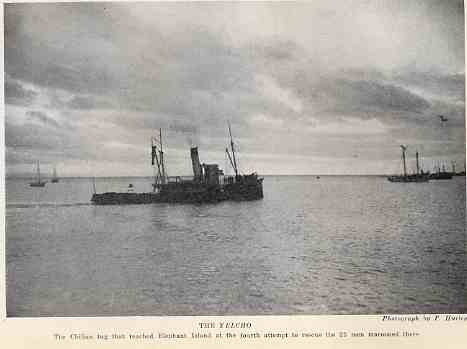
Out of the complement of ten men all told who were manning the ship, there were eight different nationalities; but they were all good fellows and understood perfectly what was wanted. The Chilian Government lent us a small steamer, the Yelcho, to tow us part of the way. She could not touch ice, though, as she was built of steel. However, on July 12 we passed her our tow-rope and proceeded on our way. In bad weather we anchored next day, and although the wind increased to a gale I could delay no longer, so we hove up anchor in the early morning of the 14th. The strain on the tow-rope was too great. With the crack of a gun the rope broke. Next day the gale continued, and I will quote from the log of the Emma, which Worsley kept as navigating officer.
The ship had a crew of ten men in all, representing eight different nationalities. But they were all good fellows and understood perfectly what was needed. The Chilean Government lent us a small steamer, the Yelcho, to tow us part of the way. The Yelcho could not touch ice, though, because she was built of steel. Still, on July 12 we passed her our tow-rope and set off. We anchored the next day because of bad weather. Although the wind grew into a gale, I could delay no longer. So we raised the anchor early on the morning of the 14th. The strain on the tow-rope was too great. It broke with a crack like a gunshot. The gale continued the next day. I will quote from the log of the Emma, which Worsley kept as navigating officer.
“9 a.m.—Fresh, increasing gale; very rough, lumpy sea. 10 a.m.—Tow-rope parted. 12 noon. Similar weather. 1 p.m.—Tow-rope parted again. Set foresail and forestay-sail and steered south-east by south. 3 p.m.—Yelcho hailed us and said that the ship’s bilges were full of water (so were our decks) and they were short of coal. Sir Ernest told them that they could return to harbour. After this the Yelcho steamed into San Sebastian Bay.”
“9 a.m.: A strong gale was growing stronger. The sea was very rough and uneven. 10 a.m.: The tow-rope broke. 12 noon: Similar weather. 1 p.m.: The tow-rope broke again. We set the foresail and forestay-sail and steered south-east by south. 3 p.m.: Yelcho called out to us. They said the ship’s bilges were full of water and they were short of coal. (Our decks were also full of water.) Sir Ernest told them they could return to harbour. After this, the Yelcho steamed into San Sebastian Bay.”
After three days of continuous bad weather we were left alone to attempt once more to rescue the twenty-two men on Elephant Island, for whom by this time I entertained very grave fears.
After three days of nonstop bad weather, we were left alone to try once more to rescue the twenty-two men on Elephant Island. By then, I was deeply worried about them.
At dawn of Friday, July 21, we were within a hundred miles of the island, and we encountered the ice in the half-light. I waited for the full day and then tried to push through. The little craft was tossing in the heavy swell, and before she had been in the pack for ten minutes she came down on a cake of ice and broke the bobstay. Then the water-inlet of the motor choked with ice. The schooner was tossing like a cork in the swell, and I saw after a few bumps that she was actually lighter than the fragments of ice around her. Progress under such conditions was out of the question. I worked the schooner out of the pack and stood to the east. I ran her through a line of pack towards the south that night, but was forced to turn to the north-east, for the ice trended in that direction as far as I could see. We hove to for the night, which was now sixteen hours long. The winter was well advanced and the weather conditions were thoroughly bad. The ice to the southward was moving north rapidly. The motor-engine had broken down and we were entirely dependent on the sails. We managed to make a little southing during the next day, but noon found us 108 miles from the island. That night we lay off the ice in a gale, hove to, and morning found the schooner iced up. The ropes, cased in frozen spray, were as thick as a man’s arm, and if the wind had increased much we would have had to cut away the sails, since there was no possibility of lowering them. Some members of the scratch crew were played out by the cold and the violent tossing. The schooner was about seventy feet long, and she responded to the motions of the storm-racked sea in a manner that might have disconcerted the most seasoned sailors.
At dawn on Friday, July 21, we were within a hundred miles of the island when we encountered ice in the dim light. I waited for full daylight, then tried to push through. The little schooner was tossing in the heavy swell. Less than ten minutes after entering the pack ice, she came down on a slab of ice and broke the bobstay. Then the motor’s water inlet became clogged with ice. The schooner tossed like a cork in the swell. After a few bumps, I saw that she was actually lighter than the pieces of ice around her. We could not make progress in such conditions. I steered her out of the pack ice and headed east. That night I took her south through a line of pack ice, but I was forced to turn northeast. The ice extended in that direction as far as I could see. We stopped and held our position for the night, which was now sixteen hours long. Winter was well advanced, and the weather was thoroughly bad. The ice to the south was moving rapidly north. The motor had broken down, so we were entirely dependent on the sails. We managed to make a little progress south the next day, but at noon we were 108 miles from the island. That night we stayed off the ice and held our position in a gale. By morning the schooner was covered in ice. Frozen spray had coated the ropes until they were as thick as a man’s arm. If the wind had increased much, we would have had to cut away the sails, since there was no way to lower them. Some members of the hastily assembled crew were exhausted by the cold and the violent tossing. The schooner was about seventy feet long. Her response to the storm-tossed sea might have unsettled even the most seasoned sailors.
I took the schooner south at every chance, but always the line of ice blocked the way. The engineer, who happened to be an American, did things to the engines occasionally, but he could not keep them running, and, the persistent south winds were dead ahead. It was hard to turn back a third time, but I realized we could not reach the island under those conditions, and we must turn north in order to clear the ship of heavy masses of ice. So we set a northerly course, and after a tempestuous passage reached Port Stanley once more. This was the third reverse, but I did not abandon my belief that the ice would not remain fast around Elephant Island during the winter, whatever the arm-chair experts at home might say. We reached Port Stanley in the schooner on August 8, and I learned there that the ship Discovery was to leave England at once and would be at the Falkland Islands about the middle of September. My good friend the Governor said I could settle down at Port Stanley and take things quietly for a few weeks. The street of that port is about a mile and a half long. It has the slaughter-house at one end and the graveyard at the other. The chief distraction is to walk from the slaughter-house to the graveyard. For a change one may walk from the graveyard to the slaughter-house. Ellaline Terriss was born at Port Stanley—a fact not forgotten by the residents, but she has not lived there much since. I could not content myself to wait for six or seven weeks, knowing that six hundred miles away my comrades were in dire need. I asked the Chilian Government to send the Yelcho, the steamer that had towed us before, to take the schooner across to Punta Arenas, and they consented promptly, as they had done to every other request of mine. So in a north-west gale we went across, narrowly escaping disaster on the way, and reached Punta Arenas on August 14.
I took the schooner south whenever I could, but the line of ice always blocked our way. The engineer, who happened to be an American, worked on the engines from time to time. But he could not keep them running, and the persistent south winds were blowing straight against us. It was hard to turn back a third time. But I realized we could not reach the island under those conditions. We had to turn north to free the ship from heavy masses of ice. So we headed north and, after a stormy passage, reached Port Stanley once more. This was our third setback, but I still believed the ice would not remain fixed around Elephant Island throughout the winter. I believed this whatever the armchair experts at home might say. We reached Port Stanley in the schooner on August 8. There I learned that the ship Discovery was to leave England at once. It would reach the Falkland Islands around the middle of September. My good friend the Governor said I could settle down in Port Stanley and take things easy for a few weeks. The port's street is about a mile and a half long. It has the slaughterhouse at one end and the graveyard at the other. The main entertainment is walking from the slaughterhouse to the graveyard. For a change, one can walk from the graveyard to the slaughterhouse. Ellaline Terriss was born in Port Stanley, a fact the residents have not forgotten. But she has not lived there much since. I could not be content to wait six or seven weeks, knowing my comrades were in desperate need 600 miles away. I asked the Chilian Government to send the Yelcho, the steamer that had towed us before. I wanted it to take the schooner across to Punta Arenas. They promptly agreed, as they had to every other request I had made. So we crossed in a northwest gale, narrowly escaped disaster on the way, and reached Punta Arenas on August 14.
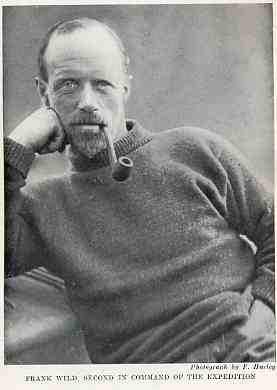
There was no suitable ship to be obtained. The weather was showing some signs of improvement, and I begged the Chilian Government to let me have the Yelcho for a last attempt to reach the island. She was a small steel-built steamer, quite unsuitable for work in the pack, but I promised that I would not touch the ice. The Government was willing to give me another chance, and on August 25 I started south on the fourth attempt at relief. This time Providence favoured us. The little steamer made a quick run down in comparatively fine weather, and I found as we neared Elephant Island that the ice was open. A southerly gale had sent it northward temporarily, and the Yelcho had her chance to slip through. We approached the island in a thick fog. I did not dare to wait for this to clear, and at 10 a.m. on August 30 we passed some stranded bergs. Then we saw the sea breaking on a reef, and I knew that we were just outside the island. It was an anxious moment, for we had still to locate the camp and the pack could not be trusted to allow time for a prolonged search in thick weather; but presently the fog lifted and revealed the cliffs and glaciers of Elephant Island. I proceeded to the east, and at 11.40 a.m. Worsley’s keen eyes detected the camp, almost invisible under its covering of snow. The men ashore saw us at the same time, and we saw tiny black figures hurry to the beach and wave signals to us. We were about a mile and a half away from the camp. I turned the Yelcho in, and within half an hour reached the beach with Crean and some of the Chilian sailors. I saw a little figure on a surf-beaten rock and recognized Wild. As I came nearer I called out, “Are you all well?” and he answered, “We are all well, boss,” and then I heard three cheers. As I drew close to the rock I flung packets of cigarettes ashore; they fell on them like hungry tigers, for well I knew that for months tobacco was dreamed of and talked of. Some of the hands were in a rather bad way, but Wild had held the party together and kept hope alive in their hearts. There was no time then to exchange news or congratulations. I did not even go up the beach to see the camp, which Wild assured me had been much improved. A heavy sea was running and a change of wind might bring the ice back at any time. I hurried the party aboard with all possible speed, taking also the records of the Expedition and essential portions of equipment. Everybody was aboard the Yelcho within an hour, and we steamed north at the little steamer’s best speed. The ice was open still, and nothing worse than an expanse of stormy ocean separated us from the South American coast.
There was no suitable ship available. The weather was showing signs of improving, so I begged the Chilean Government to lend me the Yelcho. I wanted to make one last attempt to reach the island. She was a small steel steamer, quite unsuitable for sailing through pack ice, but I promised not to touch the ice. The Government was willing to give me another chance. On August 25, I headed south on our fourth attempt to rescue the men. This time Providence favoured us. The little steamer made a quick journey south in comparatively fine weather. As we neared Elephant Island, I found that the ice had opened up. A southerly gale had temporarily driven the ice northward, giving the Yelcho a chance to slip through. We approached the island in thick fog. I did not dare wait for the fog to clear, and at 10 a.m. on August 30 we passed some stranded icebergs. Then we saw the sea breaking on a reef, and I knew we were just outside the island. It was an anxious moment. We still had to find the camp, and the pack ice might not give us time for a long search in thick fog. But soon the fog lifted, revealing the cliffs and glaciers of Elephant Island. I continued east, and at 11.40 a.m. Worsley’s keen eyes spotted the camp. It was almost invisible beneath its covering of snow. The men ashore saw us at the same time. We saw tiny black figures hurry to the beach and wave signals to us. We were about a mile and a half from the camp. I turned the Yelcho toward shore, and within half an hour I reached the beach with Crean and some Chilean sailors. I saw a small figure on a rock battered by the surf and recognized Wild. As I came nearer, I called out, “Are you all well?” He answered, “We are all well, boss,” and then I heard three cheers. As I drew close to the rock, I threw packets of cigarettes ashore. The men fell on them like hungry tigers. I knew well that they had dreamed and talked of tobacco for months. Some of the men were in rather bad shape, but Wild had held the party together and kept their hopes alive. There was no time to exchange news or congratulations. I did not even go up the beach to see the camp, which Wild assured me had been much improved. The sea was rough, and a change of wind could bring the ice back at any time. I hurried the party aboard as quickly as possible. We also took the Expedition’s records and essential equipment. Everyone was aboard the Yelcho within an hour, and we steamed north at the little steamer’s best speed. The ice was still open, and nothing worse than an expanse of stormy ocean lay between us and the South American coast.
During the run up to Punta Arenas I heard Wild’s story, and blessed again the cheerfulness and resource that had served the party so well during four and a half months of privation. The twenty-two men on Elephant Island were just at the end of their resources when the Yelcho reached them. Wild had husbanded the scanty stock of food as far as possible and had fought off the devils of despondency and despair on that little sand-spit, where the party had a precarious foothold between the grim ice-fields and the treacherous, ice-strewn sea. The pack had opened occasionally, but much of the time the way to the north had been barred. The Yelcho had arrived at the right moment. Two days earlier she could not have reached the island, and a few hours later the pack may have been impenetrable again. Wild had reckoned that help would come in August, and every morning he had packed his kit, in cheerful anticipation that proved infectious, as I have no doubt it was meant to be. One of the party to whom I had said “Well, you all were packed up ready,” replied, “You see, boss, Wild never gave up hope, and whenever the sea was at all clear of ice he rolled up his sleeping-bag and said to all hands, ‘Roll up your sleeping-bags, boys; the boss may come to-day.’” And so it came to pass that we suddenly came out of the fog, and, from a black outlook, in an hour all were in safety homeward bound. The food was eked out with seal and penguin meat, limpets, and seaweed. Seals had been scarce, but the supply of penguins had held out fairly well during the first three months. The men were down to the last Bovril ration, the only form of hot drink they had, and had scarcely four days’ food in hand at the time of the rescue. The camp was in constant danger of being buried by the snow, which drifted heavily from the heights behind, and the men moved the accumulations with what implements they could provide. There was danger that the camp would become completely invisible from the sea, so that a rescue party might look for it in vain.
On the voyage to Punta Arenas, I heard Wild’s story. Once again, I was grateful for the cheerfulness and resourcefulness that had served the party so well during four and a half months of hardship. The twenty-two men on Elephant Island were almost out of supplies when the Yelcho reached them. Wild had stretched their meager food supply as far as possible and fought off despair and hopelessness. The party had a precarious foothold on a small sand-spit between the grim ice-fields and the treacherous, ice-strewn sea. The pack ice had occasionally opened, but much of the time it had blocked the way north. The Yelcho arrived at just the right moment. Two days earlier, she could not have reached the island. A few hours later, the pack may have been impassable again. Wild had expected help to come in August. Every morning, he packed his kit, confidently expecting rescue. His cheerfulness spread to the others, as I have no doubt he intended. I said to one of the party, “Well, you were all packed up and ready.” He replied, “You see, boss, Wild never gave up hope. Whenever the sea was at all clear of ice, he rolled up his sleeping-bag and said to all hands, ‘Roll up your sleeping-bags, boys; the boss may come today.’” And so we suddenly came out of the fog. What had seemed a hopeless situation ended within an hour, with everyone safe and on their way home. The men had supplemented their food with seal and penguin meat, limpets, and seaweed. Seals had been scarce, but penguins had remained fairly plentiful during the first three months. The men were down to their last ration of Bovril, their only hot drink. At the time of the rescue, they had barely four days’ food left. The camp was in constant danger of being buried by snow drifting heavily from the heights behind it. The men cleared the snow with whatever tools they could make. There was a danger that the camp would disappear completely from view at sea, so that a rescue party might look for it in vain.
“It had been arranged that a gun should be fired from the relief ship when she got near the island,” said Wild. “Many times when the glaciers were ‘calving,’ and chunks fell off with a report like a gun, we thought that it was the real thing, and after a time we got to distrust these signals. As a matter of fact, we saw the Yelcho before we heard any gun. It was an occasion one will not easily forget. We were just assembling for lunch to the call of ‘Lunch O!’ and I was serving out the soup, which was particularly good that day, consisting of boiled seal’s backbone, limpets, and seaweed, when there was another hail from Marston of ‘Ship O!’ Some of the men thought it was ‘Lunch O!’ over again, but when there was another yell from Marston lunch had no further attractions. The ship was about a mile and a half away and steaming past us. A smoke-signal was the agreed sign from the shore, and, catching up somebody’s coat that was lying about, I struck a pick into a tin of kerosene kept for the purpose, poured it over the coat, and set it alight. It flared instead of smoking; but that didn’t matter, for you had already recognized the spot where you had left us and the Yelcho was turning in.”
“We had arranged for a gun to be fired from the relief ship when she got near the island,” said Wild. “Many times, chunks fell from the glaciers as they ‘calved,’ making a sound like a gunshot. We thought the sounds came from the ship. After a while, we stopped trusting them. In fact, we saw the Yelcho before we heard any gun. It was a moment I won’t easily forget. “We were gathering for lunch at the call of ‘Lunch O!’ I was serving the soup, which was particularly good that day. It was made from boiled seal’s backbone, limpets, and seaweed. Then Marston called out, ‘Ship O!’ Some of the men thought he had called ‘Lunch O!’ again. But when Marston yelled again, lunch no longer interested anyone. The ship was about a mile and a half away, steaming past us. “We had agreed to send a smoke signal from shore. I grabbed someone’s coat that was lying nearby. Then I struck a pick into a tin of kerosene kept for that purpose. I poured the kerosene over the coat and set it alight. The coat flared instead of smoking, but that didn’t matter. You had already recognized the spot where you had left us, and the Yelcho was turning in.”
We encountered bad weather on the way back to Punta Arenas, and the little Yelcho laboured heavily; but she had light hearts aboard. We entered the Straits of Magellan on September 3 and reached Rio Secco at 8 a.m. I went ashore, found a telephone, and told the Governor and my friends at Punta Arenas that the men were safe. Two hours later we were at Punta Arenas, where we were given a welcome none of us is likely to forget. The Chilian people were no less enthusiastic than the British residents. The police had been instructed to spread the news that the Yelcho was coming with the rescued men, and lest the message should fail to reach some people, the fire-alarm had been rung. The whole populace appeared to be in the streets. It was a great reception, and with the strain of long, anxious months lifted at last, we were in a mood to enjoy it.
We encountered bad weather on the way back to Punta Arenas, and the little Yelcho struggled in the rough seas. But everyone aboard was in high spirits. We entered the Straits of Magellan on September 3 and reached Rio Secco at 8 a.m. I went ashore and found a telephone. I told the Governor and my friends at Punta Arenas that the men were safe. Two hours later, we reached Punta Arenas, where we received a welcome none of us is likely to forget. The Chilean people were just as enthusiastic as the British residents. The police had been told to spread the news that the Yelcho was bringing the rescued men. The fire alarm had also been sounded, in case the news failed to reach some people. The whole population seemed to be in the streets. It was a great reception. With the strain of long, anxious months lifted at last, we were in a mood to enjoy it.
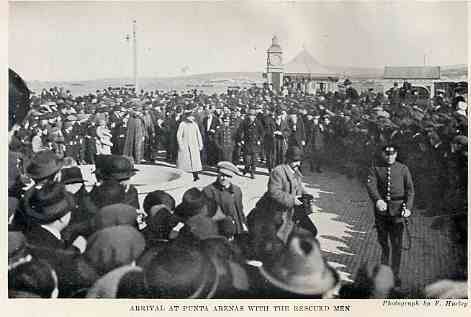
The next few weeks were crowded ones, but I will not attempt here to record their history in detail. I received congratulations and messages of friendship and good cheer from all over the world, and my heart went out to the good people who had remembered my men and myself in the press of terrible events on the battlefields. The Chilian Government placed the Yelcho at my disposal to take the men up to Valparaiso and Santiago. We reached Valparaiso on September 27. Everything that could swim in the way of a boat was out to meet us, the crews of Chilian warships were lined up, and at least thirty thousand thronged the streets. I lectured in Santiago on the following evening for the British Red Cross and a Chilian naval charity. The Chilian flag and the Union Jack were draped together, the band played the Chilian national anthem, “God Save the King,” and the “Marseillaise,” and the Chilian Minister for Foreign Affairs spoke from the platform and pinned an Order on my coat. I saw the President and thanked him for the help that he had given a British expedition. His Government had spent £4000 on coal alone. In reply he recalled the part that British sailors had taken in the making of the Chilian Navy.
The next few weeks were busy, but I will not try to describe them in detail here. Congratulations and messages of friendship and good cheer came from all over the world. My heart went out to the good people who had remembered my men and me amid the terrible events on the battlefields. The Chilian Government made the Yelcho available to take the men to Valparaiso and Santiago. We reached Valparaiso on September 27. Every boat that could float was out to meet us. The crews of Chilian warships lined up, and at least thirty thousand people crowded the streets. The following evening, I gave a lecture in Santiago for the British Red Cross and a Chilian naval charity. The Chilian flag and the Union Jack were draped together. The band played the Chilian national anthem, “God Save the King,” and the “Marseillaise.” The Chilian Minister for Foreign Affairs spoke from the platform and pinned an Order on my coat. I met the President and thanked him for the help he had given a British expedition. His Government had spent £4000 on coal alone. In reply, he recalled the part British sailors had played in building the Chilian Navy.
The Chilian Railway Department provided a special train to take us across the Andes, and I proceeded to Montevideo in order to thank personally the President and Government of Uruguay for the help they had given generously in the earlier relief voyages. We were entertained royally at various spots en route. We went also to Buenos Ayres on a brief call. Then we crossed the Andes again. I had made arrangements by this time for the men and the staff to go to England. All hands were keen to take their places in the Empire’s fighting forces. My own immediate task was the relief of the marooned Ross Sea party, for news had come to me of the Aurora’s long drift in the Ross Sea and of her return in a damaged condition to New Zealand. Worsley was to come with me. We hurried northwards via Panama, steamship and train companies giving us everywhere the most cordial and generous assistance, and caught at San Francisco a steamer that would get us to New Zealand at the end of November. I had been informed that the New Zealand Government was making arrangements for the relief of the Ross Sea party, but my information was incomplete, and I was very anxious to be on the spot myself as quickly as possible.
The Chilian Railway Department provided a special train to take us across the Andes. I went on to Montevideo to thank the President and Government of Uruguay in person for their generous help with the earlier relief voyages. We were treated royally at various places en route. We also made a brief visit to Buenos Ayres. Then we crossed the Andes again. By then, I had arranged for the men and the staff to go to England. All were eager to take their places in the Empire’s fighting forces. My own immediate task was to rescue the stranded Ross Sea party. I had heard that the Aurora had drifted for a long time in the Ross Sea and returned to New Zealand damaged. Worsley was to come with me. We hurried north via Panama, with steamship and train companies everywhere giving us the warmest and most generous help. In San Francisco, we caught a steamer that would get us to New Zealand at the end of November. I had been told that the New Zealand Government was arranging to rescue the Ross Sea party. But my information was incomplete, and I was very anxious to get there myself as quickly as possible.