Chapter 9
The Boat Journey
The increasing sea made it necessary for us to drag the boats farther up the beach. This was a task for all hands, and after much labour we got the boats into safe positions among the rocks and made fast the painters to big boulders. Then I discussed with Wild and Worsley the chances of reaching South Georgia before the winter locked the seas against us. Some effort had to be made to secure relief. Privation and exposure had left their mark on the party, and the health and mental condition of several men were causing me serious anxiety. Blackborrow’s feet, which had been frost-bitten during the boat journey, were in a bad way, and the two doctors feared that an operation would be necessary. They told me that the toes would have to be amputated unless animation could be restored within a short period. Then the food-supply was a vital consideration. We had left ten cases of provisions in the crevice of the rocks at our first camping-place on the island. An examination of our stores showed that we had full rations for the whole party for a period of five weeks. The rations could be spread over three months on a reduced allowance and probably would be supplemented by seals and sea-elephants to some extent. I did not dare to count with full confidence on supplies of meat and blubber, for the animals seemed to have deserted the beach and the winter was near. Our stocks included three seals and two and a half skins (with blubber attached). We were mainly dependent on the blubber for fuel, and, after making a preliminary survey of the situation, I decided that the party must be limited to one hot meal a day.
The rising seas forced us to drag the boats farther up the beach. Every man helped, and after much hard work we got the boats safely among the rocks. We tied their ropes to large boulders. Then I discussed with Wild and Worsley our chances of reaching South Georgia before winter made the seas impassable. We had to make some effort to get help. Hardship and exposure had taken their toll on the party. I was seriously worried about the health and mental condition of several men. Blackborrow’s feet, frostbitten during the boat journey, were in bad shape. Both doctors feared an operation would be necessary. They told me his toes would have to be amputated unless circulation returned soon. Our food supply was also a vital concern. We had left ten cases of provisions in a crack between the rocks at our first campsite on the island. An inspection showed that we had enough food for the whole party to eat full rations for five weeks. On reduced rations, the food could last three months. We could probably add some seal and sea elephant meat. I did not dare count on a steady supply of meat and blubber. The animals seemed to have deserted the beach, and winter was near. Our supplies included three seals and two and a half skins, with blubber attached. We relied mainly on blubber for fuel. After a preliminary assessment of the situation, I decided to limit the party to one hot meal a day.
A boat journey in search of relief was necessary and must not be delayed. That conclusion was forced upon me. The nearest port where assistance could certainly be secured was Port Stanley, in the Falkland Islands, 540 miles away, but we could scarcely hope to beat up against the prevailing north-westerly wind in a frail and weakened boat with a small sail area. South Georgia was over 800 miles away, but lay in the area of the west winds, and I could count upon finding whalers at any of the whaling-stations on the east coast. A boat party might make the voyage and be back with relief within a month, provided that the sea was clear of ice and the boat survive the great seas. It was not difficult to decide that South Georgia must be the objective, and I proceeded to plan ways and means. The hazards of a boat journey across 800 miles of stormy sub-Antarctic ocean were obvious, but I calculated that at worst the venture would add nothing to the risks of the men left on the island. There would be fewer mouths to feed during the winter and the boat would not require to take more than one month’s provisions for six men, for if we did not make South Georgia in that time we were sure to go under. A consideration that had weight with me was that there was no chance at all of any search being made for us on Elephant Island.
I was forced to conclude that a boat journey to find help was necessary and must not be delayed. The nearest port where help could certainly be found was Port Stanley in the Falkland Islands, 540 miles away. But we could hardly hope to sail against the prevailing northwesterly wind in a frail, weakened boat with little sail. South Georgia was over 800 miles away, but the west winds would carry us toward it. I could also count on finding whalers at any of the whaling stations on its east coast. A boat party might make the journey and return with help within a month. That depended on the sea being free of ice and the boat surviving the great seas. It was not difficult to decide that South Georgia must be our destination, and I began planning how to reach it. The dangers of crossing 800 miles of stormy sub-Antarctic ocean in a boat were obvious. But I calculated that, at worst, the journey would add nothing to the risks faced by the men left on the island. There would be fewer mouths to feed during the winter. The boat would need only one month’s provisions for six men. If we did not reach South Georgia in that time, we were sure to go under. Another consideration weighed on me: there was no chance at all that anyone would search for us on Elephant Island.
The case required to be argued in some detail, since all hands knew that the perils of the proposed journey were extreme. The risk was justified solely by our urgent need of assistance. The ocean south of Cape Horn in the middle of May is known to be the most tempestuous storm-swept area of water in the world. The weather then is unsettled, the skies are dull and overcast, and the gales are almost unceasing. We had to face these conditions in a small and weather-beaten boat, already strained by the work of the months that had passed. Worsley and Wild realized that the attempt must be made, and they both asked to be allowed to accompany me on the voyage. I told Wild at once that he would have to stay behind. I relied upon him to hold the party together while I was away and to make the best of his way to Deception Island with the men in the spring in the event of our failure to bring help. Worsley I would take with me, for I had a very high opinion of his accuracy and quickness as a navigator, and especially in the snapping and working out of positions in difficult circumstances—an opinion that was only enhanced during the actual journey. Four other men would be required, and I decided to call for volunteers, although, as a matter of fact, I pretty well knew which of the people I would select. Crean I proposed to leave on the island as a right-hand man for Wild, but he begged so hard to be allowed to come in the boat that, after consultation with Wild, I promised to take him. I called the men together, explained my plan, and asked for volunteers. Many came forward at once. Some were not fit enough for the work that would have to be done, and others would not have been much use in the boat since they were not seasoned sailors, though the experiences of recent months entitled them to some consideration as seafaring men. McIlroy and Macklin were both anxious to go but realized that their duty lay on the island with the sick men. They suggested that I should take Blackborrow in order that he might have shelter and warmth as quickly as possible, but I had to veto this idea. It would be hard enough for fit men to live in the boat. Indeed, I did not see how a sick man, lying helpless in the bottom of the boat, could possibly survive in the heavy weather we were sure to encounter. I finally selected McNeish, McCarthy, and Vincent in addition to Worsley and Crean. The crew seemed a strong one, and as I looked at the men I felt confidence increasing.
The plan needed detailed discussion, since everyone knew the proposed journey was extremely dangerous. Only our urgent need for help justified the risk. The ocean south of Cape Horn in mid-May is known as the most storm-swept stretch of water in the world. The weather is unsettled, the skies are dull and overcast, and the gales are almost constant. We had to face these conditions in a small, weather-beaten boat, already strained by months of use. Worsley and Wild realized that the attempt had to be made, and both asked to come with me. I told Wild at once that he would have to stay behind. I relied on him to hold the party together while I was away. If we failed to bring help, he was to do his best to take the men to Deception Island in the spring. I would take Worsley with me. I had a very high opinion of his accuracy and speed as a navigator, especially when taking and calculating positions under difficult conditions. The journey itself only strengthened that opinion. I needed four other men and decided to ask for volunteers, although I already had a fairly good idea whom I would choose. I had planned to leave Crean on the island as Wild’s right-hand man. But he begged so hard to come in the boat that I consulted Wild and then promised to take him. I called the men together, explained my plan, and asked for volunteers. Many came forward at once. Some were not fit enough for the work ahead. Others would not have been much use in the boat because they were not experienced sailors. Even so, their experiences in recent months entitled them to some consideration as seafaring men. McIlroy and Macklin were both eager to go, but they realized that their duty was to stay on the island with the sick men. They suggested that I take Blackborrow so he could find shelter and warmth as quickly as possible. But I had to reject the idea. It would be hard enough for fit men to live in the boat. Indeed, I could not see how a sick man, lying helpless in the bottom of the boat, could survive the heavy weather we were sure to meet. In addition to Worsley and Crean, I finally chose McNeish, McCarthy, and Vincent. The crew seemed strong, and my confidence grew as I looked at the men.
The decision made, I walked through the blizzard with Worsley and Wild to examine the James Caird. The 20-ft. boat had never looked big; she appeared to have shrunk in some mysterious way when I viewed her in the light of our new undertaking. She was an ordinary ship’s whaler, fairly strong, but showing signs of the strains she had endured since the crushing of the Endurance. Where she was holed in leaving the pack was, fortunately, about the water-line and easily patched. Standing beside her, we glanced at the fringe of the storm-swept, tumultuous sea that formed our path. Clearly, our voyage would be a big adventure. I called the carpenter and asked him if he could do anything to make the boat more seaworthy. He first inquired if he was to go with me, and seemed quite pleased when I said “Yes.” He was over fifty years of age and not altogether fit, but he had a good knowledge of sailing-boats and was very quick. McCarthy said that he could contrive some sort of covering for the James Caird if he might use the lids of the cases and the four sledge-runners that we had lashed inside the boat for use in the event of a landing on Graham Land at Wilhelmina Bay. This bay, at one time the goal of our desire, had been left behind in the course of our drift, but we had retained the runners. The carpenter proposed to complete the covering with some of our canvas; and he set about making his plans at once.
Once the decision was made, I walked through the blizzard with Worsley and Wild to examine the James Caird. The 20-foot boat had never looked big. But she seemed to have shrunk somehow when I thought about our new undertaking. She was an ordinary ship’s whaler, fairly strong, but showing signs of the strain she had endured since the Endurance was crushed. Fortunately, the hole she had sustained while leaving the pack was near the waterline and easy to patch. Standing beside her, we looked at the edge of the storm-swept, turbulent sea that lay in our path. Clearly, our voyage would be a big adventure. I called the carpenter and asked if he could make the boat more seaworthy. He first asked if he was to go with me, and seemed quite pleased when I said “Yes.” He was over fifty and not altogether fit, but he knew sailing boats well and was very quick. McCarthy said he could make some sort of cover for the James Caird if he could use the case lids and the four sledge-runners lashed inside the boat. We had kept the runners there in case we landed at Wilhelmina Bay on Graham Land. We had once hoped to reach the bay, but had drifted past it. We had still kept the runners. The carpenter proposed to finish the cover with some of our canvas, and he began making plans at once.
Noon had passed and the gale was more severe than ever. We could not proceed with our preparations that day. The tents were suffering in the wind and the sea was rising. We made our way to the snow-slope at the shoreward end of the spit, with the intention of digging a hole in the snow large enough to provide shelter for the party. I had an idea that Wild and his men might camp there during my absence, since it seemed impossible that the tents could hold together for many more days against the attacks of the wind; but an examination of the spot indicated that any hole we could dig probably would be filled quickly by the drift. At dark, about 5 p.m., we all turned in, after a supper consisting of a pannikin of hot milk, one of our precious biscuits, and a cold penguin leg each.
Noon had passed, and the gale was worse than ever. We could not continue our preparations that day. The tents were being battered by the wind, and the sea was rising. We went to the snow slope at the shoreward end of the spit. We intended to dig a hole in the snow large enough to shelter the party. I thought Wild and his men might camp there while I was away. It seemed impossible that the tents could withstand the wind for many more days. But when we examined the spot, we saw that any hole we dug would probably fill quickly with drifting snow. At dark, around 5 p.m., we all went to bed. We had eaten a supper of a small metal cup of hot milk, one of our precious biscuits, and a cold penguin leg each.
The gale was stronger than ever on the following morning (April 20). No work could be done. Blizzard and snow, snow and blizzard, sudden lulls and fierce returns. During the lulls we could see on the far horizon to the north-east bergs of all shapes and sizes driving along before the gale, and the sinister appearance of the swift-moving masses made us thankful indeed that, instead of battling with the storm amid the ice, we were required only to face the drift from the glaciers and the inland heights. The gusts might throw us off our feet, but at least we fell on solid ground and not on the rocking floes. Two seals came up on the beach that day, one of them within ten yards of my tent. So urgent was our need of food and blubber that I called all hands and organized a line of beaters instead of simply walking up to the seal and hitting it on the nose. We were prepared to fall upon this seal en masse if it attempted to escape. The kill was made with a pick-handle, and in a few minutes five days’ food and six days’ fuel were stowed in a place of safety among the boulders above high-water mark. During this day the cook, who had worked well on the floe and throughout the boat journey, suddenly collapsed. I happened to be at the galley at the moment and saw him fall. I pulled him down the slope to his tent and pushed him into its shelter with orders to his tent-mates to keep him in his sleeping-bag until I allowed him to come out or the doctors said he was fit enough. Then I took out to replace the cook one of the men who had expressed a desire to lie down and die. The task of keeping the galley fire alight was both difficult and strenuous, and it took his thoughts away from the chances of immediate dissolution. In fact, I found him a little later gravely concerned over the drying of a naturally not over-clean pair of socks which were hung up in close proximity to our evening milk. Occupation had brought his thoughts back to the ordinary cares of life.
The gale was stronger than ever the next morning (April 20). No work could be done. Blizzard and snow, snow and blizzard, sudden lulls and fierce returns. During the lulls, we could see icebergs of all shapes and sizes on the far northeastern horizon, driven along by the gale. The fast-moving masses looked sinister. We were truly thankful that we only had to face the snow blowing down from the glaciers and inland heights, rather than battle the storm among the ice. The gusts might knock us off our feet, but at least we fell on solid ground, not rocking ice floes. Two seals came ashore that day, one within ten yards of my tent. We needed food and blubber so urgently that I called everyone and organized a line of beaters. Otherwise, I would have simply walked up to the seal and hit it on the nose. We were prepared to fall on the seal en masse if it tried to escape. We killed it with a pick-handle. Within minutes, five days’ food and six days’ fuel were stored safely among the boulders above the high-water mark. During the day, the cook suddenly collapsed. He had worked well on the floe and throughout the boat journey. I happened to be at the galley and saw him fall. I pulled him down the slope to his tent and pushed him inside. I ordered his tent-mates to keep him in his sleeping bag until I let him come out or the doctors said he was fit enough. To replace the cook, I brought in one of the men who had expressed a wish to lie down and die. Keeping the galley fire alight was difficult and exhausting, and it took his mind off the possibility of dying at any moment. In fact, a little later I found him seriously concerned about a pair of socks drying near our evening milk. The socks were, as usual, not particularly clean. Having work to do had brought his thoughts back to the ordinary cares of life.
There was a lull in the bad weather on April 21, and the carpenter started to collect material for the decking of the James Caird. He fitted the mast of the Stancomb Wills fore and aft inside the James Caird as a hog-back and thus strengthened the keel with the object of preventing our boat “hogging”—that is, buckling in heavy seas. He had not sufficient wood to provide a deck, but by using the sledge-runners and box-lids he made a framework extending from the forecastle aft to a well. It was a patched-up affair, but it provided a base for a canvas covering. We had a bolt of canvas frozen stiff, and this material had to be cut and then thawed out over the blubber-stove, foot by foot, in order that it might be sewn into the form of a cover. When it had been nailed and screwed into position it certainly gave an appearance of safety to the boat, though I had an uneasy feeling that it bore a strong likeness to stage scenery, which may look like a granite wall and is in fact nothing better than canvas and lath. As events proved, the covering served its purpose well. We certainly could not have lived through the voyage without it.
The bad weather eased on April 21, and the carpenter began collecting material to deck the James Caird. He fitted the mast of the Stancomb Wills lengthwise inside the James Caird as a hog-back. This strengthened the keel to prevent the boat from “hogging”, or buckling in heavy seas. He did not have enough wood for a deck. But he used sledge-runners and box lids to make a framework running from the forecastle back to a well. It was a patched-up job, but it provided a base for a canvas covering. We had a bolt of canvas frozen stiff. We had to cut the canvas and thaw it foot by foot over the blubber-stove so it could be sewn into a cover. Once nailed and screwed in place, the cover certainly made the boat look safe. But I had an uneasy feeling that it looked too much like stage scenery. Stage scenery may look like a granite wall, but it is really nothing better than canvas and lath. As events proved, the covering served its purpose well. We certainly could not have survived the voyage without it.
Another fierce gale was blowing on April 22, interfering with our preparations for the voyage. The cooker from No. 5 tent came adrift in a gust, and, although it was chased to the water’s edge, it disappeared for good. Blackborrow’s feet were giving him much pain, and McIlroy and Macklin thought it would be necessary for them to operate soon. They were under the impression then that they had no chloroform, but they found some subsequently in the medicine-chest after we had left. Some cases of stores left on a rock off the spit on the day of our arrival were retrieved during this day. We were setting aside stores for the boat journey and choosing the essential equipment from the scanty stock at our disposal. Two ten-gallon casks had to be filled with water melted down from ice collected at the foot of the glacier. This was a rather slow business. The blubber-stove was kept going all night, and the watchmen emptied the water into the casks from the pot in which the ice was melted. A working party started to dig a hole in the snow-slope about forty feet above sea-level with the object of providing a site for a camp. They made fairly good progress at first, but the snow drifted down unceasingly from the inland ice, and in the end the party had to give up the project.
Another fierce gale blew on April 22, interfering with our preparations for the voyage. A gust blew away the cooker from No. 5 tent. The men chased it to the water’s edge, but it disappeared for good. Blackborrow’s feet were causing him great pain, and McIlroy and Macklin thought they would soon need to operate. They believed they had no chloroform, but after we left, they found some in the medicine chest. That day, we recovered some cases of supplies left on a rock off the spit when we arrived. We set aside supplies for the boat journey and chose essential equipment from the little we had. Two ten-gallon casks had to be filled with water melted from ice collected at the foot of the glacier. This was a rather slow process. The blubber stove was kept burning all night, and the watchmen emptied the melted ice from the pot into the casks. A work party began digging a hole in the snow slope about forty feet above sea level to make a campsite. At first, the party made fairly good progress. But snow drifted down constantly from the inland ice, and in the end they had to abandon the project.
The weather was fine on April 23, and we hurried forward our preparations. It was on this day I decided finally that the crew for the James Caird should consist of Worsley, Crean, McNeish, McCarthy, Vincent, and myself. A storm came on about noon, with driving snow and heavy squalls. Occasionally the air would clear for a few minutes, and we could see a line of pack-ice, five miles out, driving across from west to east. This sight increased my anxiety to get away quickly. Winter was advancing, and soon the pack might close completely round the island and stay our departure for days or even for weeks, I did not think that ice would remain around Elephant Island continuously during the winter, since the strong winds and fast currents would keep it in motion. We had noticed ice and bergs, going past at the rate of four or five knots. A certain amount of ice was held up about the end of our spit, but the sea was clear where the boat would have to be launched.
The weather was fine on April 23, and we hurried to prepare. That day I made my final decision about the crew of the James Caird. It would consist of Worsley, Crean, McNeish, McCarthy, Vincent, and myself. Around noon, a storm came on, with driving snow and heavy squalls. Now and then the air cleared for a few minutes. We could see a line of pack ice five miles out, moving from west to east. The sight made me even more anxious to leave quickly. Winter was advancing, and soon the pack ice might close completely around the island. It could delay our departure for days or even weeks. I did not think the ice would remain around Elephant Island throughout the winter, because strong winds and fast currents would keep it moving. We had seen ice and icebergs passing at four or five knots. Some ice had collected near the end of our spit, but the sea was clear where we would launch the boat.
Worsley, Wild, and I climbed to the summit of the seaward rocks and examined the ice from a better vantage-point than the beach offered. The belt of pack outside appeared to be sufficiently broken for our purposes, and I decided that, unless the conditions forbade it, we would make a start in the James Caird on the following morning. Obviously the pack might close at any time. This decision made, I spent the rest of the day looking over the boat, gear, and stores, and discussing plans with Worsley and Wild.
Worsley, Wild, and I climbed to the top of the rocks facing the sea. From there, we could see the ice better than from the beach. The belt of pack ice offshore appeared broken enough for our purposes. I decided that we would set out in the James Caird the next morning, unless conditions made it impossible. The pack ice could, of course, close at any time. Having made the decision, I spent the rest of the day checking the boat, gear, and supplies. I also discussed plans with Worsley and Wild.
Our last night on the solid ground of Elephant Island was cold and uncomfortable. We turned out at dawn and had breakfast. Then we launched the Stancomb Wills and loaded her with stores, gear, and ballast, which would be transferred to the James Caird when the heavier boat had been launched. The ballast consisted of bags made from blankets and filled with sand, making a total weight of about 1000 lbs. In addition we had gathered a number of round boulders and about 250 lbs. of ice, which would supplement our two casks of water.
Our last night on the solid ground of Elephant Island was cold and uncomfortable. We got up at dawn and had breakfast. Then we launched the Stancomb Wills and loaded her with supplies, equipment, and ballast. We would transfer the load to the James Caird once the heavier boat was launched. The ballast consisted of bags made from blankets and filled with sand. These weighed about 1,000 pounds in total. We had also gathered several round boulders and about 250 pounds of ice. The ice would supplement our two casks of water.
The stores taken in the James Caird, which would last six men for one month, were as follows:
The supplies taken aboard the James Caird would last six men for one month. They were as follows:
30 boxes of matches. 6½ gallons paraffin. 1 tin methylated spirit. 10 boxes of flamers. 1 box of blue lights. 2 Primus stoves with spare parts and prickers. 1 Nansen aluminium cooker. 6 sleeping-bags. A few spare socks. A few candles and some blubber-oil in an oil-bag.
30 boxes of matches. 6½ gallons of paraffin. 1 tin of methylated spirit. 10 boxes of flamers. 1 box of blue lights. 2 Primus stoves with spare parts and cleaning needles. 1 Nansen aluminum cooker. 6 sleeping bags. A few spare socks. A few candles and some blubber oil in an oil bag.
Food: 3 cases sledging rations = 300 rations. 2 cases nut food = 200 ” 2 cases biscuits = 600 biscuits. 1 case lump sugar. 30 packets of Trumilk. 1 tin. of Bovril cubes. 1 tin of Cerebos salt. 36 gallons of water. 250 lbs. of ice.
Food: 3 cases of sledging rations = 300 rations. 2 cases of nut food = 200 rations. 2 cases of biscuits = 600 biscuits. 1 case of sugar cubes. 30 packets of Trumilk. 1 tin of Bovril cubes. 1 tin of Cerebos salt. 36 gallons of water. 250 pounds of ice.
Instruments: Sextant. Sea-anchor. Binoculars. Charts. Prismatic compass. Aneroid.
Instruments: Sextant. Sea anchor. Binoculars. Charts. Prismatic compass. Aneroid barometer.
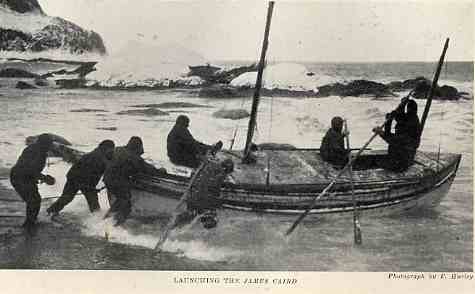
The swell was slight when the Stancomb Wills was launched and the boat got under way without any difficulty; but half an hour later, when we were pulling down the James Caird, the swell increased suddenly. Apparently the movement of the ice outside had made an opening and allowed the sea to run in without being blanketed by the line of pack. The swell made things difficult. Many of us got wet to the waist while dragging the boat out—a serious matter in that climate. When the James Caird was afloat in the surf she nearly capsized among the rocks before we could get her clear, and Vincent and the carpenter, who were on the deck, were thrown into the water. This was really bad luck, for the two men would have small chance of drying their clothes after we had got under way. Hurley, who had the eye of the professional photographer for “incidents,” secured a picture of the upset, and I firmly believe that he would have liked the two unfortunate men to remain in the water until he could get a “snap” at close quarters; but we hauled them out immediately, regardless of his feelings.
The swell was slight when we launched the Stancomb Wills, and the boat got under way without difficulty. But half an hour later, as we were pulling down the James Caird, the swell suddenly grew stronger. Apparently, the ice outside had shifted and opened a gap. This allowed the sea to enter without being blocked by the line of pack ice. The swell made things difficult. Many of us got wet to the waist while dragging the boat out, a serious matter in that climate. When the James Caird was afloat in the surf, she nearly capsized among the rocks before we could get her clear. Vincent and the carpenter, who were on deck, were thrown into the water. This was really bad luck, for the two men would have little chance to dry their clothes once we got under way. Hurley, who had a professional photographer’s eye for “incidents,” got a picture of the accident. I firmly believe he would have liked the two unfortunate men to stay in the water until he could get a close-up “snap”. But we hauled them out immediately, regardless of his feelings.
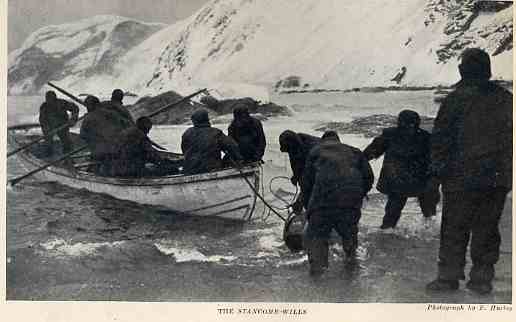
The James Caird was soon clear of the breakers. We used all the available ropes as a long painter to prevent her drifting away to the north-east, and then the Stancomb Wills came alongside, transferred her load, and went back to the shore for more. As she was being beached this time the sea took her stern and half filled her with water. She had to be turned over and emptied before the return journey could be made. Every member of the crew of the Stancomb Wills was wet to the skin. The water-casks were towed behind the Stancomb Wills on this second journey, and the swell, which was increasing rapidly, drove the boat on to the rocks, where one of the casks was slightly stove in. This accident proved later to be a serious one, since some sea-water had entered the cask and the contents were now brackish.
The James Caird was soon clear of the breaking waves. We used all the ropes we had as one long tether to keep her from drifting northeast. Then the Stancomb Wills came alongside, transferred her load, and returned to shore for more. As she was being beached this time, the sea caught her stern and half filled her with water. She had to be turned over and emptied before she could make the return journey. Every member of the Stancomb Wills crew was soaked to the skin. On the second journey, the water casks were towed behind the Stancomb Wills. The swell was rising rapidly and drove the boat onto the rocks, where one cask was slightly damaged. This accident later proved serious because some seawater had entered the cask, making its contents brackish.
By midday the James Caird was ready for the voyage. Vincent and the carpenter had secured some dry clothes by exchange with members of the shore party (I heard afterwards that it was a full fortnight before the soaked garments were finally dried), and the boat’s crew was standing by waiting for the order to cast off. A moderate westerly breeze was blowing. I went ashore in the Stancomb Wills and had a last word with Wild, who was remaining in full command, with directions as to his course of action in the event of our failure to bring relief, but I practically left the whole situation and scope of action and decision to his own judgment, secure in the knowledge that he would act wisely. I told him that I trusted the party to him and said good-bye to the men. Then we pushed off for the last time, and within a few minutes I was aboard the James Caird. The crew of the Stancomb Wills shook hands with us as the boats bumped together and offered us the last good wishes. Then, setting our jib, we cut the painter and moved away to the north-east. The men who were staying behind made a pathetic little group on the beach, with the grim heights of the island behind them and the sea seething at their feet, but they waved to us and gave three hearty cheers. There was hope in their hearts and they trusted us to bring the help that they needed.
By midday, the James Caird was ready for the voyage. Vincent and the carpenter had exchanged clothes with members of the shore party to get some dry ones. I heard afterwards that their soaked clothes took a full fortnight to dry. The boat’s crew stood ready, waiting for the order to cast off. A moderate westerly breeze was blowing. I went ashore in the Stancomb Wills and spoke one last time with Wild, who would remain in full command. I gave him directions for what to do if we failed to bring relief. But I left almost everything to his judgment, confident that he would act wisely. I told him I was entrusting the party to him and said goodbye to the men. Then we pushed off for the last time, and within a few minutes I was aboard the James Caird. As the boats bumped together, the crew of the Stancomb Wills shook hands with us and offered their final good wishes. Then we raised our jib, cut the rope holding the boats together, and headed northeast. The men staying behind made a pitiful little group on the beach. The grim heights of the island rose behind them, and the sea churned at their feet. But they waved to us and gave three hearty cheers. They were hopeful and trusted us to bring the help they needed.
I had all sails set, and the James Caird quickly dipped the beach and its line of dark figures. The westerly wind took us rapidly to the line of pack, and as we entered it I stood up with my arm around the mast, directing the steering, so as to avoid the great lumps of ice that were flung about in the heave of the sea. The pack thickened and we were forced to turn almost due east, running before the wind towards a gap I had seen in the morning from the high ground. I could not see the gap now, but we had come out on its bearing and I was prepared to find that it had been influenced by the easterly drift. At four o’clock in the afternoon we found the channel, much narrower than it had seemed in the morning but still navigable. Dropping sail, we rowed through without touching the ice anywhere, and by 5.30 p.m. we were clear of the pack with open water before us. We passed one more piece of ice in the darkness an hour later, but the pack lay behind, and with a fair wind swelling the sails we steered our little craft through the night, our hopes centred on our distant goal. The swell was very heavy now, and when the time came for our first evening meal we found great difficulty in keeping the Primus lamp alight and preventing the hoosh splashing out of the pot. Three men were needed to attend to the cooking, one man holding the lamp and two men guarding the aluminium cooking-pot, which had to be lifted clear of the Primus whenever the movement of the boat threatened to cause a disaster. Then the lamp had to be protected from water, for sprays were coming over the bows and our flimsy decking was by no means water-tight. All these operations were conducted in the confined space under the decking, where the men lay or knelt and adjusted themselves as best they could to the angles of our cases and ballast. It was uncomfortable, but we found consolation in the reflection that without the decking we could not have used the cooker at all.
I had all sails set, and the James Caird quickly left the beach and its line of dark figures below the horizon. The westerly wind carried us swiftly to the edge of the pack ice. As we entered it, I stood with my arm around the mast and directed the steering. We had to avoid the great lumps of ice tossed about by the heaving sea. The pack grew thicker, and we were forced to turn almost due east. We ran before the wind toward a gap I had seen that morning from the high ground. I could no longer see the gap, but we had come out on its bearing. I was prepared to find that the ice had drifted east and affected the gap. At four o’clock in the afternoon, we found the channel. It was much narrower than it had seemed that morning, but we could still navigate it. We lowered the sails and rowed through without touching the ice anywhere. By 5.30 p.m. we were clear of the pack, with open water ahead. An hour later, we passed one more piece of ice in the darkness. But the pack was behind us, and a favorable wind filled the sails. We steered our little craft through the night, our hopes fixed on our distant goal. The swell was very heavy now. When it was time for our first evening meal, we had great difficulty keeping the Primus lamp lit. We also struggled to keep the hoosh from splashing out of the pot. Three men were needed to handle the cooking. One held the lamp, and two guarded the aluminium cooking-pot. They had to lift the pot clear of the Primus whenever the boat’s movement threatened disaster. The lamp also had to be protected from water. Spray was coming over the bows, and our flimsy decking was far from watertight. All this work took place in the confined space under the decking. There the men lay or knelt, adjusting themselves as best they could around our cases and ballast. It was uncomfortable, but we took comfort in knowing that without the decking we could not have used the cooker at all.
The tale of the next sixteen days is one of supreme strife amid heaving waters. The sub-Antarctic Ocean lived up to its evil winter reputation. I decided to run north for at least two days while the wind held and so get into warmer weather before turning to the east and laying a course for South Georgia. We took two-hourly spells at the tiller. The men who were not on watch crawled into the sodden sleeping-bags and tried to forget their troubles for a period; but there was no comfort in the boat. The bags and cases seemed to be alive in the unfailing knack of presenting their most uncomfortable angles to our rest-seeking bodies. A man might imagine for a moment that he had found a position of ease, but always discovered quickly that some unyielding point was impinging on muscle or bone. The first night aboard the boat was one of acute discomfort for us all, and we were heartily glad when the dawn came and we could set about the preparation of a hot breakfast.
The next sixteen days were a time of intense struggle amid heaving seas. The sub-Antarctic Ocean lived up to its terrible winter reputation. I decided to sail north for at least two days while the wind held. This would take us into warmer weather before we turned east and set a course for South Georgia. We took two-hour shifts at the tiller. The men who were off watch crawled into the soaked sleeping bags and tried to forget their troubles for a while. But there was no comfort in the boat. The bags and cases seemed almost alive, always managing to press their most uncomfortable angles against our bodies as we tried to rest. A man might imagine for a moment that he had found a comfortable position. But he would quickly discover that some hard point was pressing against muscle or bone. The first night aboard the boat was acutely uncomfortable for us all. We were heartily glad when dawn came and we could begin preparing a hot breakfast.
This record of the voyage to South Georgia is based upon scanty notes made day by day. The notes dealt usually with the bare facts of distances, positions, and weather, but our memories retained the incidents of the passing days in a period never to be forgotten. By running north for the first two days I hoped to get warmer weather and also to avoid lines of pack that might be extending beyond the main body. We needed all the advantage that we could obtain from the higher latitude for sailing on the great circle, but we had to be cautious regarding possible ice-streams. Cramped in our narrow quarters and continually wet by the spray, we suffered severely from cold throughout the journey. We fought the seas and the winds and at the same time had a daily struggle to keep ourselves alive. At times we were in dire peril. Generally we were upheld by the knowledge that we were making progress towards the land where we would be, but there were days and nights when we lay hove to, drifting across the storm-whitened seas and watching with eyes interested rather than apprehensive the uprearing masses of water, flung to and fro by Nature in the pride of her strength. Deep seemed the valleys when we lay between the reeling seas. High were the hills when we perched momentarily on the tops of giant combers. Nearly always there were gales. So small was our boat and so great were the seas that often our sail flapped idly in the calm between the crests of two waves. Then we would climb the next slope and catch the full fury of the gale where the wool-like whiteness of the breaking water surged around us. We had our moments of laughter—rare, it is true, but hearty enough. Even when cracked lips and swollen mouths checked the outward and visible signs of amusement we could see a joke of the primitive kind. Man’s sense of humour is always most easily stirred by the petty misfortunes of his neighbours, and I shall never forget Worsley’s efforts on one occasion to place the hot aluminium stand on top of the Primus stove after it had fallen off in an extra heavy roll. With his frost-bitten fingers he picked it up, dropped it, picked it up again, and toyed with it gingerly as though it were some fragile article of lady’s wear. We laughed, or rather gurgled with laughter.
This account of the voyage to South Georgia is based on the few notes I made each day. They usually recorded only the basic facts of distance, position, and weather. But we remembered the events of those passing days, a time we would never forget. By heading north for the first two days, I hoped to find warmer weather. I also hoped to avoid lines of pack ice that might extend beyond the main mass. We needed every advantage the higher latitude could give us in sailing the great circle route. But we had to be cautious of possible streams of ice. Cramped in our narrow quarters and constantly soaked by spray, we suffered terribly from cold throughout the journey. We fought the seas and the winds, while struggling every day to stay alive. At times we were in terrible danger. Usually, we were encouraged by knowing that we were making progress toward the land we hoped to reach. But on some days and nights we lay hove to, drifting across the storm-whitened seas. We watched with interest rather than fear as Nature, in the pride of her strength, tossed towering masses of water back and forth. The valleys seemed deep when we lay between the surging seas. The hills were high when we rested for a moment on the tops of giant breaking waves. There were gales almost all the time. Our boat was so small and the seas so great that our sail often flapped uselessly in the calm between two wave crests. Then we would climb the next slope and catch the full fury of the gale. All around us, the breaking water surged, white as wool. We had moments of laughter. They were rare, it is true, but hearty enough. Even when cracked lips and swollen mouths kept us from showing amusement, we could still appreciate a simple joke. A person's sense of humor is always most easily stirred by the small misfortunes of others. I shall never forget Worsley's efforts on one occasion to put the hot aluminum stand back on the Primus stove. The stand had fallen off during an especially heavy roll. With his frostbitten fingers, he picked it up, dropped it, and picked it up again. He handled it gingerly, as though it were some delicate item of ladies' clothing. We laughed, or rather gurgled with laughter.
The wind came up strong and worked into a gale from the north-west on the third day out. We stood away to the east. The increasing seas discovered the weaknesses of our decking. The continuous blows shifted the box-lids and sledge-runners so that the canvas sagged down and accumulated water. Then icy trickles, distinct from the driving sprays, poured fore and aft into the boat. The nails that the carpenter had extracted from cases at Elephant Island and used to fasten down the battens were too short to make firm the decking. We did what we could to secure it, but our means were very limited, and the water continued to enter the boat at a dozen points. Much baling was necessary, and nothing that we could do prevented our gear from becoming sodden. The searching runnels from the canvas were really more unpleasant than the sudden definite douches of the sprays. Lying under the thwarts during watches below, we tried vainly to avoid them. There were no dry places in the boat, and at last we simply covered our heads with our Burberrys and endured the all-pervading water. The baling was work for the watch. Real rest we had none. The perpetual motion of the boat made repose impossible; we were cold, sore, and anxious. We moved on hands and knees in the semi-darkness of the day under the decking. The darkness was complete by 6 p.m., and not until 7 a.m. of the following day could we see one another under the thwarts. We had a few scraps of candle, and they were preserved carefully in order that we might have light at meal-times. There was one fairly dry spot in the boat, under the solid original decking at the bows, and we managed to protect some of our biscuit from the salt water; but I do not think any of us got the taste of salt out of our mouths during the voyage.
On the third day out, the wind rose and became a gale from the northwest. We headed east. The growing seas exposed the weaknesses in our decking. The constant pounding shifted the box lids and sledge runners, causing the canvas to sag and collect water. Then icy streams, separate from the wind-driven spray, poured into the boat from bow to stern. The carpenter had pulled nails from cases at Elephant Island and used them to fasten the battens. But the nails were too short to hold the decking firmly in place. We did what we could to secure it, but we had very little to work with. Water kept entering the boat in a dozen places. We had to do a great deal of bailing, and nothing we did could keep our gear from getting soaked. The streams that found their way through the canvas were even more unpleasant than the sudden, unmistakable blasts of spray. During our off-duty watches, we lay under the thwarts and tried in vain to avoid them. There were no dry places in the boat. At last, we simply covered our heads with our Burberrys and endured the water that was everywhere. The men on watch had to do the bailing. We had no real rest. The boat’s constant movement made rest impossible, and we were cold, sore, and anxious. We moved on our hands and knees in the dim daylight beneath the decking. By 6 p.m., it was completely dark. We could not see one another under the thwarts until 7 a.m. the next day. We had a few scraps of candle, which we carefully saved so we could have light at mealtimes. There was one fairly dry spot in the boat, under the solid original decking at the bow. We managed to protect some of our biscuit from the salt water there. But I do not think any of us got the taste of salt out of our mouths during the voyage.
The difficulty of movement in the boat would have had its humorous side if it had not involved us in so many aches and pains. We had to crawl under the thwarts in order to move along the boat, and our knees suffered considerably. When watch turned out it was necessary for me to direct each man by name when and where to move, since if all hands had crawled about at the same time the result would have been dire confusion and many bruises. Then there was the trim of the boat to be considered. The order of the watch was four hours on and four hours off, three men to the watch. One man had the tiller-ropes, the second man attended to the sail, and the third baled for all he was worth. Sometimes when the water in the boat had been reduced to reasonable proportions, our pump could be used. This pump, which Hurley had made from the Flinder’s bar case of our ship’s standard compass, was quite effective, though its capacity was not large. The man who was attending the sail could pump into the big outer cooker, which was lifted and emptied overboard when filled. We had a device by which the water could go direct from the pump into the sea through a hole in the gunwale, but this hole had to be blocked at an early stage of the voyage, since we found that it admitted water when the boat rolled.
The difficulty of moving around the boat might have been funny if it had not caused us so many aches and pains. We had to crawl under the thwarts to get from one end of the boat to the other, and our knees suffered badly. When the watch came on duty, I had to tell each man by name when and where to move. If all the men had crawled about at once, there would have been terrible confusion and many bruises. We also had to consider the boat’s trim. The watches were four hours on and four hours off, with three men on each watch. One man handled the tiller ropes, the second tended the sail, and the third bailed as hard as he could. Sometimes, when we had reduced the water in the boat to a reasonable level, we could use our pump. Hurley had made the pump from the Flinder’s bar case of our ship’s standard compass. It worked quite well, though it did not have a large capacity. The man tending the sail could pump water into the big outer cooker. When the cooker was full, we lifted it and emptied it overboard. We had a device that let water flow directly from the pump into the sea through a hole in the gunwale. But we had to block the hole early in the voyage because we found that water came in through it when the boat rolled.
While a new watch was shivering in the wind and spray, the men who had been relieved groped hurriedly among the soaked sleeping-bags and tried to steal a little of the warmth created by the last occupants; but it was not always possible for us to find even this comfort when we went off watch. The boulders that we had taken aboard for ballast had to be shifted continually in order to trim the boat and give access to the pump, which became choked with hairs from the moulting sleeping-bags and finneskoe. The four reindeer-skin sleeping-bags shed their hair freely owing to the continuous wetting, and soon became quite bald in appearance. The moving of the boulders was weary and painful work. We came to know every one of the stones by sight and touch, and I have vivid memories of their angular peculiarities even to-day. They might have been of considerable interest as geological specimens to a scientific man under happier conditions. As ballast they were useful. As weights to be moved about in cramped quarters they were simply appalling. They spared no portion of our poor bodies. Another of our troubles, worth mention here, was the chafing of our legs by our wet clothes, which had not been changed now for seven months. The insides of our thighs were rubbed raw, and the one tube of Hazeline cream in our medicine-chest did not go far in alleviating our pain, which was increased by the bite of the salt water. We thought at the time that we never slept. The fact was that we would doze off uncomfortably, to be aroused quickly by some new ache or another call to effort. My own share of the general unpleasantness was accentuated by a finely developed bout of sciatica. I had become possessor of this originally on the floe several months earlier.
While a fresh watch shivered in the wind and spray, the men they relieved hurriedly felt their way among the soaked sleeping bags. They tried to steal a little of the warmth left by the last occupants. But when we went off watch, we could not always find even that comfort. We had to keep shifting the boulders we had taken aboard as ballast. This kept the boat balanced and gave us access to the pump. The pump became clogged with hairs from the shedding sleeping bags and finneskoe. The four reindeer-skin sleeping bags shed freely because they were constantly wet. Soon they looked quite bald. Moving the boulders was exhausting and painful work. We came to know every stone by sight and touch. Even today, I vividly remember their peculiar angles. In happier circumstances, a scientist might have found them quite interesting as geological specimens. As ballast, they were useful. As weights to be moved around in cramped quarters, they were simply appalling. No part of our poor bodies was spared. Another trouble worth mentioning was the chafing of our legs by our wet clothes. We had not changed those clothes for seven months. The insides of our thighs were rubbed raw, and the salt water made the pain worse. The one tube of Hazeline cream in our medicine chest did little to relieve it. At the time, we thought we never slept. In fact, we would doze off uncomfortably, only to be quickly awakened by a new ache or another call to work. My own share of the general misery was made worse by a particularly bad bout of sciatica. I had first developed it on the floe several months earlier.
Our meals were regular in spite of the gales. Attention to this point was essential, since the conditions of the voyage made increasing calls upon our vitality. Breakfast, at 8 a.m., consisted of a pannikin of hot hoosh made from Bovril sledging ration, two biscuits, and some lumps of sugar. Lunch came at 1 p.m., and comprised Bovril sledging ration, eaten raw, and a pannikin of hot milk for each man. Tea, at 5 p.m., had the same menu. Then during the night we had a hot drink, generally of milk. The meals were the bright beacons in those cold and stormy days. The glow of warmth and comfort produced by the food and drink made optimists of us all. We had two tins of Virol, which we were keeping for an emergency; but, finding ourselves in need of an oil-lamp to eke out our supply of candles, we emptied one of the tins in the manner that most appealed to us, and fitted it with a wick made by shredding a bit of canvas. When this lamp was filled with oil it gave a certain amount of light, though it was easily blown out, and was of great assistance to us at night. We were fairly well off as regarded fuel, since we had 6½ gallons of petroleum.
Our meals were regular despite the gales. Keeping to this routine was essential because the voyage was making increasing demands on our strength. Breakfast, at 8 a.m., consisted of a pannikin of hot hoosh made from Bovril sledging ration, two biscuits, and some lumps of sugar. Lunch came at 1 p.m. Each man had raw Bovril sledging ration and a pannikin of hot milk. Tea, at 5 p.m., had the same menu. During the night we had a hot drink, usually milk. The meals were bright beacons in those cold and stormy days. The warmth and comfort of the food and drink made optimists of us all. We had two tins of Virol, which we were keeping for an emergency. But we needed an oil lamp to make our supply of candles last longer. So we emptied one tin in the way that appealed to us most, and fitted it with a wick made from shredded canvas. When filled with oil, the lamp gave some light and was a great help at night, though it was easily blown out. We were fairly well supplied with fuel, since we had 6½ gallons of petroleum.
A severe south-westerly gale on the fourth day out forced us to heave to. I would have liked to have run before the wind, but the sea was very high and the James Caird was in danger of broaching to and swamping. The delay was vexatious, since up to that time we had been making sixty or seventy miles a day, good going with our limited sail area. We hove to under double-reefed mainsail and our little jigger, and waited for the gale to blow itself out. During that afternoon we saw bits of wreckage, the remains probably of some unfortunate vessel that had failed to weather the strong gales south of Cape Horn. The weather conditions did not improve, and on the fifth day out the gale was so fierce that we were compelled to take in the double-reefed mainsail and hoist our small jib instead. We put out a sea-anchor to keep the James Caird’s head up to the sea. This anchor consisted of a triangular canvas bag fastened to the end of the painter and allowed to stream out from the bows. The boat was high enough to catch the wind, and, as she drifted to leeward, the drag of the anchor kept her head to windward. Thus our boat took most of the seas more or less end on. Even then the crests of the waves often would curl right over us and we shipped a great deal of water, which necessitated unceasing baling and pumping. Looking out abeam, we would see a hollow like a tunnel formed as the crest of a big wave toppled over on to the swelling body of water. A thousand times it appeared as though the James Caird must be engulfed; but the boat lived. The south-westerly gale had its birthplace above the Antarctic Continent, and its freezing breath lowered the temperature far towards zero. The sprays froze upon the boat and gave bows, sides, and decking a heavy coat of mail. This accumulation of ice reduced the buoyancy of the boat, and to that extent was an added peril; but it possessed a notable advantage from one point of view. The water ceased to drop and trickle from the canvas, and the spray came in solely at the well in the after part of the boat. We could not allow the load of ice to grow beyond a certain point, and in turns we crawled about the decking forward, chipping and picking at it with the available tools.
On the fourth day out, a severe southwesterly gale forced us to stop and hold our position. I would have liked to sail before the wind. But the sea was very high, and the James Caird risked turning sideways to the waves and being swamped. The delay was frustrating because we had been making sixty or seventy miles a day until then. That was good going with our limited sail area. We held our position under a double-reefed mainsail and our little jigger, and waited for the gale to die down. That afternoon we saw pieces of wreckage. They were probably the remains of some unfortunate vessel that had failed to survive the strong gales south of Cape Horn. The weather did not improve. On the fifth day out, the gale was so fierce that we had to take down the double-reefed mainsail. We raised our small jib instead. We put out a sea anchor to keep the James Caird’s bow facing the waves. The anchor was a triangular canvas bag fastened to the end of the painter, a rope trailing from the bow. The boat rode high enough to catch the wind. As she drifted downwind, the drag of the anchor kept her bow facing into the wind. In this way, our boat met most of the waves more or less bow first. Even then, the wave crests often curled right over us, and we took on a great deal of water. We had to bail and pump constantly. Looking out to the side, we would see a hollow like a tunnel. It formed as the crest of a big wave toppled onto the swelling water below. A thousand times, it seemed that the James Caird must be engulfed, but the boat survived. The southwesterly gale had been born above the Antarctic Continent. Its freezing breath brought the temperature down close to zero. Spray froze on the boat, covering the bow, sides, and decking with a heavy coat of ice. The weight of the ice made the boat less buoyant and added to the danger. But from one point of view, the ice had a notable advantage. Water stopped dripping and trickling from the canvas, and spray came in only at the well in the back of the boat. We could not let the ice grow beyond a certain point. So we took turns crawling over the forward deck, chipping and picking at it with the tools we had.
When daylight came on the morning of the sixth day out we saw and felt that the James Caird had lost her resiliency. She was not rising to the oncoming seas. The weight of the ice that had formed in her and upon her during the night was having its effect, and she was becoming more like a log than a boat. The situation called for immediate action. We first broke away the spare oars, which were encased in ice and frozen to the sides of the boat, and threw them overboard. We retained two oars for use when we got inshore. Two of the fur sleeping-bags went over the side; they were thoroughly wet, weighing probably 40 lbs. each, and they had frozen stiff during the night. Three men constituted the watch below, and when a man went down it was better to turn into the wet bag just vacated by another man than to thaw out a frozen bag with the heat of his unfortunate body. We now had four bags, three in use and one for emergency use in case a member of the party should break down permanently. The reduction of weight relieved the boat to some extent, and vigorous chipping and scraping did more. We had to be very careful not to put axe or knife through the frozen canvas of the decking as we crawled over it, but gradually we got rid of a lot of ice. The James Caird lifted to the endless waves as though she lived again.
At daylight on the sixth morning at sea, we could see and feel that the James Caird had lost her spring. She was no longer rising to meet the oncoming seas. Ice had formed inside and on her during the night, and its weight was taking a toll. She was becoming more like a log than a boat. We had to act immediately. First, we broke loose the spare oars, which were covered in ice and frozen to the boat’s sides. We threw them overboard, keeping two oars for use when we got close to shore. We also threw two fur sleeping bags over the side. They were soaked, probably weighed 40 lbs. each, and had frozen stiff overnight. Three men were on watch below deck. When a man went down, it was better to get into the wet bag another man had just left. That was better than thawing a frozen bag with the heat of his own unfortunate body. We now had four bags, three in use and one in reserve. The spare was for an emergency, in case a member of the party should break down permanently. Reducing the weight helped the boat somewhat, and vigorous chipping and scraping helped more. As we crawled over the frozen canvas deck, we had to be careful not to put an axe or knife through it. But gradually we got rid of a lot of ice. The James Caird lifted to the endless waves as though she had come to life again.
About 11 a.m. the boat suddenly fell off into the trough of the sea. The painter had parted and the sea-anchor had gone. This was serious. The James Caird went away to leeward, and we had no chance at all of recovering the anchor and our valuable rope, which had been our only means of keeping the boat’s head up to the seas without the risk of hoisting sail in a gale. Now we had to set the sail and trust to its holding. While the James Caird rolled heavily in the trough, we beat the frozen canvas until the bulk of the ice had cracked off it and then hoisted it. The frozen gear worked protestingly, but after a struggle our little craft came up to the wind again, and we breathed more freely. Skin frost-bites were troubling us, and we had developed large blisters on our fingers and hands. I shall always carry the scar of one of these frost-bites on my left hand, which became badly inflamed after the skin had burst and the cold had bitten deeply.
Around 11 a.m. the boat suddenly turned sideways into the trough between the waves. The rope holding the sea anchor had snapped, and the anchor was gone. This was serious. The James Caird drifted downwind, and we had no chance at all of recovering the anchor and our valuable rope. They had been our only means of keeping the boat facing the waves without risking raising a sail in a gale. Now we had to raise the sail and trust that it would hold. While the James Caird rolled heavily between the waves, we beat the frozen canvas until most of the ice cracked off. Then we raised the sail. The frozen equipment resisted, but after a struggle our little boat faced into the wind again, and we breathed more easily. Frostbite was troubling us, and we had developed large blisters on our fingers and hands. I will always carry the scar of one of these frostbite injuries on my left hand. It became badly inflamed after the skin broke and the cold penetrated deeply.
We held the boat up to the gale during that day, enduring as best we could discomforts that amounted to pain. The boat tossed interminably on the big waves under grey, threatening skies. Our thoughts did not embrace much more than the necessities of the hour. Every surge of the sea was an enemy to be watched and circumvented. We ate our scanty meals, treated our frost-bites, and hoped for the improved conditions that the morrow might bring. Night fell early, and in the lagging hours of darkness we were cheered by a change for the better in the weather. The wind dropped, the snow-squalls became less frequent, and the sea moderated. When the morning of the seventh day dawned there was not much wind. We shook the reef out of the sail and laid our course once more for South Georgia. The sun came out bright and clear, and presently Worsley got a snap for longitude. We hoped that the sky would remain clear until noon, so that we could get the latitude. We had been six days out without an observation, and our dead reckoning naturally was uncertain. The boat must have presented a strange appearance that morning. All hands basked in the sun. We hung our sleeping-bags to the mast and spread our socks and other gear all over the deck. Some of the ice had melted off the James Caird in the early morning after the gale began to slacken; and dry patches were appearing in the decking. Porpoises came blowing round the boat, and Cape pigeons wheeled and swooped within a few feet of us. These little black-and-white birds have an air of friendliness that is not possessed by the great circling albatross. They had looked grey against the swaying sea during the storm as they darted about over our heads and uttered their plaintive cries. The albatrosses, of the black or sooty variety, had watched with hard, bright eyes, and seemed to have a quite impersonal interest in our struggle to keep afloat amid the battering seas. In addition to the Cape pigeons an occasional stormy petrel flashed overhead. Then there was a small bird, unknown to me, that appeared always to be in a fussy, bustling state, quite out of keeping with the surroundings. It irritated me. It had practically no tail, and it flitted about vaguely as though in search of the lost member. I used to find myself wishing it would find its tail and have done with the silly fluttering.
We kept the boat headed into the gale that day, bearing discomforts that amounted to pain as best we could. The boat tossed endlessly on the big waves beneath grey, threatening skies. We thought of little beyond the needs of the hour. Every surge of the sea was an enemy to watch and evade. We ate our meagre meals, treated our frostbite, and hoped the next day would bring better conditions. Night fell early, and during the slow hours of darkness, a welcome change came over the weather. The wind dropped, the snow squalls became less frequent, and the sea grew calmer. When the seventh day dawned, there was little wind. We shook out the reef in the sail and set our course for South Georgia again. The sun came out bright and clear, and soon Worsley took a quick sighting to find our longitude. We hoped the sky would stay clear until noon, so we could find our latitude. We had been at sea for six days without an observation, so our dead reckoning was naturally uncertain. The boat must have looked strange that morning. We all basked in the sun. We hung our sleeping bags from the mast and spread our socks and other gear all over the deck. Some ice had melted off the James Caird early that morning, after the gale began to ease. Dry patches were appearing on the deck. Porpoises surfaced and blew around the boat, while Cape pigeons wheeled and swooped within a few feet of us. These little black-and-white birds have a friendly air that the great circling albatross lacks. During the storm, the Cape pigeons had looked grey against the heaving sea. They darted about over our heads, calling plaintively. The black or sooty albatrosses had watched with hard, bright eyes. They seemed to take a quite impersonal interest in our struggle to stay afloat amid the battering seas. Besides the Cape pigeons, an occasional stormy petrel flashed overhead. There was also a small bird I did not know. It always seemed to be fussing and bustling, quite out of keeping with its surroundings. It irritated me. It had practically no tail and flitted about aimlessly, as if looking for the missing part. I used to find myself wishing it would find its tail and put an end to the silly fluttering.
We revelled in the warmth of the sun that day. Life was not so bad, after all. We felt we were well on our way. Our gear was drying, and we could have a hot meal in comparative comfort. The swell was still heavy, but it was not breaking and the boat rode easily. At noon Worsley balanced himself on the gunwale and clung with one hand to the stay of the mainmast while he got a snap of the sun. The result was more than encouraging. We had done over 380 miles and were getting on for half-way to South Georgia. It looked as though we were going to get through.
We enjoyed the warmth of the sun that day. Life was not so bad, after all. We felt we were well on our way. Our gear was drying, and we could have a hot meal in relative comfort. The swells were still heavy, but they were not breaking, and the boat rode easily. At noon, Worsley balanced on the gunwale and held the mainmast’s stay with one hand while he took a sight of the sun. The result was more than encouraging. We had traveled over 380 miles and were getting close to halfway to South Georgia. It looked as though we were going to make it.
The wind freshened to a good stiff breeze during the afternoon, and the James Caird made satisfactory progress. I had not realized until the sunlight came how small our boat really was. There was some influence in the light and warmth, some hint of happier days, that made us revive memories of other voyages, when we had stout decks beneath our feet, unlimited food at our command, and pleasant cabins for our ease. Now we clung to a battered little boat, “alone, alone—all, all alone; alone on a wide, wide sea.” So low in the water were we that each succeeding swell cut off our view of the sky-line. We were a tiny speck in the vast vista of the sea—the ocean that is open to all and merciful to none, that threatens even when it seems to yield, and that is pitiless always to weakness. For a moment the consciousness of the forces arrayed against us would be almost overwhelming. Then hope and confidence would rise again as our boat rose to a wave and tossed aside the crest in a sparkling shower like the play of prismatic colours at the foot of a waterfall. My double-barrelled gun and some cartridges had been stowed aboard the boat as an emergency precaution against a shortage of food, but we were not disposed to destroy our little neighbours, the Cape pigeons, even for the sake of fresh meat. We might have shot an albatross, but the wandering king of the ocean aroused in us something of the feeling that inspired, too late, the Ancient Mariner. So the gun remained among the stores and sleeping-bags in the narrow quarters beneath our leaking deck, and the birds followed us unmolested.
The wind strengthened to a stiff breeze during the afternoon, and the James Caird made good progress. Until the sunlight came, I had not realized how small our boat really was. Something in the light and warmth, some hint of happier days, brought back memories of other voyages. Then we had sturdy decks beneath our feet, unlimited food at our command, and comfortable cabins where we could relax. Now we clung to a battered little boat, “alone, alone—all, all alone; alone on a wide, wide sea.” We were so low in the water that each passing swell blocked our view of the horizon. We were a tiny speck in the vast expanse of the sea. The ocean is open to all and merciful to none. It threatens even when it seems to yield, and it is always pitiless toward weakness. For a moment, the awareness of the forces against us was almost overwhelming. Then hope and confidence would rise again as our boat climbed a wave and tossed its crest aside. The spray sparkled like the colors at the foot of a waterfall. My double-barrelled gun and some cartridges had been stored aboard in case we ran short of food. But we did not want to kill our little neighbors, the Cape pigeons, even for fresh meat. We might have shot an albatross, but the wandering king of the ocean stirred feelings in us like those that came too late to the Ancient Mariner. So the gun stayed among the supplies and sleeping bags in the cramped space beneath our leaking deck, and the birds followed us unharmed.
The eighth, ninth, and tenth days of the voyage had few features worthy of special note. The wind blew hard during those days, and the strain of navigating the boat was unceasing, but always we made some advance towards our goal. No bergs showed on our horizon, and we knew that we were clear of the ice-fields. Each day brought its little round of troubles, but also compensation in the form of food and growing hope. We felt that we were going to succeed. The odds against us had been great, but we were winning through. We still suffered severely from the cold, for, though the temperature was rising, our vitality was declining owing to shortage of food, exposure, and the necessity of maintaining our cramped positions day and night. I found that it was now absolutely necessary to prepare hot milk for all hands during the night, in order to sustain life till dawn. This meant lighting the Primus lamp in the darkness and involved an increased drain on our small store of matches. It was the rule that one match must serve when the Primus was being lit. We had no lamp for the compass and during the early days of the voyage we would strike a match when the steersman wanted to see the course at night; but later the necessity for strict economy impressed itself upon us, and the practice of striking matches at night was stopped. We had one water-tight tin of matches. I had stowed away in a pocket, in readiness for a sunny day, a lens from one of the telescopes, but this was of no use during the voyage. The sun seldom shone upon us. The glass of the compass got broken one night, and we contrived to mend it with adhesive tape from the medicine-chest. One of the memories that comes to me from those days is of Crean singing at the tiller. He always sang while he was steering, and nobody ever discovered what the song was. It was devoid of tune and as monotonous as the chanting of a Buddhist monk at his prayers; yet somehow it was cheerful. In moments of inspiration Crean would attempt “The Wearing of the Green.”
The eighth, ninth, and tenth days of the voyage brought little worth noting. The wind blew hard, and navigating the boat was a constant strain. But we always made some progress toward our goal. No icebergs appeared on the horizon, and we knew we were clear of the ice fields. Each day brought its share of troubles, but also food and growing hope to make up for them. We felt that we were going to succeed. The odds against us had been great, but we were making it through. We still suffered terribly from the cold. Though the temperature was rising, we were growing weaker from lack of food, exposure, and remaining cramped day and night. I found it absolutely necessary to prepare hot milk for everyone during the night to keep us alive until dawn. This meant lighting the Primus stove in the dark and using more of our small supply of matches. The rule was that we must light the Primus with a single match. We had no light for the compass. During the early days of the voyage, we struck a match when the steersman needed to check the course at night. But later we realized how strictly we had to conserve matches, and we stopped striking them at night. We had one watertight tin of matches. I had put a lens from one of the telescopes in my pocket, ready for a sunny day. But the lens was no use during the voyage. The sun seldom shone on us. One night the compass glass broke, and we managed to mend it with adhesive tape from the medicine chest. One of my memories from those days is of Crean singing at the tiller. He always sang while steering, and nobody ever discovered what the song was. It had no tune and was as monotonous as a Buddhist monk chanting his prayers. Yet somehow it was cheerful. In moments of inspiration, Crean would attempt “The Wearing of the Green.”
On the tenth night Worsley could not straighten his body after his spell at the tiller. He was thoroughly cramped, and we had to drag him beneath the decking and massage him before he could unbend himself and get into a sleeping-bag. A hard north-westerly gale came up on the eleventh day (May 5) and shifted to the south-west in the late afternoon. The sky was overcast and occasional snow-squalls added to the discomfort produced by a tremendous cross-sea—the worst, I thought, that we had experienced. At midnight I was at the tiller and suddenly noticed a line of clear sky between the south and south-west. I called to the other men that the sky was clearing, and then a moment later I realized that what I had seen was not a rift in the clouds but the white crest of an enormous wave. During twenty-six years’ experience of the ocean in all its moods I had not encountered a wave so gigantic. It was a mighty upheaval of the ocean, a thing quite apart from the big white-capped seas that had been our tireless enemies for many days. I shouted, “For God’s sake, hold on! It’s got us!” Then came a moment of suspense that seemed drawn out into hours. White surged the foam of the breaking sea around us. We felt our boat lifted and flung forward like a cork in breaking surf. We were in a seething chaos of tortured water; but somehow the boat lived through it, half-full of water, sagging to the dead weight and shuddering under the blow. We baled with the energy of men fighting for life, flinging the water over the sides with every receptacle that came to our hands, and after ten minutes of uncertainty we felt the boat renew her life beneath us. She floated again and ceased to lurch drunkenly as though dazed by the attack of the sea. Earnestly we hoped that never again would we encounter such a wave.
On the tenth night, Worsley could not straighten his body after his turn at the tiller. He was badly cramped. We had to drag him beneath the deck and massage him before he could straighten up and get into a sleeping bag. On the eleventh day, May 5, a strong northwesterly gale came up. It shifted to the southwest in the late afternoon. The sky was overcast, and occasional snow squalls added to our discomfort. Huge waves were crossing one another, creating what I thought were the worst seas we had experienced. At midnight, I was at the tiller when I suddenly noticed a strip of clear sky between south and southwest. I called to the others that the sky was clearing. A moment later, I realized I had seen not a break in the clouds but the white crest of an enormous wave. In twenty-six years at sea, I had experienced the ocean in all its moods, but never encountered such a gigantic wave. It was a mighty heaving of the ocean, unlike the great white-capped waves that had been our tireless enemies for many days. I shouted, “For God’s sake, hold on! It’s got us!” Then came a moment of suspense that seemed to stretch into hours. White foam from the breaking wave surged around us. We felt our boat lifted and thrown forward like a cork in the surf. We were in a churning chaos of tortured water, but somehow the boat survived. It was half full of water, sagging under the dead weight and shuddering from the blow. We bailed with the energy of men fighting for their lives. We flung water over the sides with every container we could find. After ten uncertain minutes, we felt the boat come back to life beneath us. It floated again and stopped lurching drunkenly, as though dazed by the sea’s attack. We earnestly hoped we would never encounter such a wave again.
The conditions in the boat, uncomfortable before, had been made worse by the deluge of water. All our gear was thoroughly wet again. Our cooking-stove had been floating about in the bottom of the boat, and portions of our last hoosh seemed to have permeated everything. Not until 3 a.m., when we were all chilled almost to the limit of endurance, did we manage to get the stove alight and make ourselves hot drinks. The carpenter was suffering particularly, but he showed grit and spirit. Vincent had for the past week ceased to be an active member of the crew, and I could not easily account for his collapse. Physically he was one of the strongest men in the boat. He was a young man, he had served on North Sea trawlers, and he should have been able to bear hardships better than McCarthy, who, not so strong, was always happy.
Conditions in the boat had been uncomfortable before, but the flood of water had made them worse. All our gear was soaked again. Our cooking stove had been floating around in the bottom of the boat. Bits of our last hoosh seemed to have got into everything. By 3 a.m., we were all chilled almost beyond endurance. Only then did we manage to light the stove and make hot drinks. The carpenter was suffering especially badly, but he showed courage and determination. For the past week, Vincent had no longer been an active member of the crew. I could not easily explain his collapse. Physically, he was one of the strongest men in the boat. He was young and had served on North Sea trawlers. He should have been able to bear hardship better than McCarthy, who was not as strong but was always cheerful.
The weather was better on the following day (May 6), and we got a glimpse of the sun. Worsley’s observation showed that we were not more than a hundred miles from the north-west corner of South Georgia. Two more days with a favourable wind and we would sight the promised land. I hoped that there would be no delay, for our supply of water was running very low. The hot drink at night was essential, but I decided that the daily allowance of water must be cut down to half a pint per man. The lumps of ice we had taken aboard had gone long ago. We were dependent upon the water we had brought from Elephant Island, and our thirst was increased by the fact that we were now using the brackish water in the breaker that had been slightly stove in in the surf when the boat was being loaded. Some sea-water had entered at that time. Thirst took possession of us. I dared not permit the allowance of water to be increased since an unfavourable wind might drive us away from the island and lengthen our voyage by many days. Lack of water is always the most severe privation that men can be condemned to endure, and we found, as during our earlier boat voyage, that the salt water in our clothing and the salt spray that lashed our faces made our thirst grow quickly to a burning pain. I had to be very firm in refusing to allow any one to anticipate the morrow’s allowance, which I was sometimes begged to do. We did the necessary work dully and hoped for the land. I had altered the course to the east so as to make sure of our striking the island, which would have been impossible to regain if we had run past the northern end. The course was laid on our scrap of chart for a point some thirty miles down the coast. That day and the following day passed for us in a sort of nightmare. Our mouths were dry and our tongues were swollen. The wind was still strong and the heavy sea forced us to navigate carefully, but any thought of our peril from the waves was buried beneath the consciousness of our raging thirst. The bright moments were those when we each received our one mug of hot milk during the long, bitter watches of the night. Things were bad for us in those days, but the end was coming. The morning of May 8 broke thick and stormy, with squalls from the north-west. We searched the waters ahead for a sign of land, and though we could see nothing more than had met our eyes for many days, we were cheered by a sense that the goal was near at hand. About ten o’clock that morning we passed a little bit of kelp, a glad signal of the proximity of land. An hour later we saw two shags sitting on a big mass of kelp, and knew then that we must be within ten or fifteen miles of the shore. These birds are as sure an indication of the proximity of land as a lighthouse is, for they never venture far to sea. We gazed ahead with increasing eagerness, and at 12.30 p.m., through a rift in the clouds, McCarthy caught a glimpse of the black cliffs of South Georgia, just fourteen days after our departure from Elephant Island. It was a glad moment. Thirst-ridden, chilled, and weak as we were, happiness irradiated us. The job was nearly done.
The weather was better the next day (May 6), and we caught a glimpse of the sun. Worsley’s observation showed that we were no more than a hundred miles from the northwest corner of South Georgia. With two more days of favorable wind, we would sight the promised land. I hoped there would be no delay, because our water supply was running very low. The hot drink at night was essential, but I decided to cut the daily water allowance to half a pint per man. The lumps of ice we had taken aboard were long gone. We depended on the water we had brought from Elephant Island. Our thirst grew worse because we were now using the brackish water in the small barrel. The barrel had been slightly damaged in the surf while the boat was being loaded, and some seawater had entered it. Thirst took hold of us. I dared not increase the water allowance, since an unfavorable wind might drive us away from the island. That could add many days to our voyage. Lack of water is always the worst hardship men can be forced to endure. As on our earlier boat voyage, the salt water in our clothes and the salt spray striking our faces quickly turned our thirst into a burning pain. Sometimes the men begged me to let them drink some of the next day’s allowance early. I had to be very firm in refusing. We did the necessary work dully and hoped for land. I had changed course to the east to make sure we reached the island. If we had sailed past its northern end, we could not have reached it again. On our scrap of chart, we set a course for a point about thirty miles down the coast. That day and the next passed in a kind of nightmare. Our mouths were dry and our tongues were swollen. The wind was still strong, and the heavy seas forced us to navigate carefully. But our raging thirst buried any thought of the danger from the waves. The bright moments came when we each received our one mug of hot milk during the long, bitter night watches. Things were bad for us in those days, but the end was coming. The morning of May 8 dawned thick and stormy, with squalls from the northwest. We searched the waters ahead for a sign of land. We could see nothing more than we had seen for many days, but we were cheered by the feeling that our goal was near. Around ten o’clock that morning, we passed a small piece of kelp, a welcome sign that land was close. An hour later, we saw two shags sitting on a large mass of kelp. We knew then that we had to be within ten or fifteen miles of shore. These birds are as sure a sign of nearby land as a lighthouse, because they never venture far out to sea. We gazed ahead with growing eagerness. At 12.30 p.m., through a break in the clouds, McCarthy caught a glimpse of the black cliffs of South Georgia. It was just fourteen days since we had left Elephant Island. It was a joyful moment. Though we were tormented by thirst, chilled, and weak, happiness filled us. The job was nearly done.
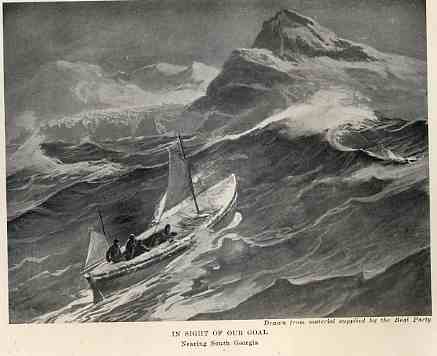
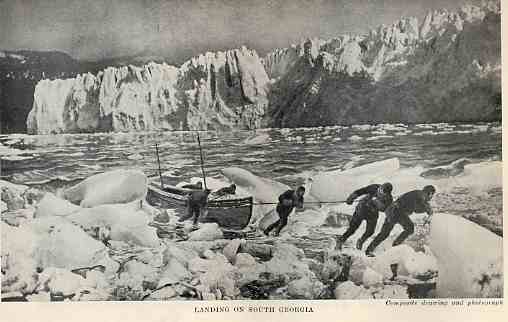
We stood in towards the shore to look for a landing-place, and presently we could see the green tussock-grass on the ledges above the surf-beaten rocks. Ahead of us and to the south, blind rollers showed the presence of uncharted reefs along the coast. Here and there the hungry rocks were close to the surface, and over them the great waves broke, swirling viciously and spouting thirty and forty feet into the air. The rocky coast appeared to descend sheer to the sea. Our need of water and rest was well-nigh desperate, but to have attempted a landing at that time would have been suicidal. Night was drawing near, and the weather indications were not favourable. There was nothing for it but to haul off till the following morning, so we stood away on the starboard tack until we had made what appeared to be a safe offing. Then we hove to in the high westerly swell. The hours passed slowly as we waited the dawn, which would herald, we fondly hoped, the last stage of our journey. Our thirst was a torment and we could scarcely touch our food; the cold seemed to strike right through our weakened bodies. At 5 a.m. the wind shifted to the north-west and quickly increased to one of the worst hurricanes any of us had ever experienced. A great cross-sea was running and the wind simply shrieked as it tore the tops off the waves and converted the whole seascape into a haze of driving spray. Down into valleys, up to tossing heights, straining until her seams opened, swung our little boat, brave still but labouring heavily. We knew that the wind and set of the sea was driving us ashore, but we could do nothing. The dawn showed us a storm-torn ocean, and the morning passed without bringing us a sight of the land; but at 1 p.m., through a rift in the flying mists, we got a glimpse of the huge crags of the island and realized that our position had become desperate. We were on a dead lee shore, and we could gauge our approach to the unseen cliffs by the roar of the breakers against the sheer walls of rock. I ordered the double-reefed mainsail to be set in the hope that we might claw off, and this attempt increased the strain upon the boat. The James Caird was bumping heavily, and the water was pouring in everywhere. Our thirst was forgotten in the realization of our imminent danger, as we baled unceasingly, and adjusted our weights from time to time; occasional glimpses showed that the shore was nearer. I knew that Annewkow Island lay to the south of us, but our small and badly marked chart showed uncertain reefs in the passage between the island and the mainland, and I dared not trust it, though as a last resort we could try to lie under the lee of the island. The afternoon wore away as we edged down the coast, with the thunder of the breakers in our ears. The approach of evening found us still some distance from Annewkow Island, and, dimly in the twilight, we could see a snow-capped mountain looming above us. The chance of surviving the night, with the driving gale and the implacable sea forcing us on to the lee shore, seemed small. I think most of us had a feeling that the end was very near. Just after 6 p.m., in the dark, as the boat was in the yeasty backwash from the seas flung from this iron-bound coast, then, just when things looked their worst, they changed for the best. I have marvelled often at the thin line that divides success from failure and the sudden turn that leads from apparently certain disaster to comparative safety. The wind suddenly shifted, and we were free once more to make an offing. Almost as soon as the gale eased, the pin that locked the mast to the thwart fell out. It must have been on the point of doing this throughout the hurricane, and if it had gone nothing could have saved us; the mast would have snapped like a carrot. Our backstays had carried away once before when iced up and were not too strongly fastened now. We were thankful indeed for the mercy that had held that pin in its place throughout the hurricane.
We headed toward shore to look for a landing place. Soon we could see green tussock grass on the ledges above the surf-battered rocks. Ahead and to the south, waves breaking over unseen obstacles showed where uncharted reefs lay along the coast. Here and there, hungry rocks lay close to the surface. Great waves broke over them, swirling viciously and shooting thirty and forty feet into the air. The rocky coast seemed to drop sheer into the sea. We desperately needed water and rest, but attempting a landing then would have been suicidal. Night was approaching, and the signs of weather were unfavorable. We had no choice but to head away from shore until morning. We sailed on a starboard tack until we appeared to be a safe distance offshore. Then we hove to in the high westerly swell. The hours passed slowly as we waited for dawn. We hoped it would mark the start of the final stage of our journey. Thirst tormented us, and we could scarcely touch our food. The cold seemed to strike straight through our weakened bodies. At 5 a.m., the wind shifted to the northwest. It quickly grew into one of the worst hurricanes any of us had ever experienced. A great cross-sea was running, with waves coming from different directions. The wind shrieked as it tore the tops off the waves, turning the whole seascape into a haze of driving spray. Our little boat swung down into valleys and up to tossing heights. She was still brave, but struggling badly and straining until her seams opened. We knew the wind and the movement of the sea were driving us ashore, but we could do nothing. Dawn revealed a storm-torn ocean. The morning passed without any sight of land. But at 1 p.m., a gap in the flying mists gave us a glimpse of the island's huge crags. We realized that our position had become desperate. The wind was driving us directly toward shore, and we could judge our approach to the unseen cliffs by the roar of breakers against the sheer rock walls. I ordered the double-reefed mainsail to be set, hoping we could work our way offshore. This attempt put even more strain on the boat. The James Caird was bumping heavily, and water was pouring in everywhere. We forgot our thirst as we realized our immediate danger. We bailed without stopping and shifted our weight from time to time. Occasional glimpses showed that the shore was closer. I knew Annewkow Island lay to the south of us. But our small, poorly marked chart showed uncertain reefs in the passage between the island and the mainland. I dared not trust the chart, though as a last resort we could try to shelter on the island's lee side. The afternoon wore on as we edged along the coast, with the thunder of breakers in our ears. As evening approached, we were still some distance from Annewkow Island. In the dim twilight, we could see a snow-capped mountain looming above us. The driving gale and the relentless sea were forcing us toward shore. Our chances of surviving the night seemed small. I think most of us felt that the end was very near. Just after 6 p.m., in the dark, the boat was caught in the foaming backwash of waves thrown against the rocky coast. Just when things looked their worst, they changed for the best. I have often marveled at the thin line between success and failure, and at the sudden turn from apparently certain disaster to relative safety. The wind suddenly shifted, and we were free once more to head offshore. Almost as soon as the gale eased, the pin locking the mast to the thwart fell out. It must have been on the point of falling out throughout the hurricane. If it had fallen out then, nothing could have saved us. The mast would have snapped like a carrot. Our backstays had broken once before when they became iced up, and they were not fastened very securely now. We were deeply thankful for the mercy that had held the pin in place throughout the hurricane.
We stood off shore again, tired almost to the point of apathy. Our water had long been finished. The last was about a pint of hairy liquid, which we strained through a bit of gauze from the medicine-chest. The pangs of thirst attacked us with redoubled intensity, and I felt that we must make a landing on the following day at almost any hazard. The night wore on. We were very tired. We longed for day. When at last the dawn came on the morning of May 10 there was practically no wind, but a high cross-sea was running. We made slow progress towards the shore. About 8 a.m. the wind backed to the north-west and threatened another blow. We had sighted in the meantime a big indentation which I thought must be King Haakon Bay, and I decided that we must land there. We set the bows of the boat towards the bay and ran before the freshening gale. Soon we had angry reefs on either side. Great glaciers came down to the sea and offered no landing-place. The sea spouted on the reefs and thundered against the shore. About noon we sighted a line of jagged reef, like blackened teeth, that seemed to bar the entrance to the bay. Inside, comparatively smooth water stretched eight or nine miles to the head of the bay. A gap in the reef appeared, and we made for it. But the fates had another rebuff for us. The wind shifted and blew from the east right out of the bay. We could see the way through the reef, but we could not approach it directly. That afternoon we bore up, tacking five times in the strong wind. The last tack enabled us to get through, and at last we were in the wide mouth of the bay. Dusk was approaching. A small cove, with a boulder-strewn beach guarded by a reef, made a break in the cliffs on the south side of the bay, and we turned in that direction. I stood in the bows directing the steering as we ran through the kelp and made the passage of the reef. The entrance was so narrow that we had to take in the oars, and the swell was piling itself right over the reef into the cove; but in a minute or two we were inside, and in the gathering darkness the James Caird ran in on a swell and touched the beach. I sprang ashore with the short painter and held on when the boat went out with the backward surge. When the James Caird came in again three of the men got ashore, and they held the painter while I climbed some rocks with another line. A slip on the wet rocks twenty feet up nearly closed my part of the story just at the moment when we were achieving safety. A jagged piece of rock held me and at the same time bruised me sorely. However, I made fast the line, and in a few minutes we were all safe on the beach, with the boat floating in the surging water just off the shore. We heard a gurgling sound that was sweet music in our ears, and, peering around, found a stream of fresh water almost at our feet. A moment later we were down on our knees drinking the pure, ice-cold water in long draughts that put new life into us. It was a splendid moment.
We moved away from shore again, so tired that we were almost beyond caring. Our water had run out long before. The last of it was about a pint of liquid full of hair, which we strained through some gauze from the medicine chest. Our thirst returned twice as fiercely, and I felt we had to land the next day, whatever the danger. The night passed slowly. We were very tired and longed for daylight. When dawn finally came on May 10, there was almost no wind, but high waves were coming from different directions. We made slow progress toward shore. Around 8 a.m., the wind shifted to the northwest and threatened another storm. By then we had seen a large inlet, which I thought must be King Haakon Bay. I decided we had to land there. We pointed the boat toward the bay and sailed with the rising gale behind us. Soon we had dangerous reefs on either side. Great glaciers reached down to the sea, leaving no place to land. The sea spouted over the reefs and thundered against the shore. Around noon we saw a line of jagged reef that seemed to block the entrance to the bay. It looked like a row of blackened teeth. Inside the reef, comparatively smooth water stretched eight or nine miles to the head of the bay. A gap appeared in the reef, and we headed for it. But fate had another setback in store for us. The wind shifted and blew from the east, straight out of the bay. We could see the way through the reef, but we could not sail directly toward it. That afternoon we turned toward the gap, tacking five times in the strong wind. The last tack took us through, and at last we were in the wide mouth of the bay. Dusk was approaching. On the south side of the bay, a small cove broke the line of cliffs. It had a beach strewn with boulders and guarded by a reef. We turned toward it. I stood in the bow and directed the steering as we sailed through the kelp and passed through the reef. The entrance was so narrow that we had to pull in the oars. The swell was rising right over the reef and into the cove. But within a minute or two we were inside. In the gathering darkness, the James Caird rode in on a swell and touched the beach. I sprang ashore with the short painter and held on as the boat was pulled back by the retreating water. When the James Caird came in again, three of the men got ashore. They held the painter while I climbed some rocks with another line. Twenty feet up, I slipped on the wet rocks. It nearly ended my part in the story just as we were reaching safety. A jagged piece of rock held me but also bruised me badly. Even so, I secured the line, and within minutes we were all safe on the beach. The boat floated just offshore in the surging water. We heard a gurgling sound that was sweet music to our ears. Looking around, we found a stream of fresh water almost at our feet. A moment later we were on our knees, drinking long draughts of the pure, ice-cold water. It put new life into us. It was a splendid moment.
The next thing was to get the stores and ballast out of the boat, in order that we might secure her for the night. We carried the stores and gear above high-water mark and threw out the bags of sand and the boulders that we knew so well. Then we attempted to pull the empty boat up the beach, and discovered by this effort how weak we had become. Our united strength was not sufficient to get the James Caird clear of the water. Time after time we pulled together, but without avail. I saw that it would be necessary to have food and rest before we beached the boat. We made fast a line to a heavy boulder and set a watch to fend the James Caird off the rocks of the beach. Then I sent Crean round to the left side of the cove, about thirty yards away, where I had noticed a little cave as we were running in. He could not see much in the darkness, but reported that the place certainly promised some shelter. We carried the sleeping-bags round and found a mere hollow in the rock-face, with a shingle floor sloping at a steep angle to the sea. There we prepared a hot meal, and when the food was finished I ordered the men to turn in. The time was now about 8 p.m., and I took the first watch beside the James Caird, which was still afloat in the tossing water just off the beach.
Next, we had to unload the supplies and ballast so we could secure the boat for the night. We carried the supplies and gear above the high-water mark. Then we threw out the familiar bags of sand and boulders. We tried to pull the empty boat up the beach, but the effort showed us how weak we had become. Even with all our strength combined, we could not get the James Caird clear of the water. We pulled together again and again, but without success. I saw that we would need food and rest before we could beach the boat. We tied a line to a heavy boulder and set a watch to keep the James Caird from hitting the rocks on the beach. Then I sent Crean to the left side of the cove, about thirty yards away. I had noticed a small cave there as we came in. He could not see much in the darkness, but reported that the place certainly seemed to offer some shelter. We carried the sleeping bags around and found only a hollow in the rock face. Its shingle floor sloped steeply toward the sea. We prepared a hot meal there, and when we had finished eating, I ordered the men to turn in. It was now about 8 p.m. I took the first watch beside the James Caird, which was still afloat in the tossing water just off the beach.
Fending the James Caird off the rocks in the darkness was awkward work. The boat would have bumped dangerously if allowed to ride in with the waves that drove into the cove. I found a flat rock for my feet, which were in a bad way owing to cold, wetness, and lack of exercise in the boat, and during the next few hours I laboured to keep the James Caird clear of the beach. Occasionally I had to rush into the seething water. Then, as a wave receded, I let the boat out on the alpine rope so as to avoid a sudden jerk. The heavy painter had been lost when the sea-anchor went adrift. The James Caird could be seen but dimly in the cove, where the high black cliffs made the darkness almost complete, and the strain upon one’s attention was great. After several hours had passed I found that my desire for sleep was becoming irresistible, and at 1 a.m. I called Crean. I could hear him groaning as he stumbled over the sharp rocks on his way down the beach. While he was taking charge of the James Caird she got adrift, and we had some anxious moments. Fortunately, she went across towards the cave and we secured her, unharmed. The loss or destruction of the boat at this stage would have been a very serious matter, since we probably would have found it impossible to leave the cove except by sea. The cliffs and glaciers around offered no practicable path towards the head of the bay. I arranged for one-hour watches during the remainder of the night and then took Crean’s place among the sleeping men and got some sleep before the dawn came.
Keeping the James Caird off the rocks in the dark was difficult work. The boat would have struck them dangerously if the waves driving into the cove had carried her in. I found a flat rock to stand on. My feet were in bad shape from the cold, wet, and lack of exercise in the boat. For the next few hours, I worked to keep the James Caird clear of the beach. At times I had to rush into the churning water. Then, as a wave drew back, I let the boat out on the alpine rope to avoid a sudden jerk. The heavy mooring rope had been lost when the sea-anchor broke loose. I could see the James Caird only dimly in the cove, where the high black cliffs made the darkness almost complete. Keeping watch took great concentration. After several hours, I found that my need for sleep was becoming irresistible. At 1 a.m. I called Crean. I could hear him groaning as he stumbled over the sharp rocks on his way down the beach. As he took charge of the James Caird, she broke loose, and we had some anxious moments. Fortunately, she drifted across towards the cave, and we secured her unharmed. Losing the boat or having her destroyed at this stage would have been very serious. We probably could not have left the cove except by sea. The surrounding cliffs and glaciers offered no usable path towards the head of the bay. I arranged one-hour watches for the rest of the night. Then I took Crean’s place among the sleeping men and got some sleep before dawn.
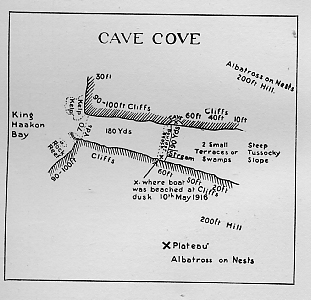
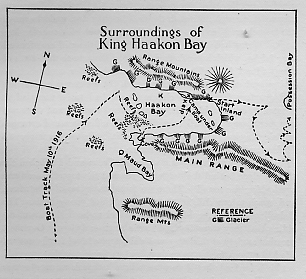
The sea went down in the early hours of the morning (May 11), and after sunrise we were able to set about getting the boat ashore, first bracing ourselves for the task with another meal. We were all weak still. We cut off the topsides and took out all the movable gear. Then we waited for Byron’s “great ninth wave,” and when it lifted the James Caird in we held her and, by dint of great exertion, worked her round broadside to the sea. Inch by inch we dragged her up until we reached the fringe of the tussock-grass and knew that the boat was above high-water mark. The rise of the tide was about five feet, and at spring tide the water must have reached almost to the edge of the tussock-grass. The completion of this job removed our immediate anxieties, and we were free to examine our surroundings and plan the next move. The day was bright and clear.
The sea calmed in the early hours of May 11. After sunrise, we ate another meal to prepare ourselves, then set about getting the boat ashore. We were all still weak. We cut off the topsides and took out all the removable gear. Then we waited for Byron’s “great ninth wave.” When the wave carried the James Caird in, we held her and, with great effort, turned her broadside to the sea. Inch by inch, we dragged her up to the edge of the tussock grass. There we knew the boat was above the high-water mark. The tide rose about five feet, and at spring tide the water must have reached almost to the edge of the tussock grass. With this job done, our immediate worries were over. We were free to examine our surroundings and plan our next move. The day was bright and clear.
King Haakon Bay is an eight-mile sound penetrating the coast of South Georgia in an easterly direction. We had noticed that the northern and southern sides of the sound were formed by steep mountain-ranges, their flanks furrowed by mighty glaciers, the outlets of the great ice-sheet of the interior. It was obvious that these glaciers and the precipitous slopes of the mountains barred our way inland from the cove. We must sail to the head of the sound. Swirling clouds and mist-wreaths had obscured our view of the sound when we were entering, but glimpses of snow-slopes had given us hope that an overland journey could be begun from that point. A few patches of very rough, tussocky land, dotted with little tarns, lay between the glaciers along the foot of the mountains, which were heavily scarred with scree-slopes. Several magnificent peaks and crags gazed out across their snowy domains to the sparkling waters of the sound.
King Haakon Bay is an eight-mile sound that cuts eastward into the coast of South Georgia. We had noticed steep mountain ranges on both sides of the sound. Their slopes were carved by mighty glaciers flowing from the great ice sheet inland. It was clear that the glaciers and steep mountain slopes blocked our way inland from the cove. We had to sail to the head of the sound. Swirling clouds and wisps of mist had hidden the sound from view as we entered. But glimpses of snowy slopes had given us hope that we could begin an overland journey from there. A few patches of very rough, tussock-covered land lay between the glaciers at the foot of the mountains. Small mountain lakes dotted the land, and slopes of loose rock deeply scarred the mountains. Several magnificent peaks and crags gazed across their snowy domains toward the sparkling waters of the sound.
Our cove lay a little inside the southern headland of King Haakon Bay. A narrow break in the cliffs, which were about a hundred feet high at this point, formed the entrance to the cove. The cliffs continued inside the cove on each side and merged into a hill which descended at a steep slope to the boulder beach. The slope, which carried tussock-grass, was not continuous. It eased at two points into little peaty swamp terraces dotted with frozen pools and drained by two small streams. Our cave was a recess in the cliff on the left-hand end of the beach. The rocky face of the cliff was undercut at this point, and the shingle thrown up by the waves formed a steep slope, which we reduced to about one in six by scraping the stones away from the inside. Later we strewed the rough floor with the dead, nearly dry underleaves of the tussock-grass, so as to form a slightly soft bed for our sleeping-bags. Water had trickled down the face of the cliff and formed long icicles, which hung down in front of the cave to the length of about fifteen feet. These icicles provided shelter, and when we had spread our sails below them, with the assistance of oars, we had quarters that, in the circumstances, had to be regarded as reasonably comfortable. The camp at least was dry, and we moved our gear there with confidence. We built a fireplace and arranged our sleeping-bags and blankets around it. The cave was about 8 ft. deep and 12 ft. wide at the entrance.
Our cove lay just inside the southern headland of King Haakon Bay. A narrow gap in the cliffs formed its entrance. The cliffs were about a hundred feet high there. They continued along both sides of the cove and merged into a hill that sloped steeply down to the boulder beach. Tussock grass grew on the slope, which leveled out in two places. These formed small, peaty swamp terraces dotted with frozen pools and drained by two small streams. Our cave was a recess in the cliff at the left end of the beach. The cliff face was undercut there, and pebbles thrown up by the waves formed a steep slope. We scraped stones away from the inner part of the slope until it had a gradient of about one in six. Later, we covered the rough floor with the dead, nearly dry lower leaves of the tussock grass. These made a slightly soft bed for our sleeping bags. Water had trickled down the cliff face and formed long icicles. They hung about fifteen feet down in front of the cave. The icicles provided shelter, and we used oars to spread our sails beneath them. In the circumstances, we had to consider our quarters reasonably comfortable. At least the camp was dry, and we moved our gear there with confidence. We built a fireplace and arranged our sleeping bags and blankets around it. The cave was about 8 feet deep and 12 feet wide at the entrance.
While the camp was being arranged Crean and I climbed the tussock slope behind the beach and reached the top of a headland overlooking the sound. There we found the nests of albatrosses, and, much to our delight, the nests contained young birds. The fledgelings were fat and lusty, and we had no hesitation about deciding that they were destined to die at an early age. Our most pressing anxiety at this stage was a shortage of fuel for the cooker. We had rations for ten more days, and we knew now that we could get birds for food; but if we were to have hot meals we must secure fuel. The store of petroleum carried in the boat was running very low, and it seemed necessary to keep some quantity for use on the overland journey that lay ahead of us. A sea-elephant or a seal would have provided fuel as well as food, but we could see none in the neighbourhood. During the morning we started a fire in the cave with wood from the top-sides of the boat, and though the dense smoke from the damp sticks inflamed our tired eyes, the warmth and the prospect of hot food were ample compensation. Crean was cook that day, and I suggested to him that he should wear his goggles, which he happened to have brought with him. The goggles helped him a great deal as he bent over the fire and tended the stew. And what a stew it was! The young albatrosses weighed about fourteen pounds each fresh killed, and we estimated that they weighed at least six pounds each when cleaned and dressed for the pot. Four birds went into the pot for six men, with a Bovril ration for thickening. The flesh was white and succulent, and the bones, not fully formed, almost melted in our mouths. That was a memorable meal. When we had eaten our fill, we dried our tobacco in the embers of the fire and smoked contentedly. We made an attempt to dry our clothes, which were soaked with salt water, but did not meet with much success. We could not afford to have a fire except for cooking purposes until blubber or driftwood had come our way.
While the camp was being set up, Crean and I climbed the tussock-covered slope behind the beach. We reached the top of a headland overlooking the sound. There we found albatross nests and, to our great delight, they contained young birds. The fledglings were fat and healthy, and we had no hesitation in deciding that they were destined to die young. Our most pressing worry now was the shortage of fuel for the cooker. We had enough rations for ten more days, and we now knew we could get birds for food. But if we were to have hot meals, we had to find fuel. The petroleum we carried in the boat was running very low. It also seemed necessary to save some for the overland journey ahead. An elephant seal or a seal would have provided fuel as well as food, but we could see none nearby. That morning we started a fire in the cave using wood from the boat’s upper sides. Thick smoke from the damp sticks irritated our tired eyes. But the warmth and the prospect of hot food more than made up for it. Crean was cooking that day, and I suggested he wear his goggles, which he happened to have brought with him. The goggles helped him a great deal as he bent over the fire and tended the stew. And what a stew it was! The young albatrosses weighed about fourteen pounds each when freshly killed. We estimated that each weighed at least six pounds when cleaned and prepared for the pot. Four birds went into the pot for six men, with a ration of Bovril to thicken the stew. The flesh was white and juicy, and the bones, not yet fully formed, almost melted in our mouths. That was a memorable meal. After we had eaten our fill, we dried our tobacco in the embers and smoked contentedly. We tried to dry our clothes, which were soaked with salt water, but had little success. Until we found blubber or driftwood, we could not afford to light a fire except for cooking.
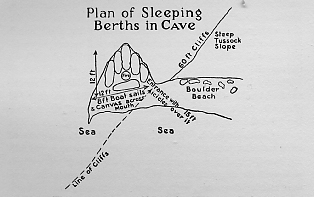
The final stage of the journey had still to be attempted. I realized that the condition of the party generally, and particularly of McNeish and Vincent, would prevent us putting to sea again except under pressure of dire necessity. Our boat, moreover, had been weakened by the cutting away of the topsides, and I doubted if we could weather the island. We were still 150 miles away from Stromness whaling-station by sea. The alternative was to attempt the crossing of the island. If we could not get over, then we must try to secure enough food and fuel to keep us alive through the winter, but this possibility was scarcely thinkable. Over on Elephant Island twenty-two men were waiting for the relief that we alone could secure for them. Their plight was worse than ours. We must push on somehow. Several days must elapse before our strength would be sufficiently recovered to allow us to row or sail the last nine miles up to the head of the bay. In the meantime we could make what preparations were possible and dry our clothes by taking advantage of every scrap of heat from the fires we lit for the cooking of our meals. We turned in early that night, and I remember that I dreamed of the great wave and aroused my companions with a shout of warning as I saw with half-awakened eyes the towering cliff on the opposite side of the cove. Shortly before midnight a gale sprang up suddenly from the north-east with rain and sleet showers. It brought quantities of glacier-ice into the cove, and by 2 a.m. (May 12) our little harbour was filled with ice, which surged to and fro in the swell and pushed its way on to the beach. We had solid rock beneath our feet and could watch without anxiety. When daylight came rain was falling heavily, and the temperature was the highest we had experienced for many months. The icicles overhanging our cave were melting down in streams and we had to move smartly when passing in and out lest we should be struck by falling lumps. A fragment weighing fifteen or twenty pounds crashed down while we were having breakfast. We found that a big hole had been burned in the bottom of Worsley’s reindeer sleeping-bag during the night. Worsley had been awakened by a burning sensation in his feet, and had asked the men near him if his bag was all right; they looked and could see nothing wrong. We were all superficially frostbitten about the feet, and this condition caused the extremities to burn painfully, while at the same time sensation was lost in the skin. Worsley thought that the uncomfortable heat of his feet was due to the frost-bites, and he stayed in his bag and presently went to sleep again. He discovered when he turned out in the morning that the tussock-grass which we had laid on the floor of the cave had smouldered outwards from the fire and had actually burned a large hole in the bag beneath his feet. Fortunately, his feet were not harmed.
We still had to attempt the final stage of the journey. I realized that the party’s condition, especially that of McNeish and Vincent, would keep us from putting to sea again unless absolutely necessary. Our boat had also been weakened by cutting away its upper sides, and I doubted we could sail around the island. By sea, we were still 150 miles from Stromness whaling-station. The alternative was to try crossing the island. If we could not get across, we would have to find enough food and fuel to survive the winter. But that possibility was scarcely worth considering. On Elephant Island, twenty-two men were waiting for the help that only we could bring them. Their situation was worse than ours. We had to push on somehow. It would take several days to recover enough strength to row or sail the last nine miles to the head of the bay. Meanwhile, we could make what preparations we could. We could also dry our clothes by taking advantage of every bit of heat from our cooking fires. We went to bed early that night. I remember dreaming of the great wave and waking my companions with a shout of warning. Half awake, I had seen the towering cliff on the opposite side of the cove. Shortly before midnight, a gale sprang up suddenly from the north-east, bringing showers of rain and sleet. It drove large amounts of glacier ice into the cove. By 2 a.m. on May 12, our little harbour was full of ice. It surged back and forth in the swell and pushed onto the beach. We had solid rock beneath our feet and could watch without worry. When daylight came, heavy rain was falling, and the temperature was the highest we had experienced for many months. The icicles hanging over our cave were melting, sending down streams of water. We had to move quickly when entering or leaving the cave to avoid being hit by falling lumps. A piece weighing fifteen or twenty pounds crashed down while we were eating breakfast. We found that a large hole had been burned in the bottom of Worsley’s reindeer sleeping-bag during the night. Worsley had been awakened by a burning sensation in his feet. He had asked the men near him if his bag was all right, but they looked and could see nothing wrong. We all had superficial frostbite on our feet. The frostbite made our feet burn painfully, even though the skin had lost feeling. Worsley thought the uncomfortable heat in his feet was due to the frostbite. So he stayed in his bag and soon fell asleep again. When he got up in the morning, he discovered what had happened. The tussock-grass we had laid on the cave floor had smouldered outward from the fire. It had burned a large hole in the bag beneath his feet. Fortunately, his feet were not harmed.
Our party spent a quiet day, attending to clothing and gear, checking stores, eating and resting. Some more of the young albatrosses made a noble end in our pot. The birds were nesting on a small plateau above the right-hand end of our beach. We had previously discovered that when we were landing from the boat on the night of May 10 we had lost the rudder. The James Caird had been bumping heavily astern as we were scrambling ashore, and evidently the rudder was then knocked off. A careful search of the beach and the rocks within our reach failed to reveal the missing article. This was a serious loss, even if the voyage to the head of the sound could be made in good weather. At dusk the ice in the cove was rearing and crashing on the beach. It had forced up a ridge of stones close to where the James Caird lay at the edge of the tussock-grass. Some pieces of ice were driven right up to the canvas wall at the front of our cave. Fragments lodged within two feet of Vincent, who had the lowest sleeping-place, and within four feet of our fire. Crean and McCarthy had brought down six more of the young albatrosses in the afternoon, so we were well supplied with fresh food. The air temperature that night probably was not lower than 38° or 40° Fahr., and we were rendered uncomfortable in our cramped sleeping quarters by the unaccustomed warmth. Our feelings towards our neighbours underwent a change. When the temperature was below 20° Fahr, we could not get too close to one another—every man wanted to cuddle against his neighbour; but let the temperature rise a few degrees and the warmth of another man’s body ceased to be a blessing. The ice and the waves had a voice of menace that night, but I heard it only in my dreams.
Our party spent a quiet day tending to our clothing and gear, checking supplies, eating, and resting. Some more young albatrosses met a noble end in our cooking pot. The birds were nesting on a small plateau above the right-hand end of our beach. We had already discovered that we had lost the rudder while landing from the boat on the night of May 10. The James Caird had been bumping heavily at the stern as we scrambled ashore. Evidently, the rudder had been knocked off then. We searched the beach and the rocks within our reach carefully, but found no sign of it. This was a serious loss, even if we could make the voyage to the head of the sound in good weather. At dusk, the ice in the cove was rising and crashing onto the beach. It had pushed up a ridge of stones near the James Caird, which lay at the edge of the tussock-grass. Some pieces of ice were driven right up to the canvas wall at the front of our cave. Fragments lodged within two feet of Vincent, who slept in the lowest spot, and within four feet of our fire. Crean and McCarthy had brought down six more young albatrosses that afternoon, so we had plenty of fresh food. The air temperature that night was probably no lower than 38° or 40° Fahrenheit. We were uncomfortable in our cramped sleeping quarters because we were not used to the warmth. Our feelings toward our neighbors changed. When the temperature was below 20° Fahrenheit, we could not get too close to one another. Every man wanted to cuddle against his neighbor. But once the temperature rose a few degrees, another man’s body heat was no longer a blessing. The ice and waves sounded threatening that night, but I heard them only in my dreams.
The bay was still filled with ice on the morning of Saturday, May 13, but the tide took it all away in the afternoon. Then a strange thing happened. The rudder, with all the broad Atlantic to sail in and the coasts of two continents to search for a resting-place, came bobbing back into our cove. With anxious eyes we watched it as it advanced, receded again, and then advanced once more under the capricious influence of wind and wave. Nearer and nearer it came as we waited on the shore, oars in hand, and at last we were able to seize it. Surely a remarkable salvage! The day was bright and clear; our clothes were drying and our strength was returning. Running water made a musical sound down the tussock slope and among the boulders. We carried our blankets up the hill and tried to dry them in the breeze 300 ft. above sea-level. In the afternoon we began to prepare the James Caird for the journey to the head of King Haakon Bay. A noon observation on this day gave our latitude as 54° 10´ 47´´ S., but according to the German chart the position should have been 54° 12´ S. Probably Worsley’s observation was the more accurate. We were able to keep the fire alight until we went to sleep that night, for while climbing the rocks above the cove I had seen at the foot of a cliff a broken spar, which had been thrown up by the waves. We could reach this spar by climbing down the cliff, and with a reserve supply of fuel thus in sight we could afford to burn the fragments of the James Caird’s topsides more freely.
The bay was still filled with ice on the morning of Saturday, May 13, but the tide carried it all away that afternoon. Then something strange happened. The rudder had the whole broad Atlantic to sail in and the coasts of two continents to find a resting place. Yet it came bobbing back into our cove. We watched anxiously as the wind and waves pushed it forward, then back, then forward again. We waited on the shore, oars in hand, as it came nearer and nearer. At last we were able to grab it. Surely a remarkable recovery! The day was bright and clear. Our clothes were drying, and our strength was returning. Running water made a musical sound as it flowed down the grassy slope and among the boulders. We carried our blankets up the hill and tried to dry them in the breeze, 300 ft. above sea level. That afternoon we began preparing the James Caird for the journey to the head of King Haakon Bay. A noon observation that day gave our latitude as 54° 10´ 47´´ S. But according to the German chart, our position should have been 54° 12´ S. Worsley’s observation was probably more accurate. We were able to keep the fire burning until we went to sleep that night. While climbing the rocks above the cove, I had seen a broken spar at the foot of a cliff. The waves had thrown it up there. We could reach the spar by climbing down the cliff. With this reserve supply of fuel in sight, we could afford to burn the fragments of the James Caird’s topsides more freely.
During the morning of this day (May 13) Worsley and I tramped across the hills in a north-easterly direction with the object of getting a view of the sound and possibly gathering some information that would be useful to us in the next stage of our journey. It was exhausting work, but after covering about 2½ miles in two hours, we were able to look east, up the bay. We could not see very much of the country that we would have to cross in order to reach the whaling-station on the other side of the island. We had passed several brooks and frozen tarns, and at a point where we had to take to the beach on the shore of the sound we found some wreckage—an 18-ft. pine-spar (probably part of a ship’s topmast), several pieces of timber, and a little model of a ship’s hull, evidently a child’s toy. We wondered what tragedy that pitiful little plaything indicated. We encountered also some gentoo penguins and a young sea-elephant, which Worsley killed.
On the morning of May 13, Worsley and I walked northeast across the hills to get a view of the sound. We also hoped to gather information that might help us on the next stage of our journey. It was exhausting work. But after covering about 2½ miles in two hours, we could look east up the bay. We could not see much of the land we would have to cross to reach the whaling station on the other side of the island. We had passed several streams and frozen mountain lakes. At one point, we had to walk along the beach on the shore of the sound, where we found some wreckage. There was an 18-foot pine spar, probably part of a ship’s topmast, several pieces of timber, and a small model of a ship’s hull. The model was evidently a child’s toy. We wondered what tragedy that pitiful little plaything might point to. We also came across some gentoo penguins and a young sea elephant, which Worsley killed.
When we got back to the cave at 3 p.m., tired, hungry, but rather pleased with ourselves, we found a splendid meal of stewed albatross chicken waiting for us. We had carried a quantity of blubber and the sea-elephant’s liver in our blouses, and we produced our treasures as a surprise for the men. Rough climbing on the way back to camp had nearly persuaded us to throw the stuff away, but we had held on (regardless of the condition of our already sorely tried clothing), and had our reward at the camp. The long bay had been a magnificent sight, even to eyes that had dwelt on grandeur long enough and were hungry for the simple, familiar things of everyday life. Its green-blue waters were being beaten to fury by the north-westerly gale. The mountains, “stern peaks that dared the stars,” peered through the mists, and between them huge glaciers poured down from the great ice-slopes and fields that lay behind. We counted twelve glaciers and heard every few minutes the reverberating roar caused by masses of ice calving from the parent streams.
When we got back to the cave at 3 p.m., we were tired and hungry but rather pleased with ourselves. A splendid meal of stewed albatross chick was waiting for us. We had carried a quantity of blubber and the sea elephant’s liver in our shirts. We brought out our treasures as a surprise for the men. The rough climb back to camp had nearly persuaded us to throw them away. But we had held on to them, despite the damage to our already battered clothing. We were rewarded when we reached camp. The long bay had been a magnificent sight. Even our eyes, long accustomed to grandeur and hungry for the simple, familiar things of everyday life, appreciated it. A northwesterly gale was whipping its green-blue waters into a fury. The mountains, “stern peaks that dared the stars,” peered through the mist. Between them, huge glaciers flowed down from the great ice slopes and fields beyond. We counted twelve glaciers. Every few minutes, we heard a rumbling roar as masses of ice broke away from the glaciers.
On May 14 we made our preparations for an early start on the following day if the weather held fair. We expected to be able to pick up the remains of the sea-elephant on our way up the sound. All hands were recovering from the chafing caused by our wet clothes during the boat journey. The insides of our legs had suffered severely, and for some time after landing in the cove we found movement extremely uncomfortable. We paid our last visit to the nests of the albatrosses, which were situated on a little undulating plateau above the cave amid tussocks, snow-patches, and little frozen tarns. Each nest consisted of a mound over a foot high of tussock-grass, roots, and a little earth. The albatross lays one egg and very rarely two. The chicks, which are hatched in January, are fed on the nest by the parent birds for almost seven months before they take to the sea and fend for themselves. Up to four months of age the chicks are beautiful white masses of downy fluff, but when we arrived on the scene their plumage was almost complete. Very often one of the parent birds was on guard near the nest. We did not enjoy attacking these birds, but our hunger knew no law. They tasted so very good and assisted our recuperation to such an extent that each time we killed one of them we felt a little less remorseful.
On May 14 we prepared to start early the next day, if the weather stayed fair. We expected to pick up the remains of the sea elephant on our way up the sound. All of us were recovering from the chafing caused by our wet clothes during the boat journey. The insides of our legs had suffered badly. For some time after landing in the cove, we found it extremely uncomfortable to move. We paid our last visit to the albatross nests. They stood on a small, rolling plateau above the cave, among tussocks, patches of snow, and small frozen pools. Each nest was a mound over a foot high, made of tussock grass, roots, and a little earth. The albatross lays one egg and very rarely two. The chicks hatch in January and are fed on the nest by their parents for almost seven months. Then they take to the sea and fend for themselves. Up to four months old, the chicks are beautiful white masses of soft fluff. But when we arrived, their feathers had almost fully developed. Often one of the parents stood guard near the nest. We did not enjoy attacking these birds, but our hunger knew no law. They tasted so good and helped us recover so much that each time we killed one, we felt a little less remorse.
May 15 was a great day. We made our hoosh at 7.30 a.m. Then we loaded up the boat and gave her a flying launch down the steep beach into the surf. Heavy rain had fallen in the night and a gusty north-westerly wind was now blowing, with misty showers. The James Caird headed to the sea as if anxious to face the battle of the waves once more. We passed through the narrow mouth of the cove with the ugly rocks and waving kelp close on either side, turned to the east, and sailed merrily up the bay as the sun broke through the mists and made the tossing waters sparkle around us. We were a curious-looking party on that bright morning, but we were feeling happy. We even broke into song, and, but for our Robinson Crusoe appearance, a casual observer might have taken us for a picnic party sailing in a Norwegian fiord or one of the beautiful sounds of the west coast of New Zealand. The wind blew fresh and strong, and a small sea broke on the coast as we advanced. The surf was sufficient to have endangered the boat if we had attempted to land where the carcass of the sea-elephant was lying, so we decided to go on to the head of the bay without risking anything, particularly as we were likely to find sea-elephants on the upper beaches. The big creatures have a habit of seeking peaceful quarters protected from the waves. We had hopes, too, of finding penguins. Our expectation as far as the sea-elephants were concerned was not at fault. We heard the roar of the bulls as we neared the head of the bay, and soon afterwards saw the great unwieldy forms of the beasts lying on a shelving beach towards the bay-head. We rounded a high, glacier-worn bluff on the north side, and at 12.30 p.m. we ran the boat ashore on a low beach of sand and pebbles, with tussock growing above high-water mark. There were hundreds of sea-elephants lying about, and our anxieties with regard to food disappeared. Meat and blubber enough to feed our party for years was in sight. Our landing-place was about a mile and a half west of the north-east corner of the bay. Just east of us was a glacier-snout ending on the beach but giving a passage towards the head of the bay, except at high water or when a very heavy surf was running. A cold, drizzling rain had begun to fall, and we provided ourselves with shelter as quickly as possible. We hauled the James Caird up above highwater mark and turned her over just to the lee or east side of the bluff. The spot was separated from the mountain-side by a low morainic bank, rising twenty or thirty feet above sea-level. Soon we had converted the boat into a very comfortable cabin à la Peggotty, turfing it round with tussocks, which we dug up with knives. One side of the James Caird rested on stones so as to afford a low entrance, and when we had finished she looked as though she had grown there. McCarthy entered into this work with great spirit. A sea-elephant provided us with fuel and meat, and that evening found a well-fed and fairly contented party at rest in Peggotty Camp.
May 15 was a great day. We made our hoosh at 7:30 a.m. Then we loaded the boat and launched her swiftly down the steep beach into the surf. Heavy rain had fallen during the night. A gusty northwesterly wind was now blowing, with misty showers. The James Caird headed out as if eager to face the battle of the waves once more. We passed through the narrow mouth of the cove, with ugly rocks and waving kelp close on either side. Then we turned east and sailed merrily up the bay. The sun broke through the mist and made the tossing water sparkle around us. We were a curious-looking party that bright morning, but we felt happy. We even broke into song. If we had not looked like Robinson Crusoe, a casual observer might have mistaken us for a picnic party. We might have been sailing in a Norwegian fjord or one of the beautiful sounds of New Zealand’s west coast. The wind blew fresh and strong, and small waves broke on the coast as we sailed on. The surf was strong enough to endanger the boat if we tried to land near the sea-elephant carcass. So we decided to continue to the head of the bay without taking any risks. We were also likely to find sea-elephants on the beaches farther up the bay. The great creatures tend to seek peaceful places sheltered from the waves. We hoped to find penguins too. Our expectations about the sea-elephants proved correct. We heard the bulls roaring as we neared the head of the bay. Soon afterward, we saw their great, unwieldy bodies lying on a sloping beach near the bay’s head. We rounded a high bluff on the north side, worn smooth by a glacier. At 12:30 p.m. we brought the boat ashore on a low beach of sand and pebbles. Tussock grass grew above the high-water mark. Hundreds of sea-elephants lay about, and our worries about food disappeared. We could see enough meat and blubber to feed our party for years. Our landing place was about a mile and a half west of the bay’s northeast corner. Just east of us, the end of a glacier reached the beach. It left a passage toward the head of the bay, except at high water or in very heavy surf. A cold drizzle had begun to fall, so we made ourselves a shelter as quickly as possible. We hauled the James Caird above the high-water mark and turned her over just east of the bluff, sheltered from the wind. A low bank of glacial debris separated the spot from the mountainside. The bank rose twenty or thirty feet above sea level. Soon we had turned the boat into a very comfortable cabin, à la Peggotty. We packed tussocks around her, digging them up with knives. One side of the James Caird rested on stones to leave a low entrance. When we had finished, she looked as though she had grown there. McCarthy threw himself into the work with great spirit. A sea-elephant provided us with fuel and meat. That evening, a well-fed and fairly contented party rested in Peggotty Camp.
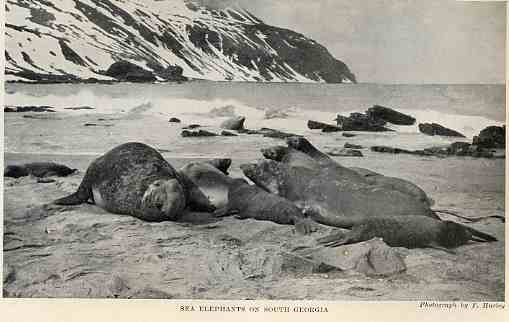
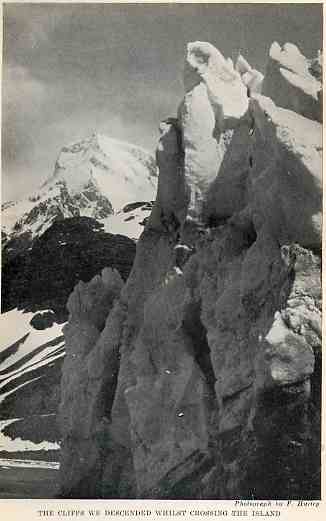
Our camp, as I have said, lay on the north side of King Haakon Bay near the head. Our path towards the whaling-stations led round the seaward end of the snouted glacier on the east side of the camp and up a snow-slope that appeared to lead to a pass in the great Allardyce Range, which runs north-west and south-east and forms the main backbone of South Georgia. The range dipped opposite the bay into a well-defined pass from east to west. An ice-sheet covered most of the interior, filling the valleys and disguising the configurations of the land, which, indeed, showed only in big rocky ridges, peaks, and nunataks. When we looked up the pass from Peggotty Camp the country to the left appeared to offer two easy paths through to the opposite coast, but we knew that the island was uninhabited at that point (Possession Bay). We had to turn our attention farther east, and it was impossible from the camp to learn much of the conditions that would confront us on the overland journey. I planned to climb to the pass and then be guided by the configuration of the country in the selection of a route eastward to Stromness Bay, where the whaling-stations were established in the minor bays, Leith, Husvik, and Stromness. A range of mountains with precipitous slopes, forbidding peaks, and large glaciers lay immediately to the south of King Haakon Bay and seemed to form a continuation of the main range. Between this secondary range and the pass above our camp a great snow-upland sloped up to the inland ice-sheet and reached a rocky ridge that stretched athwart our path and seemed to bar the way. This ridge was a right-angled offshoot from the main ridge. Its chief features were four rocky peaks with spaces between that looked from a distance as though they might prove to be passes.
Our camp, as I have said, lay on the north side of King Haakon Bay, near its head. Our route to the whaling stations led around the seaward end of the projecting glacier east of the camp. From there, it went up a snow slope that seemed to lead to a pass in the great Allardyce Range. The range runs northwest to southeast and forms the main backbone of South Georgia. Opposite the bay, the range dipped into a well-defined pass running east to west. An ice sheet covered most of the interior, filling the valleys and concealing the shape of the land. Only large rocky ridges, peaks, and nunataks showed through. From Peggotty Camp, we could see two apparently easy routes to the opposite coast on the left side of the pass. But we knew the island was uninhabited at that point, Possession Bay. We had to look farther east. From the camp, we could learn little about the conditions we would face on the overland journey. I planned to climb to the pass and then choose an eastward route based on the shape of the land. Our destination was Stromness Bay, where whaling stations had been established in the smaller bays of Leith, Husvik, and Stromness. Immediately south of King Haakon Bay lay a mountain range with steep slopes, forbidding peaks, and large glaciers. It seemed to be a continuation of the main range. Between this secondary range and the pass above our camp, a broad snowy upland rose toward the inland ice sheet. It reached a rocky ridge that stretched across our path and seemed to block the way. This ridge branched off from the main ridge at a right angle. Its main features were four rocky peaks. From a distance, the spaces between them looked as though they might prove to be passes.
The weather was bad on Tuesday, May 16, and we stayed under the boat nearly all day. The quarters were cramped but gave full protection from the weather, and we regarded our little cabin with a great deal of satisfaction. Abundant meals of sea-elephant steak and liver increased our contentment. McNeish reported during the day that he had seen rats feeding on the scraps, but this interesting statement was not verified. One would not expect to find rats at such a spot, but there was a bare possibility that they had landed from a wreck and managed to survive the very rigorous conditions.
The weather was bad on Tuesday, May 16, so we stayed under the boat nearly all day. It was cramped, but the boat gave us full protection from the weather. We were very pleased with our little cabin. Generous meals of elephant seal steak and liver made us even more content. During the day, McNeish reported seeing rats feeding on the scraps, but we could not verify his interesting claim. One would not expect to find rats in such a place. But there was a slight possibility that they had come ashore from a wreck and survived the extremely harsh conditions.
A fresh west-south-westerly breeze was blowing on the following morning (Wednesday, May 17), with misty squalls, sleet, and rain. I took Worsley with me on a pioneer journey to the west with the object of examining the country to be traversed at the beginning of the overland journey. We went round the seaward end of the snouted glacier, and after tramping about a mile over stony ground and snow-coated debris, we crossed some big ridges of scree and moraines. We found that there was good going for a sledge as far as the north-east corner of the bay, but did not get much information regarding the conditions farther on owing to the view becoming obscured by a snow-squall. We waited a quarter of an hour for the weather to clear but were forced to turn back without having seen more of the country. I had satisfied myself, however, that we could reach a good snow-slope leading apparently to the inland ice. Worsley reckoned from the chart that the distance from our camp to Husvik, on an east magnetic course, was seventeen geographical miles, but we could not expect to follow a direct line. The carpenter started making a sledge for use on the overland journey. The materials at his disposal were limited in quantity and scarcely suitable in quality.
The next morning, Wednesday, May 17, a fresh breeze was blowing from the west-southwest. Misty squalls brought sleet and rain. I took Worsley west with me on a scouting trip. We wanted to examine the terrain at the start of our planned overland journey. We went around the seaward end of the glacier’s projecting snout. Then we tramped about a mile over stony ground and snow-covered debris. After that, we crossed some large ridges of scree and glacial debris. We found good ground for a sledge as far as the northeast corner of the bay. But a snow squall blocked our view, so we learned little about the conditions beyond. We waited fifteen minutes for the weather to clear, but had to turn back without seeing more of the terrain. Even so, I was satisfied that we could reach a good snow slope that seemed to lead to the inland ice. From the chart, Worsley reckoned that Husvik was seventeen geographical miles from our camp on a course of magnetic east. But we could not expect to travel in a straight line. The carpenter began making a sledge for the overland journey. He had only a limited quantity of materials, and their quality was hardly suitable.
We overhauled our gear on Thursday, May 18; and hauled our sledge to the lower edge of the snouted glacier. The vehicle proved heavy and cumbrous. We had to lift it empty over bare patches of rock along the shore, and I realized that it would be too heavy for three men to manage amid the snow-plains, glaciers, and peaks of the interior. Worsley and Crean were coming with me, and after consultation we decided to leave the sleeping-bags behind us and make the journey in very light marching order. We would take three days’ provisions for each man in the form of sledging ration and biscuit. The food was to be packed in three sacks, so that each member of the party could carry his own supply. Then we were to take the Primus lamp filled with oil, the small cooker, the carpenter’s adze (for use as an ice-axe), and the alpine rope, which made a total length of fifty feet when knotted. We might have to lower ourselves down steep slopes or cross crevassed glaciers. The filled lamp would provide six hot meals, which would consist of sledging ration boiled up with biscuit. There were two boxes of matches left, one full and the other partially used. We left the full box with the men at the camp and took the second box, which contained forty-eight matches. I was unfortunate as regarded footgear, since I had given away my heavy Burberry boots on the floe, and had now a comparatively light pair in poor condition. The carpenter assisted me by putting several screws in the sole of each boot with the object of providing a grip on the ice. The screws came out of the James Caird.
On Thursday, May 18, we checked our gear and hauled our sledge to the lower edge of the snouted glacier. The sledge proved heavy and awkward. We had to lift it, empty, over bare patches of rock along the shore. I realized it would be too heavy for three men to manage across the snow plains, glaciers, and peaks inland. Worsley and Crean were coming with me. After discussing the problem, we decided to leave the sleeping bags behind and travel with very light loads. We would each take three days’ provisions in the form of sledging ration and biscuit. We would pack the food in three sacks, so each man could carry his own supply. We would also take the Primus lamp, filled with oil, the small cooker, and the carpenter’s adze to use as an ice axe. We would take the alpine rope too, which measured fifty feet when knotted together. We might have to lower ourselves down steep slopes or cross glaciers split by crevasses. The filled lamp would provide six hot meals, made by boiling sledging ration with biscuit. We had two boxes of matches left, one full and the other partly used. We left the full box with the men at camp and took the other, which contained forty-eight matches. I was unlucky with my footwear. I had given away my heavy Burberry boots on the ice floe, and the pair I had now was comparatively light and in poor condition. The carpenter helped me by putting several screws in the sole of each boot to give me a grip on the ice. The screws came from the James Caird.
We turned in early that night, but sleep did not come to me. My mind was busy with the task of the following day. The weather was clear and the outlook for an early start in the morning was good. We were going to leave a weak party behind us in the camp. Vincent was still in the same condition, and he could not march. McNeish was pretty well broken up. The two men were not capable of managing for themselves and McCarthy must stay to look after them. He might have a difficult task if we failed to reach the whaling station. The distance to Husvik, according to the chart, was no more than seventeen geographical miles in a direct line, but we had very scanty knowledge of the conditions of the interior. No man had ever penetrated a mile from the coast of South Georgia at any point, and the whalers I knew regarded the country as inaccessible. During that day, while we were walking to the snouted glacier, we had seen three wild duck flying towards the head of the bay from the eastward. I hoped that the presence of these birds indicated tussock-land and not snow-fields and glaciers in the interior, but the hope was not a very bright one.
We went to bed early that night, but I could not sleep. My mind was busy with the task ahead of us the next day. The weather was clear, and it looked promising for an early start. We were going to leave a weak party behind at the camp. Vincent’s condition was unchanged, and he could not march. McNeish was in very poor shape. Neither man could manage on his own, so McCarthy had to stay and look after them. He might have a difficult task if we failed to reach the whaling station. According to the chart, Husvik was no more than seventeen geographical miles away in a straight line. But we knew very little about conditions inland. No one had ever gone even a mile inland from any point on the coast of South Georgia. The whalers I knew considered the interior inaccessible. Earlier that day, as we walked to the glacier’s projecting end, we had seen three wild ducks. They were flying from the east toward the head of the bay. I hoped the birds’ presence meant there was tussock grassland inland, rather than snowfields and glaciers. But I was not very hopeful.
We turned out at 2 a.m. on the Friday morning and had our hoosh ready an hour later. The full moon was shining in a practically cloudless sky, its rays reflected gloriously from the pinnacles and crevassed ice of the adjacent glaciers. The huge peaks of the mountains stood in bold relief against the sky and threw dark shadows on the waters of the sound. There was no need for delay, and we made a start as soon as we had eaten our meal. McNeish walked about 200 yds with us; he could do no more. Then we said good-bye and he turned back to the camp. The first task was to get round the edge of the snouted glacier, which had points like fingers projecting towards the sea. The waves were reaching the points of these fingers, and we had to rush from one recess to another when the waters receded. We soon reached the east side of the glacier and noticed its great activity at this point. Changes had occurred within the preceding twenty-four hours. Some huge pieces had broken off, and the masses of mud and stone that were being driven before the advancing ice showed movement. The glacier was like a gigantic plough driving irresistibly towards the sea.
We got up at 2 a.m. on Friday and had our hoosh ready an hour later. The full moon shone in an almost cloudless sky. Its light reflected gloriously from the pinnacles and crevassed ice of the nearby glaciers. The huge mountain peaks stood out sharply against the sky and cast dark shadows on the waters of the sound. There was no need to wait, so we set off as soon as we had eaten. McNeish walked about 200 yards with us. He could go no farther. We said goodbye, and he turned back to camp. Our first task was to get around the edge of the glacier, whose snout had fingerlike points jutting toward the sea. The waves reached the tips of these fingers. We had to rush from one recess to the next as the water drew back. We soon reached the east side of the glacier and saw how active it was there. Changes had taken place in the previous twenty-four hours. Some huge pieces had broken off. The advancing ice was also pushing masses of mud and stone ahead of it, showing that the glacier was moving. It was like a gigantic plough pushing irresistibly toward the sea.
Lying on the beach beyond the glacier was wreckage that told of many ill-fated ships. We noticed stanchions of teakwood, liberally carved, that must have came from ships of the older type; iron-bound timbers with the iron almost rusted through; battered barrels and all the usual debris of the ocean. We had difficulties and anxieties of our own, but as we passed that graveyard of the sea we thought of the many tragedies written in the wave-worn fragments of lost vessels. We did not pause, and soon we were ascending a snow-slope heading due east on the last lap of our long trail.
On the beach beyond the glacier lay wreckage from many doomed ships. We noticed richly carved teakwood posts that must have come from older ships. There were timbers bound with iron that had almost rusted through, battered barrels, and all the usual debris from the sea. We had our own difficulties and worries. But as we passed that graveyard of the sea, we thought of the many tragedies told by the wave-worn fragments of lost ships. We did not stop. Soon we were climbing a snowy slope, heading due east on the final stretch of our long journey.
The snow-surface was disappointing. Two days before we had been able to move rapidly on hard, packed snow; now we sank over our ankles at each step and progress was slow. After two hours’ steady climbing we were 2500 ft. above sea-level. The weather continued fine and calm, and as the ridges drew nearer and the western coast of the island spread out below, the bright moonlight showed us that the interior was broken tremendously. High peaks, impassable cliffs, steep snow-slopes, and sharply descending glaciers were prominent features in all directions, with stretches of snow-plain over laying the ice-sheet of the interior. The slope we were ascending mounted to a ridge and our course lay direct to the top. The moon, which proved a good friend during this journey, threw a long shadow at one point and told us that the surface was broken in our path. Warned in time, we avoided a huge hole capable of swallowing an army. The bay was now about three miles away, and the continued roaring of a big glacier at the head of the bay came to our ears. This glacier, which we had noticed during the stay at Peggotty Camp, seemed to be calving almost continuously.
The snow surface was disappointing. Two days earlier, we had been able to move quickly on hard, packed snow. Now we sank past our ankles with every step, and progress was slow. After two hours of steady climbing, we were 2,500 feet above sea level. The weather remained clear and calm. As we drew nearer to the ridges, the island’s western coast spread out below us. In the bright moonlight, we could see that the interior was extremely rugged. In every direction, we saw high peaks, impassable cliffs, steep snow slopes, and sharply descending glaciers. Stretches of snow plain lay over the ice sheet in the interior. The slope we were climbing rose to a ridge, and our route led straight to the top. The moon proved a good friend during this journey. At one point, it cast a long shadow that revealed a break in the surface ahead. Warned in time, we avoided a huge hole that could have swallowed an army. The bay was now about three miles away, and we could still hear a large glacier roaring at its head. We had noticed this glacier during our stay at Peggotty Camp. It seemed to be calving almost continuously.
I had hoped to get a view of the country ahead of us from the top of the slope, but as the surface became more level beneath our feet, a thick fog drifted down. The moon became obscured and produced a diffused light that was more trying than darkness, since it illuminated the fog without guiding our steps. We roped ourselves together as a precaution against holes, crevasses, and precipices, and I broke trail through the soft snow. With almost the full length of the rope between myself and the last man we were able to steer an approximately straight course, since, if I veered to the right or the left when marching into the blank wall of the fog, the last man on the rope could shout a direction. So, like a ship with its “port,” “starboard,” “steady,” we tramped through the fog for the next two hours.
I had hoped to see the country ahead from the top of the slope. But as the ground beneath our feet became more level, a thick fog drifted down. The moon disappeared behind it, casting a diffuse light that was worse than darkness. The light lit up the fog but did nothing to guide our steps. We roped ourselves together to guard against holes, crevasses, and cliffs, and I led the way through the soft snow. Almost the full length of the rope stretched between me and the last man. This allowed us to keep a roughly straight course. If I veered right or left as I walked into the blank wall of fog, the last man could shout directions. So we trudged through the fog for the next two hours, like a ship following commands of “port,” “starboard,” and “steady.”
Then, as daylight came, the fog thinned and lifted, and from an elevation of about 3000 ft. we looked down on what seemed to be a huge frozen lake with its farther shores still obscured by the fog. We halted there to eat a bit of biscuit while we discussed whether we would go down and cross the flat surface of the lake, or keep on the ridge we had already reached. I decided to go down, since the lake lay on our course. After an hour of comparatively easy travel through the snow we noticed the thin beginnings of crevasses. Soon they were increasing in size and showing fractures, indicating that we were travelling on a glacier. As the daylight brightened the fog dissipated; the lake could be seen more clearly, but still we could not discover its east shore. A little later the fog lifted completely, and then we saw that our lake stretched to the horizon, and realized suddenly that we were looking down upon the open sea on the east coast of the island. The slight pulsation at the shore showed that the sea was not even frozen; it was the bad light that had deceived us. Evidently we were at the top of Possession Bay, and the island at that point could not be more than five miles across from the head of King Haakon Bay. Our rough chart was inaccurate. There was nothing for it but to start up the glacier again. That was about seven o’clock in the morning, and by nine o’clock we had more than recovered our lost ground. We regained the ridge and then struck south-east, for the chart showed that two more bays indented the coast before Stromness. It was comforting to realize that we would have the eastern water in sight during our journey, although we could see there was no way around the shore line owing to steep cliffs and glaciers. Men lived in houses lit by electric light on the east coast. News of the outside world waited us there, and, above all, the east coast meant for us the means of rescuing the twenty-two men we had left on Elephant Island.
As daylight came, the fog thinned and lifted. From about 3,000 feet up, we looked down on what seemed to be a huge frozen lake. Its far shore was still hidden by the fog. We stopped to eat some biscuit and discuss our route. We could go down and cross the lake’s flat surface, or stay on the ridge we had reached. I decided to go down because the lake lay on our course. After an hour of fairly easy travel through the snow, we noticed the first thin signs of crevasses. Soon the crevasses grew larger and showed cracks, indicating that we were traveling on a glacier. As the daylight grew brighter, the fog cleared. We could see the lake more clearly, but still could not find its eastern shore. A little later, the fog lifted completely. We saw that the lake stretched to the horizon and suddenly realized we were looking down at the open sea on the island’s east coast. The slight movement of the water at the shore showed that the sea was not even frozen. The poor light had deceived us. We were evidently at the head of Possession Bay. At that point, the island could not be more than five miles across from the head of King Haakon Bay. Our rough chart was inaccurate. We had no choice but to start back up the glacier. It was about seven in the morning, and by nine we had more than recovered the ground we had lost. We regained the ridge and then headed southeast, because the chart showed two more bays along the coast before Stromness. It was comforting to know that we would have the sea to the east in sight during our journey. Still, we could see that steep cliffs and glaciers made it impossible to travel along the shore. Men lived on the east coast in houses lit by electric light. News of the outside world awaited us there. Above all, the east coast meant we could find a way to rescue the twenty-two men we had left on Elephant Island.