Chapter 16
A call for careful navigation—Three hours' steering in twenty-three days—Arrival at the Keeling Cocos Islands—A curious chapter of social history—A welcome from the children of the islands—Cleaning and painting the Spray on the beach—A Mohammedan blessing for a pot of jam—Keeling as a paradise—A risky adventure in a small boat—Away to Rodriguez—Taken for Antichrist—The governor calms the fears of the people—A lecture—A convent in the hills.
A need for careful navigation. Three hours of steering in twenty-three days. Arrival at the Keeling Cocos Islands. A curious chapter of social history. A welcome from the island children. Cleaning and painting the Spray on the beach. A Muslim blessing for a pot of jam. Keeling as a paradise. A risky adventure in a small boat. Leaving for Rodriguez. Mistaken for the Antichrist. The governor calms the people's fears. A lecture. A convent in the hills.
To the Keeling Cocos Islands was now only five hundred and fifty miles; but even in this short run it was necessary to be extremely careful in keeping a true course else I would miss the atoll.
The Keeling Cocos Islands were now only 550 miles away. But even on this short voyage, I had to steer extremely carefully to stay on course, or I would miss the atoll.
On the 12th, some hundred miles southwest of Christmas Island, I saw anti-trade clouds flying up from the southwest very high over the regular winds, which weakened now for a few days, while a swell heavier than usual set in also from the southwest. A winter gale was going on in the direction of the Cape of Good Hope. Accordingly, I steered higher to windward, allowing twenty miles a day while this went on, for change of current; and it was not too much, for on that course I made the Keeling Islands right ahead. The first unmistakable sign of the land was a visit one morning from a white tern that fluttered very knowingly about the vessel, and then took itself off westward with a businesslike air in its wing. The tern is called by the islanders the "pilot of Keeling Cocos." Farther on I came among a great number of birds fishing, and fighting over whatever they caught. My reckoning was up, and springing aloft, I saw from half-way up the mast cocoanut-trees standing out of the water ahead. I expected to see this; still, it thrilled me as an electric shock might have done. I slid down the mast, trembling under the strangest sensations; and not able to resist the impulse, I sat on deck and gave way to my emotions. To folks in a parlor on shore this may seem weak indeed, but I am telling the story of a voyage alone.
On the 12th, about a hundred miles southwest of Christmas Island, I saw anti-trade clouds racing up from the southwest. They were very high above the regular winds, which weakened for a few days. A heavier than usual swell also came from the southwest. A winter gale was blowing in the direction of the Cape of Good Hope. So I steered higher into the wind, allowing twenty miles a day for the change in current while this lasted. That was not too much, for on that course I came upon the Keeling Islands right ahead. The first unmistakable sign of land was a visit one morning from a white tern. It fluttered knowingly around the vessel, then flew off westward with a businesslike air. The islanders call the tern the "pilot of Keeling Cocos." Farther on, I came among a great number of birds fishing and fighting over whatever they caught. I had reached the position I had calculated. I sprang up the mast, and halfway up I saw coconut trees rising out of the water ahead. I had expected to see them, but the sight still thrilled me like an electric shock. I slid down the mast, trembling with the strangest feelings. Unable to resist the impulse, I sat on deck and gave way to my emotions. To people in a parlor on shore, this may seem very weak, but I am telling the story of a voyage alone.
I didn't touch the helm, for with the current and heave of the sea the sloop found herself at the end of the run absolutely in the fairway of the channel. You couldn't have beaten it in the navy! Then I trimmed her sails by the wind, took the helm, and flogged her up the couple of miles or so abreast the harbor landing, where I cast anchor at 3:30 P.M., July 17,1897, twenty-three days from Thursday Island. The distance run was twenty-seven hundred miles as the crow flies. This would have been a fair Atlantic voyage. It was a delightful sail! During those twenty-three days I had not spent altogether more than three hours at the helm, including the time occupied in beating into Keeling harbor. I just lashed the helm and let her go; whether the wind was abeam or dead aft, it was all the same: she always sailed on her course. No part of the voyage up to this point, taking it by and large, had been so finished as this.
I didn't touch the helm. The current and the heave of the sea brought the sloop right into the navigable part of the channel. You couldn't have done better in the navy! Then I trimmed her sails to the wind and took the helm. I pushed her on for a couple of miles or so, until we were abreast of the harbor landing. There I anchored at 3:30 P.M. on July 17, 1897, twenty-three days out from Thursday Island. We had covered twenty-seven hundred miles as the crow flies. That would have been a respectable Atlantic voyage. It was a delightful sail! During those twenty-three days, I had spent no more than three hours at the helm altogether. That included the time spent tacking into Keeling harbor. I just lashed the helm and let her go. Whether the wind came from the side or directly behind made no difference. She always stayed on course. Overall, no part of the voyage up to that point had been so well executed.
On July 21, 1897, Mr. Andrew J. Leach reported to Joseph Chamberlain, Colonial Secretary, through Governor Kynnersley of Singapore. He said this about the Iphegenia's visit to the atoll: "As we left the ocean depths of deepest blue and entered the coral circle, the contrast was most remarkable. The brilliant colors of the waters, transparent to a depth of over thirty feet, now purple, now of the bluest sky-blue, and now green, with the white crests of the waves flashing tinder a brilliant sun, the encircling ... palm-clad islands, the gaps between which were to the south undiscernible, the white sand shores and the whiter gaps where breakers appeared, and, lastly, the lagoon itself, seven or eight miles across from north to south, and five to six from east to west, presented a sight never to be forgotten. After some little delay, Mr. Sidney Ross, the eldest son of Mr. George Ross, came off to meet us, and soon after, accompanied by the doctor and another officer, we went ashore." "On reaching the landing-stage, we found, hauled up for cleaning, etc., the Spray of Boston, a yawl of 12.70 tons gross, the property of Captain Joshua Slocum. He arrived at the island on the 17th of July, twenty-three days out from Thursday Island. This extraordinary solitary traveler left Boston some two years ago single-handed, crossed to Gibraltar, sailed down to Cape Horn, passed through the Strait of Magellan to the Society Islands, thence to Australia, and through the Torres Strait to Thursday Island."
The Keeling Cocos Islands, according to Admiral Fitzroy, R. N., lie between the latitudes of 11 degrees 50' and 12 degrees 12' S., and the longitudes of 96 degrees 51' and 96 degrees 58' E. They were discovered in 1608-9 by Captain William Keeling, then in the service of the East India Company. The southern group consists of seven or eight islands and islets on the atoll, which is the skeleton of what some day, according to the history of coral reefs, will be a continuous island. North Keeling has no harbor, is seldom visited, and is of no importance. The South Keelings are a strange little world, with a romantic history all their own. They have been visited occasionally by the floating spar of some hurricane-swept ship, or by a tree that has drifted all the way from Australia, or by an ill-starred ship cast away, and finally by man. Even a rock once drifted to Keeling, held fast among the roots of a tree.
According to Admiral Fitzroy of the Royal Navy, the Keeling Cocos Islands lie between 11 degrees 50' and 12 degrees 12' S. latitude, and between 96 degrees 51' and 96 degrees 58' E. longitude. Captain William Keeling discovered them in 1608-9, while serving with the East India Company. The southern group consists of seven or eight islands and islets on the atoll. Judging by the history of coral reefs, the atoll is the skeleton of what will someday become a continuous island. North Keeling has no harbor, is seldom visited, and is of no importance. The South Keelings are a strange little world, with a romantic history all their own. From time to time, a spar from a hurricane-struck ship has drifted there, or a tree from as far away as Australia. An unlucky ship has been wrecked there too, and finally, people came. Even a rock once drifted to Keeling, held fast among the roots of a tree.
After the discovery of the islands by Captain Keeling, their first notable visitor was Captain John Clunis-Ross, who in 1814 touched in the ship Borneo on a voyage to India. Captain Ross returned two years later with his wife and family and his mother-in-law, Mrs. Dymoke, and eight sailor-artisans, to take possession of the islands, but found there already one Alexander Hare, who meanwhile had marked the little atoll as a sort of Eden for a seraglio of Malay women which he moved over from the coast of Africa. It was Ross's own brother, oddly enough, who freighted Hare and his crowd of women to the islands, not knowing of Captain John's plans to occupy the little world. And so Hare was there with his outfit, as if he had come to stay.
After Captain Keeling discovered the islands, their first notable visitor was Captain John Clunis-Ross. In 1814, he stopped there aboard the ship Borneo on a voyage to India. Captain Ross returned two years later to take possession of the islands. He brought his wife and family, his mother-in-law, Mrs. Dymoke, and eight sailors who were also craftsmen. But he found that Alexander Hare was already there. In the meantime, Hare had chosen the little atoll as a kind of Eden for his harem of Malay women. He had brought the women from the coast of Africa. Oddly enough, it was Ross's own brother who transported Hare and his group of women to the islands. He had not known of Captain John's plans to occupy the little world. And so Hare was there with his whole party, as if he had come to stay.
On his previous visit, however, Ross had nailed the English Jack to a mast on Horsburg Island, one of the group. After two years shreds of it still fluttered in the wind, and his sailors, nothing loath, began at once the invasion of the new kingdom to take possession of it, women and all. The force of forty women, with only one man to command them, was not equal to driving eight sturdy sailors back into the sea.
On his previous visit, however, Ross had nailed the English Jack to a mast on Horsburg Island, one of the group. Two years later, shreds of the flag still fluttered in the wind. His sailors were only too willing to invade the new kingdom at once and take possession of it, women and all. Forty women, with only one man to command them, were no match for eight sturdy sailors. They could not drive the sailors back into the sea.
Findlay's "Sailing Directory" gives conflicting dates for some of these events. I follow the accounts gathered from the old captain's grandsons and local records.
From this time on Hare had a hard time of it. He and Ross did not get on well as neighbors. The islands were too small and too near for characters so widely different. Hare had "oceans of money," and might have lived well in London; but he had been governor of a wild colony in Borneo, and could not confine himself to the tame life that prosy civilization affords. And so he hung on to the atoll with his forty women, retreating little by little before Ross and his sturdy crew, till at last he found himself and his harem on the little island known to this day as Prison Island, where, like Bluebeard, he confined his wives in a castle. The channel between the islands was narrow, the water was not deep, and the eight Scotch sailors wore long boots. Hare was now dismayed. He tried to compromise with rum and other luxuries, but these things only made matters worse. On the day following the first St. Andrew's celebration on the island, Hare, consumed with rage, and no longer on speaking terms with the captain, dashed off a note to him, saying: "Dear Ross: I thought when I sent rum and roast pig to your sailors that they would stay away from my flower-garden." In reply to which the captain, burning with indignation, shouted from the center of the island, where he stood, "Ahoy, there, on Prison Island! You Hare, don't you know that rum and roast pig are not a sailor's heaven?" Hare said afterward that one might have heard the captain's roar across to Java.
From then on, Hare had a hard time. He and Ross did not get along as neighbors. The islands were too small and too close together for men with such different characters. Hare had "oceans of money" and could have lived well in London. But he had been governor of a wild colony in Borneo. He could not settle for the tame life offered by dull civilization. So he clung to the atoll with his forty women. Little by little, he retreated before Ross and his sturdy crew. At last, he and his harem found themselves on the little island still known as Prison Island. There, like Bluebeard, he confined his wives in a castle. The channel between the islands was narrow, the water was shallow, and the eight Scottish sailors wore long boots. Hare was now alarmed. He tried to reach a compromise with rum and other luxuries, but these only made matters worse. The day after the island's first St. Andrew's celebration, Hare was furious. He was no longer on speaking terms with the captain, so he dashed off a note to him. It said: "Dear Ross: I thought when I sent rum and roast pig to your sailors that they would stay away from my flower-garden." The captain was outraged. In reply, he shouted from the center of the island, "Ahoy, there, on Prison Island! You Hare, don't you know that rum and roast pig are not a sailor's heaven?" Hare later said that the captain's roar could have been heard all the way to Java.
The lawless establishment was soon broken up by the women deserting Prison Island and putting themselves under Ross's protection. Hare then went to Batavia, where he met his death.
The lawless establishment soon fell apart when the women left Prison Island and sought Ross's protection. Hare then went to Batavia, where he died.
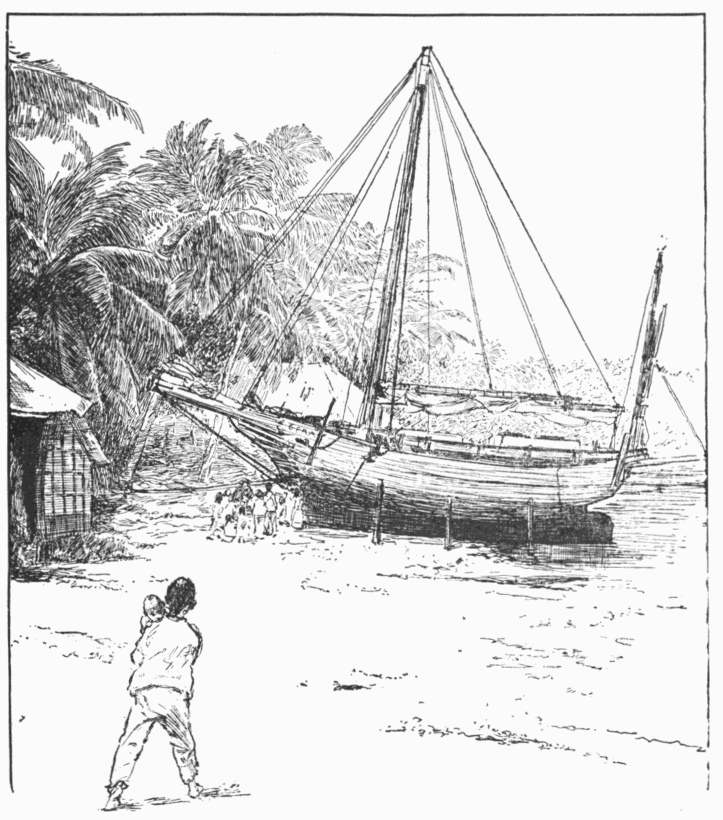
My first impression upon landing was that the crime of infanticide had not reached the islands of Keeling Cocos. "The children have all come to welcome you," explained Mr. Ross, as they mustered at the jetty by hundreds, of all ages and sizes. The people of this country were all rather shy, but, young or old, they never passed one or saw one passing their door without a salutation. In their musical voices they would say, "Are you walking?" ("Jalan, jalan?") "Will you come along?" one would answer.
My first impression when I landed was that the crime of infanticide had not reached the islands of Keeling Cocos. "The children have all come to welcome you," Mr. Ross explained. Hundreds of children of all ages and sizes gathered at the jetty. The people of this country were all rather shy. But young and old alike always greeted anyone they passed or saw passing their door. In their musical voices, they would ask, "Are you walking?" ("Jalan, jalan?") One would answer, "Will you come along?"
For a long time after I arrived the children regarded the "one-man ship" with suspicion and fear. A native man had been blown away to sea many years before, and they hinted to one another that he might have been changed from black to white, and returned in the sloop. For some time every movement I made was closely watched. They were particularly interested in what I ate. One day, after I had been "boot-topping" the sloop with a composition of coal-tar and other stuff, and while I was taking my dinner, with the luxury of blackberry jam, I heard a commotion, and then a yell and a stampede, as the children ran away yelling: "The captain is eating coal-tar! The captain is eating coal-tar!" But they soon found out that this same "coal-tar" was very good to eat, and that I had brought a quantity of it. One day when I was spreading a sea-biscuit thick with it for a wide-awake youngster, I heard them whisper, "Chut-chut!" meaning that a shark had bitten my hand, which they observed was lame. Thenceforth they regarded me as a hero, and I had not fingers enough for the little bright-eyed tots that wanted to cling to them and follow me about. Before this, when I held out my hand and said, "Come!" they would shy off for the nearest house, and say, "Dingin" ("It's cold"), or "Ujan" ("It's going to rain"). But it was now accepted that I was not the returned spirit of the lost black, and I had plenty of friends about the island, rain or shine.
For a long time after I arrived, the children viewed the "one-man ship" with suspicion and fear. Many years before, a native man had been blown out to sea. The children hinted to one another that he might have changed from black to white and returned in the sloop. For some time, they watched my every move closely. They were particularly interested in what I ate. One day, I had been "boot-topping" the sloop, coating its hull with a mixture of coal tar and other materials. Later, as I was enjoying the luxury of blackberry jam with my dinner, I heard a commotion. Then came a yell and a stampede as the children ran away shouting: "The captain is eating coal-tar! The captain is eating coal-tar!" But they soon discovered that this "coal-tar" was very good to eat and that I had brought plenty of it. One day, I was spreading a thick layer of jam on a sea biscuit for an alert youngster. I heard the children whisper, "Chut-chut!" This meant that a shark had bitten my hand, which they had noticed was impaired. From then on, they regarded me as a hero. I did not have enough fingers for all the bright-eyed little children who wanted to hold on to them and follow me around. Before this, when I held out my hand and said, "Come!" they would shy away to the nearest house. They would say, "Dingin" ("It's cold"), or "Ujan" ("It's going to rain"). But now they accepted that I was not the returned spirit of the lost black man. I had plenty of friends around the island, rain or shine.
One day after this, when I tried to haul the sloop and found her fast in the sand, the children all clapped their hands and cried that a kpeting (crab) was holding her by the keel; and little Ophelia, ten or twelve years of age, wrote in the Spray's log-book:
One day after this, I tried to pull the sloop but found her stuck in the sand. All the children clapped their hands and cried that a kpeting (crab) was holding her by the keel. Little Ophelia, who was ten or twelve years old, wrote in the Spray's logbook:
| A hundred men with might and main |
| On the windlass hove, yeo ho! |
| The cable only came in twain; |
| The ship she would not go; |
| For, child, to tell the strangest thing, |
| The keel was held by a great kpeting. |
This being so or not, it was decided that the Mohammedan priest, Sama the Emim, for a pot of jam, should ask Mohammed to bless the voyage and make the crab let go the sloop's keel, which it did, if it had hold, and she floated on the very next tide.
Whether this was true or not, it was decided that the Mohammedan priest, Sama the Emim, would be given a pot of jam. In return, he would ask Mohammed to bless the voyage and make the crab release the sloop's keel. The crab did release it, if it had hold of it, and the sloop floated on the very next tide.
On the 22d of July arrived H.M.S. Iphegenia, with Mr. Justice Andrew J. Leech and court officers on board, on a circuit of inspection among the Straits Settlements, of which Keeling Cocos was a dependency, to hear complaints and try cases by law, if any there were to try. They found the Spray hauled ashore and tied to a cocoanut-tree. But at the Keeling Islands there had not been a grievance to complain of since the day that Hare migrated, for the Rosses have always treated the islanders as their own family.
On July 22, H.M.S. Iphegenia arrived with Mr. Justice Andrew J. Leech and court officers on board. They were inspecting the Straits Settlements, of which Keeling Cocos was a dependency. They had come to hear complaints and try any cases that needed to be heard. They found the Spray pulled ashore and tied to a coconut tree. But there had been no grievances at the Keeling Islands since Hare left. The Rosses have always treated the islanders as their own family.
If there is a paradise on this earth it is Keeling. There was not a case for a lawyer, but something had to be done, for here were two ships in port, a great man-of-war and the Spray. Instead of a lawsuit a dance was got up, and all the officers who could leave their ship came ashore. Everybody on the island came, old and young, and the governor's great hall was filled with people. All that could get on their feet danced, while the babies lay in heaps in the corners of the room, content to look on. My little friend Ophelia danced with the judge. For music two fiddles screeched over and over again the good old tune, "We won't go home till morning." And we did not.
If there is a paradise on earth, it is Keeling. There was no case for a lawyer, but something had to be done. Two ships were in port, a great warship and the Spray. Instead of a lawsuit, a dance was arranged. All the officers who could leave their ship came ashore. Everyone on the island came, old and young, and the governor's great hall was filled with people. Everyone who could stand danced. The babies lay in heaps in the corners of the room, content to watch. My little friend Ophelia danced with the judge. For music, two fiddles screeched out the good old tune, "We won't go home till morning," over and over again. And we did not.
The women at the Keelings do not do all the drudgery, as in many places visited on the voyage. It would cheer the heart of a Fuegian woman to see the Keeling lord of creation up a cocoanut-tree. Besides cleverly climbing the trees, the men of Keeling build exquisitely modeled canoes. By far the best workmanship in boat-building I saw on the voyage was here. Many finished mechanics dwelt under the palms at Keeling, and the hum of the band-saw and the ring of the anvil were heard from morning till night. The first Scotch settlers left there the strength of Northern blood and the inheritance of steady habits. No benevolent society has ever done so much for any islanders as the noble Captain Ross, and his sons, who have followed his example of industry and thrift.
The women at the Keelings do not do all the hard work, as women do in many places I visited on the voyage. A Fuegian woman would be glad to see a Keeling man, a lord of creation, climbing a coconut tree. Besides being skilled climbers, the men of Keeling build beautifully shaped canoes. The best boatbuilding workmanship I saw on the voyage was here, by far. Many skilled craftsmen lived among the palms at Keeling. The hum of the band saw and the ring of the anvil could be heard from morning till night. The first Scottish settlers left behind the strength of Northern blood and a legacy of steady habits. No charitable society has ever done as much for any islanders as the noble Captain Ross. His sons have followed his example of hard work and thrift.
Admiral Fitzroy of the Beagle, who visited here, where many things are reversed, spoke of "these singular though small islands, where crabs eat cocoanuts, fish eat coral, dogs catch fish, men ride on turtles, and shells are dangerous man-traps," adding that the greater part of the sea-fowl roost on branches, and many rats make their nests in the tops of palm-trees.
Admiral Fitzroy of the Beagle visited these islands, where many things are reversed. He described them as "these unusual though small islands, where crabs eat coconuts, fish eat coral, dogs catch fish, men ride turtles, and shells are dangerous traps for people." He added that most seabirds roost on branches, and many rats build their nests in the tops of palm trees.
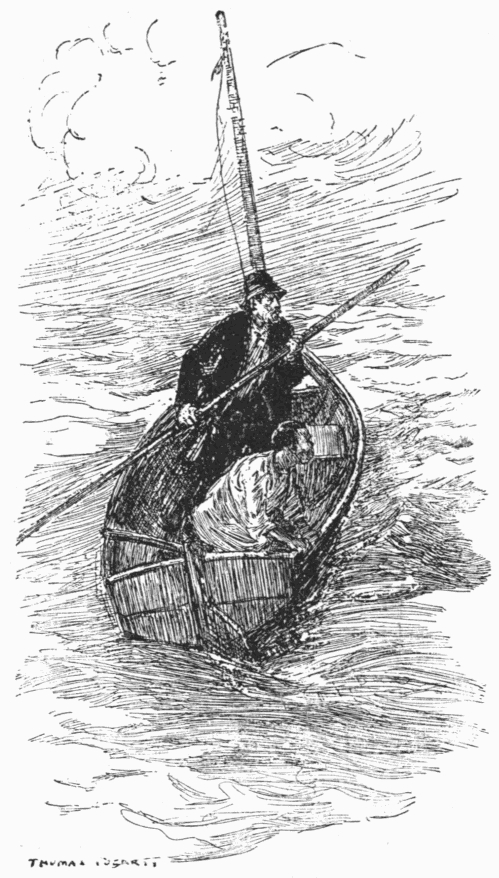
My vessel being refitted, I decided to load her with the famous mammoth tridaena shell of Keeling, found in the bayou near by. And right here, within sight of the village, I came near losing "the crew of the Spray"—not from putting my foot in a man-trap shell, however, but from carelessly neglecting to look after the details of a trip across the harbor in a boat. I had sailed over oceans; I have since completed a course over them all, and sailed round the whole world without so nearly meeting a fatality as on that trip across a lagoon, where I trusted all to some one else, and he, weak mortal that he was, perhaps trusted all to me. However that may be, I found myself with a thoughtless African negro in a rickety bateau that was fitted with a rotten sail, and this blew away in mid-channel in a squall, that sent us drifting helplessly to sea, where we should have been incontinently lost. With the whole ocean before us to leeward, I was dismayed to see, while we drifted, that there was not a paddle or an oar in the boat! There was an anchor, to be sure, but not enough rope to tie a cat, and we were already in deep water. By great good fortune, however, there was a pole. Plying this as a paddle with the utmost energy, and by the merest accidental flaw in the wind to favor us, the trap of a boat was worked into shoal water, where we could touch bottom and push her ashore. With Africa, the nearest coast to leeward, three thousand miles away, with not so much as a drop of water in the boat, and a lean and hungry negro—well, cast the lot as one might, the crew of the Spray in a little while would have been hard to find. It is needless to say that I took no more such chances. The tridacna were afterward procured in a safe boat, thirty of them taking the place of three tons of cement ballast, which I threw overboard to make room and give buoyancy.
After my vessel was refitted, I decided to load her with Keeling's famous mammoth tridacna shells, found in the nearby bayou. Right there, within sight of the village, I nearly lost "the crew of the Spray". It was not because I put my foot in a man-trap shell. It was because I had carelessly neglected the details of a boat trip across the harbor. I had sailed across oceans. Since then, I have crossed them all and sailed around the whole world. Yet I never came so close to death as on that trip across a lagoon. I had trusted everything to someone else, and he, weak mortal that he was, had perhaps trusted everything to me. Whatever the reason, I found myself with a thoughtless African Black man in a rickety bateau with a rotten sail. In mid-channel, a squall blew the sail away and sent us drifting helplessly toward the sea. There we would have been lost at once. As we drifted, I was dismayed to see that the boat had no paddle or oar. The whole ocean lay ahead of us downwind. There was an anchor, to be sure, but not enough rope to tie a cat, and we were already in deep water. By great good fortune, however, there was a pole. I used it as a paddle with all my strength. A purely accidental lull in the wind also helped us work that trap of a boat into shallow water. There we could touch bottom and push her ashore. Africa, the nearest coast downwind, was three thousand miles away. We had not so much as a drop of water in the boat, and there was a lean and hungry Black man. Well, however the lots might have fallen, the crew of the Spray would soon have been hard to find. Needless to say, I took no more such chances. The tridacna were later collected in a safe boat. Thirty of them replaced three tons of cement ballast, which I threw overboard to make room and keep the vessel buoyant.
On August 22, the kpeting, or whatever else it was that held the sloop in the islands, let go its hold, and she swung out to sea under all sail, heading again for home. Mounting one or two heavy rollers on the fringe of the atoll, she cleared the flashing reefs. Long before dark Keeling Cocos, with its thousand souls, as sinless in their lives as perhaps it is possible for frail mortals to be, was left out of sight, astern. Out of sight, I say, except in my strongest affection.
On August 22, the kpeting, or whatever else had held the sloop in the islands, let go. Under full sail, she headed out to sea, once again bound for home. She rode over one or two heavy rollers at the edge of the atoll and cleared the flashing reefs. Long before dark, Keeling Cocos and its thousand people had vanished from sight behind me. Their lives were perhaps as free from sin as frail mortals’ lives can be. Out of sight, I say, but still held in my deepest affection.
The sea was rugged, and the Spray washed heavily when hauled on the wind, which course I took for the island of Rodriguez, and which brought the sea abeam. The true course for the island was west by south, one quarter south, and the distance was nineteen hundred miles; but I steered considerably to the windward of that to allow for the heave of the sea and other leeward effects. My sloop on this course ran under reefed sails for days together. I naturally tired of the never-ending motion of the sea, and, above all, of the wetting I got whenever I showed myself on deck. Under these heavy weather conditions the Spray seemed to lag behind on her course; at least, I attributed to these conditions a discrepancy in the log, which by the fifteenth day out from Keeling amounted to one hundred and fifty miles between the rotator and the mental calculations I had kept of what she should have gone, and so I kept an eye lifting for land. I could see about sundown this day a bunch of clouds that stood in one spot, right ahead, while the other clouds floated on; this was a sign of something. By midnight, as the sloop sailed on, a black object appeared where I had seen the resting clouds. It was still a long way off, but there could be no mistaking this: it was the high island of Rodriguez. I hauled in the patent log, which I was now towing more from habit than from necessity, for I had learned the Spray and her ways long before this. If one thing was clearer than another in her voyage, it was that she could be trusted to come out right and in safety, though at the same time I always stood ready to give her the benefit of even the least doubt. The officers who are over-sure, and "know it all like a book," are the ones, I have observed, who wreck the most ships and lose the most lives. The cause of the discrepancy in the log was one often met with, namely, coming in contact with some large fish; two out of the four blades of the rotator were crushed or bent, the work probably of a shark. Being sure of the sloop's position, I lay down to rest and to think, and I felt better for it. By daylight the island was abeam, about three miles away. It wore a hard, weather-beaten appearance there, all alone, far out in the Indian Ocean, like land adrift. The windward side was uninviting, but there was a good port to leeward, and I hauled in now close on the wind for that. A pilot came out to take me into the inner harbor, which was reached through a narrow channel among coral reefs.
The sea was rough, and waves washed heavily over the Spray as I steered toward the wind. I took that course for the island of Rodriguez, and it brought the sea against the sloop’s side. The true course for the island was west by south, one quarter south, and the distance was nineteen hundred miles. But I steered well to windward of that course to allow for the sea’s push and other forces carrying us downwind. On this course, my sloop ran under reduced sails for days at a time. Naturally, I grew tired of the sea’s endless motion and, above all, of getting soaked whenever I went on deck. In this heavy weather, the Spray seemed to fall behind on her course. At least, I blamed the weather for a discrepancy in the log. By the fifteenth day out from Keeling, the rotator showed that she had traveled one hundred and fifty miles less than I had calculated in my head. So I kept a lookout for land. Around sundown that day, I saw a bunch of clouds standing in one spot, right ahead, while the other clouds floated on. This was a sign of something. By midnight, as the sloop sailed on, a black object appeared where I had seen the stationary clouds. It was still a long way off, but there was no mistaking it. It was the high island of Rodriguez. I pulled in the patent log, which I was now towing more from habit than necessity. I had learned the Spray and her ways long before this. If one thing was clearer than another on her voyage, it was that she could be trusted to come through safely and on course. Even so, I always stood ready to give her the benefit of the slightest doubt. I have observed that the officers who are too sure of themselves and "know it all like a book" are the ones who wreck the most ships and lose the most lives. The discrepancy in the log had a common cause: a collision with a large fish. Two of the rotator’s four blades were crushed or bent, probably by a shark. Now that I was sure of the sloop’s position, I lay down to rest and think, and I felt better for it. By daylight, the island was off our side, about three miles away. It looked hard and weather beaten, all alone, far out in the Indian Ocean, like land adrift. The windward side was uninviting, but there was a good port on the sheltered side. I now steered close into the wind to reach it. A pilot came out to take me into the inner harbor, which was reached through a narrow channel among coral reefs.
It was a curious thing that at all of the islands some reality was insisted on as unreal, while improbabilities were clothed as hard facts; and so it happened here that the good abbe, a few days before, had been telling his people about the coming of Antichrist, and when they saw the Spray sail into the harbor, all feather-white before a gale of wind, and run all standing upon the beach, and with only one man aboard, they cried, "May the Lord help us, it is he, and he has come in a boat!" which I say would have been the most improbable way of his coming. Nevertheless, the news went flying through the place. The governor of the island, Mr. Roberts, came down immediately to see what it was all about, for the little town was in a great commotion. One elderly woman, when she heard of my advent, made for her house and locked herself in. When she heard that I was actually coming up the street she barricaded her doors, and did not come out while I was on the island, a period of eight days. Governor Roberts and his family did not share the fears of their people, but came on board at the jetty, where the sloop was berthed, and their example induced others to come also. The governor's young boys took charge of the Spray's dinghy at once, and my visit cost his Excellency, besides great hospitality to me, the building of a boat for them like the one belonging to the Spray.
It was curious that on all the islands, people insisted some real things were unreal, while treating improbable things as hard facts. A few days earlier, the good abbe had been telling his people about the coming of Antichrist. Then they saw the Spray sail into the harbor, all feather-white before a gale. The sloop ran straight onto the beach under full sail, with only one man aboard. They cried, "May the Lord help us, it is he, and he has come in a boat!" I must say, coming by boat would have been a most improbable way for Antichrist to arrive. Nevertheless, the news flew through the place. The island’s governor, Mr. Roberts, came down immediately to see what was going on. The little town was in a great commotion. One elderly woman, on hearing of my arrival, hurried home and locked herself in. When she heard that I was actually coming up the street, she barricaded her doors. She did not come out during my eight days on the island. Governor Roberts and his family did not share their people’s fears. They came aboard at the jetty, where the sloop was docked, and their example encouraged others to come too. The governor’s young boys took charge of the Spray's dinghy at once. Besides offering me great hospitality, his Excellency had to pay for a boat like the Spray's dinghy to be built for them.
My first day at this Land of Promise was to me like a fairy-tale. For many days I had studied the charts and counted the time of my arrival at this spot, as one might his entrance to the Islands of the Blessed, looking upon it as the terminus of the last long run, made irksome by the want of many things with which, from this time on, I could keep well supplied. And behold, here was the sloop, arrived, and made securely fast to a pier in Rodriguez. On the first evening ashore, in the land of napkins and cut glass, I saw before me still the ghosts of hempen towels and of mugs with handles knocked off. Instead of tossing on the sea, however, as I might have been, here was I in a bright hall, surrounded by sparkling wit, and dining with the governor of the island! "Aladdin," I cried, "where is your lamp? My fisherman's lantern, which I got at Gloucester, has shown me better things than your smoky old burner ever revealed."
My first day in this Land of Promise felt like a fairy tale. For many days I had studied the charts and counted the days until I would arrive. I looked forward to it as someone might look forward to entering the Islands of the Blessed. It would be the end of the last long voyage. That voyage had become tiresome because I lacked many things I could now keep well supplied. And now, here was the sloop, safely tied to a pier in Rodriguez. On my first evening ashore, in a land of napkins and cut glass, I still saw ghosts of hemp towels and mugs with their handles knocked off. Instead of tossing on the sea, as I might have been, I was in a bright hall. I was surrounded by sparkling wit and dining with the island’s governor! "Aladdin," I cried, "where is your lamp? My fisherman’s lantern, which I got at Gloucester, has shown me better things than your smoky old lamp ever revealed."
The second day in port was spent in receiving visitors. Mrs. Roberts and her children came first to "shake hands," they said, "with the Spray." No one was now afraid to come on board except the poor old woman, who still maintained that the Spray had Antichrist in the hold, if, indeed, he had not already gone ashore. The governor entertained that evening, and kindly invited the "destroyer of the world" to speak for himself. This he did, elaborating most effusively on the dangers of the sea (which, after the manner of many of our frailest mortals, he would have had smooth had he made it); also by contrivances of light and darkness he exhibited on the wall pictures of the places and countries visited on the voyage (nothing like the countries, however, that he would have made), and of the people seen, savage and other, frequently groaning, "Wicked world! Wicked world!" When this was finished his Excellency the governor, speaking words of thankfulness, distributed pieces of gold.
I spent the second day in port receiving visitors. Mrs. Roberts and her children came first, they said, to "shake hands" with the Spray. No one was afraid to come aboard now except the poor old woman. She still insisted that Antichrist was in the Spray's hold, if he had not already gone ashore. The governor hosted a gathering that evening and kindly invited the "destroyer of the world" to speak for himself. He did so, talking at great length about the dangers of the sea. Like many of us frail mortals, he would have made the sea smooth, had he made it himself. Using light and darkness, he also projected pictures onto the wall. They showed places and countries visited on the voyage. They were nothing like the countries he would have made, however. The pictures also showed people he had seen, both savage and otherwise. As he showed them, he frequently groaned, "Wicked world! Wicked world!" When he finished, his Excellency the governor spoke words of thanks and handed out pieces of gold.
On the following day I accompanied his Excellency and family on a visit to San Gabriel, which was up the country among the hills. The good abbe of San Gabriel entertained us all royally at the convent, and we remained his guests until the following day. As I was leaving his place, the abbe said, "Captain, I embrace you, and of whatever religion you may be, my wish is that you succeed in making your voyage, and that our Saviour the Christ be always with you!" To this good man's words I could only say, "My dear abbe, had all religionists been so liberal there would have been less bloodshed in the world."
The next day, I joined his Excellency and his family on a visit to San Gabriel, inland among the hills. The good abbe of San Gabriel treated us all royally at the convent. We remained his guests until the next day. As I was leaving, the abbe said, "Captain, I embrace you, whatever your religion may be. I hope you succeed in making your voyage, and that our Saviour Christ is always with you!" To this good man, I could only say, "My dear abbe, if all religious people had been so tolerant, there would have been less bloodshed in the world."
At Rodriguez one may now find every convenience for filling pure and wholesome water in any quantity, Governor Roberts having built a reservoir in the hills, above the village, and laid pipes to the jetty, where, at the time of my visit, there were five and a half feet at high tide. In former years well-water was used, and more or less sickness occurred from it. Beef may be had in any quantity on the island, and at a moderate price. Sweet potatoes were plentiful and cheap; the large sack of them that I bought there for about four shillings kept unusually well. I simply stored them in the sloop's dry hold. Of fruits, pomegranates were most plentiful; for two shillings I obtained a large sack of them, as many as a donkey could pack from the orchard, which, by the way, was planted by nature herself.
At Rodriguez, you can now easily obtain any amount of pure, wholesome water. Governor Roberts built a reservoir in the hills above the village and laid pipes to the jetty. When I visited, the water at the jetty was five and a half feet deep at high tide. In earlier years, people used well water, which caused varying amounts of sickness. Beef is available on the island in any quantity and at a moderate price. Sweet potatoes were plentiful and cheap. The large sack I bought for about four shillings kept unusually well. I simply stored the potatoes in the sloop's dry hold. Of the fruits, pomegranates were the most plentiful. For two shillings, I bought a large sack of them, as many as a donkey could carry from the orchard. The orchard, by the way, had been planted by nature herself.