Chapter 15
Arrival at Port Denison, Queensland—A lecture—Reminiscences of Captain Cook—Lecturing for charity at Cooktown—A happy escape from a coral reef—Home Island, Sunday Island, Bird Island—An American pearl-fisherman—Jubilee at Thursday Island—A new ensign for the Spray—Booby Island—Across the Indian Ocean—Christmas Island.
Arrival at Port Denison, Queensland. A lecture. Memories of Captain Cook. Lecturing for charity at Cooktown. A lucky escape from a coral reef. Home Island, Sunday Island, Bird Island. An American pearl fisherman. A jubilee at Thursday Island. A new flag for the Spray. Booby Island. Across the Indian Ocean. Christmas Island.
On the morning of the 26th Gloucester Island was close aboard, and the Spray anchored in the evening at Port Denison, where rests, on a hill, the sweet little town of Bowen, the future watering place and health-resort of Queensland. The country all about here had a healthful appearance.
On the morning of the 26th, Gloucester Island was close by. That evening, the Spray anchored at Port Denison. The lovely little town of Bowen sits on a hill there. It is destined to become a seaside and health resort for Queensland. All the surrounding countryside looked healthy.
The harbor was easy of approach, spacious and safe, and afforded excellent holding-ground. It was quiet in Bowen when the Spray arrived, and the good people with an hour to throw away on the second evening of her arrival came down to the School of Arts to talk about the voyage, it being the latest event. It was duly advertised in the two little papers, "Boomerang" and "Nully Nully," in the one the day before the affair came off, and in the other the day after, which was all the same to the editor, and, for that matter, it was the same to me.
The harbor was easy to approach, spacious and safe, with excellent ground for anchoring. Bowen was quiet when the Spray arrived. On the second evening after her arrival, the good people who had an hour to spare came to the School of Arts. They came to talk about the voyage, since it was the latest event. The gathering was duly advertised in the two little papers, "Boomerang" and "Nully Nully." One advertised it the day before the event, and the other the day after. That made no difference to the editor, and, for that matter, it made no difference to me.
Besides this, circulars were distributed with a flourish, and the "best bellman" in Australia was employed. But I could have keelhauled the wretch, bell and all, when he came to the door of the little hotel where my prospective audience and I were dining, and with his clattering bell and fiendish yell made noises that would awake the dead, all over the voyage of the Spray from "Boston to Bowen, the two Hubs in the cart-wheels of creation," as the "Boomerang" afterward said.
Besides this, circulars were distributed with great fanfare, and the "best bellman" in Australia was hired. But I could have keelhauled the wretch, bell and all. He came to the door of the little hotel where my prospective audience and I were dining. There, he clanged his bell and yelled like a fiend, making enough noise to wake the dead. And all this was about the voyage of the Spray from "Boston to Bowen, the two Hubs in the cart-wheels of creation," as the "Boomerang" later put it.
Mr. Myles, magistrate, harbor-master, land commissioner, gold warden, etc., was chairman, and introduced me, for what reason I never knew, except to embarrass me with a sense of vain ostentation and embitter my life, for Heaven knows I had met every person in town the first hour ashore. I knew them all by name now, and they all knew me. However, Mr. Myles was a good talker. Indeed, I tried to induce him to go on and tell the story while I showed the pictures, but this he refused to do. I may explain that it was a talk illustrated by stereopticon. The views were good, but the lantern, a thirty-shilling affair, was wretched, and had only an oil-lamp in it.
Mr. Myles was magistrate, harbor master, land commissioner, gold warden, and so on. He chaired the event and introduced me. I never knew why he introduced me, unless it was to embarrass me with needless ceremony and make my life miserable. Heaven knows I had met everyone in town during my first hour ashore. By then, I knew them all by name, and they all knew me. However, Mr. Myles was a good speaker. In fact, I tried to persuade him to tell the story while I showed the pictures, but he refused. I should explain that the talk was illustrated with a stereopticon, a picture projector. The pictures were good, but the projector was a wretched thirty-shilling affair with only an oil lamp inside.
I sailed early the next morning before the papers came out, thinking it best to do so. They each appeared with a favorable column, however, of what they called a lecture, so I learned afterward, and they had a kind word for the bellman besides.
I sailed early the next morning, before the newspapers came out, thinking it best to leave then. Later, though, I learned that each newspaper had published a favorable column about what they called a lecture. They also had a kind word for the bellman.
From Port Denison the sloop ran before the constant trade-wind, and made no stop at all, night or day, till she reached Cooktown, on the Endeavor River, where she arrived Monday, May 31, 1897, before a furious blast of wind encountered that day fifty miles down the coast. On this parallel of latitude is the high ridge and backbone of the tradewinds, which about Cooktown amount often to a hard gale.
From Port Denison, the sloop sailed with the steady trade wind behind her. She sailed without stopping, night or day, until she reached Cooktown on the Endeavor River. She arrived on Monday, May 31, 1897, driven by a furious blast of wind she had encountered that day, fifty miles down the coast. This latitude is the high ridge and backbone of the trade winds, which often reach the force of a hard gale around Cooktown.
I had been charged to navigate the route with extra care, and to feel my way over the ground. The skilled officer of the royal navy who advised me to take the Barrier Reef passage wrote me that H. M. S. Orlando steamed nights as well as days through it, but that I, under sail, would jeopardize my vessel on coral reefs if I undertook to do so.
I had been told to navigate the route with extra care and proceed cautiously. A skilled Royal Navy officer had advised me to take the Barrier Reef passage. He wrote that H. M. S. Orlando steamed through the passage by night as well as by day. But he warned that, under sail, I would risk my vessel on the coral reefs if I did the same.
Confidentially, it would have been no easy matter finding anchorage every night. The hard work, too, of getting the sloop under way every morning was finished, I had hoped, when she cleared the Strait of Magellan. Besides that, the best of admiralty charts made it possible to keep on sailing night and day. Indeed, with a fair wind, and in the clear weather of that season, the way through the Barrier Reef Channel, in all sincerity, was clearer than a highway in a busy city, and by all odds less dangerous. But to any one contemplating the voyage I would say, beware of reefs day or night, or, remaining on the land, be wary still.
Between us, finding an anchorage every night would have been no easy task. I had also hoped to be done with the hard work of getting the sloop sailing every morning once she cleared the Strait of Magellan. Besides, the best admiralty charts made it possible to sail on night and day. In fact, with a favorable wind and the clear weather of that season, the route through the Barrier Reef Channel was honestly clearer than a busy city street, and far less dangerous. But to anyone considering the voyage, I would say: beware of reefs, day or night. Even if you stay on land, be careful.
"The Spray came flying into port like a bird," said the longshore daily papers of Cooktown the morning after she arrived; "and it seemed strange," they added, "that only one man could be seen on board working the craft." The Spray was doing her best, to be sure, for it was near night, and she was in haste to find a perch before dark.
"The Spray came flying into port like a bird," said Cooktown's coastal daily newspapers the morning after she arrived. "And it seemed strange," they added, "that only one man could be seen on board working the boat." The Spray was certainly doing her best. Night was approaching, and she was hurrying to find a perch before dark.
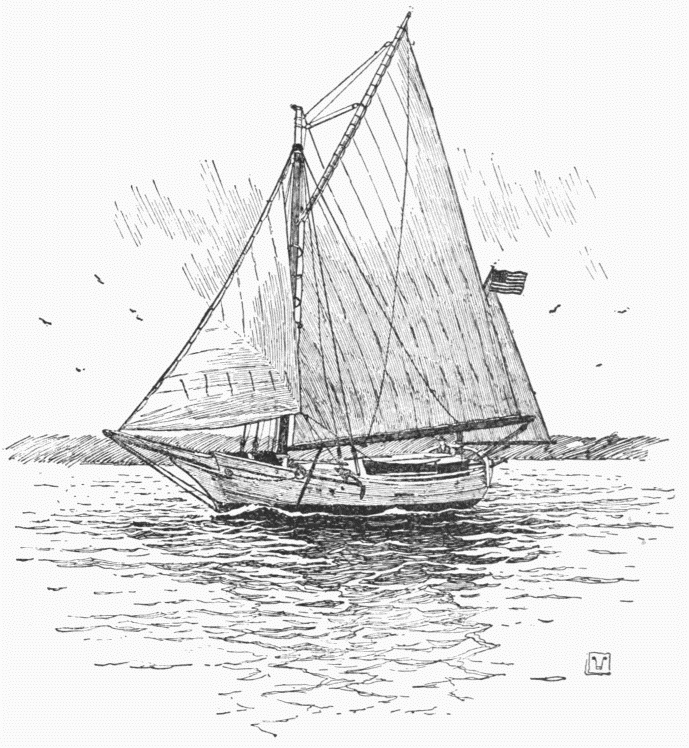
Tacking inside of all the craft in port, I moored her at sunset nearly abreast the Captain Cook monument, and next morning went ashore to feast my eyes on the very stones the great navigator had seen, for I was now on a seaman's consecrated ground. But there seemed a question in Cooktown's mind as to the exact spot where his ship, the Endeavor, hove down for repairs on her memorable voyage around the world. Some said it was not at all at the place where the monument now stood. A discussion of the subject was going on one morning where I happened to be, and a young lady present, turning to me as one of some authority in nautical matters, very flatteringly asked my opinion. Well, I could see no reason why Captain Cook, if he made up his mind to repair his ship inland, couldn't have dredged out a channel to the place where the monument now stood, if he had a dredging-machine with him, and afterward fill it up again; for Captain Cook could do 'most anything, and nobody ever said that he hadn't a dredger along. The young lady seemed to lean to my way of thinking, and following up the story of the historical voyage, asked if I had visited the point farther down the harbor where the great circumnavigator was murdered. This took my breath, but a bright school-boy coming along relieved my embarrassment, for, like all boys, seeing that information was wanted, he volunteered to supply it. Said he: "Captain Cook wasn't murdered 'ere at all, ma'am; 'e was killed in Hafrica: a lion et 'im."
After tacking past all the boats in port, I moored her at sunset, nearly opposite the Captain Cook monument. The next morning I went ashore to feast my eyes on the very stones the great navigator had seen. I was now on ground sacred to sailors. But people in Cooktown seemed unsure of the exact spot where Cook’s ship, the Endeavor, had been tilted over for repairs during her memorable voyage around the world. Some said it was nowhere near the place where the monument now stood. One morning, I happened to be present during a discussion of the subject. A young lady turned to me as someone with some authority on nautical matters and, very flatteringly, asked my opinion. Well, I could see no reason why Captain Cook couldn’t have dredged a channel to the monument’s present site. That is, if he had decided to repair his ship inland and had a dredging machine with him. He could have filled the channel in afterward. After all, Captain Cook could do almost anything, and nobody had ever said he didn’t have a dredger with him. The young lady seemed inclined to agree with me. Continuing with the story of the historic voyage, she asked if I had visited the point farther down the harbor where the great circumnavigator was murdered. This took my breath away, but a bright schoolboy came along and relieved my embarrassment. Like all boys, he saw that information was wanted and volunteered to provide it. He said: "Captain Cook wasn’t murdered here at all, ma’am. He was killed in Africa. A lion ate him."
Here I was reminded of distressful days gone by. I think it was in 1866 that the old steamship Soushay, from Batavia for Sydney, put in at Cooktown for scurvy-grass, as I always thought, and "incidentally" to land mails. On her sick-list was my fevered self; and so I didn't see the place till I came back on the Spray thirty-one years later. And now I saw coming into port the physical wrecks of miners from New Guinea, destitute and dying. Many had died on the way and had been buried at sea. He would have been a hardened wretch who could look on and not try to do something for them.
Here I was reminded of painful days gone by. I think it was in 1866 that the old steamship Soushay stopped at Cooktown on its way from Batavia to Sydney. I always thought it stopped for scurvy-grass and "incidentally" to deliver mail. I was on the sick list with a fever, so I didn't see Cooktown until I returned on the Spray thirty-one years later. Now I saw miners from New Guinea coming into port, physically broken, penniless, and dying. Many had died on the way and had been buried at sea. Only a hardened wretch could have watched without trying to do something for them.
The sympathy of all went out to these sufferers, but the little town was already straitened from a long run on its benevolence. I thought of the matter, of the lady's gift to me at Tasmania, which I had promised myself I would keep only as a loan, but found now, to my embarrassment, that I had invested the money. However, the good Cooktown people wished to hear a story of the sea, and how the crew of the Spray fared when illness got aboard of her. Accordingly the little Presbyterian church on the hill was opened for a conversation; everybody talked, and they made a roaring success of it. Judge Chester, the magistrate, was at the head of the gam, and so it was bound to succeed. He it was who annexed the island of New Guinea to Great Britain. "While I was about it," said he, "I annexed the blooming lot of it." There was a ring in the statement pleasant to the ear of an old voyager. However, the Germans made such a row over the judge's mainsail haul that they got a share in the venture.
Everyone felt sympathy for these sufferers, but the little town was already stretched thin after giving generously for so long. I thought about the matter and the gift a lady had given me in Tasmania. I had promised myself I would treat the gift only as a loan. But I now found, to my embarrassment, that I had invested the money. However, the good people of Cooktown wanted to hear a sea story. They wanted to know how the crew of the Spray had fared when illness came aboard. So the little Presbyterian church on the hill was opened for a conversation. Everybody talked, and they made the gathering a roaring success. Judge Chester, the magistrate, led the gathering, so it was bound to succeed. He was the man who annexed the island of New Guinea to Great Britain. "While I was about it," he said, "I annexed the blooming lot of it." There was a ring to that statement that pleased an old voyager's ear. However, the Germans raised such a fuss over the judge's bold move that they got a share of the venture.
Well, I was now indebted to the miners of Cooktown for the great privilege of adding a mite to a worthy cause, and to Judge Chester all the town was indebted for a general good time. The matter standing so, I sailed on June 6,1897, heading away for the north as before.
Well, I now owed the miners of Cooktown thanks for the great privilege of contributing a little to a worthy cause. And all the town owed Judge Chester thanks for a good time. With that settled, I sailed on June 6, 1897, heading north as before.
Arrived at a very inviting anchorage about sundown, the 7th, I came to, for the night, abreast the Claremont light-ship. This was the only time throughout the passage of the Barrier Reef Channel that the Spray anchored, except at Port Denison and at Endeavor River. On the very night following this, however (the 8th), I regretted keenly, for an instant, that I had not anchored before dark, as I might have done easily under the lee of a coral reef. It happened in this way. The Spray had just passed M Reef light-ship, and left the light dipping astern, when, going at full speed, with sheets off, she hit the M Reef itself on the north end, where I expected to see a beacon.
Around sundown on the 7th, I reached a very inviting anchorage. I anchored for the night alongside the Claremont light-ship. This was the only time the Spray anchored during the passage through the Barrier Reef Channel, except at Port Denison and Endeavor River. The very next night, however, the 8th, I briefly and deeply regretted not anchoring before dark. I could easily have anchored in the shelter of a coral reef. This is what happened. The Spray had just passed M Reef light-ship, leaving its light fading behind us. Then, at full speed with her sails let out, she hit the north end of M Reef itself, where I had expected to see a beacon.
She swung off quickly on her heel, however, and with one more bound on a swell cut across the shoal point so quickly that I hardly knew how it was done. The beacon wasn't there; at least, I didn't see it. I hadn't time to look for it after she struck, and certainly it didn't much matter then whether I saw it or not.
But she quickly turned on her heel. With one more bounce on a swell, she crossed the shallow point so quickly that I hardly knew how she did it. The beacon wasn't there. At least, I didn't see it. I hadn't had time to look for it after she struck. And by then, it certainly didn't much matter whether I saw the beacon or not.
But this gave her a fine departure for Cape Greenville, the next point ahead. I saw the ugly boulders under the sloop's keel as she flashed over them, and I made a mental note of it that the letter M, for which the reef was named, was the thirteenth one in our alphabet, and that thirteen, as noted years before, was still my lucky number. The natives of Cape Greenville are notoriously bad, and I was advised to give them the go-by. Accordingly, from M Reef I steered outside of the adjacent islands, to be on the safe side. Skipping along now, the Spray passed Home Island, off the pitch of the cape, soon after midnight, and squared away on a westerly course. A short time later she fell in with a steamer bound south, groping her way in the dark and making the night dismal with her own black smoke.
But this gave her a good start toward Cape Greenville, the next point ahead. I saw the ugly boulders beneath the sloop’s keel as she flashed over them. I noted that M, the letter the reef was named for, was the thirteenth in our alphabet. As I had noticed years before, thirteen was still my lucky number. The people of Cape Greenville are notoriously dangerous, and I was advised to avoid them. So, to be safe, I steered from M Reef around the outside of the nearby islands. Skipping along, the Spray passed Home Island, off the tip of the cape, soon after midnight. She then turned onto a westerly course. A short time later, she encountered a steamer heading south. The steamer was feeling her way through the dark, making the night dismal with her own black smoke.
From Home Island I made for Sunday Island, and bringing that abeam, shortened sail, not wishing to make Bird Island, farther along, before daylight, the wind being still fresh and the islands being low, with dangers about them. Wednesday, June 9, 1897, at daylight, Bird Island was dead ahead, distant two and a half miles, which I considered near enough. A strong current was pressing the sloop forward. I did not shorten sail too soon in the night! The first and only Australian canoe seen on the voyage was encountered here standing from the mainland, with a rag of sail set, bound for this island.
From Home Island, I sailed toward Sunday Island. When I came alongside it, I reduced sail. I did not want to reach Bird Island, farther along, before daylight. The wind was still strong, and the islands were low and surrounded by dangers. At daylight on Wednesday, June 9, 1897, Bird Island was directly ahead, two and a half miles away. I considered that close enough. A strong current was pushing the sloop forward. I had not reduced sail too soon during the night! Here I encountered the first and only Australian canoe I saw on the voyage. It was coming from the mainland, with a rag of a sail set, bound for Bird Island.
A long, slim fish that leaped on board in the night was found on deck this morning. I had it for breakfast. The spry chap was no larger around than a herring, which it resembled in every respect, except that it was three times as long; but that was so much the better, for I am rather fond of fresh herring, anyway. A great number of fisher-birds were about this day, which was one of the pleasantest on God's earth. The Spray, dancing over the waves, entered Albany Pass as the sun drew low in the west over the hills of Australia.
This morning I found a long, slim fish on deck that had leaped aboard during the night. I had it for breakfast. The lively fellow was no thicker than a herring and looked just like one, except it was three times as long. But that was all the better, since I am rather fond of fresh herring anyway. A great number of fishing birds were about that day, which was one of the pleasantest on God's earth. The Spray danced over the waves and entered Albany Pass as the sun sank in the west over the hills of Australia.
At 7:30 P.M. the Spray, now through the pass, came to anchor in a cove in the mainland, near a pearl-fisherman, called the Tarawa, which was at anchor, her captain from the deck of his vessel directing me to a berth. This done, he at once came on board to clasp hands. The Tarawa was a Californian, and Captain Jones, her master, was an American.
At 7:30 P.M., the Spray cleared the pass and anchored in a cove on the mainland. A pearl-fishing vessel called the Tarawa was anchored nearby. From her deck, the captain directed me to a place to anchor. Once I had anchored, he came aboard at once to shake hands. The Tarawa was from California, and Captain Jones, her captain, was an American.
On the following morning Captain Jones brought on board two pairs of exquisite pearl shells, the most perfect ones I ever saw. They were probably the best he had, for Jones was the heart-yarn of a sailor. He assured me that if I would remain a few hours longer some friends from Somerset, near by, would pay us all a visit, and one of the crew, sorting shells on deck, "guessed" they would. The mate "guessed" so, too. The friends came, as even the second mate and cook had "guessed" they would. They were Mr. Jardine, stockman, famous throughout the land, and his family. Mrs. Jardine was the niece of King Malietoa, and cousin to the beautiful Faamu-Sami ("To make the sea burn"), who visited the Spray at Apia. Mr. Jardine was himself a fine specimen of a Scotsman. With his little family about him, he was content to live in this remote place, accumulating the comforts of life.
The next morning, Captain Jones brought aboard two pairs of exquisite pearl shells. They were the most perfect I had ever seen. They were probably the best he had, because Jones was a sailor to the core. He assured me that if I stayed a few hours longer, some friends from nearby Somerset would visit us all. One of the crew, sorting shells on deck, "guessed" they would. The mate "guessed" so, too. The friends came, just as the second mate and cook had also "guessed" they would. They were Mr. Jardine, a stockman famous throughout the land, and his family. Mrs. Jardine was King Malietoa's niece and cousin to the beautiful Faamu-Sami ("To make the sea burn"), who visited the Spray at Apia. Mr. Jardine himself was a fine example of a Scotsman. With his small family around him, he was content to live in this remote place, accumulating the comforts of life.
The fact of the Tarawa having been built in America accounted for the crew, boy Jim and all, being such good guessers. Strangely enough, though, Captain Jones himself, the only American aboard, was never heard to guess at all.
The Tarawa had been built in America, which explained why the whole crew, including boy Jim, were such good guessers. Strangely enough, though, Captain Jones was the only American aboard, and no one ever heard him guess at all.
After a pleasant chat and good-by to the people of the Tarawa, and to Mr. and Mrs. Jardine, I again weighed anchor and stood across for Thursday Island, now in plain view, mid-channel in Torres Strait, where I arrived shortly after noon. Here the Spray remained over until June 24. Being the only American representative in port, this tarry was imperative, for on the 22d was the Queen's diamond jubilee. The two days over were, as sailors say, for "coming up."
After a pleasant chat, I said goodbye to the people of the Tarawa, and to Mr. and Mrs. Jardine. I weighed anchor again and sailed across to Thursday Island. The island was now clearly visible in the middle of Torres Strait, and I arrived shortly after noon. The Spray stayed there until June 24. As the only American representative in port, I had to stay for the Queen's diamond jubilee on June 22. The extra two days were, as sailors say, for "coming up."
Meanwhile I spent pleasant days about the island. Mr. Douglas, resident magistrate, invited me on a cruise in his steamer one day among the islands in Torres Strait. This being a scientific expedition in charge of Professor Mason Bailey, botanist, we rambled over Friday and Saturday islands, where I got a glimpse of botany. Miss Bailey, the professor's daughter, accompanied the expedition, and told me of many indigenous plants with long names.
Meanwhile, I spent pleasant days on the island. One day, Mr. Douglas, the resident magistrate, invited me on a cruise among the islands of Torres Strait in his steamer. It was a scientific expedition led by Professor Mason Bailey, a botanist. We wandered over Friday and Saturday islands, where I learned a little about botany. Miss Bailey, the professor's daughter, came along and told me about many native plants with long names.
The 22d was the great day on Thursday Island, for then we had not only the jubilee, but a jubilee with a grand corroboree in it, Mr. Douglas having brought some four hundred native warriors and their wives and children across from the mainland to give the celebration the true native touch, for when they do a thing on Thursday Island they do it with a roar. The corroboree was, at any rate, a howling success. It took place at night, and the performers, painted in fantastic colors, danced or leaped about before a blazing fire. Some were rigged and painted like birds and beasts, in which the emu and kangaroo were well represented. One fellow leaped like a frog. Some had the human skeleton painted on their bodies, while they jumped about threateningly, spear in hand, ready to strike down some imaginary enemy. The kangaroo hopped and danced with natural ease and grace, making a fine figure. All kept time to music, vocal and instrumental, the instruments (save the mark!) being bits of wood, which they beat one against the other, and saucer-like bones, held in the palm of the hands, which they knocked together, making a dull sound. It was a show at once amusing, spectacular, and hideous.
The 22nd was the big day on Thursday Island. We had not only the jubilee, but a jubilee with a grand corroboree. Mr. Douglas had brought about four hundred native warriors, along with their wives and children, across from the mainland. He brought them to give the celebration a truly native touch. When people on Thursday Island do something, they do it with a roar. The corroboree was, at any rate, a howling success. It took place at night. The performers, painted in fantastic colors, danced or leaped about in front of a blazing fire. Some were dressed and painted like birds and animals, especially emus and kangaroos. One fellow leaped like a frog. Some had human skeletons painted on their bodies. They jumped about threateningly, spears in hand, ready to strike down imaginary enemies. The kangaroo hopped and danced with natural ease and grace, cutting a fine figure. All kept time to singing and instrumental music. The instruments, if you could call them that, were pieces of wood beaten together and saucer-shaped bones. The bones were held in the palms and knocked together, making a dull sound. The show was amusing, spectacular, and hideous all at once.
The warrior aborigines that I saw in Queensland were for the most part lithe and fairly well built, but they were stamped always with repulsive features, and their women were, if possible, still more ill favored.
The Aboriginal warriors I saw in Queensland were mostly lean and fairly well built. But they always had repulsive features, and their women were, if possible, even more unattractive.
I observed that on the day of the jubilee no foreign flag was waving in the public grounds except the Stars and Stripes, which along with the Union Jack guarded the gateway, and floated in many places, from the tiniest to the standard size. Speaking to Mr. Douglas, I ventured a remark on this compliment to my country. "Oh," said he, "this is a family affair, and we do not consider the Stars and Stripes a foreign flag." The Spray of course flew her best bunting, and hoisted the Jack as well as her own noble flag as high as she could.
I noticed that on the day of the jubilee, the Stars and Stripes was the only foreign flag flying in the public grounds. It stood beside the Union Jack at the gateway and flew in many places, in sizes from the tiniest to the standard. I mentioned this compliment to my country to Mr. Douglas. "Oh," he said, "this is a family affair, and we do not consider the Stars and Stripes a foreign flag." The Spray of course flew her finest flags, raising the Jack and her own noble flag as high as she could.
On June 24 the Spray, well fitted in every way, sailed for the long voyage ahead, down the Indian Ocean. Mr. Douglas gave her a flag as she was leaving his island. The Spray had now passed nearly all the dangers of the Coral Sea and Torres Strait, which, indeed, were not a few; and all ahead from this point was plain sailing and a straight course. The trade-wind was still blowing fresh, and could be safely counted on now down to the coast of Madagascar, if not beyond that, for it was still early in the season.
On June 24, the Spray, fully equipped in every way, set sail for the long voyage down the Indian Ocean. Mr. Douglas gave her a flag as she was leaving his island. The Spray had now passed nearly all the dangers of the Coral Sea and Torres Strait. There had been quite a few. From this point on, the sailing was easy and the course straight. The trade wind was still blowing strongly. Since it was still early in the season, I could safely count on it as far as the coast of Madagascar, if not beyond.
I had no wish to arrive off the Cape of Good Hope before midsummer, and it was now early winter. I had been off that cape once in July, which was, of course, midwinter there. The stout ship I then commanded encountered only fierce hurricanes, and she bore them ill. I wished for no winter gales now. It was not that I feared them more, being in the Spray instead of a large ship, but that I preferred fine weather in any case. It is true that one may encounter heavy gales off the Cape of Good Hope at any season of the year, but in the summer they are less frequent and do not continue so long. And so with time enough before me to admit of a run ashore on the islands en route, I shaped the course now for Keeling Cocos, atoll islands, distant twenty-seven hundred miles. Taking a departure from Booby Island, which the sloop passed early in the day, I decided to sight Timor on the way, an island of high mountains.
I did not want to arrive off the Cape of Good Hope before midsummer, and it was now early winter. I had been off the cape once in July, which was, of course, midwinter there. The sturdy ship I commanded then encountered nothing but fierce hurricanes, and she did not handle them well. I did not want any winter gales now. I did not fear them more because I was in the Spray instead of a large ship. I simply preferred good weather in any case. It is true that heavy gales can occur off the Cape of Good Hope in any season. But in summer they are less frequent and do not last as long. So, with enough time to go ashore on islands along the way, I set course for Keeling Cocos. Those atoll islands were twenty-seven hundred miles away. The sloop passed Booby Island early in the day, and I used it as my starting point. I decided to sight Timor, an island of high mountains, along the way.
Booby Island I had seen before, but only once, however, and that was when in the steamship Soushay, on which I was "hove-down" in a fever. When she steamed along this way I was well enough to crawl on deck to look at Booby Island. Had I died for it, I would have seen that island. In those days passing ships landed stores in a cave on the island for shipwrecked and distressed wayfarers. Captain Airy of the Soushay, a good man, sent a boat to the cave with his contribution to the general store. The stores were landed in safety, and the boat, returning, brought back from the improvised post-office there a dozen or more letters, most of them left by whalemen, with the request that the first homeward-bound ship would carry them along and see to their mailing, which had been the custom of this strange postal service for many years. Some of the letters brought back by our boat were directed to New Bedford, and some to Fairhaven, Massachusetts.
I had seen Booby Island once before, while aboard the steamship Soushay. I was "laid low" with a fever at the time. As the ship steamed past, I was well enough to crawl on deck and look at Booby Island. Even if it had killed me, I would have seen that island. In those days, passing ships left supplies in a cave on the island for shipwrecked travelers and others in distress. Captain Airy of the Soushay was a good man. He sent a boat to the cave with his contribution to the shared supplies. The supplies were safely brought ashore. On its return, the boat brought back a dozen or more letters from the makeshift post office there. Most had been left by whalers, who asked the first ship heading home to carry and mail them. This strange postal service had operated that way for many years. Some of the letters our boat brought back were addressed to New Bedford, and some to Fairhaven, Massachusetts.
There is a light to-day on Booby Island, and regular packet communication with the rest of the world, and the beautiful uncertainty of the fate of letters left there is a thing of the past. I made no call at the little island, but standing close in, exchanged signals with the keeper of the light. Sailing on, the sloop was at once in the Arafura Sea, where for days she sailed in water milky white and green and purple. It was my good fortune to enter the sea on the last quarter of the moon, the advantage being that in the dark nights I witnessed the phosphorescent light effect at night in its greatest splendor. The sea, where the sloop disturbed it, seemed all ablaze, so that by its light I could see the smallest articles on deck, and her wake was a path of fire.
Today, Booby Island has a lighthouse and regular mail service with the rest of the world. The beautiful uncertainty about the fate of letters left there is a thing of the past. I did not stop at the little island, but sailed close enough to exchange signals with the lighthouse keeper. Sailing on, the sloop immediately entered the Arafura Sea. For days, she sailed through water that was milky white, green, and purple. I was fortunate to enter the sea during the moon’s last quarter. The dark nights allowed me to see the phosphorescent light at its most splendid. Wherever the sloop disturbed the sea, the water seemed to burst into flames. By its light, I could see the smallest objects on deck, and her wake was a path of fire.
On the 25th of June the sloop was already clear of all the shoals and dangers, and was sailing on a smooth sea as steadily as before, but with speed somewhat slackened. I got out the flying-jib made at Juan Fernandez, and set it as a spinnaker from the stoutest bamboo that Mrs. Stevenson had given me at Samoa. The spinnaker pulled like a sodger, and the bamboo holding its own, the Spray mended her pace.
By June 25, the sloop was clear of all the shoals and dangers. She was sailing as steadily as before on a smooth sea, but a little more slowly. I got out the flying-jib made at Juan Fernandez and set it as a spinnaker. I used the stoutest bamboo that Mrs. Stevenson had given me at Samoa to hold it out. The spinnaker pulled like a soldier, and the bamboo held firm, so the Spray picked up speed.
Several pigeons flying across to-day from Australia toward the islands bent their course over the Spray. Smaller birds were seen flying in the opposite direction. In the part of the Arafura that I came to first, where it was shallow, sea-snakes writhed about on the surface and tumbled over and over in the waves. As the sloop sailed farther on, where the sea became deep, they disappeared. In the ocean, where the water is blue, not one was ever seen.
Today, several pigeons flying from Australia toward the islands changed course and flew over the Spray. Smaller birds were flying in the opposite direction. In the first part of the Arafura I reached, where the water was shallow, sea snakes writhed on the surface and tumbled over and over in the waves. As the sloop sailed farther on and the water grew deep, the snakes disappeared. In the ocean, where the water is blue, I never saw a single sea snake.
In the days of serene weather there was not much to do but to read and take rest on the Spray, to make up as much as possible for the rough time off Cape Horn, which was not yet forgotten, and to forestall the Cape of Good Hope by a store of ease. My sea journal was now much the same from day to day-something like this of June 26 and 27, for example:
During the days of calm weather, there was little to do aboard the Spray but read and rest. I rested as much as I could to make up for the rough time off Cape Horn, which I had not yet forgotten. I also wanted to stock up on rest before reaching the Cape of Good Hope. My sea journal now read much the same from day to day, like these entries for June 26 and 27, for example:
June 26, in the morning, it is a bit squally; later in, the day blowing a steady breeze.
On the morning of June 26, the weather was a bit squally. Later in the day, a steady breeze blew.
| On the log at noon is | 130 | miles |
| Subtract correction for slip | 10 | " |
| 120 | " | |
| Add for current | 10 | " |
| 130 | " | |
| Latitude by observation at noon, 10 degrees 23' S. | ||
| Longitude as per mark on the chart. |
There wasn't much brain-work in that log, I'm sure. June 27 makes a better showing, when all is told:
I'm sure that log entry didn't take much thought. All things considered, the entry for June 27 looks better:
First of all, to-day, was a flying-fish on deck; fried it in butter.
First thing today, there was a flying fish on deck. I fried it in butter.
133 miles on the log.
The log showed 133 miles.
For slip, off, and for current, on, as per guess, about equal—let it go at that.
I guessed that the loss from slip and the gain from the current were about equal. I left it at that.
Latitude by observation at noon, 10 degrees 25' S.
Latitude observed at noon: 10 degrees 25 minutes south.
For several days now the Spray sailed west on the parallel of 10 degrees 25' S., as true as a hair. If she deviated at all from that, through the day or night,—and this may have happened,—she was back, strangely enough, at noon, at the same latitude. But the greatest science was in reckoning the longitude. My tin clock and only timepiece had by this time lost its minute-hand, but after I boiled her she told the hours, and that was near enough on a long stretch.
For several days now, the Spray had sailed west along the latitude of 10 degrees 25' S., as straight as a hair. She may have strayed from that latitude during the day or night. But strangely enough, she was back at the same latitude at noon. The real challenge was calculating longitude. By this time, my tin clock, my only timepiece, had lost its minute hand. But after I boiled it, it told the hours, and that was close enough for a long stretch.
On the 2d of July the great island of Timor was in view away to the nor'ard. On the following day I saw Dana Island, not far off, and a breeze came up from the land at night, fragrant of the spices or what not of the coast.
On July 2, the great island of Timor came into view far to the north. The next day, I saw Dana Island not far away. That night, a breeze came from the land, fragrant with spices or something else from the coast.
On the 11th, with all sail set and with the spinnaker still abroad, Christmas Island, about noon, came into view one point on the starboard bow. Before night it was abeam and distant two and a half miles. The surface of the island appeared evenly rounded from the sea to a considerable height in the center. In outline it was as smooth as a fish, and a long ocean swell, rolling up, broke against the sides, where it lay like a monster asleep, motionless on the sea. It seemed to have the proportions of a whale, and as the sloop sailed along its side to the part where the head would be, there was a nostril, even, which was a blow-hole through a ledge of rock where every wave that dashed threw up a shaft of water, lifelike and real.
On the 11th, all sails were set, and the spinnaker was still out. Around noon, Christmas Island came into view, one point off the starboard bow. Before nightfall, the island was directly alongside, two and a half miles away. Its surface seemed to rise in an even curve from the sea to a considerable height at the center. Its outline was as smooth as a fish. A long ocean swell rolled in and broke against its sides. The island lay motionless in the sea, like a sleeping monster. It seemed to have the proportions of a whale. As the sloop sailed along its side toward the place where the head would be, there was even a nostril. It was a blowhole through a ledge of rock, where every crashing wave sent up a shaft of water, lifelike and real.
It had been a long time since I last saw this island; but I remember my temporary admiration for the captain of the ship I was then in, the Tawfore, when he sang out one morning from the quarter-deck, well aft, "Go aloft there, one of ye, with a pair of eyes, and see Christmas Island." Sure enough, there the island was in sight from the royal-yard. Captain M——had thus made a great hit, and he never got over it. The chief mate, terror of us ordinaries in the ship, walking never to windward of the captain, now took himself very humbly to leeward altogether. When we arrived at Hong-Kong there was a letter in the ship's mail for me. I was in the boat with the captain some hours while he had it. But do you suppose he could hand a letter to a seaman? No, indeed; not even to an ordinary seaman. When we got to the ship he gave it to the first mate; the first mate gave it to the second mate, and he laid it, michingly, on the capstan-head, where I could get it.
It had been a long time since I last saw this island. But I remember briefly admiring the captain of the ship I was on then, the Tawfore. One morning, he called out from the quarterdeck near the stern, "One of you with a pair of eyes, go aloft and look for Christmas Island." Sure enough, the island was visible from the royal yard high up the mast. Captain M... had made a great impression, and he never got over it. The chief mate, who terrified us ordinary seamen, never walked to windward of the captain. Now he humbly kept himself entirely to leeward. When we arrived at Hong-Kong, there was a letter for me in the ship's mail. I spent some hours in the boat with the captain while he had the letter. But do you suppose he could hand a letter to a seaman? No, indeed, not even to an ordinary seaman. When we got to the ship, he gave the letter to the first mate. The first mate gave it to the second mate, who laid it furtively on the capstan head, where I could get it.