Chapter 14
A testimonial from a lady—Cruising round Tasmania—The skipper delivers his first lecture on the voyage—Abundant provisions-An inspection of the Spray for safety at Devonport—Again at Sydney—Northward bound for Torres Strait—An amateur shipwreck—Friends on the Australian coast—Perils of a coral sea.
A testimonial from a woman. Cruising around Tasmania. The skipper gives his first lecture on the voyage. Plenty of provisions. An inspection of the Spray for safety at Devonport. Back in Sydney. Heading north for Torres Strait. An amateur shipwreck. Friends on the Australian coast. Dangers of a coral sea.
February 1,1897, on returning to my vessel I found waiting for me the letter of sympathy which I subjoin:
On February 1, 1897, I returned to my vessel and found the following letter of sympathy waiting for me:
A lady sends Mr. Slocum the inclosed five-pound note as a token of her appreciation of his bravery in crossing the wide seas on so small a boat, and all alone, without human sympathy to help when danger threatened. All success to you.
A lady sends Mr. Slocum the enclosed five-pound note to show her admiration for his bravery. He crossed the wide seas in such a small boat, all alone, without human sympathy to help him when danger threatened. Wishing you every success.
To this day I do not know who wrote it or to whom I am indebted for the generous gift it contained. I could not refuse a thing so kindly meant, but promised myself to pass it on with interest at the first opportunity, and this I did before leaving Australia.
To this day, I do not know who wrote it or whom I have to thank for the generous gift it contained. I could not refuse something so kindly meant. But I promised myself I would pass it on with interest at the first opportunity. I did so before leaving Australia.
The season of fair weather around the north of Australia being yet a long way off, I sailed to other ports in Tasmania, where it is fine the year round, the first of these being Beauty Point, near which are Beaconsfield and the great Tasmania gold-mine, which I visited in turn. I saw much gray, uninteresting rock being hoisted out of the mine there, and hundreds of stamps crushing it into powder. People told me there was gold in it, and I believed what they said.
The fair weather season in northern Australia was still a long way off, so I sailed to other ports in Tasmania. The weather there is fine all year. My first stop was Beauty Point, near Beaconsfield and the great Tasmania gold-mine. I visited both in turn. At the mine, I saw a lot of dull gray rock being hoisted out, and hundreds of stamps crushing it into powder. People told me there was gold in the rock, and I believed them.
I remember Beauty Point for its shady forest and for the road among the tall gum-trees. While there the governor of New South Wales, Lord Hampden, and his family came in on a steam-yacht, sight-seeing. The Spray, anchored near the landing-pier, threw her bunting out, of course, and probably a more insignificant craft bearing the Stars and Stripes was never seen in those waters. However, the governor's party seemed to know why it floated there, and all about the Spray, and when I heard his Excellency say, "Introduce me to the captain," or "Introduce the captain to me," whichever it was, I found myself at once in the presence of a gentleman and a friend, and one greatly interested in my voyage. If any one of the party was more interested than the governor himself, it was the Honorable Margaret, his daughter. On leaving, Lord and Lady Hampden promised to rendezvous with me on board the Spray at the Paris Exposition in 1900. "If we live," they said, and I added, for my part, "Dangers of the seas excepted."
I remember Beauty Point for its shady forest and the road among the tall gum trees. While I was there, the governor of New South Wales, Lord Hampden, and his family arrived on a steam yacht to see the sights. The Spray was anchored near the landing pier and, of course, flew her flags. Probably no smaller or less important vessel flying the Stars and Stripes had ever been seen in those waters. Still, the governor's party seemed to know why the flag was flying there and all about the Spray. I heard his Excellency say, "Introduce me to the captain," or "Introduce the captain to me," whichever it was. At once I found myself in the presence of a gentleman and a friend who was greatly interested in my voyage. If anyone in the party was more interested than the governor himself, it was his daughter, the Honorable Margaret. As they left, Lord and Lady Hampden promised to meet me aboard the Spray at the Paris Exposition in 1900. "If we live," they said. For my part, I added, "Dangers of the seas excepted."
From Beauty Point the Spray visited Georgetown, near the mouth of the river Tamar. This little settlement, I believe, marks the place where the first footprints were made by whites in Tasmania, though it never grew to be more than a hamlet.
From Beauty Point, the Spray visited Georgetown, near the mouth of the Tamar River. I believe this small settlement marks the spot where white people first set foot in Tasmania. Yet Georgetown never grew beyond a hamlet.
Considering that I had seen something of the world, and finding people here interested in adventure, I talked the matter over before my first audience in a little hall by the country road. A piano having been brought in from a neighbor's, I was helped out by the severe thumping it got, and by a "Tommy Atkins" song from a strolling comedian. People came from a great distance, and the attendance all told netted the house about three pounds sterling. The owner of the hall, a kind lady from Scotland, would take no rent, and so my lecture from the start was a success.
I had seen something of the world, and I found that people here were interested in adventure. So I talked about my travels before my first audience in a small hall by the country road. A piano had been brought in from a neighbor’s house. The heavy pounding it received helped me along, as did a "Tommy Atkins" song from a traveling comedian. People came from a great distance, and the attendance brought the hall about three pounds sterling in all. The owner of the hall, a kind lady from Scotland, would not take any rent. So my lecture was a success from the start.
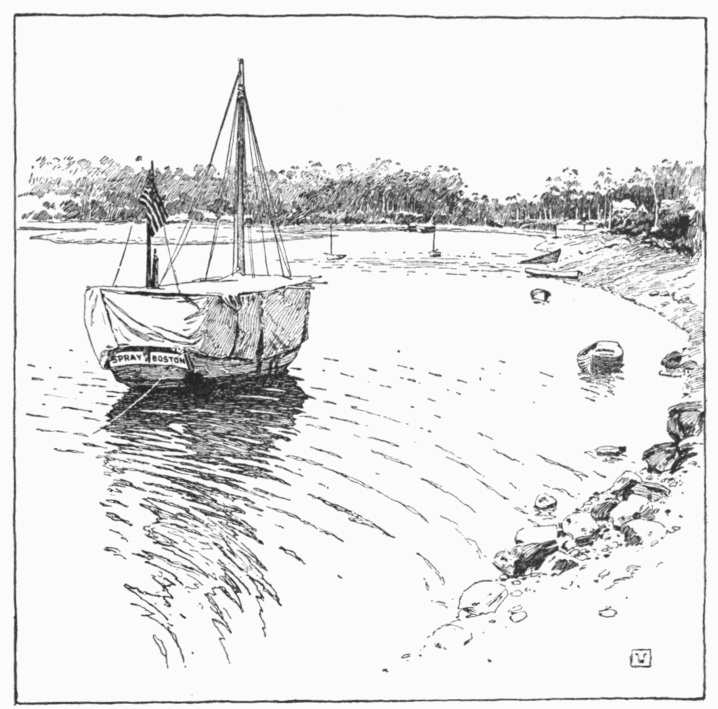
From this snug little place I made sail for Devonport, a thriving place on the river Mersey, a few hours' sail westward along the coast, and fast becoming the most important port in Tasmania. Large steamers enter there now and carry away great cargoes of farm produce, but the Spray was the first vessel to bring the Stars and Stripes to the port, the harbor-master, Captain Murray, told me, and so it is written in the port records. For the great distinction the Spray enjoyed many civilities while she rode comfortably at anchor in her port-duster awning that covered her from stem to stern.
From this snug little place, I sailed west along the coast to Devonport, a few hours away. This thriving place on the river Mersey was fast becoming the most important port in Tasmania. Large steamers now enter the port and carry away great cargoes of farm produce. But the Spray was the first vessel to bring the Stars and Stripes to the port. The harbor-master, Captain Murray, told me so, and the port records say the same. Because of this great distinction, the Spray received many courtesies. She rode comfortably at anchor under her port-duster awning, which covered her from stem to stern.
From the magistrate's house, "Malunnah," on the point, she was saluted by the Jack both on coming in and on going out, and dear Mrs. Aikenhead, the mistress of Malunnah, supplied the Spray with jams and jellies of all sorts, by the case, prepared from the fruits of her own rich garden—enough to last all the way home and to spare. Mrs. Wood, farther up the harbor, put up bottles of raspberry wine for me. At this point, more than ever before, I was in the land of good cheer. Mrs. Powell sent on board chutney prepared "as we prepare it in India." Fish, and game were plentiful here, and the voice of the gobbler was heard, and from Pardo, farther up the country, came an enormous cheese; and yet people inquire: "What did you live on? What did you eat?"
From the magistrate's house, "Malunnah," on the point, the Jack saluted the Spray as she came in and went out. Dear Mrs. Aikenhead, the mistress of Malunnah, supplied the Spray with cases of jams and jellies of all sorts. She had made them from the fruits of her own rich garden. There was more than enough to last all the way home. Mrs. Wood, farther up the harbor, bottled raspberry wine for me. Here, more than ever before, I was in the land of good cheer. Mrs. Powell sent chutney on board, prepared "as we prepare it in India." Fish and game were plentiful here, and the gobbler could be heard. An enormous cheese came from Pardo, farther inland. And yet people ask: "What did you live on? What did you eat?"
I was haunted by the beauty of the landscape all about, of the natural ferneries then disappearing, and of the domed forest-trees on the slopes, and was fortunate in meeting a gentleman intent on preserving in art the beauties of his country. He presented me with many reproductions from his collection of pictures, also many originals, to show to my friends.
I was captivated by the beauty of the landscape all around me. The natural fern groves were disappearing, and dome-shaped forest trees covered the slopes. I was fortunate to meet a gentleman who was determined to preserve his country’s beauty in art. He gave me many reproductions from his picture collection, as well as many originals, to show my friends.
By another gentleman I was charged to tell the glories of Tasmania in every land and on every occasion. This was Dr. McCall, M. L. C. The doctor gave me useful hints on lecturing. It was not without misgivings, however, that I filled away on this new course, and I am free to say that it is only by the kindness of sympathetic audiences that my oratorical bark was held on even keel. Soon after my first talk the kind doctor came to me with words of approval. As in many other of my enterprises, I had gone about it at once and without second thought. "Man, man," said he, "great nervousness is only a sign of brain, and the more brain a man has the longer it takes him to get over the affliction; but," he added reflectively, "you will get over it." However, in my own behalf I think it only fair to say that I am not yet entirely cured.
Another gentleman urged me to tell of Tasmania’s glories in every land and on every occasion. This was Dr. McCall, M. L. C. The doctor gave me useful advice on lecturing. Still, I had doubts as I set sail on this new course. I freely admit that only the kindness of sympathetic audiences kept my speaking ship on an even keel. Soon after my first talk, the kind doctor came to me with words of approval. As with many of my other ventures, I had plunged in at once without a second thought. "Man, man," he said, "great nervousness is only a sign of brain, and the more brain a man has, the longer it takes him to get over the affliction. But," he added thoughtfully, "you will get over it." However, in my own defense, I think it only fair to say that I am not yet entirely cured.
The Spray was hauled out on the marine railway at Devonport and examined carefully top and bottom, but was found absolutely free from the destructive teredo, and sound in all respects. To protect her further against the ravage of these insects the bottom was coated once more with copper paint, for she would have to sail through the Coral and Arafura seas before refitting again. Everything was done to fit her for all the known dangers. But it was not without regret that I looked forward to the day of sailing from a country of so many pleasant associations. If there was a moment in my voyage when I could have given it up, it was there and then; but no vacancies for a better post being open, I weighed anchor April 16,1897, and again put to sea.
The Spray was hauled out on the marine railway at Devonport and carefully inspected from top to bottom. She was found completely free of the destructive teredo and sound in every respect. To protect her further from these pests, her bottom was coated once more with copper paint. She would have to sail through the Coral and Arafura seas before being refitted again. Everything was done to prepare her for all the known dangers. But I looked ahead with regret to the day I would sail from a country that held so many pleasant memories. If there was ever a moment on my voyage when I could have given it up, it was there and then. But no better post was available, so I weighed anchor on April 16, 1897, and put to sea again.
The season of summer was then over; winter was rolling up from the south, with fair winds for the north. A foretaste of winter wind sent the Spray flying round Cape Howe and as far as Cape Bundooro farther along, which she passed on the following day, retracing her course northward. This was a fine run, and boded good for the long voyage home from the antipodes. My old Christmas friends on Bundooro seemed to be up and moving when I came the second time by their cape, and we exchanged signals again, while the sloop sailed along as before in a smooth sea and close to the shore.
Summer was over, and winter was moving up from the south, bringing favorable winds for sailing north. An early taste of winter wind sent the Spray flying around Cape Howe and on toward Cape Bundooro. She passed Cape Bundooro the next day, retracing her course northward. It was a fine run, and it was a good sign for the long voyage home from the antipodes. My old Christmas friends on Bundooro seemed to be up and about when I passed their cape a second time. We exchanged signals again as the sloop sailed along, as before, close to shore on a smooth sea.
The weather was fine, with clear sky the rest of the passage to Port Jackson (Sydney), where the Spray arrived April 22, 1897, and anchored in Watson's Bay, near the heads, in eight fathoms of water. The harbor from the heads to Parramatta, up the river, was more than ever alive with boats and yachts of every class. It was, indeed, a scene of animation, hardly equaled in any other part of the world.
The weather was fine, with clear skies for the rest of the passage to Port Jackson (Sydney). The Spray arrived there on April 22, 1897, and anchored in Watson's Bay, near the heads, in eight fathoms of water. The harbor, from the heads up the river to Parramatta, was busier than ever with boats and yachts of every kind. It was a lively scene, hardly matched anywhere else in the world.
A few days later the bay was flecked with tempestuous waves, and none but stout ships carried sail. I was in a neighboring hotel then, nursing a neuralgia which I had picked up alongshore, and had only that moment got a glance of just the stern of a large, unmanageable steamship passing the range of my window as she forged in by the point, when the bell-boy burst into my room shouting that the Spray had "gone bung." I tumbled out quickly, to learn that "bung" meant that a large steamship had run into her, and that it was the one of which I saw the stern, the other end of her having hit the Spray. It turned out, however, that no damage was done beyond the loss of an anchor and chain, which from the shock of the collision had parted at the hawse. I had nothing at all to complain of, though, in the end, for the captain, after he clubbed his ship, took the Spray in tow up the harbor, clear of all dangers, and sent her back again, in charge of an officer and three men, to her anchorage in the bay, with a polite note saying he would repair any damages done. But what yawing about she made of it when she came with a stranger at the helm! Her old friend the pilot of the Pinta would not have been guilty of such lubberly work. But to my great delight they got her into a berth, and the neuralgia left me then, or was forgotten. The captain of the steamer, like a true seaman, kept his word, and his agent, Mr. Collishaw handed me on the very next day the price of the lost anchor and chain, with something over for anxiety of mind. I remember that he offered me twelve pounds at once; but my lucky number being thirteen, we made the amount thirteen pounds, which squared all accounts.
A few days later, stormy waves dotted the bay, and only sturdy ships carried sail. I was staying at a nearby hotel, nursing a case of neuralgia I had picked up along the shore. A large, unmanageable steamship came in past the point, and I caught a glimpse of its stern through my window. Just then the bellboy burst into my room, shouting that the Spray had "gone bung." I rushed out and learned that "bung" meant a large steamship had run into her. It was the ship whose stern I had just seen. Its other end had hit the Spray. It turned out, though, that the only damage was the loss of an anchor and chain. The shock of the collision had broken the chain at the hawse, where it passed through the bow. In the end, I had nothing to complain about. After the captain used his ship’s anchor to swing her around, he towed the Spray up the harbor, clear of all dangers. Then he sent her back to her anchorage in the bay, in the care of an officer and three men. He also sent a polite note saying he would repair any damage. But how she swerved from side to side with a stranger at the helm! Her old friend, the pilot of the Pinta, would never have steered so clumsily. To my great delight, they got her into a berth, and my neuralgia left me then, or I forgot it. The steamer’s captain, like a true seaman, kept his word. The very next day, his agent, Mr. Collishaw, paid me for the lost anchor and chain, with something extra for my anxiety. I remember that he offered me twelve pounds at once. But thirteen was my lucky number, so we made it thirteen pounds, which settled all accounts.
I sailed again, May 9, before a strong southwest wind, which sent the Spray gallantly on as far as Port Stevens, where it fell calm and then came up ahead; but the weather was fine, and so remained for many days, which was a great change from the state of the weather experienced here some months before.
I sailed again on May 9, with a strong southwest wind carrying the Spray gallantly as far as Port Stevens. There the wind died down, then picked up again from ahead. But the weather was fine and stayed that way for many days. This was a great change from the weather I had experienced here some months before.
Having a full set of admiralty sheet-charts of the coast and Barrier Reef, I felt easy in mind. Captain Fisher, R.N., who had steamed through the Barrier passages in H. M. S. Orlando, advised me from the first to take this route, and I did not regret coming back to it now.
I had a full set of Admiralty charts of the coast and Barrier Reef, so I felt at ease. Captain Fisher, R.N., had steamed through the Barrier passages in H. M. S. Orlando. He had advised me from the start to take this route, and I did not regret returning to it now.
The wind, for a few days after passing Port Stevens, Seal Rocks, and Cape Hawk, was light and dead ahead; but these points are photographed on my memory from the trial of beating round them some months before when bound the other way. But now, with a good stock of books on board, I fell to reading day and night, leaving this pleasant occupation merely to trim sails or tack, or to lie down and rest, while the Spray nibbled at the miles. I tried to compare my state with that of old circumnavigators, who sailed exactly over the route which I took from Cape Verde Islands or farther back to this point and beyond, but there was no comparison so far as I had got. Their hardships and romantic escapes—those of them who escaped death and worse sufferings—did not enter into my experience, sailing all alone around the world. For me is left to tell only of pleasant experiences, till finally my adventures are prosy and tame.
For a few days after passing Port Stevens, Seal Rocks, and Cape Hawk, the wind was light and blew straight against me. But those places were etched in my memory. Some months earlier, I had struggled to beat around them while sailing the other way. Now, with a good supply of books on board, I began reading day and night. I left this pleasant occupation only to trim the sails, tack, or lie down and rest, while the Spray nibbled away at the miles. I tried to compare my situation with that of the early sailors who had circumnavigated the world. They had sailed exactly the same route I took, from the Cape Verde Islands or farther back, to this point and beyond. But as far as I had sailed, there was no comparison. Sailing all alone around the world, I had known none of their hardships or dramatic escapes. Some of them escaped death and even worse suffering. I can tell only of pleasant experiences, until finally my adventures become dull and tame.
I had just finished reading some of the most interesting of the old voyages in woe-begone ships, and was already near Port Macquarie, on my own cruise, when I made out, May 13, a modern dandy craft in distress, anchored on the coast. Standing in for her, I found that she was the cutter-yacht Akbar, which had sailed from Watson's Bay about three days ahead of the Spray, and that she had run at once into trouble. No wonder she did so. It was a case of babes in the wood or butterflies at sea. Her owner, on his maiden voyage, was all duck trousers; the captain, distinguished for the enormous yachtsman's cap he wore, was a Murrumbidgee whaler before he took command of the Akbar; and the navigating officer, poor fellow, was almost as deaf as a post, and nearly as stiff and immovable as a post in the ground. These three jolly tars comprised the crew. None of them knew more about the sea or about a vessel than a newly born babe knows about another world. They were bound for New Guinea, so they said; perhaps it was as well that three tenderfeet so tender as those never reached that destination.
I had just finished reading some of the most interesting old accounts of voyages in miserable ships. On my own cruise, I was already near Port Macquarie when, on May 13, I spotted a modern, fancy craft in distress. The craft was anchored off the coast. I sailed in toward her and found that she was the cutter-yacht Akbar. She had sailed from Watson's Bay about three days ahead of the Spray and had run into trouble at once. No wonder. It was a case of babes in the woods or butterflies at sea. Her owner, on his first voyage, was all duck trousers. The captain, known for the enormous yachtsman's cap he wore, had been a Murrumbidgee whaler before taking command of the Akbar. The navigating officer, poor fellow, was almost as deaf as a post and nearly as stiff and immovable as a post in the ground. These three cheerful sailors made up the crew. None of them knew more about the sea or a vessel than a newborn baby knows about another world. They said they were bound for New Guinea. Perhaps it was just as well that three such inexperienced newcomers never reached that destination.
Akbar was not her registered name, which I need not reveal.
The Murrumbidgee is a small river winding through the mountains of Australia. It is the last place you would look for a whale.
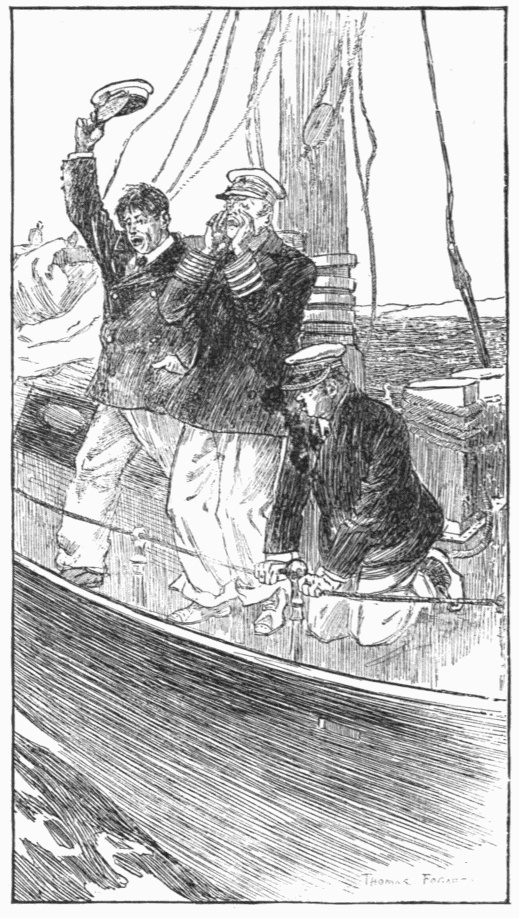
The owner, whom I had met before he sailed, wanted to race the poor old Spray to Thursday Island en route. I declined the challenge, naturally, on the ground of the unfairness of three young yachtsmen in a clipper against an old sailor all alone in a craft of coarse build; besides that, I would not on any account race in the Coral Sea.
The owner, whom I had met before he sailed, wanted to race the poor old Spray to Thursday Island along the way. Naturally, I declined the challenge. It was unfair to pit three young yachtsmen in a clipper against an old sailor alone in a crudely built boat. Besides, I would not race in the Coral Sea under any circumstances.
"Spray ahoy!" they all hailed now. "What's the weather goin' t' be? Is it a-goin' to blow? And don't you think we'd better go back t' r-r-refit?"
"Spray ahoy!" they all called out now. "What's the weather going to be like? Is it going to blow? And don't you think we'd better go back to r-r-refit?"
I thought, "If ever you get back, don't refit," but I said: "Give me the end of a rope, and I'll tow you into yon port farther along; and on your lives," I urged, "do not go back round Cape Hawk, for it's winter to the south of it."
I thought, "If you ever get back, don't refit." But I said, "Give me the end of a rope, and I'll tow you to the port farther along." I urged them, "For your lives, do not go back around Cape Hawk. It's winter south of the cape."
They purposed making for Newcastle under jury-sails; for their mainsail had been blown to ribbons, even the jigger had been blown away, and her rigging flew at loose ends. The Akbar, in a word, was a wreck.
They planned to head for Newcastle under jury-sails. Their mainsail had been blown to ribbons, even the jigger had been blown away, and the ship's rigging hung loose. In short, the Akbar was a wreck.
"Up anchor," I shouted, "up anchor, and let me tow you into Port Macquarie, twelve miles north of this."
"Raise your anchor," I shouted. "Raise your anchor and let me tow you into Port Macquarie, twelve miles north of here."
"No," cried the owner; "we'll go back to Newcastle. We missed Newcastle on the way coming; we didn't see the light, and it was not thick, either." This he shouted very loud, ostensibly for my hearing, but closer even than necessary, I thought, to the ear of the navigating officer. Again I tried to persuade them to be towed into the port of refuge so near at hand. It would have cost them only the trouble of weighing their anchor and passing me a rope; of this I assured them, but they declined even this, in sheer ignorance of a rational course.
"No," cried the owner. "We'll go back to Newcastle. We missed Newcastle on the way here. We didn't see the light, even though it wasn't foggy." He shouted this very loudly, supposedly so I could hear him. But I thought he was closer to the navigating officer's ear than necessary. Again, I tried to persuade them to let me tow them into the nearby port of refuge. I assured them that all they had to do was raise their anchor and pass me a rope. But they refused even this, simply because they did not know what sensible action to take.
"What is your depth of water?" I asked.
"How deep is the water where you are?" I asked.
"Don't know; we lost our lead. All the chain is out. We sounded with the anchor."
"I don't know. We lost our sounding lead. All the chain is out. We measured the depth with the anchor."
"Send your dinghy over, and I'll give you a lead."
"Send your dinghy over, and I'll give you a lead."
"We've lost our dinghy, too," they cried.
"We've lost our dinghy, too," they shouted.
"God is good, else you would have lost yourselves," and "Farewell" was all I could say.
"God is good, or you would have gotten lost," and "Goodbye" was all I could say.
The trifling service proffered by the Spray would have saved their vessel.
The small service offered by the Spray would have saved their vessel.
"Report us," they cried, as I stood on—"report us with sails blown away, and that we don't care a dash and are not afraid."
"Report us," they cried as I sailed on. "Report that our sails have blown away, but we don't give a damn and aren't afraid."
"Then there is no hope for you," and again "Farewell." I promised I would report them, and did so at the first opportunity, and out of humane reasons I do so again. On the following day I spoke the steamship Sherman, bound down the coast, and reported the yacht in distress and that it would be an act of humanity to tow her somewhere away from her exposed position on an open coast. That she did not get a tow from the steamer was from no lack of funds to pay the bill; for the owner, lately heir to a few hundred pounds, had the money with him. The proposed voyage to New Guinea was to look that island over with a view to its purchase. It was about eighteen days before I heard of the Akbar again, which was on the 31st of May, when I reached Cooktown, on the Endeavor River, where I found this news:
"Then there is no hope for you," and again, "Farewell." I promised to report their situation and did so at the first opportunity. I report it again here out of concern for their safety. The next day, I spoke to the steamship Sherman, which was sailing down the coast. I reported that the yacht was in distress. I said it would be an act of kindness to tow her somewhere away from her exposed position on the open coast. It was not for lack of money that the yacht failed to get a tow from the steamer. The owner had recently inherited a few hundred pounds and had the money with him. The planned voyage to New Guinea was to look over the island with a view to buying it. About eighteen days passed before I heard of the Akbar again. That was on May 31, when I reached Cooktown, on the Endeavor River, and found this news:
May 31, the yacht Akbar, from Sydney for New Guinea, three hands on board, lost at Crescent Head; the crew saved.
May 31, the yacht Akbar, sailing from Sydney to New Guinea with three crew members, was lost at Crescent Head. The crew was saved.
So it took them several days to lose the yacht, after all.
So, after all, it took them several days to lose the yacht.
After speaking the distressed Akbar and the Sherman, the voyage for many days was uneventful save in the pleasant incident on May 16 of a chat by signal with the people on South Solitary Island, a dreary stone heap in the ocean just off the coast of New South Wales, in latitude 30 degrees 12' south.
After communicating with the distressed Akbar and the Sherman, the voyage was uneventful for many days. The one pleasant exception was a chat by signal on May 16 with the people on South Solitary Island. The island is a dreary heap of stone in the ocean, just off the coast of New South Wales, at latitude 30 degrees 12' south.
"What vessel is that?" they asked, as the sloop came abreast of their island. For answer I tried them with the Stars and Stripes at the peak. Down came their signals at once, and up went the British ensign instead, which they dipped heartily. I understood from this that they made out my vessel and knew all about her, for they asked no more questions. They didn't even ask if the "voyage would pay," but they threw out this friendly message, "Wishing you a pleasant voyage," which at that very moment I was having.
"What vessel is that?" they asked as the sloop came alongside their island. In answer, I raised the Stars and Stripes at the peak. They immediately lowered their signals and raised the British ensign instead, dipping it heartily in salute. I understood that they had recognized my vessel and knew all about her, for they asked no more questions. They didn't even ask if the "voyage would pay." But they sent this friendly message: "Wishing you a pleasant voyage." At that very moment, I was having one.
May 19 the Spray, passing the Tweed River, was signaled from Danger Point, where those on shore seemed most anxious about the state of my health, for they asked if "all hands" were well, to which I could say, "Yes."
On May 19, as the Spray passed the Tweed River, people on shore at Danger Point signaled me. They seemed very concerned about my health, since they asked if "all hands" were well. I could answer, "Yes."
On the following day the Spray rounded Great Sandy Cape, and, what is a notable event in every voyage, picked up the trade-winds, and these winds followed her now for many thousands of miles, never ceasing to blow from a moderate gale to a mild summer breeze, except at rare intervals.
The next day, the Spray rounded Great Sandy Cape and picked up the trade winds, a notable event on every voyage. The winds followed her for many thousands of miles. Except at rare intervals, they never stopped blowing, ranging from a moderate gale to a mild summer breeze.
From the pitch of the cape was a noble light seen twenty-seven miles; passing from this to Lady Elliott Light, which stands on an island as a sentinel at the gateway of the Barrier Reef, the Spray was at once in the fairway leading north. Poets have sung of beacon-light and of pharos, but did ever poet behold a great light flash up before his path on a dark night in the midst of a coral sea? If so, he knew the meaning of his song.
A magnificent light at the tip of the cape could be seen from twenty-seven miles away. Passing from there to Lady Elliott Light, the Spray was soon in the northbound channel. Lady Elliott Light stands on an island like a sentinel at the gateway to the Barrier Reef. Poets have sung of beacons and lighthouses. But has a poet ever seen a great light flash before him on a dark night amid a coral sea? If so, he knew what his song meant.
The Spray had sailed for hours in suspense, evidently stemming a current. Almost mad with doubt, I grasped the helm to throw her head off shore, when blazing out of the sea was the light ahead. "Excalibur!" cried "all hands," and rejoiced, and sailed on. The Spray was now in a protected sea and smooth water, the first she had dipped her keel into since leaving Gibraltar, and a change it was from the heaving of the misnamed "Pacific" Ocean.
The Spray had sailed for hours in uncertainty, apparently fighting a current. Almost frantic with doubt, I grabbed the helm to turn her away from shore. Then a light blazed ahead from the sea. "Excalibur!" cried "all hands." We rejoiced and sailed on. The Spray was now in sheltered, smooth water. It was the first smooth water she had sailed in since leaving Gibraltar. What a change it was from the heaving waters of the misnamed "Pacific" Ocean.
The Pacific is perhaps, upon the whole, no more boisterous than other oceans, though I feel quite safe in saying that it is not more pacific except in name. It is often wild enough in one part or another. I once knew a writer who, after saying beautiful things about the sea, passed through a Pacific hurricane, and he became a changed man. But where, after all, would be the poetry of the sea were there no wild waves? At last here was the Spray in the midst of a sea of coral. The sea itself might be called smooth indeed, but coral rocks are always rough, sharp, and dangerous. I trusted now to the mercies of the Maker of all reefs, keeping a good lookout at the same time for perils on every hand.
The Pacific is perhaps no rougher overall than other oceans. But I feel quite safe saying it is no more peaceful, except in name. It is often wild enough in one part or another. I once knew a writer who said beautiful things about the sea. Then he went through a Pacific hurricane, and he became a changed man. But where would the poetry of the sea be without wild waves? At last the Spray was in the middle of a sea of coral. The water itself could indeed be called smooth, but coral rocks are always rough, sharp, and dangerous. I now trusted in the mercy of the Maker of all reefs. At the same time, I kept a sharp lookout for dangers on every side.
Lo! the Barrier Reef and the waters of many colors studded all about with enchanted islands! I behold among them after all many safe harbors, else my vision is astray. On the 24th of May, the sloop, having made one hundred and ten miles a day from Danger Point, now entered Whitsunday Pass, and that night sailed through among the islands. When the sun rose next morning I looked back and regretted having gone by while it was dark, for the scenery far astern was varied and charming.
Look! The Barrier Reef and its waters of many colors, dotted all around with enchanted islands! Among them, I see many safe harbors after all, unless my eyes deceive me. On May 24, the sloop entered Whitsunday Pass, having averaged 110 miles a day from Danger Point. That night, it sailed through the islands. When the sun rose the next morning, I looked back and regretted passing through in the dark. The scenery far behind me was varied and charming.