Chapter 13
Samoan royalty—King Malietoa—Good-by to friends at Vailima—Leaving Fiji to the south—Arrival at Newcastle, Australia—The yachts of Sydney—A ducking on the Spray—Commodore Foy presents the sloop with a new suit of sails—On to Melbourne—A shark that proved to be valuable—A change of course—The "Rain of Blood"—In Tasmania.
Samoan royalty. King Malietoa. Saying goodbye to friends at Vailima. Leaving Fiji to the south. Arrival at Newcastle, Australia. The yachts of Sydney. A dunking on the Spray. Commodore Foy gives the sloop a new set of sails. On to Melbourne. A shark that proved valuable. A change of course. The "Rain of Blood". In Tasmania.
At Apia I had the pleasure of meeting Mr. A. Young, the father of the late Queen Margaret, who was Queen of Manua from 1891 to 1895. Her grandfather was an English sailor who married a princess. Mr. Young is now the only survivor of the family, two of his children, the last of them all, having been lost in an island trader which a few months before had sailed, never to return. Mr. Young was a Christian gentleman, and his daughter Margaret was accomplished in graces that would become any lady. It was with pain that I saw in the newspapers a sensational account of her life and death, taken evidently from a paper in the supposed interest of a benevolent society, but without foundation in fact. And the startling head-lines saying, "Queen Margaret of Manua is dead," could hardly be called news in 1898, the queen having then been dead three years.
At Apia, I had the pleasure of meeting Mr. A. Young, the father of the late Queen Margaret. She was Queen of Manua from 1891 to 1895. Her grandfather was an English sailor who married a princess. Mr. Young is now the only surviving member of the family. Two of his children, the last of the family besides him, were lost aboard an island trading ship. The ship had sailed a few months earlier and never returned. Mr. Young was a Christian gentleman, and his daughter Margaret had accomplishments and graces that would suit any lady. I was pained to see a sensational account of her life and death in the newspapers. It was evidently taken from a paper supposedly published in the interest of a charitable society, but it had no basis in fact. And the startling headlines saying, "Queen Margaret of Manua is dead," could hardly be called news in 1898. The queen had been dead for three years by then.
While hobnobbing, as it were, with royalty, I called on the king himself, the late Malietoa. King Malietoa was a great ruler; he never got less than forty-five dollars a month for the job, as he told me himself, and this amount had lately been raised, so that he could live on the fat of the land and not any longer be called "Tin-of-salmon Malietoa" by graceless beach-combers.
While mixing with royalty, so to speak, I visited the king himself, the late Malietoa. King Malietoa was a great ruler. He told me himself that he never received less than forty-five dollars a month for the job. His pay had recently been raised, so he could live in luxury. The raise also meant that rude beachcombers would no longer call him "Tin-of-salmon Malietoa."
As my interpreter and I entered the front door of the palace, the king's brother, who was viceroy, sneaked in through a taro-patch by the back way, and sat cowering by the door while I told my story to the king. Mr. W—-of New York, a gentleman interested in missionary work, had charged me, when I sailed, to give his remembrance to the king of the Cannibal Islands, other islands of course being meant; but the good King Malietoa, notwithstanding that his people have not eaten a missionary in a hundred years, received the message himself, and seemed greatly pleased to hear so directly from the publishers of the "Missionary Review," and wished me to make his compliments in return. His Majesty then excused himself, while I talked with his daughter, the beautiful Faamu-Sami (a name signifying "To make the sea burn"), and soon reappeared in the full-dress uniform of the German commander-in-chief, Emperor William himself; for, stupidly enough, I had not sent my credentials ahead that the king might be in full regalia to receive me. Calling a few days later to say good-by to Faamu-Sami, I saw King Malietoa for the last time.
As my interpreter and I entered the palace through the front door, the king's brother sneaked in through a taro patch at the back. He was the viceroy, and he sat cowering by the door while I told my story to the king. When I sailed, Mr. W of New York had asked me to give his regards to the king of the Cannibal Islands. Mr. W was a gentleman interested in missionary work, and of course he meant other islands. But good King Malietoa accepted the message himself, although his people had not eaten a missionary in a hundred years. He seemed very pleased to hear so directly from the publishers of the "Missionary Review" and asked me to return his compliments. His Majesty then excused himself while I talked with his daughter, the beautiful Faamu-Sami. Her name means "To make the sea burn." He soon reappeared in the full-dress uniform of the German commander-in-chief, Emperor William himself. Stupidly, I had not sent my credentials ahead, so the king could receive me in full regalia. A few days later, I called to say goodbye to Faamu-Sami and saw King Malietoa for the last time.
Of the landmarks in the pleasant town of Apia, my memory rests first on the little school just back of the London Missionary Society coffee-house and reading-rooms, where Mrs. Bell taught English to about a hundred native children, boys and girls. Brighter children you will not find anywhere.
Of the landmarks in the pleasant town of Apia, I remember first the little school just behind the London Missionary Society coffeehouse and reading rooms. There, Mrs. Bell taught English to about a hundred native children, boys and girls. You will not find brighter children anywhere.
"Now, children," said Mrs. Bell, when I called one day, "let us show the captain that we know something about the Cape Horn he passed in the Spray" at which a lad of nine or ten years stepped nimbly forward and read Basil Hall's fine description of the great cape, and read it well. He afterward copied the essay for me in a clear hand.
One day when I visited, Mrs. Bell said, "Now, children, let us show the captain what we know about Cape Horn, which he passed in the Spray." A boy of nine or ten quickly stepped forward and read Basil Hall's fine description of the great cape. He read it well. Later, he copied the essay for me in clear handwriting.
Calling to say good-by to my friends at Vailima, I met Mrs. Stevenson in her Panama hat, and went over the estate with her. Men were at work clearing the land, and to one of them she gave an order to cut a couple of bamboo-trees for the Spray from a clump she had planted four years before, and which had grown to the height of sixty feet. I used them for spare spars, and the butt of one made a serviceable jib-boom on the homeward voyage. I had then only to take ava with the family and be ready for sea. This ceremony, important among Samoans, was conducted after the native fashion. A Triton horn was sounded to let us know when the beverage was ready, and in response we all clapped hands. The bout being in honor of the Spray, it was my turn first, after the custom of the country, to spill a little over my shoulder; but having forgotten the Samoan for "Let the gods drink," I repeated the equivalent in Russian and Chinook, as I remembered a word in each, whereupon Mr. Osbourne pronounced me a confirmed Samoan. Then I said "Tofah!" to my good friends of Samoa, and all wishing the Spray bon voyage, she stood out of the harbor August 20, 1896, and continued on her course. A sense of loneliness seized upon me as the islands faded astern, and as a remedy for it I crowded on sail for lovely Australia, which was not a strange land to me; but for long days in my dreams Vailima stood before the prow.
I called on my friends at Vailima to say goodbye. I met Mrs. Stevenson in her Panama hat and walked around the estate with her. Men were clearing the land, and she told one of them to cut two bamboo trees for the Spray. She had planted the clump four years earlier, and the bamboo had grown sixty feet tall. I used the trees as spare spars, and the base of one made a useful jib-boom on the voyage home. All that remained was to drink ava with the family and get ready for sea. This ceremony, important among Samoans, was conducted in the local fashion. A Triton horn sounded to let us know the drink was ready, and we all clapped in response. Since the gathering was in honor of the Spray, it was my turn to go first. Following the local custom, I spilled a little ava over my shoulder. But I had forgotten the Samoan for "Let the gods drink," so I said the equivalent in Russian and Chinook. I remembered a word in each language. At this, Mr. Osbourne declared me a confirmed Samoan. Then I said "Tofah!" to my good friends in Samoa. With everyone wishing the Spray bon voyage, she sailed out of the harbor on August 20, 1896, and continued on her course. I felt lonely as the islands faded behind me. To overcome the feeling, I set as much sail as I could for lovely Australia, a land I already knew. But for many days, Vailima stood before the bow in my dreams.
The Spray had barely cleared the islands when a sudden burst of the trades brought her down to close reefs, and she reeled off one hundred and eighty-four miles the first day, of which I counted forty miles of current in her favor. Finding a rough sea, I swung her off free and sailed north of the Horn Islands, also north of Fiji instead of south, as I had intended, and coasted down the west side of the archipelago. Thence I sailed direct for New South Wales, passing south of New Caledonia, and arrived at Newcastle after a passage of forty-two days, mostly of storms and gales.
The Spray had barely cleared the islands when a sudden burst of the trade winds forced me to reef her sails tightly. She covered 184 miles on the first day, including 40 miles I credited to a favorable current. In the rough sea, I turned her onto a freer course and sailed north of the Horn Islands. I also sailed north of Fiji instead of south, as I had intended, and followed the west coast of the archipelago. From there, I sailed straight for New South Wales, passing south of New Caledonia. I arrived at Newcastle after a 42-day passage, with storms and gales most of the way.
One particularly severe gale encountered near New Caledonia foundered the American clipper-ship Patrician farther south. Again, nearer the coast of Australia, when, however, I was not aware that the gale was extraordinary, a French mail-steamer from New Caledonia for Sydney, blown considerably out of her course, on her arrival reported it an awful storm, and to inquiring friends said: "Oh, my! we don't know what has become of the little sloop Spray. We saw her in the thick of the storm." The Spray was all right, lying to like a duck. She was under a goose's wing mainsail, and had had a dry deck while the passengers on the steamer, I heard later, were up to their knees in water in the saloon. When their ship arrived at Sydney they gave the captain a purse of gold for his skill and seamanship in bringing them safe into port. The captain of the Spray got nothing of this sort. In this gale I made the land about Seal Rocks, where the steamship Catherton, with many lives, was lost a short time before. I was many hours off the rocks, beating back and forth, but weathered them at last.
A particularly severe gale I encountered near New Caledonia sank the American clipper ship Patrician farther south. Later, nearer the coast of Australia, I encountered another gale, though I did not realize it was extraordinary. A French mail steamer sailing from New Caledonia to Sydney was blown far off course by the gale. When the steamer arrived, its passengers described an awful storm. To friends who asked about the Spray, they said: "Oh, my! We don't know what happened to the little sloop Spray. We saw her in the middle of the storm." The Spray was all right, lying to like a duck. She had her mainsail set like a goose's wing, and her deck had stayed dry. I heard later that the steamer's passengers had been up to their knees in water in the saloon. When the steamer arrived in Sydney, the passengers gave its captain a purse of gold. It was a reward for his skill and seamanship in bringing them safely into port. The captain of the Spray got nothing of the sort. During this gale, I sighted land near Seal Rocks. The steamship Catherton had been lost there a short time before, along with many lives. I spent many hours off the rocks, beating back and forth, but at last I made it past them.
I arrived at Newcastle in the teeth of a gale of wind. It was a stormy season. The government pilot, Captain Cumming, met me at the harbor bar, and with the assistance of a steamer carried my vessel to a safe berth. Many visitors came on board, the first being the United States consul, Mr. Brown. Nothing was too good for the Spray here. All government dues were remitted, and after I had rested a few days a port pilot with a tug carried her to sea again, and she made along the coast toward the harbor of Sydney, where she arrived on the following day, October 10, 1896.
I arrived at Newcastle in the face of a gale. It was a stormy season. The government pilot, Captain Cumming, met me at the harbor bar. With the help of a steamer, he brought my vessel to a safe berth. Many visitors came aboard. The first was the United States consul, Mr. Brown. Nothing was too good for the Spray here. All government dues were waived. After I had rested for a few days, a port pilot and a tug took her back to sea. She sailed along the coast toward the harbor of Sydney and arrived there the following day, October 10, 1896.
I came to in a snug cove near Manly for the night, the Sydney harbor police-boat giving me a pluck into anchorage while they gathered data from an old scrap-book of mine, which seemed to interest them. Nothing escapes the vigilance of the New South Wales police; their reputation is known the world over. They made a shrewd guess that I could give them some useful information, and they were the first to meet me. Some one said they came to arrest me, and—well, let it go at that.
I anchored for the night in a sheltered cove near Manly. The Sydney harbor police boat gave me a tow into the anchorage while the officers gathered information from an old scrapbook of mine. It seemed to interest them. Nothing escapes the notice of the New South Wales police. Their reputation is known the world over. They made a shrewd guess that I could give them some useful information, and they were the first to meet me. Someone said they came to arrest me. Well, let it go at that.
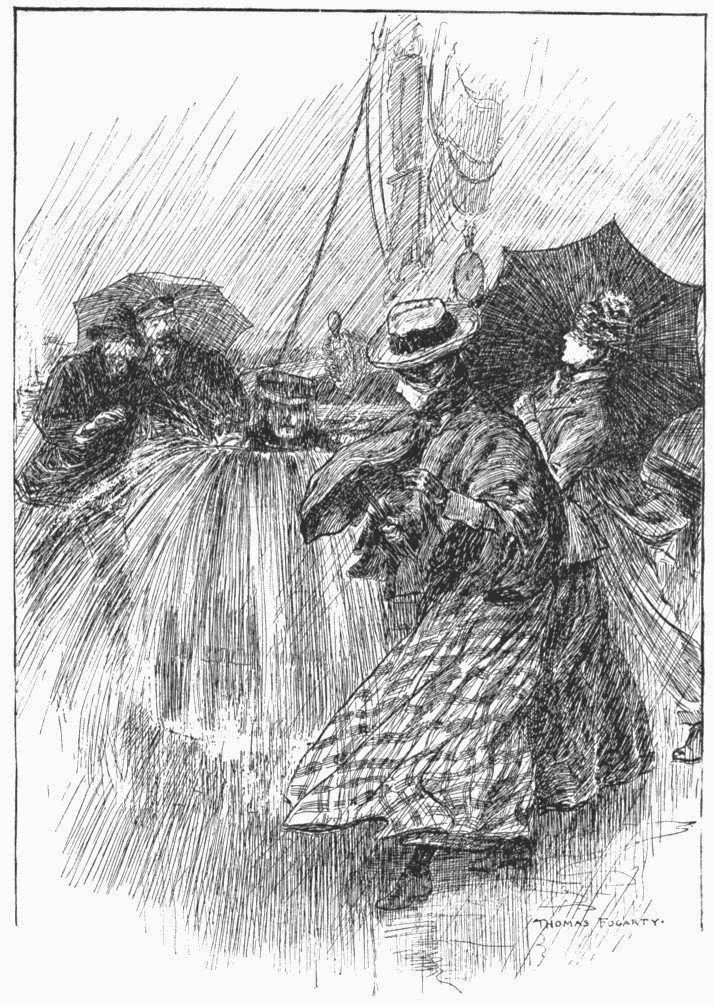
Summer was approaching, and the harbor of Sydney was blooming with yachts. Some of them came down to the weather-beaten Spray and sailed round her at Shelcote, where she took a berth for a few days. At Sydney I was at once among friends. The Spray remained at the various watering-places in the great port for several weeks, and was visited by many agreeable people, frequently by officers of H.M.S. Orlando and their friends. Captain Fisher, the commander, with a party of young ladies from the city and gentlemen belonging to his ship, came one day to pay me a visit in the midst of a deluge of rain. I never saw it rain harder even in Australia. But they were out for fun, and rain could not dampen their feelings, however hard it poured. But, as ill luck would have it, a young gentleman of another party on board, in the full uniform of a very great yacht club, with brass buttons enough to sink him, stepping quickly to get out of the wet, tumbled holus-bolus, head and heels, into a barrel of water I had been coopering, and being a short man, was soon out of sight, and nearly drowned before he was rescued. It was the nearest to a casualty on the Spray in her whole course, so far as I know. The young man having come on board with compliments made the mishap most embarrassing. It had been decided by his club that the Spray could not be officially recognized, for the reason that she brought no letters from yacht-clubs in America, and so I say it seemed all the more embarrassing and strange that I should have caught at least one of the members, in a barrel, and, too, when I was not fishing for yachtsmen.
Summer was approaching, and Sydney harbor was blooming with yachts. Some came down to the weather-beaten Spray and sailed around her at Shelcote, where she stayed for a few days. In Sydney I was among friends at once. The Spray spent several weeks at various watering places around the great port. Many agreeable people visited her, often including officers of H.M.S. Orlando and their friends. One day, Captain Fisher, the commander, came to visit me during a downpour. He brought a party of young ladies from the city and gentlemen from his ship. I had never seen it rain harder, even in Australia. But they were out for fun, and no amount of rain could dampen their spirits. As bad luck would have it, a young gentleman from another party was also aboard. He wore the full uniform of a very grand yacht club, with enough brass buttons to sink him. Hurrying out of the rain, he fell head over heels into a barrel of water I had been repairing. He was short, and soon disappeared from sight. He nearly drowned before he was rescued. As far as I know, it was the closest thing to a casualty aboard the Spray during her entire voyage. The mishap was especially embarrassing because the young man had come aboard to pay his compliments. His club had decided that the Spray could not be officially recognized because she carried no letters from yacht clubs in America. So it seemed all the more embarrassing and strange that I should have caught at least one of its members in a barrel, especially when I was not fishing for yachtsmen.
The typical Sydney boat is a handy sloop of great beam and enormous sail-carrying power; but a capsize is not uncommon, for they carry sail like vikings. In Sydney I saw all manner of craft, from the smart steam-launch and sailing-cutter to the smaller sloop and canoe pleasuring on the bay. Everybody owned a boat. If a boy in Australia has not the means to buy him a boat he builds one, and it is usually one not to be ashamed of. The Spray shed her Joseph's coat, the Fuego mainsail, in Sydney, and wearing a new suit, the handsome present of Commodore Foy, she was flagship of the Johnstone's Bay Flying Squadron when the circumnavigators of Sydney harbor sailed in their annual regatta. They "recognized" the Spray as belonging to "a club of her own," and with more Australian sentiment than fastidiousness gave her credit for her record.
The typical Sydney boat is a handy, broad-beamed sloop that can carry an enormous amount of sail. But capsizes are not uncommon, because Sydney sailors carry sail like Vikings. In Sydney, I saw all kinds of craft enjoying the bay, from smart steam launches and sailing cutters to smaller sloops and canoes. Everybody owned a boat. If an Australian boy cannot afford to buy a boat, he builds one. It is usually a boat he need not be ashamed of. In Sydney, the Spray shed her Joseph's coat, the Fuego mainsail. Commodore Foy gave her a handsome new set of sails. Wearing them, she was flagship of the Johnstone's Bay Flying Squadron when the circumnavigators of Sydney harbor sailed in their annual regatta. They "recognized" the Spray as belonging to "a club of her own." With more Australian sentiment than concern for strict accuracy, they gave her credit for her record.
Time flew fast those days in Australia, and it was December 6,1896, when the Spray sailed from Sydney. My intention was now to sail around Cape Leeuwin direct for Mauritius on my way home, and so I coasted along toward Bass Strait in that direction.
Time passed quickly during those days in Australia. The Spray sailed from Sydney on December 6, 1896. I now planned to sail around Cape Leeuwin and directly to Mauritius on my way home. So I sailed along the coast toward Bass Strait.
There was little to report on this part of the voyage, except changeable winds, "busters," and rough seas. The 12th of December, however, was an exceptional day, with a fine coast wind, northeast. The Spray early in the morning passed Twofold Bay and later Cape Bundooro in a smooth sea with land close aboard. The lighthouse on the cape dipped a flag to the Spray's flag, and children on the balconies of a cottage near the shore waved handkerchiefs as she passed by. There were only a few people all told on the shore, but the scene was a happy one. I saw festoons of evergreen in token of Christmas, near at hand. I saluted the merrymakers, wishing them a "Merry Christmas." and could hear them say, "I wish you the same."
There was little to report on this part of the voyage, except changing winds, "busters," and rough seas. December 12, however, was an exceptional day, with a fine northeast wind along the coast. Early in the morning, the Spray passed Twofold Bay. Later she passed Cape Bundooro, sailing on a smooth sea close to shore. The lighthouse on the cape dipped a flag in salute to the Spray's flag. Children on the balconies of a cottage near the shore waved handkerchiefs as she passed. There were only a few people on shore altogether, but it was a happy scene. I saw evergreen garlands put up for Christmas, which was close at hand. I saluted the merrymakers, wishing them a "Merry Christmas." I could hear them say, "I wish you the same."
From Cape Bundooro I passed by Cliff Island in Bass Strait, and exchanged signals with the light-keepers while the Spray worked up under the island. The wind howled that day while the sea broke over their rocky home.
From Cape Bundooro I passed Cliff Island in Bass Strait. I exchanged signals with the lighthouse keepers as the Spray sailed toward the island. The wind howled that day as the sea broke over their rocky home.
A few days later, December 17, the Spray came in close under Wilson's Promontory, again seeking shelter. The keeper of the light at that station, Mr. J. Clark, came on board and gave me directions for Waterloo Bay, about three miles to leeward, for which I bore up at once, finding good anchorage there in a sandy cove protected from all westerly and northerly winds.
A few days later, on December 17, the Spray came close to Wilson's Promontory, again seeking shelter. The lighthouse keeper there, Mr. J. Clark, came aboard and gave me directions to Waterloo Bay, about three miles downwind. I headed there at once and found good anchorage in a sandy cove protected from all westerly and northerly winds.
Anchored here was the ketch Secret, a fisherman, and the Mary of Sydney, a steam ferry-boat fitted for whaling. The captain of the Mary was a genius, and an Australian genius at that, and smart. His crew, from a sawmill up the coast, had not one of them seen a live whale when they shipped; but they were boatmen after an Australian's own heart, and the captain had told them that to kill a whale was no more than to kill a rabbit. They believed him, and that settled it. As luck would have it, the very first one they saw on their cruise, although an ugly humpback, was a dead whale in no time, Captain Young, the master of the Mary, killing the monster at a single thrust of a harpoon. It was taken in tow for Sydney, where they put it on exhibition. Nothing but whales interested the crew of the gallant Mary, and they spent most of their time here gathering fuel along shore for a cruise on the grounds off Tasmania. Whenever the word "whale" was mentioned in the hearing of these men their eyes glistened with excitement.
Anchored here were the fishing ketch Secret and the Mary of Sydney, a steam ferry fitted for whaling. The captain of the Mary was a genius, an Australian genius at that, and a smart one. His crew came from a sawmill up the coast. Not one of them had seen a live whale when they signed on. But they were boatmen after an Australian’s own heart, and the captain had told them killing a whale was no harder than killing a rabbit. They believed him, and that settled it. As luck would have it, the first whale they saw on their cruise was dead in no time, although it was a fierce humpback. Captain Young, master of the Mary, killed the monster with a single thrust of a harpoon. They towed it to Sydney, where they put it on exhibition. Nothing but whales interested the crew of the gallant Mary. They spent most of their time here gathering fuel along the shore for a cruise on the whaling grounds off Tasmania. Whenever these men heard the word "whale," their eyes glistened with excitement.
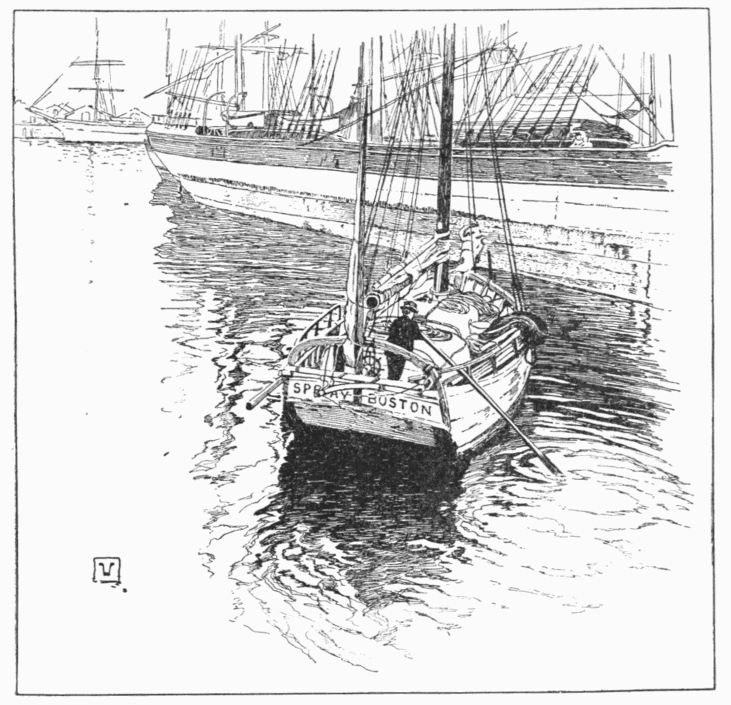
We spent three days in the quiet cove, listening to the wind outside. Meanwhile Captain Young and I explored the shores, visited abandoned miners' pits, and prospected for gold ourselves.
We spent three days in the quiet cove, listening to the wind outside. During that time, Captain Young and I explored the shores and visited abandoned miners' pits. We also searched for gold ourselves.
Our vessels, parting company the morning they sailed, stood away like sea-birds each on its own course. The wind for a few days was moderate, and, with unusual luck of fine weather, the Spray made Melbourne Heads on the 22d of December, and, taken in tow by the steam-tug Racer, was brought into port.
Our vessels parted company on the morning they sailed, each heading off on its own course like a seabird. The wind was moderate for a few days. With unusually good luck in the weather, the Spray reached Melbourne Heads on December 22. The steam tug Racer took the Spray in tow and brought her into port.
Christmas day was spent at a berth in the river Yarrow, but I lost little time in shifting to St. Kilda, where I spent nearly a month.
I spent Christmas Day docked in the river Yarrow, but soon moved to St. Kilda, where I spent nearly a month.
The Spray paid no port charges in Australia or anywhere else on the voyage, except at Pernambuco, till she poked her nose into the custom-house at Melbourne, where she was charged tonnage dues; in this instance, sixpence a ton on the gross. The collector exacted six shillings and sixpence, taking off nothing for the fraction under thirteen tons, her exact gross being 12.70 tons. I squared the matter by charging people sixpence each for coming on board, and when this business got dull I caught a shark and charged them sixpence each to look at that. The shark was twelve feet six inches in length, and carried a progeny of twenty-six, not one of them less than two feet in length. A slit of a knife let them out in a canoe full of water, which, changed constantly, kept them alive one whole day. In less than an hour from the time I heard of the ugly brute it was on deck and on exhibition, with rather more than the amount of the Spray's tonnage dues already collected. Then I hired a good Irishman, Tom Howard by name,—who knew all about sharks, both on the land and in the sea, and could talk about them,—to answer questions and lecture. When I found that I could not keep abreast of the questions I turned the responsibility over to him.
The Spray paid no port charges in Australia or anywhere else on the voyage, except at Pernambuco. That changed when she poked her nose into the customs office at Melbourne. There she was charged tonnage dues of sixpence per ton of gross tonnage. The collector demanded six shillings and sixpence, making no allowance for the fraction under thirteen tons. Her exact gross tonnage was 12.70 tons. I made up the money by charging people sixpence each to come aboard. When business slowed down, I caught a shark and charged them sixpence each to look at it. The shark was twelve feet six inches long and carried twenty-six young, each at least two feet long. A slit with a knife let them out into a canoe full of water. The water was changed constantly, keeping them alive for a whole day. Less than an hour after I heard about the ugly brute, it was on deck and on display. I had already collected a little more than the Spray's tonnage dues. Then I hired a good Irishman named Tom Howard to answer questions and give lectures. He knew all about sharks, both on land and in the sea, and could talk about them. When I found I could not keep up with the questions, I handed the job over to him.
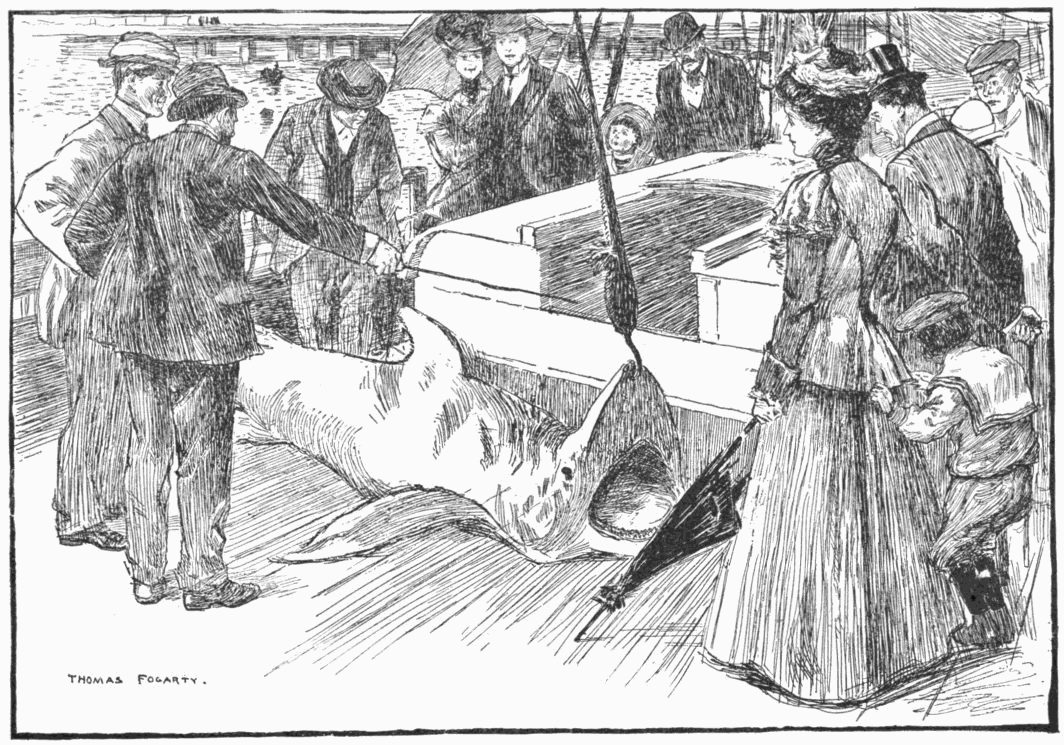
Returning from the bank, where I had been to deposit money early in the day, I found Howard in the midst of a very excited crowd, telling imaginary habits of the fish. It was a good show; the people wished to see it, and it was my wish that they should; but owing to his over-stimulated enthusiasm, I was obliged to let Howard resign. The income from the show and the proceeds of the tallow I had gathered in the Strait of Magellan, the last of which I had disposed of to a German soap-boiler at Samoa, put me in ample funds.
Early in the day, I went to the bank to deposit some money. When I returned, I found Howard surrounded by a very excited crowd, telling them about the fish’s imaginary habits. It was a good show, and the people wanted to see it. I wanted them to see it too, but Howard’s overexcited enthusiasm obliged me to let him resign. The show’s income and the proceeds from the tallow I had gathered in the Strait of Magellan left me with plenty of money. I had sold the last of the tallow to a German soap maker in Samoa.
January 24, 1897, found the Spray again in tow of the tug Racer, leaving Hobson's Bay after a pleasant time in Melbourne and St. Kilda, which had been protracted by a succession of southwest winds that seemed never-ending.
On January 24, 1897, the Spray was again being towed by the tug Racer as she left Hobson's Bay. I had spent a pleasant time in Melbourne and St. Kilda, where my stay had been extended by seemingly endless southwest winds.
In the summer months, that is, December, January, February, and sometimes March, east winds are prevalent through Bass Strait and round Cape Leeuwin; but owing to a vast amount of ice drifting up from the Antarctic, this was all changed now and emphasized with much bad weather, so much so that I considered it impracticable to pursue the course farther. Therefore, instead of thrashing round cold and stormy Cape Leeuwin, I decided to spend a pleasanter and more profitable time in Tasmania, waiting for the season for favorable winds through Torres Strait, by way of the Great Barrier Reef, the route I finally decided on. To sail this course would be taking advantage of anticyclones, which never fail, and besides it would give me the chance to put foot on the shores of Tasmania, round which I had sailed years before.
In the summer months, December, January, February, and sometimes March, east winds usually prevail through Bass Strait and around Cape Leeuwin. But a vast amount of ice drifting up from the Antarctic had changed all of that. It had also brought a great deal of bad weather. Conditions were so bad that I considered it impractical to continue on that course. So, instead of battling my way around cold and stormy Cape Leeuwin, I decided to spend a pleasanter and more profitable time in Tasmania. There I would wait for the season of favorable winds through Torres Strait, by way of the Great Barrier Reef. That was the route I finally chose. Sailing this route would let me take advantage of anticyclones, which never fail. It would also give me the chance to set foot on the shores of Tasmania, which I had sailed around years before.
I should mention that while I was at Melbourne there occurred one of those extraordinary storms sometimes called "rain of blood," the first of the kind in many years about Australia. The "blood" came from a fine brick-dust matter afloat in the air from the deserts. A rain-storm setting in brought down this dust simply as mud; it fell in such quantities that a bucketful was collected from the sloop's awnings, which were spread at the time. When the wind blew hard and I was obliged to furl awnings, her sails, unprotected on the booms, got mud-stained from clue to earing.
I should mention an extraordinary storm that occurred while I was in Melbourne. It was one of those storms sometimes called a "rain of blood," the first of its kind around Australia in many years. The "blood" came from fine, brick-colored dust floating in the air from the deserts. When a rainstorm began, the dust came down as mud. So much fell that a bucketful was collected from the sloop's awnings, which were spread at the time. When the wind blew hard, I had to furl the awnings. The sloop's sails, left unprotected on the booms, became stained with mud from clew to earing.
The phenomena of dust-storms, well understood by scientists, are not uncommon on the coast of Africa. Reaching some distance out over the sea, they frequently cover the track of ships, as in the case of the one through which the Spray passed in the earlier part of her voyage. Sailors no longer regard them with superstitious fear, but our credulous brothers on the land cry out "Rain of blood!" at the first splash of the awful mud.
Dust storms are not uncommon on the coast of Africa, and scientists understand them well. They reach some distance out over the sea and often cover the routes ships travel. The Spray passed through one such storm earlier in her voyage. Sailors no longer regard these storms with superstitious fear. But our gullible brothers on land cry out "Rain of blood!" at the first splash of the awful mud.
The rip off Port Phillip Heads, a wild place, was rough when the Spray entered Hobson's Bay from the sea, and was rougher when she stood out. But, with sea-room and under sail, she made good weather immediately after passing it. It was only a few hours' sail to Tasmania across the strait, the wind being fair and blowing hard. I carried the St. Kilda shark along, stuffed with hay, and disposed of it to Professor Porter, the curator of the Victoria Museum of Launceston, which is at the head of the Tamar. For many a long day to come may be seen there the shark of St. Kilda. Alas! the good but mistaken people of St. Kilda, when the illustrated journals with pictures of my shark reached their news-stands, flew into a passion, and swept all papers containing mention of fish into the fire; for St. Kilda was a watering-place—and the idea of a shark there! But my show went on.
The rip off Port Phillip Heads was a wild place. It was rough when the Spray entered Hobson's Bay from the sea, and rougher when she sailed out. But once past the rip, with room to maneuver and under sail, she handled the weather well. It was only a few hours' sail across the strait to Tasmania, with a strong, favorable wind. I brought the St. Kilda shark along, stuffed with hay. I gave it to Professor Porter, the curator of the Victoria Museum of Launceston, at the head of the Tamar. The shark of St. Kilda may be seen there for many a long day to come. Alas! The good but mistaken people of St. Kilda flew into a rage when illustrated journals with pictures of my shark reached their newsstands. They swept all papers mentioning fish into the fire. St. Kilda was a seaside resort, after all, and the idea of a shark there! But my show went on.
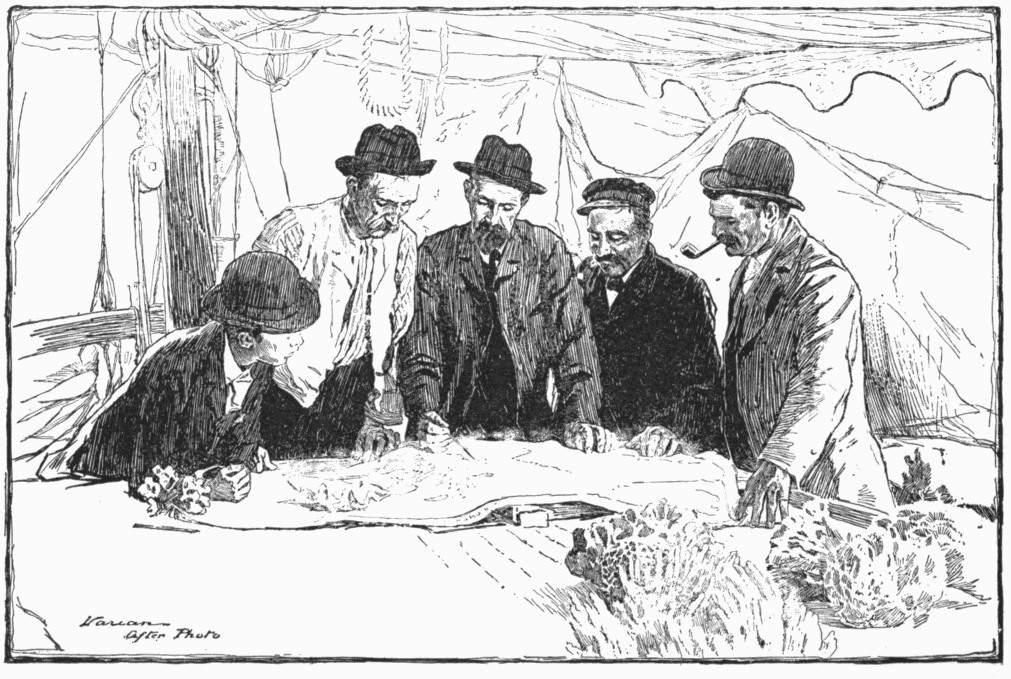
The Spray was berthed on the beach at a small jetty at Launceston while the tide driven in by the gale that brought her up the river was unusually high; and she lay there hard and fast, with not enough water around her at any time after to wet one's feet till she was ready to sail; then, to float her, the ground was dug from under her keel.
The Spray was berthed on the beach beside a small jetty at Launceston. The tide was unusually high, driven in by the gale that had brought her up the river. She remained stuck fast there until she was ready to sail. During that time, there was never enough water around her to wet anyone's feet. To float her, the ground was dug out from under her keel.
In this snug place I left her in charge of three children, while I made journeys among the hills and rested my bones, for the coming voyage, on the moss-covered rocks at the gorge hard by, and among the ferns I found wherever I went. My vessel was well taken care of. I never returned without finding that the decks had been washed and that one of the children, my nearest neighbor's little girl from across the road, was at the gangway attending to visitors, while the others, a brother and sister, sold marine curios such as were in the cargo, on "ship's account." They were a bright, cheerful crew, and people came a long way to hear them tell the story of the voyage, and of the monsters of the deep "the captain had slain." I had only to keep myself away to be a hero of the first water; and it suited me very well to do so and to rusticate in the forests and among the streams.
In this sheltered place, I left my vessel in the care of three children. Meanwhile, I wandered among the hills and rested my bones for the coming voyage. I rested on the moss-covered rocks at the nearby gorge and among the ferns I found wherever I went. My vessel was well cared for. Whenever I returned, I found the decks washed. One of the children, my nearest neighbor's little girl from across the road, was always at the gangway attending to visitors. The other two, a brother and sister, sold marine curios from the cargo on "ship's account." They were a bright, cheerful crew. People came from far away to hear them tell the story of the voyage and the monsters of the deep "the captain had slain." All I had to do was stay away to be a hero of the first rank. That suited me very well, and I enjoyed spending my time in the woods and by the streams.