Chapter 8
From Cape Pillar into the Pacific—Driven by a tempest toward Cape Horn—Captain Slocum's greatest sea adventure—Beaching the strait again by way of Cockburn Channel—Some savages find the carpet-tacks—Danger from firebrands—A series of fierce williwaws—Again sailing westward.
From Cape Pillar into the Pacific. A storm drives Captain Slocum toward Cape Horn. His greatest adventure at sea. Reaching the strait again through Cockburn Channel. Some savages find the carpet tacks. Danger from burning sticks. A series of fierce williwaws. Sailing westward again.
It was the 3d of March when the Spray sailed from Port Tamar direct for Cape Pillar, with the wind from the northeast, which I fervently hoped might hold till she cleared the land; but there was no such good luck in store. It soon began to rain and thicken in the northwest, boding no good. The Spray reared Cape Pillar rapidly, and, nothing loath, plunged into the Pacific Ocean at once, taking her first bath of it in the gathering storm. There was no turning back even had I wished to do so, for the land was now shut out by the darkness of night. The wind freshened, and I took in a third reef. The sea was confused and treacherous. In such a time as this the old fisherman prayed, "Remember, Lord, my ship is small and thy sea is so wide!" I saw now only the gleaming crests of the waves. They showed white teeth while the sloop balanced over them. "Everything for an offing," I cried, and to this end I carried on all the sail she would bear. She ran all night with a free sheet, but on the morning of March 4 the wind shifted to southwest, then back suddenly to northwest, and blew with terrific force. The Spray, stripped of her sails, then bore off under bare poles. No ship in the world could have stood up against so violent a gale. Knowing that this storm might continue for many days, and that it would be impossible to work back to the westward along the coast outside of Tierra del Fuego, there seemed nothing to do but to keep on and go east about, after all. Anyhow, for my present safety the only course lay in keeping her before the wind. And so she drove southeast, as though about to round the Horn, while the waves rose and fell and bellowed their never-ending story of the sea; but the Hand that held these held also the Spray. She was running now with a reefed forestaysail, the sheets flat amidship. I paid out two long ropes to steady her course and to break combing seas astern, and I lashed the helm amidship. In this trim she ran before it, shipping never a sea. Even while the storm raged at its worst, my ship was wholesome and noble. My mind as to her seaworthiness was put at ease for aye.
On March 3, the Spray sailed from Port Tamar straight for Cape Pillar. The wind was from the northeast, and I fervently hoped it would hold until she cleared the land. But I had no such luck. Soon it began to rain, and the sky grew thick in the northwest, a bad sign. The Spray reached Cape Pillar quickly and plunged willingly into the Pacific Ocean. Her first bath in the Pacific came in a gathering storm. There was no turning back, even if I had wanted to. The darkness of night had hidden the land. The wind grew stronger, and I took in a third reef. The sea was chaotic and treacherous. At such a time, the old fisherman prayed, "Remember, Lord, my ship is small and thy sea is so wide!" Now I could see only the gleaming crests of the waves. They showed white teeth as the sloop balanced over them. "Everything for an offing," I cried, and to get clear of the coast, I carried all the sail she could bear. She ran all night with a free sheet. But on the morning of March 4, the wind shifted to the southwest, then suddenly back to the northwest. It blew with terrific force. With her sails taken in, the Spray then turned away from the wind under bare poles. No ship in the world could have stood up against so violent a gale. I knew the storm might continue for many days. I also knew it would be impossible to work back westward along the coast outside Tierra del Fuego. So there seemed to be nothing to do but keep going and go east around the world after all. In any case, my only safe course for the moment was to keep her running before the wind. And so she drove southeast, as though about to round the Horn. The waves rose and fell and bellowed their never-ending story of the sea. But the Hand that held the waves held the Spray too. She was now running with a reefed forestaysail, its sheets pulled tight amidships. I paid out two long ropes to steady her course and break the cresting seas astern. I also lashed the helm amidships. Rigged this way, she ran before the wind without taking a wave aboard. Even while the storm raged at its worst, my ship was sound and noble. My mind was at ease about her seaworthiness from then on.
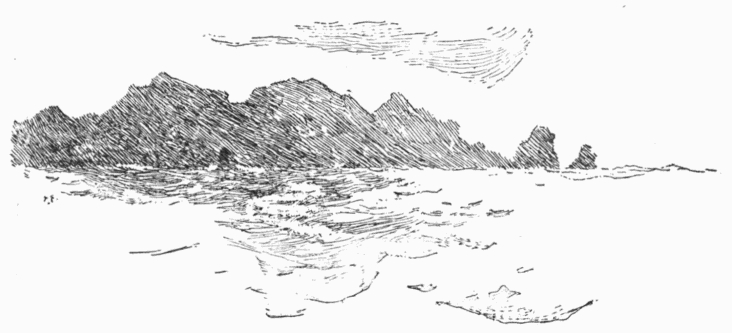
When all had been done that I could do for the safety of the vessel, I got to the fore-scuttle, between seas, and prepared a pot of coffee over a wood fire, and made a good Irish stew. Then, as before and afterward on the Spray, I insisted on warm meals. In the tide-race off Cape Pillar, however, where the sea was marvelously high, uneven, and crooked, my appetite was slim, and for a time I postponed cooking. (Confidentially, I was seasick!)
After doing all I could to keep the vessel safe, I made my way to the fore-scuttle between waves. There I made a pot of coffee over a wood fire and cooked a good Irish stew. As I did before and afterward on the Spray, I insisted on warm meals. But in the tide-race off Cape Pillar, the sea was remarkably high, uneven, and confused. I had little appetite, so I put off cooking for a while. (Confidentially, I was seasick!)
The first day of the storm gave the Spray her actual test in the worst sea that Cape Horn or its wild regions could afford, and in no part of the world could a rougher sea be found than at this particular point, namely, off Cape Pillar, the grim sentinel of the Horn.
On the first day of the storm, the Spray faced her real test in the worst seas around Cape Horn. And nowhere in the world could a rougher sea be found than off Cape Pillar, the grim sentinel of the Horn.
Farther offshore, while the sea was majestic, there was less apprehension of danger. There the Spray rode, now like a bird on the crest of a wave, and now like a waif deep down in the hollow between seas; and so she drove on. Whole days passed, counted as other days, but with always a thrill—yes, of delight.
Farther offshore, the sea was majestic, but there was less fear of danger. There the Spray rode like a bird on a wave’s crest, then like a stray deep in the trough between waves. And so she sailed on. Whole days passed, counted like any other days, but always with a thrill of delight.
On the fourth day of the gale, rapidly nearing the pitch of Cape Horn, I inspected my chart and pricked off the course and distance to Port Stanley, in the Falkland Islands, where I might find my way and refit, when I saw through a rift in the clouds a high mountain, about seven leagues away on the port beam. The fierce edge of the gale by this time had blown off, and I had already bent a square-sail on the boom in place of the mainsail, which was torn to rags. I hauled in the trailing ropes, hoisted this awkward sail reefed, the forestaysail being already set, and under this sail brought her at once on the wind heading for the land, which appeared as an island in the sea. So it turned out to be, though not the one I had supposed.
On the fourth day of the gale, I was rapidly approaching Cape Horn. I checked my chart and plotted the course and distance to Port Stanley, in the Falkland Islands. There I might get my bearings and refit. Then, through a break in the clouds, I saw a high mountain about seven leagues off the port side. By then, the worst of the gale had passed. I had already fastened a square sail to the boom to replace the mainsail, which had been torn to rags. I pulled in the trailing ropes and hoisted the awkward square sail, reefed to reduce its area. The forestaysail was already set. Under this sail, I immediately turned the boat into the wind, heading for the land, which looked like an island. It did turn out to be an island, though not the one I had thought.
I was exultant over the prospect of once more entering the Strait of Magellan and beating through again into the Pacific, for it was more than rough on the outside coast of Tierra del Fuego. It was indeed a mountainous sea. When the sloop was in the fiercest squalls, with only the reefed forestaysail set, even that small sail shook her from keelson to truck when it shivered by the leech. Had I harbored the shadow of a doubt for her safety, it would have been that she might spring a leak in the garboard at the heel of the mast; but she never called me once to the pump. Under pressure of the smallest sail I could set she made for the land like a race-horse, and steering her over the crests of the waves so that she might not trip was nice work. I stood at the helm now and made the most of it.
I was thrilled at the prospect of entering the Strait of Magellan once more and sailing against the wind through it into the Pacific again. The sea off the outer coast of Tierra del Fuego was more than rough. The waves were mountainous. In the fiercest squalls, the sloop carried only the reefed forestaysail. Even that small sail shook her from keelson to masthead when its trailing edge flapped. If I had felt the slightest doubt about her safety, it would have been that she might spring a leak in the garboard plank at the foot of the mast. But she never once needed pumping. Driven by the smallest sail I could set, she raced toward land like a racehorse. Steering her over the wave crests so she would not trip was delicate work. I stood at the helm now and did the best I could.
Night closed in before the sloop reached the land, leaving her feeling the way in pitchy darkness. I saw breakers ahead before long. At this I wore ship and stood offshore, but was immediately startled by the tremendous roaring of breakers again ahead and on the lee bow. This puzzled me, for there should have been no broken water where I supposed myself to be. I kept off a good bit, then wore round, but finding broken water also there, threw her head again offshore. In this way, among dangers, I spent the rest of the night. Hail and sleet in the fierce squalls cut my flesh till the blood trickled over my face; but what of that? It was daylight, and the sloop was in the midst of the Milky Way of the sea, which is northwest of Cape Horn, and it was the white breakers of a huge sea over sunken rocks which had threatened to engulf her through the night. It was Fury Island I had sighted and steered for, and what a panorama was before me now and all around! It was not the time to complain of a broken skin. What could I do but fill away among the breakers and find a channel between them, now that it was day? Since she had escaped the rocks through the night, surely she would find her way by daylight. This was the greatest sea adventure of my life. God knows how my vessel escaped.
Night fell before the sloop reached land, leaving her to feel her way through pitch darkness. Before long, I saw breakers ahead. I turned the ship and headed offshore, but I was immediately startled by the tremendous roar of breakers again. They were ahead and off the lee bow. This puzzled me, because there should have been no breaking waves where I thought I was. I turned well away, then turned the ship around. But I found breakers there too, so I pointed her offshore again. I spent the rest of the night like this, surrounded by danger. Hail and sleet in the fierce squalls cut my flesh until blood trickled down my face. But what did that matter? Daylight had come, and the sloop was in the midst of the Milky Way of the sea, northwest of Cape Horn. The white breakers of a huge sea, crashing over sunken rocks, had threatened to engulf her all night. I had sighted Fury Island and steered toward it, and what a panorama lay before me and all around! It was no time to complain of broken skin. Now that it was day, what could I do but set sail among the breakers and find a channel between them? Since she had escaped the rocks through the night, surely she would find her way by daylight. This was the greatest sea adventure of my life. God knows how my vessel escaped.
The sloop at last reached inside of small islands that sheltered her in smooth water. Then I climbed the mast to survey the wild scene astern. The great naturalist Darwin looked over this seascape from the deck of the Beagle, and wrote in his journal, "Any landsman seeing the Milky Way would have nightmare for a week." He might have added, "or seaman" as well.
At last, the sloop reached the calm water sheltered by small islands. Then I climbed the mast to survey the wild scene behind us. The great naturalist Darwin looked out over this seascape from the deck of the Beagle, and wrote in his journal, "Any landsman seeing the Milky Way would have nightmare for a week." He might have added, "or seaman" as well.
The Spray's good luck followed fast. I discovered, as she sailed along through a labyrinth of islands, that she was in the Cockburn Channel, which leads into the Strait of Magellan at a point opposite Cape Froward, and that she was already passing Thieves' Bay, suggestively named. And at night, March 8, behold, she was at anchor in a snug cove at the Turn! Every heart-beat on the Spray now counted thanks.
The Spray's good luck continued. As she sailed through a maze of islands, I discovered that she was in the Cockburn Channel. The channel leads into the Strait of Magellan opposite Cape Froward. She was already passing Thieves' Bay, a suggestive name. On the night of March 8, she was at anchor in a sheltered cove at the Turn! Every heartbeat aboard the Spray now gave thanks.
Here I pondered on the events of the last few days, and, strangely enough, instead of feeling rested from sitting or lying down, I now began to feel jaded and worn; but a hot meal of venison stew soon put me right, so that I could sleep. As drowsiness came on I sprinkled the deck with tacks, and then I turned in, bearing in mind the advice of my old friend Samblich that I was not to step on them myself. I saw to it that not a few of them stood "business end" up; for when the Spray passed Thieves' Bay two canoes had put out and followed in her wake, and there was no disguising the fact any longer that I was alone.
Here I thought about the events of the past few days. Strangely, instead of feeling rested from sitting or lying down, I began to feel tired and worn out. But a hot meal of venison stew soon made me feel better, so I could sleep. As I grew drowsy, I scattered tacks across the deck and turned in. I remembered my old friend Samblich's advice not to step on them myself. I made sure plenty of them stood "business end" up. When the Spray passed Thieves' Bay, two canoes had set out and followed in her wake. There was no hiding the fact any longer that I was alone.
Now, it is well known that one cannot step on a tack without saying something about it. A pretty good Christian will whistle when he steps on the "commercial end" of a carpet-tack; a savage will howl and claw the air, and that was just what happened that night about twelve o'clock, while I was asleep in the cabin, where the savages thought they "had me," sloop and all, but changed their minds when they stepped on deck, for then they thought that I or somebody else had them. I had no need of a dog; they howled like a pack of hounds. I had hardly use for a gun. They jumped pell-mell, some into their canoes and some into the sea, to cool off, I suppose, and there was a deal of free language over it as they went. I fired several guns when I came on deck, to let the rascals know that I was home, and then I turned in again, feeling sure I should not be disturbed any more by people who left in so great a hurry.
Everyone knows you cannot step on a tack without saying something about it. A fairly good Christian will whistle when he steps on the "commercial end" of a carpet tack. A savage will howl and claw the air. That was just what happened around midnight that night, while I slept in the cabin. The savages thought they "had me," sloop and all. But they changed their minds when they stepped on deck. Then they thought I or somebody else had them. I had no need of a dog. They howled like a pack of hounds. I hardly needed a gun. They jumped in all directions, some into their canoes and some into the sea, to cool off, I suppose. They used plenty of colorful language as they went. When I came on deck, I fired several shots to let the rascals know I was home. Then I went back to bed. I felt sure I would not be disturbed again by people who had left in such a hurry.
The Fuegians, being cruel, are naturally cowards; they regard a rifle with superstitious fear. The only real danger one could see that might come from their quarter would be from allowing them to surround one within bow-shot, or to anchor within range where they might lie in ambush. As for their coming on deck at night, even had I not put tacks about, I could have cleared them off by shots from the cabin and hold. I always kept a quantity of ammunition within reach in the hold and in the cabin and in the forepeak, so that retreating to any of these places I could "hold the fort" simply by shooting up through the deck.
The Fuegians are cruel and therefore naturally cowardly. They regard a rifle with superstitious fear. The only real danger I could see from them was letting them surround me within bowshot. The other danger was anchoring within range of a place where they could lie in ambush. As for their coming on deck at night, I could have driven them off with shots from the cabin and hold, even if I had not scattered tacks. I always kept plenty of ammunition within reach in the hold, the cabin, and the forepeak. That way, I could retreat to any of these places and "hold the fort" simply by shooting up through the deck.
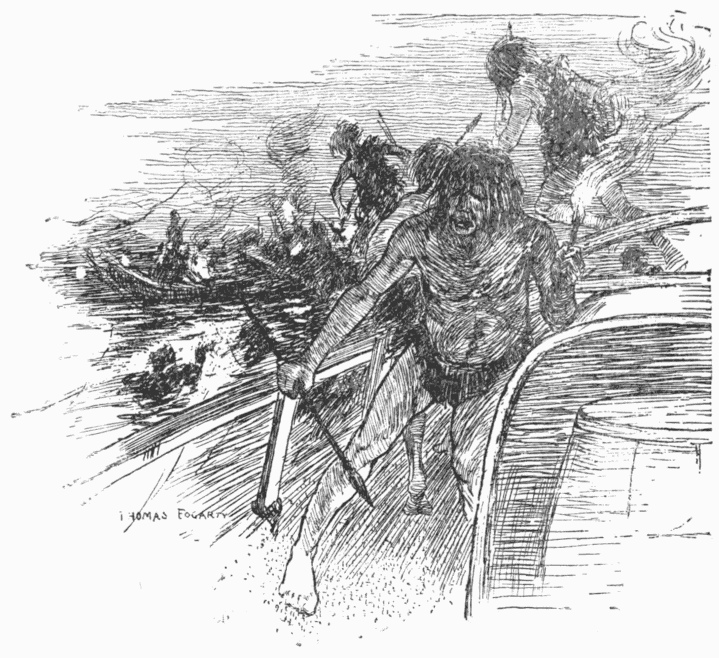
Perhaps the greatest danger to be apprehended was from the use of fire. Every canoe carries fire; nothing is thought of that, for it is their custom to communicate by smoke-signals. The harmless brand that lies smoldering in the bottom of one of their canoes might be ablaze in one's cabin if he were not on the alert. The port captain of Sandy Point warned me particularly of this danger. Only a short time before they had fired a Chilean gunboat by throwing brands in through the stern windows of the cabin. The Spray had no openings in the cabin or deck, except two scuttles, and these were guarded by fastenings which could not be undone without waking me if I were asleep.
Perhaps the greatest danger was fire. Every canoe carries fire, and no one thinks anything of it because smoke signals are their custom. A harmless burning stick smoldering in the bottom of a canoe could set a cabin on fire if its occupant were not alert. The port captain of Sandy Point gave me a special warning about this danger. Only a short time earlier, they had set a Chilean gunboat on fire by throwing burning sticks through the cabin’s stern windows. The Spray had no openings in the cabin or deck except two scuttles. These were secured with fastenings that could not be undone without waking me if I were asleep.
On the morning of the 9th, after a refreshing rest and a warm breakfast, and after I had swept the deck of tacks, I got out what spare canvas there was on board, and began to sew the pieces together in the shape of a peak for my square-mainsail, the tarpaulin. The day to all appearances promised fine weather and light winds, but appearances in Tierra del Fuego do not always count. While I was wondering why no trees grew on the slope abreast of the anchorage, half minded to lay by the sail-making and land with my gun for some game and to inspect a white boulder on the beach, near the brook, a williwaw came down with such terrific force as to carry the Spray, with two anchors down, like a feather out of the cove and away into deep water. No wonder trees did not grow on the side of that hill! Great Boreas! a tree would need to be all roots to hold on against such a furious wind.
On the morning of the 9th, I had a refreshing rest and a warm breakfast, then swept the tacks off the deck. I got out the spare canvas on board and began sewing the pieces together to form a peak for my square mainsail, the tarpaulin. The day seemed to promise fine weather and light winds, but appearances in Tierra del Fuego do not always count. I wondered why no trees grew on the slope opposite the anchorage. I was half inclined to put aside the sail-making and go ashore with my gun to hunt for game. I also wanted to inspect a white boulder on the beach near the brook. Just then, a williwaw came down with terrific force. It carried the Spray, with two anchors down, like a feather out of the cove and into deep water. No wonder trees did not grow on the side of that hill! Great Boreas! A tree would need to be all roots to hold on against such a furious wind.
From the cove to the nearest land to leeward was a long drift, however, and I had ample time to weigh both anchors before the sloop came near any danger, and so no harm came of it. I saw no more savages that day or the next; they probably had some sign by which they knew of the coming williwaws; at least, they were wise in not being afloat even on the second day, for I had no sooner gotten to work at sail-making again, after the anchor was down, than the wind, as on the day before, picked the sloop up and flung her seaward with a vengeance, anchor and all, as before. This fierce wind, usual to the Magellan country, continued on through the day, and swept the sloop by several miles of steep bluffs and precipices overhanging a bold shore of wild and uninviting appearance. I was not sorry to get away from it, though in doing so it was no Elysian shore to which I shaped my course. I kept on sailing in hope, since I had no choice but to go on, heading across for St. Nicholas Bay, where I had cast anchor February 19. It was now the 10th of March! Upon reaching the bay the second time I had circumnavigated the wildest part of desolate Tierra del Fuego. But the Spray had not yet arrived at St. Nicholas, and by the merest accident her bones were saved from resting there when she did arrive. The parting of a staysail-sheet in a williwaw, when the sea was turbulent and she was plunging into the storm, brought me forward to see instantly a dark cliff ahead and breakers so close under the bows that I felt surely lost, and in my thoughts cried, "Is the hand of fate against me, after all, leading me in the end to this dark spot?" I sprang aft again, unheeding the flapping sail, and threw the wheel over, expecting, as the sloop came down into the hollow of a wave, to feel her timbers smash under me on the rocks. But at the touch of her helm she swung clear of the danger, and in the next moment she was in the lee of the land.
From the cove, however, it was a long drift to the nearest land downwind. I had plenty of time to raise both anchors before the sloop came near danger, so no harm was done. I saw no more savages that day or the next. They probably had some sign that told them when the williwaws were coming. At least, they were wise not to be afloat even on the second day. After dropping anchor, I had barely begun making sails again when the wind struck as it had the day before. Once again, it picked up the sloop and flung her fiercely out to sea, anchor and all. This fierce wind, common in the Magellan country, continued throughout the day. It swept the sloop past several miles of steep bluffs and cliffs overlooking a rugged, wild, and uninviting shore. I was glad to leave it behind, though I was not heading for a paradise. I sailed on in hope, since I had no choice but to continue. I headed across to St. Nicholas Bay, where I had anchored on February 19. It was now March 10! When I reached the bay for the second time, I had sailed all the way around the wildest part of desolate Tierra del Fuego. But the Spray had not yet reached St. Nicholas, and only by the narrowest chance was she saved from being wrecked there. During a williwaw, a staysail-sheet snapped as the sea churned and the sloop plunged into the storm. I went forward and immediately saw a dark cliff ahead, with breakers so close beneath the bows that I felt sure I was lost. In my thoughts I cried, "Is the hand of fate against me, after all, leading me in the end to this dark spot?" I sprang back to the wheel, ignoring the flapping sail, and turned it hard. As the sloop sank into the trough of a wave, I expected to feel her timbers smash against the rocks beneath me. But the moment I turned the wheel, she swung clear of danger. A moment later, she was in the shelter of the land.
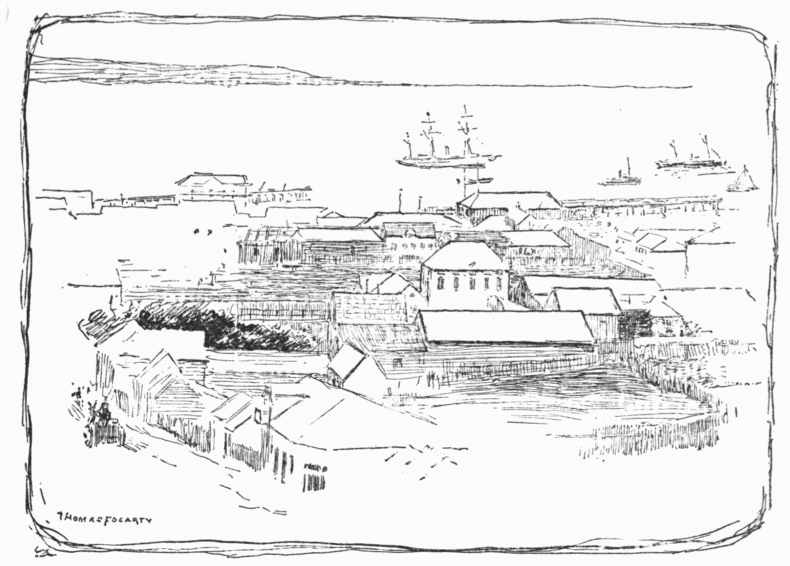
It was the small island in the middle of the bay for which the sloop had been steering, and which she made with such unerring aim as nearly to run it down. Farther along in the bay was the anchorage, which I managed to reach, but before I could get the anchor down another squall caught the sloop and whirled her round like a top and carried her away, altogether to leeward of the bay. Still farther to leeward was a great headland, and I bore off for that. This was retracing my course toward Sandy Point, for the gale was from the southwest.
The sloop had been steering toward the small island in the middle of the bay. She headed so straight for it that she nearly ran it down. The anchorage was farther along in the bay, and I managed to reach it. But before I could drop anchor, another squall caught the sloop. It spun her around like a top and carried her completely out of the bay, downwind. A great headland lay still farther downwind, and I turned toward it. Since the gale was blowing from the southwest, this took me back along my course toward Sandy Point.
I had the sloop soon under good control, however, and in a short time rounded to under the lee of a mountain, where the sea was as smooth as a mill-pond, and the sails flapped and hung limp while she carried her way close in. Here I thought I would anchor and rest till morning, the depth being eight fathoms very close to the shore. But it was interesting to see, as I let go the anchor, that it did not reach the bottom before another williwaw struck down from this mountain and carried the sloop off faster than I could pay out cable. Therefore, instead of resting, I had to "man the windlass" and heave up the anchor with fifty fathoms of cable hanging up and down in deep water. This was in that part of the strait called Famine Reach. Dismal Famine Reach! On the sloop's crab-windlass I worked the rest of the night, thinking how much easier it was for me when I could say, "Do that thing or the other," than now doing all myself. But I hove away and sang the old chants that I sang when I was a sailor. Within the last few days I had passed through much and was now thankful that my state was no worse.
However, I soon got the sloop under control and rounded to in the shelter of a mountain. There, the sea was as smooth as a millpond. The sails flapped and hung limp as the sloop coasted close to shore. I thought I would anchor there and rest until morning. The water was eight fathoms deep very close to shore. But something interesting happened as I let go the anchor. Before it reached the bottom, another williwaw, a sudden violent gust, swept down from the mountain. It carried the sloop away faster than I could pay out the anchor cable. So instead of resting, I had to "man the windlass" and haul up the anchor. Fifty fathoms of cable hung straight down into deep water. This was in the part of the strait called Famine Reach. Dismal Famine Reach! I worked the sloop's crab-windlass for the rest of the night. I thought how much easier it had been when I could say, "Do that thing or the other," instead of doing everything myself. But I kept hauling and sang the old chants I had sung as a sailor. I had been through a great deal in the past few days, and I was thankful that things were no worse.
It was daybreak when the anchor was at the hawse. By this time the wind had gone down, and cat's-paws took the place of williwaws, while the sloop drifted slowly toward Sandy Point. She came within sight of ships at anchor in the roads, and I was more than half minded to put in for new sails, but the wind coming out from the northeast, which was fair for the other direction, I turned the prow of the Spray westward once more for the Pacific, to traverse a second time the second half of my first course through the strait.
It was daybreak when the anchor reached the bow. By then, the wind had died down, and cat's-paws replaced the williwaws. The sloop drifted slowly toward Sandy Point. Ships anchored offshore came into sight, and I was more than half inclined to put in for new sails. But the wind came from the northeast, favoring the other direction. So I turned the bow of the Spray westward once more, toward the Pacific. I would cross the second half of my original route through the strait a second time.