Chapter 9
Repairing the Spray's sails—Savages and an obstreperous anchor-A spider-fight—An encounter with Black Pedro—A visit to the steamship Colombia,—On the defensive against a fleet of canoes—A record of voyages through the strait—A chance cargo of tallow.
Repairing the Spray's sails. Savages and a stubborn anchor. A spider fight. An encounter with Black Pedro. A visit to the steamship Colombia. Defending against a fleet of canoes. A record of voyages through the strait. An unexpected cargo of tallow.
I was determined to rely on my own small resources to repair the damages of the great gale which drove me southward toward the Horn, after I had passed from the Strait of Magellan out into the Pacific. So when I had got back into the strait, by way of Cockburn Channel, I did not proceed eastward for help at the Sandy Point settlement, but turning again into the northwestward reach of the strait, set to work with my palm and needle at every opportunity, when at anchor and when sailing. It was slow work; but little by little the squaresail on the boom expanded to the dimensions of a serviceable mainsail with a peak to it and a leech besides. If it was not the best-setting sail afloat, it was at least very strongly made and would stand a hard blow. A ship, meeting the Spray long afterward, reported her as wearing a mainsail of some improved design and patent reefer, but that was not the case.
After I sailed out of the Strait of Magellan into the Pacific, a great gale drove me south toward the Horn. I was determined to repair the damage using my own limited resources. So, when I returned to the strait through Cockburn Channel, I did not head east to seek help at the Sandy Point settlement. Instead, I turned back into the stretch of the strait running northwest. Whenever I had a chance, whether sailing or at anchor, I worked with my sailmaker’s palm and needle. The work was slow, but little by little, the square sail on the boom grew into a serviceable mainsail, complete with a peak and a leech. It may not have been the best-fitting sail afloat, but it was strongly made and could withstand a hard blow. Much later, a ship that met the Spray reported that she carried a mainsail of some improved design with a patented reefing device, but that was not true.
The Spray for a few days after the storm enjoyed fine weather, and made fair time through the strait for the distance of twenty miles, which, in these days of many adversities, I called a long run. The weather, I say, was fine for a few days; but it brought little rest. Care for the safety of my vessel, and even for my own life, was in no wise lessened by the absence of heavy weather. Indeed, the peril was even greater, inasmuch as the savages on comparatively fine days ventured forth on their marauding excursions, and in boisterous weather disappeared from sight, their wretched canoes being frail and undeserving the name of craft at all. This being so, I now enjoyed gales of wind as never before, and the Spray was never long without them during her struggles about Cape Horn. I became in a measure inured to the life, and began to think that one more trip through the strait, if perchance the sloop should be blown off again, would make me the aggressor, and put the Fuegians entirely on the defensive. This feeling was forcibly borne in on me at Snug Bay, where I anchored at gray morning after passing Cape Froward, to find, when broad day appeared, that two canoes which I had eluded by sailing all night were now entering the same bay stealthily under the shadow of the high headland. They were well manned, and the savages were well armed with spears and bows. At a shot from my rifle across the bows, both turned aside into a small creek out of range. In danger now of being flanked by the savages in the bush close aboard, I was obliged to hoist the sails, which I had barely lowered, and make across to the opposite side of the strait, a distance of six miles. But now I was put to my wit's end as to how I should weigh anchor, for through an accident to the windlass right here I could not budge it. However, I set all sail and filled away, first hauling short by hand. The sloop carried her anchor away, as though it was meant to be always towed in this way underfoot, and with it she towed a ton or more of kelp from a reef in the bay, the wind blowing a wholesale breeze.
For a few days after the storm, the Spray enjoyed fine weather and made good time through the strait, covering twenty miles. In those days of constant trouble, I called that a long run. The weather was fine for a few days, as I say, but it brought little rest. I worried no less about my vessel’s safety, or even my own life, when the weather was calm. In fact, the danger was greater. On relatively fine days, the savages ventured out on raiding trips. In rough weather, they disappeared from sight. Their miserable canoes were so fragile that they hardly deserved to be called boats. So I came to welcome strong winds as never before. The Spray was never without them for long as she struggled around Cape Horn. I grew somewhat used to this life. I began to think that one more trip through the strait, if the sloop happened to be blown off course again, would make me the aggressor. Then the Fuegians would be entirely on the defensive. This feeling struck me strongly at Snug Bay. I anchored there in the gray morning after passing Cape Froward. In full daylight, I saw two canoes entering the same bay, creeping along in the shadow of the high headland. I had escaped them by sailing all night. Both canoes were well manned, and the savages were well armed with spears and bows. I fired my rifle across their bows, and both turned into a small creek out of range. I was now in danger of being flanked by the savages in the bush close to the boat. So I had to hoist the sails I had barely lowered and head for the opposite side of the strait, six miles away. But now I was at my wits’ end. An accident had damaged the windlass just there, and I could not budge the anchor. Still, I hauled in the anchor line by hand until it was short, then set all sail and got under way. The sloop carried her anchor along as if it were meant to be towed beneath her all the time. Along with it, she towed a ton or more of kelp from a reef in the bay, while the wind blew a wholesale breeze.
Meanwhile I worked till blood started from my fingers, and with one eye over my shoulder for savages, I watched at the same time, and sent a bullet whistling whenever I saw a limb or a twig move; for I kept a gun always at hand, and an Indian appearing then within range would have been taken as a declaration of war. As it was, however, my own blood was all that was spilt—and from the trifling accident of sometimes breaking the flesh against a cleat or a pin which came in the way when I was in haste. Sea-cuts in my hands from pulling on hard, wet ropes were sometimes painful and often bled freely; but these healed when I finally got away from the strait into fine weather.
Meanwhile, I worked until my fingers bled, keeping an eye over my shoulder for savages. Whenever I saw a limb or a twig move, I sent a bullet whistling toward it. I always kept a gun at hand. If an Indian had appeared within range then, I would have taken it as a declaration of war. As it was, though, only my own blood was spilled. This was from minor accidents, when I sometimes broke the skin against a cleat or pin while hurrying. The cuts on my hands from pulling hard, wet ropes at sea were sometimes painful and often bled freely. But they healed when I finally got out of the strait and into fine weather.
After clearing Snug Bay I hauled the sloop to the wind, repaired the windlass, and hove the anchor to the hawse, catted it, and then stretched across to a port of refuge under a high mountain about six miles away, and came to in nine fathoms close under the face of a perpendicular cliff. Here my own voice answered back, and I named the place "Echo Mountain." Seeing dead trees farther along where the shore was broken, I made a landing for fuel, taking, besides my ax, a rifle, which on these days I never left far from hand; but I saw no living thing here, except a small spider, which had nested in a dry log that I boated to the sloop. The conduct of this insect interested me now more than anything else around the wild place. In my cabin it met, oddly enough, a spider of its own size and species that had come all the way from Boston—a very civil little chap, too, but mighty spry. Well, the Fuegian threw up its antennae for a fight; but my little Bostonian downed it at once, then broke its legs, and pulled them off, one by one, so dexterously that in less than three minutes from the time the battle began the Fuegian spider didn't know itself from a fly.
After clearing Snug Bay, I headed the sloop into the wind and repaired the windlass. I hauled the anchor up to the hawse and secured it. Then I sailed across to a sheltered harbor beneath a high mountain about six miles away. I anchored in nine fathoms, close to the face of a sheer cliff. My own voice echoed back to me there, so I named the place "Echo Mountain." Farther along, where the shoreline was broken, I saw dead trees and went ashore for fuel. I took my ax and a rifle, which I never kept far from hand in those days. But I saw no living thing there except a small spider. It had made its home in a dry log that I carried back to the sloop. In that wild place, the spider’s behavior interested me more than anything else around me. In my cabin, it met, oddly enough, a spider of its own size and species that had come all the way from Boston. The Boston spider was a very civil little chap, too, but mighty quick. Well, the Fuegian threw up its antennae for a fight. But my little Bostonian knocked it down at once. Then it broke the Fuegian’s legs and pulled them off one by one. It worked so skillfully that, less than three minutes after the fight began, the Fuegian spider didn’t know itself from a fly.
I made haste the following morning to be under way after a night of wakefulness on the weird shore. Before weighing anchor, however, I prepared a cup of warm coffee over a smart wood fire in my great Montevideo stove. In the same fire was cremated the Fuegian spider, slain the day before by the little warrior from Boston, which a Scots lady at Cape Town long after named "Bruce" upon hearing of its prowess at Echo Mountain. The Spray now reached away for Coffee Island, which I sighted on my birthday, February 20,1896.
After a sleepless night on the strange shore, I hurried to get underway the next morning. Before raising anchor, however, I made a cup of warm coffee over a lively wood fire in my great Montevideo stove. In the same fire, I cremated the Fuegian spider, which the little warrior from Boston had killed the day before. Long afterward, a Scots lady at Cape Town named the warrior "Bruce" when she heard of its prowess at Echo Mountain. The Spray now sailed toward Coffee Island, which I sighted on my birthday, February 20, 1896.
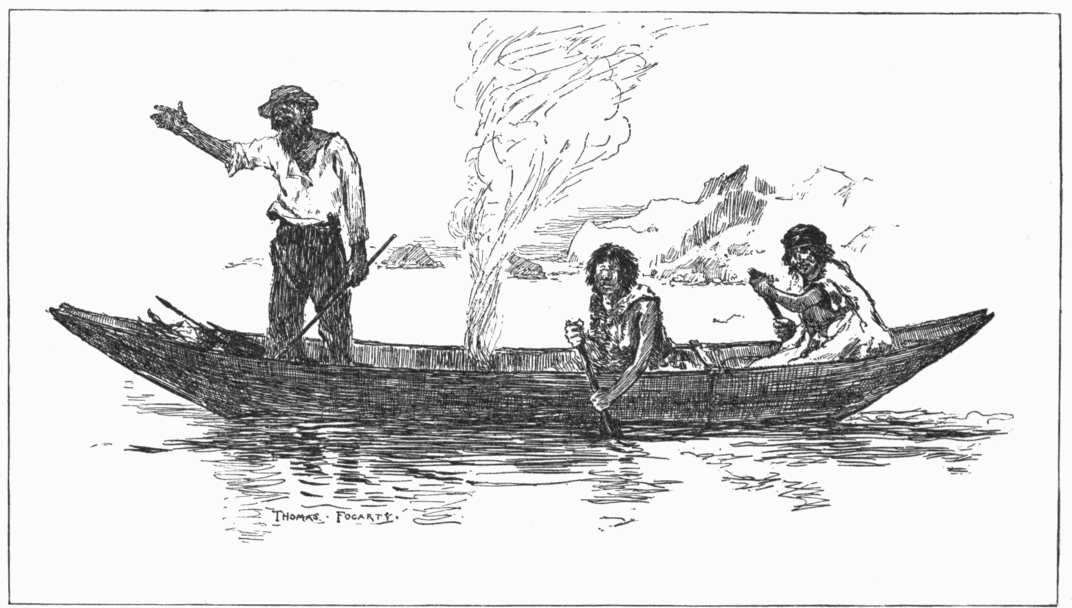
There she encountered another gale, that brought her in the lee of great Charles Island for shelter. On a bluff point on Charles were signal-fires, and a tribe of savages, mustered here since my first trip through the strait, manned their canoes to put off for the sloop. It was not prudent to come to, the anchorage being within bow-shot of the shore, which was thickly wooded; but I made signs that one canoe might come alongside, while the sloop ranged about under sail in the lee of the land. The others I motioned to keep off, and incidentally laid a smart Martini-Henry rifle in sight, close at hand, on the top of the cabin. In the canoe that came alongside, crying their never-ending begging word "yammerschooner," were two squaws and one Indian, the hardest specimens of humanity I had ever seen in any of my travels. "Yammerschooner" was their plaint when they pushed off from the shore, and "yammerschooner" it was when they got alongside. The squaws beckoned for food, while the Indian, a black-visaged savage, stood sulkily as if he took no interest at all in the matter, but on my turning my back for some biscuits and jerked beef for the squaws, the "buck" sprang on deck and confronted me, saying in Spanish jargon that we had met before. I thought I recognized the tone of his "yammerschooner," and his full beard identified him as the Black Pedro whom, it was true, I had met before. "Where are the rest of the crew?" he asked, as he looked uneasily around, expecting hands, maybe, to come out of the fore-scuttle and deal him his just deserts for many murders. "About three weeks ago," said he, "when you passed up here, I saw three men on board. Where are the other two?" I answered him briefly that the same crew was still on board. "But," said he, "I see you are doing all the work," and with a leer he added, as he glanced at the mainsail, "hombre valiente." I explained that I did all the work in the day, while the rest of the crew slept, so that they would be fresh to watch for Indians at night. I was interested in the subtle cunning of this savage, knowing him, as I did, better perhaps than he was aware. Even had I not been advised before I sailed from Sandy Point, I should have measured him for an arch-villain now. Moreover, one of the squaws, with that spark of kindliness which is somehow found in the breast of even the lowest savage, warned me by a sign to be on my guard, or Black Pedro would do me harm. There was no need of the warning, however, for I was on my guard from the first, and at that moment held a smart revolver in my hand ready for instant service.
There the sloop encountered another gale, which drove her to shelter in the lee of great Charles Island. Signal fires burned on a bluff point on Charles. A tribe of savages had gathered there since my first trip through the strait. They manned their canoes and set out for the sloop. It was not prudent to anchor, because the anchorage was within bow-shot of the thickly wooded shore. But I signaled that one canoe could come alongside while the sloop sailed back and forth in the lee of the land. I motioned the others to keep away. I also casually placed a handy Martini-Henry rifle in plain sight on the cabin top, close at hand. In the canoe that came alongside were two Indian women and one Indian man. They were the toughest-looking human beings I had seen in all my travels. They cried out their constant begging word, "yammerschooner," as they pushed off from shore. "Yammerschooner" was still their cry when they came alongside. The women gestured for food. The Indian man, a black-faced savage, stood sulking, as if he had no interest in the matter. But when I turned my back to get some biscuits and jerked beef for the women, he sprang on deck. He faced me and said in broken Spanish that we had met before. I thought I recognized the tone of his "yammerschooner," and his full beard identified him as Black Pedro. It was true that I had met him before. "Where are the rest of the crew?" he asked, looking around uneasily. Perhaps he expected men to come out of the forward hatch and give him what he deserved for his many murders. "About three weeks ago," he said, "when you passed up here, I saw three men on board. Where are the other two?" I answered briefly that the same crew was still on board. "But," he said, "I see you are doing all the work." He glanced at the mainsail and added with a leer, "hombre valiente." I explained that I did all the work during the day while the rest of the crew slept. That way, they would be fresh to watch for Indians at night. I was interested in the subtle cunning of this savage. I knew him, perhaps better than he realized. Even without the warnings I had received before sailing from Sandy Point, I would have judged him a master villain now. One of the women also warned me with a sign to be on guard, or Black Pedro would harm me. She showed that spark of kindness somehow found in the breast of even the lowest savage. But there was no need for the warning. I had been on my guard from the first, and at that moment I held a handy revolver ready for immediate use.
"When you sailed through here before," he said, "you fired a shot at me," adding with some warmth that it was "muy malo." I affected not to understand, and said, "You have lived at Sandy Point, have you not I" He answered frankly, "Yes," and appeared delighted to meet one who had come from the dear old place. "At the mission?" I queried. "Why, yes," he replied, stepping forward as if to embrace an old friend. I motioned him back, for I did not share his flattering humor. "And you know Captain Pedro Samblich?" continued I. "Yes," said the villain, who had killed a kinsman of Samblich—"yes, indeed; he is a great friend of mine." "I know it," said I. Samblich had told me to shoot him on sight. Pointing to my rifle on the cabin, he wanted to know how many times it fired. "Cuantos?" said he. When I explained to him that that gun kept right on shooting, his jaw fell, and he spoke of getting away. I did not hinder him from going. I gave the squaws biscuits and beef, and one of them gave me several lumps of tallow in exchange, and I think it worth mentioning that she did not offer me the smallest pieces, but with some extra trouble handed me the largest of all the pieces in the canoe. No Christian could have done more. Before pushing off from the sloop the cunning savage asked for matches, and made as if to reach with the end of his spear the box I was about to give him; but I held it toward him on the muzzle of my rifle, the one that "kept on shooting." The chap picked the box off the gun gingerly enough, to be sure, but he jumped when I said, "Quedao [Look out]," at which the squaws laughed and seemed not at all displeased. Perhaps the wretch had clubbed them that morning for not gathering mussels enough for his breakfast. There was a good understanding among us all.
"When you sailed through here before," he said, "you fired a shot at me." He added with some heat that this was "muy malo." I pretended not to understand. "You have lived at Sandy Point, haven't you?" I asked. "Yes," he answered frankly, and seemed delighted to meet someone who had come from the dear old place. "At the mission?" I asked. "Why, yes," he replied, stepping forward as if to embrace an old friend. I motioned him back, for I did not share his friendly mood. "And you know Captain Pedro Samblich?" I continued. "Yes," said the villain, who had killed a relative of Samblich. "Yes, indeed, he is a great friend of mine." "I know it," I said. Samblich had told me to shoot him on sight. Pointing to my rifle on the cabin, he wanted to know how many times it could fire. "Cuantos?" he said. When I explained that the gun kept right on shooting, his jaw dropped, and he spoke of leaving. I did not stop him. I gave the women biscuits and beef, and one of them gave me several lumps of tallow in exchange. I think it worth mentioning that she did not offer me the smallest pieces. Instead, she went to some extra trouble to hand me the largest pieces in the canoe. No Christian could have done more. Before pushing off from the sloop, the cunning savage asked for matches. He acted as if he would reach for the box I was about to give him with the tip of his spear. But I held it out to him on the muzzle of my rifle, the one that "kept on shooting." The fellow picked the box off the gun very gingerly, but he jumped when I said, "Quedao [Look out]." The women laughed and seemed not at all displeased. Perhaps the wretch had beaten them with a club that morning for not gathering enough mussels for his breakfast. There was a good understanding among us all.
From Charles Island the Spray crossed over to Fortescue Bay, where she anchored and spent a comfortable night under the lee of high land, while the wind howled outside. The bay was deserted now. They were Fortescue Indians whom I had seen at the island, and I felt quite sure they could not follow the Spray in the present hard blow. Not to neglect a precaution, however, I sprinkled tacks on deck before I turned in.
From Charles Island, the Spray crossed to Fortescue Bay and anchored there. She spent a comfortable night sheltered by high land, while the wind howled outside. The bay was deserted now. The people I had seen at the island were Fortescue Indians. I felt quite sure they could not follow the Spray in the strong wind. Still, to take every precaution, I sprinkled tacks on deck before going to bed.
On the following day the loneliness of the place was broken by the appearance of a great steamship, making for the anchorage with a lofty bearing. She was no Diego craft. I knew the sheer, the model, and the poise. I threw out my flag, and directly saw the Stars and Stripes flung to the breeze from the great ship.
The next day, a great steamship broke the loneliness of the place. She sailed proudly toward the anchorage. She was no Diego vessel. I recognized the curve of her deck, her shape, and her stance in the water. I raised my flag, and soon saw the Stars and Stripes flying from the great ship.
The wind had then abated, and toward night the savages made their appearance from the island, going direct to the steamer to "yammerschooner." Then they came to the Spray to beg more, or to steal all, declaring that they got nothing from the steamer. Black Pedro here came alongside again. My own brother could not have been more delighted to see me, and he begged me to lend him my rifle to shoot a guanaco for me in the morning. I assured the fellow that if I remained there another day I would lend him the gun, but I had no mind to remain. I gave him a cooper's draw-knife and some other small implements which would be of service in canoe-making, and bade him be off.
The wind had died down, and toward nightfall the savages appeared from the island. They went straight to the steamer to "yammerschooner." Then they came to the Spray to beg for more or steal everything, saying they had gotten nothing from the steamer. Black Pedro came alongside again. My own brother could not have been more delighted to see me. Pedro begged me to lend him my rifle so he could shoot a guanaco for me in the morning. I assured him that if I stayed another day, I would lend him the gun. But I had no intention of staying. I gave him a cooper's draw-knife and some other small tools useful for making canoes, and told him to be off.
Under the cover of darkness that night I went to the steamer, which I found to be the Colombia, Captain Henderson, from New York, bound for San Francisco. I carried all my guns along with me, in case it should be necessary to fight my way back. In the chief mate of the Colombia, Mr. Hannibal, I found an old friend, and he referred affectionately to days in Manila when we were there together, he in the Southern Cross and I in the Northern Light, both ships as beautiful as their names.
Under cover of darkness that night, I went to the steamer. It was the Colombia, captained by Henderson, from New York and bound for San Francisco. I took all my guns with me in case I had to fight my way back. I found an old friend in the Colombia’s chief mate, Mr. Hannibal. He spoke fondly of the days we had spent together in Manila. He was on the Southern Cross and I was on the Northern Light, both ships as beautiful as their names.
The Colombia had an abundance of fresh stores on board. The captain gave his steward some order, and I remember that the guileless young man asked me if I could manage, besides other things, a few cans of milk and a cheese. When I offered my Montevideo gold for the supplies, the captain roared like a lion and told me to put my money up. It was a glorious outfit of provisions of all kinds that I got.
The Colombia had plenty of fresh supplies on board. The captain gave his steward an order. I remember the innocent young man asking whether I could take a few cans of milk and a cheese, among other things. When I offered my Montevideo gold for the supplies, the captain roared like a lion and told me to put my money away. I received a splendid supply of provisions of all kinds.
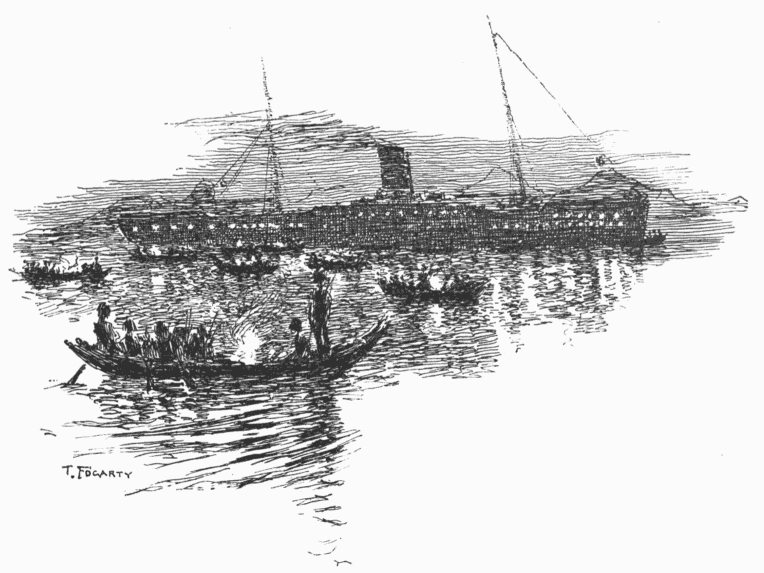
Returning to the Spray, where I found all secure, I prepared for an early start in the morning. It was agreed that the steamer should blow her whistle for me if first on the move. I watched the steamer, off and on, through the night for the pleasure alone of seeing her electric lights, a pleasing sight in contrast to the ordinary Fuegian canoe with a brand of fire in it. The sloop was the first under way, but the Colombia, soon following, passed, and saluted as she went by. Had the captain given me his steamer, his company would have been no worse off than they were two or three months later. I read afterward, in a late California paper, "The Colombia will be a total loss." On her second trip to Panama she was wrecked on the rocks of the California coast.
I returned to the Spray and found everything secure. Then I prepared to leave early in the morning. We agreed that the steamer would blow her whistle for me if she got moving first. I watched the steamer off and on throughout the night, just for the pleasure of seeing her electric lights. They were a welcome contrast to the usual Fuegian canoe with a burning stick in it. The sloop got under way first, but the Colombia soon followed. She passed me and saluted as she went by. If the captain had given me his steamer, his company would have been no worse off than they were two or three months later. I later read in a recent California paper, "The Colombia will be a total loss." On her second trip to Panama, she was wrecked on the rocks of the California coast.
The Spray was then beating against wind and current, as usual in the strait. At this point the tides from the Atlantic and the Pacific meet, and in the strait, as on the outside coast, their meeting makes a commotion of whirlpools and combers that in a gale of wind is dangerous to canoes and other frail craft.
The Spray was sailing against the wind and current, as usual in the strait. Here, the tides from the Atlantic and the Pacific meet. Their meeting stirs up whirlpools and breaking waves, both in the strait and along the outside coast. In a gale, these are dangerous to canoes and other small, fragile boats.
A few miles farther along was a large steamer ashore, bottom up. Passing this place, the sloop ran into a streak of light wind, and then—a most remarkable condition for strait weather—it fell entirely calm. Signal-fires sprang up at once on all sides, and then more than twenty canoes hove in sight, all heading for the Spray. As they came within hail, their savage crews cried, "Amigo yammerschooner," "Anclas aqui," "Bueno puerto aqui," and like scraps of Spanish mixed with their own jargon. I had no thought of anchoring in their "good port." I hoisted the sloop's flag and fired a gun, all of which they might construe as a friendly salute or an invitation to come on. They drew up in a semicircle, but kept outside of eighty yards, which in self-defense would have been the death-line.
A few miles farther on, a large steamer lay stranded upside down. After passing it, the sloop entered a stretch of light wind. Then the wind died completely, a most remarkable condition for weather in the strait. Signal fires sprang up at once on all sides. Then more than twenty canoes came into view, all heading for the Spray. When they came close enough to be heard, their savage crews shouted, "Amigo yammerschooner," "Anclas aqui," "Bueno puerto aqui," and similar scraps of Spanish mixed with their own jargon. I had no intention of anchoring in their "good port." I raised the sloop's flag and fired a gun. They might take these acts as a friendly salute or an invitation to approach. They formed a semicircle but stayed more than eighty yards away. In self-defense, I would have fired on them if they crossed that line.
In their mosquito fleet was a ship's boat stolen probably from a murdered crew. Six savages paddled this rather awkwardly with the blades of oars which had been broken off. Two of the savages standing erect wore sea-boots, and this sustained the suspicion that they had fallen upon some luckless ship's crew, and also added a hint that they had already visited the Spray's deck, and would now, if they could, try her again. Their sea-boots, I have no doubt, would have protected their feet and rendered carpet-tacks harmless. Paddling clumsily, they passed down the strait at a distance of a hundred yards from the sloop, in an offhand manner and as if bound to Fortescue Bay. This I judged to be a piece of strategy, and so kept a sharp lookout over a small island which soon came in range between them and the sloop, completely hiding them from view, and toward which the Spray was now drifting helplessly with the tide, and with every prospect of going on the rocks, for there was no anchorage, at least, none that my cables would reach. And, sure enough, I soon saw a movement in the grass just on top of the island, which is called Bonet Island and is one hundred and thirty-six feet high. I fired several shots over the place, but saw no other sign of the savages. It was they that had moved the grass, for as the sloop swept past the island, the rebound of the tide carrying her clear, there on the other side was the boat, surely enough exposing their cunning and treachery. A stiff breeze, coming up suddenly, now scattered the canoes while it extricated the sloop from a dangerous position, albeit the wind, though friendly, was still ahead.
Among their small fleet of canoes was a ship’s boat, probably stolen from a murdered crew. Six of the savages paddled it rather awkwardly with the blades of broken oars. Two stood upright wearing sea boots. This strengthened my suspicion that they had attacked an unfortunate ship’s crew. It also suggested that they had already been aboard the Spray and would try again if they could. Their sea boots, I have no doubt, would have protected their feet from the carpet tacks. Paddling clumsily, they passed down the strait a hundred yards from the sloop. They acted casually, as if heading for Fortescue Bay. I judged this to be a trick, so I kept a sharp lookout over a small island. The island soon came between their boat and the sloop, hiding them completely from view. The Spray was now drifting helplessly toward it with the tide and seemed likely to run aground on the rocks. There was nowhere to anchor, at least nowhere my cables could reach. Sure enough, I soon saw movement in the grass at the top of the island. It is called Bonet Island and is one hundred and thirty-six feet high. I fired several shots over the spot but saw no other sign of the savages. They had moved the grass, for as the sloop swept past the island, the returning tide carried her clear. There, on the other side, was the boat, revealing their cunning and treachery. A stiff breeze suddenly sprang up, scattering the canoes and freeing the sloop from a dangerous position. But although the wind was helpful, it was still blowing from ahead.
The Spray, flogging against current and wind, made Borgia Bay on the following afternoon, and cast anchor there for the second time. I would now, if I could, describe the moonlit scene on the strait at midnight after I had cleared the savages and Bonet Island. A heavy cloud-bank that had swept across the sky then cleared away, and the night became suddenly as light as day, or nearly so. A high mountain was mirrored in the channel ahead, and the Spray sailing along with her shadow was as two sloops on the sea.
The Spray fought against the current and wind and reached Borgia Bay the following afternoon. There, she anchored for the second time. I wish I could describe the moonlit scene on the strait at midnight, after I had passed the savages and Bonet Island. A heavy bank of clouds had swept across the sky. Then the clouds cleared, and the night suddenly became almost as light as day. A high mountain was reflected in the channel ahead. The Spray sailed along with her shadow, looking like two sloops on the sea.
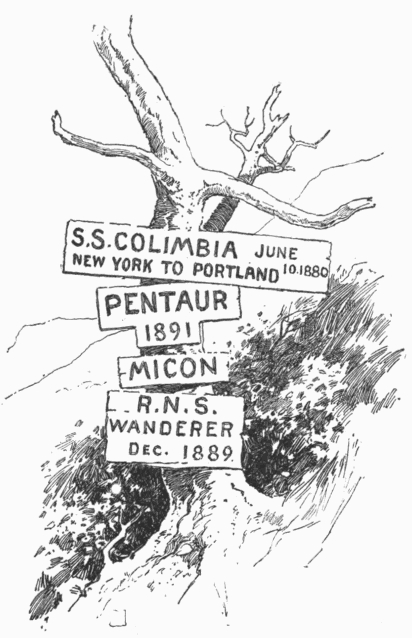
The sloop being moored, I threw out my skiff, and with ax and gun landed at the head of the cove, and filled a barrel of water from a stream. Then, as before, there was no sign of Indians at the place. Finding it quite deserted, I rambled about near the beach for an hour or more. The fine weather seemed, somehow, to add loneliness to the place, and when I came upon a spot where a grave was marked I went no farther. Returning to the head of the cove, I came to a sort of Calvary, it appeared to me, where navigators, carrying their cross, had each set one up as a beacon to others coming after. They had anchored here and gone on, all except the one under the little mound. One of the simple marks, curiously enough, had been left there by the steamship Colimbia, sister ship to the Colombia, my neighbor of that morning.
Once the sloop was moored, I put my skiff in the water. With an ax and a gun, I landed at the head of the cove and filled a barrel with water from a stream. As before, there was no sign of Indians there. The place was completely deserted, so I wandered near the beach for an hour or more. The fine weather somehow seemed to make the place feel lonelier. When I came upon a marked grave, I went no farther. Returning to the head of the cove, I came upon what seemed to me a kind of Calvary. Navigators carrying their crosses had each set one up there as a beacon for those who came after. They had anchored here and moved on, all except the one under the little mound. Curiously, one of the simple markers had been left by the steamship Colimbia, sister ship to the Colombia, my neighbor that morning.
I read the names of many other vessels; some of them I copied in my journal, others were illegible. Many of the crosses had decayed and fallen, and many a hand that put them there I had known, many a hand now still. The air of depression was about the place, and I hurried back to the sloop to forget myself again in the voyage.
I read the names of many other vessels. I copied some into my journal, but others were too faded to read. Many of the crosses had rotted and fallen. I had known many of the people who had put them there, and many of those hands were now still. The place felt depressing, and I hurried back to the sloop to lose myself in the voyage again.
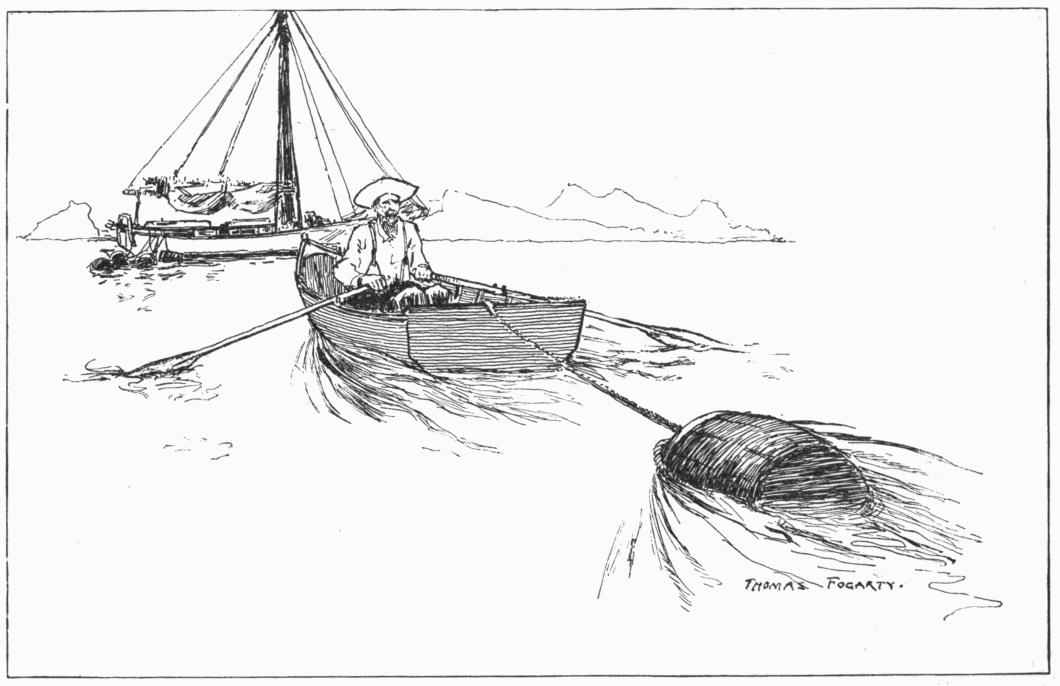
Early the next morning I stood out from Borgia Bay, and off Cape Quod, where the wind fell light, I moored the sloop by kelp in twenty fathoms of water, and held her there a few hours against a three-knot current. That night I anchored in Langara Cove, a few miles farther along, where on the following day I discovered wreckage and goods washed up from the sea. I worked all day now, salving and boating off a cargo to the sloop. The bulk of the goods was tallow in casks and in lumps from which the casks had broken away; and embedded in the seaweed was a barrel of wine, which I also towed alongside. I hoisted them all in with the throat-halyards, which I took to the windlass. The weight of some of the casks was a little over eight hundred pounds.
Early the next morning, I sailed out of Borgia Bay. Off Cape Quod, the wind grew light, so I moored the sloop to kelp in twenty fathoms of water. It held her there for a few hours against a three-knot current. That night I anchored in Langara Cove, a few miles farther along. The next day, I found wreckage and goods washed up from the sea. I worked all day salvaging the goods and carrying a cargo out to the sloop by boat. Most of the goods were tallow, some in casks and some in lumps where the casks had broken away. A barrel of wine was caught in the seaweed, and I towed it alongside too. I hoisted everything aboard with the throat-halyards, which I led to the windlass. Some of the casks weighed a little over eight hundred pounds.
There were no Indians about Langara; evidently there had not been any since the great gale which had washed the wreckage on shore. Probably it was the same gale that drove the Spray off Cape Horn, from March 3 to 8. Hundreds of tons of kelp had been torn from beds in deep water and rolled up into ridges on the beach. A specimen stalk which I found entire, roots, leaves, and all, measured one hundred and thirty-one feet in length. At this place I filled a barrel of water at night, and on the following day sailed with a fair wind at last.
There were no Indians around Langara. Apparently none had been there since the great storm that washed the wreckage ashore. It was probably the same storm that drove the Spray off Cape Horn from March 3 to 8. Hundreds of tons of kelp had been torn from beds in deep water and piled into ridges on the beach. I found one whole stalk, with roots, leaves, and all. It measured 131 feet long. I filled a barrel with water there that night. The next day, I sailed with a fair wind at last.
I had not sailed far, however, when I came abreast of more tallow in a small cove, where I anchored, and boated off as before. It rained and snowed hard all that day, and it was no light work carrying tallow in my arms over the boulders on the beach. But I worked on till the Spray was loaded with a full cargo. I was happy then in the prospect of doing a good business farther along on the voyage, for the habits of an old trader would come to the surface. I sailed from the cove about noon, greased from top to toe, while my vessel was tallowed from keelson to truck. My cabin, as well as the hold and deck, was stowed full of tallow, and all were thoroughly smeared.
I had not sailed far, however, when I came alongside more tallow in a small cove. I anchored there and carried it out to the boat as before. Rain and snow fell hard all day, and carrying tallow in my arms over the boulders on the beach was hard work. But I kept working until the Spray had a full cargo. I was happy at the prospect of doing good business farther along on the voyage. The habits of an old trader were coming to the surface. I sailed from the cove around noon, greased from head to toe, while my vessel was covered in tallow from keelson to masthead. My cabin, as well as the hold and deck, was packed full of tallow, and all were thoroughly smeared with it.