Chapter 6
Departure from Rio de Janeiro—The Spray ashore on the sands of Uruguay—A narrow escape from shipwreck—The boy who found a sloop—The Spray floated but somewhat damaged—Courtesies from the British consul at Maldonado—A warm greeting at Montevideo—An excursion to Buenos Aires—Shortening the mast and bowsprit.
Departure from Rio de Janeiro. The Spray runs aground on the sands of Uruguay. A narrow escape from shipwreck. The boy who found a sloop. The Spray is refloated but somewhat damaged. Kindnesses from the British consul at Maldonado. A warm welcome at Montevideo. A trip to Buenos Aires. Shortening the mast and bowsprit.
On November 28 the Spray sailed from Rio de Janeiro, and first of all ran into a gale of wind, which tore up things generally along the coast, doing considerable damage to shipping. It was well for her, perhaps, that she was clear of the land. Coasting along on this part of the voyage, I observed that while some of the small vessels I fell in with were able to outsail the Spray by day, they fell astern of her by night. To the Spray day and night were the same; to the others clearly there was a difference. On one of the very fine days experienced after leaving Rio, the steamship South Wales spoke the Spray and unsolicited gave the longitude by chronometer as 48 degrees W., "as near as I can make it," the captain said. The Spray, with her tin clock, had exactly the same reckoning. I was feeling at ease in my primitive method of navigation, but it startled me not a little to find my position by account verified by the ship's chronometer. On December 5 a barkantine hove in sight, and for several days the two vessels sailed along the coast together. Right here a current was experienced setting north, making it necessary to hug the shore, with which the Spray became rather familiar. Here I confess a weakness: I hugged the shore entirely too close. In a word, at daybreak on the morning of December 11 the Spray ran hard and fast on the beach. This was annoying; but I soon found that the sloop was in no great danger. The false appearance of the sand-hills under a bright moon had deceived me, and I lamented now that I had trusted to appearances at all. The sea, though moderately smooth, still carried a swell which broke with some force on the shore. I managed to launch my small dory from the deck, and ran out a kedge-anchor and warp; but it was too late to kedge the sloop off, for the tide was falling and she had already sewed a foot. Then I went about "laying out" the larger anchor, which was no easy matter, for my only life-boat, the frail dory, when the anchor and cable were in it, was swamped at once in the surf, the load being too great for her. Then I cut the cable and made two loads of it instead of one. The anchor, with forty fathoms bent and already buoyed, I now took and succeeded in getting through the surf; but my dory was leaking fast, and by the time I had rowed far enough to drop the anchor she was full to the gunwale and sinking. There was not a moment to spare, and I saw clearly that if I failed now all might be lost. I sprang from the oars to my feet, and lifting the anchor above my head, threw it clear just as she was turning over. I grasped her gunwale and held on as she turned bottom up, for I suddenly remembered that I could not swim. Then I tried to right her, but with too much eagerness, for she rolled clean over, and left me as before, clinging to her gunwale, while my body was still in the water. Giving a moment to cool reflection, I found that although the wind was blowing moderately toward the land, the current was carrying me to sea, and that something would have to be done. Three times I had been under water, in trying to right the dory, and I was just saying, "Now I lay me," when I was seized by a determination to try yet once more, so that no one of the prophets of evil I had left behind me could say, "I told you so." Whatever the danger may have been, much or little, I can truly say that the moment was the most serene of my life.
On November 28, the Spray sailed from Rio de Janeiro and immediately ran into a gale. The storm caused widespread destruction along the coast and considerable damage to shipping. Perhaps it was fortunate that the Spray was clear of land. As I sailed along the coast on this part of the voyage, I noticed something about the small vessels I met. Some could outsail the Spray by day, but they fell behind her at night. To the Spray, day and night were the same. To the others, there was clearly a difference. On one of the very fine days after leaving Rio, the steamship South Wales hailed the Spray. Without being asked, the captain gave the longitude according to his chronometer as 48 degrees W., "as near as I can make it," he said. The Spray, with her tin clock, had calculated exactly the same position. I was comfortable with my primitive method of navigation. Still, I was quite startled to find my calculated position confirmed by the ship's chronometer. On December 5, a barkantine came into sight, and the two vessels sailed along the coast together for several days. Here we encountered a northward current, making it necessary to stay close to shore. The Spray became rather familiar with it. Here I confess a weakness: I stayed entirely too close to shore. In short, at daybreak on December 11, the Spray ran hard aground on the beach. This was annoying, but I soon found that the sloop was in no great danger. The bright moon had made the sand hills look deceptive, and I now regretted trusting appearances at all. The sea was moderately smooth, but a swell still broke with some force on the shore. I managed to launch my small dory from the deck and carry out a kedge anchor and rope. But it was too late to pull the sloop off with the anchor. The tide was falling, and she was already a foot above the water. Then I set about laying out the larger anchor. This was no easy matter. My only lifeboat was the frail dory, and when I put the anchor and cable in it, the load was too great. The dory was immediately swamped in the surf. So I cut the cable and divided the load in two. I took the anchor with forty fathoms of cable attached and already buoyed, and managed to get through the surf. But my dory was leaking fast. By the time I had rowed far enough to drop the anchor, the dory was full to the gunwale and sinking. There was not a moment to spare, and I saw clearly that if I failed now, all might be lost. I sprang up from the oars, lifted the anchor over my head, and threw it clear just as the dory turned over. I grabbed the gunwale and held on as the dory turned bottom up. I had suddenly remembered that I could not swim. Then I tried to turn the dory upright, but I was too eager. It rolled all the way over and left me as before, clinging to the gunwale with my body in the water. I paused to think calmly. Though the wind was blowing moderately toward land, the current was carrying me out to sea, and I had to do something. I had gone under water three times while trying to right the dory. I was just saying, "Now I lay me," when I became determined to try once more. I did not want any of the prophets of evil I had left behind to say, "I told you so." Whatever the danger may have been, great or small, I can truly say that the moment was the most serene of my life.
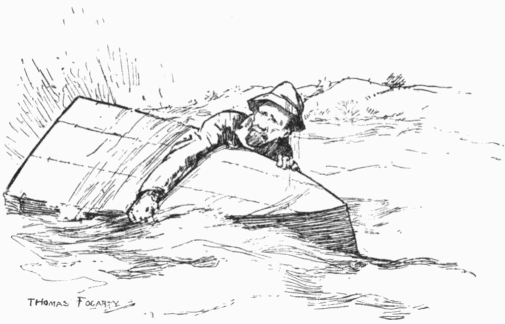
After righting the dory for the fourth time, I finally succeeded by the utmost care in keeping her upright while I hauled myself into her and with one of the oars, which I had recovered, paddled to the shore, somewhat the worse for wear and pretty full of salt water. The position of my vessel, now high and dry, gave me anxiety. To get her afloat again was all I thought of or cared for. I had little difficulty in carrying the second part of my cable out and securing it to the first, which I had taken the precaution to buoy before I put it into the boat. To bring the end back to the sloop was a smaller matter still, and I believe I chuckled above my sorrows when I found that in all the haphazard my judgment or my good genius had faithfully stood by me. The cable reached from the anchor in deep water to the sloop's windlass by just enough to secure a turn and no more. The anchor had been dropped at the right distance from the vessel. To heave all taut now and wait for the coming tide was all I could do.
After turning the dory upright for the fourth time, I finally managed to keep her steady with the greatest care. I hauled myself aboard and paddled to shore with one of the oars I had recovered. I was somewhat battered and pretty full of salt water. My vessel’s position, now high and dry, worried me. Getting her afloat again was all I thought about or cared about. I had little difficulty carrying out the second length of cable and securing it to the first. I had taken care to attach a buoy to the first length before putting it in the boat. Bringing the end back to the sloop was even easier. I believe I chuckled despite my troubles when I found that, amid all the confusion, my judgment or my good fortune had faithfully stood by me. The cable reached from the anchor in deep water to the sloop’s windlass with just enough length for one turn and no more. The anchor had been dropped at the right distance from the vessel. All I could do now was pull the cable taut and wait for the tide to come in.
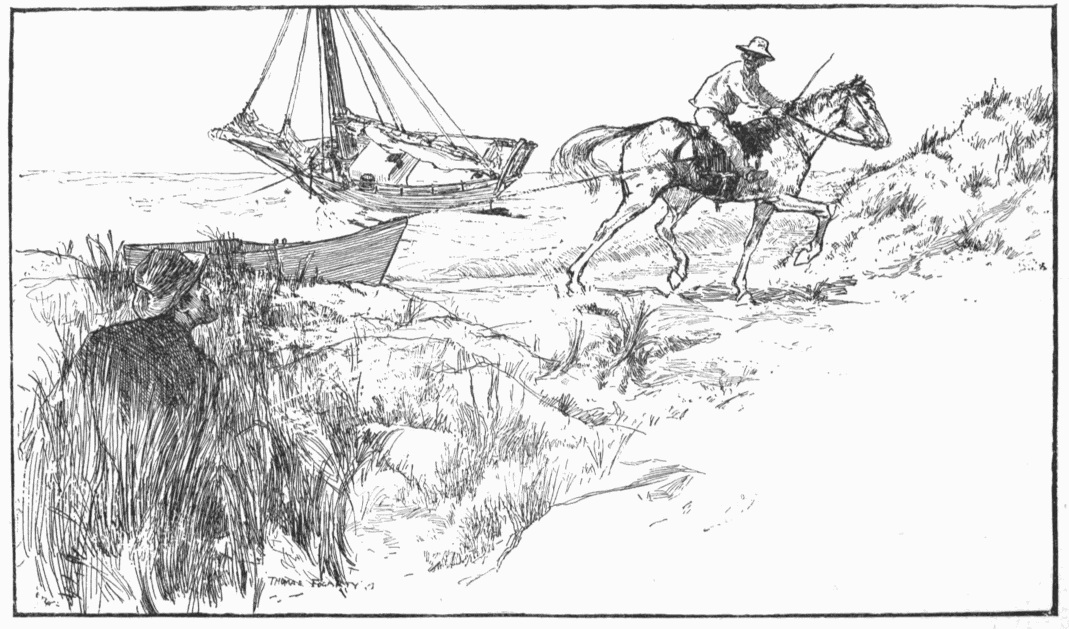
I had already done enough work to tire a stouter man, and was only too glad to throw myself on the sand above the tide and rest; for the sun was already up, and pouring a generous warmth over the land. While my state could have been worse, I was on the wild coast of a foreign country, and not entirely secure in my property, as I soon found out. I had not been long on the shore when I heard the patter, patter of a horse's feet approaching along the hard beach, which ceased as it came abreast of the sand-ridge where I lay sheltered from the wind. Looking up cautiously, I saw mounted on a nag probably the most astonished boy on the whole coast. He had found a sloop! "It must be mine," he thought, "for am I not the first to see it on the beach?" Sure enough, there it was all high and dry and painted white. He trotted his horse around it, and finding no owner, hitched the nag to the sloop's bobstay and hauled as though he would take her home; but of course she was too heavy for one horse to move. With my skiff, however, it was different; this he hauled some distance, and concealed behind a dune in a bunch of tall grass. He had made up his mind, I dare say, to bring more horses and drag his bigger prize away, anyhow, and was starting off for the settlement a mile or so away for the reinforcement when I discovered myself to him, at which he seemed displeased and disappointed. "Buenos dias, muchacho," I said. He grunted a reply, and eyed me keenly from head to foot. Then bursting into a volley of questions,—more than six Yankees could ask,—he wanted to know, first, where my ship was from, and how many days she had been coming. Then he asked what I was doing here ashore so early in the morning. "Your questions are easily answered," I replied; "my ship is from the moon, it has taken her a month to come, and she is here for a cargo of boys." But the intimation of this enterprise, had I not been on the alert, might have cost me dearly; for while I spoke this child of the campo coiled his lariat ready to throw, and instead of being himself carried to the moon, he was apparently thinking of towing me home by the neck, astern of his wild cayuse, over the fields of Uruguay.
I had already done enough work to tire a stronger man. I was only too glad to lie down on the sand above the tide and rest. The sun was already up, spreading generous warmth over the land. My situation could have been worse, but I was on the wild coast of a foreign country. My property was not entirely safe, as I soon found out. I had not been ashore long when I heard the patter, patter of a horse’s feet approaching along the hard beach. The sound stopped beside the sand ridge where I lay sheltered from the wind. I looked up cautiously and saw a boy on a horse. He was probably the most astonished boy on the whole coast. He had found a sloop! "It must be mine," he thought, "for am I not the first to see it on the beach?" Sure enough, there it was, high and dry and painted white. He rode his horse around the sloop and found no owner. Then he hitched the horse to the sloop’s bobstay and pulled as if he meant to take her home. But of course she was too heavy for one horse to move. My skiff was another matter. He pulled the skiff some distance and hid it behind a dune in a clump of tall grass. I dare say he had made up his mind to bring more horses and drag his bigger prize away. He was starting off for reinforcements at the settlement a mile or so away when I showed myself. He seemed displeased and disappointed. "Buenos dias, muchacho," I said. He grunted a reply and looked me over keenly from head to foot. Then he burst into a volley of questions, more than six Yankees could ask. First, he wanted to know where my ship was from and how many days she had been coming. Then he asked what I was doing ashore so early in the morning. "Your questions are easily answered," I replied. "My ship is from the moon, it has taken her a month to come, and she is here for a cargo of boys." But that hint of my plans might have cost me dearly if I had not been alert. While I spoke, this child of the campo coiled his lariat, ready to throw. Instead of being carried to the moon himself, he was apparently thinking of towing me home by the neck. He would have dragged me behind his wild cayuse, across the fields of Uruguay.
The exact spot where I was stranded was at the Castillo Chicos, about seven miles south of the dividing-line of Uruguay and Brazil, and of course the natives there speak Spanish. To reconcile my early visitor, I told him that I had on my ship biscuits, and that I wished to trade them for butter and milk. On hearing this a broad grin lighted up his face, and showed that he was greatly interested, and that even in Uruguay a ship's biscuit will cheer the heart of a boy and make him your bosom friend. The lad almost flew home, and returned quickly with butter, milk, and eggs. I was, after all, in a land of plenty. With the boy came others, old and young, from neighboring ranches, among them a German settler, who was of great assistance to me in many ways.
I was stranded at Castillo Chicos, about seven miles south of the border between Uruguay and Brazil. Of course, the locals there speak Spanish. To win over my early visitor, I told him I had ship’s biscuits aboard. I wanted to trade them for butter and milk. His face lit up with a broad grin when he heard this, showing how interested he was. Even in Uruguay, a ship’s biscuit can cheer a boy’s heart and make him your close friend. The boy almost flew home and quickly returned with butter, milk, and eggs. After all, I was in a land of plenty. Others came with the boy, both old and young, from neighboring ranches. Among them was a German settler who helped me greatly in many ways.
A coast-guard from Fort Teresa, a few miles away, also came, "to protect your property from the natives of the plains," he said. I took occasion to tell him, however, that if he would look after the people of his own village, I would take care of those from the plains, pointing, as I spoke, to the nondescript "merchant" who had already stolen my revolver and several small articles from my cabin, which by a bold front I had recovered. The chap was not a native Uruguayan. Here, as in many other places that I visited, the natives themselves were not the ones discreditable to the country.
A coast guard from Fort Teresa, a few miles away, also came. He said he had come "to protect your property from the natives of the plains." But I told him that if he looked after the people of his own village, I would handle those from the plains. As I spoke, I pointed to the odd-looking "merchant" who had already stolen my revolver and several small items from my cabin. I had recovered them by putting on a bold front. The man was not a native Uruguayan. Here, as in many other places I visited, the natives themselves were not the ones who brought discredit on the country.
Early in the day a despatch came from the port captain of Montevideo, commanding the coastguards to render the Spray every assistance. This, however, was not necessary, for a guard was already on the alert, and making all the ado that would become the wreck of a steamer with a thousand emigrants aboard. The same messenger brought word from the port captain that he would despatch a steam-tug to tow the Spray to Montevideo. The officer was as good as his word; a powerful tug arrived on the following day; but, to make a long story short, with the help of the German and one soldier and one Italian, called "Angel of Milan," I had already floated the sloop and was sailing for port with the boom off before a fair wind. The adventure cost the Spray no small amount of pounding on the hard sand; she lost her shoe and part of her false keel, and received other damage, which, however, was readily mended afterward in dock.
Early that day, a message arrived from the port captain of Montevideo, ordering the coastguards to give the Spray every assistance. This was unnecessary, however. A guard was already on alert, making all the fuss one would expect if a steamer carrying a thousand emigrants had been wrecked. The same messenger brought word that the port captain would send a steam tug to tow the Spray to Montevideo. The officer kept his word, and a powerful tug arrived the next day. But, to make a long story short, I had already refloated the sloop with the help of the German, one soldier, and one Italian called "Angel of Milan." I was sailing for port with the boom off, running before a favorable wind. The Spray had taken quite a pounding on the hard sand during the adventure. She lost her shoe and part of her false keel and suffered other damage, though all of it was easily repaired afterward in dock.
On the following day I anchored at Maldonado. The British consul, his daughter, and another young lady came on board, bringing with them a basket of fresh eggs, strawberries, bottles of milk, and a great loaf of sweet bread. This was a good landfall, and better cheer than I had found at Maldonado once upon a time when I entered the port with a stricken crew in my bark, the Aquidneck.
The next day I anchored at Maldonado. The British consul, his daughter, and another young lady came aboard. They brought a basket of fresh eggs, strawberries, bottles of milk, and a large loaf of sweet bread. It was a good arrival, and a warmer welcome than I had once found at Maldonado. On that earlier visit, I had entered the port in my bark, the Aquidneck, with a stricken crew.
In the waters of Maldonado Bay a variety of fishes abound, and fur-seals in their season haul out on the island abreast the bay to breed. Currents on this coast are greatly affected by the prevailing winds, and a tidal wave higher than that ordinarily produced by the moon is sent up the whole shore of Uruguay before a southwest gale, or lowered by a northeaster, as may happen. One of these waves having just receded before the northeast wind which brought the Spray in left the tide now at low ebb, with oyster-rocks laid bare for some distance along the shore. Other shellfish of good flavor were also plentiful, though small in size. I gathered a mess of oysters and mussels here, while a native with hook and line, and with mussels for bait, fished from a point of detached rocks for bream, landing several good-sized ones.
Many kinds of fish abound in Maldonado Bay, and fur seals come ashore to breed on the island opposite the bay during their breeding season. Currents along this coast are greatly affected by the prevailing winds. A southwest gale sends a tidal wave along the whole shore of Uruguay, raising the water higher than the moon normally would. A northeaster, on the other hand, lowers it. Such a wave had just receded before the northeast wind that brought the Spray in. The tide was now at low ebb, leaving oyster rocks exposed for some distance along the shore. Other tasty shellfish were also plentiful, though small. I gathered a meal of oysters and mussels here. Meanwhile, a local fisherman used a hook and line, baited with mussels, to fish for bream from a group of detached rocks. He landed several good-sized ones.
The fisherman's nephew, a lad about seven years old, deserves mention as the tallest blasphemer, for a short boy, that I met on the voyage. He called his old uncle all the vile names under the sun for not helping him across the gully. While he swore roundly in all the moods and tenses of the Spanish language, his uncle fished on, now and then congratulating his hopeful nephew on his accomplishment. At the end of his rich vocabulary the urchin sauntered off into the fields, and shortly returned with a bunch of flowers, and with all smiles handed them to me with the innocence of an angel. I remembered having seen the same flower on the banks of the river farther up, some years before. I asked the young pirate why he had brought them to me. Said he, "I don't know; I only wished to do so." Whatever the influence was that put so amiable a wish in this wild pampa boy, it must be far-reaching, thought I, and potent, seas over.
The fisherman's nephew was a boy of about seven. For such a short boy, he was the most towering blasphemer I met on the voyage. He called his old uncle every vile name under the sun for not helping him across the gully. The boy swore heartily in every mood and tense of the Spanish language. His uncle kept fishing, occasionally congratulating his promising nephew on his achievement. When the youngster had exhausted his rich vocabulary, he wandered off into the fields. He soon returned with a bunch of flowers and, smiling, handed them to me with the innocence of an angel. I remembered seeing the same flower on the riverbanks farther upstream some years before. I asked the young pirate why he had brought me the flowers. He said, "I don't know; I only wished to do so." Whatever influence had inspired such a kind wish in this wild pampa boy, I thought it must be powerful and reach far across the seas.
Shortly after, the Spray sailed for Montevideo, where she arrived on the following day and was greeted by steam-whistles till I felt embarrassed and wished that I had arrived unobserved. The voyage so far alone may have seemed to the Uruguayans a feat worthy of some recognition; but there was so much of it yet ahead, and of such an arduous nature, that any demonstration at this point seemed, somehow, like boasting prematurely.
Shortly afterward, the Spray sailed for Montevideo and arrived the next day. Steam whistles greeted me until I felt embarrassed and wished I had arrived unnoticed. To the Uruguayans, my solo voyage so far may have seemed like a feat worth recognizing. But so much of the voyage still lay ahead, and it would be so difficult, that any celebration at this point somehow seemed like boasting too soon.
The Spray had barely come to anchor at Montevideo when the agents of the Royal Mail Steamship Company, Messrs. Humphreys & Co., sent word that they would dock and repair her free of expense and give me twenty pounds sterling, which, they did to the letter, and more besides. The calkers at Montevideo paid very careful attention to the work of making the sloop tight. Carpenters mended the keel and also the life-boat (the dory), painting it till I hardly knew it from a butterfly.
The Spray had barely anchored at Montevideo when Humphreys & Co. sent word. The agents of the Royal Mail Steamship Company offered to dock and repair her for free and give me twenty pounds sterling. They did exactly that, and more besides. The caulkers at Montevideo took great care to make the sloop watertight. Carpenters repaired the keel and the lifeboat (the dory). They painted the dory so brightly that I could hardly tell it from a butterfly.
Christmas of 1895 found the Spray refitted even to a wonderful makeshift stove which was contrived from a large iron drum of some sort punched full of holes to give it a draft; the pipe reached straight up through the top of the forecastle. Now, this was not a stove by mere courtesy. It was always hungry, even for green wood; and in cold, wet days off the coast of Tierra del Fuego it stood me in good stead. Its one door swung on copper hinges, which one of the yard apprentices, with laudable pride, polished till the whole thing blushed like the brass binnacle of a P. & O. steamer.
By Christmas 1895, the Spray had been refitted, even with a wonderful makeshift stove. The stove was made from a large iron drum of some sort, punched full of holes to give it a draft. Its pipe went straight up through the top of the forecastle. This was no stove in name only. It was always hungry, even for green wood. On cold, wet days off the coast of Tierra del Fuego, it served me well. Its single door swung on copper hinges. One of the yard apprentices polished the hinges with admirable pride, until the whole thing blushed like the brass binnacle of a P. & O. steamer.
The Spray was now ready for sea. Instead of proceeding at once on her voyage, however, she made an excursion up the river, sailing December 29. An old friend of mine, Captain Howard of Cape Cod and of River Plate fame, took the trip in her to Buenos Aires, where she arrived early on the following day, with a gale of wind and a current so much in her favor that she outdid herself. I was glad to have a sailor of Howard's experience on board to witness her performance of sailing with no living being at the helm. Howard sat near the binnacle and watched the compass while the sloop held her course so steadily that one would have declared that the card was nailed fast. Not a quarter of a point did she deviate from her course. My old friend had owned and sailed a pilot-sloop on the river for many years, but this feat took the wind out of his sails at last, and he cried, "I'll be stranded on Chico Bank if ever I saw the like of it!" Perhaps he had never given his sloop a chance to show what she could do. The point I make for the Spray here, above all other points, is that she sailed in shoal water and in a strong current, with other difficult and unusual conditions. Captain Howard took all this into account.
The Spray was now ready for sea. Instead of setting out on her voyage at once, however, she took a trip up the river, leaving on December 29. An old friend of mine, Captain Howard, was aboard for the trip to Buenos Aires. He was from Cape Cod and was well known on the River Plate. The Spray arrived early the next day. A gale and a current were so much in her favor that she outdid herself. I was glad to have a sailor of Howard’s experience aboard to see her sail without a living being at the helm. Howard sat near the binnacle and watched the compass. The sloop held her course so steadily that one would have said the compass card was nailed in place. She did not stray even a quarter of a point from her course. My old friend had owned and sailed a pilot-sloop on the river for many years. But this feat finally took the wind out of his sails, and he cried, "I'll be stranded on Chico Bank if ever I saw the like of it!" Perhaps he had never given his sloop a chance to show what she could do. Above all, the point I make for the Spray is that she sailed in shallow water and a strong current, under other difficult and unusual conditions. Captain Howard took all of these conditions into account.
In all the years away from his native home Howard had not forgotten the art of making fish chowders; and to prove this he brought along some fine rockfish and prepared a mess fit for kings. When the savory chowder was done, chocking the pot securely between two boxes on the cabin floor, so that it could not roll over, we helped ourselves and swapped yarns over it while the Spray made her own way through the darkness on the river. Howard told me stories about the Fuegian cannibals as she reeled along, and I told him about the pilot of the Pinta steering my vessel through the storm off the coast of the Azores, and that I looked for him at the helm in a gale such as this. I do not charge Howard with superstition,—we are none of us superstitious,—but when I spoke about his returning to Montevideo on the Spray he shook his head and took a steam-packet instead.
In all his years away from his native home, Howard had not forgotten how to make fish chowder. To prove it, he brought along some fine rockfish and made a chowder fit for kings. When the savory chowder was ready, we wedged the pot between two boxes on the cabin floor so it could not roll over. We helped ourselves and swapped stories over the chowder while the Spray made her own way through the darkness on the river. As she rolled along, Howard told me stories about the Fuegian cannibals. I told him how the pilot of the Pinta had steered my vessel through the storm off the coast of the Azores. I also told him that I expected to see the pilot at the helm in a gale like this one. I do not accuse Howard of superstition. None of us are superstitious. But when I suggested that he return to Montevideo on the Spray, he shook his head and took a steam-packet instead.
I had not been in Buenos Aires for a number of years. The place where I had once landed from packets, in a cart, was now built up with magnificent docks. Vast fortunes had been spent in remodeling the harbor; London bankers could tell you that. The port captain, after assigning the Spray a safe berth, with his compliments, sent me word to call on him for anything I might want while in port, and I felt quite sure that his friendship was sincere. The sloop was well cared for at Buenos Aires; her dockage and tonnage dues were all free, and the yachting fraternity of the city welcomed her with a good will. In town I found things not so greatly changed as about the docks, and I soon felt myself more at home.
I had not been in Buenos Aires for several years. I had once come ashore from packet ships in a cart. Now magnificent docks stood where I had landed. Vast fortunes had been spent rebuilding the harbor. London bankers could tell you that. The port captain assigned the Spray a safe berth and sent his compliments. He also sent word that I could call on him for anything I needed while in port. I felt quite sure his friendship was sincere. The sloop was well cared for in Buenos Aires. All her dockage and tonnage fees were waived, and the city's yachting community welcomed her warmly. In town, things had not changed as much as they had around the docks. I soon felt more at home.
From Montevideo I had forwarded a letter from Sir Edward Hairby to the owner of the "Standard," Mr. Mulhall, and in reply to it was assured of a warm welcome to the warmest heart, I think, outside of Ireland. Mr. Mulhall, with a prancing team, came down to the docks as soon as the Spray was berthed, and would have me go to his house at once, where a room was waiting. And it was New Year's day, 1896. The course of the Spray had been followed in the columns of the "Standard."
From Montevideo, I had forwarded a letter from Sir Edward Hairby to Mr. Mulhall, the owner of the "Standard." In reply, he assured me of a warm welcome. I think he had the warmest heart outside of Ireland. As soon as the Spray docked, Mr. Mulhall came down with a lively team of horses. He insisted that I go straight to his house, where a room was waiting for me. It was New Year's Day, 1896. The "Standard" had been following the Spray's course in its columns.
Mr. Mulhall kindly drove me to see many improvements about the city, and we went in search of some of the old landmarks. The man who sold "lemonade" on the plaza when first I visited this wonderful city I found selling lemonade still at two cents a glass; he had made a fortune by it. His stock in trade was a wash-tub and a neighboring hydrant, a moderate supply of brown sugar, and about six lemons that floated on the sweetened water. The water from time to time was renewed from the friendly pump, but the lemon "went on forever," and all at two cents a glass.
Mr. Mulhall kindly drove me around to see many improvements in the city, and we went looking for some old landmarks. I found the man who had sold "lemonade" on the plaza when I first visited this wonderful city. He was still selling lemonade for two cents a glass, and he had made a fortune from it. His entire setup was a washtub, a nearby hydrant, a modest supply of brown sugar, and about six lemons floating in the sweetened water. From time to time, he replenished the water from the handy pump, but the lemon "went on forever," and all for two cents a glass.
But we looked in vain for the man who once sold whisky and coffins in Buenos Aires; the march of civilization had crushed him—memory only clung to his name. Enterprising man that he was, I fain would have looked him up. I remember the tiers of whisky-barrels, ranged on end, on one side of the store, while on the other side, and divided by a thin partition, were the coffins in the same order, of all sizes and in great numbers. The unique arrangement seemed in order, for as a cask was emptied a coffin might be filled. Besides cheap whisky and many other liquors, he sold "cider," which he manufactured from damaged Malaga raisins. Within the scope of his enterprise was also the sale of mineral waters, not entirely blameless of the germs of disease. This man surely catered to all the tastes, wants, and conditions of his customers.
But we searched in vain for the man who once sold whisky and coffins in Buenos Aires. The march of civilization had crushed him, and only the memory of his name remained. He was such an enterprising man that I would have liked to look him up. I remember the rows of whisky barrels standing on end on one side of his store. On the other side, separated by a thin partition, coffins of all sizes stood in the same order. There were a great many of them. The unusual arrangement seemed fitting, since a coffin might be filled as a barrel was emptied. Besides cheap whisky and many other liquors, he sold "cider," which he made from damaged Malaga raisins. His business also sold mineral waters, which were not entirely free of disease germs. This man surely catered to all the tastes, wants, and conditions of his customers.
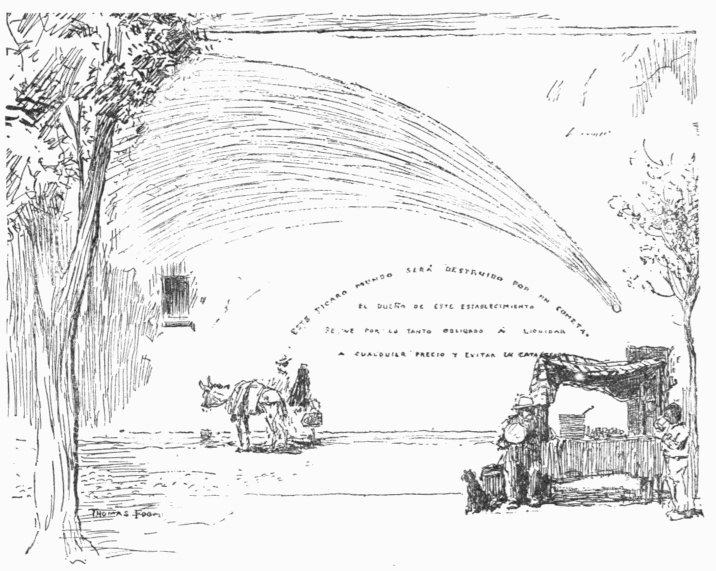
Farther along in the city, however, survived the good man who wrote on the side of his store, where thoughtful men might read and learn: "This wicked world will be destroyed by a comet! The owner of this store is therefore bound to sell out at any price and avoid the catastrophe." My friend Mr. Mulhall drove me round to view the fearful comet with streaming tail pictured large on the trembling merchant's walls.
Farther into the city, however, there was still the good man who had written a message on his store wall. Thoughtful men could read it and learn: "This wicked world will be destroyed by a comet! The owner of this store must therefore sell out at any price and avoid the catastrophe." My friend Mr. Mulhall drove me around to see the frightening comet with its streaming tail, painted large on the trembling merchant's walls.
I unshipped the sloop's mast at Buenos Aires and shortened it by seven feet. I reduced the length of the bowsprit by about five feet, and even then I found it reaching far enough from home; and more than once, when on the end of it reefing the jib, I regretted that I had not shortened it another foot.
At Buenos Aires, I removed the sloop’s mast and shortened it by seven feet. I shortened the bowsprit by about five feet, but even then it stretched far enough from home. More than once, while reefing the jib at the end of the bowsprit, I wished I had shortened it another foot.