Chapter 5
Sailing from Gibraltar with the assistance of her Majesty's tug—The Spray's course changed from the Suez Canal to Cape Horn—Chased by a Moorish pirate—A comparison with Columbus—The Canary Islands-The Cape Verde Islands—Sea life—Arrival at Pernambuco—A bill against the Brazilian government—Preparing for the stormy weather of the cape.
Sailing from Gibraltar with help from her Majesty's tug. The Spray's course changed from the Suez Canal to Cape Horn. Chased by a Moorish pirate. A comparison with Columbus. The Canary Islands. The Cape Verde Islands. Life at sea. Arrival at Pernambuco. A bill against the Brazilian government. Preparing for the cape's stormy weather.
Monday, August 25, the Spray sailed from Gibraltar, well repaid for whatever deviation she had made from a direct course to reach the place. A tug belonging to her Majesty towed the sloop into the steady breeze clear of the mount, where her sails caught a volant wind, which carried her once more to the Atlantic, where it rose rapidly to a furious gale. My plan was, in going down this coast, to haul offshore, well clear of the land, which hereabouts is the home of pirates; but I had hardly accomplished this when I perceived a felucca making out of the nearest port, and finally following in the wake of the Spray. Now, my course to Gibraltar had been taken with a view to proceed up the Mediterranean Sea, through the Suez Canal, down the Red Sea, and east about, instead of a western route, which I finally adopted. By officers of vast experience in navigating these seas, I was influenced to make the change. Longshore pirates on both coasts being numerous, I could not afford to make light of the advice. But here I was, after all, evidently in the midst of pirates and thieves! I changed my course; the felucca did the same, both vessels sailing very fast, but the distance growing less and less between us. The Spray was doing nobly; she was even more than at her best; but, in spite of all I could do, she would broach now and then. She was carrying too much sail for safety. I must reef or be dismasted and lose all, pirate or no pirate. I must reef, even if I had to grapple with him for my life.
On Monday, August 25, the Spray sailed from Gibraltar. The visit had been well worth the detour from her direct course. A tug belonging to Her Majesty towed the sloop clear of the Rock and into a steady breeze. Her sails caught the swift wind, which carried her once more into the Atlantic. There the wind quickly rose to a furious gale. As I sailed down this coast, I planned to head offshore, well clear of land. This coast was home to pirates. But I had hardly made it offshore when I saw a felucca sail out of the nearest port. Eventually, she began following in the wake of the Spray. I had sailed to Gibraltar intending to continue into the Mediterranean Sea, through the Suez Canal, down the Red Sea, and eastward. Instead, I finally chose a western route. Officers with vast experience sailing these seas had persuaded me to change my plans. Pirates were numerous along both coasts, so I could not afford to take their advice lightly. But here I was, after all, apparently in the midst of pirates and thieves! I changed course, and the felucca did the same. Both vessels were sailing very fast, but the distance between us kept shrinking. The Spray was doing nobly, sailing even better than her best. But despite all I could do, she would turn sideways to the wind and waves now and then. She was carrying too much sail to be safe. I had to reef, or lose my mast and everything else, pirate or no pirate. I had to reef, even if I had to fight the pirate for my life.
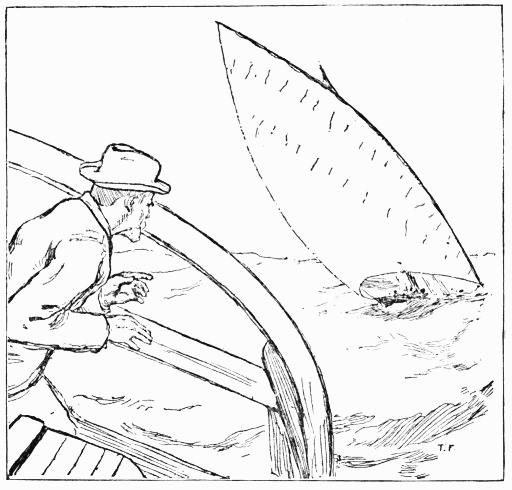
I was not long in reefing the mainsail and sweating it up—probably not more than fifteen minutes; but the felucca had in the meantime so shortened the distance between us that I now saw the tuft of hair on the heads of the crew,—by which, it is said, Mohammed will pull the villains up into heaven,—and they were coming on like the wind. From what I could clearly make out now, I felt them to be the sons of generations of pirates, and I saw by their movements that they were now preparing to strike a blow. The exultation on their faces, however, was changed in an instant to a look of fear and rage. Their craft, with too much sail on, broached to on the crest of a great wave. This one great sea changed the aspect of affairs suddenly as the flash of a gun. Three minutes later the same wave overtook the Spray and shook her in every timber. At the same moment the sheet-strop parted, and away went the main-boom, broken short at the rigging. Impulsively I sprang to the jib-halyards and down-haul, and instantly downed the jib. The head-sail being off, and the helm put hard down, the sloop came in the wind with a bound. While shivering there, but a moment though it was, I got the mainsail down and secured inboard, broken boom and all. How I got the boom in before the sail was torn I hardly know; but not a stitch of it was broken. The mainsail being secured, I hoisted away the jib, and, without looking round, stepped quickly to the cabin and snatched down my loaded rifle and cartridges at hand; for I made mental calculations that the pirate would by this time have recovered his course and be close aboard, and that when I saw him it would be better for me to be looking at him along the barrel of a gun. The piece was at my shoulder when I peered into the mist, but there was no pirate within a mile. The wave and squall that carried away my boom dismasted the felucca outright. I perceived his thieving crew, some dozen or more of them, struggling to recover their rigging from the sea. Allah blacken their faces!
It did not take me long to reef the mainsail and haul it up tight, probably no more than fifteen minutes. But meanwhile, the felucca had come so much closer that I could see the tufts of hair on the crew’s heads. Mohammed, it is said, will use those tufts to pull the villains up into heaven. They were coming on like the wind. From what I could now see clearly, I felt they were the sons of generations of pirates. Their movements showed me that they were preparing to strike. But the triumph on their faces instantly changed to fear and rage. Carrying too much sail, their craft turned sideways on the crest of a great wave. That single great wave changed everything as suddenly as a gunshot. Three minutes later, the same wave overtook the Spray and shook every timber. At the same moment, the sheet-strop broke, and the main-boom snapped off at the rigging. Without thinking, I sprang to the jib-halyards and down-haul and immediately lowered the jib. With the headsail down, I put the helm hard down, and the sloop swung quickly into the wind. While the boat shivered there, though it was only for a moment, I lowered the mainsail and secured it inboard, broken boom and all. I hardly know how I got the boom in before the sail tore, but not a stitch was broken. With the mainsail secured, I hoisted the jib. Without looking around, I stepped quickly into the cabin and snatched up my loaded rifle and the cartridges at hand. I figured that the pirate would have recovered his course by then and would be close alongside. When I saw him, I thought it would be better to be looking at him along the barrel of a gun. The rifle was at my shoulder as I peered into the mist, but there was no pirate within a mile. The wave and squall that carried away my boom had completely dismasted the felucca. I saw his thieving crew, a dozen or more of them, struggling to recover their rigging from the sea. Allah blacken their faces!
I sailed comfortably on under the jib and forestaysail, which I now set. I fished the boom and furled the sail snug for the night; then hauled the sloop's head two points offshore to allow for the set of current and heavy rollers toward the land. This gave me the wind three points on the starboard quarter and a steady pull in the headsails. By the time I had things in this order it was dark, and a flying-fish had already fallen on deck. I took him below for my supper, but found myself too tired to cook, or even to eat a thing already prepared. I do not remember to have been more tired before or since in all my life than I was at the finish of that day. Too fatigued to sleep, I rolled about with the motion of the vessel till near midnight, when I made shift to dress my fish and prepare a dish of tea. I fully realized now, if I had not before, that the voyage ahead would call for exertions ardent and lasting. On August 27 nothing could be seen of the Moor, or his country either, except two peaks, away in the east through the clear atmosphere of morning. Soon after the sun rose even these were obscured by haze, much to my satisfaction.
I sailed on comfortably after setting the jib and forestaysail. I secured the boom and furled the sail tightly for the night. Then I turned the sloop’s bow two points farther offshore to allow for the current and heavy rollers moving toward land. This put the wind three points off the starboard quarter and kept it pulling steadily on the headsails. By the time I had everything in order, it was dark, and a flying fish had already landed on deck. I took the fish below for supper, but I was too tired to cook or even to eat anything already prepared. I cannot remember ever being more tired, before or since, than I was at the end of that day. Too tired to sleep, I rolled about with the motion of the vessel until nearly midnight. Then I managed to clean the fish and make some tea. If I had not realized it before, I now fully understood that the voyage ahead would demand intense and sustained effort. On August 27, nothing could be seen of the Moor or his country except two peaks far to the east, visible through the clear morning air. Soon after sunrise, even those disappeared into the haze, much to my satisfaction.
The wind, for a few days following my escape from the pirates, blew a steady but moderate gale, and the sea, though agitated into long rollers, was not uncomfortably rough or dangerous, and while sitting in my cabin I could hardly realize that any sea was running at all, so easy was the long, swinging motion of the sloop over the waves. All distracting uneasiness and excitement being now over, I was once more alone with myself in the realization that I was on the mighty sea and in the hands of the elements. But I was happy, and was becoming more and more interested in the voyage.
For a few days after I escaped from the pirates, the wind blew in a steady but moderate gale. Though the sea rose in long swells, it was not uncomfortably rough or dangerous. As I sat in my cabin, I could hardly tell that the sea was moving at all. The sloop swung so gently over the waves. All the distracting worry and excitement were now over. Once more, I was alone with myself, aware that I was on the mighty sea and at the mercy of the elements. But I was happy and becoming more and more interested in the voyage.
Columbus, in the Santa Maria, sailing these seas more than four hundred years before, was not so happy as I, nor so sure of success in what he had undertaken. His first troubles at sea had already begun. His crew had managed, by foul play or otherwise, to break the ship's rudder while running before probably just such a gale as the Spray had passed through; and there was dissension on the Santa Maria, something that was unknown on the Spray.
More than four hundred years earlier, Columbus had sailed these seas in the Santa Maria. He was not as happy as I was, or as sure that he would succeed in what he had undertaken. His troubles at sea had already begun. His crew had broken the ship’s rudder, perhaps deliberately or perhaps by other means. The ship had probably been running before just such a gale as the Spray had passed through. And there was disagreement among the crew of the Santa Maria, something unknown on the Spray.
After three days of squalls and shifting winds I threw myself down to rest and sleep, while, with helm lashed, the sloop sailed steadily on her course.
After three days of squalls and shifting winds, I lay down to rest and sleep. With the helm tied in place, the sloop sailed steadily on course.
September 1, in the early morning, land-clouds rising ahead told of the Canary Islands not far away. A change in the weather came next day: storm-clouds stretched their arms across the sky; from the east, to all appearances, might come a fierce harmattan, or from the south might come the fierce hurricane. Every point of the compass threatened a wild storm. My attention was turned to reefing sails, and no time was to be lost over it, either, for the sea in a moment was confusion itself, and I was glad to head the sloop three points or more away from her true course that she might ride safely over the waves. I was now scudding her for the channel between Africa and the island of Fuerteventura, the easternmost of the Canary Islands, for which I was on the lookout. At 2 P.M., the weather becoming suddenly fine, the island stood in view, already abeam to starboard, and not more than seven miles off. Fuerteventura is twenty-seven hundred feet high, and in fine weather is visible many leagues away.
Early on September 1, clouds rising ahead over land told me that the Canary Islands were not far away. The weather changed the next day. Storm clouds stretched their arms across the sky. A fierce harmattan seemed likely to come from the east, or a fierce hurricane from the south. Every point of the compass threatened a wild storm. I turned my attention to reefing the sails, and there was no time to lose. The sea became chaotic in a moment, and I was glad to steer the sloop more than three points off course so she could ride safely over the waves. I was now running before the wind toward the channel between Africa and Fuerteventura. I kept watch for the island, the easternmost of the Canary Islands. At 2 P.M., the weather suddenly cleared, and the island came into view. It was already directly off the starboard side, no more than seven miles away. Fuerteventura is 2,700 feet high and can be seen many leagues away in fine weather.
The wind freshened in the night, and the Spray had a fine run through the channel. By daylight, September 3, she was twenty-five miles clear of all the islands, when a calm ensued, which was the precursor of another gale of wind that soon came on, bringing with it dust from the African shore. It howled dismally while it lasted, and though it was not the season of the harmattan, the sea in the course of an hour was discolored with a reddish-brown dust. The air remained thick with flying dust all the afternoon, but the wind, veering northwest at night, swept it back to land, and afforded the Spray once more a clear sky. Her mast now bent under a strong, steady pressure, and her bellying sail swept the sea as she rolled scuppers under, courtesying to the waves. These rolling waves thrilled me as they tossed my ship, passing quickly under her keel. This was grand sailing.
The wind picked up during the night, and the Spray made a fine run through the channel. By daylight on September 3, she was twenty-five miles clear of all the islands. Then the wind died, a calm that preceded another gale. The gale soon arrived, bringing dust from the African shore. It howled dismally while it lasted. Though it was not the season of the harmattan, reddish-brown dust discolored the sea within an hour. The air remained thick with blowing dust all afternoon. But at night the wind shifted northwest and swept the dust back to land, giving the Spray clear skies again. Her mast now bent under strong, steady pressure, and her billowing sail swept the sea. She rolled until her scuppers went underwater, as if bowing to the waves. I thrilled as these rolling waves tossed my ship and passed quickly beneath her keel. This was grand sailing.
September 4, the wind, still fresh, blew from the north-northeast, and the sea surged along with the sloop. About noon a steamship, a bullock-droger, from the river Plate hove in sight, steering northeast, and making bad weather of it. I signaled her, but got no answer. She was plunging into the head sea and rolling in a most astonishing manner, and from the way she yawed one might have said that a wild steer was at the helm.
On September 4, the wind was still brisk from the north-northeast, and the sea surged alongside the sloop. About noon, a cattle-carrying steamship from the river Plate came into sight. She was heading northeast and struggling in the rough weather. I signaled her, but got no answer. She plunged into the oncoming sea and rolled in a most astonishing way. She swerved so wildly that one might have thought a wild steer was at the helm.
On the morning of September 6 I found three flying-fish on deck, and a fourth one down the fore-scuttle as close as possible to the frying-pan. It was the best haul yet, and afforded me a sumptuous breakfast and dinner.
On the morning of September 6, I found three flying fish on deck. A fourth had landed down the forward hatch, as close as possible to the frying pan. It was my best haul yet, and it gave me a sumptuous breakfast and dinner.
The Spray had now settled down to the tradewinds and to the business of her voyage. Later in the day another droger hove in sight, rolling as badly as her predecessor. I threw out no flag to this one, but got the worst of it for passing under her lee. She was, indeed, a stale one! And the poor cattle, how they bellowed! The time was when ships passing one another at sea backed their topsails and had a "gam," and on parting fired guns; but those good old days have gone. People have hardly time nowadays to speak even on the broad ocean, where news is news, and as for a salute of guns, they cannot afford the powder. There are no poetry-enshrined freighters on the sea now; it is a prosy life when we have no time to bid one another good morning.
The Spray had now settled into the trade winds and the work of her voyage. Later that day, another droger came into view, rolling as badly as the first. I raised no flag to this one, but I got the worst of passing downwind of her. She certainly smelled foul! And how the poor cattle bellowed! There was a time when ships passing at sea would stop and have a "gam," or a chat. When they parted, they fired their guns. But those good old days are gone. Nowadays, people hardly have time to speak, even on the broad ocean, where news is news. And as for a gun salute, they cannot afford the powder. There are no freighters celebrated in poetry on the sea now. Life is dull when we have no time to wish one another good morning.
My ship, running now in the full swing of the trades, left me days to myself for rest and recuperation. I employed the time in reading and writing, or in whatever I found to do about the rigging and the sails to keep them all in order. The cooking was always done quickly, and was a small matter, as the bill of fare consisted mostly of flying-fish, hot biscuits and butter, potatoes, coffee and cream—dishes readily prepared.
My ship was now sailing steadily in the trade winds, leaving me days to rest and recover. I spent the time reading and writing, or doing whatever was needed to keep the rigging and sails in order. Cooking was always quick and simple. My meals consisted mostly of flying fish, hot biscuits and butter, potatoes, and coffee with cream. These were easy to prepare.
On September 10 the Spray passed the island of St. Antonio, the northwesternmost of the Cape Verdes, close aboard. The landfall was wonderfully true, considering that no observations for longitude had been made. The wind, northeast, as the sloop drew by the island, was very squally, but I reefed her sails snug, and steered broad from the highland of blustering St. Antonio. Then leaving the Cape Verde Islands out of sight astern, I found myself once more sailing a lonely sea and in a solitude supreme all around. When I slept I dreamed that I was alone. This feeling never left me; but, sleeping or waking, I seemed always to know the position of the sloop, and I saw my vessel moving across the chart, which became a picture before me.
On September 10, the Spray passed close to St. Antonio, the northwesternmost island of the Cape Verdes. My landfall was remarkably accurate, considering that I had made no observations to determine my longitude. As the sloop passed the island, the northeast wind came in violent gusts. But I shortened her sails securely and steered well clear of blustery St. Antonio’s highlands. Then the Cape Verde Islands disappeared behind me. Once more I was sailing a lonely sea, with complete solitude all around me. When I slept, I dreamed that I was alone. This feeling never left me. But whether asleep or awake, I always seemed to know the sloop’s position. I could see my vessel moving across the chart, which appeared as a picture before me.
One night while I sat in the cabin under this spell, the profound stillness all about was broken by human voices alongside! I sprang instantly to the deck, startled beyond my power to tell. Passing close under lee, like an apparition, was a white bark under full sail. The sailors on board of her were hauling on ropes to brace the yards, which just cleared the sloop's mast as she swept by. No one hailed from the white-winged flier, but I heard some one on board say that he saw lights on the sloop, and that he made her out to be a fisherman. I sat long on the starlit deck that night, thinking of ships, and watching the constellations on their voyage.
One night, as I sat in the cabin under this spell, human voices alongside broke the deep silence around me! I sprang onto the deck, more startled than I can describe. A white bark under full sail was passing close by on the sheltered side, like a ghost. Its sailors were hauling ropes to turn the yards. The yards just cleared the sloop’s mast as the bark swept past. No one called out from the white-winged vessel, but I heard someone aboard say he saw lights on the sloop. He said he took the sloop for a fishing boat. I sat for a long time on the starlit deck that night, thinking of ships and watching the constellations on their voyage.
On the following day, September 13, a large four-masted ship passed some distance to windward, heading north.
The next day, September 13, a large four-masted ship passed some distance away on the windward side, heading north.
The sloop was now rapidly drawing toward the region of doldrums, and the force of the trade-winds was lessening. I could see by the ripples that a counter-current had set in. This I estimated to be about sixteen miles a day. In the heart of the counter-stream the rate was more than that setting eastward.
The sloop was now approaching the doldrums rapidly, and the trade winds were weakening. I could see from the ripples that a countercurrent had begun to flow. I estimated its speed at about sixteen miles a day. At the heart of the countercurrent, it was flowing eastward even faster.
September 14 a lofty three-masted ship, heading north, was seen from the masthead. Neither this ship nor the one seen yesterday was within signal distance, yet it was good even to see them. On the following day heavy rain-clouds rose in the south, obscuring the sun; this was ominous of doldrums. On the 16th the Spray entered this gloomy region, to battle with squalls and to be harassed by fitful calms; for this is the state of the elements between the northeast and the southeast trades, where each wind, struggling in turn for mastery, expends its force whirling about in all directions. Making this still more trying to one's nerve and patience, the sea was tossed into confused cross-lumps and fretted by eddying currents. As if something more were needed to complete a sailor's discomfort in this state, the rain poured down in torrents day and night. The Spray struggled and tossed for ten days, making only three hundred miles on her course in all that time. I didn't say anything!
On September 14, a tall three-masted ship heading north was seen from the masthead. Neither this ship nor the one seen yesterday was close enough to signal, but it was good even to see them. The next day, heavy rain clouds rose in the south and hid the sun. This was a sign of the doldrums. On the 16th, the Spray entered this gloomy region, where she had to battle squalls and endure unpredictable calms. These are the conditions between the northeast and southeast trade winds. Each wind struggles in turn to gain control, spending its force as it whirls in every direction. Making things even harder on one's nerves and patience, the sea was churned into confused, crossing waves by swirling currents. As if a sailor needed more discomfort in these conditions, rain poured down day and night. The Spray struggled and tossed for ten days, making only three hundred miles on her course in all that time. I didn't say anything!
On September 23 the fine schooner Nantasket of Boston, from Bear River, for the river Plate, lumber-laden, and just through the doldrums, came up with the Spray, and her captain passing a few words, she sailed on. Being much fouled on the bottom by shell-fish, she drew along with her fishes which had been following the Spray, which was less provided with that sort of food. Fishes will always follow a foul ship. A barnacle-grown log adrift has the same attraction for deep-sea fishes. One of this little school of deserters was a dolphin that had followed the Spray about a thousand miles, and had been content to eat scraps of food thrown overboard from my table; for, having been wounded, it could not dart through the sea to prey on other fishes. I had become accustomed to seeing the dolphin, which I knew by its scars, and missed it whenever it took occasional excursions away from the sloop. One day, after it had been off some hours, it returned in company with three yellowtails, a sort of cousin to the dolphin. This little school kept together, except when in danger and when foraging about the sea. Their lives were often threatened by hungry sharks that came round the vessel, and more than once they had narrow escapes. Their mode of escape interested me greatly, and I passed hours watching them. They would dart away, each in a different direction, so that the wolf of the sea, the shark, pursuing one, would be led away from the others; then after a while they would all return and rendezvous under one side or the other of the sloop. Twice their pursuers were diverted by a tin pan, which I towed astern of the sloop, and which was mistaken for a bright fish; and while turning, in the peculiar way that sharks have when about to devour their prey, I shot them through the head.
On September 23, the fine Boston schooner Nantasket came up alongside the Spray. She was carrying lumber from Bear River to the river Plate and had just passed through the doldrums. Her captain exchanged a few words with me, and she sailed on. Her hull was heavily covered with shellfish, so she drew away fish that had been following the Spray. My sloop had less of that kind of food to offer. Fish will always follow a fouled ship. A drifting log covered with barnacles has the same attraction for deep-sea fish. One of these deserters was a dolphin that had followed the Spray for about a thousand miles. It had been content to eat scraps from my table that I threw overboard. The dolphin had been wounded and could not dart through the sea to prey on other fish. I had grown accustomed to seeing it and knew it by its scars. I missed it whenever it made an occasional excursion away from the sloop. One day, after it had been gone for several hours, it returned with three yellowtails, a sort of cousin to the dolphin. This little school stayed together, except when in danger or foraging around the sea. Hungry sharks often came around the vessel and threatened their lives, and more than once the fish narrowly escaped. Their way of escaping interested me greatly, and I spent hours watching them. They would dart away, each in a different direction. The shark, that wolf of the sea, would pursue one and be led away from the others. After a while, they would all return and gather under one side of the sloop or the other. Twice, their pursuers were distracted by a tin pan that I towed behind the sloop. They mistook it for a bright fish. As the sharks turned in their peculiar way to devour their prey, I shot them through the head.
Their precarious life seemed to concern the yellowtails very little, if at all. All living beings, without doubt, are afraid of death. Nevertheless, some of the species I saw huddle together as though they knew they were created for the larger fishes, and wished to give the least possible trouble to their captors. I have seen, on the other hand, whales swimming in a circle around a school of herrings, and with mighty exertion "bunching" them together in a whirlpool set in motion by their flukes, and when the small fry were all whirled nicely together, one or the other of the leviathans, lunging through the center with open jaws, take in a boat-load or so at a single mouthful. Off the Cape of Good Hope I saw schools of sardines or other small fish being treated in this way by great numbers of cavally-fish. There was not the slightest chance of escape for the sardines, while the cavally circled round and round, feeding from the edge of the mass. It was interesting to note how rapidly the small fry disappeared; and though it was repeated before my eyes over and over, I could hardly perceive the capture of a single sardine, so dexterously was it done.
Their dangerous lives seemed to concern the yellowtails very little, if at all. All living beings are, without doubt, afraid of death. Nevertheless, some of the species I saw huddled together as if they knew they were created for larger fish. They seemed to want to give their captors as little trouble as possible. On the other hand, I have seen whales swimming in a circle around a school of herring. With great effort, they "bunched" the fish together in a whirlpool stirred up by their tails. Once the small fish were all neatly gathered, one whale or another would lunge through the center with open jaws. In a single mouthful, it would swallow a boatload or so. Off the Cape of Good Hope, I saw schools of sardines or other small fish treated this way by large numbers of cavally-fish. The sardines had no chance of escape as the cavally circled round and round, feeding from the edge of the mass. It was interesting to see how quickly the small fish disappeared. Though the feeding happened before my eyes over and over, I could hardly see a single sardine being caught. The cavally caught them so skillfully.
Along the equatorial limit of the southeast trade winds the air was heavily charged with electricity, and there was much thunder and lightning. It was hereabout I remembered that, a few years before, the American ship Alert was destroyed by lightning. Her people, by wonderful good fortune, were rescued on the same day and brought to Pernambuco, where I then met them.
Near the equatorial edge of the southeast trade winds, the air was heavily charged with electricity. There was much thunder and lightning. Here I remembered that, a few years earlier, lightning had destroyed the American ship Alert. By a stroke of extraordinary good fortune, her crew were rescued the same day and brought to Pernambuco. I met them there at the time.
On September 25, in the latitude of 5 degrees N., longitude 26 degrees 30' W., I spoke the ship North Star of London. The great ship was out forty-eight days from Norfolk, Virginia, and was bound for Rio, where we met again about two months later. The Spray was now thirty days from Gibraltar.
On September 25, at latitude 5 degrees north and longitude 26 degrees 30 minutes west, I spoke with the ship North Star of London. The great ship had left Norfolk, Virginia, forty-eight days earlier and was bound for Rio. We met again in Rio about two months later. The Spray had now been at sea for thirty days since leaving Gibraltar.
The Spray's next companion of the voyage was a swordfish, that swam alongside, showing its tall fin out of the water, till I made a stir for my harpoon, when it hauled its black flag down and disappeared. September 30, at half-past eleven in the morning, the Spray crossed the equator in longitude 29 degrees 30' W. At noon she was two miles south of the line. The southeast trade-winds, met, rather light, in about 4 degrees N., gave her sails now a stiff full sending her handsomely over the sea toward the coast of Brazil, where on October 5, just north of Olinda Point, without further incident, she made the land, casting anchor in Pernambuco harbor about noon: forty days from Gibraltar, and all well on board. Did I tire of the voyage in all that time? Not a bit of it! I was never in better trim in all my life, and was eager for the more perilous experience of rounding the Horn.
The Spray's next companion on the voyage was a swordfish. It swam alongside, its tall fin showing above the water. But when I moved to get my harpoon, it lowered its black flag and disappeared. At half past eleven on the morning of September 30, the Spray crossed the equator at longitude 29 degrees 30' W. At noon she was two miles south of the line. We had met the southeast trade winds, rather light, at about 4 degrees N. Now they filled her sails with a strong breeze, sending her smoothly over the sea toward the coast of Brazil. On October 5, without further incident, she sighted land just north of Olinda Point. She anchored in Pernambuco harbor around noon, forty days out from Gibraltar, with all well on board. Did I tire of the voyage in all that time? Not a bit of it! I had never been in better shape in my life, and I was eager for the more perilous experience of rounding the Horn.
It was not at all strange in a life common to sailors that, having already crossed the Atlantic twice and being now half-way from Boston to the Horn, I should find myself still among friends. My determination to sail westward from Gibraltar not only enabled me to escape the pirates of the Red Sea, but, in bringing me to Pernambuco, landed me on familiar shores. I had made many voyages to this and other ports in Brazil. In 1893 I was employed as master to take the famous Ericsson ship Destroyer from New York to Brazil to go against the rebel Mello and his party. The Destroyer, by the way, carried a submarine cannon of enormous length.
For a sailor, it was not at all strange to find myself still among friends. I had already crossed the Atlantic twice and was now halfway from Boston to the Horn. My decision to sail west from Gibraltar not only let me escape the pirates of the Red Sea. It also brought me to Pernambuco and familiar shores. I had made many voyages to Pernambuco and other ports in Brazil. In 1893, I was hired as captain to take the famous Ericsson ship Destroyer from New York to Brazil. The ship was to go against the rebel Mello and his party. The Destroyer, by the way, carried an enormously long submarine cannon.
In the same expedition went the Nictheroy, the ship purchased by the United States government during the Spanish war and renamed the Buffalo. The Destroyer was in many ways the better ship of the two, but the Brazilians in their curious war sank her themselves at Bahia. With her sank my hope of recovering wages due me; still, I could but try to recover, for to me it meant a great deal. But now within two years the whirligig of time had brought the Mello party into power, and although it was the legal government which had employed me, the so-called "rebels" felt under less obligation to me than I could have wished.
The Nictheroy also took part in the expedition. The United States government bought the ship during the Spanish war and renamed it the Buffalo. The Destroyer was the better ship in many ways. But the Brazilians themselves sank her at Bahia during their curious war. My hope of recovering the wages owed to me sank with her. Still, I had to try to recover them, because the money meant a great deal to me. But within two years, the whirligig of time had brought the Mello party to power. Although the legal government had employed me, the so-called "rebels" felt less obligated to me than I could have wished.
During these visits to Brazil I had made the acquaintance of Dr. Perera, owner and editor of "El Commercio Jornal," and soon after the Spray was safely moored in Upper Topsail Reach, the doctor, who is a very enthusiastic yachtsman, came to pay me a visit and to carry me up the waterway of the lagoon to his country residence. The approach to his mansion by the waterside was guarded by his armada, a fleet of boats including a Chinese sampan, a Norwegian pram, and a Cape Ann dory, the last of which he obtained from the Destroyer. The doctor dined me often on good Brazilian fare, that I might, as he said, "salle gordo" for the voyage; but he found that even on the best I fattened slowly.
During these visits to Brazil, I met Dr. Perera, the owner and editor of "El Commercio Jornal." Soon after the Spray was safely moored in Upper Topsail Reach, the doctor came to visit me. He was a very enthusiastic yachtsman, and he took me along the lagoon to his country home. His armada guarded the waterside approach to the house. The fleet included a Chinese sampan, a Norwegian pram, and a Cape Ann dory. He had obtained the dory from the Destroyer. The doctor often treated me to good Brazilian food so that I might, as he said, "salle gordo" for the voyage. But he found that even on the best food, I gained weight slowly.
Fruits and vegetables and all other provisions necessary for the voyage having been taken in, on the 23d of October I unmoored and made ready for sea. Here I encountered one of the unforgiving Mello faction in the person of the collector of customs, who charged the Spray tonnage dues when she cleared, notwithstanding that she sailed with a yacht license and should have been exempt from port charges. Our consul reminded the collector of this and of the fact—without much diplomacy, I thought—that it was I who brought the Destroyer to Brazil. "Oh, yes," said the bland collector; "we remember it very well," for it was now in a small way his turn.
After taking aboard fruits, vegetables, and all the other provisions needed for the voyage, I untied the boat on October 23 and prepared to sail. Here I met one of the unforgiving Mello faction, the customs collector. When the Spray cleared port, he charged her tonnage dues. Yet she sailed under a yacht license and should have been exempt from port charges. Our consul reminded the collector of the exemption. He also reminded him that I had brought the Destroyer to Brazil. I thought this was not very diplomatic. "Oh, yes," said the smooth-mannered collector. "We remember it very well." For now, in a small way, it was his turn.
Mr. Lungrin, a merchant, to help me out of the trifling difficulty, offered to freight the Spray with a cargo of gunpowder for Bahia, which would have put me in funds; and when the insurance companies refused to take the risk on cargo shipped on a vessel manned by a crew of only one, he offered to ship it without insurance, taking all the risk himself. This was perhaps paying me a greater compliment than I deserved. The reason why I did not accept the business was that in so doing I found that I should vitiate my yacht license and run into more expense for harbor dues around the world than the freight would amount to. Instead of all this, another old merchant friend came to my assistance, advancing the cash direct.
Mr. Lungrin, a merchant, offered to help me out of this small difficulty. He offered to send a cargo of gunpowder to Bahia on the Spray, which would have given me money. But the insurance companies refused to cover cargo shipped on a vessel with a crew of only one. So he offered to ship the gunpowder without insurance, taking all the risk himself. This was perhaps a greater compliment than I deserved. I did not accept the offer because carrying the cargo would have invalidated my yacht license. The harbor dues I would have had to pay around the world would have cost more than the freight payment. Instead, another old merchant friend came to my assistance and advanced me the cash directly.
While at Pernambuco I shortened the boom, which had been broken when off the coast of Morocco, by removing the broken piece, which took about four feet off the inboard end; I also refitted the jaws. On October 24,1895, a fine day even as days go in Brazil, the Spray sailed, having had abundant good cheer. Making about one hundred miles a day along the coast, I arrived at Rio de Janeiro November 5, without any event worth mentioning, and about noon cast anchor near Villaganon, to await the official port visit. On the following day I bestirred myself to meet the highest lord of the admiralty and the ministers, to inquire concerning the matter of wages due me from the beloved Destroyer. The high official I met said: "Captain, so far as we are concerned, you may have the ship, and if you care to accept her we will send an officer to show you where she is." I knew well enough where she was at that moment. The top of her smoke-stack being awash in Bahia, it was more than likely that she rested on the bottom there. I thanked the kind officer, but declined his offer.
While in Pernambuco, I shortened the boom, which had broken off the coast of Morocco. I removed the broken piece, taking about four feet off the inboard end. I also refitted the jaws. On October 24, 1895, the Spray sailed after we had enjoyed plenty of good cheer. It was a fine day, even by Brazilian standards. I made about one hundred miles a day along the coast and arrived at Rio de Janeiro on November 5. Nothing worth mentioning had happened on the voyage. Around noon, I anchored near Villaganon to await the official port visit. The next day, I set out to meet the highest lord of the admiralty and the ministers. I wanted to ask about the wages owed me from the beloved Destroyer. The high official I met said: "Captain, as far as we are concerned, you may have the ship. If you want to accept her, we will send an officer to show you where she is." I knew well enough where she was at that moment. The top of her smokestack was just above the water in Bahia, so she was more than likely resting on the bottom there. I thanked the kind officer but declined his offer.
The Spray, with a number of old shipmasters on board, sailed about the harbor of Rio the day before she put to sea. As I had decided to give the Spray a yawl rig for the tempestuous waters of Patagonia, I here placed on the stern a semicircular brace to support a jigger mast. These old captains inspected the Spray's rigging, and each one contributed something to her outfit. Captain Jones, who had acted as my interpreter at Rio, gave her an anchor, and one of the steamers gave her a cable to match it. She never dragged Jones's anchor once on the voyage, and the cable not only stood the strain on a lee shore, but when towed off Cape Horn helped break combing seas astern that threatened to board her.
The Spray sailed around Rio harbor with several old shipmasters aboard the day before she put to sea. I had decided to give the Spray a yawl rig for the stormy waters of Patagonia. So, in Rio, I fitted a semicircular brace on the stern to support a jigger mast. The old captains inspected the Spray's rigging, and each contributed something to her equipment. Captain Jones, who had been my interpreter in Rio, gave her an anchor. One of the steamers gave her a matching cable. Jones's anchor never dragged once during the voyage. The cable held under strain on a lee shore. It also helped break the cresting waves that threatened to come aboard from astern when it was towed off Cape Horn.