Chapter 4
Squally weather in the Azores—High living—Delirious from cheese and plums—The pilot of the Pinta—At Gibraltar—Compliments exchanged with the British navy—A picnic on the Morocco shore.
Stormy weather in the Azores. Living well. Delirious from cheese and plums. The pilot of the Pinta. At Gibraltar. Exchanging compliments with the British navy. A picnic on the Moroccan shore.
I set sail from Horta early on July 24. The southwest wind at the time was light, but squalls came up with the sun, and I was glad enough to get reefs in my sails before I had gone a mile. I had hardly set the mainsail, double-reefed, when a squall of wind down the mountains struck the sloop with such violence that I thought her mast would go. However, a quick helm brought her to the wind. As it was, one of the weather lanyards was carried away and the other was stranded. My tin basin, caught up by the wind, went flying across a French school-ship to leeward. It was more or less squally all day, sailing along under high land; but rounding close under a bluff, I found an opportunity to mend the lanyards broken in the squall. No sooner had I lowered my sails when a four-oared boat shot out from some gully in the rocks, with a customs officer on board, who thought he had come upon a smuggler. I had some difficulty in making him comprehend the true case. However, one of his crew, a sailorly chap, who understood how matters were, while we palavered jumped on board and rove off the new lanyards I had already prepared, and with a friendly hand helped me "set up the rigging." This incident gave the turn in my favor. My story was then clear to all. I have found this the way of the world. Let one be without a friend, and see what will happen!
I set sail from Horta early on July 24. The southwest wind was light, but squalls came up with the sun. I was glad to reef my sails before I had gone a mile. I had hardly raised the mainsail with two reefs in it when a squall came down from the mountains. It struck the sloop so violently that I thought her mast would go. But I quickly turned her into the wind. Even so, one of the windward rigging ropes broke, and the other was partly frayed through. The wind caught my tin basin and sent it flying across a French school-ship downwind. Squalls came and went all day as I sailed along the high land. But as I rounded close beneath a bluff, I found a chance to mend the rigging ropes damaged in the squall. As soon as I lowered my sails, a four-oared boat shot out from a gully in the rocks. A customs officer was aboard, and he thought he had found a smuggler. I had some difficulty making him understand what was really happening. But one of his crew was a capable sailor who understood the situation. While we talked, he jumped aboard and threaded the new ropes I had already prepared. He then helped me "set up the rigging." This act turned things in my favor. My story was then clear to all. I have found this to be the way of the world. Let a person be without a friend, and see what happens!
Passing the island of Pico, after the rigging was mended, the Spray stretched across to leeward of the island of St. Michael's, which she was up with early on the morning of July 26, the wind blowing hard. Later in the day she passed the Prince of Monaco's fine steam-yacht bound to Fayal, where, on a previous voyage, the prince had slipped his cables to "escape a reception" which the padres of the island wished to give him. Why he so dreaded the "ovation" I could not make out. At Horta they did not know. Since reaching the islands I had lived most luxuriously on fresh bread, butter, vegetables, and fruits of all kinds. Plums seemed the most plentiful on the Spray, and these I ate without stint. I had also a Pico white cheese that General Manning, the American consul-general, had given me, which I supposed was to be eaten, and of this I partook with the plums. Alas! by night-time I was doubled up with cramps. The wind, which was already a smart breeze, was increasing somewhat, with a heavy sky to the sou'west. Reefs had been turned out, and I must turn them in again somehow. Between cramps I got the mainsail down, hauled out the earings as best I could, and tied away point by point, in the double reef. There being sea-room, I should, in strict prudence, have made all snug and gone down at once to my cabin. I am a careful man at sea, but this night, in the coming storm, I swayed up my sails, which, reefed though they were, were still too much in such heavy weather; and I saw to it that the sheets were securely belayed. In a word, I should have laid to, but did not. I gave her the double-reefed mainsail and whole jib instead, and set her on her course. Then I went below, and threw myself upon the cabin floor in great pain. How long I lay there I could not tell, for I became delirious. When I came to, as I thought, from my swoon, I realized that the sloop was plunging into a heavy sea, and looking out of the companionway, to my amazement I saw a tall man at the helm. His rigid hand, grasping the spokes of the wheel, held them as in a vise. One may imagine my astonishment. His rig was that of a foreign sailor, and the large red cap he wore was cockbilled over his left ear, and all was set off with shaggy black whiskers. He would have been taken for a pirate in any part of the world. While I gazed upon his threatening aspect I forgot the storm, and wondered if he had come to cut my throat. This he seemed to divine. "Senor," said he, doffing his cap, "I have come to do you no harm." And a smile, the faintest in the world, but still a smile, played on his face, which seemed not unkind when he spoke. "I have come to do you no harm. I have sailed free," he said, "but was never worse than a contrabandista. I am one of Columbus's crew," he continued. "I am the pilot of the Pinta come to aid you. Lie quiet, senor captain," he added, "and I will guide your ship to-night. You have a calentura, but you will be all right tomorrow." I thought what a very devil he was to carry sail. Again, as if he read my mind, he exclaimed: "Yonder is the Pinta ahead; we must overtake her. Give her sail; give her sail! Vale, vale, muy vale!" Biting off a large quid of black twist, he said: "You did wrong, captain, to mix cheese with plums. White cheese is never safe unless you know whence it comes. Quien sabe, it may have been from leche de Capra and becoming capricious—"
After the rigging was repaired, the Spray passed Pico and sailed toward the sheltered side of St. Michael's. She reached the island early on the morning of July 26, with the wind blowing hard. Later that day, she passed the Prince of Monaco's fine steam yacht, which was bound for Fayal. On a previous voyage, the prince had slipped his cables at Fayal to "escape a reception" the island's padres wanted to give him. I could not understand why he so dreaded the "ovation." At Horta, they did not know either. Since reaching the islands, I had lived most luxuriously on fresh bread, butter, vegetables, and all kinds of fruit. Plums seemed to be the most plentiful fruit on the Spray, and I ate them without restraint. I also had a Pico white cheese that General Manning, the American consul-general, had given me. I supposed it was meant to be eaten, so I ate some with the plums. Alas! By nightfall, I was doubled over with cramps. The wind was already a brisk breeze, and it was growing stronger. Heavy clouds filled the sky to the southwest. I had shaken out the reefs, and now I had to reef the sail again somehow. Between cramps, I lowered the mainsail, hauled out the reefing lines as best I could, and tied each reef point in turn, putting in the second reef. Since I had room to maneuver at sea, prudence demanded that I secure everything and go straight down to my cabin. I am a careful man at sea, but that night, with a storm coming, I hoisted my sails. Though reefed, they still carried too much canvas for such heavy weather. I made sure the sheets were securely tied. In short, I should have laid the boat to, but I did not. Instead, I set the double-reefed mainsail and the full jib, and put her on course. Then I went below and threw myself onto the cabin floor in great pain. I could not tell how long I lay there, for I became delirious. When I thought I had come out of my faint, I realized that the sloop was plunging into a heavy sea. I looked out through the companionway and, to my amazement, saw a tall man at the helm. His rigid hand gripped the wheel's spokes like a vise. You can imagine my astonishment. He was dressed like a foreign sailor, with a large red cap tilted over his left ear. Shaggy black whiskers completed the picture. Anywhere in the world, he would have been taken for a pirate. As I stared at his threatening appearance, I forgot the storm and wondered if he had come to cut my throat. He seemed to sense my fear. "Senor," he said, taking off his cap, "I have come to do you no harm." The faintest smile played across his face, which seemed not unkind when he spoke. "I have come to do you no harm. I have sailed free," he said, "but I was never worse than a contrabandista. I am one of Columbus's crew," he continued. "I am the pilot of the Pinta, come to help you. Lie still, senor captain," he added, "and I will guide your ship tonight. You have a calentura, but you will be all right tomorrow." I thought he was quite a devil for carrying so much sail. Again, as if he had read my mind, he exclaimed: "There's the Pinta ahead. We must catch her. Give her sail, give her sail! Vale, vale, muy vale!" Biting off a large piece of black chewing tobacco, he said: "You were wrong, captain, to mix cheese with plums. White cheese is never safe unless you know where it comes from. Quien sabe, it may have been made from leche de Capra and become capricious..."
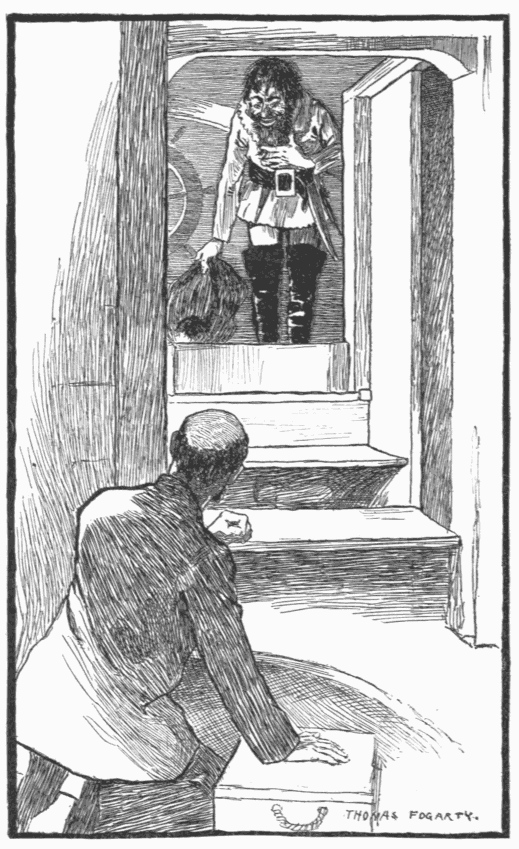
"Avast, there!" I cried. "I have no mind for moralizing."
"Stop right there!" I cried. "I don't want to hear a lecture."
I made shift to spread a mattress and lie on that instead of the hard floor, my eyes all the while fastened on my strange guest, who, remarking again that I would have "only pains and calentura," chuckled as he chanted a wild song:
I managed to spread out a mattress and lie on it instead of the hard floor. All the while, I kept my eyes on my strange guest. He said again that I would have "only pains and calentura," then chuckled as he chanted a wild song:
| High are the waves, fierce, gleaming, |
| High is the tempest roar! |
| High the sea-bird screaming! |
| High the Azore! |
I suppose I was now on the mend, for I was peevish, and complained: "I detest your jingle. Your Azore should be at roost, and would have been were it a respectable bird!" I begged he would tie a rope-yarn on the rest of the song, if there was any more of it. I was still in agony. Great seas were boarding the Spray, but in my fevered brain I thought they were boats falling on deck, that careless draymen were throwing from wagons on the pier to which I imagined the Spray was now moored, and without fenders to breast her off. "You'll smash your boats!" I called out again and again, as the seas crashed on the cabin over my head. "You'll smash your boats, but you can't hurt the Spray. She is strong!" I cried.
I suppose I was getting better, because I was irritable and complained: "I hate your jingle. Your Azore should be roosting, and would be if it were a respectable bird!" I begged him to tie a rope-yarn around the rest of the song, if there was any more. I was still in agony. Huge waves were breaking over the Spray. But in my fevered mind, I thought they were boats falling onto the deck. I imagined that the Spray was moored at a pier, without fenders to keep her clear of it. I thought careless draymen were throwing boats from their wagons on the pier. "You'll smash your boats!" I called out again and again as the waves crashed onto the cabin above my head. "You'll smash your boats, but you can't hurt the Spray. She's strong!" I cried.
I found, when my pains and calentura had gone, that the deck, now as white as a shark's tooth from seas washing over it, had been swept of everything movable. To my astonishment, I saw now at broad day that the Spray was still heading as I had left her, and was going like a racehorse. Columbus himself could not have held her more exactly on her course. The sloop had made ninety miles in the night through a rough sea. I felt grateful to the old pilot, but I marveled some that he had not taken in the jib. The gale was moderating, and by noon the sun was shining. A meridian altitude and the distance on the patent log, which I always kept towing, told me that she had made a true course throughout the twenty-four hours. I was getting much better now, but was very weak, and did not turn out reefs that day or the night following, although the wind fell light; but I just put my wet clothes out in the sun when it was shining, and lying down there myself, fell asleep. Then who should visit me again but my old friend of the night before, this time, of course, in a dream. "You did well last night to take my advice," said he, "and if you would, I should like to be with you often on the voyage, for the love of adventure alone." Finishing what he had to say, he again doffed his cap and disappeared as mysteriously as he came, returning, I suppose, to the phantom Pinta. I awoke much refreshed, and with the feeling that I had been in the presence of a friend and a seaman of vast experience. I gathered up my clothes, which by this time were dry, then, by inspiration, I threw overboard all the plums in the vessel.
When my pains and calentura had passed, I found that the deck had been swept clear of everything movable. The seas washing over it had left it as white as a shark's tooth. To my amazement, I could now see in broad daylight that the Spray was still heading as I had left her. She was going like a racehorse. Columbus himself could not have held her more exactly on course. The sloop had made ninety miles through rough seas during the night. I felt grateful to the old pilot, but I wondered why he had not taken in the jib. The gale was easing, and by noon the sun was shining. I took a noon sighting of the sun and checked the distance on the patent log, which I always kept towing. Together, they told me that the sloop had held a true course throughout the twenty-four hours. I was feeling much better now, but I was very weak. Though the wind grew light, I did not let out the reefed sails that day or the following night. Instead, I put my wet clothes out in the sunshine and lay down there myself. I fell asleep. Then who should visit me again but my old friend from the night before, this time, of course, in a dream. "You did well last night to take my advice," he said. "If you would let me, I should like to be with you often on the voyage, for the love of adventure alone." When he had finished speaking, he again took off his cap and disappeared as mysteriously as he had come. I suppose he returned to the phantom Pinta. I woke up much refreshed, feeling that I had been in the presence of a friend and a very experienced seaman. I gathered up my clothes, which were dry by then. Then, on a sudden impulse, I threw all the plums on the vessel overboard.
July 28 was exceptionally fine. The wind from the northwest was light and the air balmy. I overhauled my wardrobe, and bent on a white shirt against nearing some coasting-packet with genteel folk on board. I also did some washing to get the salt out of my clothes. After it all I was hungry, so I made a fire and very cautiously stewed a dish of pears and set them carefully aside till I had made a pot of delicious coffee, for both of which I could afford sugar and cream. But the crowning dish of all was a fish-hash, and there was enough of it for two. I was in good health again, and my appetite was simply ravenous. While I was dining I had a large onion over the double lamp stewing for a luncheon later in the day. High living to-day!
July 28 was exceptionally fine. A light wind blew from the northwest, and the air was pleasantly warm. I sorted through my clothes and put on a white shirt, in case I came near a coastal passenger boat carrying genteel people. I also washed some clothes to get the salt out. After all that, I was hungry, so I made a fire and very carefully stewed some pears. I set the pears carefully aside while I made a pot of delicious coffee. I could afford sugar and cream for both. But the best dish of all was a fish hash, and there was enough for two. I was healthy again, and my appetite was simply ravenous. While I ate, I had a large onion stewing over the double lamp for a later lunch. High living today!
In the afternoon the Spray came upon a large turtle asleep on the sea. He awoke with my harpoon through his neck, if he awoke at all. I had much difficulty in landing him on deck, which I finally accomplished by hooking the throat-halyards to one of his flippers, for he was about as heavy as my boat. I saw more turtles, and I rigged a burton ready with which to hoist them in; for I was obliged to lower the mainsail whenever the halyards were used for such purposes, and it was no small matter to hoist the large sail again. But the turtle-steak was good. I found no fault with the cook, and it was the rule of the voyage that the cook found no fault with me. There was never a ship's crew so well agreed. The bill of fare that evening was turtle-steak, tea and toast, fried potatoes, stewed onions; with dessert of stewed pears and cream.
That afternoon, the Spray came upon a large turtle sleeping on the sea. He woke with my harpoon through his neck, if he woke at all. I had great difficulty getting him on deck. He was about as heavy as my boat. I finally hauled him aboard by hooking the throat halyards to one of his flippers. I saw more turtles and rigged a burton, a lifting tackle, ready to hoist them aboard. I had to lower the mainsail whenever I used the halyards for such purposes. Hoisting the large sail again was no small task. But the turtle steak was good. I found no fault with the cook, and it was the rule of the voyage that the cook found no fault with me. No ship’s crew ever agreed so well. That evening’s menu was turtle steak, tea and toast, fried potatoes, and stewed onions, with stewed pears and cream for dessert.
Sometime in the afternoon I passed a barrel-buoy adrift, floating light on the water. It was painted red, and rigged with a signal-staff about six feet high. A sudden change in the weather coming on, I got no more turtle or fish of any sort before reaching port. July 31 a gale sprang up suddenly from the north, with heavy seas, and I shortened sail. The Spray made only fifty-one miles on her course that day. August 1 the gale continued, with heavy seas. Through the night the sloop was reaching, under close-reefed mainsail and bobbed jib. At 3 P.M. the jib was washed off the bowsprit and blown to rags and ribbons. I bent the "jumbo" on a stay at the night-heads. As for the jib, let it go; I saved pieces of it, and, after all, I was in want of pot-rags.
Sometime in the afternoon, I passed a barrel buoy drifting loose, riding high on the water. It was painted red and fitted with a signal pole about six feet high. The weather suddenly changed, and I caught no more turtles or fish of any kind before reaching port. On July 31, a gale suddenly sprang up from the north, bringing heavy seas, and I reduced sail. The Spray made only fifty-one miles along her course that day. On August 1, the gale and heavy seas continued. Through the night, the sloop sailed across the wind under a close-reefed mainsail and shortened jib. At 3 P.M., the jib was washed off the bowsprit and blown to rags and ribbons. I attached the "jumbo" to a stay at the night-heads. As for the jib, let it go. I saved pieces of it, and, after all, I needed pot rags.
On August 3 the gale broke, and I saw many signs of land. Bad weather having made itself felt in the galley, I was minded to try my hand at a loaf of bread, and so rigging a pot of fire on deck by which to bake it, a loaf soon became an accomplished fact. One great feature about ship's cooking is that one's appetite on the sea is always good—a fact that I realized when I cooked for the crew of fishermen in the before-mentioned boyhood days. Dinner being over, I sat for hours reading the life of Columbus, and as the day wore on I watched the birds all flying in one direction, and said, "Land lies there."
On August 3 the gale ended, and I saw many signs of land. The bad weather had made itself felt in the galley, so I decided to try baking a loaf of bread. I set up a pot of fire on deck to bake it, and soon the loaf was done. One great thing about cooking aboard ship is that your appetite at sea is always good. I had learned that as a boy, when I cooked for the crew of fishermen I mentioned earlier. After dinner, I sat for hours reading the life of Columbus. As the day went on, I watched the birds all flying in one direction and said, "Land lies there."
Early the next morning, August 4, I discovered Spain. I saw fires on shore, and knew that the country was inhabited. The Spray continued on her course till well in with the land, which was that about Trafalgar. Then keeping away a point, she passed through the Strait of Gibraltar, where she cast anchor at 3 P. M. of the same day, less than twenty-nine days from Cape Sable. At the finish of this preliminary trip I found myself in excellent health, not overworked or cramped, but as well as ever in my life, though I was as thin as a reef-point.
Early the next morning, August 4, I discovered Spain. I saw fires on shore and knew the country was inhabited. The Spray stayed on course until she was close to land near Trafalgar. Then she turned slightly away and passed through the Strait of Gibraltar. She anchored there at 3 P. M. that day, less than twenty-nine days after leaving Cape Sable. At the end of this first trip, I was in excellent health. I was neither overworked nor cramped, but as well as ever in my life, though as thin as a reef-point.
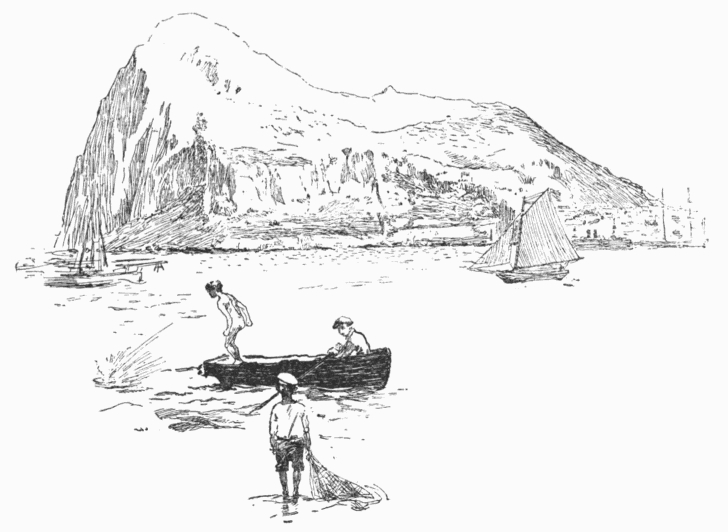
Two Italian barks, which had been close alongside at daylight, I saw long after I had anchored, passing up the African side of the strait. The Spray had sailed them both hull down before she reached Tarifa. So far as I know, the Spray beat everything going across the Atlantic except the steamers.
At daylight, two Italian barks had been close alongside. Long after I had anchored, I saw them sailing up the African side of the strait. The Spray had sailed so far ahead of both that their hulls had disappeared below the horizon before she reached Tarifa. As far as I know, the Spray beat every vessel crossing the Atlantic except the steamers.
All was well, but I had forgotten to bring a bill of health from Horta, and so when the fierce old port doctor came to inspect there was a row. That, however, was the very thing needed. If you want to get on well with a true Britisher you must first have a deuce of a row with him. I knew that well enough, and so I fired away, shot for shot, as best I could. "Well, yes," the doctor admitted at last, "your crew are healthy enough, no doubt, but who knows the diseases of your last port?"—a reasonable enough remark. "We ought to put you in the fort, sir!" he blustered; "but never mind. Free pratique, sir! Shove off, cockswain!" And that was the last I saw of the port doctor.
All was well, but I had forgotten to bring a health certificate from Horta. So when the fierce old port doctor came to inspect us, we had an argument. But that argument was just what was needed. If you want to get along with a true Briton, you must first have a fierce argument with him. I knew that well enough, so I fired back, shot for shot, as best I could. "Well, yes," the doctor admitted at last, "your crew is healthy enough, no doubt, but who knows what diseases there are in your last port?" That was a reasonable enough remark. "We ought to put you in the fort, sir!" he blustered. "But never mind. You have permission to enter port, sir! Push off, coxswain!" And that was the last I saw of the port doctor.
But on the following morning a steam-launch, much longer than the Spray, came alongside,—or as much of her as could get alongside,—with compliments from the senior naval officer, Admiral Bruce, saying there was a berth for the Spray at the arsenal. This was around at the new mole. I had anchored at the old mole, among the native craft, where it was rough and uncomfortable. Of course I was glad to shift, and did so as soon as possible, thinking of the great company the Spray would be in among battle-ships such as the Collingwood, Balfleur, and Cormorant, which were at that time stationed there, and on board all of which I was entertained, later, most royally.
But the next morning, a steam launch much longer than the Spray came alongside, or as close alongside as it could get. It brought greetings from the senior naval officer, Admiral Bruce, and word that there was a berth for the Spray at the arsenal. The berth was around at the new mole. I had anchored at the old mole, among the local boats, where it was rough and uncomfortable. Of course I was glad to move, and I did so as soon as possible. I thought of the great company the Spray would be in among battleships such as the Collingwood, Balfleur, and Cormorant. They were stationed there at the time, and I was later treated like royalty aboard all of them.
"'Put it thar!' as the Americans say," was the salute I got from Admiral Bruce, when I called at the admiralty to thank him for his courtesy of the berth, and for the use of the steam-launch which towed me into dock. "About the berth, it is all right if it suits, and we'll tow you out when you are ready to go. But, say, what repairs do you want? Ahoy the Hebe, can you spare your sailmaker? The Spray wants a new jib. Construction and repair, there! will you see to the Spray? Say, old man, you must have knocked the devil out of her coming over alone in twenty-nine days! But we'll make it smooth for you here!" Not even her Majesty's ship the Collingwood was better looked after than the Spray at Gibraltar.
"'Put it there!' as the Americans say," was Admiral Bruce's greeting when I called at the admiralty. I had come to thank him for providing a berth and the steam launch that had towed me into dock. "About the berth, it's yours if it suits you, and we'll tow you out when you're ready to go. But tell me, what repairs do you need? Ahoy, Hebe, can you spare your sailmaker? The Spray needs a new jib. Construction and repair, will you see to the Spray? Say, old man, you must have knocked the devil out of her crossing alone in twenty-nine days! But we'll make things easy for you here!" Not even Her Majesty's ship the Collingwood was better cared for than the Spray at Gibraltar.
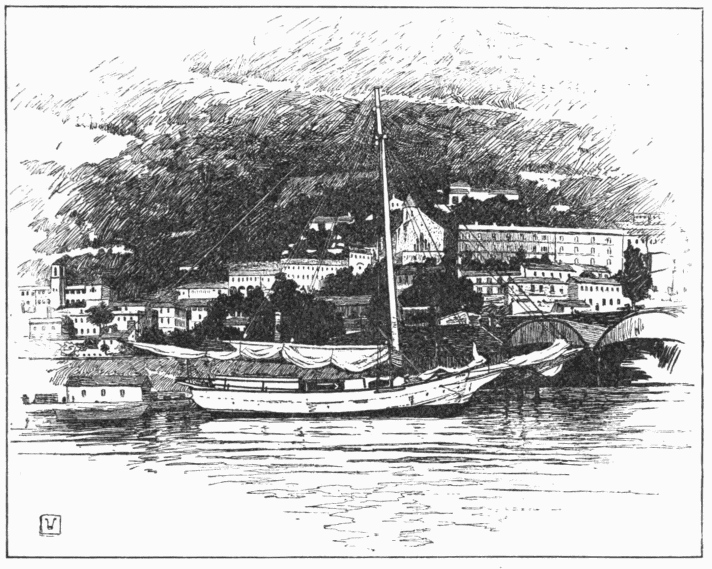
Later in the day came the hail: "Spray ahoy! Mrs. Bruce would like to come on board and shake hands with the Spray. Will it be convenient to-day!" "Very!" I joyfully shouted.
Later that day, someone called out: "Spray ahoy! Mrs. Bruce would like to come aboard and shake hands with the Spray. Would today be convenient?" "Very!" I shouted joyfully.
On the following day Sir F. Carrington, at the time governor of Gibraltar, with other high officers of the garrison, and all the commanders of the battle-ships, came on board and signed their names in the Spray's log-book. Again there was a hail, "Spray ahoy!" "Hello!" "Commander Reynolds's compliments. You are invited on board H.M.S. Collingwood, 'at home' at 4:30 P.M. Not later than 5:30 P.M." I had already hinted at the limited amount of my wardrobe, and that I could never succeed as a dude. "You are expected, sir, in a stovepipe hat and a claw-hammer coat!" "Then I can't come." "Dash it! come in what you have on; that is what we mean." "Aye, aye, sir!" The Collingwood's cheer was good, and had I worn a silk hat as high as the moon I could not have had a better time or been made more at home. An Englishman, even on his great battle-ship, unbends when the stranger passes his gangway, and when he says "at home" he means it.
The next day, Sir F. Carrington, then governor of Gibraltar, came aboard with other senior officers of the garrison. All the battleship commanders came too, and they signed their names in the Spray's logbook. Again, someone hailed me: "Spray ahoy!" "Hello!" "Commander Reynolds sends his compliments. You are invited aboard H.M.S. Collingwood, where he is receiving guests, at 4:30 P.M. No later than 5:30 P.M." I had already hinted that I had few clothes and could never pass as a fashionable gentleman. "You are expected, sir, in a top hat and a tailcoat!" "Then I can't come." "Dash it! Come in what you have on. That's what we mean." "Aye, aye, sir!" The hospitality aboard the Collingwood was excellent. Even if I had worn a silk hat as high as the moon, I could not have had a better time or felt more at home. An Englishman, even on his great battleship, relaxes when a stranger comes aboard. When he says "at home," he means it.
That one should like Gibraltar would go without saying. How could one help loving so hospitable a place? Vegetables twice a week and milk every morning came from the palatial grounds of the admiralty. "Spray ahoy!" would hail the admiral. "Spray ahoy!" "Hello!" "To-morrow is your vegetable day, sir." "Aye, aye, sir!"
Of course anyone would like Gibraltar. How could anyone help loving such a welcoming place? Vegetables came twice a week and milk every morning from the admiralty's grand grounds. "Spray ahoy!" the admiral would call. "Spray ahoy!" "Hello!" "Tomorrow is your vegetable day, sir." "Aye, aye, sir!"
I rambled much about the old city, and a gunner piloted me through the galleries of the rock as far as a stranger is permitted to go. There is no excavation in the world, for military purposes, at all approaching these of Gibraltar in conception or execution. Viewing the stupendous works, it became hard to realize that one was within the Gibraltar of his little old Morse geography.
I wandered around the old city, and a gunner guided me through the tunnels inside the rock. He took me as far as a visitor is allowed to go. No military excavation in the world comes close to Gibraltar’s tunnels in design or execution. Looking at these immense works, I found it hard to believe I was inside the Gibraltar of my little old Morse geography book.
Before sailing I was invited on a picnic with the governor, the officers of the garrison, and the commanders of the war-ships at the station; and a royal affair it was. Torpedo-boat No. 91, going twenty-two knots, carried our party to the Morocco shore and back. The day was perfect—too fine, in fact, for comfort on shore, and so no one landed at Morocco. No. 91 trembled like an aspen-leaf as she raced through the sea at top speed. Sublieutenant Boucher, apparently a mere lad, was in command, and handled his ship with the skill of an older sailor. On the following day I lunched with General Carrington, the governor, at Line Wall House, which was once the Franciscan convent. In this interesting edifice are preserved relics of the fourteen sieges which Gibraltar has seen. On the next day I supped with the admiral at his residence, the palace, which was once the convent of the Mercenaries. At each place, and all about, I felt the friendly grasp of a manly hand, that lent me vital strength to pass the coming long days at sea. I must confess that the perfect discipline, order, and cheerfulness at Gibraltar were only a second wonder in the great stronghold. The vast amount of business going forward caused no more excitement than the quiet sailing of a well-appointed ship in a smooth sea. No one spoke above his natural voice, save a boatswain's mate now and then. The Hon. Horatio J. Sprague, the venerable United States consul at Gibraltar, honored the Spray with a visit on Sunday, August 24, and was much pleased to find that our British cousins had been so kind to her.
Before sailing, I was invited to a picnic with the governor, the garrison officers, and the commanders of the warships stationed there. It was a royal affair. Torpedo-boat No. 91 carried our party to the Morocco shore and back at twenty-two knots. The day was perfect, in fact, too fine for comfort on shore, so no one landed at Morocco. No. 91 trembled like an aspen leaf as she raced through the sea at top speed. Sublieutenant Boucher, apparently little more than a boy, was in command. He handled his ship with the skill of an older sailor. The following day, I had lunch with General Carrington, the governor, at Line Wall House, once a Franciscan convent. The interesting building contains relics from the fourteen sieges Gibraltar has seen. The next day, I had supper with the admiral at his residence, the palace, once the convent of the Mercenaries. At each place, and everywhere I went, I felt the friendly grip of a manly hand. It gave me vital strength for the long days at sea ahead. I must confess that the perfect discipline, order, and cheerfulness at Gibraltar were only the second wonder of the great stronghold. The vast amount of business under way caused no more excitement than a well-equipped ship sailing quietly on a smooth sea. No one raised his voice above its natural level, except a boatswain's mate now and then. The Hon. Horatio J. Sprague, the venerable United States consul at Gibraltar, honored the Spray with a visit on Sunday, August 24. He was very pleased to find that our British cousins had been so kind to her.