Chapter 37
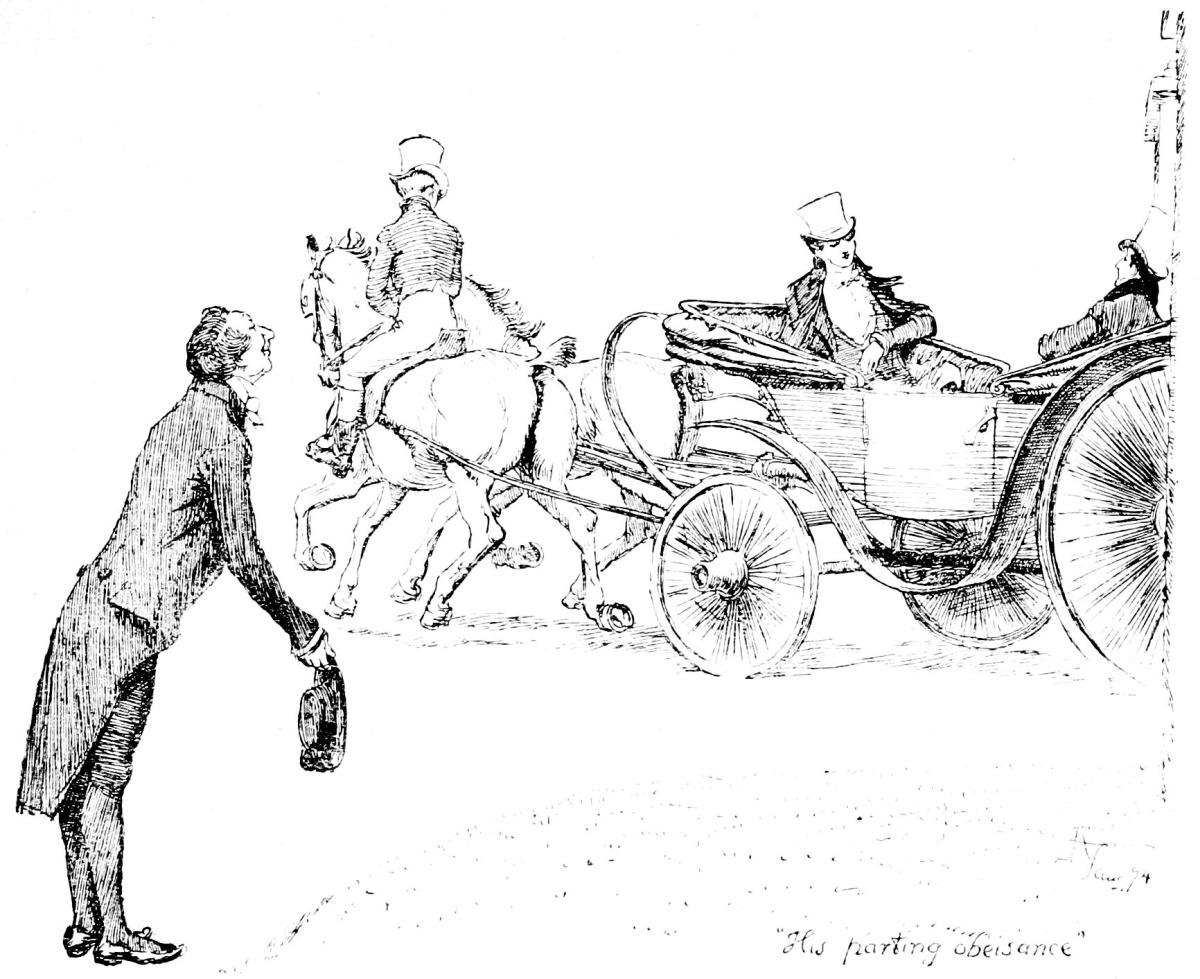
THE two gentlemen left Rosings the next morning; and Mr. Collins having been in waiting near the lodges, to make them his parting obeisance, was able to bring home the pleasing intelligence of their appearing in very good health, and in as tolerable spirits as could be expected, after the melancholy scene so lately gone through at Rosings. To Rosings he then hastened to console Lady Catherine and her daughter; and on his return brought back, with great satisfaction, a message from her Ladyship, importing that she felt herself so dull as to make her very desirous of having them all to dine with her.
The two gentlemen left Rosings the next morning. Mr. Collins had been waiting near the gatehouses to bow to them as they left. He could therefore bring home the pleasing news that both gentlemen appeared to be in very good health. Their spirits were as good as could be expected after the sad scene so recently endured at Rosings. He then hurried to Rosings to comfort Lady Catherine and her daughter. On his return, he brought back a message from her Ladyship with great satisfaction. She felt so bored that she was very eager to have them all dine with her.
Elizabeth could not see Lady Catherine without recollecting that, had she chosen it, she might by this time have been presented to her as her future niece; nor could she think, without a smile, of what her Ladyship’s indignation would have been. “What would she have said? how would she have behaved?” were the questions with which she amused herself.
Whenever Elizabeth saw Lady Catherine, she remembered that she could have been introduced by now as her future niece. That is, if Elizabeth had chosen it. And she could not help smiling as she imagined how outraged Lady Catherine would have been. “What would she have said? How would she have behaved?” Elizabeth amused herself with these questions.
Their first subject was the diminution of the Rosings’ party. “I assure you, I feel it exceedingly,” said Lady Catherine; “I believe nobody feels the loss of friends so much as I do. But I am particularly attached to these young men; and know them to be so much attached to me! They were excessively sorry to go! But so they always are. The dear Colonel rallied his spirits tolerably till just at last; but Darcy seemed to feel it most acutely—more, I think, than last year. His attachment to Rosings certainly increases.”
Their first topic was the departure of some of the guests from Rosings. “I assure you, I feel their absence deeply,” said Lady Catherine. “I believe nobody misses friends as much as I do. But I am especially fond of these young men. And I know they are so fond of me! They were terribly sorry to leave! But they always are. The dear Colonel managed to stay fairly cheerful until the very end. But Darcy seemed to feel the parting most deeply, more, I think, than last year. He certainly grows more attached to Rosings.”
Mr. Collins had a compliment and an allusion to throw in here, which were kindly smiled on by the mother and daughter.
Mr. Collins added a compliment and a reference to something else. The mother and daughter smiled kindly at both.
Lady Catherine observed, after dinner, that Miss Bennet seemed out of spirits; and immediately accounting for it herself, by supposing that she did not like to go home again so soon, she added,—
After dinner, Lady Catherine remarked that Miss Bennet seemed unhappy. She immediately assumed that Miss Bennet did not want to go home again so soon, and added:
“But if that is the case, you must write to your mother to beg that you may stay a little longer. Mrs. Collins will be very glad of your company, I am sure.”
“But if that’s the case, you must write to your mother and beg her to let you stay a little longer. I’m sure Mrs. Collins will be very glad to have your company.”
“I am much obliged to your Ladyship for your kind invitation,” replied Elizabeth; “but it is not in my power to accept it. I must be in town next Saturday.”
“Thank you, your Ladyship, for your kind invitation,” Elizabeth replied. “But I can’t accept it. I must be in town next Saturday.”
“Why, at that rate, you will have been here only six weeks. I expected you to stay two months. I told Mrs. Collins so before you came. There can be no occasion for your going so soon. Mrs. Bennet could certainly spare you for another fortnight.”
“Well, then you’ll have been here only six weeks. I expected you to stay two months. I told Mrs. Collins before you came that you would stay two months. There can be no reason for you to leave so soon. Mrs. Bennet could certainly spare you for another two weeks.”
“But my father cannot. He wrote last week to hurry my return.”
“But my father can’t. He wrote last week to urge me to come back sooner.”
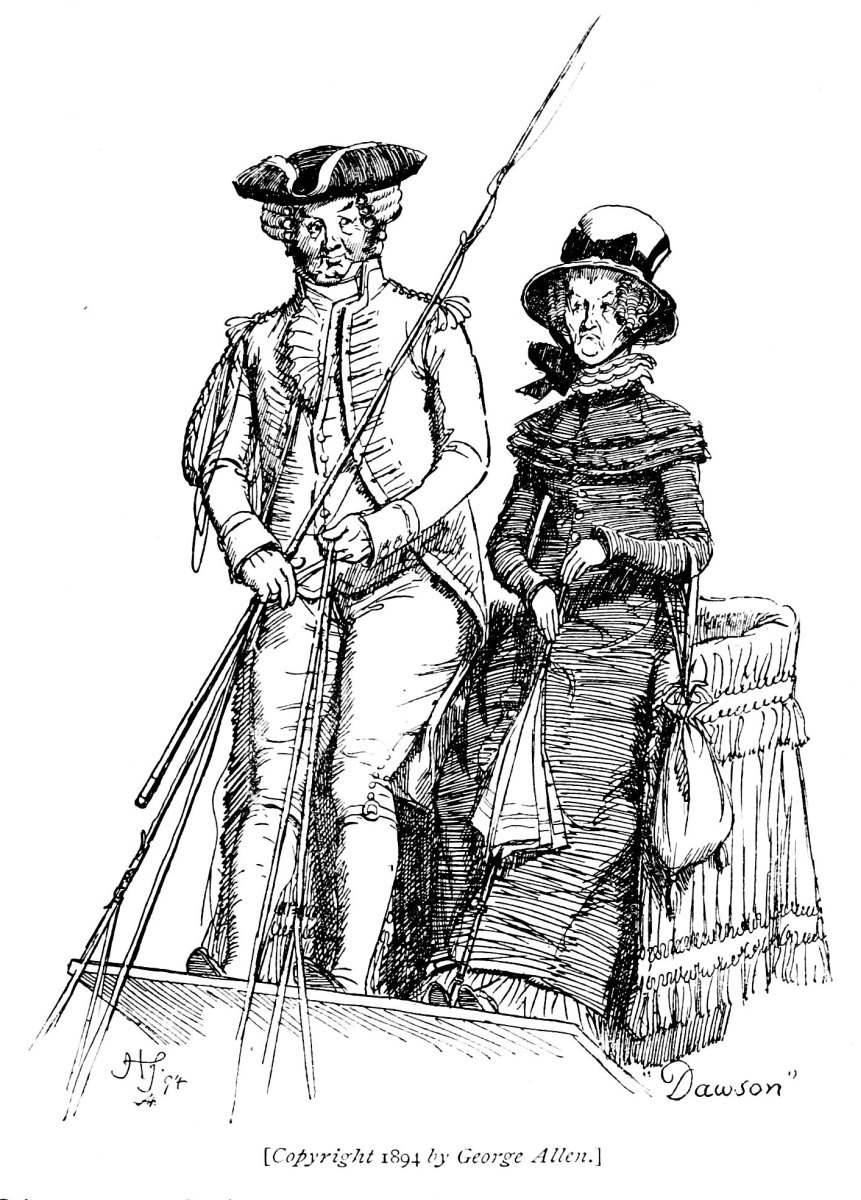
“Oh, your father, of course, may spare you, if your mother can. Daughters are never of so much consequence to a father. And if you will stay another month complete, it will be in my power to take one of you as far as London, for I am going there early in June, for a week; and as Dawson does not object to the barouche-box, there will be very good room for one of you—and, indeed, if the weather should happen to be cool, I should not object to taking you both, as you are neither of you large.”
“Oh, your father, of course, can spare you if your mother can. Daughters are never as important to a father. And if you stay another full month, I can take one of you as far as London. I am going there for a week in early June. And since Dawson does not mind sitting on the carriage’s outside box seat, there will be plenty of room for one of you. Indeed, if the weather happens to be cool, I would not mind taking you both, since neither of you is large.”
“You are all kindness, madam; but I believe we must abide by our original plan.”
“You are very kind, madam. But I believe we must stick to our original plan.”
Lady Catherine seemed resigned. “Mrs. Collins, you must send a servant with them. You know I always speak my mind, and I cannot bear the idea of two young women travelling post by themselves. It is highly improper. You must contrive to send somebody. I have the greatest dislike in the world to that sort of thing. Young women should always be properly guarded and attended, according to their situation in life. When my niece Georgiana went to Ramsgate last summer, I made a point of her having two men-servants go with her. Miss Darcy, the daughter of Mr. Darcy of Pemberley, and Lady Anne, could not have appeared with propriety in a different manner. I am excessively attentive to all those things. You must send John with the young ladies, Mrs. Collins. I am glad it occurred to me to mention it; for it would really be discreditable to you to let them go alone.”
Lady Catherine seemed resigned. “Mrs. Collins, you must send a servant with them. You know I always speak my mind. I cannot bear the thought of two young women travelling alone in a hired carriage. It is highly improper. You must find a way to send someone with them. There is nothing I dislike more than that sort of thing. Young women should always have proper protection and attendants suited to their social position. When my niece Georgiana went to Ramsgate last summer, I insisted that two male servants go with her. Miss Darcy is the daughter of Mr. Darcy of Pemberley and Lady Anne. She could not have travelled any other way and still appeared respectable. I pay extremely close attention to all those details. You must send John with the young ladies, Mrs. Collins. I am glad I thought to mention it. Letting them go alone would really reflect badly on you.”
“My uncle is to send a servant for us.”
“My uncle will send a servant to pick us up.”
“Oh! Your uncle! He keeps a man-servant, does he? I am very glad you have somebody who thinks of those things. Where shall you change horses? Oh, Bromley, of course. If you mention my name at the Bell, you will be attended to.”
“Oh! Your uncle! He has a male servant, does he? I’m very glad you have someone who thinks of those things. Where will you change horses? Oh, Bromley, of course. If you mention my name at the Bell, they’ll take care of you.”
Lady Catherine had many other questions to ask respecting their journey; and as she did not answer them all herself attention was necessary—which Elizabeth believed to be lucky for her; or, with a mind so occupied, she might have forgotten where she was. Reflection must be reserved for solitary hours: whenever she was alone, she gave way to it as the greatest relief; and not a day went by without a solitary walk, in which she might indulge in all the delight of unpleasant recollections.
Lady Catherine had many more questions about their journey. Since she did not answer all her own questions, Elizabeth had to pay attention. Elizabeth thought this was lucky for her. Otherwise, with so much on her mind, she might have forgotten where she was. She had to save her reflections for time alone. Whenever she was alone, she let herself reflect, finding it the greatest relief. Not a day passed without a solitary walk, when she could enjoy all the pleasure of dwelling on unpleasant memories.
Mr. Darcy’s letter she was in a fair way of soon knowing by heart. She studied every sentence; and her feelings towards its writer were at times widely different. When she remembered the style of his address, she was still full of indignation: but when she considered how unjustly she had condemned and upbraided him, her anger was turned against herself; and his disappointed feelings became the object of compassion. His attachment excited gratitude, his general character respect: but she could not approve him; nor could she for a moment repent her refusal, or feel the slightest inclination ever to see him again. In her own past behaviour, there was a constant source of vexation and regret: and in the unhappy defects of her family, a subject of yet heavier chagrin. They were hopeless of remedy. Her father, contented with laughing at them, would never exert himself to restrain the wild giddiness of his youngest daughters; and her mother, with manners so far from right herself, was entirely insensible of the evil. Elizabeth had frequently united with Jane in an endeavour to check the imprudence of Catherine and Lydia; but while they were supported by their mother’s indulgence, what chance could there be of improvement? Catherine, weak-spirited, irritable, and completely under Lydia’s guidance, had been always affronted by their advice; and Lydia, self-willed and careless, would scarcely give them a hearing. They were ignorant, idle, and vain. While there was an officer in Meryton, they would flirt with him; and while Meryton was within a walk of Longbourn, they would be going there for ever.
She was well on her way to knowing Mr. Darcy’s letter by heart. She studied every sentence, and her feelings toward him sometimes varied greatly. When she remembered the way he had spoken to her, she was still full of indignation. But when she considered how unfairly she had judged and scolded him, her anger turned against herself. She felt compassion for his disappointed hopes. His love made her grateful, and his overall character earned her respect. But she could not approve of him. Nor could she regret refusing him for a moment, or feel the slightest wish ever to see him again. Her own past behavior was a constant source of frustration and regret. Her family’s unfortunate faults caused her still greater distress. There was no hope of correcting those faults. Her father was content to laugh at them. He would never make an effort to control his youngest daughters’ wild, thoughtless behavior. Her mother’s own manners were far from proper, and she saw nothing wrong with her daughters’ behavior. Elizabeth had often joined Jane in trying to curb Catherine and Lydia’s recklessness. But with their mother indulging them, what chance was there of improvement? Catherine was weak-willed, irritable, and completely under Lydia’s influence. She had always taken offense at Elizabeth and Jane’s advice. Lydia was headstrong and careless, and would barely listen to them. Both younger sisters were ignorant, idle, and vain. As long as there was an officer in Meryton, they would flirt with him. And as long as Meryton was within walking distance of Longbourn, they would keep going there forever.
Anxiety on Jane’s behalf was another prevailing concern; and Mr. Darcy’s explanation, by restoring Bingley to all her former good opinion, heightened the sense of what Jane had lost. His affection was proved to have been sincere, and his conduct cleared of all blame, unless any could attach to the implicitness of his confidence in his friend. How grievous then was the thought that, of a situation so desirable in every respect, so replete with advantage, so promising for happiness, Jane had been deprived, by the folly and indecorum of her own family!
Worry about Jane was another major concern. Mr. Darcy’s explanation restored Bingley to her former high opinion and made Jane’s loss feel even greater. Bingley’s love had proved sincere, and his behavior was free from all blame, unless he deserved any for trusting his friend completely. How painful, then, to think that Jane had lost a match so desirable in every way! It offered so many advantages and such promise of happiness. Yet Jane had been denied it because of her own family’s foolishness and improper behavior!
When to these recollections was added the development of Wickham’s character, it may be easily believed that the happy spirits which had seldom been depressed before were now so much affected as to make it almost impossible for her to appear tolerably cheerful.
Along with these memories came the discovery of Wickham’s true character. Her naturally cheerful spirits had rarely been dampened before. It is easy to believe that she was now so upset she found it almost impossible to appear even reasonably cheerful.
Their engagements at Rosings were as frequent during the last week of her stay as they had been at first. The very last evening was spent there; and her Ladyship again inquired minutely into the particulars of their journey, gave them directions as to the best method of packing, and was so urgent on the necessity of placing gowns in the only right way, that Maria thought herself obliged, on her return, to undo all the work of the morning, and pack her trunk afresh.
Their visits to Rosings were as frequent during the last week of her stay as they had been at first. They spent their very last evening there. Her Ladyship again asked detailed questions about their journey and told them the best way to pack. She insisted so strongly that there was only one right way to pack dresses that Maria felt obliged to repack. When Maria returned, she undid all her morning’s work and packed her trunk again.
When they parted, Lady Catherine, with great condescension, wished them a good journey, and invited them to come to Hunsford again next year; and Miss de Bourgh exerted herself so far as to courtesy and hold out her hand to both.
As they parted, Lady Catherine very graciously wished them a good journey and invited them back to Hunsford next year. And Miss de Bourgh made the effort to curtsy and hold out her hand to both of them.