Chapter 20
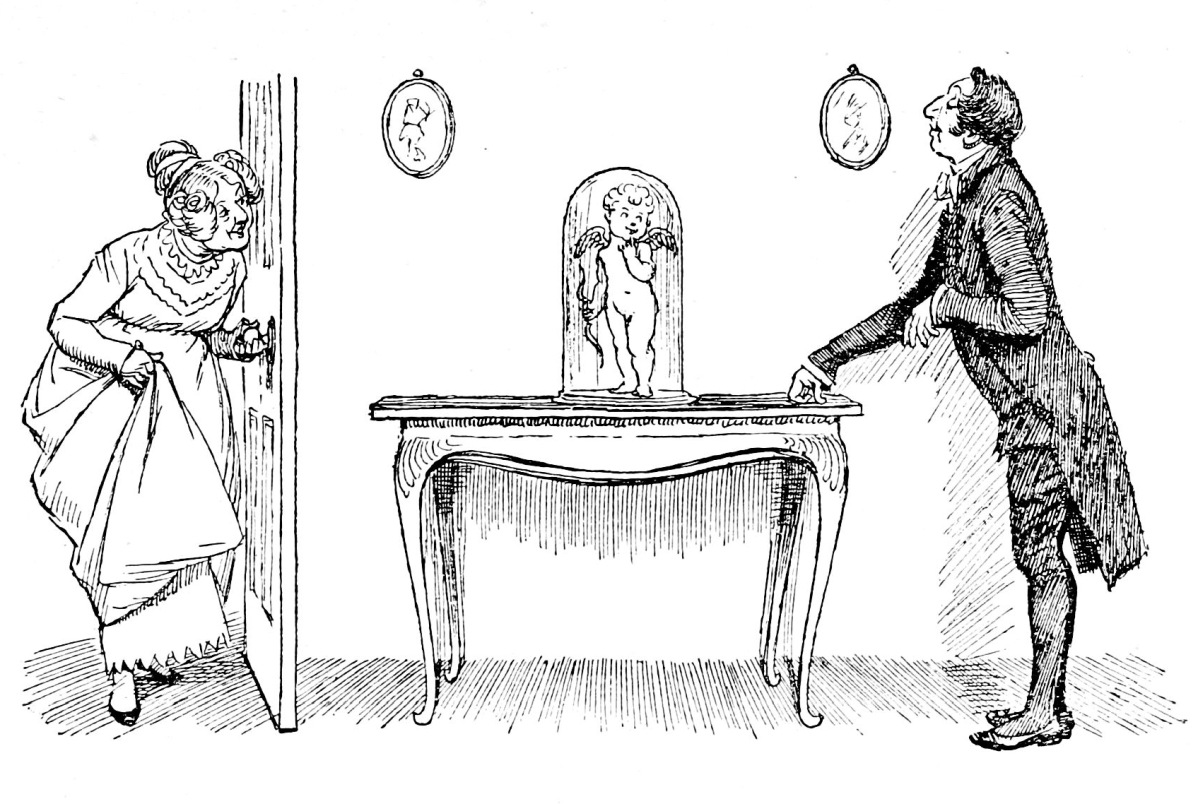
MR. COLLINS was not left long to the silent contemplation of his successful love; for Mrs. Bennet, having dawdled about in the vestibule to watch for the end of the conference, no sooner saw Elizabeth open the door and with quick step pass her towards the staircase, than she entered the breakfast-room, and congratulated both him and herself in warm terms on the happy prospect of their nearer connection. Mr. Collins received and returned these felicitations with equal pleasure, and then proceeded to relate the particulars of their interview, with the result of which he trusted he had every reason to be satisfied, since the refusal which his cousin had steadfastly given him would naturally flow from her bashful modesty and the genuine delicacy of her character.
Mr. Collins was not left alone for long to reflect silently on his success in love. Mrs. Bennet had been lingering in the entrance hall, waiting for their conversation to end. As soon as Elizabeth opened the door and hurried past her toward the stairs, Mrs. Bennet entered the breakfast room. She warmly congratulated both Mr. Collins and herself on the happy prospect of becoming more closely related. Mr. Collins accepted and returned her congratulations with equal pleasure. He then described the details of his conversation with Elizabeth. He believed he had every reason to be satisfied with the outcome. After all, his cousin’s firm refusal would naturally come from her shy modesty and genuine sensitivity.
This information, however, startled Mrs. Bennet: she would have been glad to be equally satisfied that her daughter had meant to encourage him by protesting against his proposals, but she dared not believe it, and could not help saying so.
However, this news startled Mrs. Bennet. She would have been glad to feel equally sure her daughter had meant to encourage him by rejecting his proposals. But she dared not believe her daughter had meant to encourage him, and could not help saying so.
“But depend upon it, Mr. Collins,” she added, “that Lizzy shall be brought to reason. I will speak to her about it myself directly. She is a very headstrong, foolish girl, and does not know her own interest; but I will make her know it.”
“But you can be sure, Mr. Collins,” she added, “that Lizzy will be made to see reason. I will speak to her about it myself right away. She is a very stubborn, foolish girl and does not know what is best for her. But I will make her understand what is best for her.”
“Pardon me for interrupting you, madam,” cried Mr. Collins; “but if she is really headstrong and foolish, I know not whether she would altogether be a very desirable wife to a man in my situation, who naturally looks for happiness in the marriage state. If, therefore, she actually persists in rejecting my suit, perhaps it were better not to force her into accepting me, because, if liable to such defects of temper, she could not contribute much to my felicity.”
“Forgive me for interrupting you, madam,” exclaimed Mr. Collins. “But if she really is stubborn and foolish, I’m not sure she would be a very suitable wife for a man in my position. Naturally, I hope to find happiness in marriage. So if she does persist in rejecting my proposal, perhaps it would be better not to force her to accept me. Because if she is prone to such faults of character, she could not contribute much to my happiness.”
“Sir, you quite misunderstand me,” said Mrs. Bennet, alarmed. “Lizzy is only headstrong in such matters as these. In everything else she is as good-natured a girl as ever lived. I will go directly to Mr. Bennet, and we shall very soon settle it with her, I am sure.”
“Sir, you’ve completely misunderstood me,” said Mrs. Bennet, alarmed. “Lizzy is only stubborn about matters like these. In every other way, she is as good-natured as any girl who ever lived. I’ll go to Mr. Bennet right away, and I’m sure we’ll soon settle the matter with her.”
She would not give him time to reply, but hurrying instantly to her husband, called out, as she entered the library,—
She gave him no time to reply. Instead, she hurried straight to her husband and called out as she entered the library:
“Oh, Mr. Bennet, you are wanted immediately; we are all in an uproar. You must come and make Lizzy marry Mr. Collins, for she vows she will not have him; and if you do not make haste he will change his mind and not have her.”
“Oh, Mr. Bennet, you’re needed right away. We are all in an uproar. You must come and make Lizzy marry Mr. Collins, because she swears she won’t marry him. And if you don’t hurry, he’ll change his mind and refuse to marry her.”
Mr. Bennet raised his eyes from his book as she entered, and fixed them on her face with a calm unconcern, which was not in the least altered by her communication.
Mr. Bennet looked up from his book as she entered and calmly watched her face, showing no concern. What she told him did not change his expression in the slightest.
“I have not the pleasure of understanding you,” said he, when she had finished her speech. “Of what are you talking?”
“I’m afraid I don’t understand you,” he said when she had finished speaking. “What are you talking about?”
“Of Mr. Collins and Lizzy. Lizzy declares she will not have Mr. Collins, and Mr. Collins begins to say that he will not have Lizzy.”
“About Mr. Collins and Lizzy. Lizzy insists she will not marry Mr. Collins. And Mr. Collins is beginning to say he will not marry Lizzy.”
“And what am I to do on the occasion? It seems a hopeless business.”
“And what am I supposed to do about it? It seems hopeless.”
“Speak to Lizzy about it yourself. Tell her that you insist upon her marrying him.”
“Talk to Lizzy about it yourself. Tell her you insist that she marry him.”
“Let her be called down. She shall hear my opinion.”
“Call her downstairs. She will hear my opinion.”
Mrs. Bennet rang the bell, and Miss Elizabeth was summoned to the library.
Mrs. Bennet rang the bell, and Miss Elizabeth was called to the library.
“Come here, child,” cried her father as she appeared. “I have sent for you on an affair of importance. I understand that Mr. Collins has made you an offer of marriage. Is it true?”
“Come here, child,” her father called out as she appeared. “I sent for you about something important. I understand that Mr. Collins has asked you to marry him. Is that true?”
Elizabeth replied that it was.
Elizabeth said it was.
“Very well—and this offer of marriage you have refused?”
“All right. And you turned down this marriage proposal?”
“I have, sir.”
“I have, sir.”
“Very well. We now come to the point. Your mother insists upon your accepting it. Is it not so, Mrs. Bennet?”
“Very well. Now we come to the point. Your mother insists that you accept it. Isn’t that right, Mrs. Bennet?”
“Yes, or I will never see her again.”
“Yes, or I’ll never see her again.”
“An unhappy alternative is before you, Elizabeth. From this day you must be a stranger to one of your parents. Your mother will never see you again if you do not marry Mr. Collins, and I will never see you again if you do.”
“You face an unhappy choice, Elizabeth. From today on, you must be a stranger to one of your parents. Your mother will never see you again if you do not marry Mr. Collins. And I will never see you again if you do.”
Elizabeth could not but smile at such a conclusion of such a beginning; but Mrs. Bennet, who had persuaded herself that her husband regarded the affair as she wished, was excessively disappointed.
Elizabeth couldn’t help smiling at such an ending after such a beginning. But Mrs. Bennet had convinced herself that her husband saw the matter as she wanted him to. She was extremely disappointed.
“What do you mean, Mr. Bennet, by talking in this way? You promised me to insist upon her marrying him.”
“What do you mean by talking like that, Mr. Bennet? You promised me you would insist that she marry him.”
“My dear,” replied her husband, “I have two small favours to request. First, that you will allow me the free use of my understanding on the present occasion; and, secondly, of my room. I shall be glad to have the library to myself as soon as may be.”
“My dear,” her husband replied, “I have two small favors to ask. First, let me use my own judgment in this matter. Second, let me have my room to myself. I would be glad to have the library to myself as soon as possible.”
Not yet, however, in spite of her disappointment in her husband, did Mrs. Bennet give up the point. She talked to Elizabeth again and again; coaxed and threatened her by turns. She endeavoured to secure Jane in her interest, but Jane, with all possible mildness, declined interfering; and Elizabeth, sometimes with real earnestness, and sometimes with playful gaiety, replied to her attacks. Though her manner varied, however, her determination never did.
Still, despite her disappointment in her husband, Mrs. Bennet did not give up. She spoke to Elizabeth again and again, taking turns coaxing and threatening her. She tried to get Jane on her side, but Jane refused to interfere as gently as possible. Elizabeth responded to her mother's attacks, sometimes seriously and sometimes with playful humor. But although her manner changed, her determination never did.
Mr. Collins, meanwhile, was meditating in solitude on what had passed. He thought too well of himself to comprehend on what motive his cousin could refuse him; and though his pride was hurt, he suffered in no other way. His regard for her was quite imaginary; and the possibility of her deserving her mother’s reproach prevented his feeling any regret.
Meanwhile, Mr. Collins was alone, thinking over what had happened. He thought too highly of himself to understand why his cousin would refuse him. Although his pride was hurt, he suffered in no other way. His affection for her existed only in his imagination. And the possibility that she deserved her mother’s criticism kept him from feeling any regret.
While the family were in this confusion, Charlotte Lucas came to spend the day with them. She was met in the vestibule by Lydia, who, flying to her, cried in a half whisper, “I am glad you are come, for there is such fun here! What do you think has happened this morning? Mr. Collins has made an offer to Lizzy, and she will not have him.”
While the family was in this state of confusion, Charlotte Lucas came to spend the day with them. Lydia rushed to meet her in the entrance hall and exclaimed in a half whisper, “I’m glad you’re here, because there’s such fun going on! What do you think happened this morning? Mr. Collins proposed to Lizzy, and she won’t marry him.”
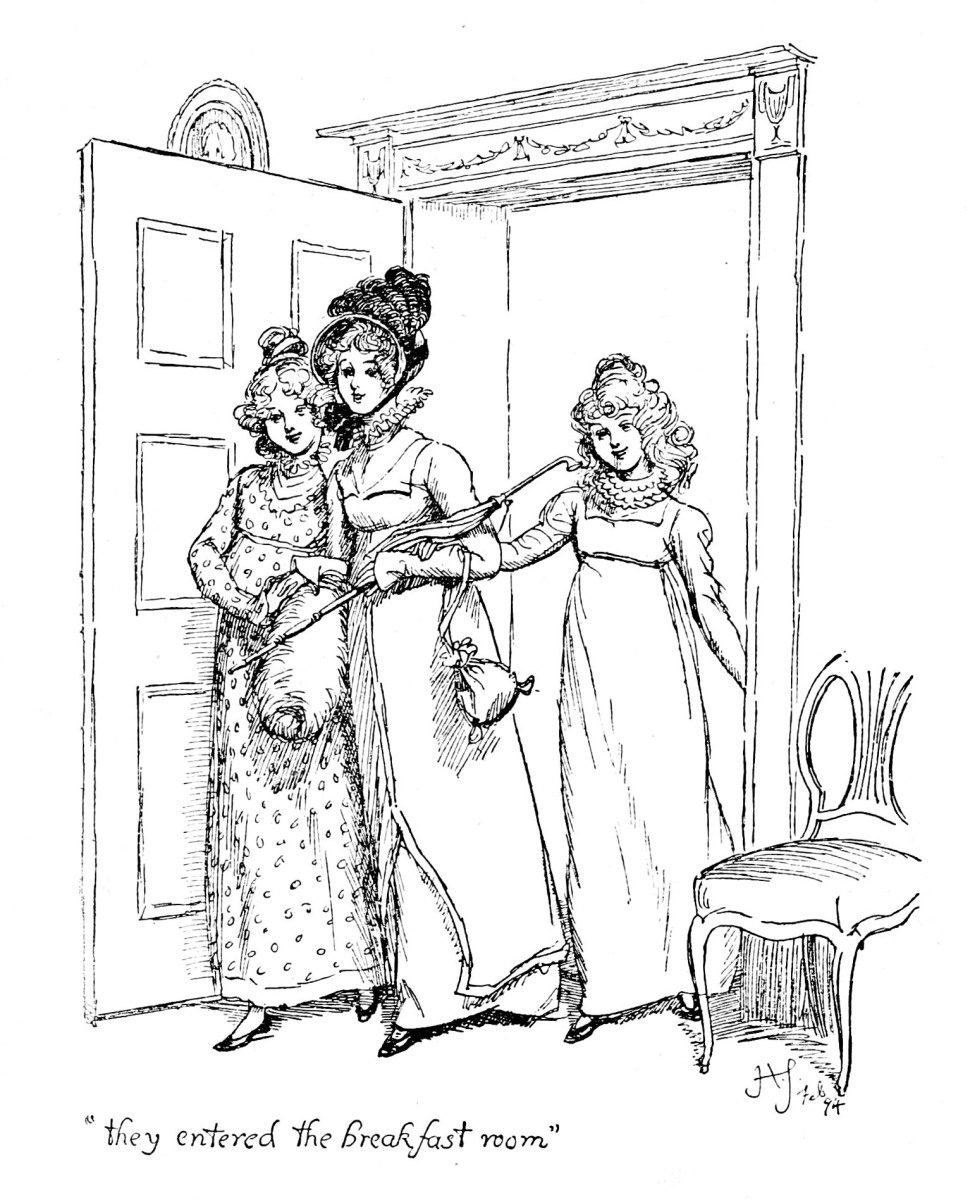
Charlotte had hardly time to answer before they were joined by Kitty, who came to tell the same news; and no sooner had they entered the breakfast-room, where Mrs. Bennet was alone, than she likewise began on the subject, calling on Miss Lucas for her compassion, and entreating her to persuade her friend Lizzy to comply with the wishes of her family. “Pray do, my dear Miss Lucas,” she added, in a melancholy tone; “for nobody is on my side, nobody takes part with me; I am cruelly used, nobody feels for my poor nerves.”
Charlotte hardly had time to answer before Kitty joined them, bringing the same news. As soon as they entered the breakfast room, where Mrs. Bennet sat alone, she too began discussing the matter. Mrs. Bennet appealed to Miss Lucas for sympathy. She begged her to persuade her friend Lizzy to do what her family wanted. “Please do, my dear Miss Lucas,” she added sadly. “Nobody is on my side. Nobody supports me. I am treated cruelly, and nobody has any sympathy for my poor nerves.”
Charlotte’s reply was spared by the entrance of Jane and Elizabeth.
Charlotte was spared having to reply when Jane and Elizabeth came in.
“Ay, there she comes,” continued Mrs. Bennet, “looking as unconcerned as may be, and caring no more for us than if we were at York, provided she can have her own way. But I tell you what, Miss Lizzy, if you take it into your head to go on refusing every offer of marriage in this way, you will never get a husband at all—and I am sure I do not know who is to maintain you when your father is dead. I shall not be able to keep you—and so I warn you. I have done with you from this very day. I told you in the library, you know, that I should never speak to you again, and you will find me as good as my word. I have no pleasure in talking to undutiful children. Not that I have much pleasure, indeed, in talking to anybody. People who suffer as I do from nervous complaints can have no great inclination for talking. Nobody can tell what I suffer! But it is always so. Those who do not complain are never pitied.”
“Yes, here she comes,” continued Mrs. Bennet, “looking as unconcerned as can be. She cares no more about us than if we were at York, as long as she gets her own way. But I tell you what, Miss Lizzy. If you keep refusing every marriage proposal like this, you will never get a husband at all. And I certainly don’t know who will support you when your father is dead. I won’t be able to support you, so I’m warning you. I’m done with you from this day on. You know I told you in the library that I would never speak to you again. And you’ll find I keep my word. I take no pleasure in talking to children who neglect their duty. Not that I take much pleasure in talking to anyone, really. People who suffer from nervous troubles as I do can hardly feel much like talking. Nobody knows how much I suffer! But it’s always the same. Those who don’t complain never get any sympathy.”
Her daughters listened in silence to this effusion, sensible that any attempt to reason with or soothe her would only increase the irritation. She talked on, therefore, without interruption from any of them till they were joined by Mr. Collins, who entered with an air more stately than usual, and on perceiving whom, she said to the girls,—
Her daughters listened silently to her outburst. They knew that trying to reason with her or calm her would only irritate her more. So she continued talking without interruption from any of them until Mr. Collins joined them. He entered looking even more dignified than usual. On seeing him, she said to the girls:
“Now, I do insist upon it, that you, all of you, hold your tongues, and let Mr. Collins and me have a little conversation together.”
“Now, I insist that you all be quiet, every one of you. Let Mr. Collins and me have a little conversation.”
Elizabeth passed quietly out of the room, Jane and Kitty followed, but Lydia stood her ground, determined to hear all she could; and Charlotte, detained first by the civility of Mr. Collins, whose inquiries after herself and all her family were very minute, and then by a little curiosity, satisfied herself with walking to the window and pretending not to hear. In a doleful voice Mrs. Bennet thus began the projected conversation:—
Elizabeth quietly left the room, and Jane and Kitty followed. But Lydia stayed where she was, determined to hear all she could. Charlotte was kept there at first by Mr. Collins’s politeness. He asked very detailed questions about her and all her family. Then a little curiosity kept her there, so she settled for walking to the window and pretending not to hear. In a mournful voice, Mrs. Bennet began the conversation she had planned:
“Oh, Mr. Collins!”
“Oh, Mr. Collins!”
“My dear madam,” replied he, “let us be for ever silent on this point. Far be it from me,” he presently continued, in a voice that marked his displeasure, “to resent the behaviour of your daughter. Resignation to inevitable evils is the duty of us all: the peculiar duty of a young man who has been so fortunate as I have been, in early preferment; and, I trust, I am resigned. Perhaps not the less so from feeling a doubt of my positive happiness had my fair cousin honoured me with her hand; for I have often observed, that resignation is never so perfect as when the blessing denied begins to lose somewhat of its value in our estimation. You will not, I hope, consider me as showing any disrespect to your family, my dear madam, by thus withdrawing my pretensions to your daughter’s favour, without having paid yourself and Mr. Bennet the compliment of requesting you to interpose your authority in my behalf. My conduct may, I fear, be objectionable in having accepted my dismission from your daughter’s lips instead of your own; but we are all liable to error. I have certainly meant well through the whole affair. My object has been to secure an amiable companion for myself, with due consideration for the advantage of all your family; and if my manner has been at all reprehensible, I here beg leave to apologize.”
“My dear madam,” he replied, “let us never speak of this matter again. Far be it from me,” he soon continued, his voice revealing his displeasure, “to resent your daughter’s behavior. We all have a duty to accept unavoidable misfortunes. That duty falls especially on a young man fortunate enough to have advanced early in his career, as I have. And I trust I have accepted my misfortune. Perhaps my acceptance is no less complete because I doubt whether marrying my lovely cousin would truly have made me happy. For I have often noticed that we accept disappointment most fully when the blessing denied us begins to seem less valuable. I hope you will not consider me disrespectful to your family, my dear madam, for withdrawing my offer of marriage. I have done so without first paying you and Mr. Bennet the courtesy of asking you to intervene on my behalf. I fear you may object to my accepting your daughter’s rejection rather than your own. But we are all capable of mistakes. I have certainly meant well throughout this whole affair. My aim has been to find myself a pleasant companion, while giving proper consideration to the benefit of your whole family. And if my manner has been at all deserving of criticism, I ask permission to apologize.”