Chapter 15
MR. COLLINS was not a sensible man, and the deficiency of nature had been but little assisted by education or society; the greatest part of his life having been spent under the guidance of an illiterate and miserly father; and though he belonged to one of the universities, he had merely kept the necessary terms without forming at it any useful acquaintance. The subjection in which his father had brought him up had given him originally great humility of manner; but it was now a good deal counteracted by the self-conceit of a weak head, living in retirement, and the consequential feelings of early and unexpected prosperity. A fortunate chance had recommended him to Lady Catherine de Bourgh when the living of Hunsford was vacant; and the respect which he felt for her high rank, and his veneration for her as his patroness, mingling with a very good opinion of himself, of his authority as a clergyman, and his right as a rector, made him altogether a mixture of pride and obsequiousness, self-importance and humility.
MR. COLLINS was not a sensible man, and education and society had done little to improve his natural shortcomings. He had spent most of his life under the guidance of an uneducated, miserly father. Although he had attended a university, he had merely completed the required terms without making any useful connections. His father’s strict control had at first made him very humble in manner. But his humility was now largely offset by the conceit of a foolish man living in seclusion. His early and unexpected success had also given him a sense of his own importance. A lucky chance had brought him to Lady Catherine de Bourgh’s attention when the Hunsford church post was vacant. He respected her high rank and revered her as his patroness. These feelings mingled with a very high opinion of himself, his authority as a clergyman, and his rights as rector. Together, they made him a mixture of pride and servility, self-importance and humility.
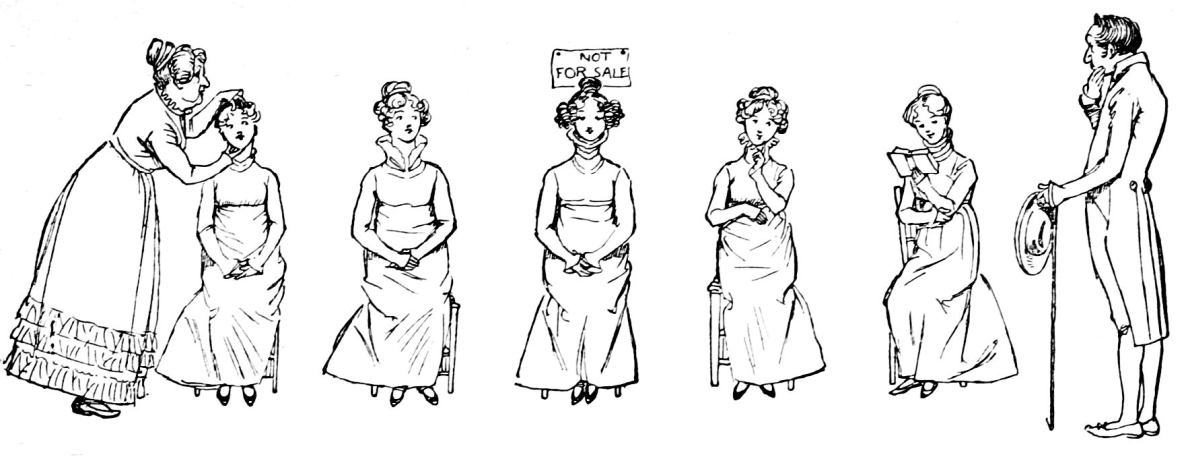
Having now a good house and a very sufficient income, he intended to marry; and in seeking a reconciliation with the Longbourn family he had a wife in view, as he meant to choose one of the daughters, if he found them as handsome and amiable as they were represented by common report. This was his plan of amends—of atonement—for inheriting their father’s estate; and he thought it an excellent one, full of eligibility and suitableness, and excessively generous and disinterested on his own part.
Now that he had a good house and more than enough income, he intended to marry. And in seeking to make peace with the Longbourn family, he had a wife in mind. He meant to choose one of the daughters, if he found them as pretty and pleasant as everyone said. Marrying one of them was his plan to make amends for inheriting their father’s estate. He thought it an excellent plan, entirely suitable and proper, and extraordinarily generous and unselfish on his part.
His plan did not vary on seeing them. Miss Bennet’s lovely face confirmed his views, and established all his strictest notions of what was due to seniority; and for the first evening she was his settled choice. The next morning, however, made an alteration; for in a quarter of an hour’s tête-à-tête with Mrs. Bennet before breakfast, a conversation beginning with his parsonage-house, and leading naturally to the avowal of his hopes, that a mistress for it might be found at Longbourn, produced from her, amid very complaisant smiles and general encouragement, a caution against the very Jane he had fixed on. “As to her younger daughters, she could not take upon her to say—she could not positively answer—but she did not know of any prepossession;—her eldest daughter she must just mention—she felt it incumbent on her to hint, was likely to be very soon engaged.”
His plan did not change when he saw them. Miss Bennet’s lovely face confirmed his choice and all his firmest beliefs about the eldest daughter’s right to come first. For the first evening, she was his definite choice. The next morning, however, brought a change. Before breakfast, he spent fifteen minutes talking alone with Mrs. Bennet. Their conversation began with his parsonage and naturally led to his hope of finding a wife at Longbourn. With very agreeable smiles and general encouragement, Mrs. Bennet warned him against choosing Jane, the very daughter he wanted. “As for her younger daughters, she could not say for certain. She could not give a definite answer, but she did not know of any existing attachment. Her eldest daughter, she must just mention, was likely to be engaged very soon. She felt obliged to give him that hint.”
Mr. Collins had only to change from Jane to Elizabeth—and it was soon done—done while Mrs. Bennet was stirring the fire. Elizabeth, equally next to Jane in birth and beauty, succeeded her of course.
Mr. Collins only had to shift his attention from Jane to Elizabeth, and he quickly did. He made the change while Mrs. Bennet was stirring the fire. Elizabeth came just after Jane in both age and beauty, so naturally she took Jane’s place.
Mrs. Bennet treasured up the hint, and trusted that she might soon have two daughters married; and the man whom she could not bear to speak of the day before, was now high in her good graces.
Mrs. Bennet eagerly held on to the hint, hoping she might soon have two daughters married. And the man she could not bear to mention the day before was now very much in her favor.
Lydia’s intention of walking to Meryton was not forgotten: every sister except Mary agreed to go with her; and Mr. Collins was to attend them, at the request of Mr. Bennet, who was most anxious to get rid of him, and have his library to himself; for thither Mr. Collins had followed him after breakfast, and there he would continue, nominally engaged with one of the largest folios in the collection, but really talking to Mr. Bennet, with little cessation, of his house and garden at Hunsford. Such doings discomposed Mr. Bennet exceedingly. In his library he had been always sure of leisure and tranquillity; and though prepared, as he told Elizabeth, to meet with folly and conceit in every other room in the house, he was used to be free from them there: his civility, therefore, was most prompt in inviting Mr. Collins to join his daughters in their walk; and Mr. Collins, being in fact much better fitted for a walker than a reader, was extremely well pleased to close his large book, and go.
Lydia’s plan to walk to Meryton had not been forgotten. Every sister except Mary agreed to go with her. Mr. Collins was to accompany them at Mr. Bennet’s request. Mr. Bennet was very eager to get rid of him and have his library to himself. Mr. Collins had followed him there after breakfast and stayed, supposedly reading one of the largest books in the collection. In reality, he talked almost nonstop to Mr. Bennet about his house and garden at Hunsford. This behavior annoyed Mr. Bennet greatly. In his library, he had always been sure of peace and time to himself. As he told Elizabeth, he was prepared to encounter foolishness and self-importance in every other room in the house. But he was used to being free from both in his library. He therefore wasted no time in politely inviting Mr. Collins to join his daughters on their walk. Mr. Collins was, in fact, much better suited to walking than reading. So he was delighted to close his large book and go.
In pompous nothings on his side, and civil assents on that of his cousins, their time passed till they entered Meryton. The attention of the younger ones was then no longer to be gained by him. Their eyes were immediately wandering up the street in quest of the officers, and nothing less than a very smart bonnet, indeed, or a really new muslin in a shop window, could recall them.
He filled the time with pompous, empty talk, while his cousins politely agreed, until they reached Meryton. Then the younger cousins could no longer spare any attention for him. Their eyes immediately searched the street for officers. Only a very stylish bonnet or a truly new muslin fabric in a shop window could draw their attention back.
But the attention of every lady was soon caught by a young man, whom they had never seen before, of most gentlemanlike appearance, walking with an officer on the other side of the way. The officer was the very Mr. Denny concerning whose return from London Lydia came to inquire, and he bowed as they passed. All were struck with the stranger’s air, all wondered who he could be; and Kitty and Lydia, determined if possible to find out, led the way across the street, under pretence of wanting something in an opposite shop, and fortunately had just gained the pavement, when the two gentlemen, turning back, had reached the same spot. Mr. Denny addressed them directly, and entreated permission to introduce his friend, Mr. Wickham, who had returned with him the day before from town, and, he was happy to say, had accepted a commission in their corps. This was exactly as it should be; for the young man wanted only regimentals to make him completely charming. His appearance was greatly in his favour: he had all the best parts of beauty, a fine countenance, a good figure, and very pleasing address. The introduction was followed up on his side by a happy readiness of conversation—a readiness at the same time perfectly correct and unassuming; and the whole party were still standing and talking together very agreeably, when the sound of horses drew their notice, and Darcy and Bingley were seen riding down the street. On distinguishing the ladies of the group the two gentlemen came directly towards them, and began the usual civilities. Bingley was the principal spokesman, and Miss Bennet the principal object. He was then, he said, on his way to Longbourn on purpose to inquire after her. Mr. Darcy corroborated it with a bow, and was beginning to determine not to fix his eyes on Elizabeth, when they were suddenly arrested by the sight of the stranger; and Elizabeth happening to see the countenance of both as they looked at each other, was all astonishment at the effect of the meeting. Both changed colour, one looked white, the other red. Mr. Wickham, after a few moments, touched his hat—a salutation which Mr. Darcy just deigned to return. What could be the meaning of it? It was impossible to imagine; it was impossible not to long to know.
But every lady’s attention was soon caught by a young man none of them had seen before. He looked every bit a gentleman and was walking with an officer across the street. The officer was Mr. Denny, whose return from London Lydia had come to ask about. He bowed as they passed. All were struck by the stranger’s manner, and all wondered who he could be. Kitty and Lydia were determined to find out if possible. They led the way across the street, pretending to want something from a shop opposite. Fortunately, they had just reached the pavement when the two gentlemen turned back and arrived at the same spot. Mr. Denny spoke to them at once and asked permission to introduce his friend, Mr. Wickham. Mr. Wickham had returned with him from London the day before. Mr. Denny was happy to say that his friend had accepted a commission as an officer in their regiment. This was exactly as it should be. The young man needed only a uniform to make him completely charming. His appearance was greatly in his favour. He had all the best features of good looks: a handsome face, a fine figure, and very pleasing manners. After the introduction, Mr. Wickham readily joined in the conversation, always speaking with perfect politeness and without showing off. The whole group was still standing and talking very pleasantly when the sound of horses caught their attention. Darcy and Bingley were riding down the street. Recognizing the ladies in the group, the two gentlemen came straight towards them and began exchanging the usual polite greetings. Bingley did most of the talking, and Miss Bennet received most of his attention. He said he was on his way to Longbourn specifically to ask after her health. Mr. Darcy confirmed this with a bow. He was just beginning to resolve not to stare at Elizabeth when the stranger suddenly caught his eye. Elizabeth happened to see both men’s faces as they looked at each other. She was astonished by the effect of their meeting. Both changed colour. One turned pale, the other red. After a few moments, Mr. Wickham touched his hat in greeting. Mr. Darcy barely bothered to return the greeting. What could the encounter mean? It was impossible to imagine, and impossible not to long to know.
In another minute Mr. Bingley, but without seeming to have noticed what passed, took leave and rode on with his friend.
A minute later, Mr. Bingley seemed not to have noticed what had happened. He said goodbye and rode on with his friend.
Mr. Denny and Mr. Wickham walked with the young ladies to the door of Mr. Philips’s house, and then made their bows, in spite of Miss Lydia’s pressing entreaties that they would come in, and even in spite of Mrs. Philips’s throwing up the parlour window, and loudly seconding the invitation.
Mr. Denny and Mr. Wickham walked with the young ladies to the door of Mr. Philips’s house. Then the two men bowed goodbye, despite Miss Lydia’s urgent pleas for them to come in. They left even though Mrs. Philips threw open the sitting room window and loudly joined in the invitation.
Mrs. Philips was always glad to see her nieces; and the two eldest, from their recent absence, were particularly welcome; and she was eagerly expressing her surprise at their sudden return home, which, as their own carriage had not fetched them, she should have known nothing about, if she had not happened to see Mr. Jones’s shopboy in the street, who had told her that they were not to send any more draughts to Netherfield, because the Miss Bennets were come away, when her civility was claimed towards Mr. Collins by Jane’s introduction of him. She received him with her very best politeness, which he returned with as much more, apologizing for his intrusion, without any previous acquaintance with her, which he could not help flattering himself, however, might be justified by his relationship to the young ladies who introduced him to her notice. Mrs. Philips was quite awed by such an excess of good breeding; but her contemplation of one stranger was soon put an end to by exclamations and inquiries about the other, of whom, however, she could only tell her nieces what they already knew, that Mr. Denny had brought him from London, and that he was to have a lieutenant’s commission in the ——shire. She had been watching him the last hour, she said, as he walked up and down the street,—and had Mr. Wickham appeared, Kitty and Lydia would certainly have continued the occupation; but unluckily no one passed the windows now except a few of the officers, who, in comparison with the stranger, were become “stupid, disagreeable fellows.” Some of them were to dine with the Philipses the next day, and their aunt promised to make her husband call on Mr. Wickham, and give him an invitation also, if the family from Longbourn would come in the evening. This was agreed to; and Mrs. Philips protested that they would have a nice comfortable noisy game of lottery tickets, and a little bit of hot supper afterwards. The prospect of such delights was very cheering, and they parted in mutual good spirits. Mr. Collins repeated his apologies in quitting the room, and was assured, with unwearying civility, that they were perfectly needless.
Mrs. Philips was always glad to see her nieces. The two eldest were especially welcome because they had been away recently. She was eagerly expressing her surprise at their sudden return home. Their own carriage had not fetched them, so she would have known nothing about their return without a chance encounter. She had happened to see Mr. Jones’s shopboy in the street. He had told her not to send any more doses of medicine to Netherfield because the Miss Bennets had left. Jane interrupted her aunt’s account by introducing Mr. Collins, who now required her polite attention. Mrs. Philips greeted him with her very best manners, and he responded with even greater politeness. He apologized for intruding when they had never met before. Still, he allowed himself to hope that his relationship to the young ladies introducing him might excuse his visit. Mrs. Philips was quite awed by such an excess of good manners. But her study of one stranger was soon interrupted by excited remarks and questions about the other. She could tell her nieces only what they already knew. Mr. Denny had brought him from London, and he was to become a lieutenant in the _____shire regiment. She said she had spent the last hour watching him walk up and down the street. If Mr. Wickham had appeared, Kitty and Lydia would certainly have carried on watching. Unfortunately, no one now passed the windows except a few officers. Compared with the stranger, these men had become “stupid, disagreeable fellows.” Some of the officers were to dine with the Philipses the next day. Their aunt promised to make her husband call on Mr. Wickham and invite him too, if the Longbourn family would come that evening. Everyone agreed to this plan. Mrs. Philips declared that they would have a lovely, comfortable, noisy game of lottery tickets, followed by a little hot supper. The prospect of such delights was very cheering, and everyone parted in good spirits. Mr. Collins repeated his apologies as he left the room. With tireless politeness, Mrs. Philips assured him that his apologies were quite unnecessary.
As they walked home, Elizabeth related to Jane what she had seen pass between the two gentlemen; but though Jane would have defended either or both, had they appeared to be wrong, she could no more explain such behaviour than her sister.
As they walked home, Elizabeth told Jane what she had seen happen between the two gentlemen. Jane would have defended either or both men if they had seemed to be in the wrong. But even so, she could explain their behavior no better than Elizabeth could.
Mr. Collins on his return highly gratified Mrs. Bennet by admiring Mrs. Philips’s manners and politeness. He protested that, except Lady Catherine and her daughter, he had never seen a more elegant woman; for she had not only received him with the utmost civility, but had even pointedly included him in her invitation for the next evening, although utterly unknown to her before. Something, he supposed, might be attributed to his connection with them, but yet he had never met with so much attention in the whole course of his life.
When Mr. Collins returned, he greatly pleased Mrs. Bennet by praising Mrs. Philips’s manners and politeness. He insisted that, apart from Lady Catherine and her daughter, he had never met a more elegant woman. For Mrs. Philips had not only welcomed him with the greatest courtesy. She had even made a point of including him in her invitation for the next evening, although they had never met before. He supposed his connection with the Bennets might account for some of her attention. But he had never received so much attention in his whole life.