Eight lectures examine how ideas gain meaning through their practical effects. One lecture asks whether a man circling a tree also circles the squirrel hiding behind it.
190 pages 3h 42m reading time
The best-known statement of pragmatism, the most famous philosophy to come out of America.
Argues that the meaning of an idea lies in the difference it makes in real life, so a debate where neither answer changes anything is an empty debate.
Argues that an idea becomes true by working: it is true when it helps us deal with our experience in a reliable way, not because it copies some fixed reality.
Its ideas shaped the thinking of John Dewey, whose work on learning by doing changed how schools in America and beyond teach children.
It helped make "pragmatic" an everyday word for judging ideas and choices by their practical results.
Born from a camping argument
The squirrel puzzle came from a real dispute James found his friends having during a mountain camping trip.
First given as talks
The book began as public lectures James gave in Boston in late 1906 and at Columbia University in New York in early 1907.
Credit to a friend
James said the idea came from his friend Charles Sanders Peirce, who had first put it forward decades earlier.
Renamed to escape borrowers
Unhappy with how others used the word, Peirce renamed his view "pragmaticism," a name ugly enough, he joked, to escape kidnappers.


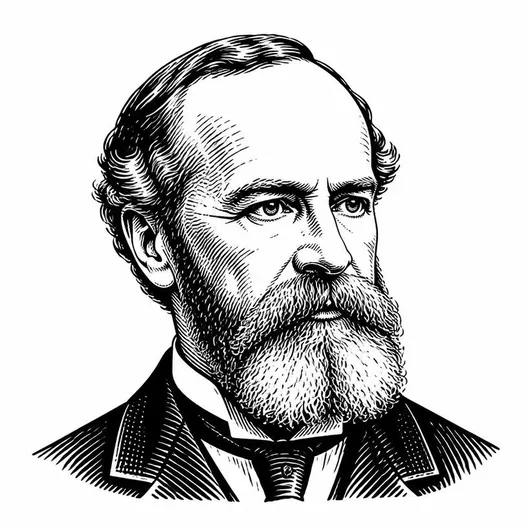 William James 1907