Short numbered passages set out a method for studying nature through observation and experiment. Four groups of mental traps, called idols, reveal how language and habit can mislead us.
270 pages 5h 15m reading time
A founding text of modern science, and one of the first books to lay out how science should be done.
Argues that real knowledge comes from slowly building up general rules from many careful observations, not from starting with big ideas and reasoning down from them.
Argues that people should look hard for cases that go against a rule, since one clear exception can show a rule is wrong.
Inspired the founders of the Royal Society in London, one of the world's oldest scientific groups, who looked to Bacon as their guide.
Helped make "Baconian method" the name for this careful, evidence-first approach to science, which shaped how later scientists thought about their work.
A king's teasing review
King James I joked that the book, like God's peace, "passeth all understanding."
Rewritten about twelve times
Bacon's chaplain said he saw around twelve drafts, revised year after year before printing.
A ship on the cover
The title page shows a ship sailing past the Pillars of Hercules, the old edge of the known world.
Only part of a plan
It was meant as one piece of a six-part project that Bacon never finished.


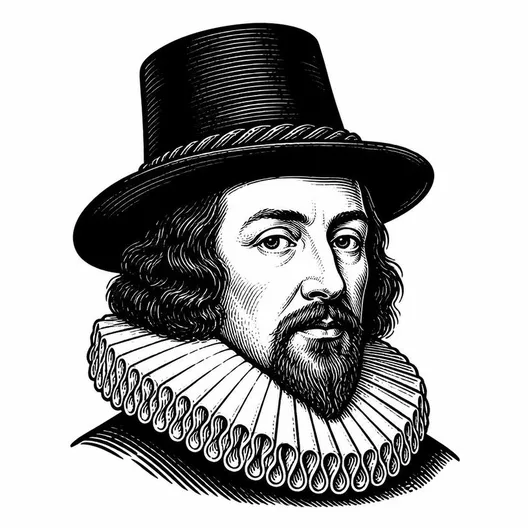 Francis Bacon 1620