A Roman emperor writes private notes to himself on how to stay calm, fair, and humble. He never meant them for others, and the first book simply thanks the people who shaped him.
203 pages 3h 57m reading time
One of the great works of Stoic philosophy, written by a Roman emperor for himself alone.
Argues that we cannot control events, only our judgments of them, and that peace of mind lies there.
Urges doing one's duty, acting justly and calmly accepting what nature brings, including death, because life is short.
It is a core text of the modern revival of Stoicism.
Written on military campaigns
Parts of it were written in army camps on the Danube, where Marcus was fighting Germanic tribes.
Written in Greek, not Latin
Though he was a Roman emperor, Marcus wrote his private notes in Greek, the language of philosophy in his time.
No title from the author
Marcus never named it, and early copies call it "To Himself," while the title "Meditations" came much later.
Nearly lost for centuries
For centuries after his death it was barely mentioned, and it survived in only a few handwritten copies.


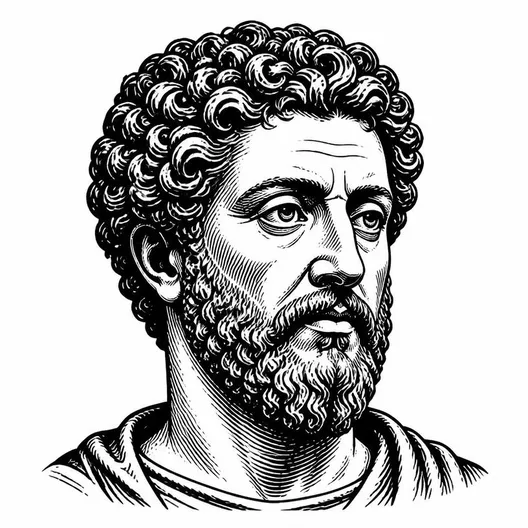 Marcus Aurelius c. 175 CE