The Life of Simone Sanese
[SIMONE MEMMI OR MARTINI]
[Simone Memmi or Martini]
PAINTER
Painter
Truly happy can those men be called, who are inclined by nature to those arts that can bring to them not only honour and very great profit, but also, what is more, fame and a name wellnigh eternal, and happier still are they who have from their cradles, besides such inclination, courtesy and honest ways, which render them very dear to all men. But happiest of all, finally, talking of craftsmen, are they who not only receive a love of the good from nature, and noble ways from the same source and from education, but also live in the time of some famous writer, from whom, in return for a little portrait or some other similar courtesy in the way of art, they gain on occasion the reward of eternal honour and name, by means of their writings; and this, among those who practise the arts of design, should be particularly desired and sought by the excellent painters, seeing that their works, being on the surface and on a ground of colour, cannot have that eternal life which castings in bronze and works in marble give to sculpture, or buildings to the architects.
Truly happy are those naturally drawn to arts that can bring them honor, great wealth, and, more importantly, nearly everlasting fame. Happier still are those who, besides this natural inclination, have been courteous and honest since childhood. These qualities make them beloved by all. But among craftsmen, the happiest of all are those who receive a love of goodness and noble manners from nature, and whose education also teaches them noble manners. They are fortunate enough to live in the time of a famous writer. In return for a small portrait or some similar artistic favor, they may gain lasting honor and fame through the writer’s work. Among those who practice the arts of design, excellent painters should especially desire and seek this reward. Their paintings are made with color on a surface. Unlike bronze and marble sculptures or architects’ buildings, they cannot last forever.
Very great, then, was that good-fortune of Simone, to live at the time of Messer Francesco Petrarca and to chance to find that most amorous poet at the Court of Avignon, desirous of having the image of Madonna Laura by the hand of Maestro Simone, because, having received it as beautiful as he had desired, he made memory of him in two sonnets, whereof one begins:
Simone was very fortunate to live in the time of Messer Francesco Petrarca. He happened to meet the deeply lovesick poet at the Court of Avignon. Petrarca wanted Maestro Simone to paint a portrait of Madonna Laura. When he received the portrait, it was as beautiful as he had hoped. So he commemorated Simone in two sonnets, one of which begins:
Per mirar Policleto a prova fiso Con gli altri che ebber fama di quell'arte;
To see Policleto intent on competing with the others who were famous for that art.
and the second:
and the second:
Quando giunse a Simon l'alto concetto Ch'a mio nome gli pose in man lo stile.
When the great idea came to Simon, That put the stylus in his hand on my behalf.
These sonnets, in truth, together with the mention made of him in one of his Familiar Letters, in the fifth book, which begins: "Non sum nescius," have given more fame to the poor life of Maestro Simone than all his own works have ever done or ever will, seeing that they must at some time perish, whereas the writings of so great a man will live for eternal ages. Simone Memmi of Siena, then, was an excellent painter, remarkable in his own times and much esteemed at the Court of the Pope, for the reason that after the death of Giotto his master, whom he had followed to Rome when he made the Navicella in mosaic and the other works, he made a Virgin Mary in the portico of S. Pietro, with a S. Peter and a S. Paul, near to the place where the bronze pine-cone is, on a wall between the arches of the portico on the outer side; and in this he counterfeited the manner of Giotto very well, receiving so much praise, above all because he portrayed therein a sacristan of S. Pietro lighting some lamps before the said figures with much promptness, that he was summoned with very great insistence to the Court of the Pope at Avignon, where he wrought so many pictures, in fresco and on panels, that he made his works correspond to the reputation that had been borne thither. Whence, having returned to Siena in great credit and much favoured on this account, he was commissioned by the Signoria to paint in fresco, in a hall of their Palace, a Virgin Mary with many figures round her, which he completed with all perfection to his own great credit and advantage. And in order to show that he was no less able to work on panel than in fresco, he painted in the said Palace a panel which led to his being afterwards made to paint two of them in the Duomo, and a Madonna with the Child in her arms, in a very beautiful attitude, over the door of the Office of the Works of the said Duomo. In this picture certain angels, supporting a standard in the air, are flying and looking down on to some saints who are round the Madonna, and they make a very beautiful composition and great adornment.
In truth, these sonnets and a mention of him in one of his Familiar Letters have brought more fame to the poor life of Maestro Simone than all his own works have ever brought him or ever will. The letter is in the fifth book and begins: "Non sum nescius." Simone’s works must someday perish, while the writings of so great a man will live for all eternity. Simone Memmi of Siena was an excellent painter, remarkable in his own time and highly esteemed at the Court of the Pope. He had followed his master Giotto to Rome when Giotto made the Navicella in mosaic and his other works there. After Giotto’s death, Simone painted the Virgin Mary with S. Peter and S. Paul in the portico of S. Pietro. The painting was near the bronze pine-cone, on a wall between the arches on the outer side of the portico. In it, Simone imitated Giotto’s style very well. He received great praise, especially for his lively depiction of a sacristan of S. Pietro lighting lamps before the figures. As a result, he was summoned with great insistence to the Court of the Pope at Avignon. There he painted so many pictures, both frescoes and panels, that his work lived up to the reputation that had reached the court. He returned to Siena with great credit and was much favored on this account. The Signoria then commissioned him to paint a fresco in a hall of their Palace. It showed the Virgin Mary surrounded by many figures. He completed it with every perfection, to his great credit and advantage. To show that he was no less skilled at painting on panels than in fresco, he painted a panel in the same Palace. This led to his being asked to paint two panels in the Duomo. He also painted a Madonna with the Child in her arms, in a very beautiful pose, over the door of the Office of the Works of the Duomo. In this picture, angels fly through the air, holding up a standard and looking down at saints gathered around the Madonna. They make a very beautiful composition and a great adornment.
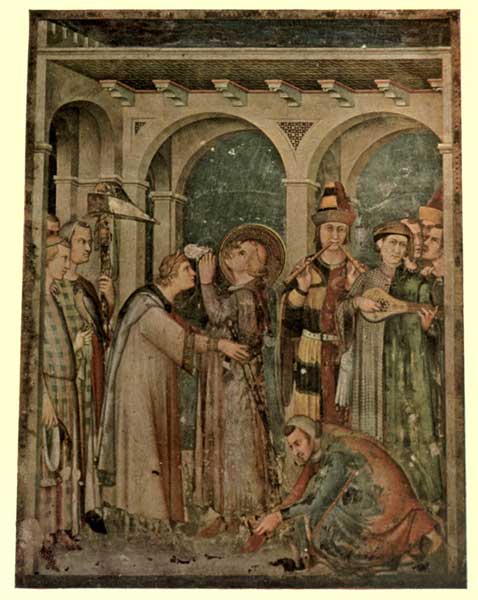
This done, Simone was brought by the General of the Augustinians to Florence, where he painted the Chapter-house of S. Spirito, showing invention and admirable judgment in the figures and the horses that he made, as is proved in that place by the story of the Passion of Christ, wherein everything is seen to have been made by him with ingenuity, with discretion, and with most beautiful grace. There are seen the Thieves on the Cross yielding up their breath, and the soul of the good one being carried to Heaven by the angels, and that of the wicked one going, accompanied by devils and all harassed, to the torments of Hell. Simone likewise showed invention and judgment in the attitudes and in the very bitter weeping of some angels round the Crucifix. But what is most worthy of consideration, above everything else, is to see those spirits visibly cleaving the air with their shoulders, almost whirling right round and yet sustaining the motion of their flight. This work would bear much stronger witness to the excellence of Simone, if, besides the fact that time has eaten it away, it had not been spoilt by those Fathers in the year 1560, when they, being unable to use the Chapter-house, because it was in bad condition from damp, made a vaulted roof to replace a worm-eaten ceiling, and threw down the little that was left of the pictures of this man. About the same time Simone painted a Madonna and a S. Luke, with some other Saints, on a panel in distemper, which is to-day in the Chapel of the Gondi in S. Maria Novella, with his name.
After this, the General of the Augustinians brought Simone to Florence, where he painted the Chapter-house of S. Spirito. The figures and horses he painted there show imagination and admirable judgment. This is evident in his depiction of the Passion of Christ. Everything in the scene was made with ingenuity, discretion, and great beauty and grace. The thieves on their crosses are shown breathing their last. Angels carry the soul of the good thief to Heaven, while devils accompany the soul of the wicked thief to the torments of Hell, harassing him all the way. Simone also showed imagination and judgment in the poses of some angels around the Crucifix and in their bitter weeping. But most worthy of attention is the way these spirits visibly cut through the air with their shoulders. They seem to whirl almost all the way around while still maintaining their flight. This work would be much stronger evidence of Simone’s excellence if time had not worn it away. It would also be stronger evidence if the Fathers had not damaged it in 1560. They could not use the Chapter-house because damp had left it in poor condition. So they replaced a worm-eaten ceiling with a vaulted roof, destroying what little remained of Simone’s paintings. Around the same time, Simone painted a Madonna and a S. Luke, with some other Saints, in distemper on a panel. The panel, bearing his name, is now in the Chapel of the Gondi in S. Maria Novella.
Next, Simone painted three walls of the Chapter-house of the said S. Maria Novella, very happily. On the first, which is over the door whereby one enters, he made the life of S. Dominic; and on that which follows in the direction of the church, he represented the Religious Order of the same Saint fighting against the heretics, represented by wolves, which are attacking some sheep, which are defended by many dogs spotted with black and white, and the wolves are beaten back and slain. There are also certain heretics, who, being convinced in disputation, are tearing their books and penitently confessing themselves, and so their souls are passing through the gate of Paradise, wherein are many little figures that are doing diverse things. In Heaven is seen the glory of the Saints, and Jesus Christ; and in the world below remain the vain pleasures and delights, in human figures, and above all in the shape of women who are seated, among whom is the Madonna Laura of Petrarca, portrayed from life and clothed in green, with a little flame of fire between her breast and her throat. There is also the Church of Christ, and, as a guard for her, the Pope, the Emperor, the Kings, the Cardinals, the Bishops, and all the Christian Princes; and among them, beside a Knight of Rhodes, is Messer Francesco Petrarca, also portrayed from the life, which Simone did in order to enhance by his works the fame of the man who had made him immortal. For the Universal Church he painted the Church of S. Maria del Fiore, not as it stands to-day, but as he had drawn it from the model and design that the architect Arnolfo had left in the Office of Works for the guidance of those who had to continue the building after him; of which models, by reason of the little care of the Wardens of Works of S. Maria del Fiore, as it has been said in another place, there would be no memorial for us if Simone had not left it painted in this work. On the third wall, which is that of the altar, he made the Passion of Christ, who, issuing from Jerusalem with the Cross on His shoulder, is going to Mount Calvary, followed by a very great multitude. Arriving there, He is seen raised on the Cross between the Thieves, with the other circumstances that accompany this story. I will say nothing of there being therein a good number of horses, of the casting of lots by the servants of the court for the garments of Christ, of the raising of the Holy Fathers from the Limbo of Hell, and of all the other well-conceived inventions, which belong not so much to a master of that age as to the most excellent of the moderns; inasmuch as, taking up the whole walls, with very diligent judgment he made in each wall diverse scenes on the slope of a mountain, and did not divide scene from scene with ornamental borders, as the old painters were wont to do, and many moderns, who put the earth over the sky four or five times, as it is seen in the principal chapel of this same church, and in the Campo Santo of Pisa, where, painting many works in fresco, he was forced against his will to make such divisions, for the other painters who had worked in that place, such as Giotto and Buonamico his master, had begun to make their scenes with this bad arrangement.
Next, Simone painted three walls of the chapter house of S. Maria Novella with great success. On the first wall, above the entrance door, he painted the life of S. Dominic. On the next wall, towards the church, he showed the saint’s religious order fighting heretics. The heretics appear as wolves attacking sheep. Many black and white spotted dogs defend the sheep, driving back and killing the wolves. Other heretics, convinced in debate, tear up their books and confess in repentance. Their souls then pass through the gate of Paradise, where many little figures are doing various things. In Heaven, Jesus Christ appears in the glory of the saints. In the world below remain vain pleasures and delights, represented by human figures, especially seated women. Among them is Madonna Laura of Petrarca, painted from life and dressed in green. A small flame burns between her breast and her throat. The painting also shows the Church of Christ, guarded by the Pope, the Emperor, the Kings, the Cardinals, the Bishops, and all the Christian Princes. Among them, beside a Knight of Rhodes, is Messer Francesco Petrarca, also painted from life. Simone included him to enhance, through his art, the fame of the man who had made him immortal. To represent the Universal Church, Simone painted the Church of S. Maria del Fiore. He painted it not as it stands today, but as he had drawn it from Arnolfo’s model and design. The architect had left these in the Office of Works to guide those who continued the building after him. As I have said elsewhere, the Wardens of Works of S. Maria del Fiore took so little care of these models that we would have no record of them if Simone had not painted one in this work. On the third wall, the altar wall, he painted the Passion of Christ. Christ leaves Jerusalem with the Cross on his shoulder and goes to Mount Calvary, followed by a great multitude. There he is shown raised on the Cross between the Thieves, with the other events of the story. I will say nothing of the many horses, or of the court servants casting lots for Christ’s garments, or of the Holy Fathers rising from the Limbo of Hell. Nor will I speak of all the other well conceived ideas, which belong less to a master of that age than to the most excellent modern artists. Using the whole surface of each wall, Simone showed various scenes along a mountainside, with very careful judgment. He did not separate the scenes with ornamental borders, as old painters used to do. Many modern painters do the same, placing earth above sky four or five times. This can be seen in the main chapel of this same church and in the Campo Santo of Pisa. At the Campo Santo, Simone painted many frescoes and was forced against his will to divide the scenes in this way. Other painters who had worked there, such as Giotto and Simone’s master Buonamico, had already begun arranging their scenes in this poor fashion.
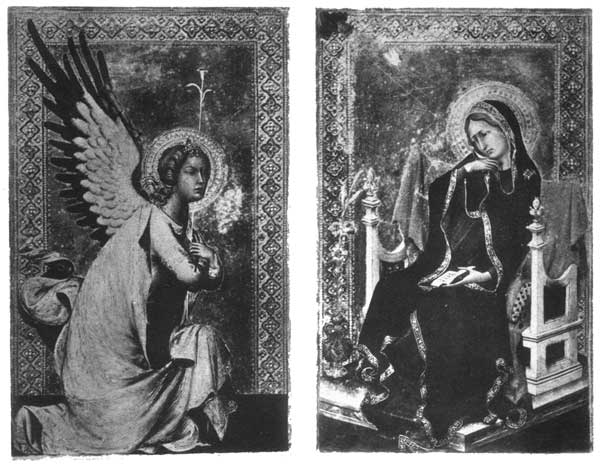
In that Campo Santo, then, following as the lesser evil the method used by the others, Simone made in fresco, over the principal door and on the inner side, a Madonna borne to Heaven by a choir of angels, who are singing and playing so vividly that there are seen in them all those various gestures that musicians are wont to make in singing or playing, such as turning the ears to the sound, opening the mouth in diverse ways, raising the eyes to Heaven, blowing out the cheeks, swelling the throat, and in short all the other actions and movements that are made in music. Under this Assumption, in three pictures, he made some scenes from the life of S. Ranieri of Pisa. In the first scene he is shown as a youth, playing the psaltery and making some girls dance, who are most beautiful by reason of the air of the heads and of the loveliness of the costumes and head-dresses of those times. Next, the same Ranieri, having been reproved for such lasciviousness by the Blessed Alberto the Hermit, is seen standing with his face downcast and tearful and with his eyes red from weeping, all penitent for his sin, while God, in the sky, surrounded by a celestial light, appears to be pardoning him. In the second picture Ranieri, distributing his wealth to God's poor before mounting on board ship, has round him a crowd of beggars, of cripples, of women, and of children, all most touching in their pushing forward, their entreating, and their thanking him. And in the same picture, also, that Saint, having received in the Temple the gown of a pilgrim, is standing before a Madonna, who, surrounded by many angels, is showing him that he will repose on her bosom in Pisa; and all these figures have vivacity and a beautiful air in the heads. In the third Simone painted the scene when, having returned after seven years from beyond the seas, he is showing that he has spent thrice forty days in the Holy Land, and when, standing in the choir to hear the Divine offices, he is tempted by the Devil, who is seen driven away by a firm determination that is perceived in Ranieri not to consent to offend God, assisted by a figure made by Simone to represent Constancy, who is chasing away the ancient adversary not only all in confusion but also (with beautiful and fanciful invention) all in terror, holding his hands to his head in his flight, and walking with his face downcast and his shoulders shrunk as close together as could be, and saying, as it is seen from the writing that is issuing from his mouth: "I can no more." And finally, there is also in this picture the scene when Ranieri, kneeling on Mount Tabor, is miraculously seeing Christ in air with Moses and Elias; and all the features of this work, with others that are not mentioned, show that Simone was very fanciful and understood the good method of grouping figures gracefully in the manner of those times. These scenes finished, he made two panels in distemper in the same city, assisted by Lippo Memmi, his brother, who had also assisted him to paint the Chapter-house of S. Maria Novella and other works.
In the Campo Santo, Simone followed the method used by the others, considering it the lesser evil. On the inside wall above the main door, he painted a fresco of the Madonna being carried to Heaven by a choir of angels. They sing and play so vividly that they display all the gestures musicians usually make. They turn their ears toward the sound, open their mouths in different ways, raise their eyes to Heaven, puff out their cheeks, and swell their throats. In short, they make all the other movements and gestures used in music. Below this Assumption, Simone painted scenes from the life of S. Ranieri of Pisa in three pictures. In the first, Ranieri appears as a young man, playing the psaltery while some girls dance. The girls are very beautiful, thanks to the expressions of their faces and the lovely costumes and headdresses of the time. Next, the Blessed Alberto the Hermit has rebuked Ranieri for such lewd behavior. Ranieri stands with his face lowered and tearful, his eyes red from weeping, fully repentant for his sin. God appears in the sky, surrounded by heavenly light, and seems to be pardoning him. In the second picture, Ranieri gives his wealth to God's poor before boarding a ship. A crowd of beggars, people with disabilities, women, and children surrounds him. They are all deeply moving as they push forward, beg, and thank him. In the same picture, the Saint has received a pilgrim's gown in the Temple and stands before a Madonna. Surrounded by many angels, she shows him that he will rest on her bosom in Pisa. All these figures are lively and have beautiful expressions. In the third picture, Simone painted Ranieri after his return from seven years overseas. Ranieri shows that he has spent three periods of forty days in the Holy Land. Standing in the choir to hear the Divine offices, he is tempted by the Devil. The Devil is driven away by Ranieri's clear determination not to offend God. Ranieri is helped by a figure Simone painted to represent Constancy, who chases away the ancient adversary. He flees in utter confusion and, in a beautiful and imaginative touch, in terror too. He holds his hands to his head, lowers his face, and hunches his shoulders as tightly as he can. The words coming from his mouth read: "I can no more." Finally, the picture also shows Ranieri kneeling on Mount Tabor, where he miraculously sees Christ in the air with Moses and Elias. All the features of this work, along with others not mentioned here, show that Simone was highly imaginative. They also show that he understood how to group figures gracefully in the manner of the time. After finishing these scenes, Simone made two panels in distemper in the same city. He was assisted by his brother, Lippo Memmi, who had also helped him paint the Chapter-house of S. Maria Novella and other works.
He, although he had not the excellence of Simone, none the less followed his manner as well as he could, and made many works in fresco in his company for S. Croce in Florence; the panel of the high-altar in S. Caterina at Pisa, for the Preaching Friars; and in S. Paolo a Ripa d' Arno, besides many very beautiful scenes in fresco, the panel in distemper that is to-day over the high-altar, containing a Madonna, S. Peter, S. Paul, S. John the Baptist, and other Saints; and on this Lippo put his name. After these works he wrought by himself a panel in distemper for the Friars of S. Augustine in San Gimignano, and thereby acquired so great a name that he was forced to send to Arezzo, to Bishop Guido de' Tarlati, a panel with three half-length figures which is to-day in the Chapel of S. Gregorio in the Vescovado.
Although he was not as accomplished as Simone, he followed Simone’s style as well as he could. Together, they painted many frescoes for S. Croce in Florence. He also painted the high altar panel in S. Caterina at Pisa for the Preaching Friars. In S. Paolo a Ripa d' Arno, he painted many beautiful fresco scenes. He also painted the panel in distemper that is now over the high altar. It shows a Madonna, S. Peter, S. Paul, S. John the Baptist, and other Saints. Lippo put his name on this panel. After these works, he painted a panel in distemper on his own for the Friars of S. Augustine in San Gimignano. This brought him such fame that he was obliged to send a panel with three half-length figures to Bishop Guido de' Tarlati in Arezzo. The panel is now in the Chapel of S. Gregorio in the Vescovado.
While Simone was at work in Florence, one his cousin, an ingenious architect called Neroccio, undertook in the year 1332 to make to ring the great bell of the Commune of Florence, which, for a period of seventeen years, no one had been able to make to ring without twelve men to pull at it. He balanced it, then, in a manner that two could move it, and once moved one alone could ring it without a break, although it weighed more than six thousand libbre; wherefore, besides the honour, he gained thereby as his reward three hundred florins of gold, which was great payment in those times.
While Simone was working in Florence, his cousin Neroccio, a gifted architect, took on a challenge in 1332. He set out to make the great bell of the Commune of Florence easier to ring. For seventeen years, no one had been able to ring it without twelve men pulling on it. Neroccio balanced the bell so that two men could set it moving. Once it was moving, one man alone could ring it without stopping, although it weighed more than six thousand libbre. Besides the honor this brought him, he received three hundred gold florins, a large payment in those days.
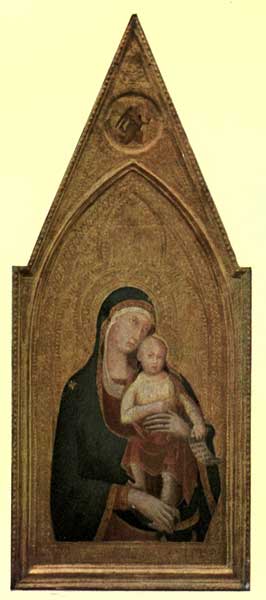
But to return to our two Memmi of Siena; Lippo, besides the works mentioned, wrought a panel in distemper, with the design of Simone, which was carried to Pistoia and placed over the high-altar of the Church of S. Francesco, and was held very beautiful. Finally, both having returned to their native city of Siena, Simone began a very large work in colour over the great gate of Camollia, containing the Coronation of Our Lady, with an infinity of figures, which remained unfinished, a very great sickness coming upon him, so that he, overcome by the gravity of the sickness, passed away from this life in the year 1345, to the very great sorrow of all his city and of Lippo his brother, who gave him honourable burial in S. Francesco.
But to return to our two Memmi of Siena, Lippo painted a panel in distemper, in addition to the works already mentioned. He used a design by Simone. The panel was taken to Pistoia and placed above the high altar of the Church of S. Francesco, where it was considered very beautiful. Finally, both brothers returned to their native city of Siena. There, Simone began a very large painting above the great gate of Camollia. It showed the Coronation of Our Lady and included countless figures. The painting remained unfinished because Simone fell gravely ill. Overcome by the illness, he died in 1345, to the great sorrow of his entire city and his brother Lippo. Lippo gave him an honorable burial in S. Francesco.
Lippo afterwards finished many works that Simone had left imperfect, and among these was a Passion of Jesus Christ over the high-altar of S. Niccola in Ancona, wherein Lippo finished what Simone had begun, imitating that which the said Simone had made and finished in the Chapter-house of S. Spirito in Florence. This work would be worthy of a longer life than peradventure will be granted to it, there being in it many horses and soldiers in beautiful attitudes, which they are striking with various animated movements, doubting and marvelling whether they have crucified or not the Son of God. At Assisi, likewise, in the lower Church of S. Francesco, he finished some figures that Simone had begun for the altar of S. Elizabeth, which is at the entrance of the door that leads into the chapels, making there a Madonna, a S. Louis King of France, and other Saints, in all eight figures, which are only as far as the knees, but good and very well coloured. Besides this, in the great refectory of the said convent, at the top of the wall, Simone had begun many little scenes and a Crucifix made in the shape of a Tree of the Cross, but this remained unfinished and outlined with the brush in red over the plaster, as may still be seen to-day; which method of working was the cartoon that our old masters used to make for painting in fresco, for greater rapidity; for having distributed the whole work over the plaster, they would outline it with the brush, reproducing from a small design all that which they wished to paint, and enlarging in proportion all that they thought to put down. Wherefore, even as this one is seen thus outlined, and many others in other places, so there are many others that had once been painted, from which the work afterwards peeled off, leaving them thus outlined in red over the plaster.
Lippo later finished many works that Simone had left unfinished. Among them was a Passion of Jesus Christ above the high altar of S. Niccola in Ancona. Lippo completed what Simone had begun, imitating the work Simone had made and finished in the Chapter-house of S. Spirito in Florence. This work deserves to last longer than it perhaps will. It contains many horses and soldiers in beautiful poses, making a variety of lively movements. They doubt and wonder whether they have crucified the Son of God. At Assisi, in the lower Church of S. Francesco, Lippo also finished some figures Simone had begun for the altar of S. Elizabeth. The altar stands at the entrance to the door leading into the chapels. Lippo painted a Madonna, a S. Louis King of France, and other saints, eight figures in all. They are shown only as far as the knees, but they are good and very well colored. In the great refectory of the same convent, Simone had begun many small scenes at the top of the wall. He had also begun a Crucifix in the form of a Tree of the Cross. But the work remained unfinished, outlined in red with a brush on the plaster, as can still be seen today. This method served as the cartoon, or preparatory design, that our old masters used to paint frescoes more quickly. After laying out the whole work on the plaster, they outlined it with a brush. They reproduced everything they wanted to paint from a small design, enlarging every part in proportion. So, just as this work and many others elsewhere can be seen in outline, many others were once painted but later lost their paint, leaving the red outlines on the plaster.
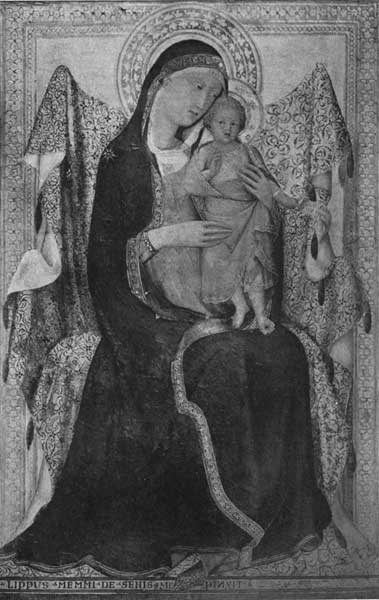
But returning to our Lippo, who drew passing well, as it may be seen in our book in a hermit who is reading with his legs crossed; he lived for twelve years after Simone, executing many works throughout all Italy, and in particular two panels in S. Croce in Florence. And seeing that the manner of these two brothers is very similar, one can distinguish the one from the other by this, that Simone used to sign his name at the foot of his works in this way: SIMONIS MEMMI SENENSIS OPUS; and Lippo, leaving out his baptismal name and caring nothing about a Latinity so rough, in this other fashion: OPUS MEMMI DE SENIS ME FECIT.
But returning to our Lippo, he drew very well. This can be seen in our book in his drawing of a hermit reading with his legs crossed. Lippo lived for twelve years after Simone and produced many works throughout all Italy. These included two panels in S. Croce in Florence. The styles of the two brothers are very similar, but they can be distinguished by their signatures. Simone signed his name at the foot of his works: SIMONIS MEMMI SENENSIS OPUS. Lippo left out his baptismal name and cared nothing about how rough his Latin was. He signed instead: OPUS MEMMI DE SENIS ME FECIT.
On the wall of the Chapter-house of S. Maria Novella—besides Petrarca and Madonna Laura, as it has been said above—Simone portrayed Cimabue, the architect Lapo, his son Arnolfo, and himself, and in the person of that Pope who is in the scene he painted Benedetto XI of Treviso, one of the Preaching Friars, the likeness of which Pope had been brought to Simone long before by Giotto, his master, when he returned from the Court of the said Pope, who had his seat in Avignon. In the same place, also, beside the said Pope, he portrayed Cardinal Niccola da Prato, who had come to Florence at that time as Legate of the said Pontiff, as Giovanni Villani relates in his History.
On the wall of the Chapter-house of S. Maria Novella, Simone portrayed Petrarca and Madonna Laura, as mentioned above. He also portrayed Cimabue, the architect Lapo, Lapo’s son Arnolfo, and himself. For the Pope in the scene, he painted Benedetto XI of Treviso, one of the Preaching Friars. Long before, Simone’s master Giotto had brought him a likeness of the Pope. Giotto brought it back when he returned from the Pope’s court, which was in Avignon. Beside the Pope, Simone also portrayed Cardinal Niccola da Prato. The cardinal had come to Florence at that time as the Pope’s Legate, as Giovanni Villani relates in his History.
Over the tomb of Simone was placed this epitaph:
This epitaph was placed over Simone’s tomb:
SIMONI MEMMIO PICTORUM OMNIUM OMNIS ÆTATIS CELEBERRIMO. VIXIT ANN. LX, MENS. II, D. III.
To Simoni Memmio, the most celebrated of all painters of all ages. He lived 60 years, 2 months, and 3 days.
As it is seen in our aforesaid book, Simone was not very excellent in draughtsmanship, but he had invention from nature, and he took much delight in drawing portraits from the life; and in this he was held so much the greatest master of his times that Signor Pandolfo Malatesti sent him as far as Avignon to portray Messer Francesco Petrarca, at the request of whom he made afterwards the portrait of Madonna Laura, with so much credit to himself.
As our book mentioned above shows, Simone was not a very skilled draftsman. But he had a natural gift for invention and greatly enjoyed drawing portraits from life. He was considered by far the greatest portraitist of his time. So Signor Pandolfo Malatesti sent him all the way to Avignon to portray Messer Francesco Petrarca. Later, at Petrarca's request, Simone painted a portrait of Madonna Laura, earning himself great credit.