Pietro Cavallini's Life
PAINTER OF ROME
Painter of Rome
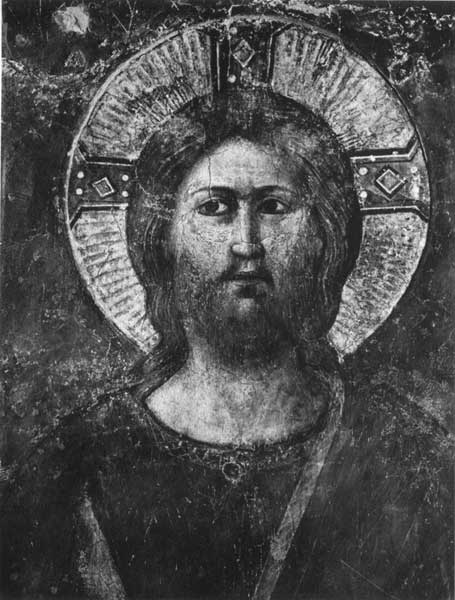
For many centuries Rome had been deprived not only of fine letters and of the glory of arms but also of all the sciences and fine arts, when, by the will of God, there was born therein Pietro Cavallini, in those times when Giotto, having, it may be said, restored painting to life, was holding the sovereignty among the painters in Italy. He, then, having been a disciple of Giotto and having worked with Giotto himself on the Navicella in mosaic in S. Pietro, was the first who, after him, gave light to that art, and he began to show that he had been no unworthy disciple of so great a master when he painted, over the door of the sacristy of the Araceli, some scenes that are to-day eaten away by time, and very many works coloured in fresco throughout the whole Church of S. Maria di Trastevere. Afterwards, working in mosaic on the principal chapel and on the façade of the church, he showed in the beginning of such a work, without the help of Giotto, that he was no less able in the execution and bringing to completion of mosaics than he was in painting. Making many scenes in fresco, also, in the Church of S. Grisogono, he strove to make himself known both as the best disciple of Giotto and as a good craftsman. In like manner, also in Trastevere, he painted almost the whole Church of S. Cecilia with his own hand, and many works in the Church of S. Francesco appresso Ripa. He then made the façade of mosaic in S. Paolo without Rome, and many stories of the Old Testament for the central nave. And painting some works in fresco in the Chapter-house of the first cloister, he put therein so great diligence that he gained thereby from men of judgment the name of being a most excellent master, and was therefore so much favoured by the prelates that they commissioned him to do the inner wall of S. Pietro, between the windows. Between these he made the four Evangelists, wrought very well in fresco, of extraordinary size in comparison with the figures that at that time were customary, with a S. Peter and a S. Paul, and a good number of figures in a ship, wherein, the Greek manner pleasing him much, he blended it ever with that of Giotto; and since he delighted to give relief to his figures, it is recognized that he used thereunto the greatest efforts that can be imagined by man. But the best work that he made in that city was in the said Church of Araceli on the Campidoglio, where he painted in fresco, on the vaulting of the principal apse, the Madonna with the Child in her arms, surrounded by a circle of sunlight, and beneath is the Emperor Octavian, to whom the Tiburtine Sibyl is showing Jesus Christ, and he is adoring Him; and the figures in this work, as it has been said in other places, have been much better preserved than the others, because those that are on the vaulting are less injured by dust than those that are made on the walls.
For many centuries, Rome had been deprived not only of literature and military glory, but also of all the sciences and fine arts. Then, by the will of God, Pietro Cavallini was born there. At that time Giotto, who had, one might say, brought painting back to life, was the leading painter in Italy. Cavallini was Giotto’s pupil and worked with him on the Navicella mosaic in S. Pietro. He was the first after Giotto to bring new light to painting. He began to show that he was a worthy pupil of so great a master when he painted scenes above the sacristy door in the Araceli. Time has worn away those scenes. He also painted a great many frescoes throughout the Church of S. Maria di Trastevere. Later, he worked in mosaic on the main chapel and the façade of the church. As he began the work without Giotto’s help, he showed that he was as capable of executing and completing mosaics as he was of painting. He also painted many fresco scenes in the Church of S. Grisogono. In these he strove to make himself known as both Giotto’s best pupil and a good craftsman. In Trastevere, he likewise painted almost the whole Church of S. Cecilia with his own hand. He also painted many works in the Church of S. Francesco appresso Ripa. He then made the mosaic façade at S. Paolo outside Rome and painted many Old Testament scenes for the central nave. He also painted frescoes in the chapter house of the first cloister. He took such care with them that knowledgeable men came to regard him as a most excellent master. The prelates consequently held him in such favor that they commissioned him to paint the inner wall of S. Pietro, between the windows. There he painted the four Evangelists in fresco, along with a S. Peter, a S. Paul, and a good number of figures in a ship. The Evangelists were very well painted and extraordinarily large compared with figures customary at the time. Cavallini greatly admired the Greek style and always blended it with Giotto’s. He also delighted in giving his figures a sense of depth, and it is clear that he made the greatest efforts imaginable to achieve it. But his best work in the city was in the Church of Araceli on the Campidoglio. There, on the vault of the main apse, he painted a fresco of the Madonna holding the Child, surrounded by a circle of sunlight. Below them is the Emperor Octavian, adoring Jesus Christ as the Tiburtine Sibyl points him out. As has been said elsewhere, the figures in this work have survived much better than the others. This is because figures on the vault are less damaged by dust than those on the walls.
After these works Pietro went to Tuscany, in order to see the works of the other disciples of his master Giotto and those of Giotto himself; and with this occasion he painted many figures in S. Marco in Florence, which are not seen to-day, the church having been whitewashed, except the Annunciation, which stands covered beside the principal door of the church. In S. Basilio, also, in the Canto alla Macine, he made another Annunciation in fresco on a wall, so like to that which he had made before in S. Marco, and to another one that is in Florence, that some believe, and not without probability, that they are all by the hand of this Pietro; and in truth they could not be more like, one to another, than they are. Among the figures that he made in the said S. Marco in Florence was the portrait of Pope Urban V from the life, with the heads of S. Peter and S. Paul; from which portrait Fra Giovanni da Fiesole copied that one which is in a panel in S. Domenico, also of Fiesole; and that was no small good-fortune, seeing that the portrait which was in S. Marco and many other figures that were about the church in fresco were covered with whitewash, as it has been said, when that convent was taken from the monks who occupied it before and given to the Preaching Friars, the whole being whitewashed with little attention and consideration.
After these works, Pietro went to Tuscany to see works by his master Giotto and Giotto’s other disciples. While there, he painted many figures in S. Marco in Florence. They can no longer be seen because the church was whitewashed. Only the Annunciation remains, covered beside the church’s main door. In S. Basilio, in the Canto alla Macine, he painted another Annunciation in fresco on a wall. It closely resembles the one he had painted in S. Marco and another in Florence. Some therefore believe, with good reason, that Pietro painted all three. In truth, they could not be more alike. Among the figures Pietro painted in S. Marco was a portrait of Pope Urban V, painted from life, with the heads of S. Peter and S. Paul. Fra Giovanni da Fiesole copied this portrait in a panel in S. Domenico, also in Fiesole. That was no small piece of good fortune. As already mentioned, the portrait in S. Marco and many other fresco figures around the church were covered with whitewash. This happened when the convent was taken from the monks who had occupied it and given to the Preaching Friars. The whole church was whitewashed with little care or consideration.
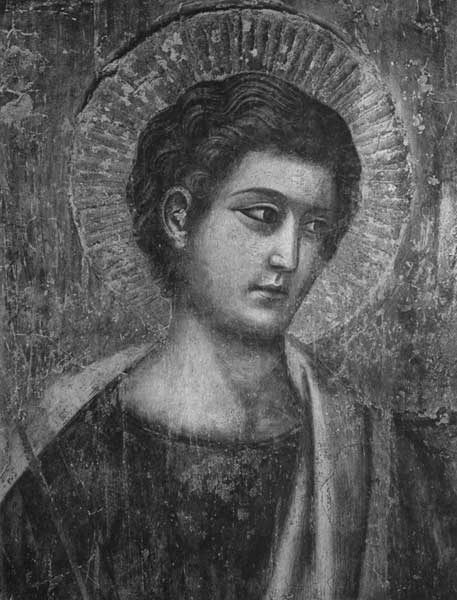
Passing afterwards, in returning to Rome, through Assisi, not only in order to see those buildings and those notable works made there by his master and by some of his fellow-disciples, but also to leave something there by his own hand, he painted in fresco in the lower Church of S. Francesco—namely, in the transept that is on the side of the sacristy—a Crucifixion of Jesus Christ, with men on horseback armed in various fashions, and with many varied and extravagant costumes of diverse foreign peoples. In the air he made some angels, who, poised on their wings in diverse attitudes, are in a storm of weeping; and some pressing their hands to their breasts, others wringing them, and others beating the palms, they are showing that they feel the greatest grief at the death of the Son of God; and all, from the middle backwards, or rather from the middle downwards, melt away into air. In this work, well executed in the colouring, which is fresh and vivacious and so well contrived in the junctions of the plaster that the work appears all made in one day, I have found the coat of arms of Gualtieri, Duke of Athens; but by reason of there not being either a date or other writing there, I cannot affirm that it was caused to be made by him. I say, however, that besides the firm belief of everyone that it is by the hand of Pietro, the manner could not be more like his than it is, not to mention that it may be believed, this painter having lived at the time when Duke Gualtieri was in Italy, that it was made by Pietro as well as by order of the said Duke. At least, let everyone think as he pleases, the work, as ancient, is worthy of nothing but praise, and the manner, besides the public voice, shows that it is by the hand of this man.
Later, on his way back to Rome, he passed through Assisi. He wanted to see the buildings and notable works his master and some fellow students had made there. He also wanted to leave a work of his own. In the lower Church of S. Francesco, he painted a fresco of the Crucifixion of Jesus Christ. It was in the transept on the side of the sacristy. He included men on horseback, armed in various ways, and many varied and extravagant costumes of different foreign peoples. In the air, he painted angels hovering on their wings in various poses, weeping bitterly. Some press their hands to their breasts, others wring them, and others clap their palms. All show that they feel the deepest grief at the death of the Son of God. From the middle backward, or rather from the waist down, all fade into the air. The work is well executed, with fresh, lively colors. The joins between the sections of plaster are so skillfully handled that the whole work appears to have been painted in one day. I found the coat of arms of Gualtieri, Duke of Athens, in the painting. But because there is no date or other inscription, I cannot say that he commissioned it. Everyone firmly believes that Pietro painted the work, and its style could not be more like his. Moreover, the painter lived when Duke Gualtieri was in Italy. So it is reasonable to believe that Pietro painted it and that the Duke commissioned it. In any case, let everyone think as they please. For a work of its age, it deserves nothing but praise. Besides the common belief, its style shows that Pietro painted it.
In the Church of S. Maria at Orvieto, wherein is the most holy relic of the Corporal, the same Pietro wrought in fresco certain stories of Jesus Christ and of the Host, with much diligence; and this he did, so it is said, for Messer Benedetto, son of Messer Buonconte Monaldeschi and lord at that time, or rather tyrant, of that city. Some likewise affirm that Pietro made some sculptures, and that they were very successful, because he had genius for whatever he set himself to do, and that he made the Crucifix that is in the great Church of S. Paolo without Rome; which Crucifix, as it is said and may be believed, is the one that spoke to S. Brigida in the year 1370.
In the Church of S. Maria at Orvieto, which holds the most holy relic of the Corporal, Pietro painted frescoes with great care. They depicted stories of Jesus Christ and the Host. He is said to have done this for Messer Benedetto, son of Messer Buonconte Monaldeschi. At the time, Messer Benedetto was the lord, or rather the tyrant, of the city. Some also say that Pietro made sculptures, and that they were very successful. This was because he had a genius for whatever he undertook. They also say that he made the Crucifix in the great Church of S. Paolo outside Rome. It is said, and may be believed, that this was the Crucifix that spoke to S. Brigida in 1370.
By the hand of the same man were some other works in that manner, which were thrown to the ground when the old Church of S. Pietro was pulled down in order to build the new. Pietro was very diligent in all his works, and sought with every effort to gain honour and to acquire fame in the art. He was not only a good Christian, but most devout and very much the friend of the poor, and he was beloved by reason of his excellence not only in his native city of Rome but by all those who had knowledge of him or of his works. And finally, he devoted himself at the end of his old age to religion, leading an exemplary life, with so much zeal that he was almost held a saint. Wherefore there is no reason to marvel not only that the said Crucifix by his hand spoke to the Saint, as it has been said, but also that innumerable miracles have been and still are wrought by a certain Madonna by his hand, which I do not intend to call his best, although it is very famous in all Italy and although I know very certainly and surely, by the manner of the painting, that it is by the hand of Pietro, whose most praiseworthy life and piety towards God were worthy to be imitated by all men. Nor let anyone believe, for the reason that it is scarcely possible and that experience continually shows this to us, that it is possible to attain to honourable rank without the fear and grace of God and without goodness of life. A disciple of Pietro Cavallini was Giovanni da Pistoia, who made some works of no great importance in his native city.
The same artist made other works in that style. They were destroyed when the old Church of S. Pietro was demolished to build the new one. Pietro was very diligent in all his work. He made every effort to gain honor and fame in his art. He was not only a good Christian, but also deeply devout and a great friend of the poor. His excellence made him beloved not only in his native city of Rome, but also by everyone who knew him or his works. Finally, in his old age, he devoted himself to religion and led an exemplary life. He was so zealous that he was almost considered a saint. So it is no wonder that, as I have said, the Crucifix he made spoke to the Saint. Nor is it surprising that countless miracles have been, and still are, performed by a Madonna he painted. I do not mean to call it his best work, although it is very famous throughout Italy. I know with complete certainty from the painting’s style that it is by Pietro. His highly praiseworthy life and devotion to God were worthy of imitation by all. Let no one believe that it is possible to attain an honorable position without fear of God, his grace, and a good life. It is scarcely possible to do so, as experience continually shows us. A disciple of Pietro Cavallini was Giovanni da Pistoia, who made some works of no great importance in his native city.
Finally, at the age of eighty-five, he died in Rome of a colic caught while working in fresco, by reason of the damp and of standing continually at this exercise. His pictures date about the year 1364, and he was honourably buried in S. Paolo without Rome, with this epitaph:
Finally, at the age of eighty-five, he died in Rome of colic. He had developed it while painting frescoes, because of the damp and the constant standing the work required. His pictures date from around 1364. He was buried with honor in S. Paolo outside Rome, with this epitaph:
QUANTUM ROMANÆ PETRUS DECUS ADDIDIT URBI PICTURA, TANTUM DAT DECUS IPSE POLO.
AS MUCH HONOR AS PETER BROUGHT TO ROME THROUGH HIS PAINTING, HE NOW BRINGS TO HEAVEN.
His portrait has never been found, for all the diligence that has been used; it is therefore not included.
Despite all efforts, his portrait has never been found. So it is not included.