The Life of Andrea di Cione Orcagna
PAINTER, SCULPTOR, AND ARCHITECT, OF FLORENCE
Painter, Sculptor, and Architect from Florence
Rarely is a man of parts excellent in one pursuit without being able easily to learn any other, and above all any one of those that are akin to his original profession, and proceed, as it were, from one and the same source, as did the Florentine Orcagna, who was painter, sculptor, architect, and poet, as it will be told below. Born in Florence, he began while still a child to give attention to sculpture under Andrea Pisano, and pursued it for some years; then, being desirous to become abundant in invention in order to make lovely historical compositions, he applied himself with so great study to drawing, assisted by nature, who wished to make him universal, that having tried his hand at painting with colours both in distemper and in fresco, even as one thing leads to another, he succeeded so well with the assistance of Bernardo Orcagna, his brother, that this Bernardo took him in company with himself to paint the life of Our Lady in the principal chapel of S. Maria Novella, which then belonged to the family of the Ricci. This work, when finished, was held very beautiful, although, by reason of the neglect of those who afterwards had charge of it, not many years passed before, the roof becoming ruined, it was spoilt by the rains and thereby brought to the condition wherein it is to-day, as it will be told in the proper place. It is enough for the present to say that Domenico Ghirlandajo, who repainted it, availed himself greatly of the invention put into it by Orcagna, who also painted in fresco in the same church the Chapel of the Strozzi, which is near to the door of the sacristy and of the belfry, in company with Bernardo, his brother. In this chapel, to which one ascends by a staircase of stone, he painted on one wall the glory of Paradise, with all the Saints and with various costumes and head-dresses of those times. On the other wall he made Hell, with the abysses, centres, and other things described by Dante, of whom Andrea was an ardent student. In the Church of the Servites in the same city he painted in fresco, also with Bernardo, the Chapel of the family of Cresci; with a Coronation of Our Lady on a very large panel in S. Pietro Maggiore, and a panel in S. Romeo, close to the side-door. In like manner, he and his brother Bernardo painted the outer façade of S. Apollinare, with so great diligence that the colours in that exposed place have been preserved marvellously vivid and beautiful up to our own day.
A gifted man who excels in one pursuit can rarely fail to learn another easily. This is especially true of pursuits related to his original profession, which seem to spring from the same source. Such a man was the Florentine Orcagna, a painter, sculptor, architect, and poet, as we shall see below. Born in Florence, he began studying sculpture under Andrea Pisano while still a child and continued for some years. Then he wanted to develop a wealth of ideas for beautiful historical compositions. So he devoted himself to drawing with great care, aided by nature, which wanted to make him accomplished in every art. As one thing led to another, he tried painting in both tempera and fresco. With the help of his brother Bernardo Orcagna, he succeeded so well that Bernardo took him as a partner. Together they painted the life of Our Lady in the main chapel of S. Maria Novella. At that time, the chapel belonged to the Ricci family. When finished, the work was considered very beautiful. But those later responsible for it neglected it, and within a few years the roof fell into disrepair. Rain damaged the paintings, leaving them in the condition they are in today, as will be told in the proper place. For now, it is enough to say that Domenico Ghirlandajo drew heavily on Orcagna's designs when he repainted the chapel. Orcagna and his brother Bernardo also painted the Strozzi Chapel in fresco in the same church. The chapel is near the doors to the sacristy and the bell tower, and a stone staircase leads up to it. On one wall Orcagna painted the glory of Paradise, with all the Saints in the varied costumes and head-dresses of the time. On the other wall he painted Hell, with the abysses, centres, and other features described by Dante. Andrea was an ardent student of Dante. In the Church of the Servites in the same city, he also painted the Cresci family chapel in fresco with Bernardo. He painted a Coronation of Our Lady on a very large panel in S. Pietro Maggiore, and a panel in S. Romeo, close to the side door. He and his brother Bernardo also painted the outer façade of S. Apollinare with great care. The colours, though exposed to the weather, have remained marvelously vivid and beautiful up to our own day.
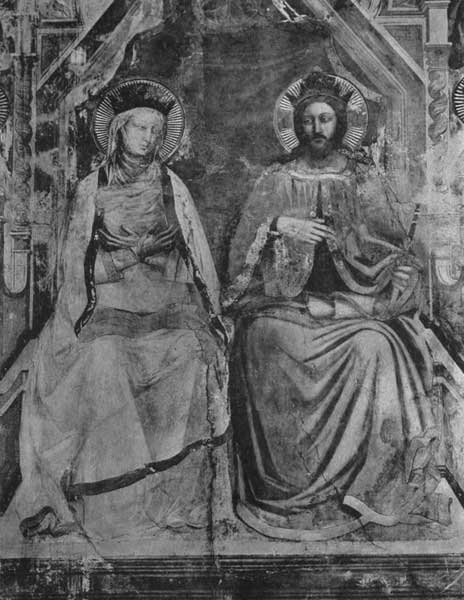
Moved by the fame of these works of Orcagna, which were much praised, the men who at that time were governing Pisa had him summoned to work on a portion of one wall in the Campo Santo of that city, even as Giotto and Buffalmacco had done before. Wherefore, putting his hand to this, Andrea painted a Universal Judgment, with some fanciful inventions of his own, on the wall facing towards the Duomo, beside the Passion of Christ made by Buffalmacco; and making the first scene on the corner, he represented therein all the degrees of lords temporal wrapped in the pleasures of this world, placing them seated in a flowery meadow and under the shade of many orange-trees, which make a most delicious grove and have some Cupids in their branches above; and these Cupids, flying round and over many young women (all portraits from the life, as it seems clear, of noble ladies and dames of those times, who, by reason of the long lapse of time, are not recognized), are making a show of shooting at the hearts of these young women, who have beside them young men and nobles who are standing listening to music and song and watching the amorous dances of youths and maidens, who are sweetly taking joy in their loves. Among these nobles Orcagna portrayed Castruccio, Lord of Lucca, as a youth of most beautiful aspect, with a blue cap wound round his head and with a hawk on his wrist, and near him other nobles of that age, of whom we know not who they are. In short, in that first part, in so far as the space permitted and his art demanded, he painted all the delights of the world with exceeding great grace. In the other part of the same scene he represented on a high mountain the life of those who, drawn by repentance for their sins and by the desire to be saved, have fled from the world to that mountain, which is all full of saintly hermits who are serving the Lord, busy in diverse pursuits with most vivacious expressions. Some, reading and praying, are shown all intent on contemplation, and others, labouring in order to gain their livelihood, are exercising themselves in various forms of action. There is seen here among others a hermit who is milking a goat, who could not be more active or more lifelike in appearance than he is. Below there is S. Macarius showing to three Kings, who are riding with their ladies and their retinue and going to the chase, human misery in the form of three Kings who are lying dead but not wholly corrupted in a tomb, which is being contemplated with attention by the living Kings in diverse and beautiful attitudes full of wonder, and it appears as if they are reflecting with pity for their own selves that they have in a short time to become such. In one of these Kings on horseback Andrea portrayed Uguccione della Faggiuola of Arezzo, in a figure which is holding its nose with one hand in order not to feel the stench of the dead and corrupted Kings. In the middle of this scene is Death, who, flying through the air and draped in black, is showing that she has cut off with her scythe the lives of many, who are lying on the ground, of all sorts and conditions, poor and rich, halt and whole, young and old, male and female, and in short a good number of every age and sex. And because he knew that the people of Pisa took pleasure in the invention of Buffalmacco, who gave speech to the figures of Bruno in S. Paolo a Ripa d'Arno, making some letters issue from their mouths, Orcagna filled this whole work of his with such writings, whereof the greater part, being eaten away by time, cannot be understood. To certain old men, then, he gives these words:
The works of Orcagna were highly praised, and their fame moved the men governing Pisa to summon him. They asked him to work on part of a wall in the city’s Campo Santo, as Giotto and Buffalmacco had done before. Andrea therefore painted a Universal Judgment, including some imaginative inventions of his own. He painted it on the wall facing the Duomo, beside the Passion of Christ by Buffalmacco. In the first scene, at the corner, he showed all ranks of worldly rulers absorbed in the pleasures of this world. They sit in a flowery meadow, shaded by many orange trees that form a delightful grove. Some Cupids sit in the branches above. The Cupids fly around and over many young women, pretending to shoot arrows at their hearts. The women seem clearly to be portraits from life of noble ladies and gentlewomen of those times. After so many years, however, they can no longer be identified. Beside them stand young men and nobles, listening to music and song. They watch youths and maidens dancing amorously and taking sweet pleasure in their love. Among these nobles, Orcagna portrayed Castruccio, Lord of Lucca, as a remarkably handsome young man. He has a blue cap wrapped around his head and a hawk on his wrist. Near him are other nobles of the time, whose identities we do not know. In short, in that first part, he painted all the pleasures of the world with great grace, as far as the space allowed and his art required. In the other part of the same scene, he showed life on a high mountain. People have fled there from the world, driven by repentance for their sins and a desire for salvation. The mountain is full of saintly hermits serving the Lord. They are busy with various pursuits, and their expressions are full of life. Some are reading and praying, completely absorbed in contemplation. Others are working in various ways to earn their living. Among them is a hermit milking a goat, who could not look more active or lifelike. Below, S. Macarius shows human misery to three Kings. The Kings are riding to the hunt with their ladies and attendants. He shows them three dead Kings lying in a tomb, their bodies not yet fully decayed. The living Kings study them closely in various beautiful poses, full of wonder. They seem to reflect with pity for themselves that they too must soon become like them. Andrea portrayed Uguccione della Faggiuola of Arezzo as one of the Kings on horseback. He holds his nose with one hand to avoid the stench of the dead and decaying Kings. In the middle of the scene is Death, flying through the air and dressed in black. She shows that she has cut short many lives with her scythe. The dead lie on the ground, people of every kind and condition, poor and rich, disabled and able-bodied, young and old, male and female. In short, there are many of every age and sex. Orcagna knew that the people of Pisa had enjoyed an invention of Buffalmacco’s. Buffalmacco had given speech to the figures of Bruno in S. Paolo a Ripa d'Arno, making letters come out of their mouths. Orcagna therefore filled his whole work with similar writings. Most have been worn away by time and cannot be understood. To certain old men, he gives these words:
DACCHÈ PROSPERITADE CI HA LASCIATI, O MORTE, MEDICINA D' OGNI PENA, DEH VIENI A DARNE OMAI L' ULTIMA CENA!
NOW THAT PROSPERITY HAS LEFT US, O DEATH, REMEDY FOR ALL PAIN, PLEASE COME AND GIVE US OUR LAST SUPPER!
with other words that cannot be understood, and verses likewise in ancient manner, composed, as I have discovered, by Orcagna himself, who gave attention to poetry and to making a sonnet or two. Round these dead bodies are some devils who are tearing their souls from their mouths, and are carrying them to certain pits full of fire, which are on the summit of a very high mountain. Over against these are angels who are likewise taking the souls from the mouths of others of these dead people, who have belonged to the good, and are flying with them to Paradise. And in this scene there is a scroll, held by two angels, wherein are these words:
along with other words that cannot be understood and verses written in an old style. I have discovered that Orcagna himself composed them. He took an interest in poetry and wrote a sonnet or two. Around these dead bodies, some devils are tearing souls from their mouths. The devils carry the souls to pits full of fire on the summit of a very high mountain. Opposite them, angels are also taking souls from the mouths of other dead people, who were among the good. The angels fly with these souls to Paradise. In this scene, two angels hold a scroll bearing these words:
ISCHERMO DI SAVERE E DI RICCHEZZA, DI NOBILTADE ANCORA E DI PRODEZZA, VALE NIENTE A I COLPI DI COSTEI;
NO SHIELD OF KNOWLEDGE OR WEALTH, OF NOBILITY OR COURAGE, CAN PROTECT AGAINST HER BLOWS;
with some other words that are difficult to understand. Next, below this, in the border of this scene, are nine angels who are holding legends both Italian and Latin in some suitable scrolls, put into that place below because above they were like to spoil the scene, and not to include them in the work seemed wrong to their author, who considered them very beautiful; and it may be that they were to the taste of that age. The greater part is omitted by us, in order not to weary others with such things, which are not pertinent and little pleasing, not to mention that the greater part of these inscriptions being effaced, the remainder is little less than fragmentary. After these works, in making the Judgment, Orcagna set Jesus Christ on high above the clouds in the midst of His twelve Apostles, judging the quick and the dead; showing on one side, with beautiful art and very vividly, the sorrowful expressions of the damned who are being dragged weeping by furious demons to Hell, and, on the other, the joy and the jubilation of the good, whom a body of angels guided by the Archangel Michael are leading as the elect, all rejoicing, to the right, where are the blessed. And it is truly a pity that for lack of writers, in so great a multitude of men of the robe, chevaliers, and other lords, that are clearly depicted and portrayed there from the life, there should be not one, or only very few, of whom we know the names or who they were; although it is said that a Pope who is seen there is Innocent IV, friend of Manfredi.
along with some other words that are difficult to understand. Below this, in the border of the scene, nine angels hold suitable scrolls bearing inscriptions in Italian and Latin. The inscriptions were placed below because they might have spoiled the scene above. Their author thought them very beautiful and felt it would be wrong to leave them out. Perhaps they suited the taste of that age. We have omitted most of them to avoid wearying others with things that are irrelevant and give little pleasure. Besides, most of the inscriptions have been erased, and what remains is little more than fragments. After these works, Orcagna painted the Judgment. He placed Jesus Christ high above the clouds, among his twelve Apostles, judging the living and the dead. On one side, with beautiful skill and great vividness, he showed the sorrowful faces of the damned. Furious demons drag them weeping to Hell. On the other side, he showed the joy and jubilation of the good. A group of angels, led by the Archangel Michael, guides these chosen souls, all rejoicing, to the right, where the blessed are. Many men of the robe, chevaliers, and other lords are clearly depicted there in portraits drawn from life. It is truly a pity that, for lack of writers, we know the names and identities of none or very few of them. It is said, however, that one Pope shown there is Innocent IV, friend of Manfredi.
This is probably a printing error for "nemico," since that Pope was anything but Manfredi's friend.
After this work, and after making some sculptures in marble for the Madonna that is on the abutment of the Ponte Vecchio, with great honour for himself, he left his brother Bernardo to execute by himself a Hell in the Campo Santo, which is described by Dante, and which was afterwards spoilt in the year 1530 and restored by Sollazzino, a painter of our own times; and he returned to Florence, where, in the middle of the Church of S. Croce, on a very great wall on the right, he painted in fresco the same subjects that he painted in the Campo Santo of Pisa, in three similar pictures, excepting, however, the scene where S. Macarius is showing to three Kings the misery of man, and the life of the hermits who are serving God on that mountain. Making, then, all the rest of that work, he laboured therein with better design and more diligence than he had done in Pisa, holding, nevertheless, to almost the same plan in the invention, the manner, the scrolls, and the rest, without changing anything save the portraits from life, for those in this work were partly of his dearest friends, whom he placed in Paradise, and partly of men little his friends, who were put by him in Hell. Among the good is seen portrayed from life in profile, with the triple crown on his head, Pope Clement VI, who changed the Jubilee in his reign from every hundred to every fifty years, and was a friend of the Florentines, and had some of Orcagna's pictures, which were very dear to him. Among the same is Maestro Dino del Garbo, a most excellent physician of that time, dressed as was then the wont of doctors, with a red bonnet lined with miniver on his head, and held by the hand by an angel; with many other portraits that are not recognized. Among the damned he portrayed Guardi, serjeant of the Commune of Florence, being dragged along by the Devil with a hook, and he is known by three red lilies that he has on his white bonnet, such as were then wont to be worn by the serjeants and other similar officials; and this he did because Guardi once made distraint on his property. He also portrayed there the notary and the judge who had been opposed to him in that action. Near to Guardi is Ceccho d'Ascoli, a famous wizard of those times; and a little above—namely, in the middle—is a hypocrite friar, who, having issued from a tomb, is seeking furtively to put himself among the good, while an angel discovers him and thrusts him among the damned.
After this work, he made some marble sculptures for the Madonna on the abutment of the Ponte Vecchio. These brought him great honour. He then left his brother Bernardo to paint a Hell by himself in the Campo Santo, as described by Dante. The painting was later damaged in 1530 and restored by Sollazzino, a painter of our own time. He returned to Florence, where he painted frescoes on a very large wall on the right, in the middle of the Church of S. Croce. These showed the same subjects he had painted in the Campo Santo of Pisa, in three similar pictures. He left out, however, the scene in which S. Macarius shows three Kings the misery of human life. He also left out the life of the hermits who serve God on that mountain. He completed the rest of the work with better design and greater care than he had shown in Pisa. Nevertheless, he followed almost the same plan in the composition, style, scrolls, and everything else. He changed only the portraits from life. Some of these were portraits of his dearest friends, whom he placed in Paradise. Others were of men who were scarcely his friends, whom he put in Hell. Among the blessed is a portrait from life of Pope Clement VI, shown in profile with the triple crown on his head. During his reign, Clement changed the Jubilee from every hundred years to every fifty years. He was a friend of the Florentines and owned some of Orcagna's pictures, which he treasured. Also among the blessed is Maestro Dino del Garbo, a most excellent physician of that time. He is dressed as doctors then usually were, wearing a red bonnet lined with miniver, and an angel holds his hand. There are many other portraits that cannot be identified. Among the damned, he painted Guardi, a serjeant of the Commune of Florence, being dragged along by the Devil with a hook. Guardi can be recognized by the three red lilies on his white bonnet. Serjeants and similar officials usually wore such bonnets at the time. The painter did this because Guardi had once seized his property for a debt. He also painted the notary and the judge who had opposed him in that case. Near Guardi is Ceccho d'Ascoli, a famous wizard of those times. A little above them, in the middle, is a hypocritical friar who has emerged from a tomb. He is trying to slip in among the blessed, but an angel discovers him and pushes him among the damned.
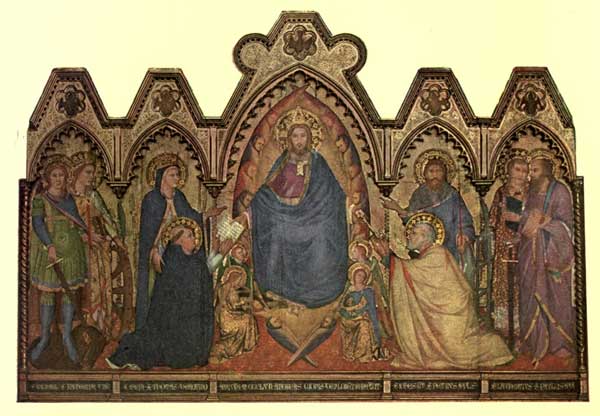
Besides Bernardo, Andrea had a brother called Jacopo, who was engaged in sculpture, but with little profit; and in making on occasion for this Jacopo designs in relief and in clay, there came to him the wish to make something in marble and to see whether he remembered the principles of that art, wherein, as it has been said, he had worked in Pisa; and so, putting himself with more study to the test, he made progress therein in such a fashion that afterwards he made use of it with honour, as it will be told. Afterwards he devoted himself with all his energy to the study of architecture, thinking that at some time or another he would have to make use of it. Nor did his thought deceive him, seeing that in the year 1355, the Commune of Florence having bought some citizens' houses near their Palace (in order to have more space and to make a larger square, and also in order to make a place where the citizens could take shelter in rainy or wintry days, and carry on under cover such business as was transacted on the Ringhiera when bad weather did not hinder), they caused many designs to be made for the building of a magnificent and very large Loggia for this purpose near the Palace, and at the same time for the Mint where the money is struck. Among these designs, made by the best masters in the city, that of Orcagna being universally approved and accepted as greater, more beautiful, and more magnificent than all the others, by decree of the Signori and of the Commune there was begun under his direction the great Loggia of the square, on the foundations made in the time of the Duke of Athens, and it was carried on with squared stone very well put together, with much diligence. And what was something new in those times, the arches of the vaulting were made no longer quarter-acute, as it had been the custom up to that time, but they were turned in half-circles in a new and laudable method, which gave much grace and beauty to this great fabric, which was brought to completion in a short time under the direction of Andrea. And if there had been taken thought to put it beside S. Romolo and to turn the arches with the back to the north, which they did not do, perchance, in order to have it conveniently near to the gate of the Palace, it would have been as useful a building for the whole city as it is beautiful in workmanship; whereas, by reason of the great wind, in winter no one can stand there. In this Loggia, between the arches on the front wall, in some ornamental work by his own hand, Orcagna made seven marble figures in half-relief representing the seven Theological and Cardinal Virtues, as accompaniment to the whole work, so beautiful that they made him known for no less able as sculptor than as painter and architect; not to mention that he was in all his actions as pleasant, courteous, and lovable a man as was ever any man of his condition. And because he would never abandon the study of any one of his professions for that of another, while the Loggia was building he made a panel in distemper with many large figures, with little figures in the predella, for that chapel of the Strozzi wherein he had formerly made some works in fresco with his brother Bernardo; on which panel, it appearing to him that it could bear better testimony to his profession than the works wrought in fresco could do, he wrote his name with these words: ANNO DOMINI MCCCLVII, ANDREAS CIONIS DE FLORENTIA ME PINXIT.
Besides Bernardo, Andrea had a brother named Jacopo, who worked as a sculptor, but with little success. Andrea sometimes made designs in relief and clay for Jacopo. This gave him the desire to work in marble and see whether he remembered the principles of sculpture. As already mentioned, he had practiced the art in Pisa. He applied himself more seriously and made such progress that he later used this skill with distinction, as we shall see. He then devoted all his energy to studying architecture, thinking he would need it sooner or later. He was right. In 1355, the Commune of Florence bought some citizens’ houses near their Palace. They wanted more room for a larger square. They also wanted a shelter where citizens could conduct business on rainy or wintry days. Such business was normally conducted on the Ringhiera when the weather permitted. The Commune therefore commissioned many designs for a magnificent, very large Loggia near the Palace. At the same time, they commissioned designs for the Mint where money is struck. The best masters in the city submitted designs. Orcagna’s was universally approved and accepted as grander, more beautiful, and more magnificent than all the others. By decree of the Signori and the Commune, work began under his direction on the great Loggia of the square. It was built on foundations laid in the time of the Duke of Athens. The work was carried out with great care, using squared stones fitted together very well. The arches of the vaulting were no longer pointed, as had been customary until then. Instead, they were made in semicircles, a new and commendable method for the time. This gave great grace and beauty to the building, which Andrea completed in a short time. The builders might have placed it beside S. Romolo, with the backs of the arches facing north. They did not, perhaps because they wanted it conveniently close to the Palace gate. Had they done so, it would have been as useful to the whole city as it is beautiful in workmanship. As it stands, the wind is so strong that no one can stay there in winter. On the front wall of the Loggia, between the arches, Orcagna made ornamental work with his own hands. It included seven marble figures in half-relief, representing the seven Theological and Cardinal Virtues. They complemented the whole work and were so beautiful that they established his reputation as a sculptor. He was known to be no less skilled in sculpture than in painting and architecture. He was also, in everything he did, as pleasant, courteous, and lovable as any man of his station. He would never abandon the study of one profession for another. So, while the Loggia was being built, he painted a panel in distemper with many large figures and smaller figures in the predella. It was for the Strozzi chapel, where he and his brother Bernardo had earlier painted some frescoes. Andrea thought the panel could bear better witness to his profession than the frescoes. He therefore signed it with these words: ANNO DOMINI MCCCLVII, ANDREAS CIONIS DE FLORENTIA ME PINXIT.
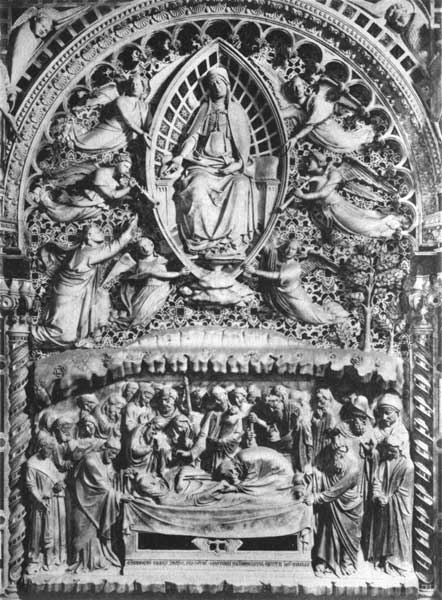
This work completed, he made some pictures, also on panel, which were sent to the Pope in Avignon and are still in the Cathedral Church of that city. A little while afterwards the men of the Company of Orsanmichele, having collected large sums of money from offerings and donations given to their Madonna by reason of the mortality of 1348, resolved to make round her a chapel, or rather shrine, not only very ornate and rich with marbles carved in every way and with other stones of price, but also with mosaic and ornaments of bronze, as much as could possibly be desired, in a manner that both in workmanship and in material it might surpass every other work of so great a size wrought up to that day. Wherefore, the charge of the whole being given to Orcagna as the most excellent of that age, he made so many designs that finally one of them pleased the authorities, as being better than all the others. The work, therefore, being allotted to him, they put complete reliance in his judgment and counsel; wherefore, giving the making of all the rest to diverse master-carvers brought from several districts, he applied himself with his brother to executing all the figures of the work, and, the whole being finished, he had them built in and put together very thoughtfully without mortar, with clamps of copper fixed with lead, to the end that the shining and polished marbles might not become discoloured; and in this he succeeded so well, with profit and honour from those who came after him, that to one who studies that work it appears, by reason of such union and methods of joining discovered by Orcagna, that the whole chapel has been shaped out of one single piece of marble. And although it is in a German manner, for that style it has so great grace and proportion that it holds the first place among the works of those times, above all because its composition of figures great and small, and of angels and prophets in half-relief round the Madonna, is very well executed. Marvellous, also, is the casting of the bands of bronze, diligently polished, which, encircling the whole work, enclose and bind it together in a manner that it is therefore as stout and strong as it is beautiful in all other respects. But how much he laboured in order to show the subtlety of his intellect in that gross age is seen in a large scene in half-relief on the back part of the said shrine, wherein, with figures of one braccio and a half each, he made the twelve Apostles gazing on high at the Madonna, while she, in a mandorla, surrounded by angels, is ascending to Heaven. In one of these Apostles he portrayed himself in marble, old, as he was, with the beard shaven, with the cap wound round the head, and with the face flat and round, as it is seen above in his portrait, drawn from that one. Besides this, he inscribed these words in the marble below: ANDREAS CIONIS, PICTOR FLORENTINUS, ORATORII ARCHIMAGISTER EXTITIT HUJUS, MCCCLIX.
After completing this work, he painted some more pictures on panels. These were sent to the Pope in Avignon and are still in the city's Cathedral Church. Shortly afterward, the Company of Orsanmichele decided to build a chapel, or rather a shrine, around their Madonna. The company had collected large sums from offerings and donations to the Madonna during the plague of 1348. The shrine was to be richly decorated with intricately carved marble, other precious stones, mosaics, and bronze ornaments. They wanted every conceivable luxury, so that both its workmanship and materials would surpass every other work of comparable size made until then. Orcagna was considered the finest artist of the age, so he was placed in charge of the whole project. He made many designs, and finally the authorities chose one as the best. They entrusted the work to him and placed complete confidence in his judgment and advice. He assigned the remaining work to master-carvers brought from various districts. He and his brother undertook to make all the figures. When the pieces were finished, Orcagna had them carefully assembled without mortar. Copper clamps, fixed in place with lead, held them together so that the bright, polished marble would not be discolored. He succeeded so well that later generations praised and honored him for it. To anyone who studies the work, Orcagna's methods of joining the pieces make the whole chapel appear carved from a single block of marble. Although the chapel is in the German style, it has such grace and proportion for that style that it ranks first among the works of its time. This is especially true because the arrangement of large and small figures, and of angels and prophets in half-relief around the Madonna, is very well executed. The casting of the carefully polished bronze bands is also marvelous. The bands encircle, enclose, and bind the whole work, making it as sturdy and strong as it is beautiful in every other respect. A large scene in half-relief on the back of the shrine shows how hard Orcagna worked to display the subtlety of his intellect in that crude age. Its figures are each one and a half braccia tall. The twelve Apostles gaze up at the Madonna as she ascends to Heaven in a mandorla, surrounded by angels. In one Apostle, Orcagna portrayed himself in marble as he was in old age, clean-shaven, with a cap wrapped around his head and a flat, round face. He can be seen that way in his portrait above, which was drawn from this likeness. Below it, he also inscribed these words in the marble: ANDREAS CIONIS, PICTOR FLORENTINUS, ORATORII ARCHIMAGISTER EXTITIT HUJUS, MCCCLIX.
It is known that the building of this Loggia and of the marble shrine, with all the master-work, cost ninety-six thousand florins of gold, which were very well spent, for the reason that it is, both in the architecture and in the sculptures and other ornaments, as beautiful as any other work whatsoever of those times, and is such that, by reason of the parts made therein by him, the name of Andrea Orcagna has been and will be ever living and great.
The Loggia and its marble shrine, including all the master-work, are known to have cost ninety-six thousand gold florins. The money was very well spent. The architecture, sculptures, and other ornaments are as beautiful as those of any other work of that time. Because of the parts Andrea Orcagna made, his name has been and will always remain alive and great.
He used to write in his pictures: FECE ANDREA DI CIONE, SCULTORE; and in his sculptures: FECE ANDREA DI CIONE, PITTORE; wishing that his painting should be known by his sculpture, and his sculpture by his painting. There are throughout all Florence many panels made by him, which are partly known by the name, such as a panel in S. Romeo, and partly by the manner, such as one that is in the Chapter-house of the Monastery of the Angeli. Some of them that he left unfinished were completed by Bernardo, his brother, who survived him, but not for many years. And because, as it has been said, Andrea delighted in making verses and various forms of poetry, when already old he wrote some sonnets to Burchiello, then a youth; and finally, being sixty years of age, he finished the course of his life in 1389, and was borne with honour from his dwelling, which was in the Via Vecchia de' Corazzai, to his tomb.
He used to write on his paintings: FECE ANDREA DI CIONE, SCULTORE. On his sculptures he wrote: FECE ANDREA DI CIONE, PITTORE. He wanted his painting to be known through his sculpture, and his sculpture through his painting. There are many panels by him throughout Florence. Some are known to be his by his name, such as a panel in S. Romeo. Others are known by their style, such as one in the Chapter-house of the Monastery of the Angeli. His brother Bernardo, who outlived him, completed some that Andrea had left unfinished. But Bernardo did not live many years longer. As mentioned, Andrea enjoyed writing verse and various kinds of poetry. So, when he was already old, he wrote some sonnets to Burchiello, who was then a young man. Finally, he died in 1389 at the age of sixty. He was carried with honor from his home in the Via Vecchia de' Corazzai to his tomb.
There were many men able in sculpture and in architecture at the same time as Orcagna, of whom the names are not known, but their works are to be seen, and these are worthy of nothing but praise and commendation. Among their works is not only the Monastery of the Certosa of Florence, made at the expense of the noble family of the Acciaiuoli, and in particular of Messer Niccola, Grand Seneschal of the King of Naples, but also the tomb of the same man, whereon he is portrayed in stone, and that of his father and one of his sisters, which has a covering of marble, whereon both were portrayed very well from nature in the year 1366. There, too, wrought by the hand of the same men, is the tomb of Messer Lorenzo, son of the said Niccola, who, dying at Naples, was brought to Florence and laid to rest there with the most honourable pomp of funeral obsequies. In like manner, in the tomb of Cardinal Santa Croce of the same family, which is in a choir then built anew in front of the high-altar, there is his portrait on a slab of marble, very well wrought in the year 1390.
Many men skilled in both sculpture and architecture lived at the same time as Orcagna. Their names are unknown, but their works can still be seen and deserve nothing but praise and commendation. These works include the Monastery of the Certosa of Florence, built at the expense of the noble Acciaiuoli family. Messer Niccola, Grand Seneschal of the King of Naples, was a particular contributor. Their works also include his tomb, on which he is portrayed in stone, and the tomb of his father and one of his sisters. The latter tomb has a marble covering on which both were portrayed very faithfully from life in 1366. The same men also made the tomb of Messer Lorenzo, Niccola’s son. After Lorenzo died in Naples, he was brought to Florence and laid to rest there with a most honorable funeral. Likewise, the tomb of Cardinal Santa Croce of the same family bears his portrait on a marble slab. The portrait was very well made in 1390. The tomb is in a choir that had then been newly built in front of the high altar.
Disciples of Andrea in painting were Bernardo Nello di Giovanni Falconi of Pisa, who wrought many panels in the Duomo of Pisa, and Tommaso di Marco of Florence, who, besides many other works, made in the year 1392 a panel that is in S. Antonio in Pisa, set up against the tramezzo of the church.
Andrea’s students in painting included Bernardo Nello di Giovanni Falconi of Pisa. Bernardo painted many panels in the Duomo of Pisa. Another student was Tommaso di Marco of Florence. Among his many works was a panel he made in 1392 for S. Antonio in Pisa. It stands against the church’s tramezzo.
See the note on p. 57.
After the death of Andrea, his brother Jacopo, occupied himself in sculpture, as it has been said, and in architecture, was employed in the year 1328 on the foundation and building of the Tower and Gate of S. Piero Gattolini, and it is said that he made the four marzocchi of stone which were placed on the four corners of the Palazzo Principale of Florence, all overlaid with gold. This work was much censured, by reason of there being laid on those places, without necessity, a greater weight than peradventure was expedient; and many would have been pleased to have the marzocchi made rather of plates of copper, hollow within, and then, after being gilded in the fire, set up in the same place, because they would have been much less heavy and more durable. It is said, too, that the same man made the horse, gilded and in full relief, that is in S. Maria del Fiore, over the door that leads to the Company of S. Zanobi, which horse is believed to be there in memory of Piero Farnese, Captain of the Florentines; however, knowing nothing more about this, I could not vouch for it. About the same time Mariotto, nephew of Andrea, made in fresco the Paradise of S. Michele Bisdomini, in the Via de' Servi in Florence, and the panel with an Annunciation that is on the altar; and for Monna Cecilia de' Boscoli he made another panel with many figures, placed near the door of the same church.
After Andrea’s death, his brother Jacopo worked in sculpture, as already mentioned, and in architecture. In 1328, he was employed to lay the foundations and build the Tower and Gate of S. Piero Gattolini. He is also said to have made the four stone marzocchi placed at the four corners of the Palazzo Principale of Florence. They were all covered with gold. The work was much criticized because it added unnecessary weight to those places, perhaps more than was advisable. Many people would have preferred the marzocchi to be made of copper plates, hollow inside, then fire-gilded and installed in the same place. They would have been much lighter and more durable. Jacopo is also said to have made the gilded horse in full relief in S. Maria del Fiore. It stands over the door leading to the Company of S. Zanobi. The horse is believed to commemorate Piero Farnese, Captain of the Florentines. However, I know nothing more about it, so I cannot vouch for this. Around the same time, Mariotto, Andrea’s nephew, painted the Paradise in fresco at S. Michele Bisdomini, in the Via de’ Servi in Florence. He also painted the panel of the Annunciation on the altar. For Monna Cecilia de’ Boscoli, he made another panel with many figures, placed near the door of the same church.
Stone lions, symbols of the city of Florence.
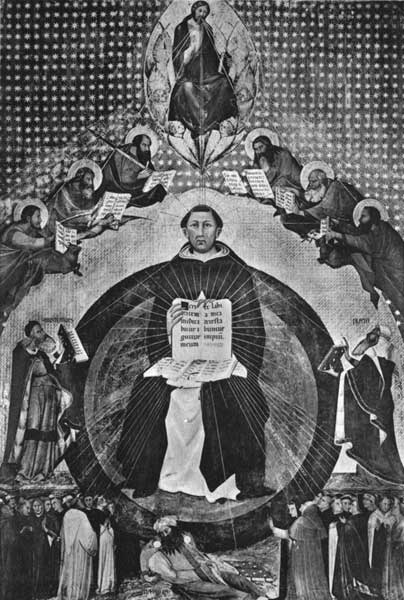
But among all the disciples of Orcagna none was more excellent than Francesco Traini, who made a panel with a ground of gold for a nobleman of the house of Coscia, who is buried at Pisa in the Chapel of S. Domenico, in the Church of S. Caterina; which panel contained a S. Dominic standing two braccia and a half high, with six scenes of his life on either side of him, animated and vivacious and well coloured. And in the same church, in the Chapel of S. Tommaso d'Aquino, he made a panel in distemper with fanciful invention, which is much praised, placing therein the said S. Thomas seated, portrayed from the life: I say from the life, because the friars of that place had an image of him brought from the Abbey of Fossa Nuova, where he died in the year 1323. Below, round S. Thomas, who is placed seated in the air with some books in his hand, which are illuminating the Christian people with their rays and lustre, there are kneeling a great number of doctors and clergy of every sort, Bishops, Cardinals, and Popes, among whom is the portrait of Pope Urban VI. Under the feet of S. Thomas are standing Sabellius, Arius, Averroes, and other heretics and philosophers, with their books all torn; and the said figure of S. Thomas is placed between Plato, who is showing him the Timæus, and Aristotle, who is showing him the Ethics. Above, a Jesus Christ, in like manner in the air between the four Evangelists, is blessing S. Thomas, and appears to be in the act of sending down upon him the Holy Spirit, and filling him with it and with His grace. This work, when finished, acquired very great fame and praise for Francesco Traini, for in making it he surpassed his master Andrea by a great measure in colouring, in harmony, and in invention. This Andrea was very diligent in his drawings, as it may be seen in our book.
But of all Orcagna’s disciples, none was more excellent than Francesco Traini. He painted a panel on a gold ground for a nobleman of the house of Coscia. The nobleman is buried in the Chapel of S. Domenico in the Church of S. Caterina at Pisa. The panel showed S. Dominic standing, two and a half braccia high, with six scenes from his life on either side. The scenes were lively, full of animation, and well colored. In the same church, Traini painted a panel in tempera for the Chapel of S. Tommaso d’Aquino. The panel is much praised for its imaginative design. In it he placed S. Thomas seated, portraying him from life. I say from life because the friars there had an image of him brought from the Abbey of Fossa Nuova. S. Thomas died there in 1323. He sits in the air, holding books whose rays and brilliance illuminate the Christian people. Below him kneel a great number of learned men and clergy of every kind, including Bishops, Cardinals, and Popes. Among them is a portrait of Pope Urban VI. Under S. Thomas’s feet stand Sabellius, Arius, Averroes, and other heretics and philosophers, with their books torn to pieces. S. Thomas sits between Plato, who shows him the Timæus, and Aristotle, who shows him the Ethics. Above them, Jesus Christ is likewise in the air between the four Evangelists, blessing S. Thomas. He appears to be sending down the Holy Spirit upon S. Thomas, filling him with the Spirit and with his grace. When finished, this work brought Francesco Traini great fame and praise. In it he far surpassed his master Andrea in coloring, harmony, and invention. Andrea was very diligent in his drawings, as can be seen in our book.