Chapter 8
Confusing Lessons
At the end of what seemed a tedious while, I had managed to pack my head full of islands, towns, bars, 'points,' and bends; and a curiously inanimate mass of lumber it was, too. However, inasmuch as I could shut my eyes and reel off a good long string of these names without leaving out more than ten miles of river in every fifty, I began to feel that I could take a boat down to New Orleans if I could make her skip those little gaps. But of course my complacency could hardly get start enough to lift my nose a trifle into the air, before Mr. Bixby would think of something to fetch it down again. One day he turned on me suddenly with this settler—
After what seemed like a tedious stretch of time, I had managed to fill my head with islands, towns, sandbars, 'points,' and bends. It was a strangely lifeless pile of lumber, too. Still, I could close my eyes and reel off a long string of these names. I left out no more than ten miles of river in every fifty. So I began to feel that I could take a boat down to New Orleans, if I could make her skip those little gaps. But of course, I could hardly start to lift my nose in the air before Mr. Bixby thought of something to bring it down again. One day he suddenly turned to me with this question that settled the matter:
'What is the shape of Walnut Bend?'
'What shape is Walnut Bend?'
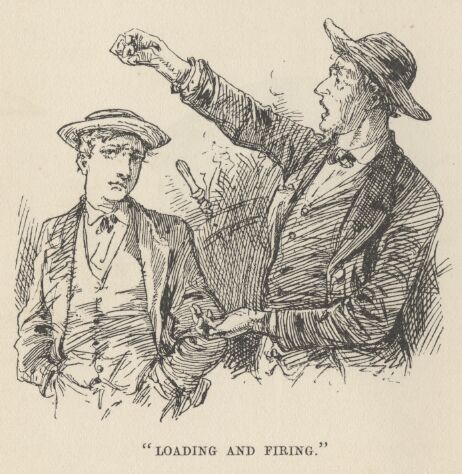
He might as well have asked me my grandmother's opinion of protoplasm. I reflected respectfully, and then said I didn't know it had any particular shape. My gunpowdery chief went off with a bang, of course, and then went on loading and firing until he was out of adjectives.
He might as well have asked me what my grandmother thought of protoplasm. I thought it over respectfully, then said I didn't know it had any particular shape. My explosive boss went off with a bang, of course. He kept loading and firing until he ran out of adjectives.
I had learned long ago that he only carried just so many rounds of ammunition, and was sure to subside into a very placable and even remorseful old smooth-bore as soon as they were all gone. That word 'old' is merely affectionate; he was not more than thirty-four. I waited. By and by he said—
I had learned long ago that he carried only so many rounds of ammunition. As soon as they were all gone, he was sure to become a very good-natured and even remorseful old smoothbore again. I use the word 'old' only with affection. He was no more than thirty-four. I waited. After a while, he said:
'My boy, you've got to know the shape of the river perfectly. It is all there is left to steer by on a very dark night. Everything else is blotted out and gone. But mind you, it hasn't the same shape in the night that it has in the day-time.'
'My boy, you have to know the shape of the river perfectly. On a very dark night, it is all you have left to steer by. Everything else is blotted out and gone. But remember, the river doesn't have the same shape at night as it does during the day.'
'How on earth am I ever going to learn it, then?'
'How on earth am I ever going to learn it, then?'
'How do you follow a hall at home in the dark. Because you know the shape of it. You can't see it.'
'How do you find your way down a hallway at home in the dark? Because you know its shape. You can't see it.'
'Do you mean to say that I've got to know all the million trifling variations of shape in the banks of this interminable river as well as I know the shape of the front hall at home?'
'Do you mean I have to know all the million tiny changes in the shape of this endless river's banks? Do I have to know them as well as I know the shape of the front hall at home?'
'On my honor, you've got to know them better than any man ever did know the shapes of the halls in his own house.'
'I swear, you've got to know them better than any man has ever known the shapes of his own hallways.'
'I wish I was dead!'
'I wish I was dead!'
'Now I don't want to discourage you, but—'
'Now I don't want to discourage you, but...'
'Well, pile it on me; I might as well have it now as another time.'
'Well, pile it on me. I might as well have it now as later.'
'You see, this has got to be learned; there isn't any getting around it. A clear starlight night throws such heavy shadows that if you didn't know the shape of a shore perfectly you would claw away from every bunch of timber, because you would take the black shadow of it for a solid cape; and you see you would be getting scared to death every fifteen minutes by the watch. You would be fifty yards from shore all the time when you ought to be within fifty feet of it. You can't see a snag in one of those shadows, but you know exactly where it is, and the shape of the river tells you when you are coming to it. Then there's your pitch-dark night; the river is a very different shape on a pitch-dark night from what it is on a starlight night. All shores seem to be straight lines, then, and mighty dim ones, too; and you'd run them for straight lines only you know better. You boldly drive your boat right into what seems to be a solid, straight wall (you knowing very well that in reality there is a curve there), and that wall falls back and makes way for you. Then there's your gray mist. You take a night when there's one of these grisly, drizzly, gray mists, and then there isn't any particular shape to a shore. A gray mist would tangle the head of the oldest man that ever lived. Well, then, different kinds of moonlight change the shape of the river in different ways. You see—'
'You see, you have to learn this. There's no way around it. On a clear, starlit night, the shadows are so deep that you have to know the shoreline perfectly. Otherwise, you'd steer away from every stand of trees, because you'd mistake its black shadow for a solid point of land. You'd be scared to death every fifteen minutes, by the clock. You'd stay fifty yards from shore when you ought to be within fifty feet of it. You can't see a snag in one of those shadows, but you know exactly where it is. The shape of the river tells you when you're coming to it. Then there's a pitch-dark night. The river looks very different on a pitch-dark night than it does on a starlit night. All the shorelines look like straight lines then, and very dim ones, too. You'd steer along them as if they were straight, except that you know better. You boldly drive your boat right toward what looks like a solid, straight wall. You know perfectly well there's really a curve there. And the wall falls back and makes way for you. Then there's gray mist. On a night with one of those grim, drizzly, gray mists, the shore has no particular shape at all. A gray mist would confuse the oldest man who ever lived. And then, different kinds of moonlight change the shape of the river in different ways. You see...'
'Oh, don't say any more, please! Have I got to learn the shape of the river according to all these five hundred thousand different ways? If I tried to carry all that cargo in my head it would make me stoop-shouldered.'
'Oh, please don't say any more! Do I have to learn the shape of the river in all these five hundred thousand different ways? If I tried to carry all that cargo in my head, it would make me hunch my shoulders.'
'No! you only learn the shape of the river, and you learn it with such absolute certainty that you can always steer by the shape that's in your head, and never mind the one that's before your eyes.'
'No! You only learn the shape of the river, and you learn it with absolute certainty. So you can always steer by the shape in your head and ignore the one before your eyes.'
'Very well, I'll try it; but after I have learned it can I depend on it. Will it keep the same form and not go fooling around?'
'All right, I'll try it. But once I've learned it, can I count on it? Will it stay the same shape and not go fooling around?'
Before Mr. Bixby could answer, Mr. W—— came in to take the watch, and he said—
Before Mr. Bixby could answer, Mr. W-- came in to take the watch. He said:
'Bixby, you'll have to look out for President's Island and all that country clear away up above the Old Hen and Chickens. The banks are caving and the shape of the shores changing like everything. Why, you wouldn't know the point above 40. You can go up inside the old sycamore-snag, now.{footnote [1. It may not be necessary, but still it can do no harm to explain that 'inside' means between the snag and the shore.—M.T.]}
'Bixby, you'll have to watch out for President's Island and all the river country above it, clear past the Old Hen and Chickens. The banks are caving in, and the shores are changing shape like crazy. Why, you wouldn't recognize the point above 40. You can go up inside the old sycamore-snag now.{footnote [1. This explanation may not be necessary, but it can't hurt. 'Inside' means between the snag and the shore. M.T.]}
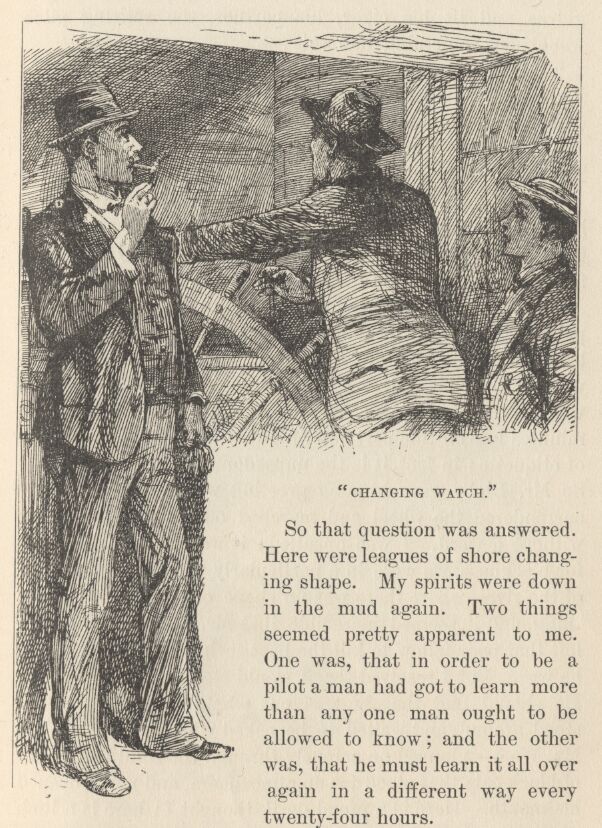
So that question was answered. Here were leagues of shore changing shape. My spirits were down in the mud again. Two things seemed pretty apparent to me. One was, that in order to be a pilot a man had got to learn more than any one man ought to be allowed to know; and the other was, that he must learn it all over again in a different way every twenty-four hours.
So that question was answered. Here were miles of shoreline changing shape. My spirits sank into the mud again. Two things seemed pretty clear to me. First, a pilot had to learn more than any one person should be allowed to know. Second, he had to learn it all over again, in a different way, every twenty-four hours.
That night we had the watch until twelve. Now it was an ancient river custom for the two pilots to chat a bit when the watch changed. While the relieving pilot put on his gloves and lit his cigar, his partner, the retiring pilot, would say something like this—
That night, we were on watch until midnight. It was a long-standing river custom for the two pilots to chat when the watch changed. While the incoming pilot put on his gloves and lit his cigar, the outgoing pilot would say something like this:
'I judge the upper bar is making down a little at Hale's Point; had quarter twain with the lower lead and mark twain {footnote [Two fathoms. 'Quarter twain' is two-and-a-quarter fathoms, thirteen-and-a-half feet. 'Mark three' is three fathoms.]} with the other.'
'I think the upper sandbar is extending downstream a little at Hale's Point. We measured quarter twain with the lower lead and mark twain {footnote [Two fathoms. 'Quarter twain' is two and a quarter fathoms, or thirteen and a half feet. 'Mark three' is three fathoms.]} with the other.'
'Yes, I thought it was making down a little, last trip. Meet any boats?'
'Yes, I thought it was falling a little on the last trip. Did you meet any boats?'
'Met one abreast the head of 21, but she was away over hugging the bar, and I couldn't make her out entirely. I took her for the “Sunny South”—hadn't any skylights forward of the chimneys.'
'Met a boat opposite the head of 21, but she was far over, close to the sandbar. I couldn't make her out completely. I thought she was the “Sunny South”. She had no skylights in front of the chimneys.'
And so on. And as the relieving pilot took the wheel his partner {footnote ['Partner' is a technical term for 'the other pilot'.]} would mention that we were in such-and-such a bend, and say we were abreast of such-and-such a man's wood-yard or plantation. This was courtesy; I supposed it was necessity. But Mr. W—— came on watch full twelve minutes late on this particular night,—a tremendous breach of etiquette; in fact, it is the unpardonable sin among pilots. So Mr. Bixby gave him no greeting whatever, but simply surrendered the wheel and marched out of the pilot-house without a word. I was appalled; it was a villainous night for blackness, we were in a particularly wide and blind part of the river, where there was no shape or substance to anything, and it seemed incredible that Mr. Bixby should have left that poor fellow to kill the boat trying to find out where he was. But I resolved that I would stand by him any way. He should find that he was not wholly friendless. So I stood around, and waited to be asked where we were. But Mr. W—— plunged on serenely through the solid firmament of black cats that stood for an atmosphere, and never opened his mouth. Here is a proud devil, thought I; here is a limb of Satan that would rather send us all to destruction than put himself under obligations to me, because I am not yet one of the salt of the earth and privileged to snub captains and lord it over everything dead and alive in a steamboat. I presently climbed up on the bench; I did not think it was safe to go to sleep while this lunatic was on watch.
And so on. When the relieving pilot took the wheel, his partner {footnote ['Partner' is a technical term for 'the other pilot'.]} would tell him which bend we were in. He would also say whose wood-yard or plantation we were passing. This was a courtesy, but I thought it was necessary. On this particular night, Mr. W—— came on watch a full twelve minutes late. This was a tremendous breach of etiquette. In fact, among pilots, it is the unforgivable sin. So Mr. Bixby gave him no greeting at all. He simply handed over the wheel and marched out of the pilot-house without a word. I was appalled. It was a wickedly dark night, and we were in a particularly wide, featureless part of the river. Nothing had any shape or substance. It seemed incredible that Mr. Bixby had left that poor fellow to wreck the boat while trying to find his position. But I decided to stand by him anyway. He would see that he was not entirely friendless. So I stood around and waited for him to ask where we were. But Mr. W—— sailed calmly on through the solid sky of black cats that passed for air. He never opened his mouth. What a proud devil, I thought. This limb of Satan would rather send us all to destruction than owe me a favor. That was because I was not yet one of the salt of the earth. I had not yet earned the privilege of snubbing captains and lording it over everything dead and alive on a steamboat. Soon I climbed onto the bench. I did not think it was safe to go to sleep while this lunatic was on watch.
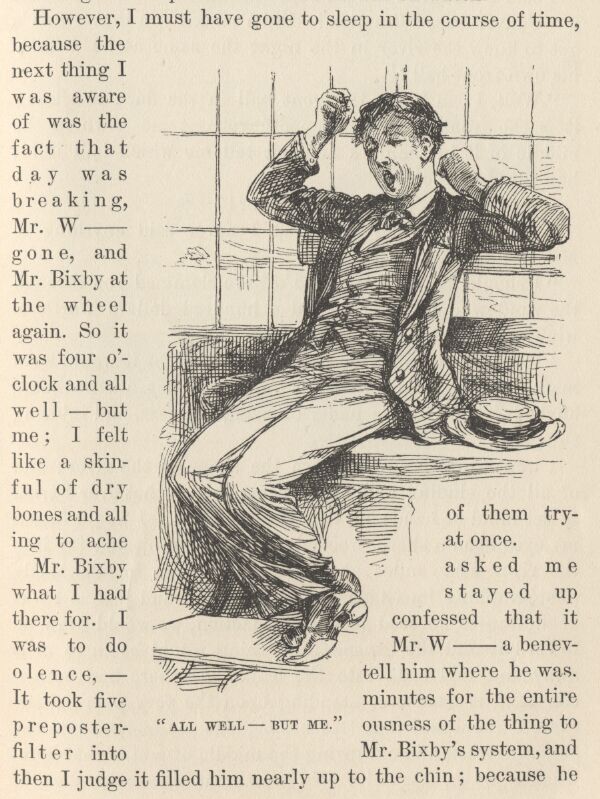
However, I must have gone to sleep in the course of time, because the next thing I was aware of was the fact that day was breaking, Mr. W—— gone, and Mr. Bixby at the wheel again. So it was four o'clock and all well—but me; I felt like a skinful of dry bones and all of them trying to ache at once.
However, I must have fallen asleep eventually. The next thing I knew, day was breaking, Mr. W was gone, and Mr. Bixby was back at the wheel. So it was four o'clock and all was well, except for me. I felt like a sack of dry bones, all trying to ache at once.
Mr. Bixby asked me what I had stayed up there for. I confessed that it was to do Mr. W—— a benevolence,—tell him where he was. It took five minutes for the entire preposterousness of the thing to filter into Mr. Bixby's system, and then I judge it filled him nearly up to the chin; because he paid me a compliment—and not much of a one either. He said,
Mr. Bixby asked me why I had stayed up there. I admitted that I wanted to do Mr. W a favor by telling him where he was. It took five minutes for Mr. Bixby to grasp how utterly ridiculous that was. Then I figure the absurdity nearly filled him up to his chin, because he paid me a compliment. It wasn't much of a compliment, either. He said,
'Well, taking you by-and-large, you do seem to be more different kinds of an ass than any creature I ever saw before. What did you suppose he wanted to know for?'
'Well, all things considered, you seem to be more kinds of an ass than anyone I have ever seen. Why did you think he wanted to know?'
I said I thought it might be a convenience to him.
I said I thought it might be useful to him.
'Convenience D-nation! Didn't I tell you that a man's got to know the river in the night the same as he'd know his own front hall?'
'Convenience, damn it! Didn't I tell you a man has to know the river at night as well as his own front hall?'
'Well, I can follow the front hall in the dark if I know it is the front hall; but suppose you set me down in the middle of it in the dark and not tell me which hall it is; how am I to know?'
'Well, I can find my way down the front hall in the dark if I know it is the front hall. But suppose you put me in the middle of the hall in the dark and don't tell me which hall it is. How am I supposed to know?'
'Well you've got to, on the river!'
'Well, you've got to on the river!'
'All right. Then I'm glad I never said anything to Mr. W—— '
'All right. Then I'm glad I never said anything to Mr. W--'
'I should say so. Why, he'd have slammed you through the window and utterly ruined a hundred dollars' worth of window-sash and stuff.'
'I should say so. Why, he'd have slammed you through the window and completely ruined a hundred dollars' worth of window frames and such.'
I was glad this damage had been saved, for it would have made me unpopular with the owners. They always hated anybody who had the name of being careless, and injuring things.
I was glad the damage had been avoided, because it would have made me unpopular with the owners. They always hated anyone with a reputation for being careless and damaging things.
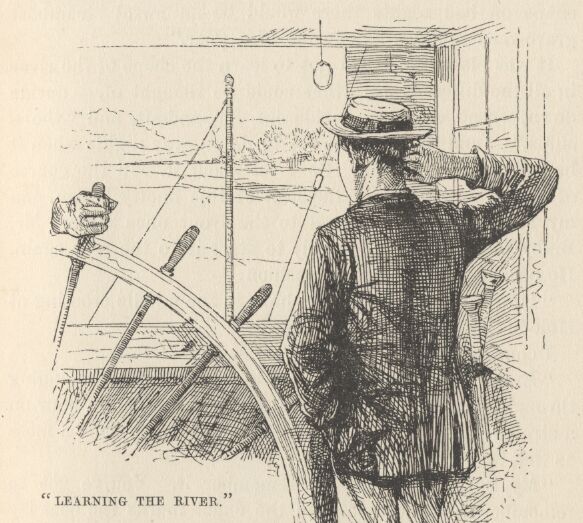
I went to work now to learn the shape of the river; and of all the eluding and ungraspable objects that ever I tried to get mind or hands on, that was the chief. I would fasten my eyes upon a sharp, wooded point that projected far into the river some miles ahead of me, and go to laboriously photographing its shape upon my brain; and just as I was beginning to succeed to my satisfaction, we would draw up toward it and the exasperating thing would begin to melt away and fold back into the bank! If there had been a conspicuous dead tree standing upon the very point of the cape, I would find that tree inconspicuously merged into the general forest, and occupying the middle of a straight shore, when I got abreast of it! No prominent hill would stick to its shape long enough for me to make up my mind what its form really was, but it was as dissolving and changeful as if it had been a mountain of butter in the hottest corner of the tropics. Nothing ever had the same shape when I was coming downstream that it had borne when I went up. I mentioned these little difficulties to Mr. Bixby. He said—
I now set to work learning the shape of the river. Of all the elusive, impossible things I had ever tried to grasp, that was the worst. I would fix my eyes on a sharp, wooded point jutting far into the river, some miles ahead. Then I would labor to photograph its shape in my mind. Just as I was beginning to feel satisfied, we would draw near it. The exasperating thing would begin to melt away and fold back into the bank! If a conspicuous dead tree stood at the very tip of the point, I would find it lost among the other trees when I came alongside. It would be standing in the middle of a straight shore! No prominent hill would hold its shape long enough for me to decide what it really looked like. Instead, it kept shifting and dissolving, as if it were a mountain of butter in the hottest corner of the tropics. Nothing ever looked the same coming downstream as it had going upstream. I mentioned these little difficulties to Mr. Bixby. He said:
'That's the very main virtue of the thing. If the shapes didn't change every three seconds they wouldn't be of any use. Take this place where we are now, for instance. As long as that hill over yonder is only one hill, I can boom right along the way I'm going; but the moment it splits at the top and forms a V, I know I've got to scratch to starboard in a hurry, or I'll bang this boat's brains out against a rock; and then the moment one of the prongs of the V swings behind the other, I've got to waltz to larboard again, or I'll have a misunderstanding with a snag that would snatch the keelson out of this steamboat as neatly as if it were a sliver in your hand. If that hill didn't change its shape on bad nights there would be an awful steamboat grave-yard around here inside of a year.'
'That's the best thing about it. If the shapes didn't change every three seconds, they wouldn't be any use. Take this spot, for example. As long as that hill over there looks like one hill, I can keep steaming right along. But the moment its top splits into a V, I know I have to turn right in a hurry. Otherwise, I'll smash this boat's brains out against a rock. Then, the moment one side of the V swings behind the other, I have to swing left again. Otherwise, I'll have a run-in with a snag that would rip the keelson out of this steamboat. It would do it as neatly as if it were pulling a splinter from your hand. If that hill didn't change shape on bad nights, there would be a terrible steamboat graveyard around here within a year.'
It was plain that I had got to learn the shape of the river in all the different ways that could be thought of,—upside down, wrong end first, inside out, fore-and-aft, and 'thortships,'—and then know what to do on gray nights when it hadn't any shape at all. So I set about it. In the course of time I began to get the best of this knotty lesson, and my self-complacency moved to the front once more. Mr. Bixby was all fixed, and ready to start it to the rear again. He opened on me after this fashion—
It was clear that I had to learn the river’s shape every way imaginable: upside down, backward, inside out, lengthwise, and crosswise. Then I had to know what to do on gray nights when the river had no shape at all. So I set about learning it. In time, I began to master this difficult lesson, and my self-satisfaction came back. Mr. Bixby was ready to put it back in its place. He began like this:
'How much water did we have in the middle crossing at Hole-in-the-Wall, trip before last?'
'How deep was the water at the middle crossing at Hole-in-the-Wall, two trips ago?'
I considered this an outrage. I said—
I thought this was outrageous. I said:
'Every trip, down and up, the leadsmen are singing through that tangled place for three-quarters of an hour on a stretch. How do you reckon I can remember such a mess as that?'
'On every trip, downriver and upriver, the leadsmen call out depths through that tangled stretch for 45 minutes straight. How do you expect me to remember a mess like that?'
'My boy, you've got to remember it. You've got to remember the exact spot and the exact marks the boat lay in when we had the shoalest water, in everyone of the five hundred shoal places between St. Louis and New Orleans; and you mustn't get the shoal soundings and marks of one trip mixed up with the shoal soundings and marks of another, either, for they're not often twice alike. You must keep them separate.'
'My boy, you've got to remember it. At every one of the five hundred shallow spots between St. Louis and New Orleans, remember where the boat was when the water was shallowest. Remember the exact position and the landmarks alongside it. And don't mix up the depth readings and landmarks from one trip with those from another. They're rarely the same twice. You must keep them separate.'
When I came to myself again, I said—
When I came to my senses again, I said:
'When I get so that I can do that, I'll be able to raise the dead, and then I won't have to pilot a steamboat to make a living. I want to retire from this business. I want a slush-bucket and a brush; I'm only fit for a roustabout. I haven't got brains enough to be a pilot; and if I had I wouldn't have strength enough to carry them around, unless I went on crutches.'
'When I can do that, I'll be able to raise the dead. Then I won't have to pilot a steamboat to make a living. I want to retire from this business. I want a slush bucket and a brush. I'm only fit to be a roustabout. I don't have enough brains to be a pilot. And if I did, I wouldn't be strong enough to carry them around unless I used crutches.'
'Now drop that! When I say I'll learn {footnote ['Teach' is not in the river vocabulary.]} a man the river, I mean it. And you can depend on it, I'll learn him or kill him.'
'Now stop that! When I say I'll learn {footnote ['Teach' is not in the river vocabulary.]} a man the river, I mean it. You can count on it. I'll learn him or kill him.'