Chapter 7
A Bold Act
WHEN I returned to the pilot-house St. Louis was gone and I was lost. Here was a piece of river which was all down in my book, but I could make neither head nor tail of it: you understand, it was turned around. I had seen it when coming up-stream, but I had never faced about to see how it looked when it was behind me. My heart broke again, for it was plain that I had got to learn this troublesome river both ways.
When I returned to the pilot-house, St. Louis was gone, and I was lost. This stretch of river was all in my book, but I couldn't make sense of it. You see, it was turned around. I had seen it while traveling upstream, but I had never turned around to see how it looked behind me. My heart broke again. It was clear that I had to learn this troublesome river both ways.
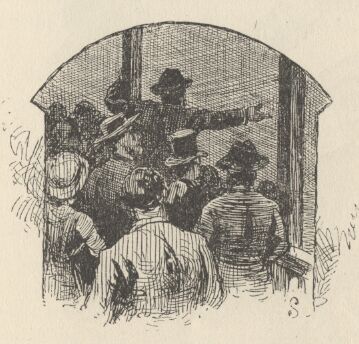
The pilot-house was full of pilots, going down to 'look at the river.' What is called the 'upper river' (the two hundred miles between St. Louis and Cairo, where the Ohio comes in) was low; and the Mississippi changes its channel so constantly that the pilots used to always find it necessary to run down to Cairo to take a fresh look, when their boats were to lie in port a week; that is, when the water was at a low stage. A deal of this 'looking at the river' was done by poor fellows who seldom had a berth, and whose only hope of getting one lay in their being always freshly posted and therefore ready to drop into the shoes of some reputable pilot, for a single trip, on account of such pilot's sudden illness, or some other necessity. And a good many of them constantly ran up and down inspecting the river, not because they ever really hoped to get a berth, but because (they being guests of the boat) it was cheaper to 'look at the river' than stay ashore and pay board. In time these fellows grew dainty in their tastes, and only infested boats that had an established reputation for setting good tables. All visiting pilots were useful, for they were always ready and willing, winter or summer, night or day, to go out in the yawl and help buoy the channel or assist the boat's pilots in any way they could. They were likewise welcome because all pilots are tireless talkers, when gathered together, and as they talk only about the river they are always understood and are always interesting. Your true pilot cares nothing about anything on earth but the river, and his pride in his occupation surpasses the pride of kings.
The pilot-house was full of pilots heading down to 'look at the river.' The 'upper river' was low. That was the two hundred miles between St. Louis and Cairo, where the Ohio joins the Mississippi. The Mississippi changes its channel constantly. So when the water was low and their boats were in port for a week, pilots always found it necessary to run down to Cairo for a fresh look. A great deal of this 'looking at the river' was done by poor fellows who seldom had a berth. Their only hope of getting one was to keep their knowledge fresh. Then they would be ready to fill in for a reputable pilot on a single trip, if he suddenly fell ill or some other need arose. And many of them kept traveling up and down the river to inspect it, though they never really hoped to get a berth. As guests of the boat, they found it cheaper to 'look at the river' than to stay ashore and pay for board. In time, these fellows became particular about their food. They infested only boats known for setting good tables. All visiting pilots were useful. Winter or summer, night or day, they were always ready and willing to go out in the yawl and help mark the channel with buoys. They would also help the boat's pilots in any other way they could. They were welcome, too, because all pilots are tireless talkers when they get together. Since they talk only about the river, everyone understands them, and they are always interesting. A true pilot cares about nothing on earth but the river, and his pride in his occupation surpasses the pride of kings.
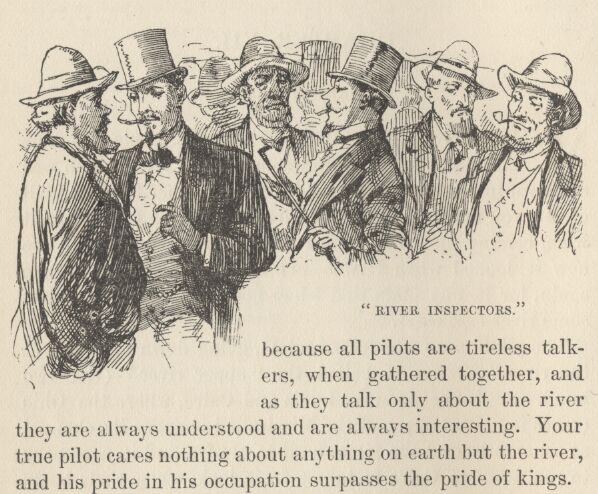
We had a fine company of these river-inspectors along, this trip. There were eight or ten; and there was abundance of room for them in our great pilot-house. Two or three of them wore polished silk hats, elaborate shirt-fronts, diamond breast-pins, kid gloves, and patent-leather boots. They were choice in their English, and bore themselves with a dignity proper to men of solid means and prodigious reputation as pilots. The others were more or less loosely clad, and wore upon their heads tall felt cones that were suggestive of the days of the Commonwealth.
We had a fine group of these river inspectors along on this trip. There were eight or ten of them, and our large pilothouse had plenty of room for them. Two or three wore polished silk hats, elaborate shirtfronts, diamond breastpins, kid gloves, and patent leather boots. They spoke in carefully chosen words and carried themselves with the dignity of wealthy men who were highly respected as pilots. The others were dressed more or less casually. On their heads they wore tall, cone-shaped felt hats that brought to mind the days of the Commonwealth.
I was a cipher in this august company, and felt subdued, not to say torpid. I was not even of sufficient consequence to assist at the wheel when it was necessary to put the tiller hard down in a hurry; the guest that stood nearest did that when occasion required—and this was pretty much all the time, because of the crookedness of the channel and the scant water. I stood in a corner; and the talk I listened to took the hope all out of me. One visitor said to another—
I was a nobody in this distinguished company, and I felt subdued, almost numb. I was not even important enough to help at the wheel when the tiller had to be put hard down in a hurry. The nearest guest did that whenever necessary. And it was necessary almost all the time, because the channel was crooked and the water was shallow. I stood in a corner, and the talk I heard took all the hope out of me. One visitor said to another:
'Jim, how did you run Plum Point, coming up?'
'Jim, how did you navigate past Plum Point on your way upriver?'
'It was in the night, there, and I ran it the way one of the boys on the “Diana” told me; started out about fifty yards above the wood pile on the false point, and held on the cabin under Plum Point till I raised the reef—quarter less twain—then straightened up for the middle bar till I got well abreast the old one-limbed cotton-wood in the bend, then got my stern on the cotton-wood and head on the low place above the point, and came through a-booming—nine and a half.'
‘It was night there, and I ran it the way one of the boys on the “Diana” told me to. I started about fifty yards above the woodpile on the false point. I kept heading for the cabin below Plum Point until I could see the reef. Quarter less twain. Then I headed straight for the middle bar until I was well abreast of the old one-limbed cottonwood in the bend. Then I lined up my stern with the cottonwood and my bow with the low place above the point. I came through at full speed. Nine and a half.’
'Pretty square crossing, an't it?'
'Pretty square crossing, isn't it?'
'Yes, but the upper bar 's working down fast.'
'Yes, but the upper sandbar is shifting downstream fast.'
Another pilot spoke up and said—
Another pilot spoke up and said:
'I had better water than that, and ran it lower down; started out from the false point—mark twain—raised the second reef abreast the big snag in the bend, and had quarter less twain.'
'I found deeper water than that and took the boat farther downstream. I started from the false point at mark twain, two fathoms deep. The second reef came into view when I was abreast of the big snag in the bend. The depth there was quarter less twain, a quarter fathom short of two.'
One of the gorgeous ones remarked—
One of the gorgeous ones said:
'I don't want to find fault with your leadsmen, but that's a good deal of water for Plum Point, it seems to me.'
'I don't want to criticize your leadsmen, but that seems like a lot of water for Plum Point.'
There was an approving nod all around as this quiet snub dropped on the boaster and 'settled' him. And so they went on talk-talk-talking. Meantime, the thing that was running in my mind was, 'Now if my ears hear aright, I have not only to get the names of all the towns and islands and bends, and so on, by heart, but I must even get up a warm personal acquaintanceship with every old snag and one-limbed cotton-wood and obscure wood pile that ornaments the banks of this river for twelve hundred miles; and more than that, I must actually know where these things are in the dark, unless these guests are gifted with eyes that can pierce through two miles of solid blackness; I wish the piloting business was in Jericho and I had never thought of it.'
Everyone nodded in approval as the quiet put-down silenced the boaster. And so they went on talk-talk-talking. Meanwhile, I kept thinking, 'Now, if I heard right, I have to memorize the names of all the towns, islands, bends, and so on. But I also have to get personally acquainted with every old snag, one-limbed cottonwood, and obscure woodpile that decorates the banks of this river for twelve hundred miles. And more than that, I have to know where these things are in the dark. That is, unless these fellows have eyes that can see through two miles of solid blackness. I wish the piloting business were in Jericho and I had never thought of it.'
At dusk Mr. Bixby tapped the big bell three times (the signal to land), and the captain emerged from his drawing-room in the forward end of the texas, and looked up inquiringly. Mr. Bixby said—
At dusk, Mr. Bixby tapped the big bell three times, the signal to land. The captain came out of his sitting room at the front of the texas and looked up questioningly. Mr. Bixby said:
'We will lay up here all night, captain.'
'We will stop here for the whole night, captain.'
'Very well, sir.'
'All right, sir.'
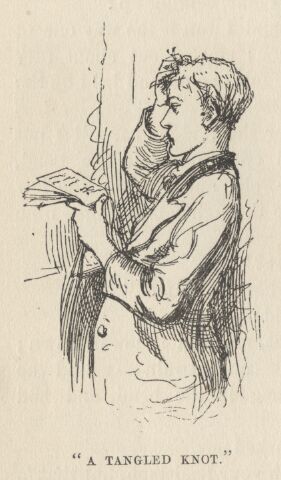
That was all. The boat came to shore and was tied up for the night. It seemed to me a fine thing that the pilot could do as he pleased, without asking so grand a captain's permission. I took my supper and went immediately to bed, discouraged by my day's observations and experiences. My late voyage's note-booking was but a confusion of meaningless names. It had tangled me all up in a knot every time I had looked at it in the daytime. I now hoped for respite in sleep; but no, it reveled all through my head till sunrise again, a frantic and tireless nightmare.
That was all. The boat came ashore and was tied up for the night. I thought it was wonderful that the pilot could do as he pleased without asking such a grand captain's permission. I ate supper and went straight to bed, discouraged by what I had seen and experienced that day. The notes from my recent voyage were just a jumble of meaningless names. Every time I had looked at them during the day, they had tied me up in knots. I hoped sleep would give me a break. But no, the notes ran wild through my head until sunrise, a frantic, tireless nightmare.
Next morning I felt pretty rusty and low-spirited. We went booming along, taking a good many chances, for we were anxious to 'get out of the river' (as getting out to Cairo was called) before night should overtake us. But Mr. Bixby's partner, the other pilot, presently grounded the boat, and we lost so much time in getting her off that it was plain that darkness would overtake us a good long way above the mouth. This was a great misfortune, especially to certain of our visiting pilots, whose boats would have to wait for their return, no matter how long that might be. It sobered the pilot-house talk a good deal. Coming up-stream, pilots did not mind low water or any kind of darkness; nothing stopped them but fog. But down-stream work was different; a boat was too nearly helpless, with a stiff current pushing behind her; so it was not customary to run down-stream at night in low water.
The next morning I felt pretty rusty and downhearted. We raced along, taking plenty of chances. We were anxious to 'get out of the river' before nightfall, as reaching Cairo was called. But Mr. Bixby's partner, the other pilot, soon ran the boat aground. We lost so much time getting her free that we were sure to be well above the river's mouth when darkness fell. This was a great misfortune, especially for some of our visiting pilots. Their boats would have to wait for them to return, no matter how long that took. The talk in the pilot-house grew much more serious. Going upstream, pilots did not mind low water or any kind of darkness. Only fog stopped them. But going downstream was different. A boat was nearly helpless with a strong current pushing behind her. So pilots did not usually travel downstream at night when the water was low.
There seemed to be one small hope, however: if we could get through the intricate and dangerous Hat Island crossing before night, we could venture the rest, for we would have plainer sailing and better water. But it would be insanity to attempt Hat Island at night. So there was a deal of looking at watches all the rest of the day, and a constant ciphering upon the speed we were making; Hat Island was the eternal subject; sometimes hope was high and sometimes we were delayed in a bad crossing, and down it went again. For hours all hands lay under the burden of this suppressed excitement; it was even communicated to me, and I got to feeling so solicitous about Hat Island, and under such an awful pressure of responsibility, that I wished I might have five minutes on shore to draw a good, full, relieving breath, and start over again. We were standing no regular watches. Each of our pilots ran such portions of the river as he had run when coming up-stream, because of his greater familiarity with it; but both remained in the pilot house constantly.
There seemed to be one small hope, however. If we could get through the tricky and dangerous Hat Island crossing before nightfall, we could risk the rest. The channel would be easier to navigate, and the water would be better. But trying to cross Hat Island at night would be madness. So we spent the rest of the day checking our watches and constantly calculating our speed. Hat Island was all anyone talked about. Sometimes our hopes were high. Then a difficult crossing would delay us, and our hopes would sink again. For hours, everyone was burdened by this hidden excitement. Even I caught it. I grew so anxious about Hat Island and felt such a terrible weight of responsibility that I wished I could spend five minutes ashore. I wanted to take a good, deep, relieving breath and start over again. We were not keeping regular watches. Each pilot took the sections of the river he had navigated on the trip upstream, because he knew them better. But both stayed in the pilot house the whole time.
An hour before sunset, Mr. Bixby took the wheel and Mr. W——stepped aside. For the next thirty minutes every man held his watch in his hand and was restless, silent, and uneasy. At last somebody said, with a doomful sigh—
An hour before sunset, Mr. Bixby took the wheel and Mr. W-- stepped aside. For the next thirty minutes, every man held his watch in his hand. They were restless, silent, and uneasy. At last, someone said with a gloomy sigh:
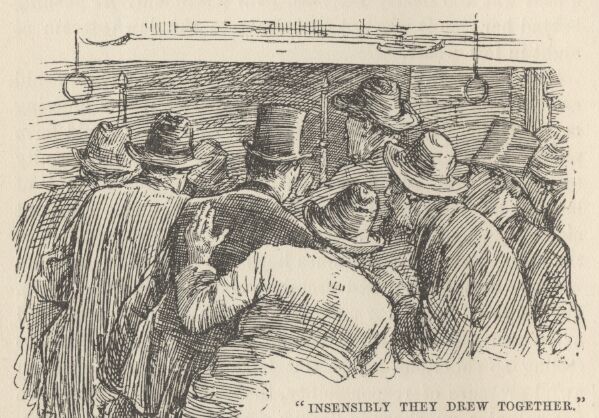
'Well, yonder's Hat Island—and we can't make it.' All the watches closed with a snap, everybody sighed and muttered something about its being 'too bad, too bad—ah, if we could only have got here half an hour sooner!' and the place was thick with the atmosphere of disappointment. Some started to go out, but loitered, hearing no bell-tap to land. The sun dipped behind the horizon, the boat went on. Inquiring looks passed from one guest to another; and one who had his hand on the door-knob and had turned it, waited, then presently took away his hand and let the knob turn back again. We bore steadily down the bend. More looks were exchanged, and nods of surprised admiration—but no words. Insensibly the men drew together behind Mr. Bixby, as the sky darkened and one or two dim stars came out. The dead silence and sense of waiting became oppressive. Mr. Bixby pulled the cord, and two deep, mellow notes from the big bell floated off on the night. Then a pause, and one more note was struck. The watchman's voice followed, from the hurricane deck—
'Well, there's Hat Island, and we can't make it.' All the watches snapped shut. Everybody sighed and muttered something about it being 'too bad, too bad. Ah, if we could only have gotten here half an hour sooner!' The place was thick with disappointment. Some started to leave, but lingered because they heard no bell signal to land. The sun sank below the horizon, and the boat went on. The guests gave one another questioning looks. One man had turned the doorknob, but he waited. Then he took his hand away and let the knob turn back. We continued steadily around the bend. More looks were exchanged, along with nods of surprised admiration, but no one spoke. Without realizing it, the men gathered behind Mr. Bixby as the sky darkened and one or two dim stars appeared. The silence and sense of waiting became oppressive. Mr. Bixby pulled the cord, and two deep, mellow notes from the big bell floated out into the night. Then, after a pause, one more note sounded. The watchman's voice followed from the hurricane deck:
'Labboard lead, there! Stabboard lead!'
'Port lead, there! Starboard lead!'
The cries of the leadsmen began to rise out of the distance, and were gruffly repeated by the word-passers on the hurricane deck.
The cries of the leadsmen began to come from the distance. The word-passers on the hurricane deck repeated the cries in gruff voices.
'M-a-r-k three!... M-a-r-k three!... Quarter-less three!... Half twain!... Quarter twain!... M-a-r-k twain!... Quarter-less—'
'Three fathoms!... Three fathoms!... Two and three quarters!... Two and a half!... Two and a quarter!... Mark twain, two fathoms!... A quarter less...'
Mr. Bixby pulled two bell-ropes, and was answered by faint jinglings far below in the engine room, and our speed slackened. The steam began to whistle through the gauge-cocks. The cries of the leadsmen went on—and it is a weird sound, always, in the night. Every pilot in the lot was watching now, with fixed eyes, and talking under his breath. Nobody was calm and easy but Mr. Bixby. He would put his wheel down and stand on a spoke, and as the steamer swung into her (to me) utterly invisible marks—for we seemed to be in the midst of a wide and gloomy sea—he would meet and fasten her there. Out of the murmur of half-audible talk, one caught a coherent sentence now and then—such as—
Mr. Bixby pulled two bell ropes, and faint bells answered from the engine room far below. Our speed slowed. Steam began to whistle through the gauge-cocks. The leadsmen kept calling out the water's depth. Their cries always sound eerie at night. Every pilot there was watching now, eyes fixed ahead, talking under his breath. Only Mr. Bixby was calm and relaxed. He would turn the wheel and stand on a spoke. Then, as the steamer swung toward her marks, he would turn the wheel back and hold her on course. Those marks were utterly invisible to me. We seemed to be in the middle of a wide, gloomy sea. Now and then, a clear sentence emerged from the murmur of half-heard talk, such as:
'There; she's over the first reef all right!'
'There, she's safely over the first reef!'
After a pause, another subdued voice—
After a pause, another quiet voice:
'Her stern's coming down just exactly right, by George!'
'Her stern is coming down just right, by George!'
'Now she's in the marks; over she goes!'
'Now she's in the marked depths. There she goes!'
Somebody else muttered—
Someone else muttered:
'Oh, it was done beautiful—beautiful!'
'Oh, it was done beautifully, beautifully!'
Now the engines were stopped altogether, and we drifted with the current. Not that I could see the boat drift, for I could not, the stars being all gone by this time. This drifting was the dismalest work; it held one's heart still. Presently I discovered a blacker gloom than that which surrounded us. It was the head of the island. We were closing right down upon it. We entered its deeper shadow, and so imminent seemed the peril that I was likely to suffocate; and I had the strongest impulse to do something, anything, to save the vessel. But still Mr. Bixby stood by his wheel, silent, intent as a cat, and all the pilots stood shoulder to shoulder at his back.
Now the engines stopped completely, and we drifted with the current. I could not actually see the boat drift, because the stars had all disappeared by then. Drifting like this was miserable work. It made your heart stand still. Soon I noticed a darkness deeper than the gloom around us. It was the head of the island. We were drifting straight toward it. We entered its deeper shadow, and the danger seemed so close that I thought I might suffocate. I felt a powerful urge to do something, anything, to save the vessel. But Mr. Bixby still stood at the wheel, silent and focused as a cat. All the pilots stood shoulder to shoulder behind him.
'She'll not make it!' somebody whispered.
'She won't make it!' somebody whispered.
The water grew shoaler and shoaler, by the leadsman's cries, till it was down to—
The leadsman’s calls showed that the water was getting shallower and shallower, until it was down to:
'Eight-and-a-half!.... E-i-g-h-t feet!.... E-i-g-h-t feet!.... Seven-and—'
'Eight and a half!.... E-i-g-h-t feet!.... E-i-g-h-t feet!.... Seven and....'
Mr. Bixby said warningly through his speaking tube to the engineer—
Mr. Bixby spoke a warning to the engineer through his speaking tube:
'Stand by, now!'
'Get ready, now!'
'Aye-aye, sir!'
'Yes, sir!'
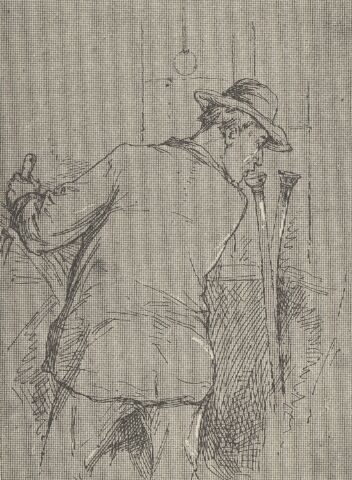
'Seven-and-a-half! Seven feet! Six-and—'
'Seven and a half! Seven feet! Six and...'
We touched bottom! Instantly Mr. Bixby set a lot of bells ringing, shouted through the tube, 'NOW, let her have it—every ounce you've got!' then to his partner, 'Put her hard down! snatch her! snatch her!' The boat rasped and ground her way through the sand, hung upon the apex of disaster a single tremendous instant, and then over she went! And such a shout as went up at Mr. Bixby's back never loosened the roof of a pilot-house before!
We hit bottom! Mr. Bixby instantly rang a lot of bells and shouted through the tube, 'NOW, give her everything you've got!' Then he shouted to his partner, 'Turn her hard! Quick! Quick!' The boat scraped and ground her way through the sand. For one tremendous instant, she hung on the brink of disaster. Then she made it over! And the shout that went up behind Mr. Bixby was louder than any that had ever shaken a pilot-house roof!
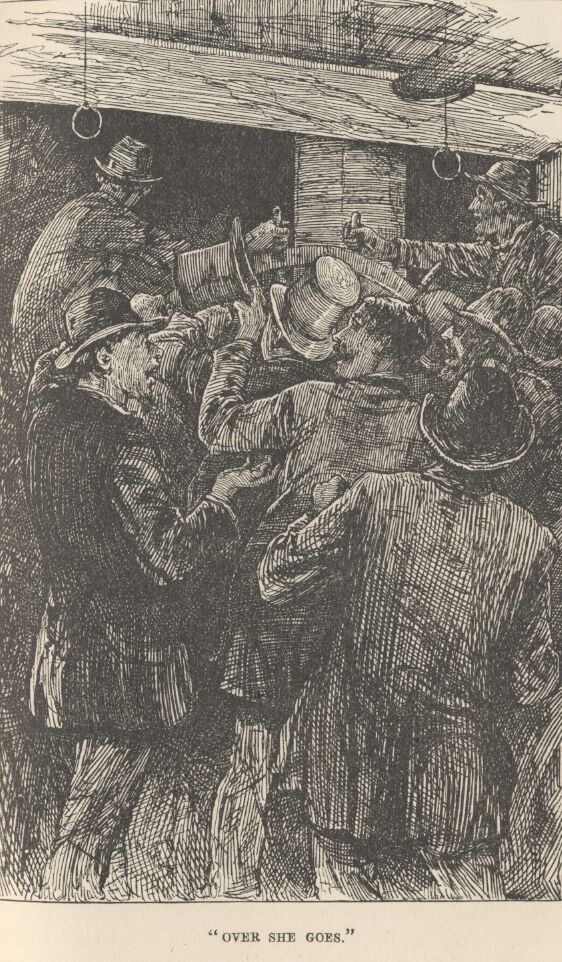
There was no more trouble after that. Mr. Bixby was a hero that night; and it was some little time, too, before his exploit ceased to be talked about by river men.
There was no more trouble after that. Mr. Bixby was a hero that night, and river men talked about his feat for some time afterward.
Fully to realize the marvelous precision required in laying the great steamer in her marks in that murky waste of water, one should know that not only must she pick her intricate way through snags and blind reefs, and then shave the head of the island so closely as to brush the overhanging foliage with her stern, but at one place she must pass almost within arm's reach of a sunken and invisible wreck that would snatch the hull timbers from under her if she should strike it, and destroy a quarter of a million dollars' worth of steam-boat and cargo in five minutes, and maybe a hundred and fifty human lives into the bargain.
To fully appreciate the remarkable precision needed to guide the great steamboat along its course through that murky expanse of water, consider what it must do. First, it must pick its way through a maze of snags and hidden reefs. Then it must pass so close to the head of the island that its stern brushes the overhanging leaves. But at one point, it must also pass almost within arm’s reach of a sunken wreck hidden underwater. If the boat struck the wreck, it would tear the timbers from beneath the hull. In five minutes, it would destroy a quarter of a million dollars’ worth of steamboat and cargo, and perhaps 150 human lives as well.
The last remark I heard that night was a compliment to Mr. Bixby, uttered in soliloquy and with unction by one of our guests. He said—
The last thing I heard that night was a compliment to Mr. Bixby. One of our guests said it to himself with great sincerity. He said:
'By the Shadow of Death, but he's a lightning pilot!'
'Good lord, he's a lightning-fast pilot!'