Chapter 57
An Archangel
FROM St. Louis northward there are all the enlivening signs of the presence of active, energetic, intelligent, prosperous, practical nineteenth-century populations. The people don't dream, they work. The happy result is manifest all around in the substantial outside aspect of things, and the suggestions of wholesome life and comfort that everywhere appear.
From St. Louis northward, there are all the lively signs of active, energetic, intelligent, prosperous, practical nineteenth-century communities. The people don't dream, they work. The happy results are clear all around, in the solid appearance of things and the signs of healthy, comfortable living everywhere.
Quincy is a notable example—a brisk, handsome, well-ordered city; and now, as formerly, interested in art, letters, and other high things.
Quincy is a notable example. It is a lively, handsome, well-ordered city, still interested in art, literature, and other lofty pursuits, as it was in the past.
But Marion City is an exception. Marion City has gone backwards in a most unaccountable way. This metropolis promised so well that the projectors tacked 'city' to its name in the very beginning, with full confidence; but it was bad prophecy. When I first saw Marion City, thirty-five years ago, it contained one street, and nearly or quite six houses. It contains but one house now, and this one, in a state of ruin, is getting ready to follow the former five into the river. Doubtless Marion City was too near to Quincy. It had another disadvantage: it was situated in a flat mud bottom, below high-water mark, whereas Quincy stands high up on the slope of a hill.
But Marion City is an exception. Marion City has declined in a most puzzling way. The town seemed so promising that its founders confidently added 'city' to its name from the start. But that was a bad prediction. When I first saw Marion City, thirty-five years ago, it had one street and nearly or exactly six houses. Now it has only one house. That house is in ruins and getting ready to follow the other five into the river. No doubt Marion City was too close to Quincy. It had another disadvantage: it stood on flat, muddy bottomland below the high-water mark. Quincy, by contrast, stands high up on a hillside.
In the beginning Quincy had the aspect and ways of a model New England town: and these she has yet: broad, clean streets, trim, neat dwellings and lawns, fine mansions, stately blocks of commercial buildings. And there are ample fair-grounds, a well kept park, and many attractive drives; library, reading-rooms, a couple of colleges, some handsome and costly churches, and a grand court-house, with grounds which occupy a square. The population of the city is thirty thousand. There are some large factories here, and manufacturing, of many sorts, is done on a great scale.
At first, Quincy looked and felt like a model New England town, and it still does. It has broad, clean streets, neat houses and lawns, fine mansions, and impressive blocks of commercial buildings. It also has spacious fairgrounds, a well-kept park, and many attractive routes for drives. There is a library, reading rooms, a couple of colleges, and some handsome, expensive churches. A grand courthouse stands on grounds that occupy a whole city block. The city has a population of thirty thousand. There are some large factories here, and many kinds of goods are manufactured on a large scale.
La Grange and Canton are growing towns, but I missed Alexandria; was told it was under water, but would come up to blow in the summer.
La Grange and Canton are growing towns, but I missed Alexandria. I was told it was underwater, but would surface for air in the summer.
Keokuk was easily recognizable. I lived there in 1857—an extraordinary year there in real-estate matters. The 'boom' was something wonderful. Everybody bought, everybody sold—except widows and preachers; they always hold on; and when the tide ebbs, they get left. Anything in the semblance of a town lot, no matter how situated, was salable, and at a figure which would still have been high if the ground had been sodded with greenbacks.
Keokuk was easy to recognize. I lived there in 1857, an extraordinary year for real estate. The 'boom' was something amazing. Everybody bought and everybody sold, except widows and preachers. They always hold on, and when the tide goes out, they get left behind. Anything that looked like a town lot could be sold, no matter where it was. The price would have been high even if the ground had been covered with dollar bills.
The town has a population of fifteen thousand now, and is progressing with a healthy growth. It was night, and we could not see details, for which we were sorry, for Keokuk has the reputation of being a beautiful city. It was a pleasant one to live in long ago, and doubtless has advanced, not retrograded, in that respect.
The town now has a population of fifteen thousand and is growing steadily. It was night, so we could not see the details. We were sorry to miss them, because Keokuk has a reputation as a beautiful city. It was a pleasant place to live long ago, and no doubt it has become even more pleasant since then.
A mighty work which was in progress there in my day is finished now. This is the canal over the Rapids. It is eight miles long, three hundred feet wide, and is in no place less than six feet deep. Its masonry is of the majestic kind which the War Department usually deals in, and will endure like a Roman aqueduct. The work cost four or five millions.
A mighty project that was underway there in my day is now finished. It is the canal over the Rapids. The canal is eight miles long, three hundred feet wide, and at least six feet deep everywhere. Its masonry is the majestic kind the War Department usually builds, and it will last like a Roman aqueduct. The work cost four or five million dollars.
After an hour or two spent with former friends, we started up the river again. Keokuk, a long time ago, was an occasional loafing-place of that erratic genius, Henry Clay Dean. I believe I never saw him but once; but he was much talked of when I lived there. This is what was said of him—
After an hour or two with old friends, we started up the river again. Long ago, Keokuk was an occasional hangout for that unpredictable genius, Henry Clay Dean. I believe I only saw him once, but people talked about him a lot when I lived there. This is what they said about him:
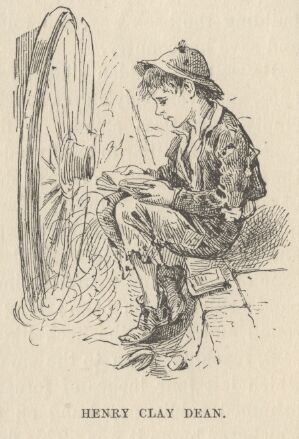
He began life poor and without education. But he educated himself—on the curbstones of Keokuk. He would sit down on a curbstone with his book, careless or unconscious of the clatter of commerce and the tramp of the passing crowds, and bury himself in his studies by the hour, never changing his position except to draw in his knees now and then to let a dray pass unobstructed; and when his book was finished, its contents, however abstruse, had been burnt into his memory, and were his permanent possession. In this way he acquired a vast hoard of all sorts of learning, and had it pigeon-holed in his head where he could put his intellectual hand on it whenever it was wanted.
He began life poor and without an education. But he educated himself on the curbs of Keokuk. He would sit on a curb with his book, oblivious to the noise of commerce and the passing crowds. He buried himself in his studies for hours. He moved only to pull in his knees now and then, letting a freight cart pass without obstruction. When he finished a book, its contents, however difficult, were burned into his memory. They were his to keep forever. In this way, he gathered a vast store of all kinds of knowledge. He kept it neatly filed in his head, ready to lay his intellectual hand on it whenever he needed it.
His clothes differed in no respect from a 'wharf-rat's,' except that they were raggeder, more ill-assorted and inharmonious (and therefore more extravagantly picturesque), and several layers dirtier. Nobody could infer the master-mind in the top of that edifice from the edifice itself.
His clothes were just like a 'wharf-rat's,' except they were more ragged, mismatched, and clashing. (That made them even more extravagantly picturesque.) They were also several layers dirtier. Nobody could have guessed that a master mind was housed at the top of that edifice just by looking at it.
He was an orator—by nature in the first place, and later by the training of experience and practice. When he was out on a canvass, his name was a lodestone which drew the farmers to his stump from fifty miles around. His theme was always politics. He used no notes, for a volcano does not need notes. In 1862, a son of Keokuk's late distinguished citizen, Mr. Claggett, gave me this incident concerning Dean—
He was a natural public speaker, and experience and practice made him even better. When he was campaigning, his name drew farmers from fifty miles around to hear him speak. His subject was always politics. He used no notes, because a volcano does not need notes. In 1862, a son of the late Mr. Claggett, a distinguished citizen of Keokuk, told me this story about Dean:
The war feeling was running high in Keokuk (in '61), and a great mass meeting was to be held on a certain day in the new Athenaeum. A distinguished stranger was to address the house. After the building had been packed to its utmost capacity with sweltering folk of both sexes, the stage still remained vacant—the distinguished stranger had failed to connect. The crowd grew impatient, and by and by indignant and rebellious. About this time a distressed manager discovered Dean on a curb-stone, explained the dilemma to him, took his book away from him, rushed him into the building the back way, and told him to make for the stage and save his country.
War fever was running high in Keokuk in 1861, and a big public meeting was planned at the new Athenaeum. A distinguished stranger was to address the crowd. The building was packed to capacity with sweltering men and women, but the stage remained empty. The distinguished stranger had failed to arrive. The crowd grew impatient and soon became angry and unruly. About then, a distressed manager found Dean sitting on a curb and explained the problem. He took Dean’s book away, rushed him into the building through the back, and told him to get onstage and save his country.
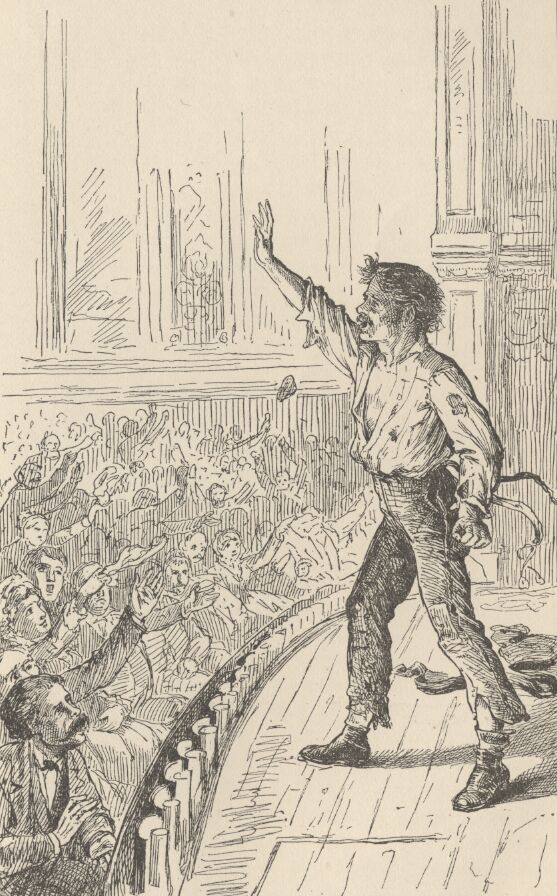
Presently a sudden silence fell upon the grumbling audience, and everybody's eyes sought a single point—the wide, empty, carpetless stage. A figure appeared there whose aspect was familiar to hardly a dozen persons present. It was the scarecrow Dean—in foxy shoes, down at the heels; socks of odd colors, also 'down;' damaged trousers, relics of antiquity, and a world too short, exposing some inches of naked ankle; an unbuttoned vest, also too short, and exposing a zone of soiled and wrinkled linen between it and the waistband; shirt bosom open; long black handkerchief, wound round and round the neck like a bandage; bob-tailed blue coat, reaching down to the small of the back, with sleeves which left four inches of forearm unprotected; small, stiff-brimmed soldier-cap hung on a corner of the bump of—whichever bump it was. This figure moved gravely out upon the stage and, with sedate and measured step, down to the front, where it paused, and dreamily inspected the house, saying no word. The silence of surprise held its own for a moment, then was broken by a just audible ripple of merriment which swept the sea of faces like the wash of a wave. The figure remained as before, thoughtfully inspecting. Another wave started—laughter, this time. It was followed by another, then a third—this last one boisterous.
Soon, a sudden silence fell over the grumbling audience. Everyone looked at one spot: the wide, empty stage, with no carpet. A figure appeared there, familiar to hardly a dozen people in the audience. It was the scarecrow Dean. His shoes were reddish brown and worn down at the heels. His mismatched socks were also down. His battered trousers were ancient relics and much too short, exposing several inches of bare ankle. His unbuttoned vest was also too short, leaving a strip of dirty, wrinkled shirt between it and his waistband. His shirt was open at the chest. A long black handkerchief was wound around his neck like a bandage. His short blue coat reached only to the small of his back, and its sleeves left four inches of forearm bare. A small soldier's cap with a stiff brim hung on the edge of the bump of, whichever bump it was. Dean walked solemnly onto the stage and down to the front, taking slow, measured steps. There he stopped and dreamily surveyed the audience without saying a word. The surprised silence lasted a moment. Then a barely audible ripple of amusement swept over the sea of faces like a wave. Dean remained where he was, thoughtfully surveying the audience. Another wave began, laughter this time. Another followed, then a third, and the last was loud and rowdy.
And now the stranger stepped back one pace, took off his soldier-cap, tossed it into the wing, and began to speak, with deliberation, nobody listening, everybody laughing and whispering. The speaker talked on unembarrassed, and presently delivered a shot which went home, and silence and attention resulted. He followed it quick and fast, with other telling things; warmed to his work and began to pour his words out, instead of dripping them; grew hotter and hotter, and fell to discharging lightnings and thunder—and now the house began to break into applause, to which the speaker gave no heed, but went hammering straight on; unwound his black bandage and cast it away, still thundering; presently discarded the bob tailed coat and flung it aside, firing up higher and higher all the time; finally flung the vest after the coat; and then for an untimed period stood there, like another Vesuvius, spouting smoke and flame, lava and ashes, raining pumice-stone and cinders, shaking the moral earth with intellectual crash upon crash, explosion upon explosion, while the mad multitude stood upon their feet in a solid body, answering back with a ceaseless hurricane of cheers, through a thrashing snowstorm of waving handkerchiefs.
The stranger stepped back one pace, took off his soldier’s cap, and tossed it into the wings. Then he began to speak slowly and deliberately. Nobody listened. Everyone was laughing and whispering. The speaker went on without embarrassment, and soon he landed a remark that struck home. The crowd fell silent and paid attention. He quickly followed with more powerful points. He warmed to his work and began pouring out his words instead of letting them drip. He grew more and more heated, until he was throwing out lightning and thunder. Now the audience began to applaud, but the speaker paid no attention. He kept hammering straight on. Still thundering, he unwound his black bandage and threw it away. Soon he took off his short-tailed coat and flung it aside, growing more and more fiery all the while. Finally, he threw his vest after the coat. Then, for who knows how long, he stood there like another Vesuvius. He spouted smoke and flame, lava and ashes, and rained down pumice stones and cinders. He shook the moral earth with intellectual crash after crash, explosion after explosion. The entire frenzied crowd stood as one, answering him with a ceaseless hurricane of cheers. Handkerchiefs waved wildly, like a churning snowstorm.
'When Dean came,' said Claggett, 'the people thought he was an escaped lunatic; but when he went, they thought he was an escaped archangel.'
'When Dean arrived,' said Claggett, 'people thought he was an escaped madman. But when he left, they thought he was an escaped archangel.'
Burlington, home of the sparkling Burdette, is another hill city; and also a beautiful one; unquestionably so; a fine and flourishing city, with a population of twenty-five thousand, and belted with busy factories of nearly every imaginable description. It was a very sober city, too—for the moment—for a most sobering bill was pending; a bill to forbid the manufacture, exportation, importation, purchase, sale, borrowing, lending, stealing, drinking, smelling, or possession, by conquest, inheritance, intent, accident, or otherwise, in the State of Iowa, of each and every deleterious beverage known to the human race, except water. This measure was approved by all the rational people in the State; but not by the bench of Judges.
Burlington, home of the sparkling Burdette, is another hill city. It is unquestionably beautiful, a fine and flourishing city of twenty-five thousand people. Busy factories of nearly every imaginable kind surround it. Burlington was also a very sober city, for the moment. A most sobering bill was pending in Iowa. It would forbid the manufacture, export, import, purchase, sale, borrowing, lending, stealing, drinking, smelling, or possession of every harmful beverage known to humanity, except water. Possession was forbidden whether the beverage was acquired by conquest, inheritance, intent, accident, or any other means. All the rational people in the state approved of the bill, but the judges did not.
Burlington has the progressive modern city's full equipment of devices for right and intelligent government; including a paid fire department, a thing which the great city of New Orleans is without, but still employs that relic of antiquity, the independent system.
Burlington has all the systems a progressive modern city needs for good, intelligent government. These include a paid fire department. The great city of New Orleans has no paid fire department. It still uses that relic of the past, the independent system.
In Burlington, as in all these Upper-River towns, one breathes a go-ahead atmosphere which tastes good in the nostrils. An opera-house has lately been built there which is in strong contrast with the shabby dens which usually do duty as theaters in cities of Burlington's size.
In Burlington, as in all these Upper-River towns, you can breathe in an atmosphere of progress that smells good. A new opera house was recently built there. It stands in sharp contrast to the shabby places that usually serve as theaters in cities Burlington’s size.
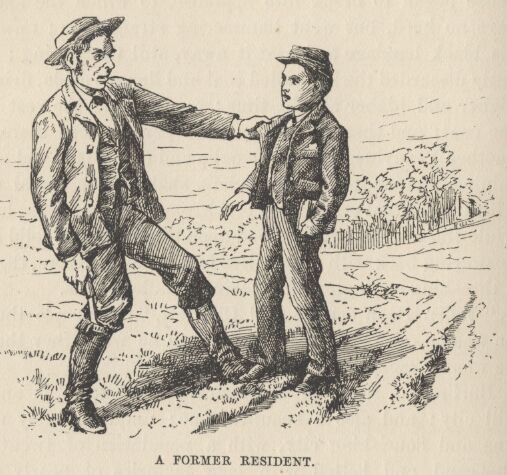
We had not time to go ashore in Muscatine, but had a daylight view of it from the boat. I lived there awhile, many years ago, but the place, now, had a rather unfamiliar look; so I suppose it has clear outgrown the town which I used to know. In fact, I know it has; for I remember it as a small place—which it isn't now. But I remember it best for a lunatic who caught me out in the fields, one Sunday, and extracted a butcher-knife from his boot and proposed to carve me up with it, unless I acknowledged him to be the only son of the Devil. I tried to compromise on an acknowledgment that he was the only member of the family I had met; but that did not satisfy him; he wouldn't have any half-measures; I must say he was the sole and only son of the Devil—he whetted his knife on his boot. It did not seem worth while to make trouble about a little thing like that; so I swung round to his view of the matter and saved my skin whole. Shortly afterward, he went to visit his father; and as he has not turned up since, I trust he is there yet.
We didn't have time to go ashore in Muscatine, but we saw it from the boat in daylight. I lived there for a while, many years ago, but the place looked rather unfamiliar now. So I suppose it has completely outgrown the town I used to know. In fact, I know it has. I remember it as a small place, which it isn't now. But I remember it best for a madman who caught me out in the fields one Sunday. He pulled a butcher knife from his boot and threatened to carve me up unless I acknowledged him as the Devil's only son. I tried to compromise by admitting he was the only member of the family I had met. But that didn't satisfy him. He wouldn't accept half measures. I had to say he was the Devil's one and only son. As he insisted, he sharpened his knife on his boot. It didn't seem worth making trouble over a little thing like that, so I came around to his view and saved my skin. Shortly afterward, he went to visit his father. Since he hasn't turned up again, I trust he's still there.
And I remember Muscatine—still more pleasantly—for its summer sunsets. I have never seen any, on either side of the ocean, that equaled them. They used the broad smooth river as a canvas, and painted on it every imaginable dream of color, from the mottled daintinesses and delicacies of the opal, all the way up, through cumulative intensities, to blinding purple and crimson conflagrations which were enchanting to the eye, but sharply tried it at the same time. All the Upper Mississippi region has these extraordinary sunsets as a familiar spectacle. It is the true Sunset Land: I am sure no other country can show so good a right to the name. The sunrises are also said to be exceedingly fine. I do not know.
I remember Muscatine even more fondly for its summer sunsets. I have never seen their equal on either side of the ocean. The sunsets used the broad, smooth river as a canvas. They painted every imaginable dream of color on it, from the delicate, mottled shades of an opal to increasingly intense colors. At their brightest, they became blinding flames of purple and crimson. They enchanted the eye, but also strained it. These extraordinary sunsets are a familiar sight throughout the Upper Mississippi region. It is the true Sunset Land. I am sure no other country has a better claim to the name. The sunrises are also said to be exceptionally beautiful. I do not know.