Chapter 52
A Burning Stick
All at once the thought came into my mind, 'I have not sought out Mr. Brown.'
All at once, I thought, 'I haven't looked for Mr. Brown.'
Upon that text I desire to depart from the direct line of my subject, and make a little excursion. I wish to reveal a secret which I have carried with me nine years, and which has become burdensome.
On that subject, I want to stray from my main topic for a moment. I want to reveal a secret I have carried for nine years. It has become a burden.
Upon a certain occasion, nine years ago, I had said, with strong feeling, 'If ever I see St. Louis again, I will seek out Mr. Brown, the great grain merchant, and ask of him the privilege of shaking him by the hand.'
Nine years ago, I had said with strong feeling, 'If I ever see St. Louis again, I will seek out Mr. Brown, the great grain merchant, and ask him for the privilege of shaking his hand.'
The occasion and the circumstances were as follows. A friend of mine, a clergyman, came one evening and said—
Here is what happened. One evening, a friend of mine who was a clergyman came to see me and said:
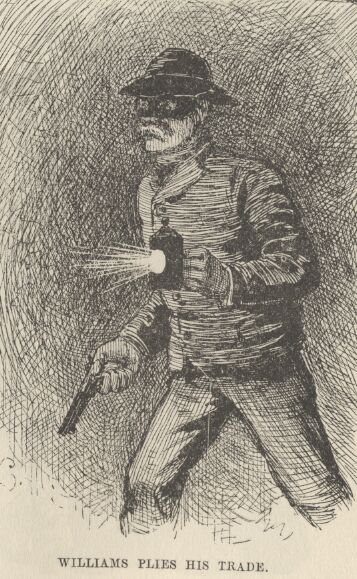
'I have a most remarkable letter here, which I want to read to you, if I can do it without breaking down. I must preface it with some explanations, however. The letter is written by an ex-thief and ex-vagabond of the lowest origin and basest rearing, a man all stained with crime and steeped in ignorance; but, thank God, with a mine of pure gold hidden away in him, as you shall see. His letter is written to a burglar named Williams, who is serving a nine-year term in a certain State prison, for burglary. Williams was a particularly daring burglar, and plied that trade during a number of years; but he was caught at last and jailed, to await trial in a town where he had broken into a house at night, pistol in hand, and forced the owner to hand over to him $8,000 in government bonds. Williams was not a common sort of person, by any means; he was a graduate of Harvard College, and came of good New England stock. His father was a clergyman. While lying in jail, his health began to fail, and he was threatened with consumption. This fact, together with the opportunity for reflection afforded by solitary confinement, had its effect—its natural effect. He fell into serious thought; his early training asserted itself with power, and wrought with strong influence upon his mind and heart. He put his old life behind him, and became an earnest Christian. Some ladies in the town heard of this, visited him, and by their encouraging words supported him in his good resolutions and strengthened him to continue in his new life. The trial ended in his conviction and sentence to the State prison for the term of nine years, as I have before said. In the prison he became acquainted with the poor wretch referred to in the beginning of my talk, Jack Hunt, the writer of the letter which I am going to read. You will see that the acquaintanceship bore fruit for Hunt. When Hunt's time was out, he wandered to St. Louis; and from that place he wrote his letter to Williams. The letter got no further than the office of the prison warden, of course; prisoners are not often allowed to receive letters from outside. The prison authorities read this letter, but did not destroy it. They had not the heart to do it. They read it to several persons, and eventually it fell into the hands of those ladies of whom I spoke a while ago. The other day I came across an old friend of mine—a clergyman—who had seen this letter, and was full of it. The mere remembrance of it so moved him that he could not talk of it without his voice breaking. He promised to get a copy of it for me; and here it is—an exact copy, with all the imperfections of the original preserved. It has many slang expressions in it—thieves' argot—but their meaning has been interlined, in parentheses, by the prison authorities'—
'I have a most remarkable letter here that I want to read to you, if I can do so without breaking down. First, though, I must explain a few things. The letter was written by a former thief and vagabond of the lowest origins and the worst upbringing. He was a man stained all over with crime and steeped in ignorance. But, thank God, he had a mine of pure gold hidden inside him, as you will see. His letter is addressed to a burglar named Williams, who is serving nine years in a State prison for burglary. Williams was an especially daring burglar and practiced his trade for several years. But at last he was caught and jailed to await trial. He had broken into a house in the town at night, pistol in hand, and forced the owner to hand over $8,000 in government bonds. Williams was by no means an ordinary person. He was a Harvard College graduate and came from a good New England family. His father was a clergyman. While Williams was in jail, his health began to fail, and he was threatened with consumption. This, together with the chance to reflect in solitary confinement, had its natural effect. He began to think seriously. His early upbringing reasserted itself and strongly influenced his mind and heart. He put his old life behind him and became a sincere Christian. Some ladies in the town heard about this and visited him. Their encouraging words supported his good resolutions and strengthened him to continue his new life. As I said before, the trial ended with his conviction and a nine-year sentence in the State prison. There he met the poor wretch I mentioned at the beginning of my talk, Jack Hunt, who wrote the letter I am going to read. You will see that the acquaintance bore fruit for Hunt. When Hunt had served his time, he wandered to St. Louis and wrote to Williams from there. Of course, the letter got no farther than the prison warden's office. Prisoners are not often allowed to receive letters from outside. The prison authorities read the letter, but they did not destroy it. They did not have the heart to do so. They read it to several people, and eventually it came into the hands of the ladies I mentioned earlier. The other day I met an old friend of mine, a clergyman, who had seen the letter and could talk of little else. Just remembering it moved him so much that he could not speak of it without his voice breaking. He promised to get me a copy, and here it is, an exact copy, with all the imperfections of the original preserved. It contains many slang expressions from the language of thieves, but the prison authorities have written their meanings between the lines, in parentheses.'
St. Louis, June 9th 1872.
St. Louis, June 9, 1872.
Mr. W—— friend Charlie if i may call you so: i no you are surprised to get a letter from me, but i hope you won't be mad at my writing to you. i want to tell you my thanks for the way you talked to me when i was in prison—it has led me to try and be a better man; i guess you thought i did not cair for what you said, & at the first go off I didn't, but i noed you was a man who had don big work with good men & want no sucker, nor want gasing & all the boys knod it.
Mr. W——, my friend Charlie, if I may call you that: I know you’re surprised to get a letter from me. But I hope you won’t be angry that I wrote. I want to thank you for the way you talked to me when I was in prison. Your words have led me to try to be a better man. I guess you thought I didn’t care about what you said, and at first I didn’t. But I knew you had done important work with good men. I knew you weren’t a fool or just talking nonsense, and all the boys knew it too.
I used to think at nite what you said, & for it i nocked off swearing months before my time was up, for i saw it want no good, nohow—the day my time was up you told me if i would shake the cross (quit stealing) & live on the square for months, it would be the best job i ever done in my life. The state agent give me a ticket to here, & on the car i thought more of what you said to me, but didn't make up my mind. When we got to Chicago on the cars from there to here, I pulled off an old woman's leather;
I used to think at night about what you said. Because of that, I quit swearing months before my time was up. I saw that swearing was no good anyway. The day my time was up, you told me that if I gave up crooked ways (quit stealing) and lived honestly for months, it would be the best thing I ever did in my life. The state agent gave me a ticket to here. On the train, I thought more about what you said to me, but I didn't make up my mind. After we got to Chicago, on the train from there to here, I stole an old woman's wallet.
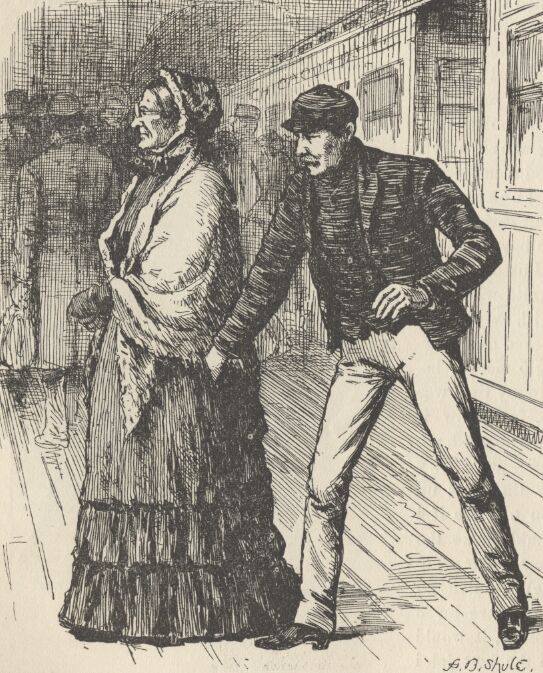
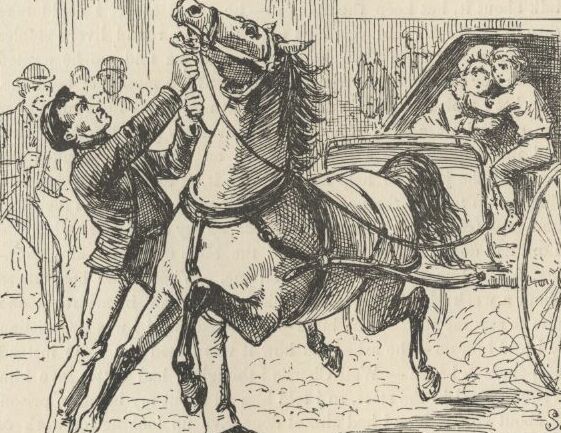
(Robbed her of her pocketbook) i hadn't no more than got it off when i wished i hadn't done it, for awhile before that i made up my mind to be a square bloke, for months on your word, but forgot it when i saw the leather was a grip (easy to get)—but i kept clos to her & when she got out of the cars at a way place i said, marm have you lost anything. & she tumbled (discovered) her leather was off (gone)—is this it says i, giving it to her—well if you aint honest, says she, but i hadn't got cheak enough to stand that sort of talk, so i left her in a hurry. When i got here i had $1 and 25 cents left & i didn't get no work for 3 days as i aint strong enough for roust about on a steam bote (for a deck hand)—The afternoon of the 3rd day I spent my last 10 cts for moons (large, round sea-biscuit) & cheese & i felt pretty rough & was thinking i would have to go on the dipe (picking pockets) again, when i thought of what you once said about a fellows calling on the Lord when he was in hard luck, & i thought i would try it once anyhow, but when i tryed it i got stuck on the start, & all i could get off wos, Lord give a poor fellow a chance to square it for 3 months for Christ's sake, amen; & i kept a thinking, of it over and over as i went along—about an hour after that i was in 4th St. & this is what happened & is the cause of my being where i am now & about which i will tell you before i get done writing. As i was walking along herd a big noise & saw a horse running away with a carriage with 2 children in it, & I grabed up a peace of box cover from the side walk & run in the middle of the street, & when the horse came up i smashed him over the head as hard as i could drive—the bord split to peces & the horse checked up a little & I grabbed the reigns & pulled his head down until he stopped—the gentleman what owned him came running up & soon as he saw the children were all rite, he shook hands with me and gave me a $50 green back, & my asking the Lord to help me come into my head, & i was so thunderstruck i couldn't drop the reigns nor say nothing—he saw something was up, &
(Robbed her of her pocketbook) I had hardly taken it before I wished I hadn't. Some time before that, I'd made up my mind to be an honest fellow for months, on your word. But I forgot when I saw the pocketbook was a grip (easy to get). I stayed close to her, though, and when she got off the train at a stop along the way, I said, “Ma'am, have you lost anything?” She tumbled (discovered) that her pocketbook was off (gone). “Is this it?” I said, giving it to her. “Well, if you ain't honest,” she said. But I didn't have the nerve to stand there and hear that, so I left her in a hurry. When I got here, I had $1.25 left. I didn't get any work for three days because I wasn't strong enough to roust about on a steamboat (work as a deckhand). On the afternoon of the third day, I spent my last 10 cents on moons (large, round sea biscuits) and cheese. I felt pretty rough and thought I'd have to go on the dipe (picking pockets) again. Then I remembered what you once said about a fellow calling on the Lord when he was down on his luck. I thought I'd try it once, anyhow. But when I tried, I got stuck right at the start. All I could get out was, “Lord, give a poor fellow a chance to square it for three months, for Christ's sake, amen.” I kept thinking it over and over as I went along. About an hour later, I was on 4th St. Then something happened that is the reason I'm where I am now. I'll tell you about it before I finish writing. As I was walking along, I heard a big noise. I saw a horse running away with a carriage that had two children in it. I grabbed a piece of box cover from the sidewalk and ran into the middle of the street. When the horse came up, I hit him over the head as hard as I could. The board split to pieces, and the horse slowed down a little. I grabbed the reins and pulled his head down until he stopped. The gentleman who owned him came running up. As soon as he saw the children were all right, he shook my hand and gave me a $50 greenback. I remembered asking the Lord to help me, and I was so thunderstruck I couldn't let go of the reins or say anything. He saw something was up, and
coming back to me said, my boy are you hurt? & the thought come into my head just then to ask him for work; & i asked him to take back the bill and give me a job—says he, jump in here & lets talk about it, but keep the money—he asked me if i could take care of horses & i said yes, for i used to hang round livery stables & often would help clean & drive horses, he told me he wanted a man for that work, & would give me $16 a month & bord me. You bet i took that chance at once. that nite in my little room over the stable i sat a long time thinking over my past life & of what had just happened & i just got down on my nees & thanked the Lord for the job & to help me to square it, & to bless you for putting me up to it, & the next morning i done it again & got me some new togs (clothes) & a bible for i made up my mind after what the Lord had done for me i would read the bible every nite and morning, & ask him to keep an eye on me. When I had been there about a week Mr. Brown (that's his name) came in my room one nite and saw me reading the bible—he asked me if i was a Christian & i told him no—he asked me how it was i read the bible instead of papers & books—Well Charlie i thought i had better give him a square deal in the start, so i told him all about my being in prison & about you, & how i had almost done give up looking for work & how the Lord got me the job when I asked him; & the only way i had to pay him back was to read the bible & square it, & i asked him to give me a chance for 3 months—he talked to me like a father for a long time, & told me i could stay & then i felt better than ever i had done in my life, for i had given Mr. Brown a fair start with me & now i didn't fear no one giving me a back cap (exposing his past life) & running me off the job—the next morning he called me into the library & gave me another square talk, & advised me to study some every day, & he would help me one or 2 hours every nite, & he gave me a Arithmetic, a spelling book, a Geography & a writing book, & he hers me every nite—he lets me come into the house to prayers every morning, & got me put in a bible class in the Sunday School which i likes very much for it helps me to understand my bible better.
He came back to me and said, “My boy, are you hurt?” Just then, I thought of asking him for work. I asked him to take back the bill and give me a job. He said, “Jump in here and let’s talk about it, but keep the money.” He asked if I could take care of horses, and I said yes. I used to hang around livery stables and often helped clean and drive horses. He told me he needed a man for that work. He would pay me $16 a month and give me room and board. You bet I took that chance at once. That night, I sat for a long time in my little room over the stable. I thought about my past life and what had just happened. Then I got down on my knees and thanked the Lord for the job. I asked him to help me make good on it and to bless you for suggesting it. The next morning, I prayed again. I also got myself some new clothes and a Bible. After what the Lord had done for me, I made up my mind to read the Bible every night and morning. I would ask him to keep an eye on me, too. After I had been there about a week, Mr. Brown (that’s his name) came into my room one night. He saw me reading the Bible and asked if I was a Christian. I told him no. He asked why I read the Bible instead of newspapers and books. Well, Charlie, I thought I had better deal honestly with him from the start. So I told him all about being in prison and about you. I told him how I had almost given up looking for work. I told him how the Lord got me the job when I asked him. The only way I could pay the Lord back was to read the Bible and make good on it. I asked Mr. Brown to give me a chance for three months. He talked to me like a father for a long time and told me I could stay. Then I felt better than I ever had in my life. I had been honest with Mr. Brown from the start. Now I wasn’t afraid someone would give me a back cap (expose my past life) and get me fired. The next morning, he called me into the library and had another honest talk with me. He advised me to study a little every day. He said he would help me for one or two hours every night. He gave me an arithmetic book, a spelling book, a geography book, and a writing book. He listens to my lessons every night. He lets me come into the house for prayers every morning. He also got me into a Bible class at Sunday School. I like the class very much because it helps me understand my Bible better.
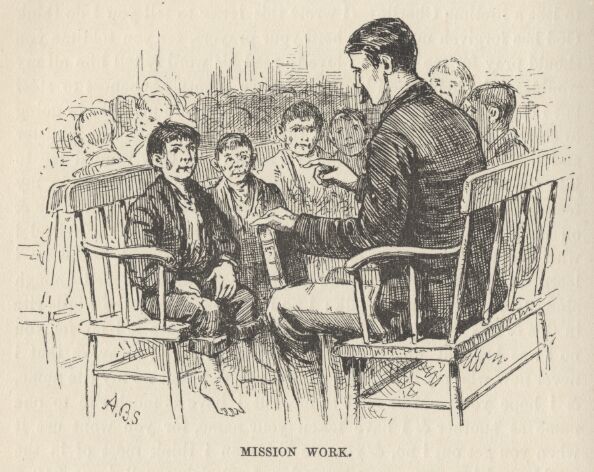
Now, Charlie the 3 months on the square are up 2 months ago, & as you said, it is the best job i ever did in my life, & i commenced another of the same sort right away, only it is to God helping me to last a lifetime Charlie—i wrote this letter to tell you I do think God has forgiven my sins & herd your prayers, for you told me you should pray for me—i no i love to read his word & tell him all my troubles & he helps me i know for i have plenty of chances to steal but i don't feel to as i once did & now i take more pleasure in going to church than to the theater & that wasnt so once—our minister and others often talk with me & a month ago they wanted me to join the church, but I said no, not now, i may be mistaken in my feelings, i will wait awhile, but now i feel that God has called me & on the first Sunday in July i will join the church—dear friend i wish i could write to you as i feel, but i cant do it yet—you no i learned to read and write while prisons & i aint got well enough along to write as i would talk; i no i aint spelled all the words rite in this & lots of other mistakes but you will excuse it i no, for you no i was brought up in a poor house until i run away, & that i never new who my father and mother was & i dont no my right name, & i hope you wont be mad at me, but i have as much rite to one name as another & i have taken your name, for you wont use it when you get out i no, & you are the man i think most of in the world; so i hope you wont be mad—I am doing well, i put $10 a month in bank with $25 of the $50— if you ever want any or all of it let me know, & it is yours. i wish you would let me send you some now. I send you with this a receipt for a year of Littles Living Age, i didn't know what you would like & i told Mr. Brown & he said he thought you would like it—i wish i was nere you so i could send you chuck (refreshments) on holidays; it would spoil this weather from here, but i will send you a box next thanksgiving any way—next week Mr. Brown takes me into his store as lite porter & will advance me as soon as i know a little more—he keeps a big granary store, wholesale—i forgot to tell you of my mission school, sunday school class—the school is in the sunday afternoon, i went out two sunday afternoons, and picked up seven kids (little boys) & got them to come in. two of them new as much as i did & i had them put in a class where they could learn something. i dont no much myself, but as these kids cant read i get on nicely with them. i make sure of them by going after them every Sunday hour before school time, I also got 4 girls to come. tell Mack and Harry about me, if they will come out here when their time is up i will get them jobs at once. i hope you will excuse this long letter & all mistakes, i wish i could see you for i cant write as i would talk—i hope the warm weather is doing your lungs good—i was afraid when you was bleeding you would die—give my respects to all the boys and tell them how i am doing—i am doing well and every one here treats me as kind as they can—Mr. Brown is going to write to you sometime—i hope some day you will write to me, this letter is from your very true friend
Now, Charlie, my three months of honest living ended two months ago. As you said, it was the best job I ever did. I started another of the same kind right away, only this one, God helping me, is to last a lifetime. Charlie, I wrote this letter to tell you that I do think God has forgiven my sins and heard your prayers. You told me you would pray for me. I know I love to read his word and tell him all my troubles. And I know he helps me. I have plenty of chances to steal, but I no longer feel like doing it as I once did. Now I take more pleasure in going to church than to the theater, and that wasn't true before. Our minister and others often talk with me. A month ago they wanted me to join the church, but I said, no, not now. I might be mistaken about my feelings, so I would wait a while. But now I feel that God has called me. On the first Sunday in July, I will join the church. Dear friend, I wish I could write to you as I feel, but I can't do it yet. You know I learned to read and write in prison. I haven't learned enough to write the way I would talk. I know I haven't spelled all the words right in this letter, and there are lots of other mistakes. But I know you will excuse them. You know I was brought up in a poorhouse until I ran away. I never knew who my father and mother were, and I don't know my real name. I hope you won't be mad at me, but I have as much right to one name as another. So I have taken your name. I know you won't use it when you get out, and you are the man I think most of in the world. So I hope you won't be mad. I am doing well. I put $10 a month in the bank, along with $25 of the $50. If you ever want any or all of it, let me know, and it is yours. I wish you would let me send you some now. I am sending you a receipt for a year's subscription to Littles Living Age. I didn't know what you would like, so I told Mr. Brown, and he thought you would like it. I wish I were near you so I could send you chuck (refreshments) on holidays. It would spoil in this weather if I sent it from here. But I will send you a box next Thanksgiving anyway. Next week Mr. Brown is taking me into his store as a light porter. He will promote me as soon as I know a little more. He runs a big wholesale grain store. I forgot to tell you about my mission school Sunday school class. The school meets on Sunday afternoons. I went out two Sunday afternoons, picked up seven kids (little boys), and got them to come. Two of them knew as much as I did, so I had them put in a class where they could learn something. I don't know much myself, but since these kids can't read, I get on nicely with them. I make sure they come by going after them every Sunday, an hour before school starts. I also got four girls to come. Tell Mack and Harry about me. If they come out here when their time is up, I will get them jobs at once. I hope you will excuse this long letter and all the mistakes. I wish I could see you, because I can't write the way I would talk. I hope the warm weather is doing your lungs good. When you were bleeding, I was afraid you would die. Give my respects to all the boys and tell them how I am doing. I am doing well, and everyone here treats me as kindly as they can. Mr. Brown is going to write to you sometime. I hope you will write to me someday. This letter is from your very true friend.
C—— W——
C... W...
who you know as Jack Hunt.
who you know as Jack Hunt.
I send you Mr. Brown's card. Send my letter to him.
I'm sending you Mr. Brown's card. Send my letter to him.
Here was true eloquence; irresistible eloquence; and without a single grace or ornament to help it out. I have seldom been so deeply stirred by any piece of writing. The reader of it halted, all the way through, on a lame and broken voice; yet he had tried to fortify his feelings by several private readings of the letter before venturing into company with it. He was practising upon me to see if there was any hope of his being able to read the document to his prayer-meeting with anything like a decent command over his feelings. The result was not promising. However, he determined to risk it; and did. He got through tolerably well; but his audience broke down early, and stayed in that condition to the end.
Here was true eloquence, irresistible eloquence, without a single graceful phrase or flourish to help it along. I have seldom been so deeply moved by anything I have read. The man reading the letter stumbled through it in a halting, broken voice. Yet he had read the letter several times in private to steady his feelings before bringing it to others. He was practicing on me to see if he had any hope of reading the letter to his prayer meeting while keeping decent control of his feelings. The result was not promising. Still, he decided to take the risk, and he did. He got through it reasonably well, but his audience broke down early and remained that way until the end.
The fame of the letter spread through the town. A brother minister came and borrowed the manuscript, put it bodily into a sermon, preached the sermon to twelve hundred people on a Sunday morning, and the letter drowned them in their own tears. Then my friend put it into a sermon and went before his Sunday morning congregation with it. It scored another triumph. The house wept as one individual.
Word of the letter spread through town. Another minister borrowed the manuscript and put the whole letter into a sermon. He preached the sermon to twelve hundred people on a Sunday morning, and the letter drowned them in their own tears. Then my friend put the letter into a sermon and preached it to his Sunday morning congregation. The letter scored another triumph. The whole congregation wept as one.
My friend went on summer vacation up into the fishing regions of our northern British neighbors, and carried this sermon with him, since he might possibly chance to need a sermon. He was asked to preach, one day. The little church was full. Among the people present were the late Dr. J. G. Holland, the late Mr. Seymour of the 'New York Times,' Mr. Page, the philanthropist and temperance advocate, and, I think, Senator Frye, of Maine. The marvelous letter did its wonted work; all the people were moved, all the people wept; the tears flowed in a steady stream down Dr. Holland's cheeks, and nearly the same can be said with regard to all who were there. Mr. Page was so full of enthusiasm over the letter that he said he would not rest until he made pilgrimage to that prison, and had speech with the man who had been able to inspire a fellow-unfortunate to write so priceless a tract.
My friend went on summer vacation to the fishing regions of our northern British neighbors. He took the sermon with him, since he might happen to need one. One day, he was asked to preach. The little church was full. Among those present were the late Dr. J. G. Holland and the late Mr. Seymour of the 'New York Times.' Mr. Page, the philanthropist and temperance advocate, was there too, and I think Senator Frye of Maine was also there. The marvelous letter had its usual effect. Everyone was moved, and everyone wept. Tears streamed steadily down Dr. Holland's cheeks, and nearly the same could be said of everyone there. Mr. Page was so enthusiastic about the letter that he said he would not rest until he made a pilgrimage to that prison. He wanted to speak with the man who had inspired a fellow prisoner to write such a priceless tract.
Ah, that unlucky Page!—and another man. If they had only been in Jericho, that letter would have rung through the world and stirred all the hearts of all the nations for a thousand years to come, and nobody might ever have found out that it was the confoundedest, brazenest, ingeniousest piece of fraud and humbuggery that was ever concocted to fool poor confiding mortals with!
Ah, that unlucky Page! And another man. If only they had been in Jericho! That letter would have echoed around the world and stirred every heart in every nation for a thousand years to come. And nobody might ever have discovered that it was the most outrageous, brazen, ingenious fraud and hoax ever concocted to fool poor, trusting people!
The letter was a pure swindle, and that is the truth. And take it by and large, it was without a compeer among swindles. It was perfect, it was rounded, symmetrical, complete, colossal!
The letter was a complete fraud, and that is the truth. All in all, it was a fraud without equal. It was perfect, balanced, symmetrical, complete, colossal!
The reader learns it at this point; but we didn't learn it till some miles and weeks beyond this stage of the affair. My friend came back from the woods, and he and other clergymen and lay missionaries began once more to inundate audiences with their tears and the tears of said audiences; I begged hard for permission to print the letter in a magazine and tell the watery story of its triumphs; numbers of people got copies of the letter, with permission to circulate them in writing, but not in print; copies were sent to the Sandwich Islands and other far regions.
The reader learns it now, but we didn't learn it until we were some miles and weeks past this point. My friend came back from the woods. He and other clergymen and lay missionaries once again flooded audiences with their own tears and the audiences' tears. I begged hard for permission to print the letter in a magazine and tell the tearful story of its triumphs. Many people got copies of the letter, with permission to share them in writing, but not in print. Copies were sent to the Sandwich Islands and other distant places.
Charles Dudley Warner was at church, one day, when the worn letter was read and wept over. At the church door, afterward, he dropped a peculiarly cold iceberg down the clergyman's back with the question—
Charles Dudley Warner was at church one day when the worn letter was read and wept over. Afterward, at the church door, he dropped an especially cold iceberg down the clergyman's back with this question:
'Do you know that letter to be genuine?'
'Do you know if that letter is real?'
It was the first suspicion that had ever been voiced; but it had that sickening effect which first-uttered suspicions against one's idol always have. Some talk followed—
It was the first suspicion anyone had voiced. But hearing someone first voice a suspicion about your idol always makes you feel sick. Some discussion followed.
'Why—what should make you suspect that it isn't genuine?'
'Why, what makes you think it isn't genuine?'
'Nothing that I know of, except that it is too neat, and compact, and fluent, and nicely put together for an ignorant person, an unpractised hand. I think it was done by an educated man.'
'Nothing that I know of, except that it is too neat, concise, fluent, and well put together for an uneducated, inexperienced person. I think an educated man did it.'
The literary artist had detected the literary machinery. If you will look at the letter now, you will detect it yourself—it is observable in every line.
The writer had spotted the literary machinery. If you look at the letter now, you will spot it yourself. You can see it in every line.
Straightway the clergyman went off, with this seed of suspicion sprouting in him, and wrote to a minister residing in that town where Williams had been jailed and converted; asked for light; and also asked if a person in the literary line (meaning me) might be allowed to print the letter and tell its history. He presently received this answer—
The clergyman immediately went away, with the seed of suspicion beginning to grow in him. He wrote to a minister in the town where Williams had been jailed and converted, asking for information. He also asked whether someone in the literary profession (meaning me) might be allowed to print the letter and tell its history. He soon received this answer:
Rev. —— ——
Rev. [name omitted]
MY dear friend,—In regard to that 'convict's letter' there can be no doubt as to its genuineness. 'Williams,' to whom it was written, lay in our jail and professed to have been converted, and Rev. Mr. ——, the chaplain, had great faith in the genuineness of the change—as much as one can have in any such case.
My dear friend, there can be no doubt that the 'convict's letter' is genuine. 'Williams,' to whom it was written, was in our jail and claimed to have been converted. Rev. Mr. ——, the chaplain, had great faith that the change was genuine, as much as one can have in any such case.
The letter was sent to one of our ladies, who is a Sunday-school teacher,—sent either by Williams himself, or the chaplain of the State's prison, probably. She has been greatly annoyed in having so much publicity, lest it might seem a breach of confidence, or be an injury to Williams. In regard to its publication, I can give no permission; though if the names and places were omitted, and especially if sent out of the country, I think you might take the responsibility and do it.
The letter was sent to one of our ladies, who teaches Sunday school. It was probably sent by Williams himself or by the state prison chaplain. She has been greatly upset by all the publicity. She fears it might seem like a breach of confidence or might harm Williams. I cannot give permission to publish the letter. But if the names and places were left out, especially if it were sent out of the country, I think you could take responsibility for publishing it.
It is a wonderful letter, which no Christian genius, much less one unsanctified, could ever have written. As showing the work of grace in a human heart, and in a very degraded and wicked one, it proves its own origin and reproves our weak faith in its power to cope with any form of wickedness.
It is a wonderful letter. No Christian genius, much less an ungodly one, could ever have written it. The letter shows the work of grace in a human heart, and a deeply degraded and wicked one at that. In doing so, it proves its own divine origin. It also rebukes us for our weak faith in the power of grace to overcome any form of wickedness.
'Mr. Brown' of St. Louis, some one said, was a Hartford man. Do all whom you send from Hartford serve their Master as well?
Someone said that 'Mr. Brown' of St. Louis was from Hartford. Do all the people you send from Hartford serve their Master as well?
P.S.—Williams is still in the State's prison, serving out a long sentence—of nine years, I think. He has been sick and threatened with consumption, but I have not inquired after him lately. This lady that I speak of corresponds with him, I presume, and will be quite sure to look after him.
P.S. Williams is still in state prison, serving a long sentence. I think it is nine years. He has been sick and at risk of tuberculosis, but I have not asked about him lately. I presume the lady I mentioned writes to him, and she will surely look after him.
This letter arrived a few days after it was written—and up went Mr. Williams's stock again. Mr. Warner's low-down suspicion was laid in the cold, cold grave, where it apparently belonged. It was a suspicion based upon mere internal evidence, anyway; and when you come to internal evidence, it's a big field and a game that two can play at: as witness this other internal evidence, discovered by the writer of the note above quoted, that 'it is a wonderful letter—which no Christian genius, much less one unsanctified, could ever have written.'
The letter arrived a few days after it was written, and Mr. Williams’s stock went up again. Mr. Warner’s low-down suspicion was laid in the cold, cold grave, where it apparently belonged. Anyway, the suspicion was based only on internal evidence. And internal evidence is a big field, a game that two can play. Just consider the other internal evidence discovered by the writer of the note quoted above: ‘it is a wonderful letter, which no Christian genius, much less an unsanctified one, could ever have written.’
I had permission now to print—provided I suppressed names and places and sent my narrative out of the country. So I chose an Australian magazine for vehicle, as being far enough out of the country, and set myself to work on my article. And the ministers set the pumps going again, with the letter to work the handles.
I now had permission to publish, as long as I left out names and places and sent my account out of the country. So I chose an Australian magazine because it was far enough out of the country. Then I began writing my article. And the ministers set the pumps going again, using the letter to work the handles.
But meantime Brother Page had been agitating. He had not visited the penitentiary, but he had sent a copy of the illustrious letter to the chaplain of that institution, and accompanied it with—apparently inquiries. He got an answer, dated four days later than that other Brother's reassuring epistle; and before my article was complete, it wandered into my hands. The original is before me, now, and I here append it. It is pretty well loaded with internal evidence of the most solid description—
But meanwhile, Brother Page had been making inquiries. He had not visited the penitentiary, but he had sent a copy of the illustrious letter to its chaplain. Apparently, he had sent some questions along with it. He received a reply dated four days after the other Brother's reassuring letter. Before I finished my article, the reply found its way into my hands. The original is before me now, and I include it here. It is full of the most solid kind of internal evidence:
STATE'S PRISON, CHAPLAIN'S OFFICE, July 11, 1873.
STATE PRISON, CHAPLAIN'S OFFICE, July 11, 1873.
Dear Bro. Page,—Herewith please find the letter kindly loaned me. I am afraid its genuineness cannot be established. It purports to be addressed to some prisoner here. No such letter ever came to a prisoner here. All letters received are carefully read by officers of the prison before they go into the hands of the convicts, and any such letter could not be forgotten. Again, Charles Williams is not a Christian man, but a dissolute, cunning prodigal, whose father is a minister of the gospel. His name is an assumed one. I am glad to have made your acquaintance. I am preparing a lecture upon life seen through prison bars, and should like to deliver the same in your vicinity.
Dear Brother Page, I am returning the letter you kindly lent me. I am afraid its authenticity cannot be established. The letter claims to be addressed to a prisoner here. No such letter ever came to a prisoner here. Prison officers carefully read all letters before they reach the prisoners. They could not have forgotten a letter like that. Also, Charles Williams is not a Christian man. He is a dissolute, cunning prodigal whose father is a minister of the gospel. Charles Williams is an assumed name. I am glad to have met you. I am preparing a lecture about life seen through prison bars. I would like to give the lecture in your area.
And so ended that little drama. My poor article went into the fire; for whereas the materials for it were now more abundant and infinitely richer than they had previously been, there were parties all around me, who, although longing for the publication before, were a unit for suppression at this stage and complexion of the game. They said: 'Wait—the wound is too fresh, yet.' All the copies of the famous letter except mine disappeared suddenly; and from that time onward, the aforetime same old drought set in in the churches. As a rule, the town was on a spacious grin for a while, but there were places in it where the grin did not appear, and where it was dangerous to refer to the ex-convict's letter.
And so that little drama ended. My poor article went into the fire. The material for it was now more abundant and infinitely richer than before. But people all around me had changed their minds. Although they had wanted the article published before, they all wanted it suppressed now, given how things had turned out. They said: 'Wait. The wound is still too fresh.' All copies of the famous letter except mine suddenly disappeared. From then on, the same old drought returned to the churches. As a rule, the town wore a broad grin for a while. But there were places where no one grinned, and where it was dangerous to mention the ex-convict's letter.
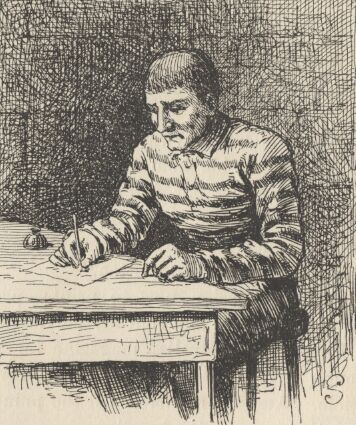
A word of explanation. 'Jack Hunt,' the professed writer of the letter, was an imaginary person. The burglar Williams—Harvard graduate, son of a minister—wrote the letter himself, to himself: got it smuggled out of the prison; got it conveyed to persons who had supported and encouraged him in his conversion—where he knew two things would happen: the genuineness of the letter would not be doubted or inquired into; and the nub of it would be noticed, and would have valuable effect—the effect, indeed, of starting a movement to get Mr. Williams pardoned out of prison.
A word of explanation. 'Jack Hunt,' the supposed writer of the letter, was an imaginary person. The burglar Williams was a Harvard graduate and the son of a minister. He wrote the letter himself, addressed it to himself, and had it smuggled out of prison. He then had it delivered to people who had supported and encouraged him in his conversion. He knew two things would happen. They would neither doubt nor question whether the letter was genuine. They would also notice its main point, and it would have a useful effect. In fact, it would start a movement to get Mr. Williams pardoned and released from prison.
That 'nub' is so ingeniously, so casually, flung in, and immediately left there in the tail of the letter, undwelt upon, that an indifferent reader would never suspect that it was the heart and core of the epistle, if he even took note of it at all, This is the 'nub'—
That 'nub' is slipped in so cleverly and casually at the end of the letter, then immediately left without comment. A casual reader would never suspect it was the heart of the letter, if they noticed it at all. This is the 'nub':
'i hope the warm weather is doing your lungs good—I was afraid when you was bleeding you would die—give my respects,' etc.
'I hope the warm weather is helping your lungs. I was afraid you would die when you were bleeding. Give my regards,' etc.
That is all there is of it—simply touch and go—no dwelling upon it. Nevertheless it was intended for an eye that would be swift to see it; and it was meant to move a kind heart to try to effect the liberation of a poor reformed and purified fellow lying in the fell grip of consumption.
That is all there is to it. It is just a brief mention, with no dwelling on it. Nevertheless, it was meant for someone who would notice it quickly. It was meant to move a kindhearted person to try to free a poor man who had reformed and purified himself, and who was in the deadly grip of tuberculosis.
When I for the first time heard that letter read, nine years ago, I felt that it was the most remarkable one I had ever encountered. And it so warmed me toward Mr. Brown of St. Louis that I said that if ever I visited that city again, I would seek out that excellent man and kiss the hem of his garment if it was a new one. Well, I visited St. Louis, but I did not hunt for Mr. Brown; for, alas! the investigations of long ago had proved that the benevolent Brown, like 'Jack Hunt,' was not a real person, but a sheer invention of that gifted rascal, Williams— burglar, Harvard graduate, son of a clergyman.
When I first heard that letter read nine years ago, I thought it was the most remarkable letter I had ever come across. It made me feel so warmly toward Mr. Brown of St. Louis that I made a promise. If I ever visited the city again, I would find that excellent man and kiss the hem of his garment, if it was a new one. Well, I did visit St. Louis, but I did not look for Mr. Brown. Alas, investigations long before had proved that the kindhearted Brown, like 'Jack Hunt,' was not a real person. He was entirely invented by that gifted rascal Williams, a burglar, Harvard graduate, and son of a clergyman.