Chapter 50
The 'Original Jacobs'
WE had some talk about Captain Isaiah Sellers, now many years dead. He was a fine man, a high-minded man, and greatly respected both ashore and on the river. He was very tall, well built, and handsome; and in his old age—as I remember him—his hair was as black as an Indian's, and his eye and hand were as strong and steady and his nerve and judgment as firm and clear as anybody's, young or old, among the fraternity of pilots. He was the patriarch of the craft; he had been a keelboat pilot before the day of steamboats; and a steamboat pilot before any other steamboat pilot, still surviving at the time I speak of, had ever turned a wheel. Consequently his brethren held him in the sort of awe in which illustrious survivors of a bygone age are always held by their associates. He knew how he was regarded, and perhaps this fact added some trifle of stiffening to his natural dignity, which had been sufficiently stiff in its original state.
We talked about Captain Isaiah Sellers, who had been dead for many years. He was a fine, honorable man, greatly respected both ashore and on the river. He was very tall, well built, and handsome. As I remember him in old age, his hair was as black as an Indian's. His eye and hand were as strong and steady as those of any pilot, young or old. His nerve and judgment were just as firm and clear. He was the patriarch of the profession. He had been a keelboat pilot before steamboats existed. He had also been a steamboat pilot before any other pilot still alive at the time had ever steered one. As a result, his fellow pilots held him in awe, as people always do with distinguished survivors of a bygone age. He knew how they regarded him, and perhaps this added a little stiffness to his natural dignity. His dignity had been stiff enough to begin with.
He left a diary behind him; but apparently it did not date back to his first steamboat trip, which was said to be 1811, the year the first steamboat disturbed the waters of the Mississippi. At the time of his death a correspondent of the 'St. Louis Republican' culled the following items from the diary—
He left a diary, but apparently it did not go back to his first steamboat trip. That trip was said to have taken place in 1811, the year the first steamboat disturbed the waters of the Mississippi. At the time of his death, a correspondent for the 'St. Louis Republican' selected the following items from the diary:
'In February, 1825, he shipped on board the steamer “Rambler,” at Florence, Ala., and made during that year three trips to New Orleans and back—this on the “Gen. Carrol,” between Nashville and New Orleans. It was during his stay on this boat that Captain Sellers introduced the tap of the bell as a signal to heave the lead, previous to which time it was the custom for the pilot to speak to the men below when soundings were wanted. The proximity of the forecastle to the pilot-house, no doubt, rendered this an easy matter; but how different on one of our palaces of the present day.
'In February 1825, he joined the crew of the steamer “Rambler” at Florence, Ala. That year, he made three round trips between Nashville and New Orleans on the “Gen. Carrol.” While he was on that boat, Captain Sellers introduced a tap of the bell as a signal to heave the lead. Before then, the pilot would speak to the men below when he wanted soundings. The forecastle was close to the pilot-house, which no doubt made speaking to the men easy. But how different it is on one of our present-day palaces.
'In 1827 we find him on board the “President,” a boat of two hundred and eighty-five tons burden, and plying between Smithland and New Orleans. Thence he joined the “Jubilee” in 1828, and on this boat he did his first piloting in the St. Louis trade; his first watch extending from Herculaneum to St. Genevieve. On May 26, 1836, he completed and left Pittsburgh in charge of the steamer “Prairie,” a boat of four hundred tons, and the first steamer with a State-Room cabin ever seen at St. Louis. In 1857 he introduced the signal for meeting boats, and which has, with some slight change, been the universal custom of this day; in fact, is rendered obligatory by act of Congress.
In 1827, he was aboard the “President,” a 285-ton boat that traveled between Smithland and New Orleans. In 1828, he joined the “Jubilee.” On that boat, he did his first piloting on the St. Louis route. His first watch ran from Herculaneum to St. Genevieve. On May 26, 1836, he completed the 400-ton steamer “Prairie” and left Pittsburgh in charge of it. The “Prairie” was the first steamer with a State-Room cabin ever seen at St. Louis. In 1857, he introduced a signal for boats meeting on the river. With slight changes, the signal has become the universal custom today. In fact, an act of Congress makes it mandatory.
'As general items of river history, we quote the following marginal notes from his general log—
'For a general view of river history, we quote the following notes from the margins of his log:
'In March, 1825, Gen. Lafayette left New Orleans for St. Louis on the low-pressure steamer “Natchez.”
'In March 1825, General Lafayette left New Orleans for St. Louis on the low-pressure steamboat “Natchez.”
'In January, 1828, twenty-one steamers left the New Orleans wharf to celebrate the occasion of Gen. Jackson's visit to that city.
'In January 1828, twenty-one steamboats left the New Orleans wharf to celebrate General Jackson's visit to the city.
'In 1830 the “North American” made the run from New Orleans to Memphis in six days—best time on record to that date. It has since been made in two days and ten hours.
In 1830 the “North American” traveled from New Orleans to Memphis in six days. That was the fastest time on record up to then. Since then, the trip has been made in two days and ten hours.
'In 1831 the Red River cut-off formed.
'In 1831 the Red River cutoff formed.
'In 1832 steamer “Hudson” made the run from White River to Helena, a distance of seventy-five miles, in twelve hours. This was the source of much talk and speculation among parties directly interested.
In 1832 the steamer “Hudson” traveled the seventy-five miles from White River to Helena in twelve hours. The trip caused much talk and speculation among those directly involved.
'In 1839 Great Horseshoe cut-off formed.
'In 1839, the Great Horseshoe cut-off formed.
'Up to the present time, a term of thirty-five years, we ascertain, by reference to the diary, he has made four hundred and sixty round trips to New Orleans, which gives a distance of one million one hundred and four thousand miles, or an average of eighty-six miles a day.'
'His diary shows that he has made 460 round trips to New Orleans over the past 35 years. That comes to 1,104,000 miles, or an average of 86 miles a day.'
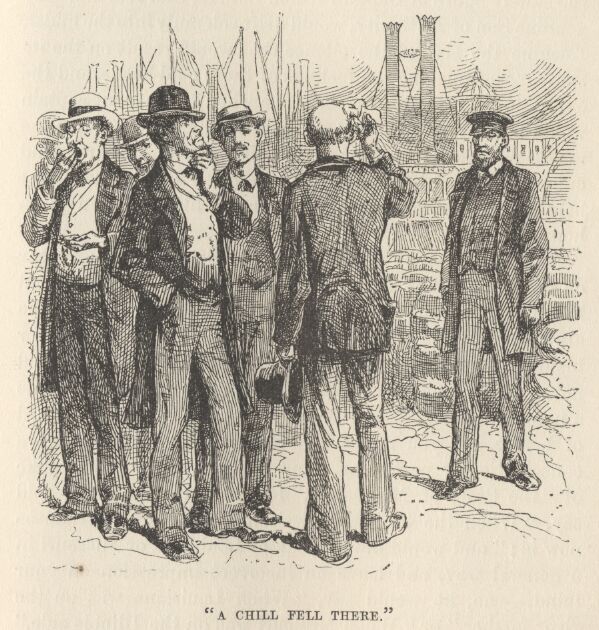
Whenever Captain Sellers approached a body of gossiping pilots, a chill fell there, and talking ceased. For this reason: whenever six pilots were gathered together, there would always be one or two newly fledged ones in the lot, and the elder ones would be always 'showing off' before these poor fellows; making them sorrowfully feel how callow they were, how recent their nobility, and how humble their degree, by talking largely and vaporously of old-time experiences on the river; always making it a point to date everything back as far as they could, so as to make the new men feel their newness to the sharpest degree possible, and envy the old stagers in the like degree. And how these complacent baldheads would swell, and brag, and lie, and date back—ten, fifteen, twenty years,—and how they did enjoy the effect produced upon the marveling and envying youngsters!
Whenever Captain Sellers approached a group of gossiping pilots, a chill fell over them, and they stopped talking. Here is why: whenever six pilots gathered, one or two would always be newcomers. The older pilots would always 'show off' in front of these poor fellows. They talked grandly and boastfully about their old experiences on the river. This made the newcomers painfully aware of how inexperienced they were, how recently they had joined this noble profession, and how low their rank was. The older pilots always made a point of dating everything as far back as they could. They wanted the newcomers to feel as new as possible and envy the old hands just as much. And how those smug baldheads would puff themselves up, brag, lie, and reach back ten, fifteen, twenty years into the past! How they enjoyed the effect on the amazed and envious youngsters!
And perhaps just at this happy stage of the proceedings, the stately figure of Captain Isaiah Sellers, that real and only genuine Son of Antiquity, would drift solemnly into the midst. Imagine the size of the silence that would result on the instant. And imagine the feelings of those bald-heads, and the exultation of their recent audience when the ancient captain would begin to drop casual and indifferent remarks of a reminiscent nature—about islands that had disappeared, and cutoffs that had been made, a generation before the oldest bald-head in the company had ever set his foot in a pilot-house!
And perhaps, just at this happy moment, the stately figure of Captain Isaiah Sellers would drift solemnly into the group. He was the real and only genuine Son of Antiquity. Imagine how silent everyone would become at once. And imagine how those bald-heads would feel, and how delighted their audience would be. The ancient captain would begin to make casual, offhand remarks about the past. He would speak of islands that had disappeared and cutoffs that had been made. All of this had happened a generation before the oldest bald-head in the group had ever set foot in a pilot-house!
Many and many a time did this ancient mariner appear on the scene in the above fashion, and spread disaster and humiliation around him. If one might believe the pilots, he always dated his islands back to the misty dawn of river history; and he never used the same island twice; and never did he employ an island that still existed, or give one a name which anybody present was old enough to have heard of before. If you might believe the pilots, he was always conscientiously particular about little details; never spoke of 'the State of Mississippi,' for instance—no, he would say, 'When the State of Mississippi was where Arkansas now is,' and would never speak of Louisiana or Missouri in a general way, and leave an incorrect impression on your mind—no, he would say, 'When Louisiana was up the river farther,' or 'When Missouri was on the Illinois side.'
Many times, this old sailor appeared as described above, spreading disaster and humiliation around him. If you believed the pilots, his islands always dated back to the misty dawn of river history. He never used the same island twice. He never used an island that still existed, either. Nor did he give an island a name anyone present was old enough to have heard before. If you believed the pilots, he was always careful to get the little details right. For instance, he never spoke of 'the State of Mississippi.' No, he would say, 'When the State of Mississippi was where Arkansas now is.' And he would never speak of Louisiana or Missouri in general terms and leave you with the wrong impression. No, he would say, 'When Louisiana was farther up the river,' or 'When Missouri was on the Illinois side.'
The old gentleman was not of literary turn or capacity, but he used to jot down brief paragraphs of plain practical information about the river, and sign them 'Mark Twain,' and give them to the 'New Orleans Picayune.' They related to the stage and condition of the river, and were accurate and valuable; and thus far, they contained no poison. But in speaking of the stage of the river to-day, at a given point, the captain was pretty apt to drop in a little remark about this being the first time he had seen the water so high or so low at that particular point for forty-nine years; and now and then he would mention Island So-and-so, and follow it, in parentheses, with some such observation as 'disappeared in 1807, if I remember rightly.' In these antique interjections lay poison and bitterness for the other old pilots, and they used to chaff the 'Mark Twain' paragraphs with unsparing mockery.
The old gentleman had neither a literary bent nor literary ability. But he used to jot down brief paragraphs of plain, practical information about the river. He signed them 'Mark Twain' and gave them to the 'New Orleans Picayune.' The paragraphs described the river’s level and condition. They were accurate and valuable, and so far contained no poison. But when describing the river’s current level at a particular point, the captain was quite likely to add a little remark. He might say it was the first time in forty-nine years he had seen the water so high or so low there. Now and then he would mention Island So-and-so and follow the name with a parenthetical observation like 'disappeared in 1807, if I remember rightly.' These ancient asides held poison and bitterness for the other old pilots. They used to tease the 'Mark Twain' paragraphs with unsparing mockery.
It so chanced that one of these paragraphs—{footnote [The original MS. of it, in the captain's own hand, has been sent to me from New Orleans. It reads as follows—
As it happened, one of these paragraphs (footnote [The original manuscript, in the captain's own handwriting, was sent to me from New Orleans. It reads as follows:
VICKSBURG May 4, 1859.
VICKSBURG, May 4, 1859.
'My opinion for the benefit of the citizens of New Orleans: The water is higher this far up than it has been since 8. My opinion is that the water will be feet deep in Canal street before the first of next June. Mrs. Turner's plantation at the head of Big Black Island is all under water, and it has not been since 1815.
'My opinion for the people of New Orleans: The water this far upstream is higher than it has been since 8. I think the water will be feet deep in Canal street before the first of next June. Mrs. Turner's plantation at the head of Big Black Island is completely underwater. It has not been underwater since 1815.
'I. Sellers.']}
'I. Sellers.']}
became the text for my first newspaper article. I burlesqued it broadly, very broadly, stringing my fantastics out to the extent of eight hundred or a thousand words. I was a 'cub' at the time. I showed my performance to some pilots, and they eagerly rushed it into print in the 'New Orleans True Delta.' It was a great pity; for it did nobody any worthy service, and it sent a pang deep into a good man's heart. There was no malice in my rubbish; but it laughed at the captain. It laughed at a man to whom such a thing was new and strange and dreadful. I did not know then, though I do now, that there is no suffering comparable with that which a private person feels when he is for the first time pilloried in print.
became the subject of my first newspaper article. I turned it into a broad parody, a very broad one. I spun out my fantasies over eight hundred or a thousand words. I was a 'cub', or apprentice pilot, at the time. I showed my work to some pilots, and they eagerly rushed it into print in the 'New Orleans True Delta.' That was a great pity. The article did no one any good, and it caused a good man deep pain. There was no malice in my rubbish, but it made fun of the captain. It made fun of a man to whom such treatment was new, strange, and dreadful. I did not know then what I know now. No suffering compares with what a private person feels when publicly ridiculed in print for the first time.
Captain Sellers did me the honor to profoundly detest me from that day forth. When I say he did me the honor, I am not using empty words. It was a very real honor to be in the thoughts of so great a man as Captain Sellers, and I had wit enough to appreciate it and be proud of it. It was distinction to be loved by such a man; but it was a much greater distinction to be hated by him, because he loved scores of people; but he didn't sit up nights to hate anybody but me.
From that day on, Captain Sellers did me the honor of hating me deeply. When I call it an honor, I mean it. It was a real honor to be in the thoughts of a man as great as Captain Sellers. I was smart enough to appreciate that honor and be proud of it. It was a distinction to be loved by such a man, but being hated by him was a much greater distinction. He loved scores of people, but I was the only person he stayed up at night to hate.
He never printed another paragraph while he lived, and he never again signed 'Mark Twain' to anything. At the time that the telegraph brought the news of his death, I was on the Pacific coast. I was a fresh new journalist, and needed a nom de guerre; so I confiscated the ancient mariner's discarded one, and have done my best to make it remain what it was in his hands—a sign and symbol and warrant that whatever is found in its company may be gambled on as being the petrified truth; how I have succeeded, it would not be modest in me to say.
He never published another paragraph during his lifetime, and he never again signed 'Mark Twain' to anything. When the news of his death came by telegraph, I was on the Pacific coast. I was a brand-new journalist and needed a pen name. So I took the old sailor's discarded name. I have done my best to keep it what it was in his hands: a guarantee that anything bearing it can be counted on as the solid truth. How well I have succeeded would not be modest for me to say.
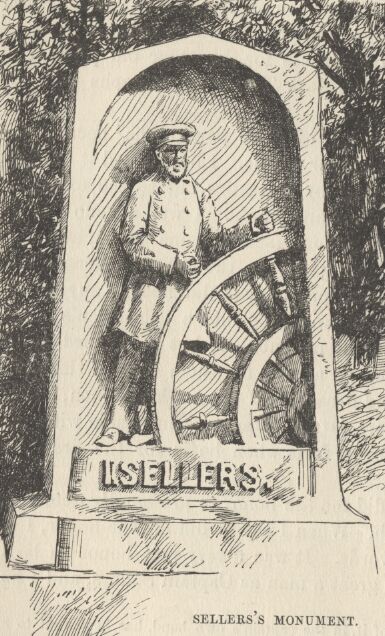
The captain had an honorable pride in his profession and an abiding love for it. He ordered his monument before he died, and kept it near him until he did die. It stands over his grave now, in Bellefontaine cemetery, St. Louis. It is his image, in marble, standing on duty at the pilot wheel; and worthy to stand and confront criticism, for it represents a man who in life would have stayed there till he burned to a cinder, if duty required it.
The captain took honorable pride in his profession and loved it deeply. He ordered his monument before he died and kept it near him for the rest of his life. It now stands over his grave in Bellefontaine cemetery, St. Louis. The marble monument shows him on duty at the pilot wheel. It deserves to stand and face criticism. It represents a man who would have stayed at the wheel until he burned to a cinder, if duty required it.
The finest thing we saw on our whole Mississippi trip, we saw as we approached New Orleans in the steam-tug. This was the curving frontage of the crescent city lit up with the white glare of five miles of electric lights. It was a wonderful sight, and very beautiful.
The finest sight of our whole Mississippi trip came as we approached New Orleans in the steam tug. The curved waterfront of the Crescent City glowed with the white light of five miles of electric lights. It was a wonderful and beautiful sight.