Chapter 49
Stories From a Pilot's Life
IN the course of the tug-boat gossip, it came out that out of every five of my former friends who had quitted the river, four had chosen farming as an occupation. Of course this was not because they were peculiarly gifted, agriculturally, and thus more likely to succeed as farmers than in other industries: the reason for their choice must be traced to some other source. Doubtless they chose farming because that life is private and secluded from irruptions of undesirable strangers—like the pilot-house hermitage. And doubtless they also chose it because on a thousand nights of black storm and danger they had noted the twinkling lights of solitary farm-houses, as the boat swung by, and pictured to themselves the serenity and security and coziness of such refuges at such times, and so had by-and-bye come to dream of that retired and peaceful life as the one desirable thing to long for, anticipate, earn, and at last enjoy.
During the gossip on the tugboat, I learned that four out of every five former friends who had left the river had become farmers. Of course, they had not chosen farming because they were especially gifted at it. They were no more likely to succeed as farmers than in other occupations. Their choice must have had another source. No doubt they chose farming because it offered a private life, safe from intrusions by unwanted strangers, like the seclusion of the pilot-house. No doubt they also chose it because of what they had seen on a thousand nights of darkness, storms, and danger. As the boat passed solitary farmhouses, they had noticed their twinkling lights. They had imagined how peaceful, safe, and cozy those shelters must be at such times. And so, in time, they had come to dream of that secluded, peaceful life as the one thing worth longing for, looking forward to, earning, and finally enjoying.
But I did not learn that any of these pilot-farmers had astonished anybody with their successes. Their farms do not support them: they support their farms. The pilot-farmer disappears from the river annually, about the breaking of spring, and is seen no more till next frost. Then he appears again, in damaged homespun, combs the hayseed out of his hair, and takes a pilot-house berth for the winter. In this way he pays the debts which his farming has achieved during the agricultural season. So his river bondage is but half broken; he is still the river's slave the hardest half of the year.
But I never heard that any of these pilot-farmers amazed anyone with their success. Their farms do not support them. They support their farms. Each year, the pilot-farmer disappears from the river around the start of spring. He is not seen again until the first frost. Then he returns in worn homespun clothes, combs the hayseed out of his hair, and takes a winter job in a pilothouse. That is how he pays off the debts his farming has earned him during the growing season. So he is only half free from the river. He is still the river’s slave for the hardest half of the year.
One of these men bought a farm, but did not retire to it. He knew a trick worth two of that. He did not propose to pauperize his farm by applying his personal ignorance to working it. No, he put the farm into the hands of an agricultural expert to be worked on shares—out of every three loads of corn the expert to have two and the pilot the third. But at the end of the season the pilot received no corn. The expert explained that his share was not reached. The farm produced only two loads.
One of these men bought a farm, but he did not retire there. He knew a trick worth twice as much. He had no intention of ruining his farm by trying to work it himself, since he knew nothing about farming. Instead, he hired an agricultural expert to work the farm for a share of the crop. For every three loads of corn, the expert would get two and the pilot would get one. But at the end of the season, the pilot received no corn. The expert explained that the pilot’s share had not been reached. The farm had produced only two loads.
Some of the pilots whom I had known had had adventures—the outcome fortunate, sometimes, but not in all cases. Captain Montgomery, whom I had steered for when he was a pilot, commanded the Confederate fleet in the great battle before Memphis; when his vessel went down, he swam ashore, fought his way through a squad of soldiers, and made a gallant and narrow escape. He was always a cool man; nothing could disturb his serenity. Once when he was captain of the 'Crescent City,' I was bringing the boat into port at New Orleans, and momently expecting orders from the hurricane deck, but received none. I had stopped the wheels, and there my authority and responsibility ceased. It was evening—dim twilight—the captain's hat was perched upon the big bell, and I supposed the intellectual end of the captain was in it, but such was not the case. The captain was very strict; therefore I knew better than to touch a bell without orders. My duty was to hold the boat steadily on her calamitous course, and leave the consequences to take care of themselves—which I did. So we went plowing past the sterns of steamboats and getting closer and closer—the crash was bound to come very soon—and still that hat never budged; for alas, the captain was napping in the texas.... Things were becoming exceedingly nervous and uncomfortable. It seemed to me that the captain was not going to appear in time to see the entertainment. But he did. Just as we were walking into the stern of a steamboat, he stepped out on deck, and said, with heavenly serenity, 'Set her back on both'—which I did; but a trifle late, however, for the next moment we went smashing through that other boat's flimsy outer works with a most prodigious racket. The captain never said a word to me about the matter afterwards, except to remark that I had done right, and that he hoped I would not hesitate to act in the same way again in like circumstances.
Some of the pilots I had known had adventures. Sometimes they ended well, but not always. Captain Montgomery was one of them. I had steered for him when he was a pilot. He commanded the Confederate fleet in the great battle before Memphis. When his vessel sank, he swam ashore and fought his way through a squad of soldiers. He made a brave and narrow escape. He was always a cool man. Nothing could disturb his calm. Once, when he was captain of the 'Crescent City,' I was bringing the boat into port at New Orleans. I kept expecting orders from the hurricane deck, but none came. I had stopped the wheels, and that was where my authority and responsibility ended. It was evening, in the dim twilight. The captain's hat was perched on the big bell, and I assumed the captain's intellectual end was inside it. But it was not. The captain was very strict, so I knew better than to touch a bell without orders. My duty was to hold the boat steadily on its disastrous course and let the consequences take care of themselves. So I did. We plowed past the sterns of steamboats, getting closer and closer. A crash was bound to come very soon, and still that hat never moved. Alas, the captain was napping in the texas.... Things were getting extremely tense and uncomfortable. It seemed to me that the captain would not appear in time to see the entertainment. But he did. Just as we were about to run into the stern of a steamboat, he stepped out on deck. With heavenly calm, he said, 'Set her back on both.' I did, but a little too late. The next moment we smashed through the other boat's flimsy outer structures with a tremendous racket. The captain said nothing to me about the matter afterward, except that I had done right. He hoped I would not hesitate to do the same again in similar circumstances.
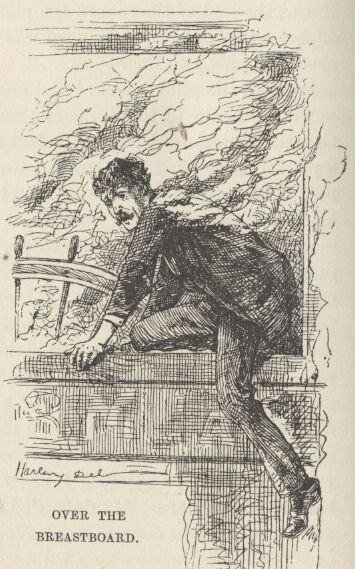
One of the pilots whom I had known when I was on the river had died a very honorable death. His boat caught fire, and he remained at the wheel until he got her safe to land. Then he went out over the breast-board with his clothing in flames, and was the last person to get ashore. He died from his injuries in the course of two or three hours, and his was the only life lost.
One of the pilots I had known when I worked on the river died a very honorable death. His boat caught fire, and he stayed at the wheel until he brought it safely to land. Then he climbed over the breast-board with his clothes on fire. He was the last person to reach shore. He died from his injuries within two or three hours, and he was the only person who died.
The history of Mississippi piloting affords six or seven instances of this sort of martyrdom, and half a hundred instances of escapes from a like fate which came within a second or two of being fatally too late; but there is no instance of a pilot deserting his post to save his life while by remaining and sacrificing it he might secure other lives from destruction. It is well worth while to set down this noble fact, and well worth while to put it in italics, too.
The history of Mississippi piloting has six or seven cases of this kind of martyrdom. It also has about fifty cases where pilots escaped a similar fate, just a second or two before it would have been too late. But there is no case of a pilot leaving his post to save his own life when he could have saved others by staying and sacrificing his life. This noble fact is well worth recording, and well worth putting in italics, too.
The 'cub' pilot is early admonished to despise all perils connected with a pilot's calling, and to prefer any sort of death to the deep dishonor of deserting his post while there is any possibility of his being useful in it. And so effectively are these admonitions inculcated, that even young and but half-tried pilots can be depended upon to stick to the wheel, and die there when occasion requires. In a Memphis graveyard is buried a young fellow who perished at the wheel a great many years ago, in White River, to save the lives of other men. He said to the captain that if the fire would give him time to reach a sand bar, some distance away, all could be saved, but that to land against the bluff bank of the river would be to insure the loss of many lives. He reached the bar and grounded the boat in shallow water; but by that time the flames had closed around him, and in escaping through them he was fatally burned. He had been urged to fly sooner, but had replied as became a pilot to reply—
A 'cub' pilot is taught early to despise every danger of the pilot’s calling. He is taught to prefer any kind of death to the deep dishonor of abandoning his post while he can still be useful there. These lessons are taught so effectively that even young, barely tested pilots can be counted on to stay at the wheel and die there when necessary. In a Memphis graveyard lies a young man who died at the wheel many years ago on White River. He gave his life to save other men. He told the captain that, if the fire gave him time to reach a distant sandbar, all could be saved. But landing against the river’s steep bank would guarantee the loss of many lives. He reached the sandbar and grounded the boat in shallow water. By then, though, the flames had closed around him, and he was fatally burned as he escaped through them. He had been urged to flee sooner, but he had answered as a pilot should:
'I will not go. If I go, nobody will be saved; if I stay, no one will be lost but me. I will stay.'
'I won't go. If I go, nobody will be saved. If I stay, no one will be lost but me. I'll stay.'
There were two hundred persons on board, and no life was lost but the pilot's. There used to be a monument to this young fellow, in that Memphis graveyard. While we tarried in Memphis on our down trip, I started out to look for it, but our time was so brief that I was obliged to turn back before my object was accomplished.
There were two hundred people on board, and only the pilot lost his life. There used to be a monument to this young man in that Memphis graveyard. When we stopped in Memphis on our trip downriver, I set out to look for it. But our time was so short that I had to turn back before I found it.
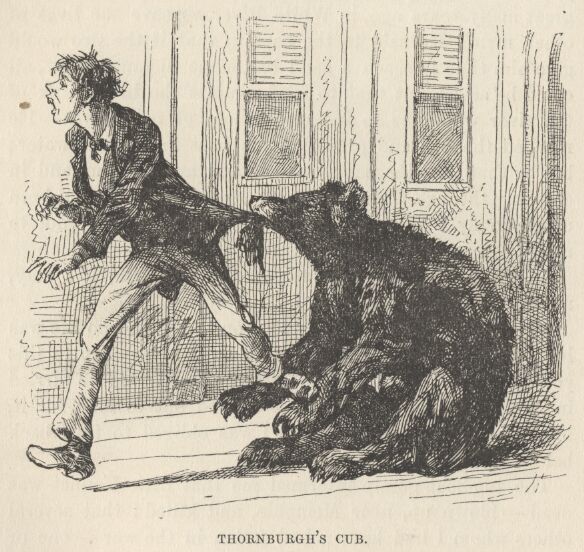
The tug-boat gossip informed me that Dick Kennet was dead—blown up, near Memphis, and killed; that several others whom I had known had fallen in the war—one or two of them shot down at the wheel; that another and very particular friend, whom I had steered many trips for, had stepped out of his house in New Orleans, one night years ago, to collect some money in a remote part of the city, and had never been seen again—was murdered and thrown into the river, it was thought; that Ben Thornburgh was dead long ago; also his wild 'cub' whom I used to quarrel with, all through every daylight watch. A heedless, reckless creature he was, and always in hot water, always in mischief. An Arkansas passenger brought an enormous bear aboard, one day, and chained him to a life-boat on the hurricane deck. Thornburgh's 'cub' could not rest till he had gone there and unchained the bear, to 'see what he would do.' He was promptly gratified. The bear chased him around and around the deck, for miles and miles, with two hundred eager faces grinning through the railings for audience, and finally snatched off the lad's coat-tail and went into the texas to chew it. The off-watch turned out with alacrity, and left the bear in sole possession. He presently grew lonesome, and started out for recreation. He ranged the whole boat—visited every part of it, with an advance guard of fleeing people in front of him and a voiceless vacancy behind him; and when his owner captured him at last, those two were the only visible beings anywhere; everybody else was in hiding, and the boat was a solitude.
The gossip aboard the tugboat told me that Dick Kennet was dead. He had been killed in an explosion near Memphis. Several others I had known had fallen in the war, one or two shot down at the wheel. Another very close friend had disappeared years ago. I had steered for him on many trips. One night, he had left his house in New Orleans to collect money in a distant part of the city. He was never seen again. People thought he had been murdered and thrown into the river. Ben Thornburgh had died long ago, too, as had his wild 'cub'. I used to quarrel with the cub throughout every daylight watch. He was a careless, reckless creature, always in trouble, always up to mischief. One day, a passenger from Arkansas brought an enormous bear aboard and chained him to a lifeboat on the hurricane deck. Thornburgh's 'cub' could not rest until he had gone up and unchained the bear, to 'see what he would do.' He soon found out. The bear chased him around and around the deck, for miles and miles. Two hundred eager faces grinned through the railings as they watched. Finally, the bear snatched off the lad's coat-tail and went into the texas to chew it. The off-watch crew quickly cleared out, leaving the bear in sole possession. Soon he grew lonely and set out for some recreation. He roamed the whole boat, visiting every part of it. A crowd of fleeing people went before him, and a silent emptiness lay behind him. When his owner finally caught him, the two of them were the only beings in sight anywhere. Everyone else was hiding, and the boat was deserted.
I was told that one of my pilot friends fell dead at the wheel, from heart disease, in 1869. The captain was on the roof at the time. He saw the boat breaking for the shore; shouted, and got no answer; ran up, and found the pilot lying dead on the floor.
I was told that one of my pilot friends died at the wheel from heart disease in 1869. The captain was on the roof at the time. He saw the boat veering toward shore and shouted, but got no answer. He ran up and found the pilot lying dead on the floor.
Mr. Bixby had been blown up, in Madrid bend; was not injured, but the other pilot was lost.
Mr. Bixby had been caught in an explosion at Madrid bend. He was not injured, but the other pilot was lost.
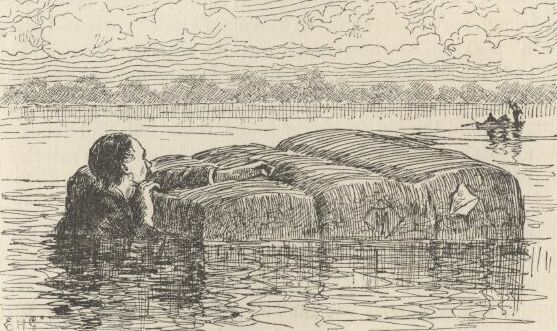
George Ritchie had been blown up near Memphis—blown into the river from the wheel, and disabled. The water was very cold; he clung to a cotton bale—mainly with his teeth—and floated until nearly exhausted, when he was rescued by some deck hands who were on a piece of the wreck. They tore open the bale and packed him in the cotton, and warmed the life back into him, and got him safe to Memphis. He is one of Bixby's pilots on the 'Baton Rouge' now.
George Ritchie had been caught in an explosion near Memphis. He was blown from the wheel into the river and injured. The water was very cold. He clung to a cotton bale, mainly with his teeth, and floated until he was nearly exhausted. Then some deckhands on a piece of the wreck rescued him. They tore open the bale and packed him in the cotton. They warmed him back to life and got him safely to Memphis. He is now one of Bixby's pilots on the 'Baton Rouge'.
Into the life of a steamboat clerk, now dead, had dropped a bit of romance—somewhat grotesque romance, but romance nevertheless. When I knew him he was a shiftless young spendthrift, boisterous, goodhearted, full of careless generosities, and pretty conspicuously promising to fool his possibilities away early, and come to nothing. In a Western city lived a rich and childless old foreigner and his wife; and in their family was a comely young girl—sort of friend, sort of servant. The young clerk of whom I have been speaking—whose name was not George Johnson, but who shall be called George Johnson for the purposes of this narrative—got acquainted with this young girl, and they sinned; and the old foreigner found them out, and rebuked them. Being ashamed, they lied, and said they were married; that they had been privately married. Then the old foreigner's hurt was healed, and he forgave and blessed them. After that, they were able to continue their sin without concealment. By-and-bye the foreigner's wife died; and presently he followed after her. Friends of the family assembled to mourn; and among the mourners sat the two young sinners. The will was opened and solemnly read. It bequeathed every penny of that old man's great wealth to Mrs. George Johnson!
A bit of romance had entered the life of a steamboat clerk who is now dead. It was a somewhat grotesque romance, but romance all the same. When I knew him, he was a lazy young spendthrift, loud and goodhearted, with a habit of giving generously without a thought. He seemed all too likely to waste his potential early and come to nothing. In a Western city lived a rich, childless old foreigner and his wife. A pretty young girl lived with them, part friend and part servant. The young clerk I mentioned got to know her, and they sinned. His name was not George Johnson, but I will call him George Johnson for this story. The old foreigner found them out and scolded them. Ashamed, they lied and said they had been married in secret. The old foreigner was no longer hurt, and he forgave and blessed them. After that, they could continue their sin openly. In time, the foreigner’s wife died, and soon he followed her. Friends of the family gathered to mourn, and among them sat the two young sinners. The will was opened and solemnly read. It left every penny of the old man’s great wealth to Mrs. George Johnson!
And there was no such person. The young sinners fled forth then, and did a very foolish thing: married themselves before an obscure Justice of the Peace, and got him to antedate the thing. That did no sort of good. The distant relatives flocked in and exposed the fraudful date with extreme suddenness and surprising ease, and carried off the fortune, leaving the Johnsons very legitimately, and legally, and irrevocably chained together in honorable marriage, but with not so much as a penny to bless themselves withal. Such are the actual facts; and not all novels have for a base so telling a situation.
And there was no such person. The young sinners then ran off and did something very foolish. They married before an obscure justice of the peace and got him to backdate the marriage. That did them no good. The distant relatives flocked in, exposed the false date with astonishing speed and ease, and carried off the fortune. The Johnsons were left very legitimately, legally, and irrevocably chained together in honorable marriage, but without a penny to their names. Those are the actual facts. Not all novels are based on such a striking situation.